Walking Berlin, Remembering Cairo
What a Return to Germany Revealed About Cities, Belonging, and Urban Change

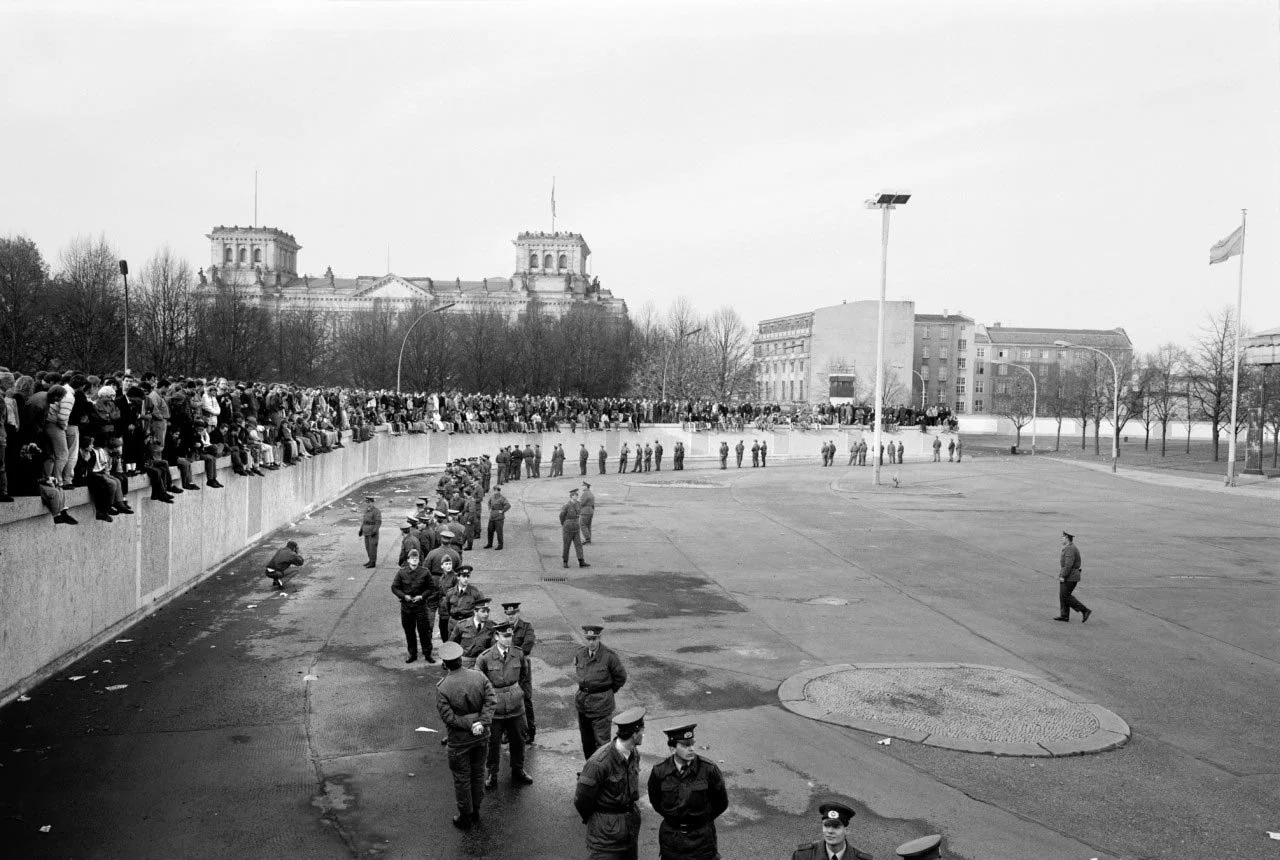
The Fall of the Berlin Wall. East German soldiers guarding the area in front of the Brandenburg Gate, while West Germans climb the Wall. East Berlin, Germany. November 12th 1989. © Mark Power
“Berlin is a city condemned forever to becoming and never to being.”
— Karl Scheffler. (Berlin: Ein Stadtschicksal, 1910)
When I boarded my flight to Berlin this June, I assumed I was returning to a familiar city. After all, this was not my first encounter with the German capital. My relationship with Berlin stretches back more than fifty years: childhood journeys from Hannover through East Germany in the 1970s, student adventures during the Cold War in the 1980s, visits as an architecture professor, and countless memories of a city that always seemed to exist somewhere between reality and imagination. All recounted in an earlier blog: Berlin: Among Ruins, Rebels, and Angels.
Yet cities rarely remain the same. More importantly, neither do we.
I arrived at Brandenburg Airport in the evening. My Uber driver was Iraqi. Even before I saw him, I recognized the unmistakable cadence of his Arabic as he spoke on the phone. The drive took us through quiet suburban streets until we reached my hotel in Schlachtensee. The reception desk was closed. Instead, I was instructed by phone to enter a code into a lockbox. A key dropped into my hand. It was an oddly Berlin moment—efficient, impersonal, yet somehow charming. Later that evening I walked to a nearby Italian restaurant overlooking Mexico Platz. The meal was memorable: olives, bread, olive oil, a veal fillet, crème brûlée, and finally a complimentary limoncello offered by the waiter. Sitting there, watching the evening unfold around me, I found myself thinking not about Berlin but about the purpose of my visit. A sudden downpour brought me back to reality and trying to find a way back to the hotel without getting soaked.
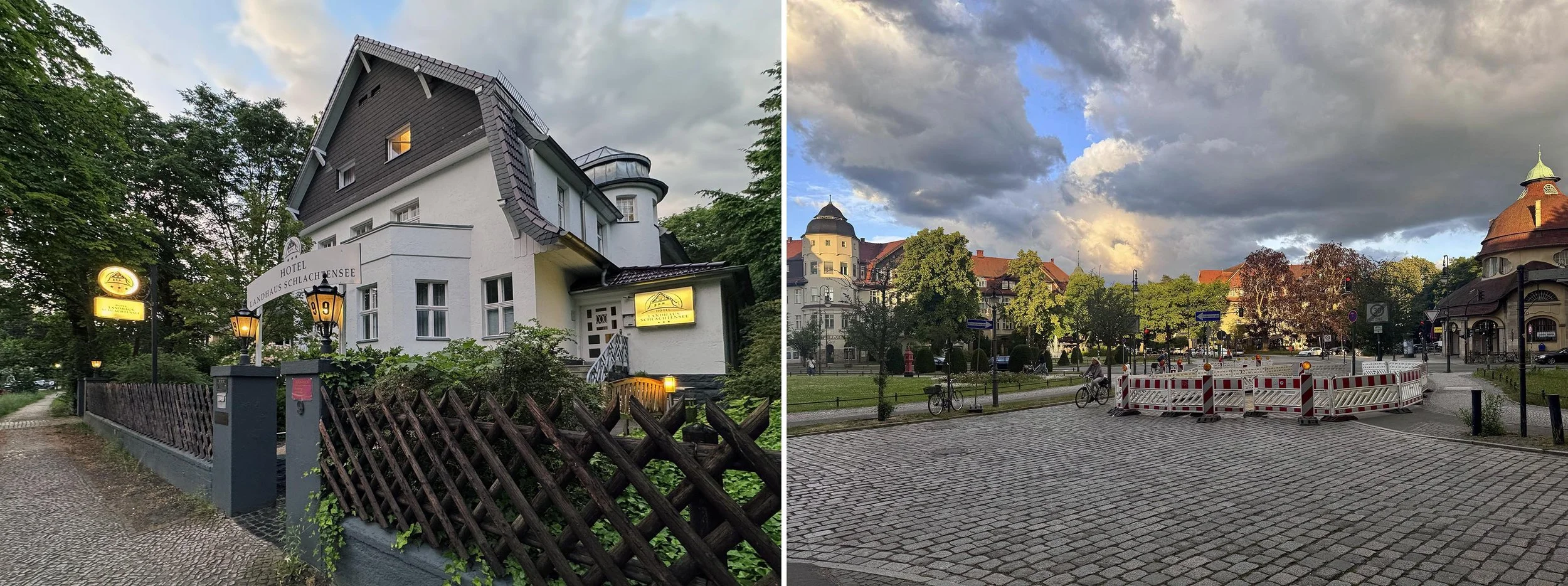
Hotel Landhaus Schlachtensee · Mexico Platz
The following day I would be delivering a lecture at the Zentrum Moderner Orient (ZMO) on my book Arab Modernism(s): Cities, History and Culture. Although the book examines cities across the Arab world—from Rabat and Beirut to Riyadh and Dubai—it was the Cairo chapter that occupied my thoughts.
At the time, I did not yet realize that Berlin itself would provide a new way of thinking about Cairo. The following afternoon I walked from my hotel to ZMO, a pleasant forty-minute journey through leafy residential streets lined with elegant villas. The institute itself was hidden behind gardens and secondary buildings, requiring a bit of searching before I finally located the entrance. There I met colleagues old and new. Ulrike Freitag, the institute's director, welcomed me warmly. Khaled, a longtime friend whose friendship stretches back to our graduate student years in the United States and later our time together at UAE University, arrived shortly before the lecture. And of course Saleh, a Kenyan researcher whom I met by chance in the forecourt; we got to talking about cities and urbanism before rain forced us to seek shelter inside.
The audience included scholars whom I had not seen in years, among them Steffen Wippel and Katrin Bromber, who had invited me to Berlin more than fifteen years earlier. Others joined online from different parts of the world, including former students and colleagues -- Lubna Shekfa and Sofia Shwayri. The discussion that followed was lively and thought-provoking. One question in particular lingered in my mind long after the event ended. Why, someone asked, do we continue to use the term "modernity"? Does it still adequately explain the transformations taking place in contemporary cities? Or should we instead speak of neoliberalism, globalization, or perhaps what many in the Arab world now describe as "Dubaization"? It was a valid question, and one that continues to occupy me.
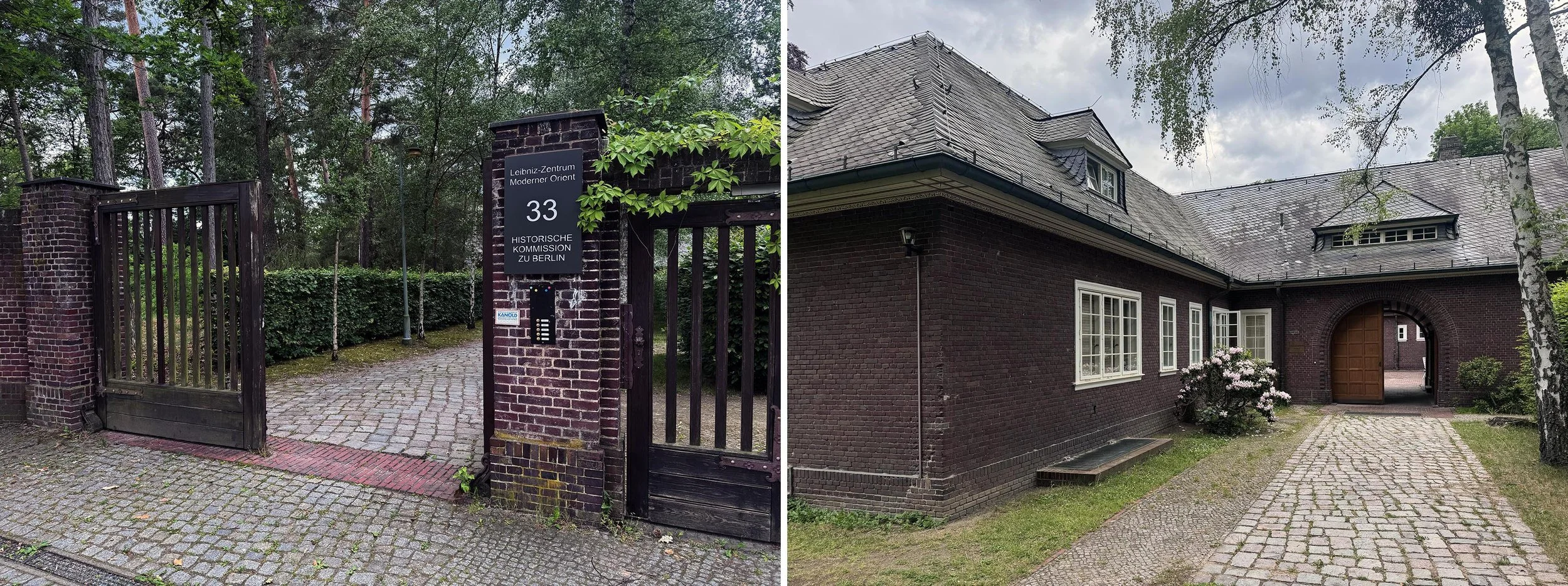
ZMO — Zentrum Moderner Orient. Berlin
Yet what struck me most was that many of the questions were not really about architecture. They were about coexistence, belonging, memory, and the ways cities accommodate difference. In retrospect, these concerns would reappear the following day as I wandered through Berlin's neighborhoods. The next morning, I took an Uber to Neukölln to meet a graduate student researching Qatari modernity. We met at Jiwar, a community café whose name means "neighborliness" in Arabic. Sitting over coffee, we discussed architecture, cultural institutions, and urban transformation. Soon afterward Khaled joined us, and after concluding my meeting with the student, we set off on foot through the surrounding streets. Indeed, Neukölln was perhaps the Berlin I most wanted to see.
The neighborhood felt immediately familiar. Arabic signs filled storefronts. The smell of grilled meat drifted from restaurants. Shisha cafés spilled onto sidewalks. Conversations moved effortlessly between German, Arabic, Turkish, and English. At times it felt less like Germany than a fragment of Beirut, Damascus, Amman, or Cairo transplanted into northern Europe. We stopped for lunch at Azzam, a modest but busy restaurant. Around us families gathered for lunch, students lingered over coffee, and delivery drivers hurried in and out. We shared kibbeh, sujuk, hummus, and tabbouleh while discussing Berlin's changing urban landscape. Afterwards we continued our walk, passing next to a famous landmark and Kebab restaurant specializing in a vegetarian Shawerma sandwich -- Mustafa Gemüse Kebab -- with a long line of people stretching along the sidewalk.
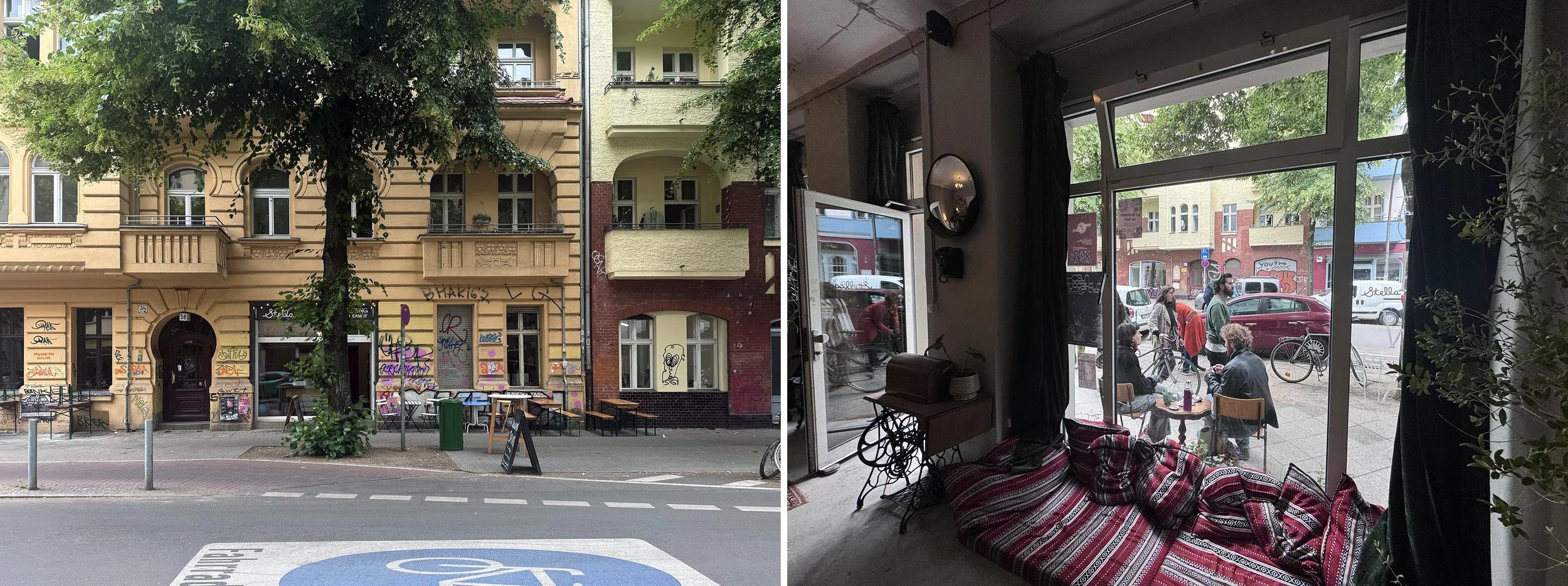
Neukölln · Jiwar
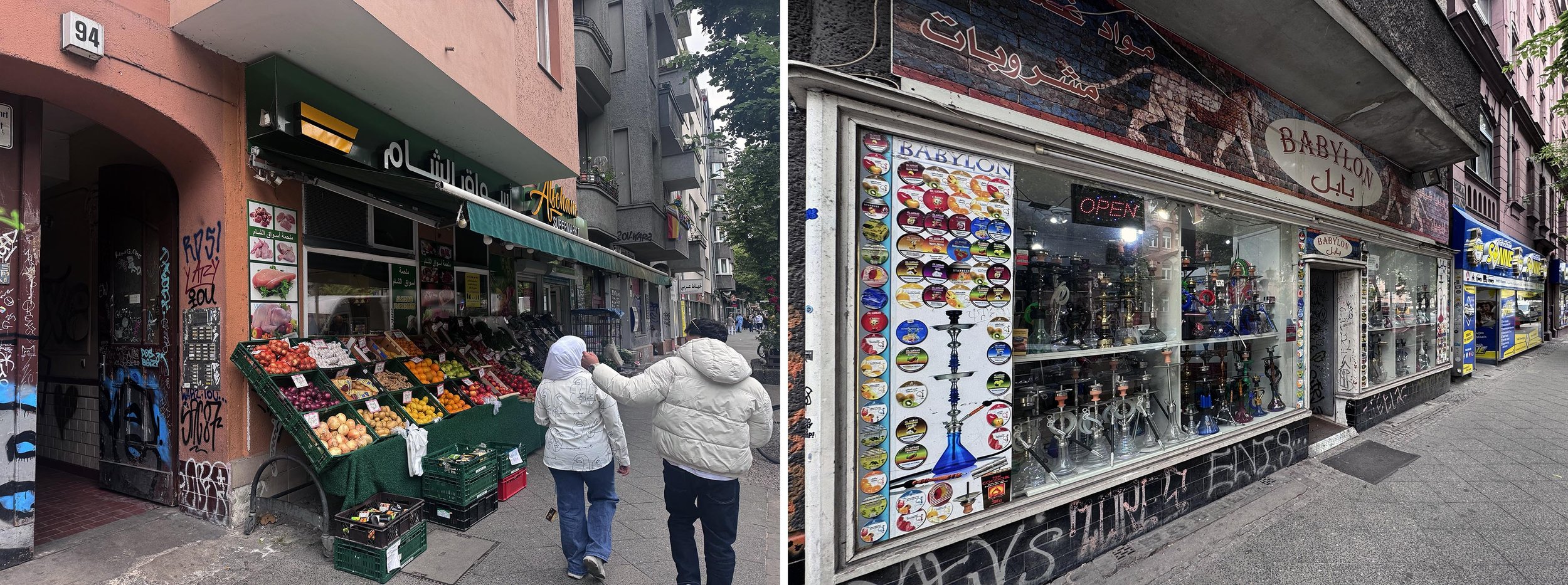
Neukölln
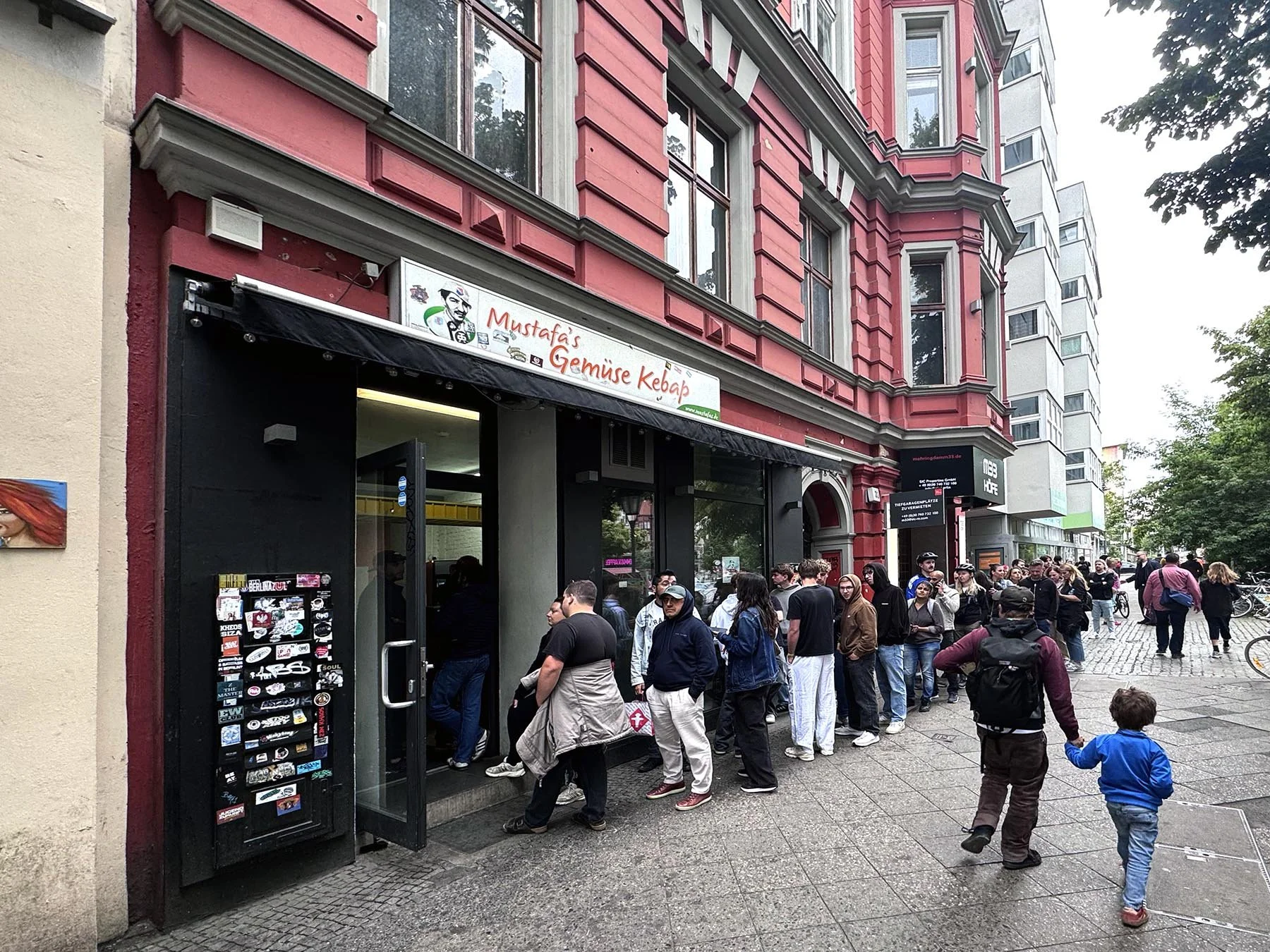
Mustafa’s Gemüse Kebab
What fascinated me was not simply the presence of migrants but the degree to which they appeared woven into the city's everyday life. Berlin did not feel like a city divided into neatly separated worlds. Instead, different communities overlapped and intersected in ways that seemed surprisingly organic.
From Neukölln we continued toward Kreuzberg. Decades ago the neighborhood was associated primarily with Berlin's Turkish community. I recall passing through with no visible signs of luxury -- it was a working-class district that was on the verge of transformation. Today it is synonymous with gentrification. New cafés sit beside older immigrant businesses. Trendy boutiques coexist with long-established markets -- including an indoor food market that provided a wide variety of ethnic food. Graffiti-covered walls stand next to carefully renovated buildings. The contradictions were obvious. Yet they remained visible. Nothing seemed hidden. Nothing appeared sanitized.
This observation stayed with me as we continued toward Kurfürstendamm and eventually arrived at the Europa Center and Bahnhof Zoo. These were places deeply embedded in my own memories of Berlin. As a student in the 1980s, I had spent nights wandering these streets. I remembered the atmosphere of Cold War Berlin, the sense of uncertainty, and of course the book Wir Kinder vom Bahnhof Zoo, which transformed the area into a symbol of addiction, alienation, and urban decline. Much has changed since then. Bikini Berlin, once an unremarkable office building, has become an elegant shopping complex. The rooftop now functions as a landscaped public terrace overlooking the city. Yet despite these transformations, the neighborhood still felt connected to its earlier incarnations.
Berlin had changed. But it had not erased itself. That distinction is important.
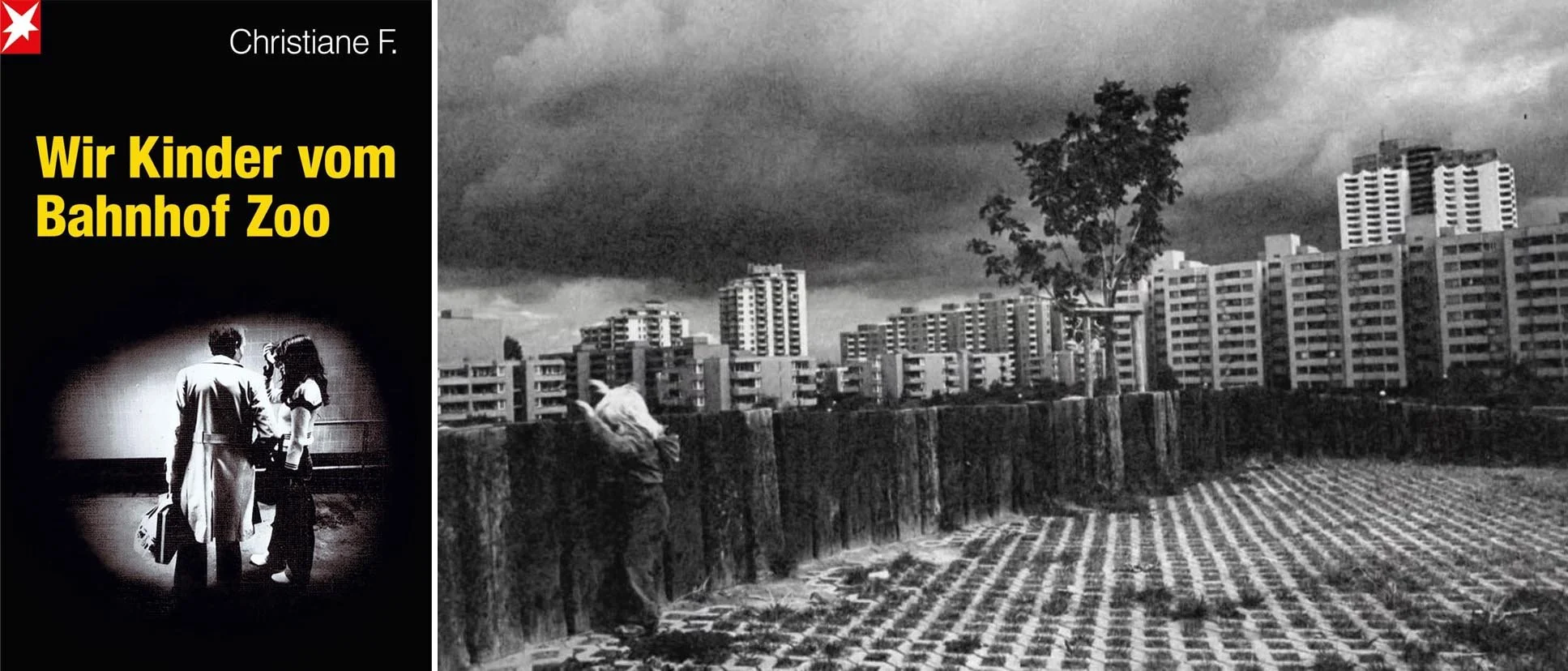
Book Cover · Gropiusstadt
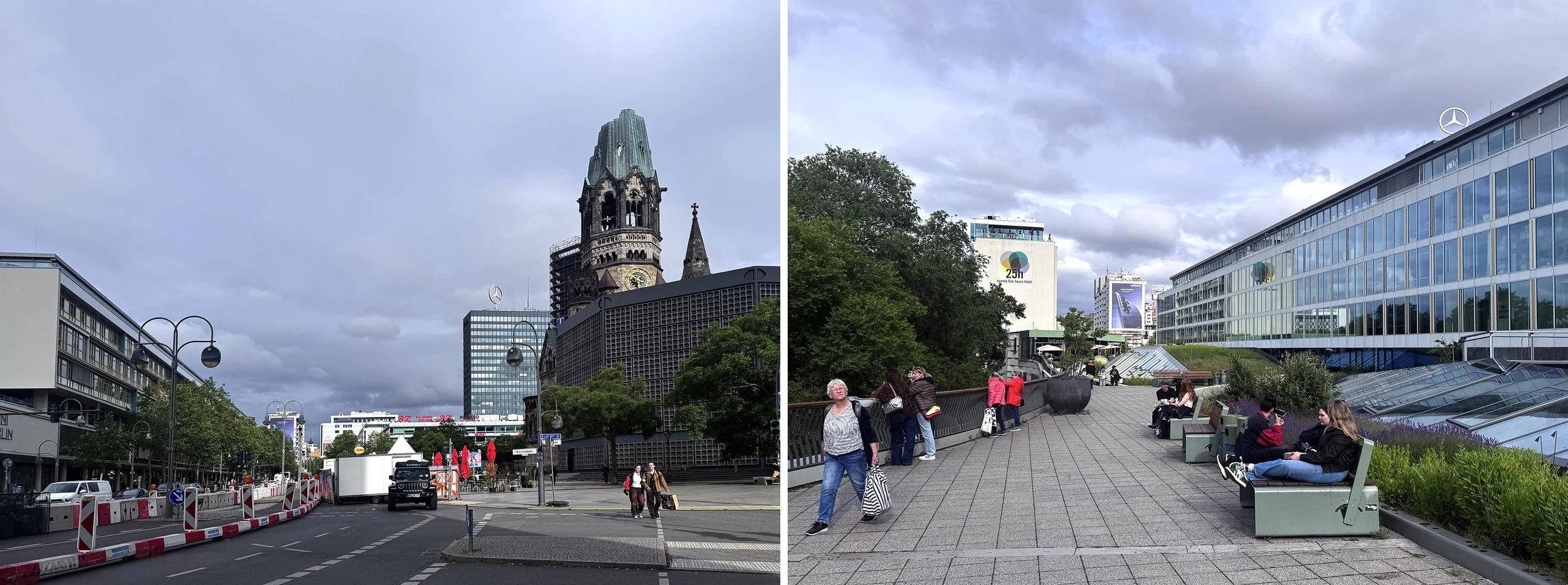
Bikini Berlin
As Khaled and I sat later that afternoon sharing drinks and reminiscing about Egypt, the UAE, and our years as graduate students, I finally began to understand why this visit felt different from my earlier encounters with Berlin. The city was forcing me to think about Cairo.
One of the central themes explored in the Cairo chapter of Arab Modernism(s)is the relationship between modernization and erasure. Cairo has always been a city of contradictions. Informal settlements exist alongside gated communities. Historic neighborhoods coexist with speculative developments. Everyday urban life unfolds in spaces that planners often ignore or seek to eliminate. The city's vitality emerges precisely from these juxtapositions. Yet many contemporary interventions—from the redevelopment of Maspero to the construction of the New Administrative Capital—seek to resolve these contradictions through demolition, relocation, and spatial control.
Walking through Berlin made me realize that the issue is not contradiction itself. Every great city is contradictory. The real question is how cities respond to those contradictions. Berlin appears remarkably comfortable allowing them to remain visible. Wealthy districts sit alongside more modest neighborhoods. Migrant communities retain a visible presence. Traces of previous eras survive even amid redevelopment. The city changes constantly, yet it rarely feels compelled to erase what came before.
Cairo increasingly seems to move in the opposite direction. Complexity becomes a problem to solve. Informality becomes something to remove. Memory becomes something to manage. Difference becomes something to resolve. Of course, Berlin is hardly a utopia. It faces its own challenges: rising housing costs, displacement, social tensions, and debates over immigration and identity. Yet what impressed me was the city's willingness to embrace incompleteness. Berlin often feels unfinished, and perhaps that is precisely its strength.
On my final evening, I walked through the forest toward Schlachtensee, a bucolic lake. The rain had largely stopped. The lake was calm. Across the water, lights flickered through the trees. And in the distance I saw my destination -- the Fischerhütte Restaurant (Fisher Hut restaurant) where a delicious seafood dinner was waiting! I realized that I had spent three days in Berlin without visiting most of its famous monuments. Instead, my memories consisted of conversations with scholars, meals shared with friends, encounters with migrants, walks through neighborhoods, and reflections on cities far beyond Germany.
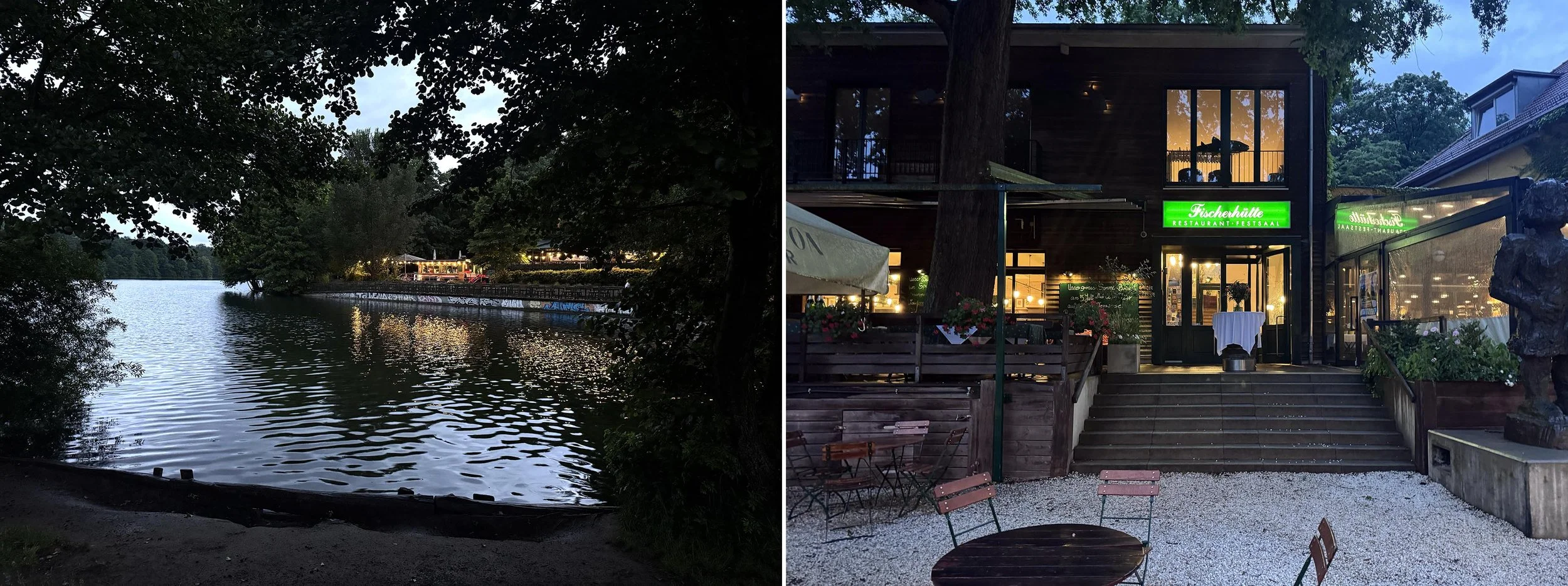
Schlachtensee · Restaurant
Perhaps that is the true lesson of Berlin.
Cities are not defined by their monuments, skylines, or master plans. They are defined by their capacity to absorb difference, accommodate memory, and allow multiple histories to coexist. Their vitality lies not in perfection but in the ability to remain open, layered, and unresolved.
As I looked across the dark waters of Schlachtensee one last time, I found myself thinking about Cairo once again. Not the Cairo of postcards or official narratives, but the Cairo of contradictions, improvisations, and everyday encounters. The Cairo that continues to survive despite repeated attempts to remake it.
Berlin had not provided answers. But it had helped clarify the question. What if the future of cities depends less on eliminating contradictions than on learning how to live with them?
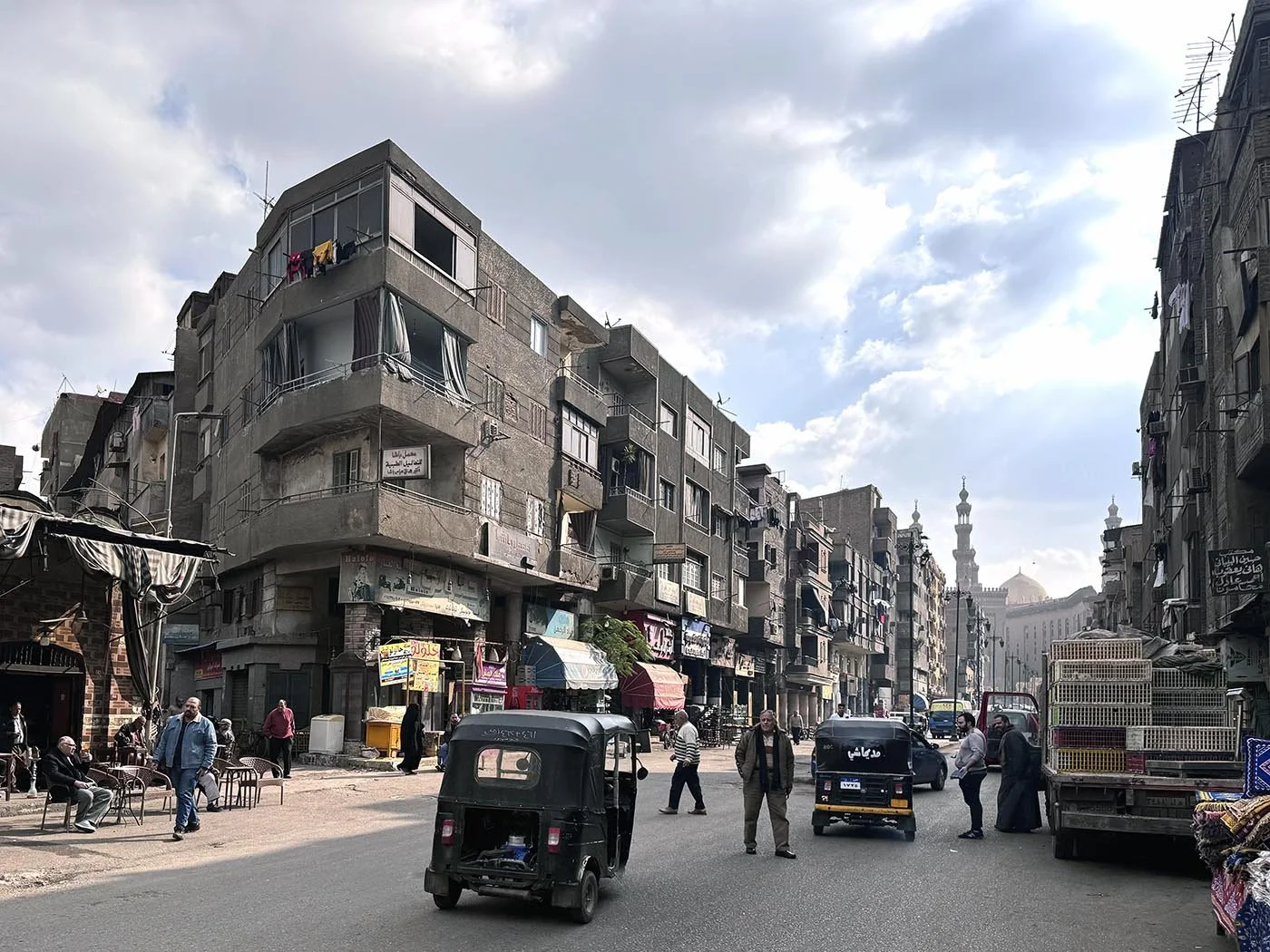
Mohamed Ali Street. Cairo
If this is of interest, I invite you to peruse the Cairo chapter in my book Arab Modernism(s). The book is available via the publisher and Amazon. And once published early 2027 further reflections on Cairo will be available in my upcoming book “My Cairo” (AUC Press)
