Part 2: Contextualizing Riyadh
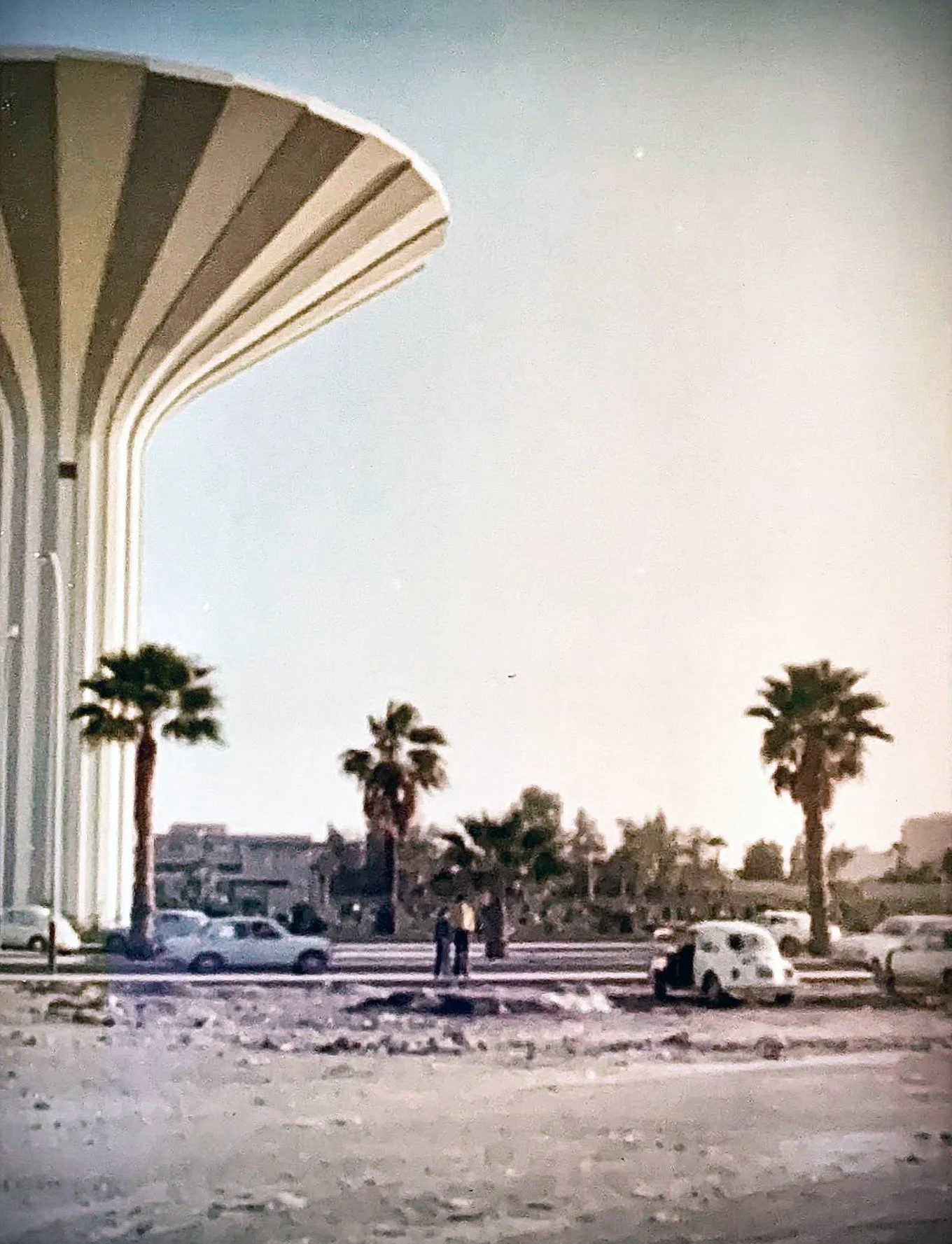
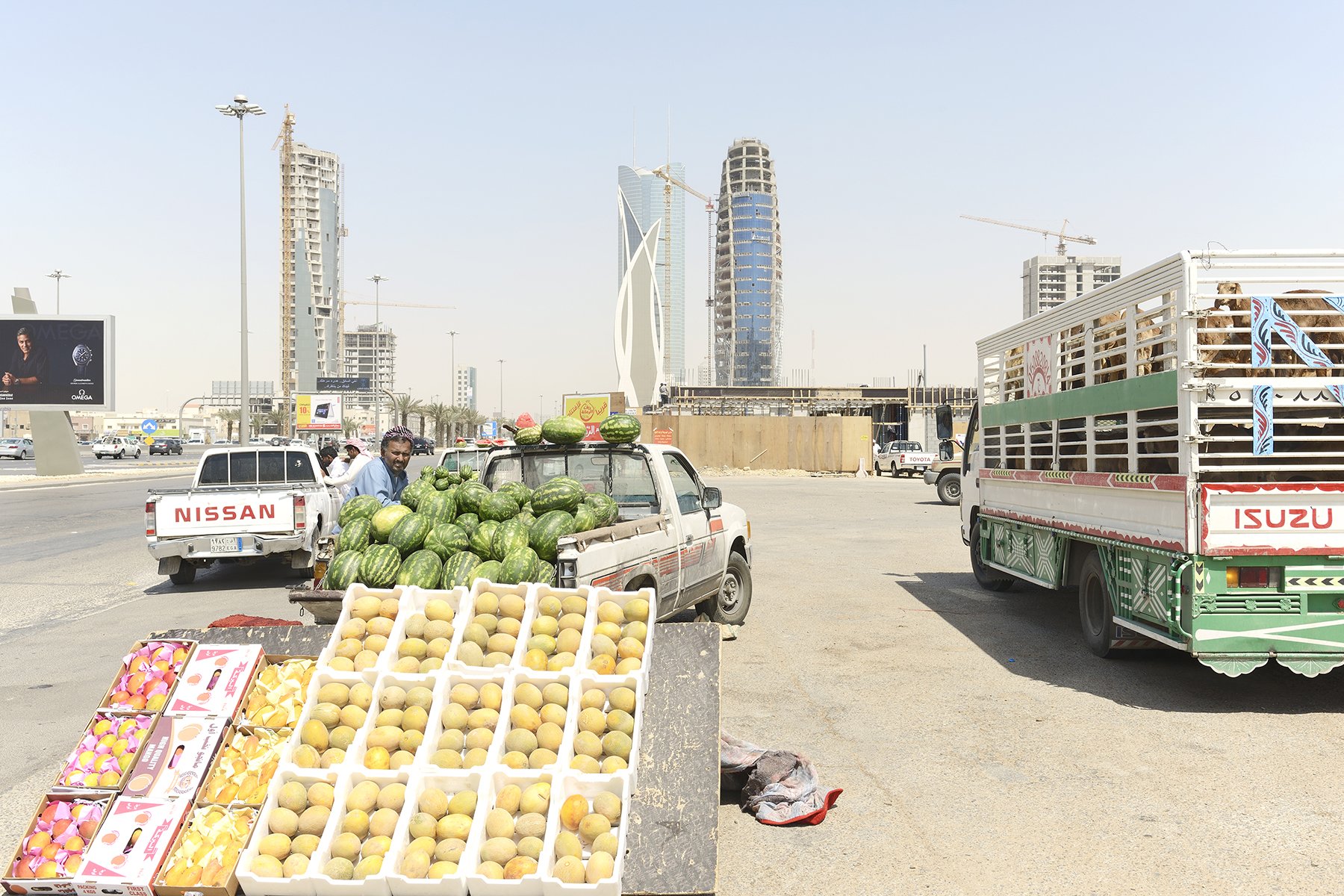
Watertower (Yasser Elsheshtawy). 1974. Fruit Vendor (Michele Nastasi). 2019
Part II examines Riyadh through the intertwined lenses of representation and urban history, arguing that the city’s contemporary condition can only be understood by connecting how it has been seen with how it has evolved. Chapter 4 foregrounds photography as a critical mode of urban inquiry, challenging persistent stereotypes that depict Riyadh as closed, abstract, or dominated by spectacle. Moving from early Orientalist and foreign documentary images to the work of contemporary Saudi photographers, the chapter highlights everyday scenes—streets, parks, walking paths, informal markets, and migrant spaces—to reveal a city animated by human presence, appropriation, and encounter. These visual narratives restore agency to residents and expose forms of urban life often absent from official representations. Chapter 5 situates these lived scenes within a longer historical trajectory, tracing Riyadh’s transformation from a mud-walled settlement to a sprawling, car-oriented metropolis shaped by modernist planning, oil-driven expansion, and successive master plans. Rather than invoking nostalgia, the chapter emphasizes continuity, adaptation, and change, positioning the humanization initiative as a corrective response to decades of suburbanization and spatial fragmentation .
AR EN
Chapter 4. Scenes from Riyadh: Spaces of Encounter and Exchange

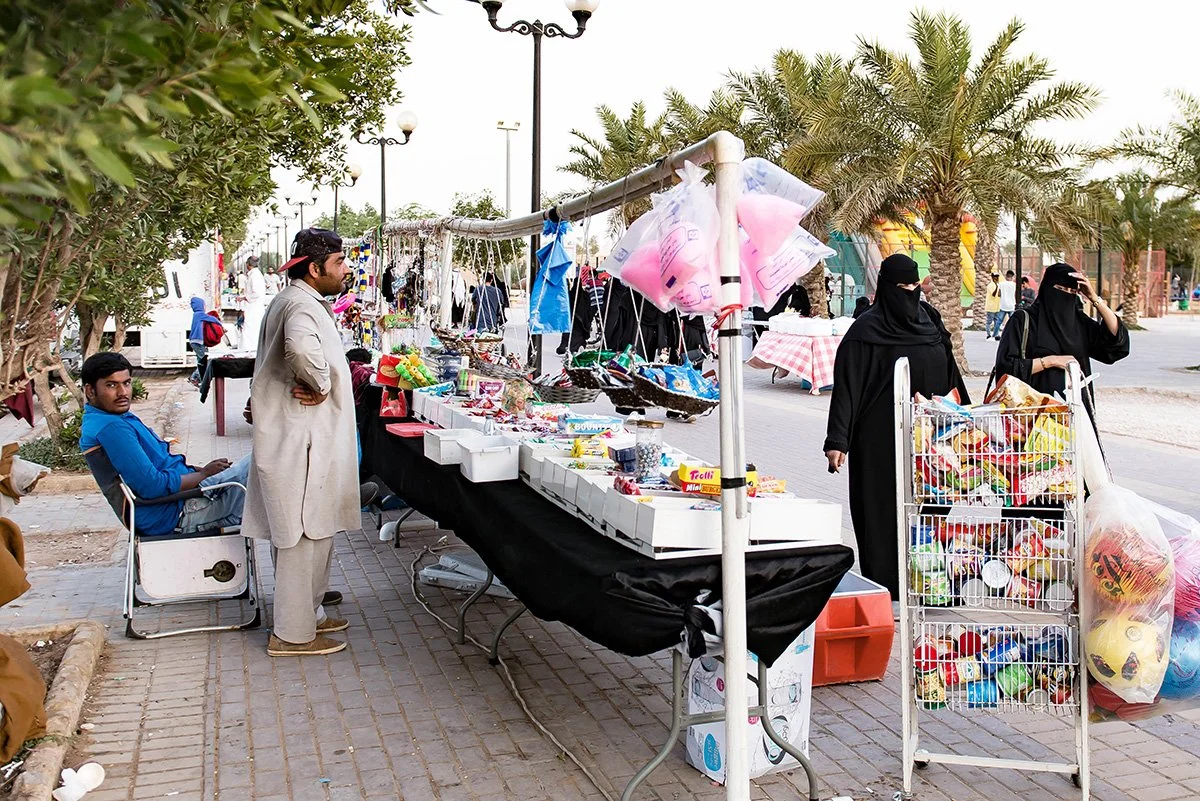
“The Last Commute” (Sami Al-Amri) — Okaz Environmental Park (Elsheshtawy)
Chapter 4 explores how Riyadh has been visually represented, arguing that photography can challenge stereotypes of the city as closed or devoid of public life. It situates contemporary anxieties about street photography within a longer history of Orientalist and journalistic images that framed the region through simplistic contrasts of tradition and modernity. While such images hold documentary value, they often reinforce reductive narratives. The chapter highlights local photographers who foreground everyday life and informality. Through archival material and a photo essay, it presents Riyadh as a socially animated, human city, reinforcing the book’s argument for people-centered urbanism.
Chapter 5. Riyadh’s Urban Growth and Development: A Historical Overview
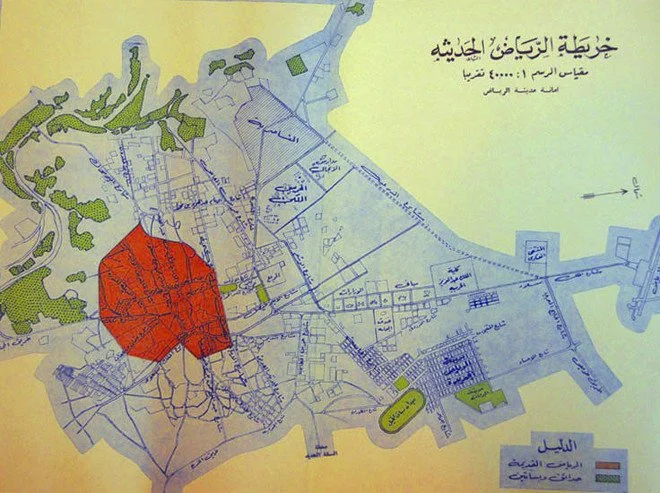
Riyadh. 1960s
Chapter 5 traces Riyadh’s transformation from a mud-walled settlement into a sprawling modern metropolis shaped by oil wealth, political authority, and modernist planning. It examines early state-building projects in the 1950s, including the Malaz district, and the decisive influence of the Doxiadis masterplan, which institutionalized car-oriented growth, superblocks, and suburban sprawl. Subsequent planning revisions and recent efforts toward public transport and multi-centered development are discussed. The chapter also critiques international media portrayals that emphasize spectacle over lived reality, concluding that the humanization initiative emerged as a corrective to decades of car-dominated urban expansion.