Part 3: Humanizing Riyadh
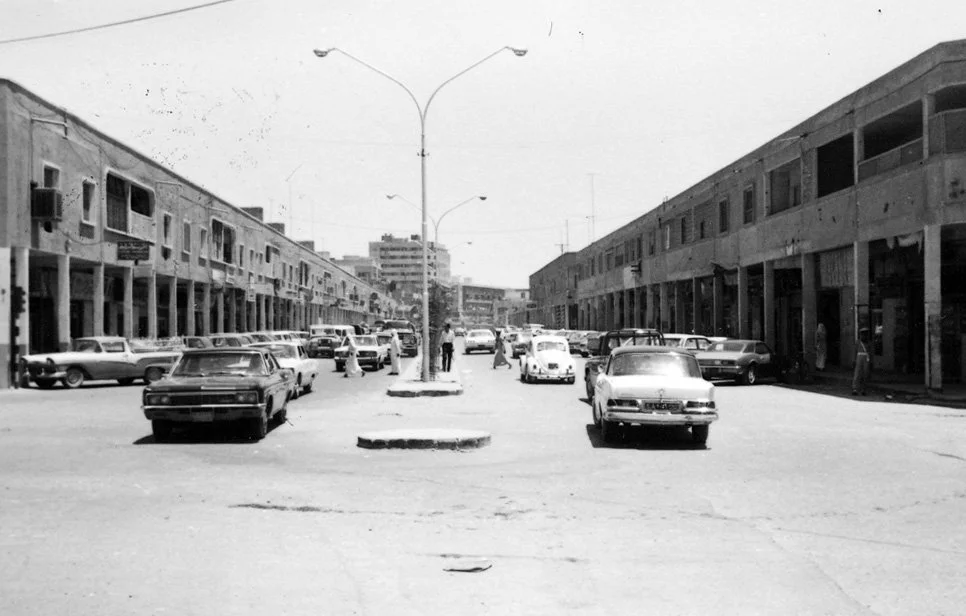
Wazir Street. 1970s
Part III forms the empirical and analytical core of the book, examining how Riyadh’s humanization agenda materializes on the ground through streets, parks, landscapes, and informal economies. Chapters 6 and 7 focus on movement and public life, tracing how walking paths, reconfigured streets, and everyday encounters challenge Riyadh’s long-standing car-oriented paradigm and reveal a city increasingly negotiated at pedestrian scale. Chapter 8 turns to green urbanism, dismantling the cliché of the “desert city” by documenting Riyadh’s parks, wadis, and emerging ecological infrastructure, from Wadi Hanifa to neighborhood gardens, and showing how greenery functions as both environmental strategy and social refuge. Chapter 9 examines informality—street vendors, food trucks, farmers’ markets, and used-goods markets—arguing that regulated informality has become a critical driver of urban vibrancy, inclusion, and economic survival. These practices reveal a city that tolerates ambiguity and adapts formal planning to everyday needs. Chapter 10 synthesizes these findings, reflecting on Riyadh’s future amid megaprojects, governance reforms, and global planning trends, and argues that the city’s true transformation lies not in spectacle but in sustaining human-scale, inclusive, and lived urbanism
AR EN
Chapter 6 . A Flâneur in Riyadh: The Transformation of Tahlia Street
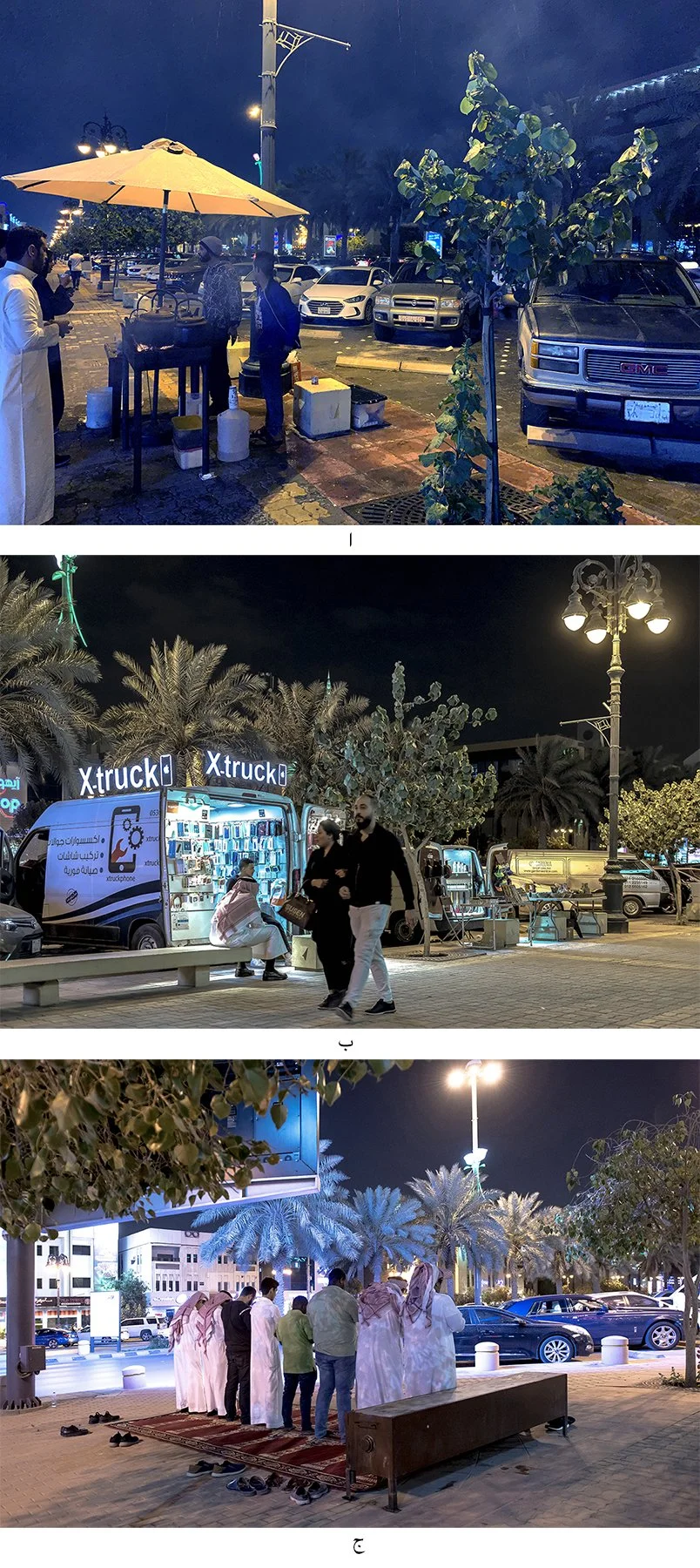
Chapter 6 analyzes the transformation of Tahlia Street as a key example of Riyadh’s shift toward people-centered urbanism. Situating streets historically as spaces of encounter, it contrasts car-oriented planning with recent efforts to reclaim public life. Comparing earlier arteries such as al-Wazir Street with Tahlia’s redevelopment, the chapter highlights widened sidewalks, traffic calming, and spaces for cafés and pedestrians under Prince Abdulaziz bin Ayyaf’s leadership. It explores the street’s role in shaping gender relations, youth culture, and sociability, while noting limits of inclusiveness and surrounding decline. Tahlia emerges as a symbolic and practical experiment in humane, locally grounded urbanism.
Chapter 7. Riyadh Drifting: Walking in the City
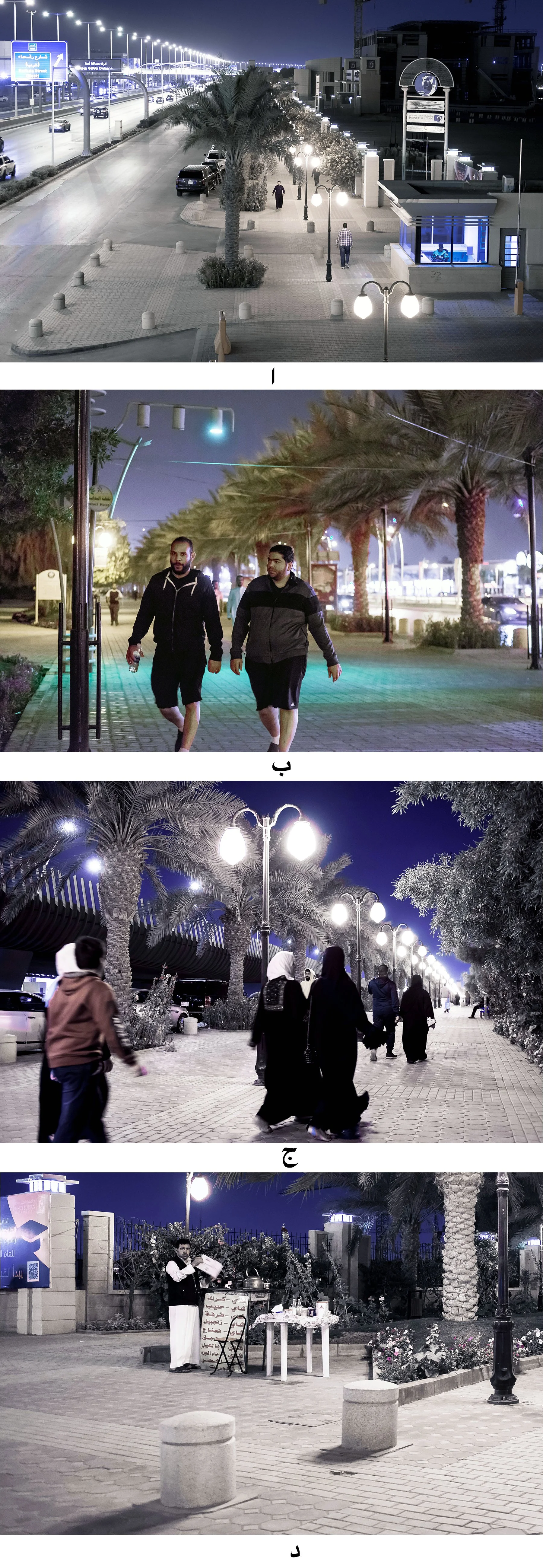
Chapter 7 examines walking as both a bodily practice and a form of urban knowledge, using drifting to rethink Riyadh beyond car-dominated planning. Drawing on thinkers from Ibn Sina to the Situationists and Michel de Certeau, it frames walking as a way of claiming space and producing meaning. The chapter situates Riyadh within global debates on walkability and public health, while noting climatic and cultural constraints. Through fieldwork and case studies of walking paths, it shows how municipal and citizen initiatives have normalized walking as exercise and sociability, arguing for an integrated pedestrian network central to Riyadh’s humanization agenda.
Chapter 8. Green Dreams: Reviving the Gardens of Riyadh
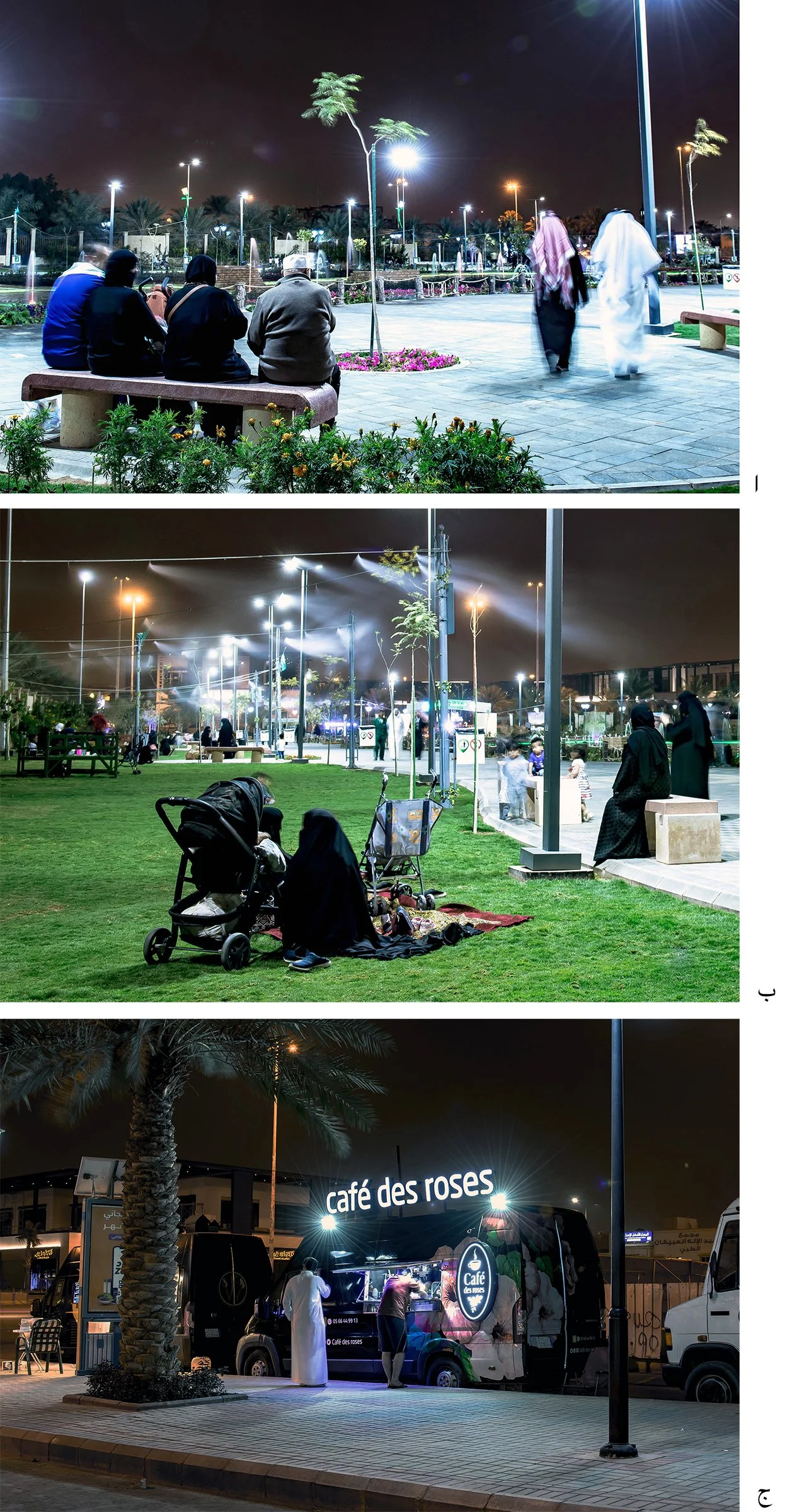
Chapter 8 challenges the stereotype of Riyadh as a “desert city” by tracing the historical and contemporary role of green space in its urban fabric. Referencing Ibn Battuta and the city’s name—meaning “gardens”—it frames current greening efforts as a recovery of urban memory. Engaging global debates on ecological urbanism, the chapter expands definitions of green space to include wadis and desert landscapes. Through mapping and fieldwork, it examines parks and the rehabilitation of Wadi Hanifah and Wadi al-Sulai, showing how these spaces foster everyday life while revealing tensions around access and regulation. Greening emerges as central to Riyadh’s humanization agenda.
Chapter 9. Regulating Informality: Spaces of Everyday Consumption in Riyadh
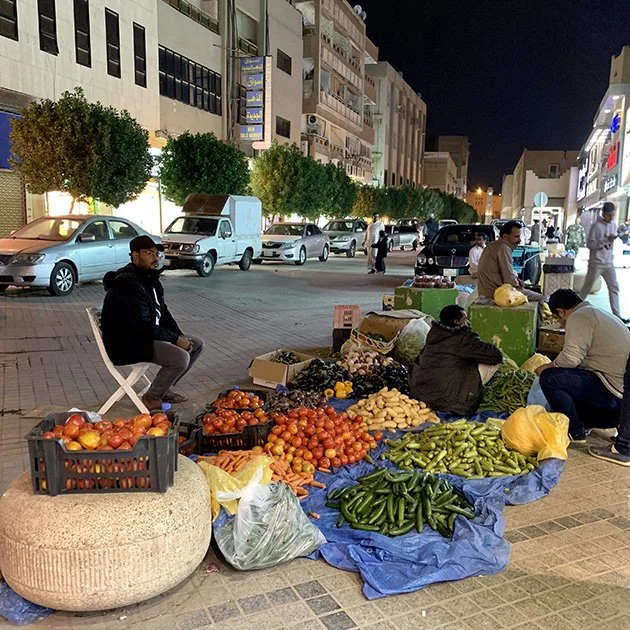
Chapter 9 explores informality as a source of urban vitality, arguing that it supports social inclusion, livelihoods, and meaningful public life. Drawing on Richard Sennett and Henri Lefebvre, it situates Riyadh within global debates on street markets and food cultures, comparing examples from New York, Singapore, Paris, and Rio de Janeiro. The chapter documents informal practices across Riyadh’s parks, plazas, and migrant neighborhoods. Under Prince Abdulaziz bin Ayyaf’s humanization initiative, policies integrated informal economies into the formal city. Case studies of vendor plazas and food trucks show how regulated informality can balance modernization with inclusiveness and everyday sociability.
Chapter 10. Conclusion: The Future of Riyadh
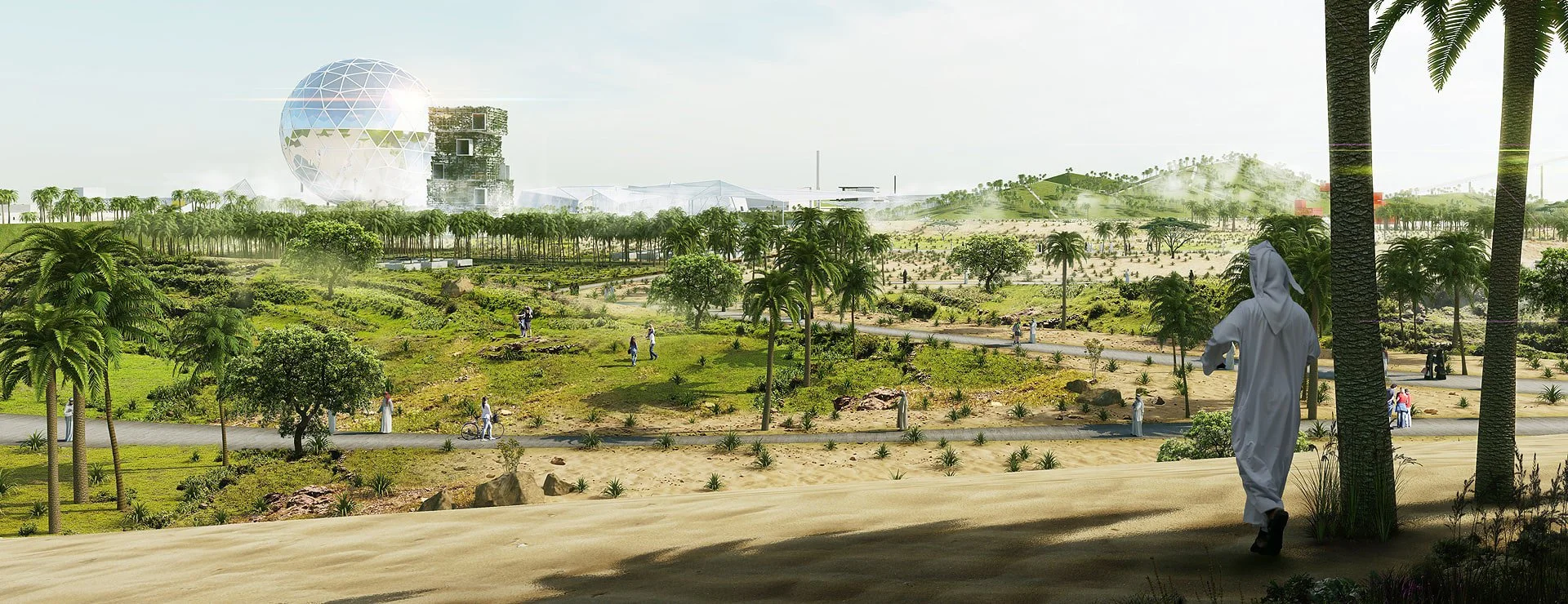
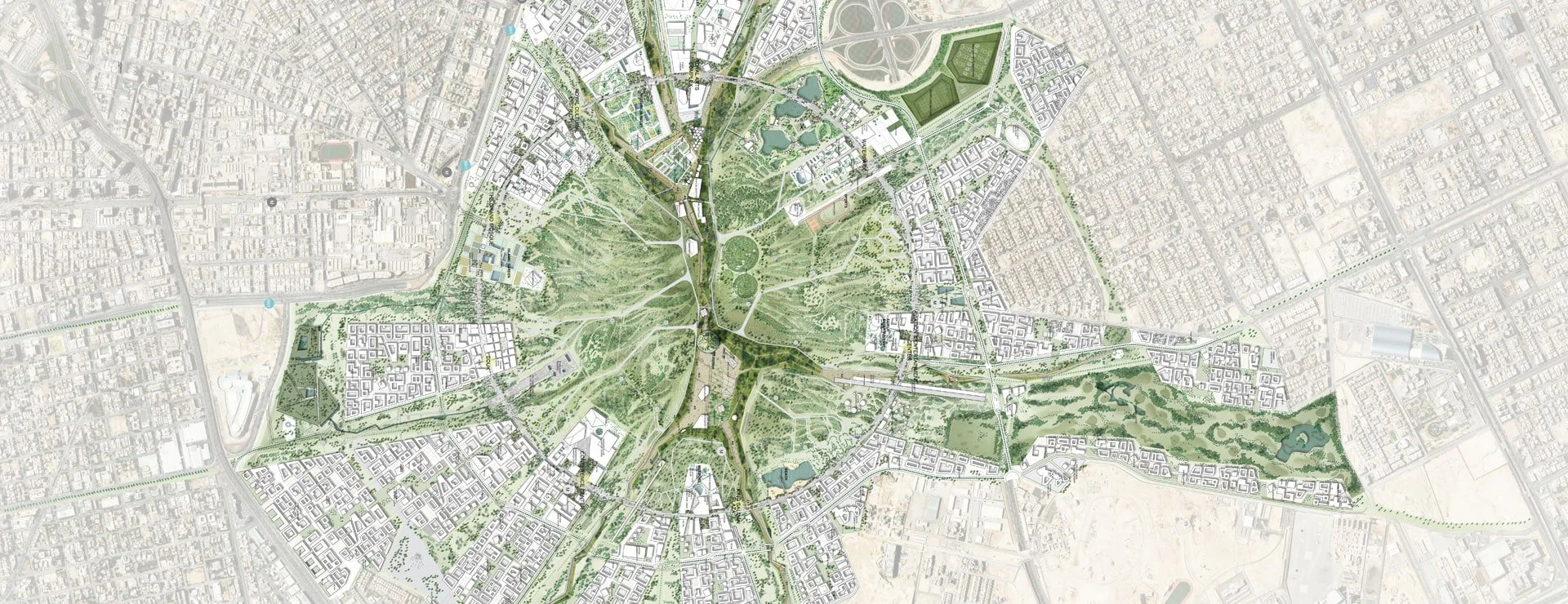
King Salman Park
Chapter 10 reflects on Riyadh’s ongoing transformation, challenging aerial views of endless sprawl with ground-level realities of parks, markets, and public life. It revisits the humanization initiative under Prince Abdulaziz bin Ayyaf as a shift toward streets, walking, and regulated informality. Assessing Vision 2030 projects such as King Salman Park, the Sports Boulevard, the Riyadh Metro, and Green Riyadh, it highlights a quality-of-life planning agenda while warning against spectacle-driven giga-projects and exclusion. The chapter concludes that Riyadh’s future depends on balancing megaproject ambition with sustained, neighborhood-scale, people-centered urbanism.