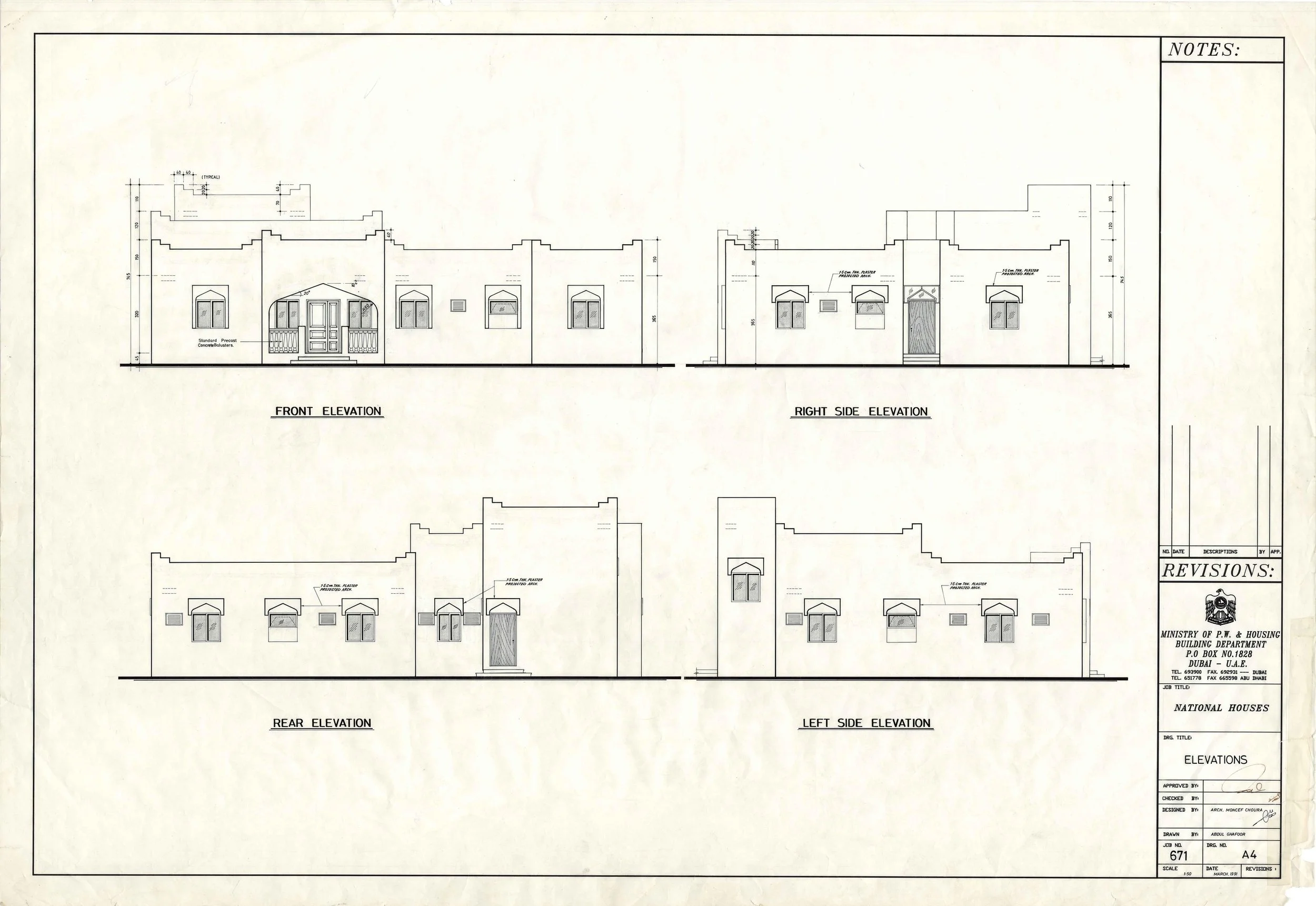
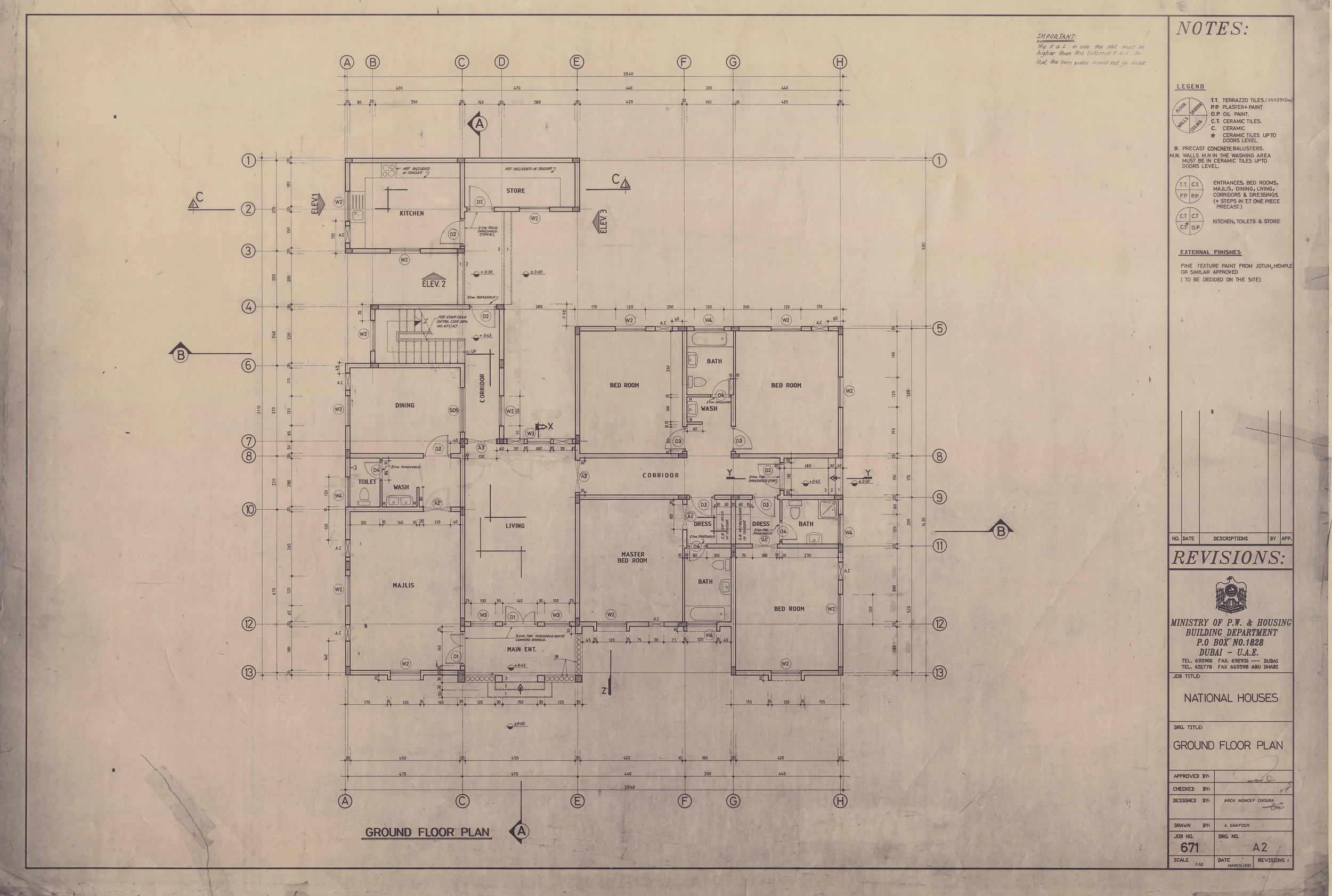
Blueprints of a Nation. Braun & Säckl, the Ministry of Public Works, and the Making of the Sha’abi Prototype
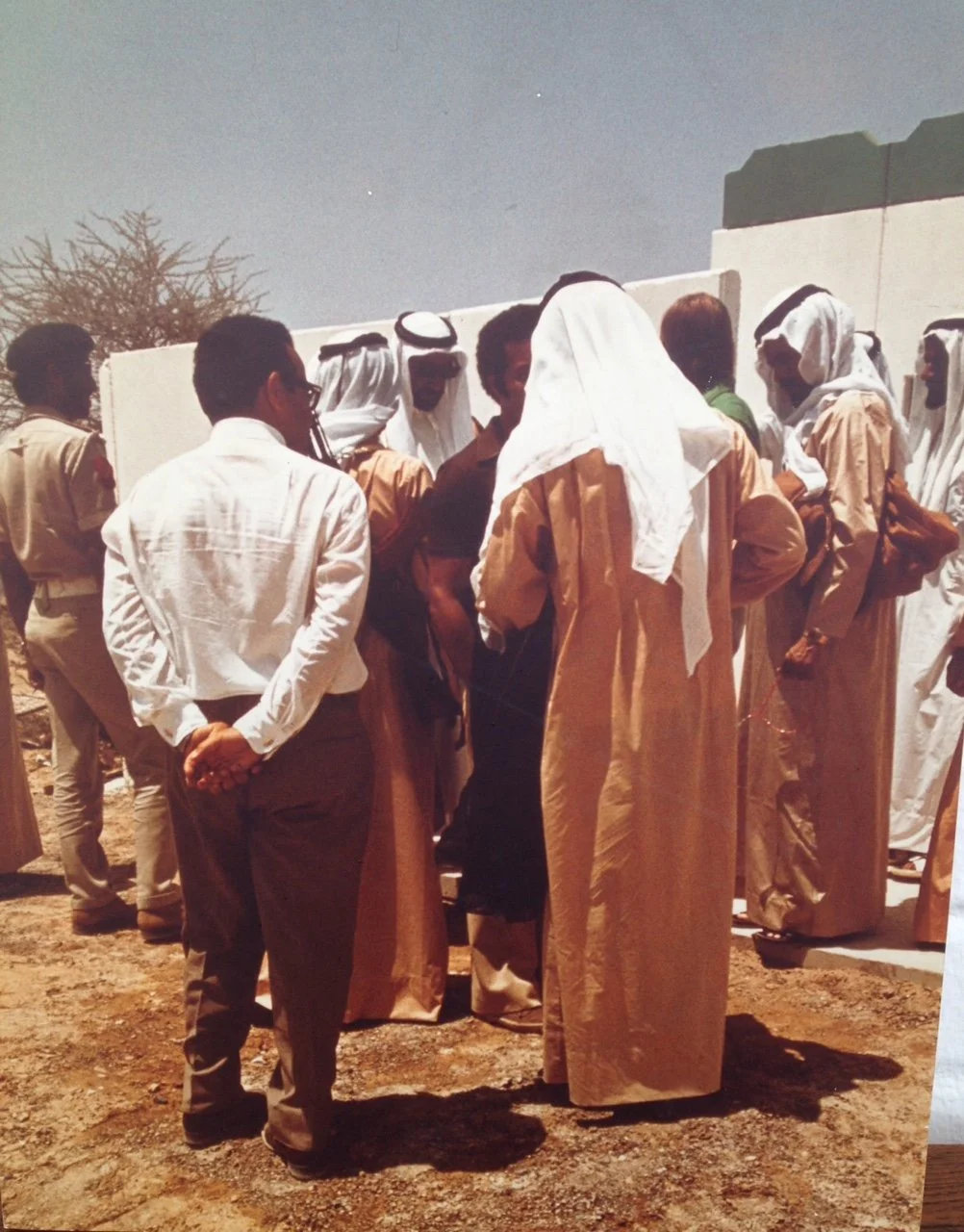
Sheikh Zayed during an inspection of the Sha’abi Prototype in Al-Ain. 1973
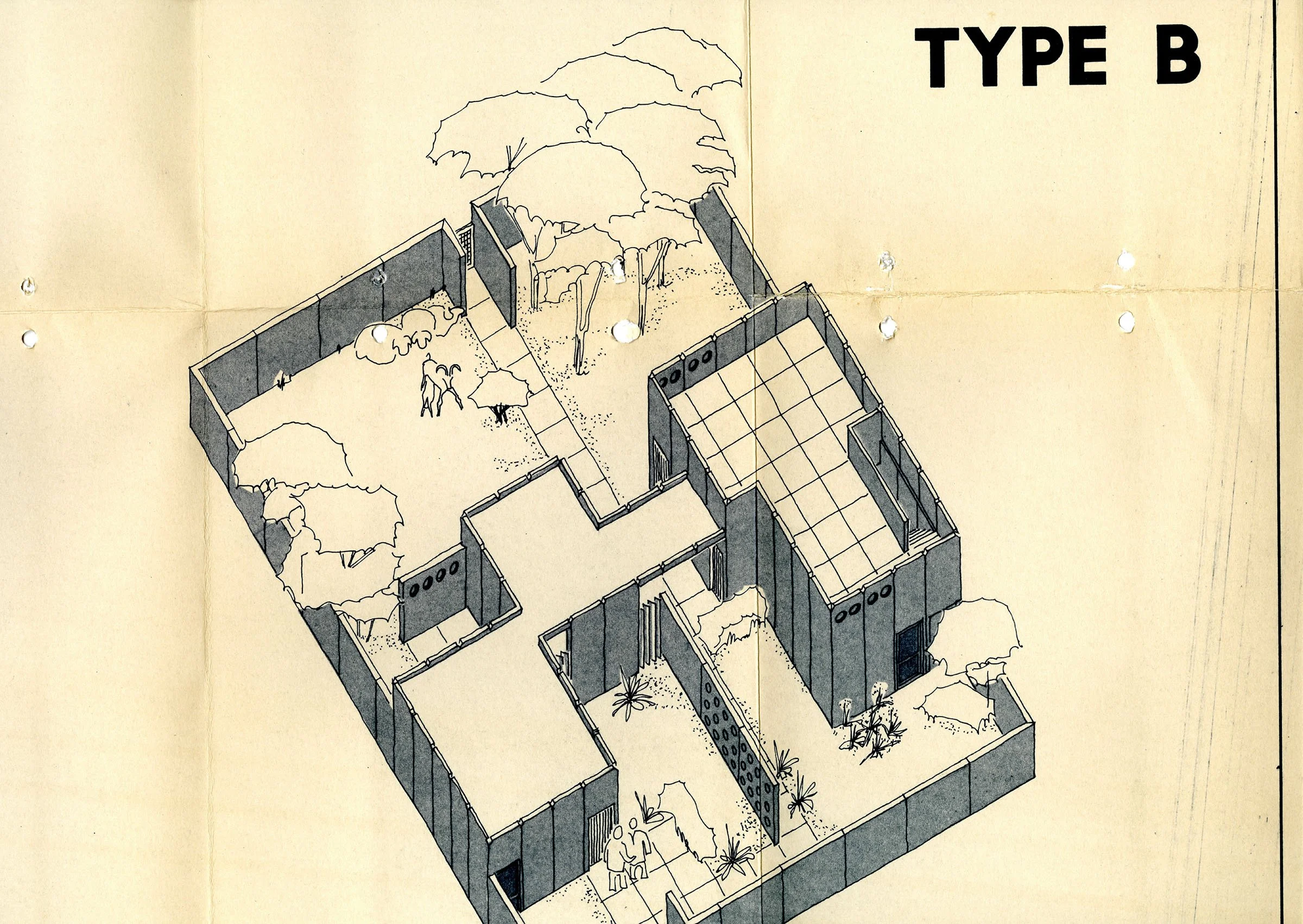
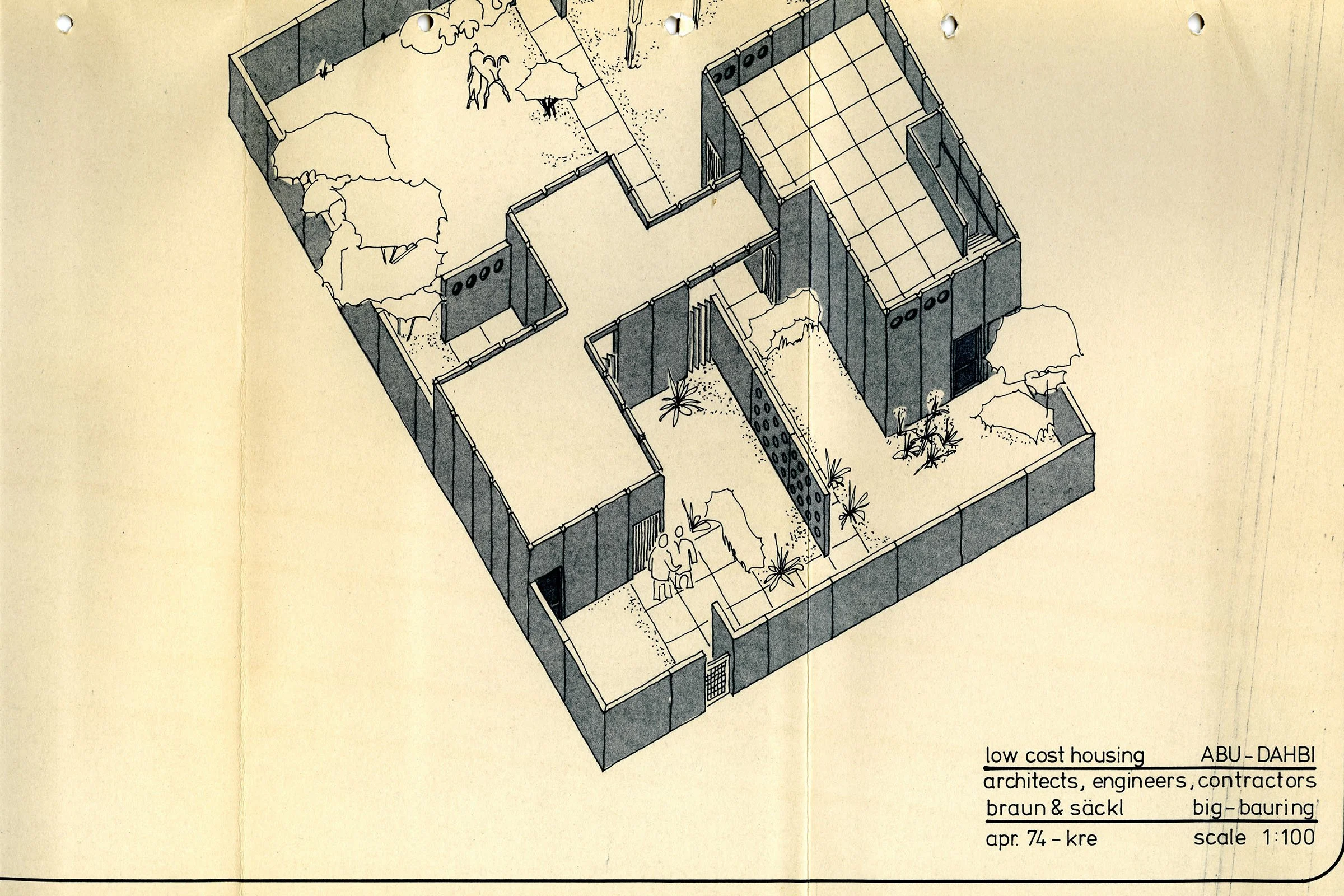
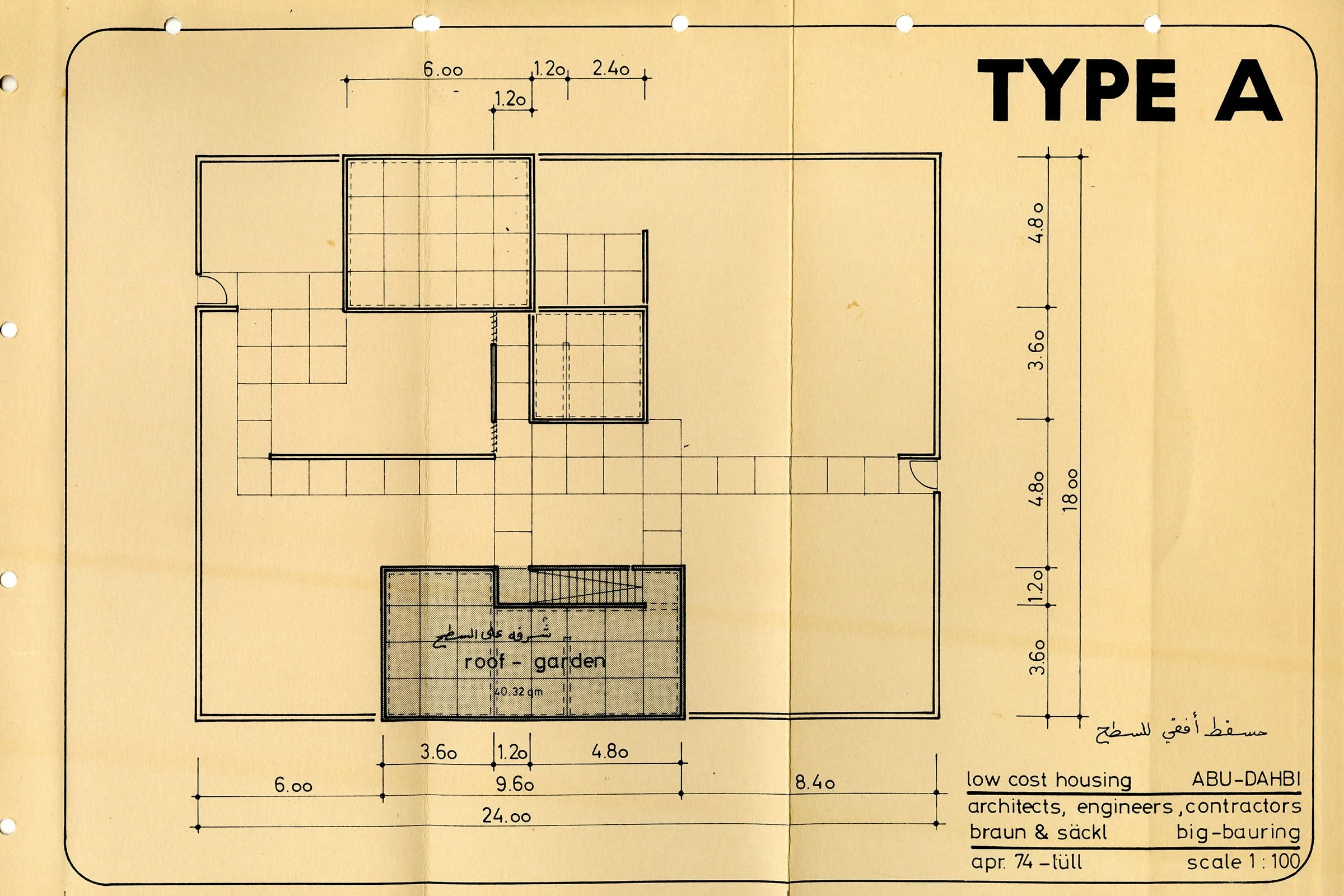
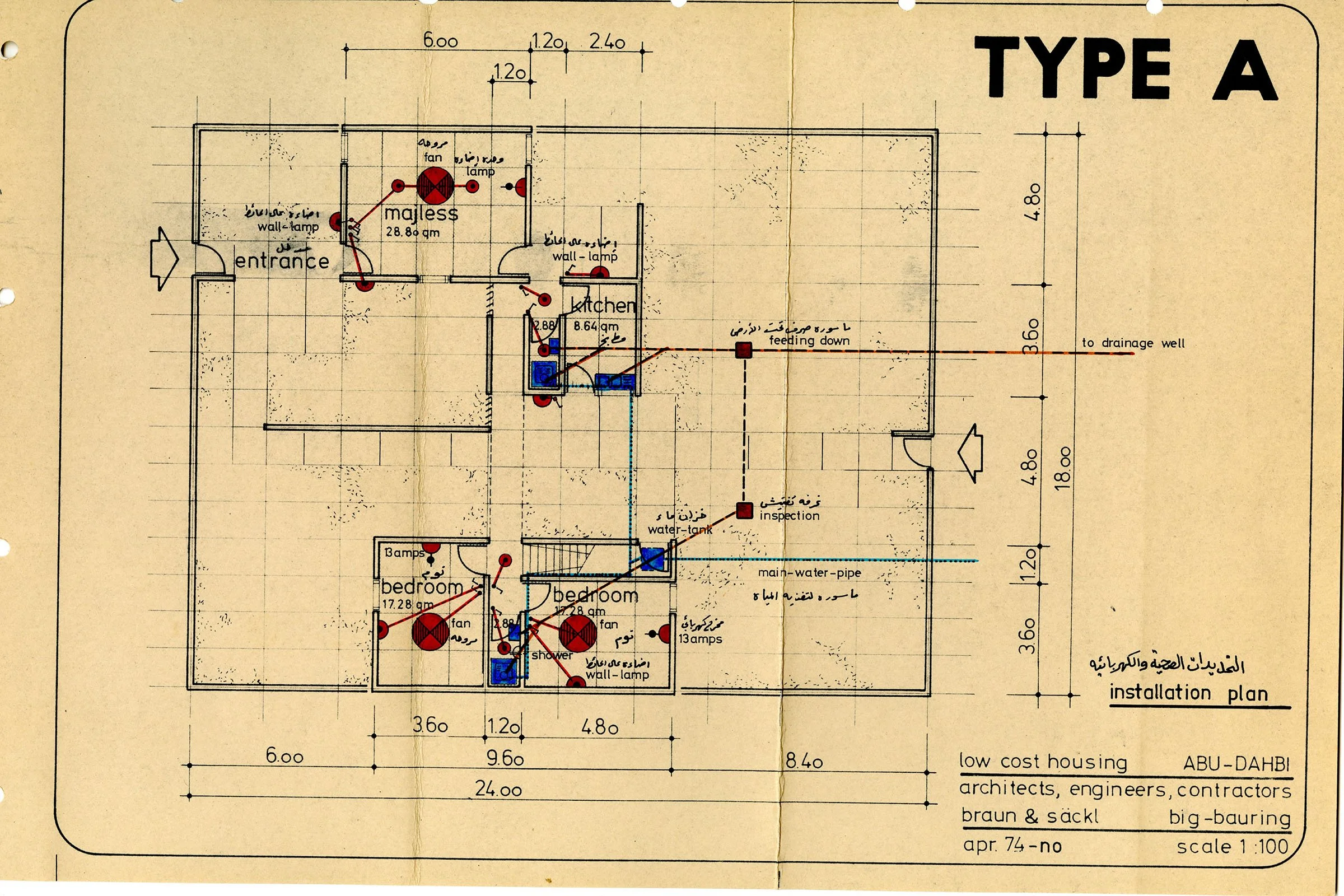
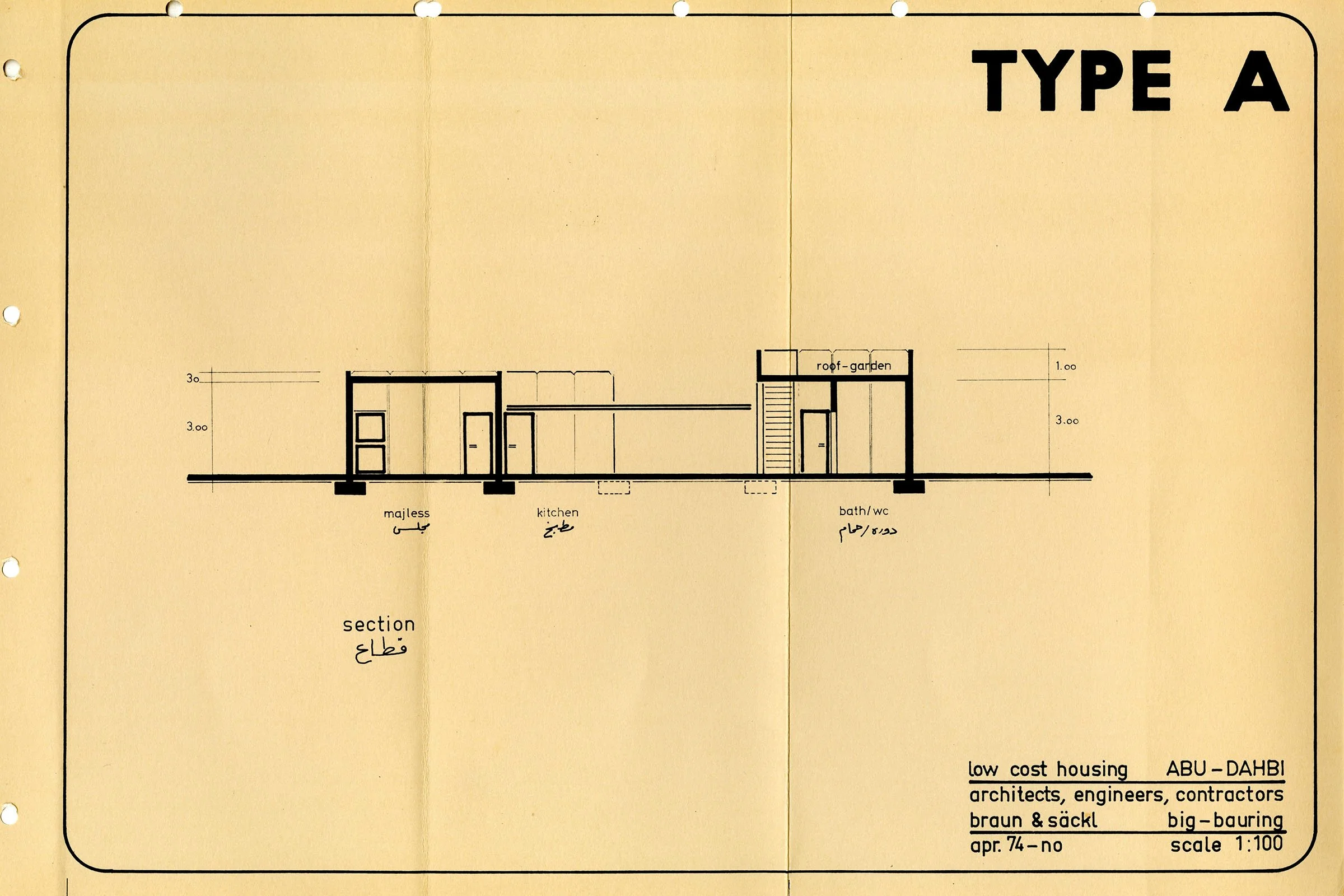
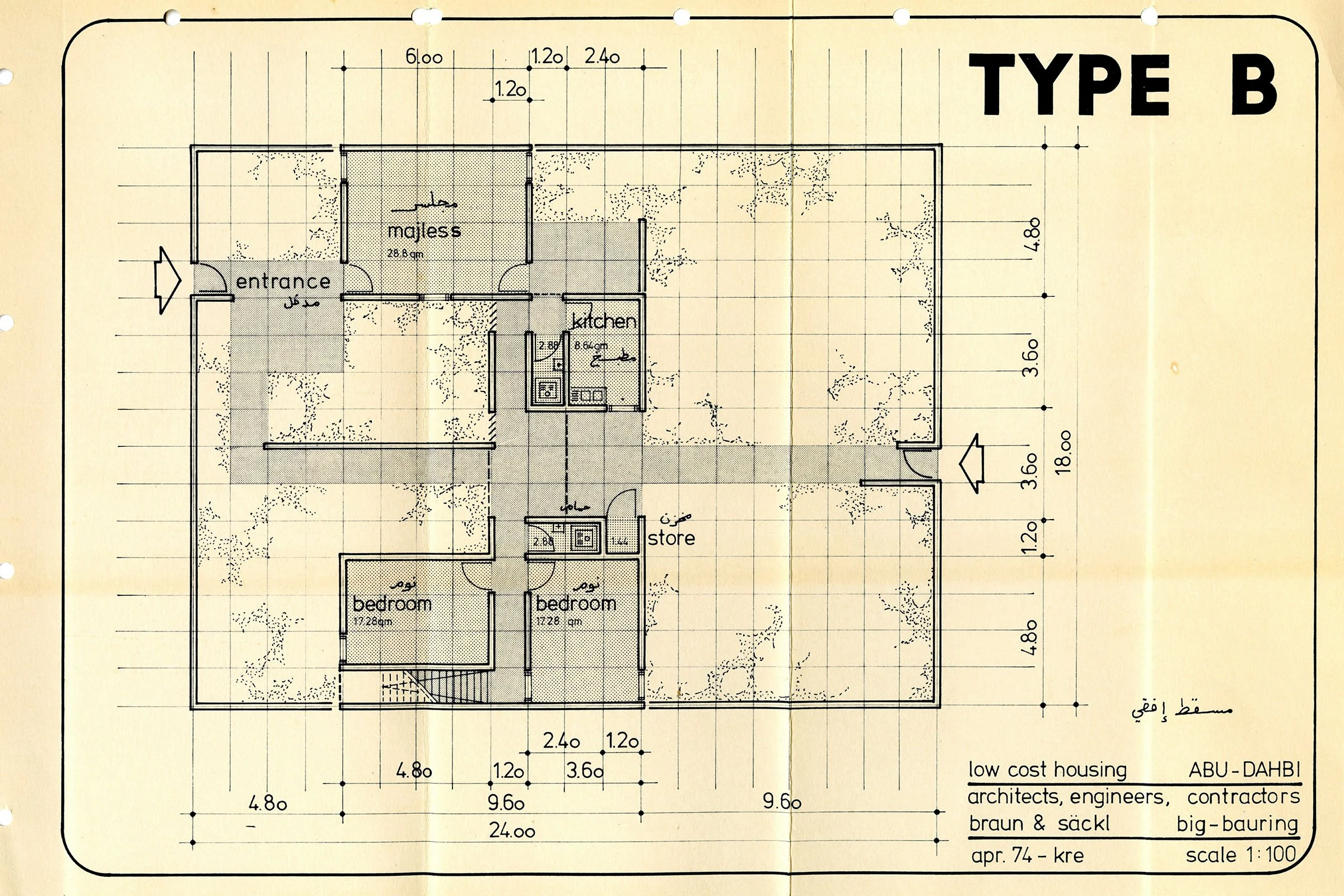
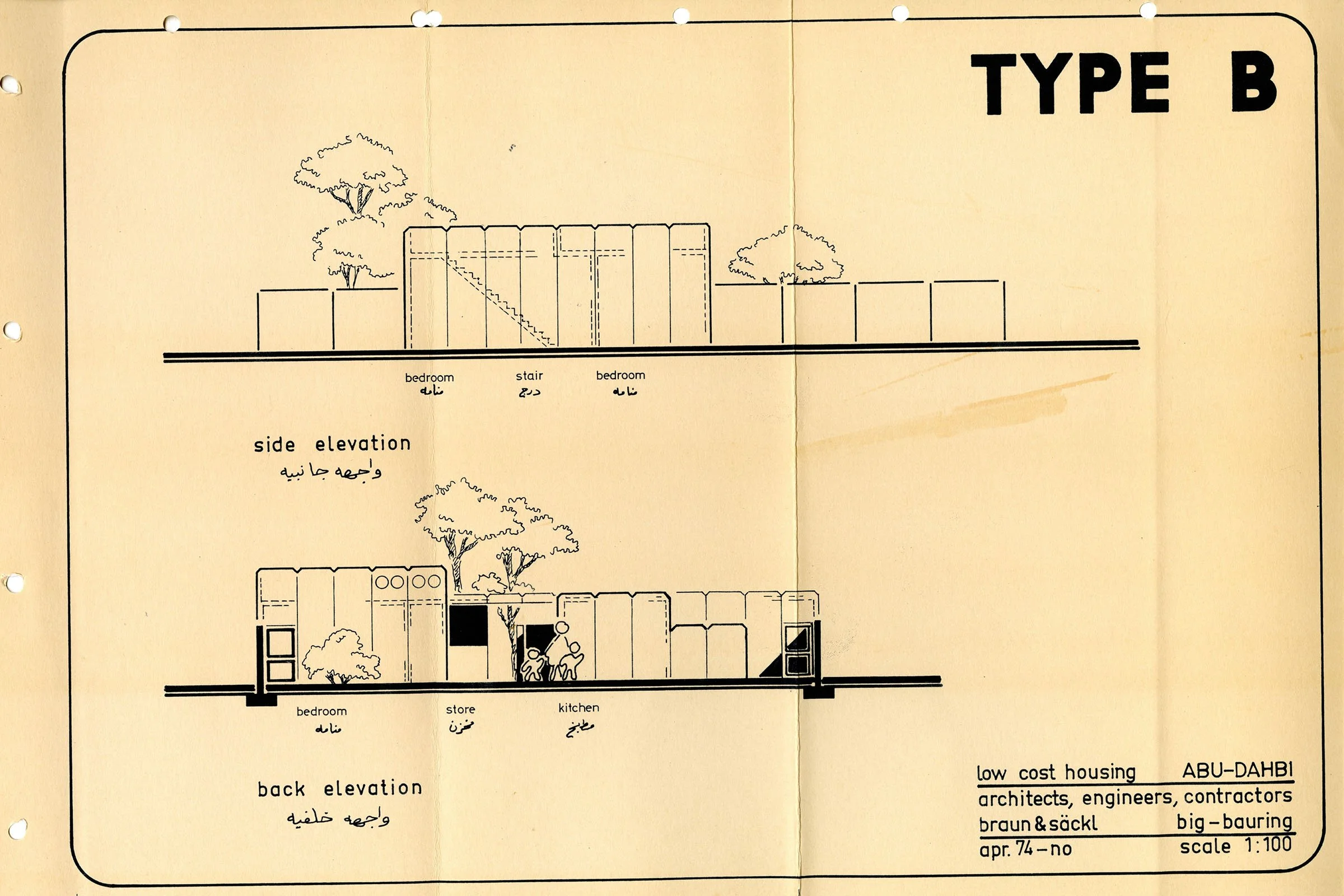
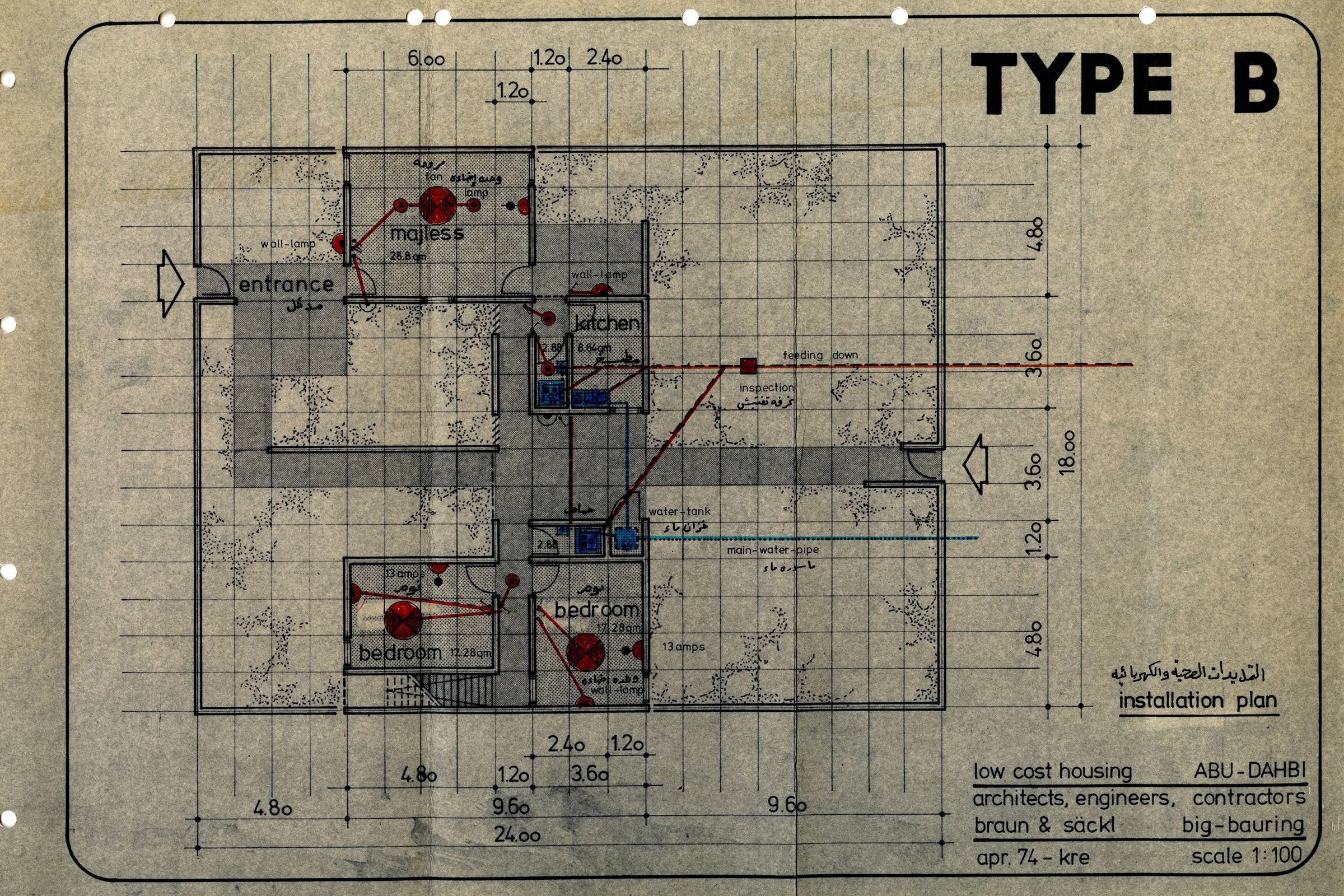
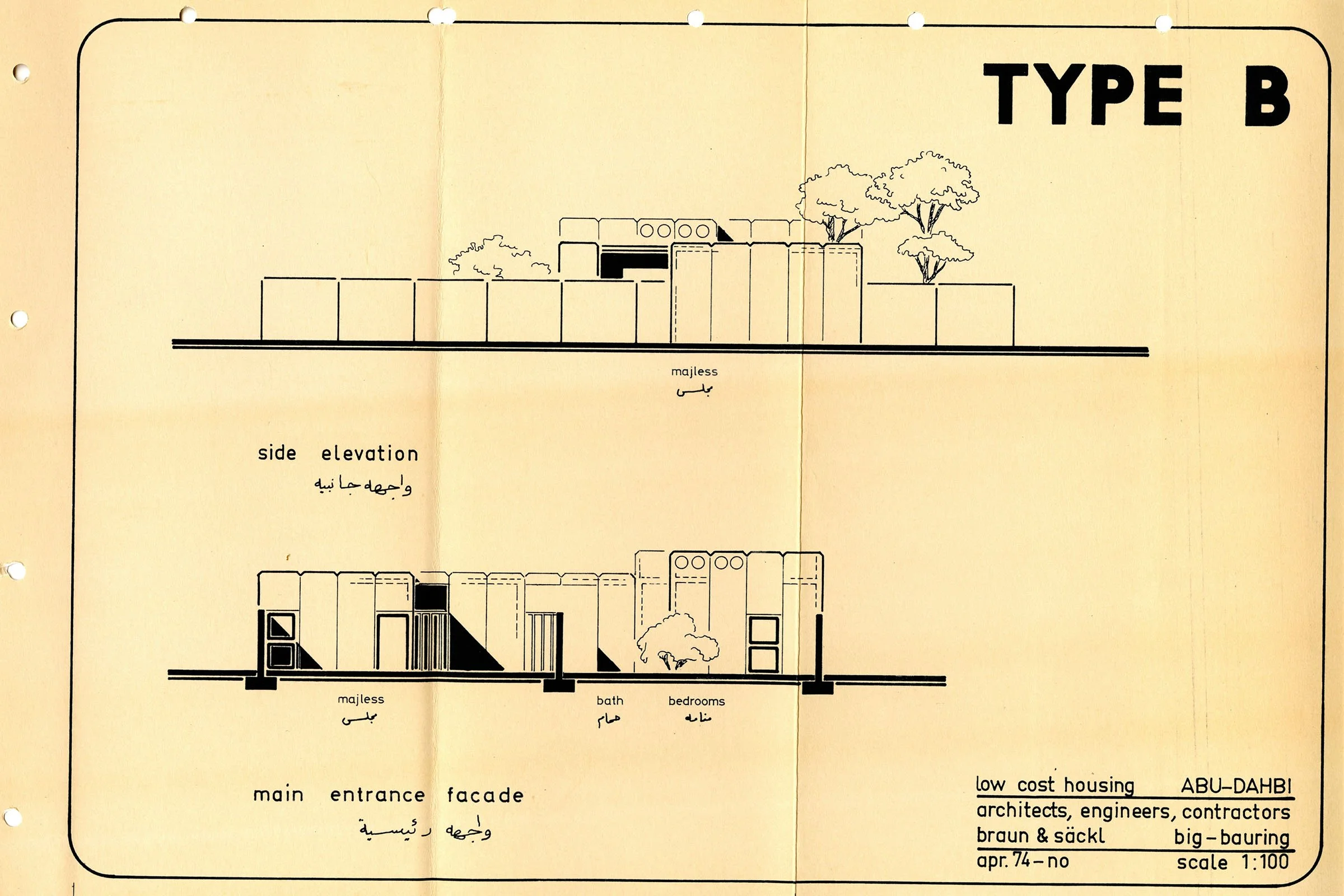
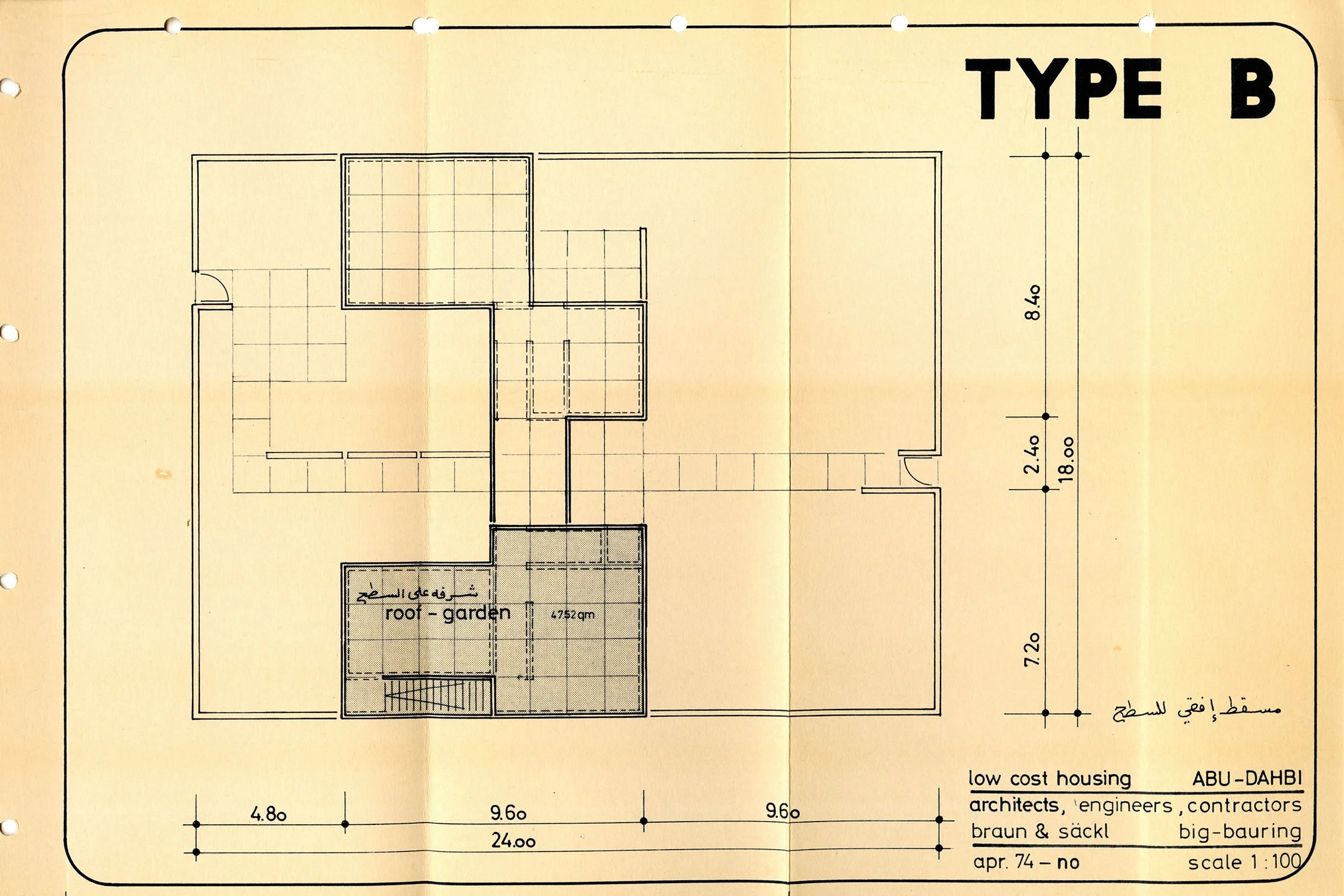
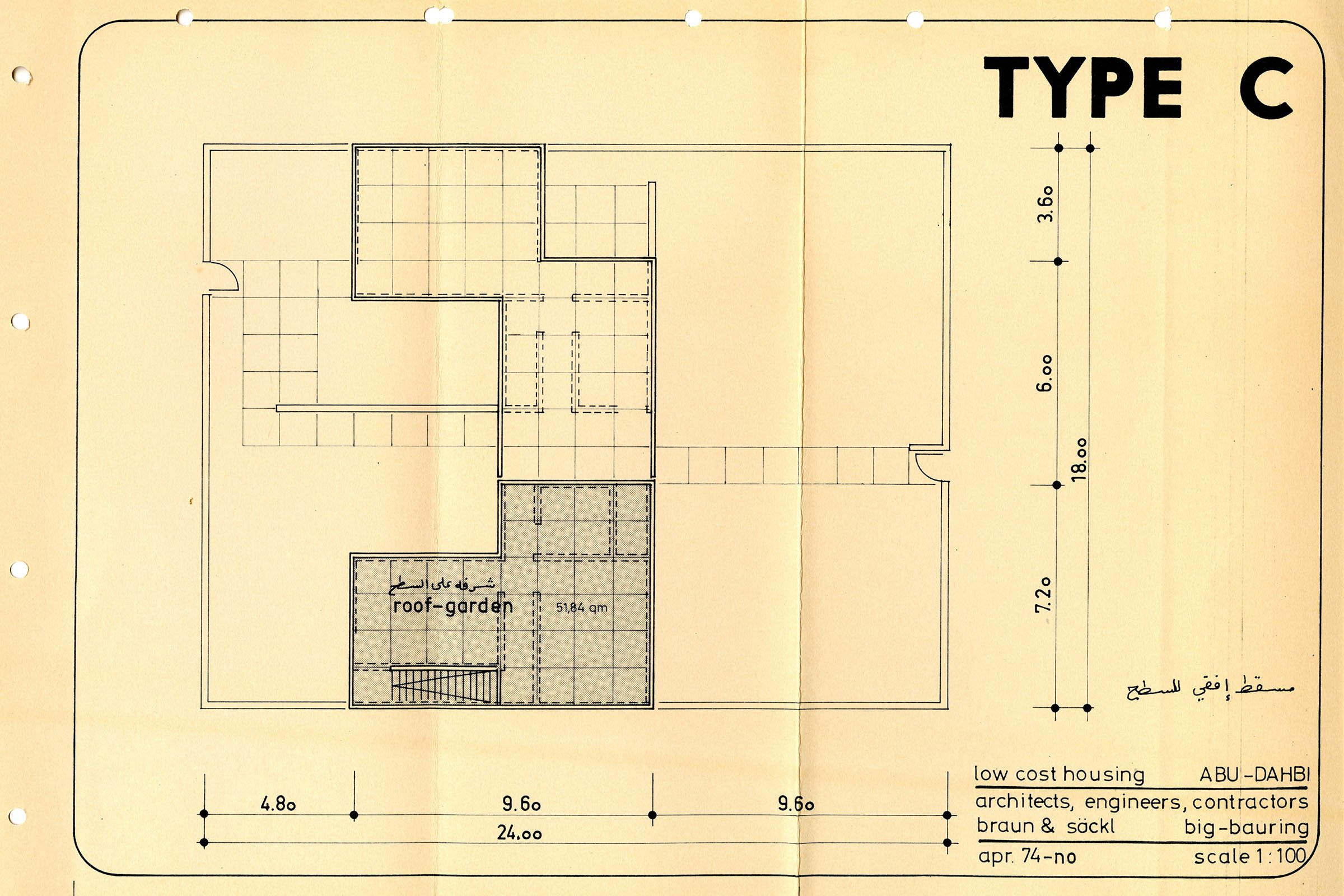
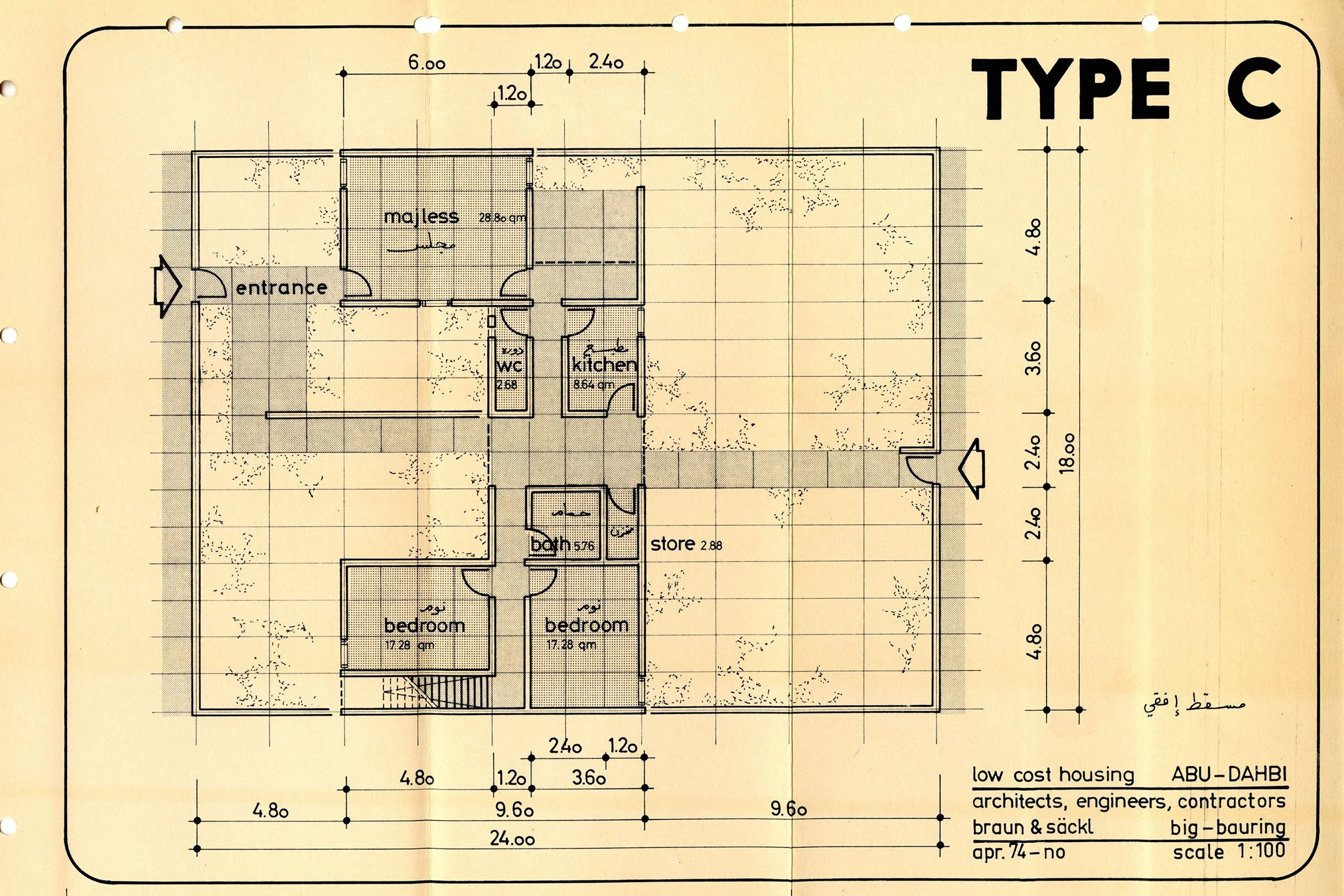
The interview conducted by Adina Hempel from Zayed University, with German architects Wolfgang Braun and Peter Säckl sheds light on a little-documented moment in the UAE’s rapid nation-building phase of the early 1970s, when international firms were drawn to the region’s ambitious development agenda. Trained in modernist principles influenced by the Bauhaus—Braun under Ernst Neufert at TU Darmstadt and Säckl at Kassel—the duo developed a prefabrication system (“Kasseler Bausystem”) that enabled fast, modular construction, making them attractive partners for large-scale housing projects. In 1973, Braun traveled to Abu Dhabi after an invitation linked to Sheikh Zayed’s push to create a culturally appropriate housing model for Bedouins; during a meeting in Al Ain with Sheikh Zayed and Sheikh Tahnoun, they were tasked with designing a courtyard-based house that respected privacy, gender separation, and local customs. At Zayed’s request, they constructed a full-scale prototype in Al Ain in summer 1974, shipping 30 tons of materials from Germany and completing the project under extreme desert conditions within two months. Although their proposal was ultimately not selected due to competitive bidding pressures, the project marked the beginning of their extensive work in the Middle East and illustrates the experimental, fast-paced, and globally entangled nature of early UAE urbanization—where modernist ideals, prefabrication technologies, and local cultural requirements intersected in shaping the Sha’abi house typology .
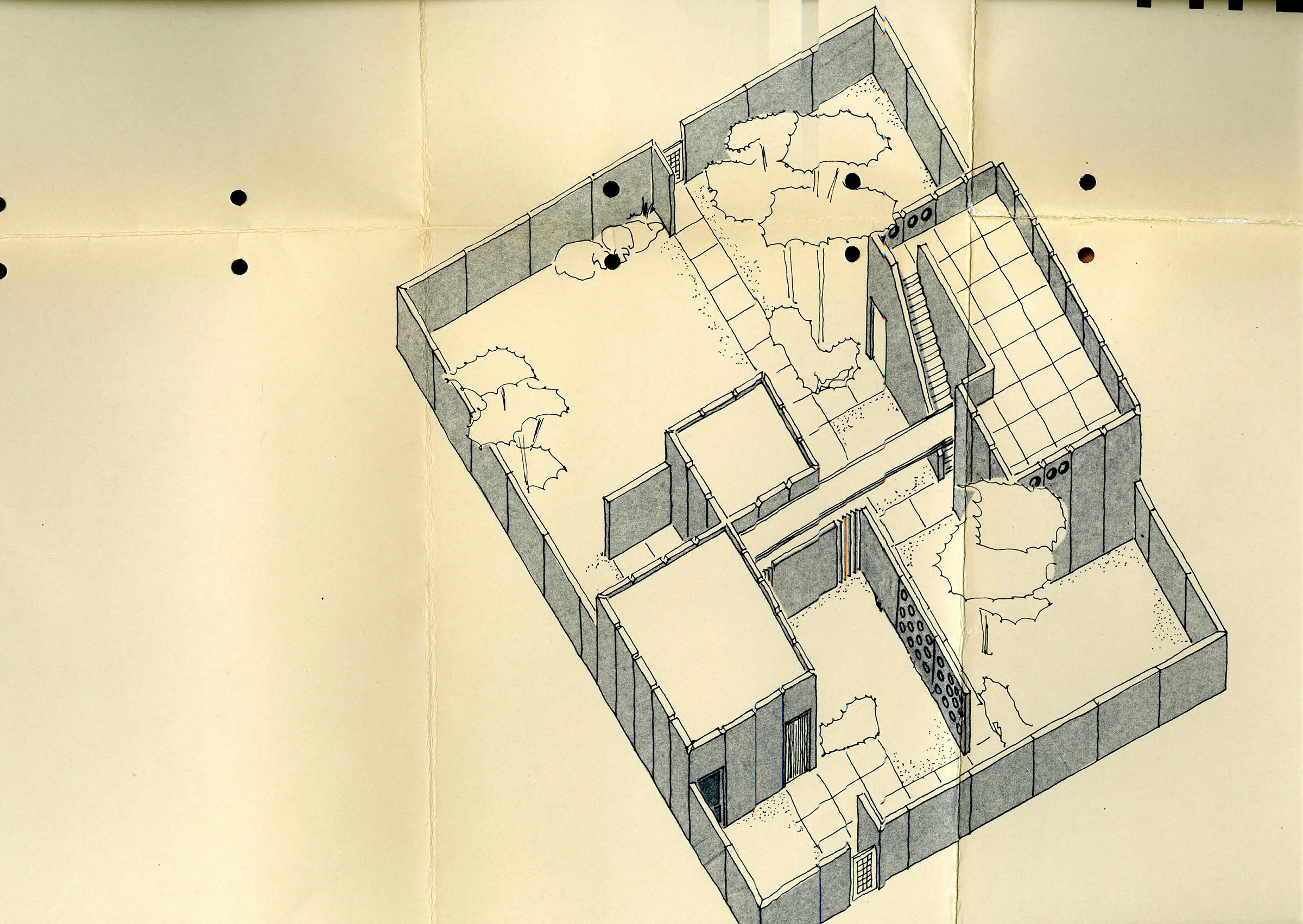
Plans for a New Society
The Ministry of Public Works and the Design of Sha’abi Housing. 1970s-1990s
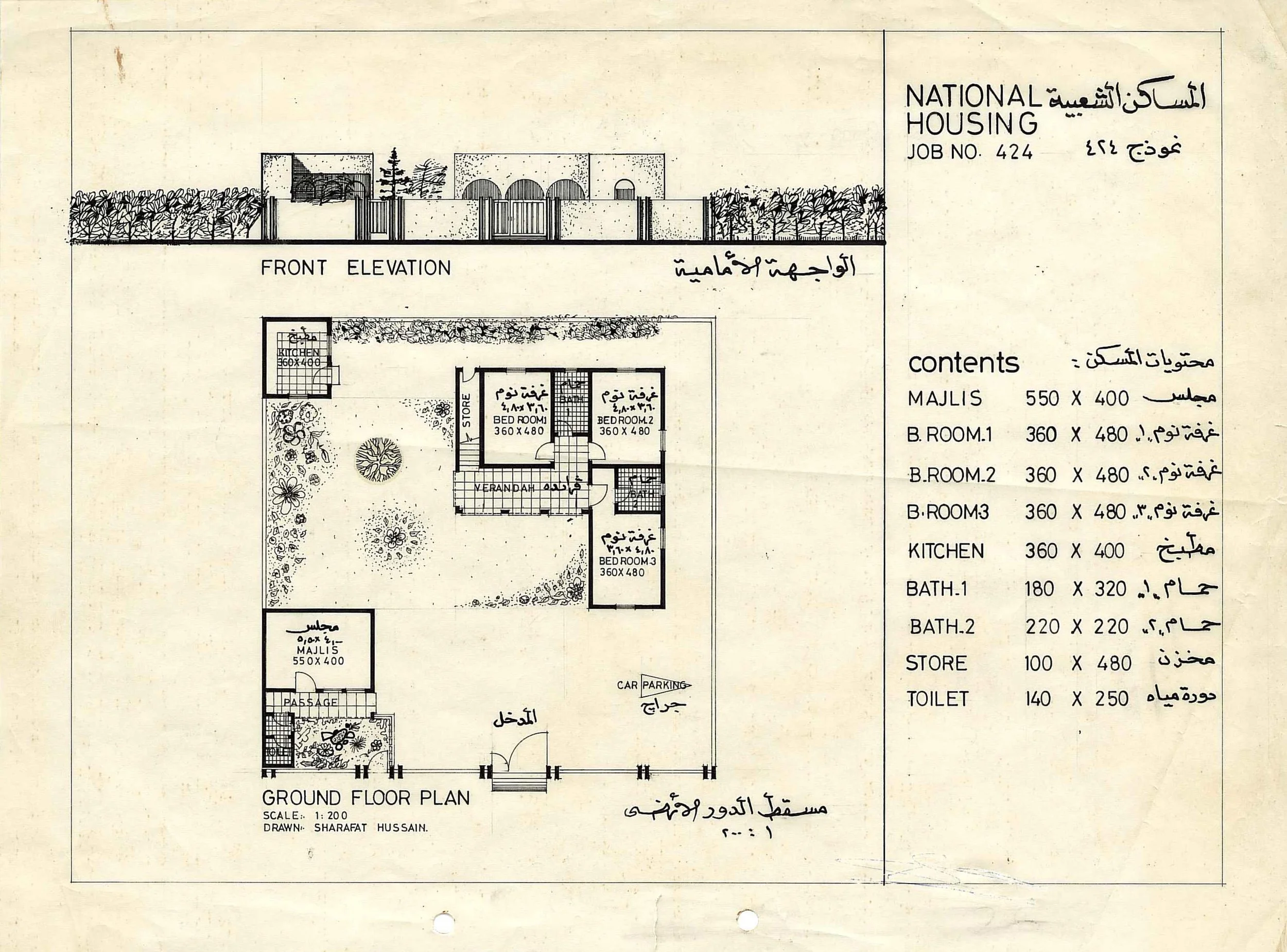
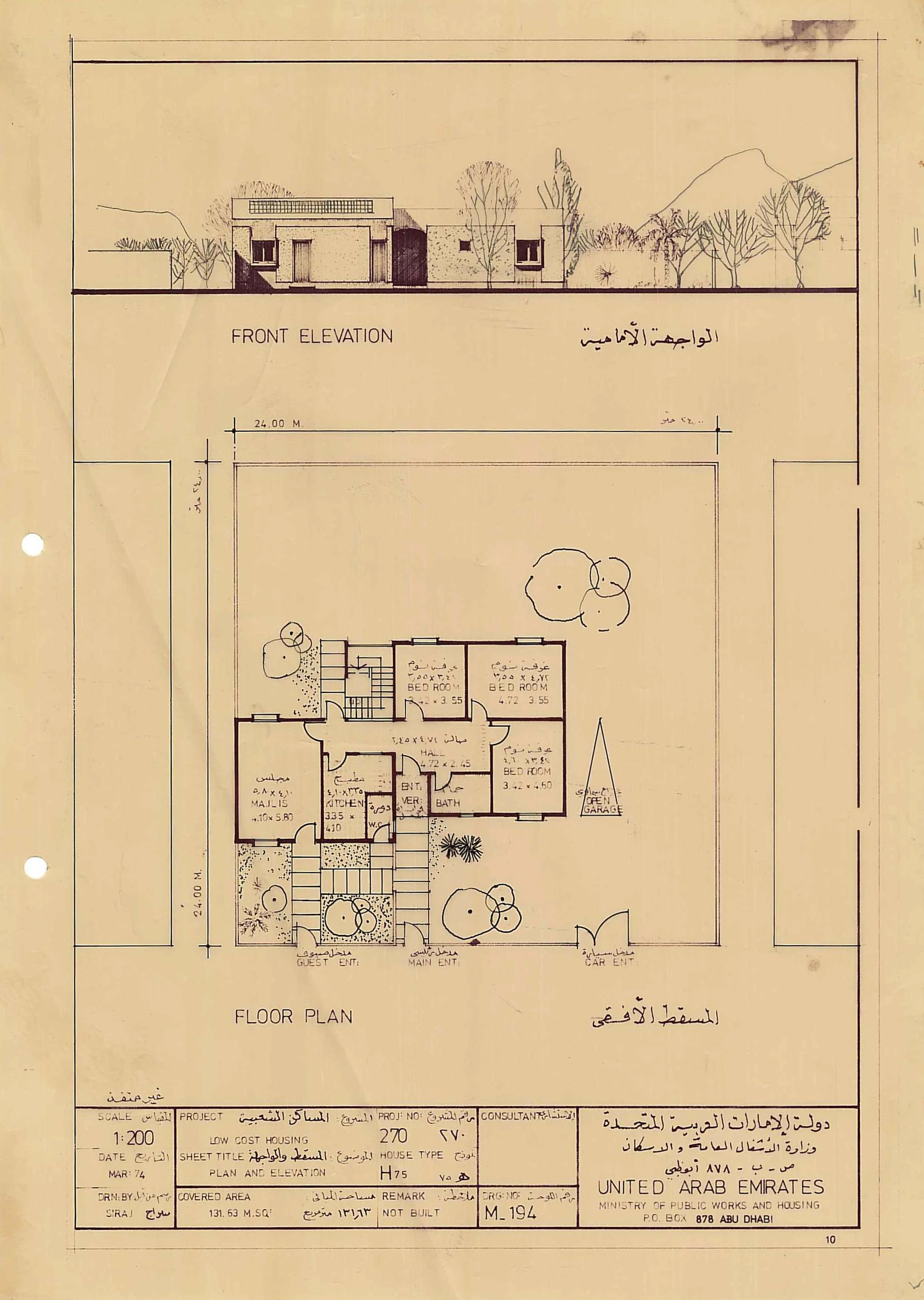
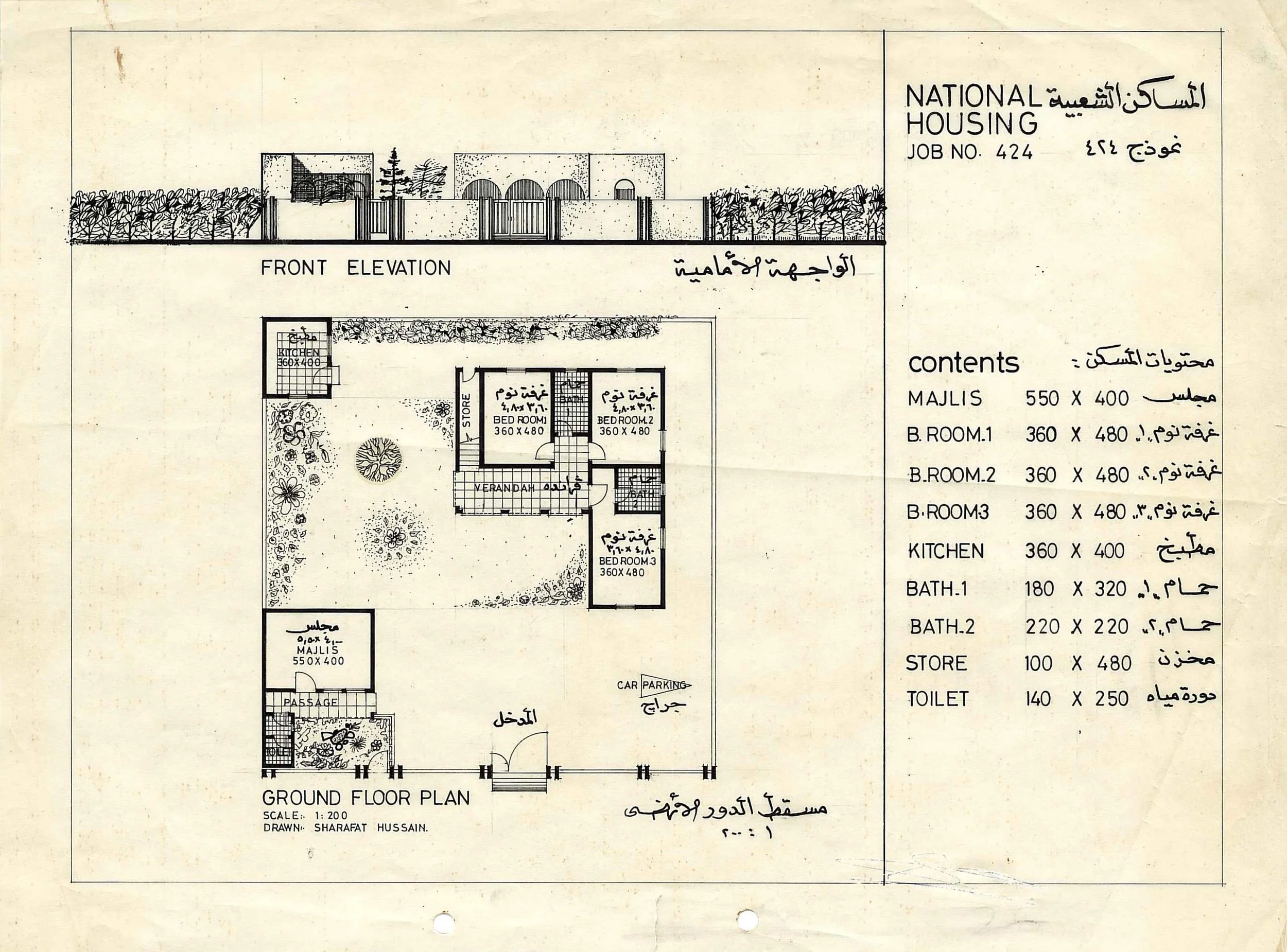
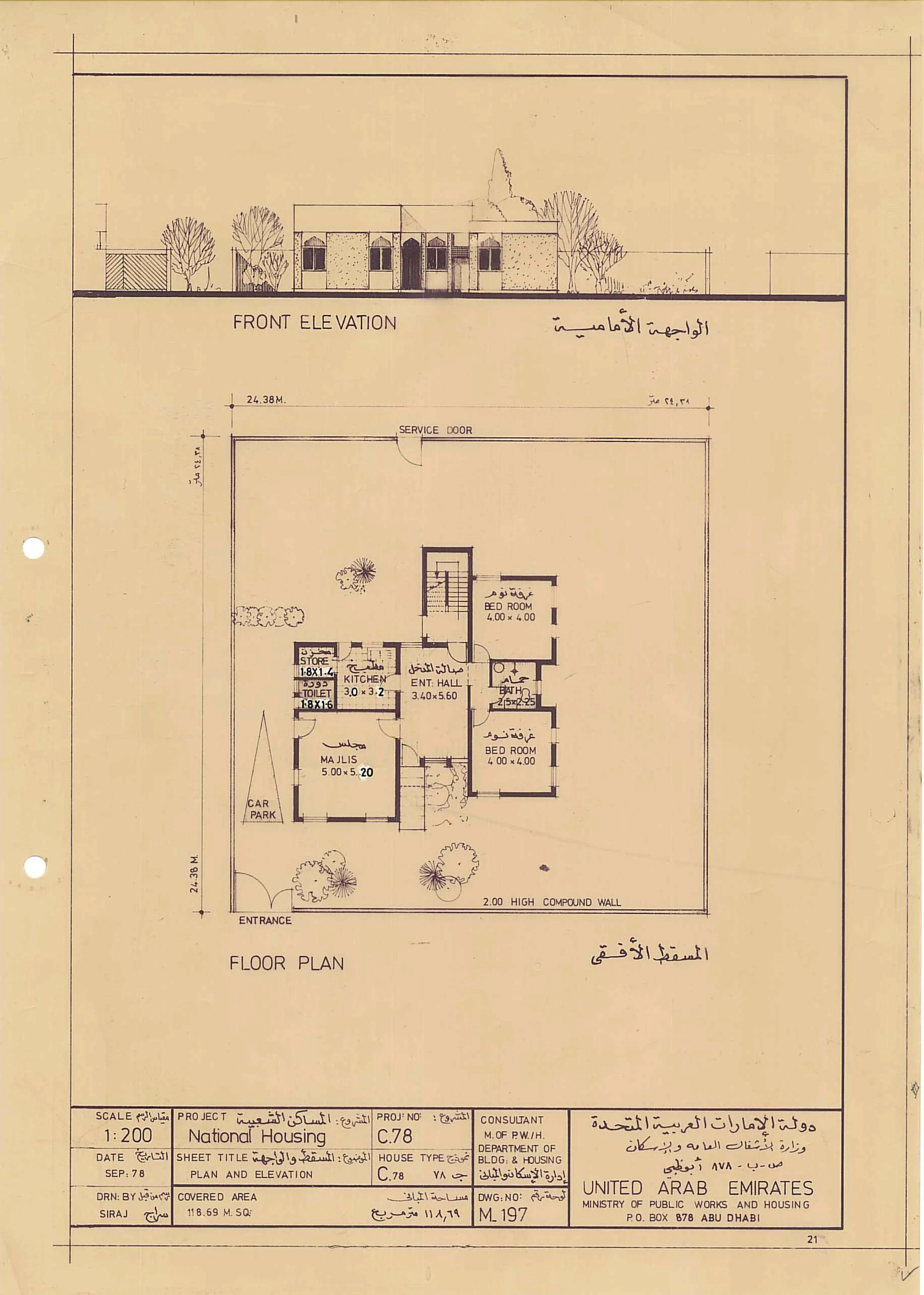
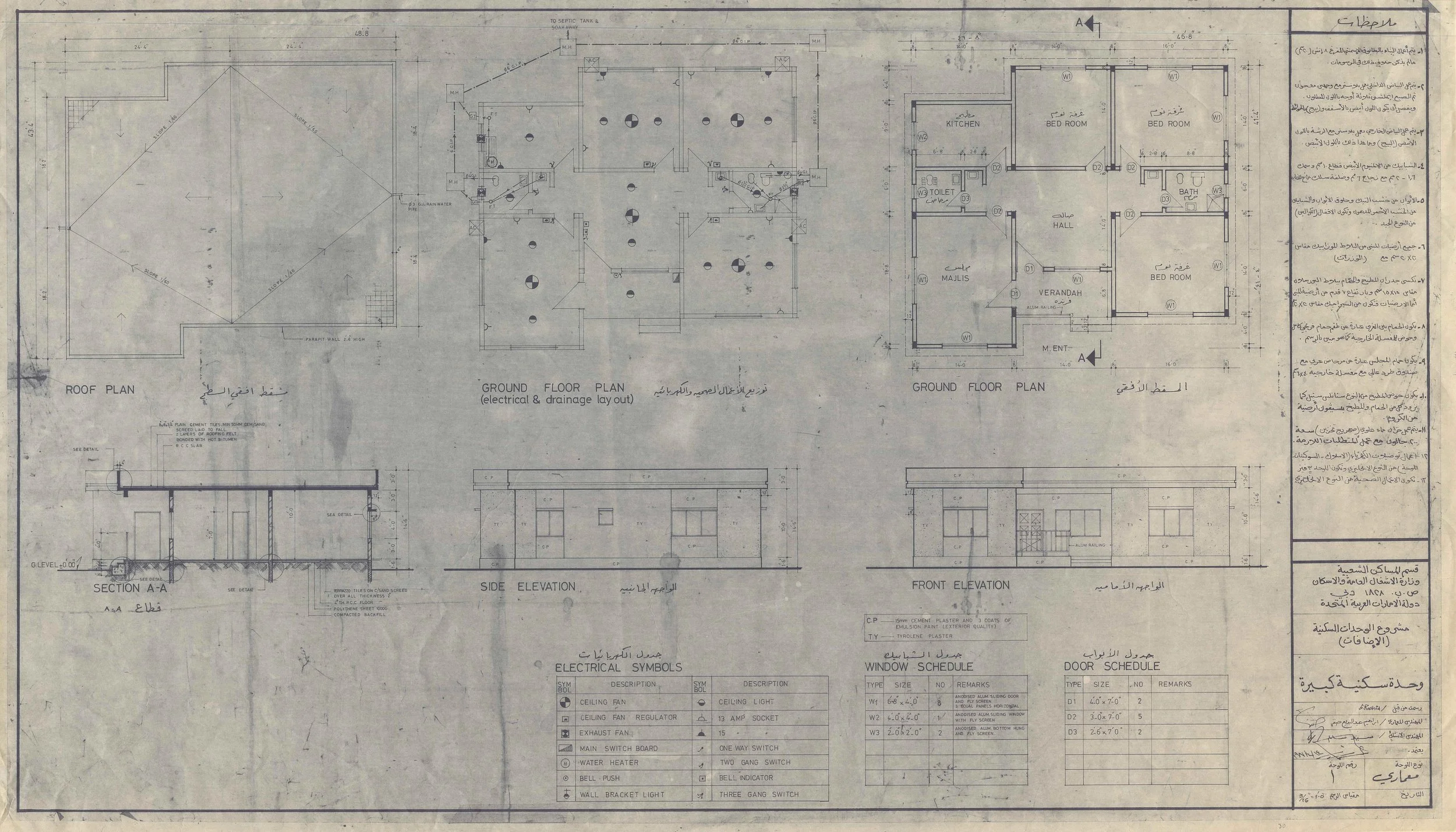
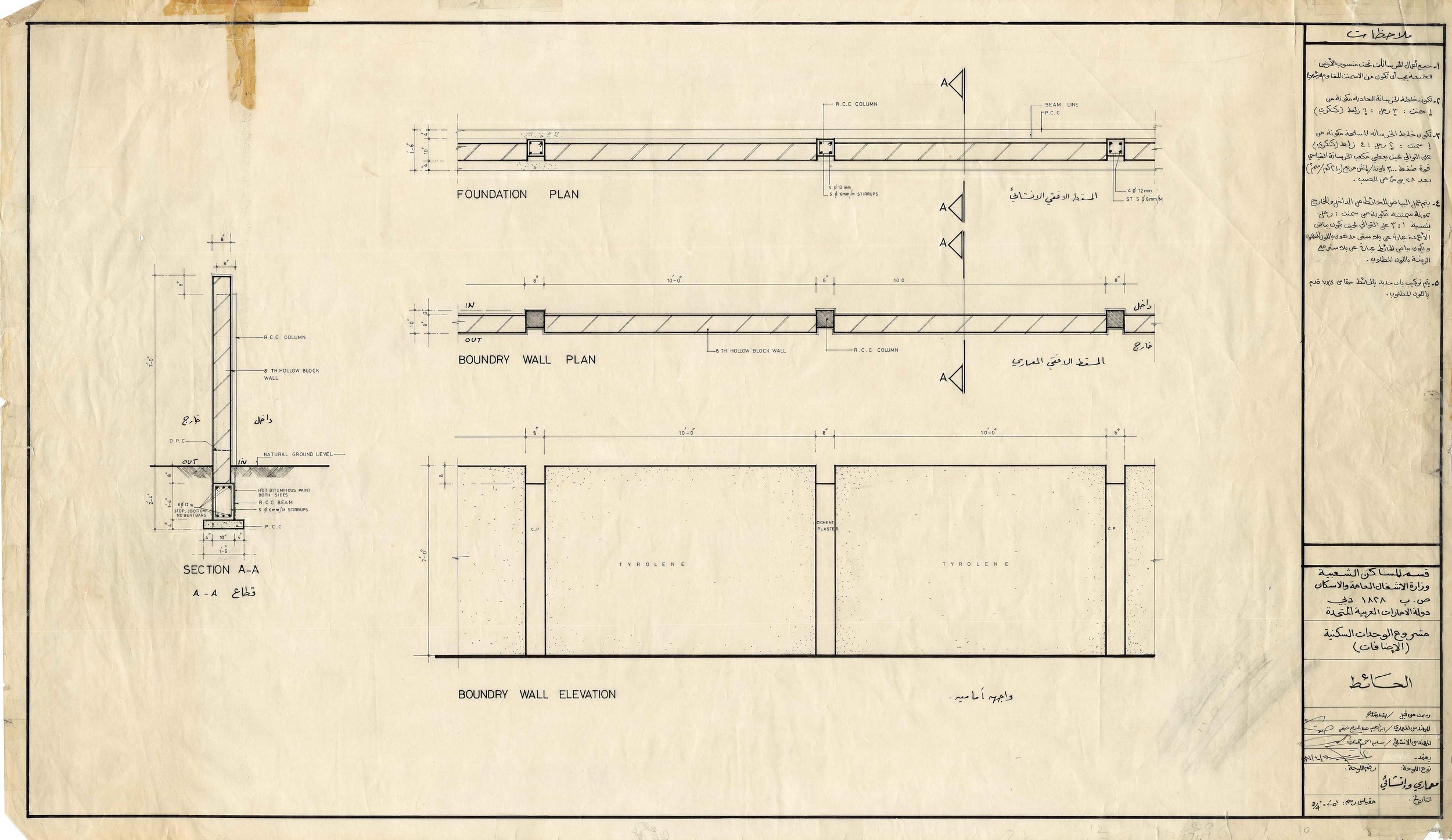
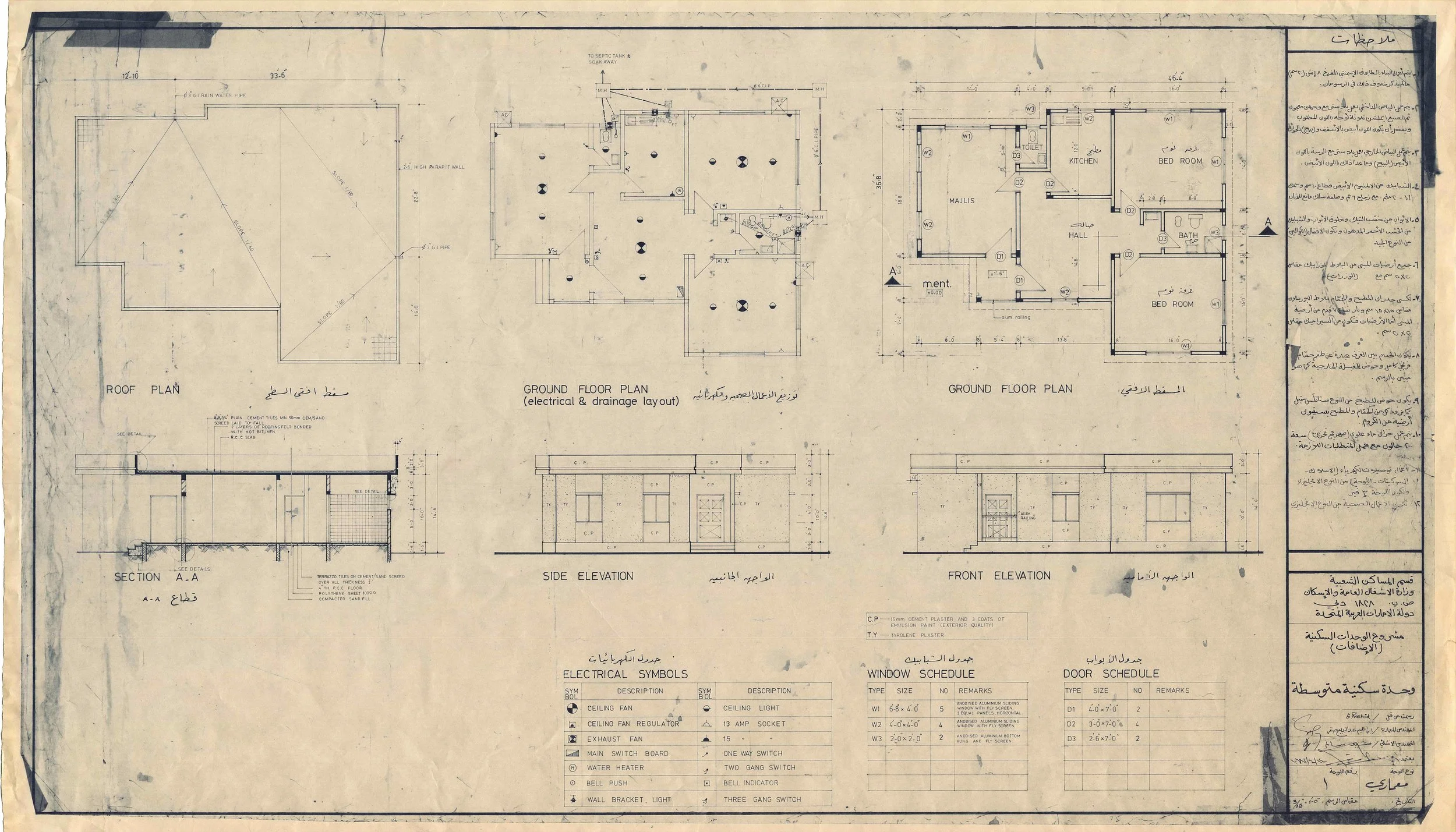
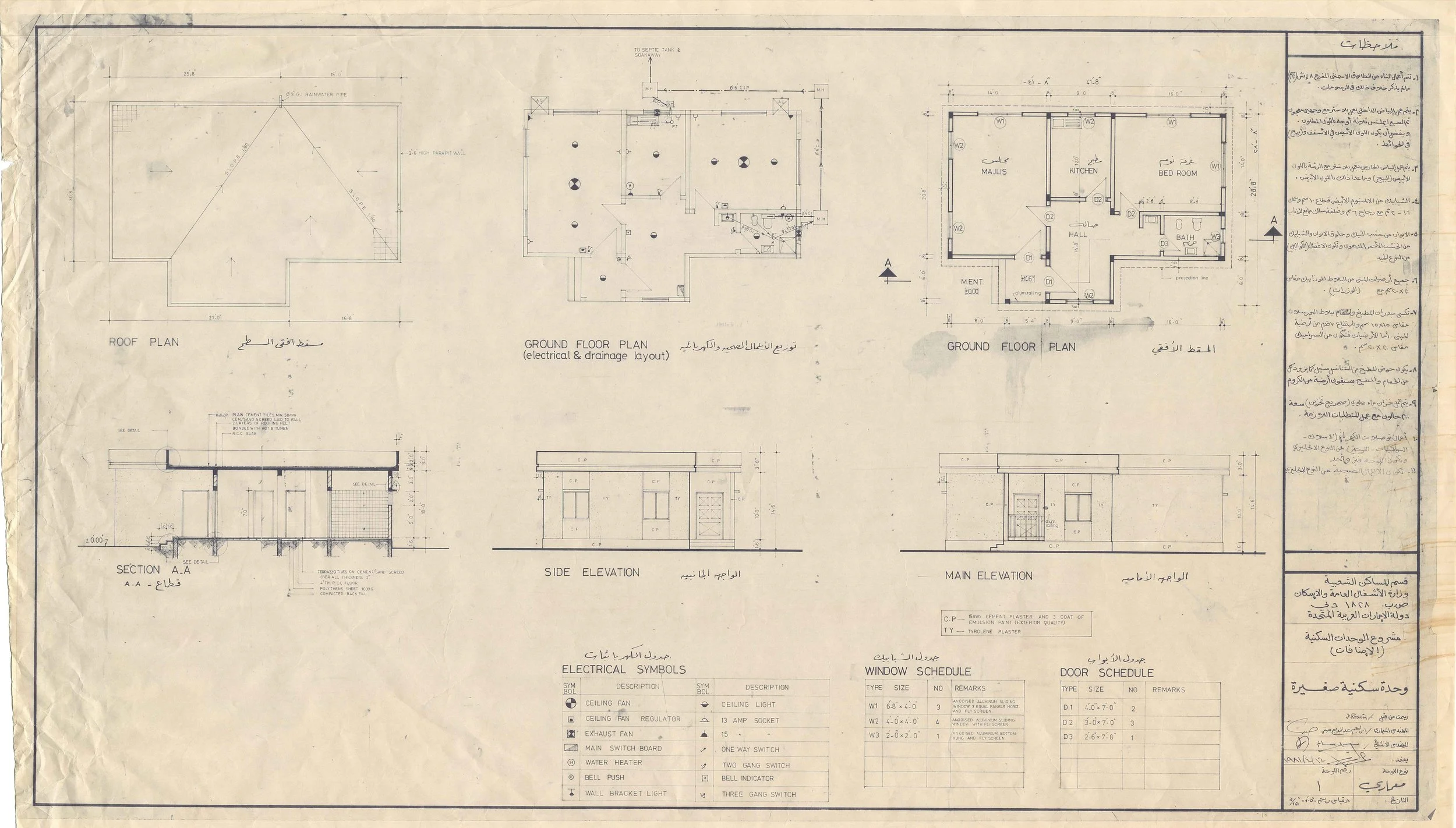
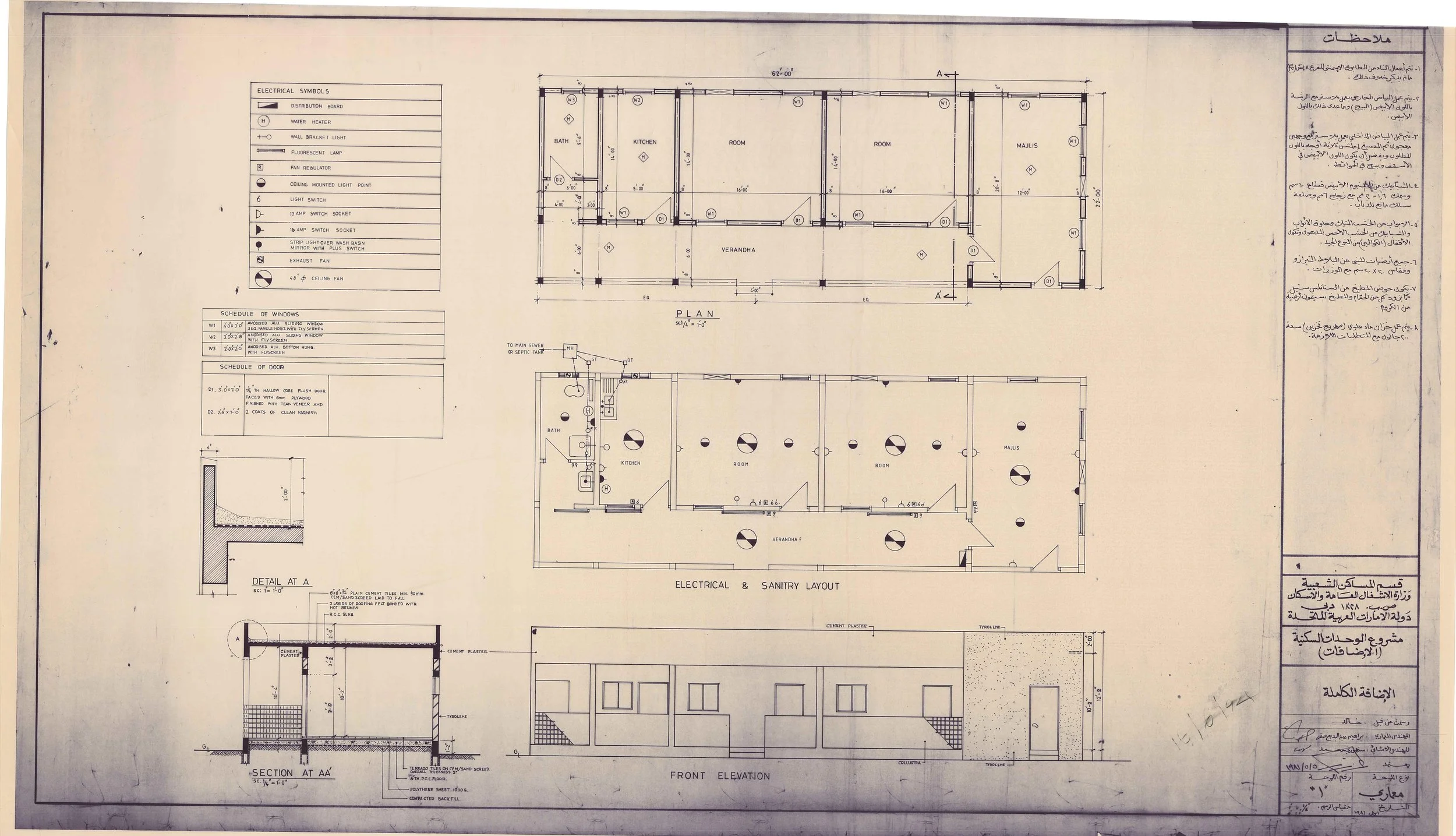
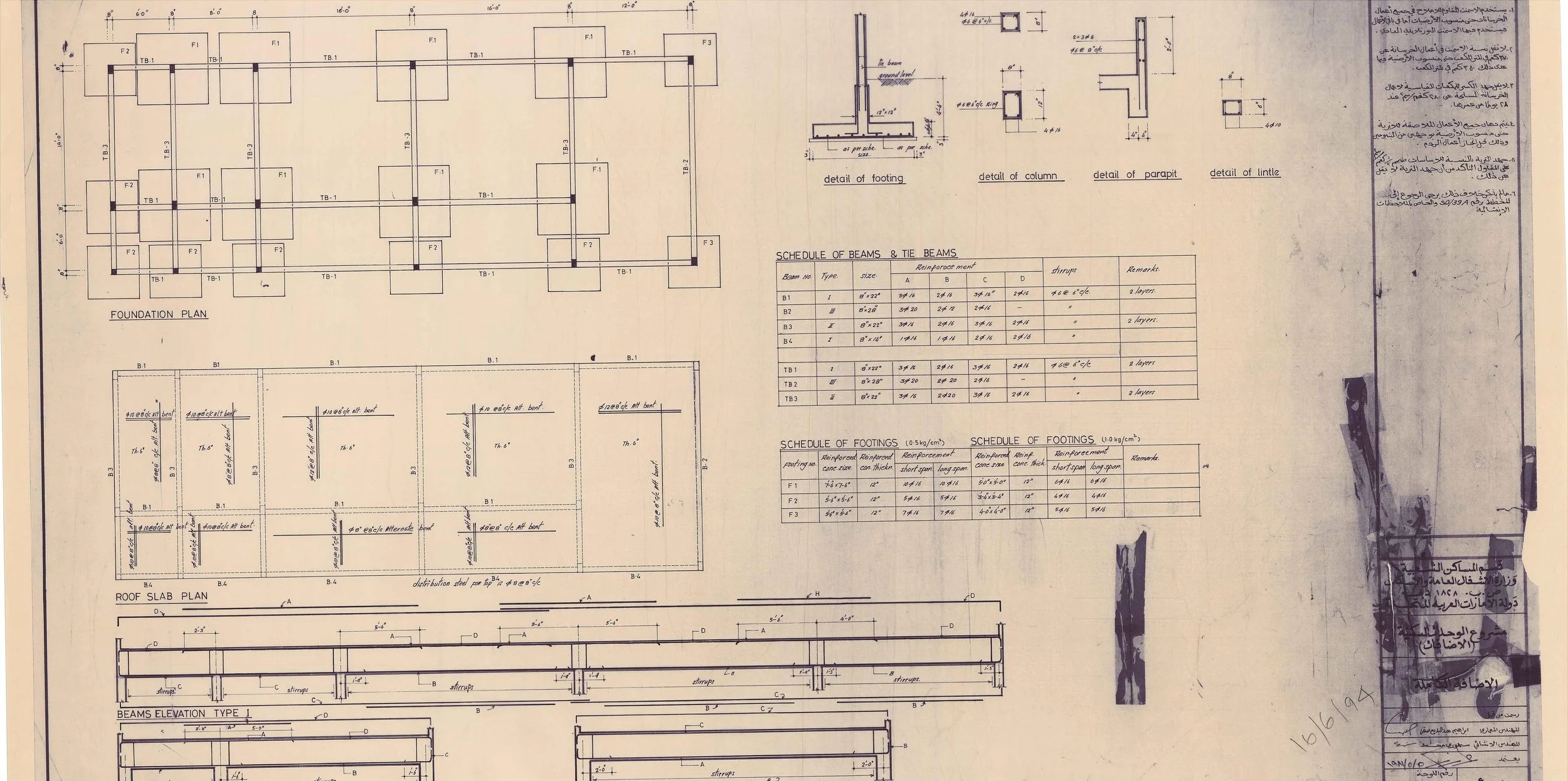
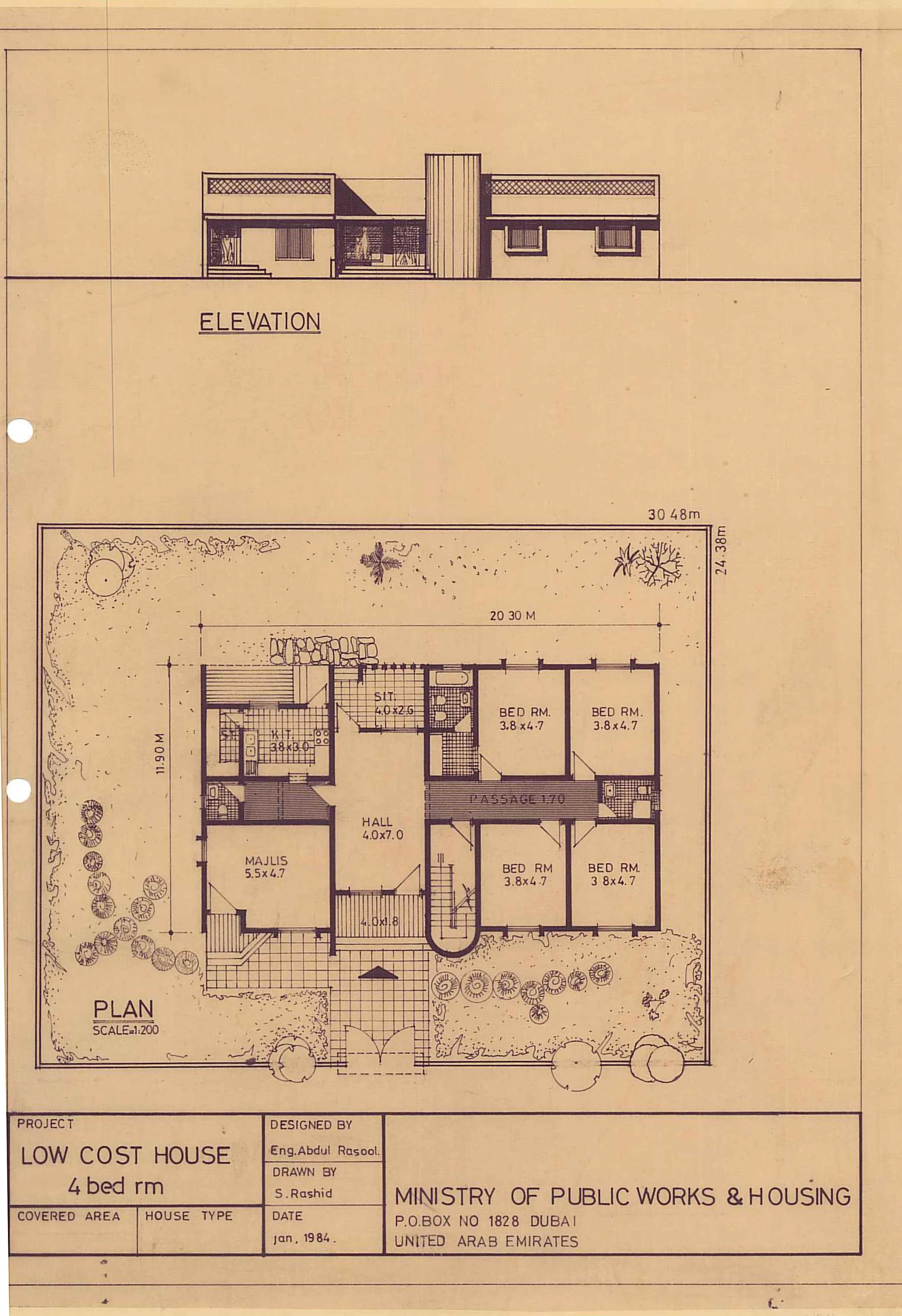
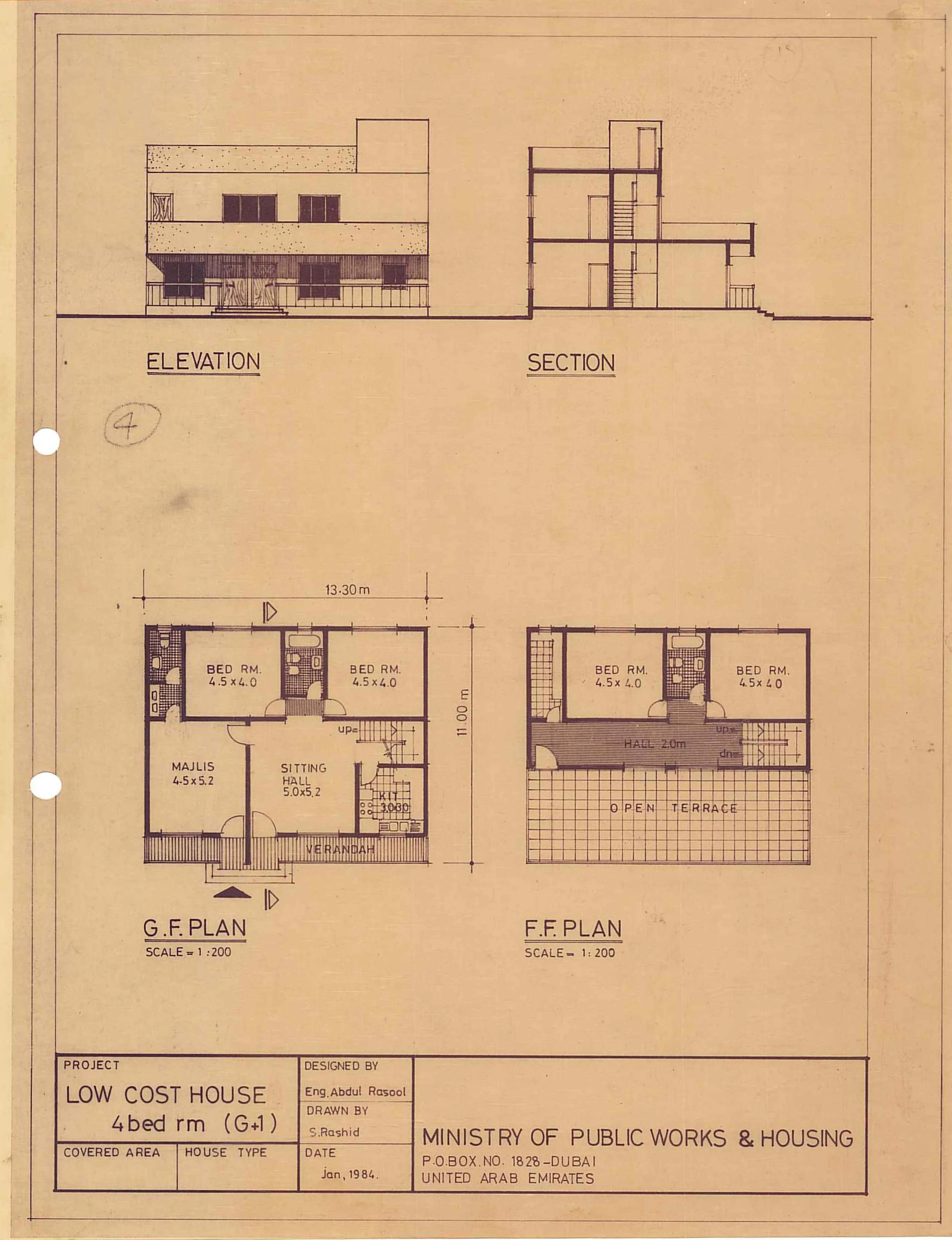
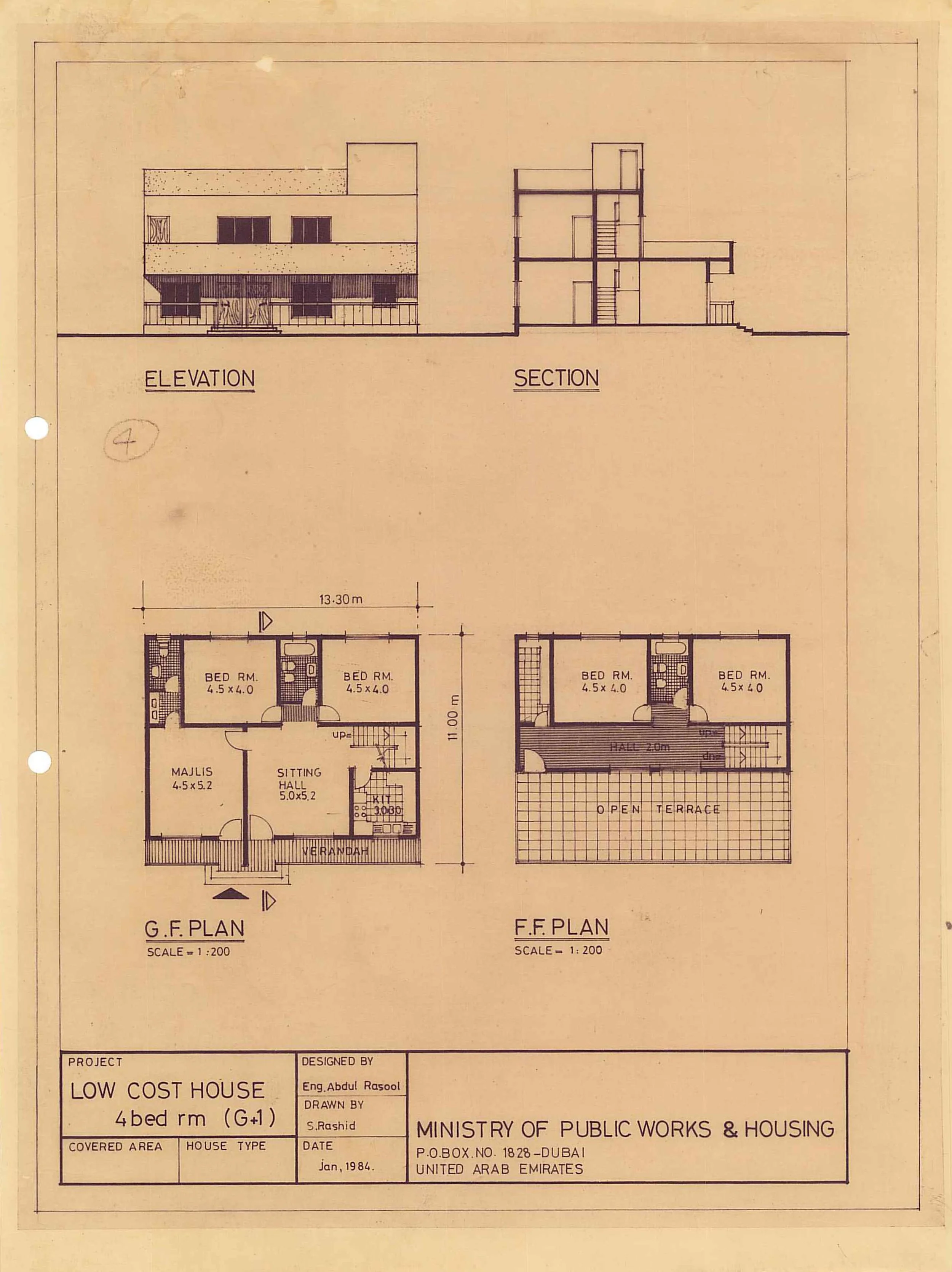
The archival drawings produced by the Ministry of Public Works offer a rare and crucial glimpse into the formalization of the Sha’abi house during the early years of the UAE’s nation-building project in the 1970s. Emerging at a moment when documentation was often fragmented or dispersed, these plans—alongside those by firms such as Halcrow—capture the translation of Bedouin spatial practices into a standardized architectural language rooted in modernist principles. They reveal a consistent typology: a square, inward-looking layout organized around a central courtyard, enclosed by boundary walls to ensure privacy and structured to separate public and domestic realms. At the same time, these drawings should not be read as fixed prescriptions but as flexible frameworks, anticipating adaptation and change by residents. As such, they mark a critical moment when state-led housing policy, cultural norms, and architectural design converged, providing the blueprint for what would become one of the UAE’s most enduring and widely reproduced vernacular forms .