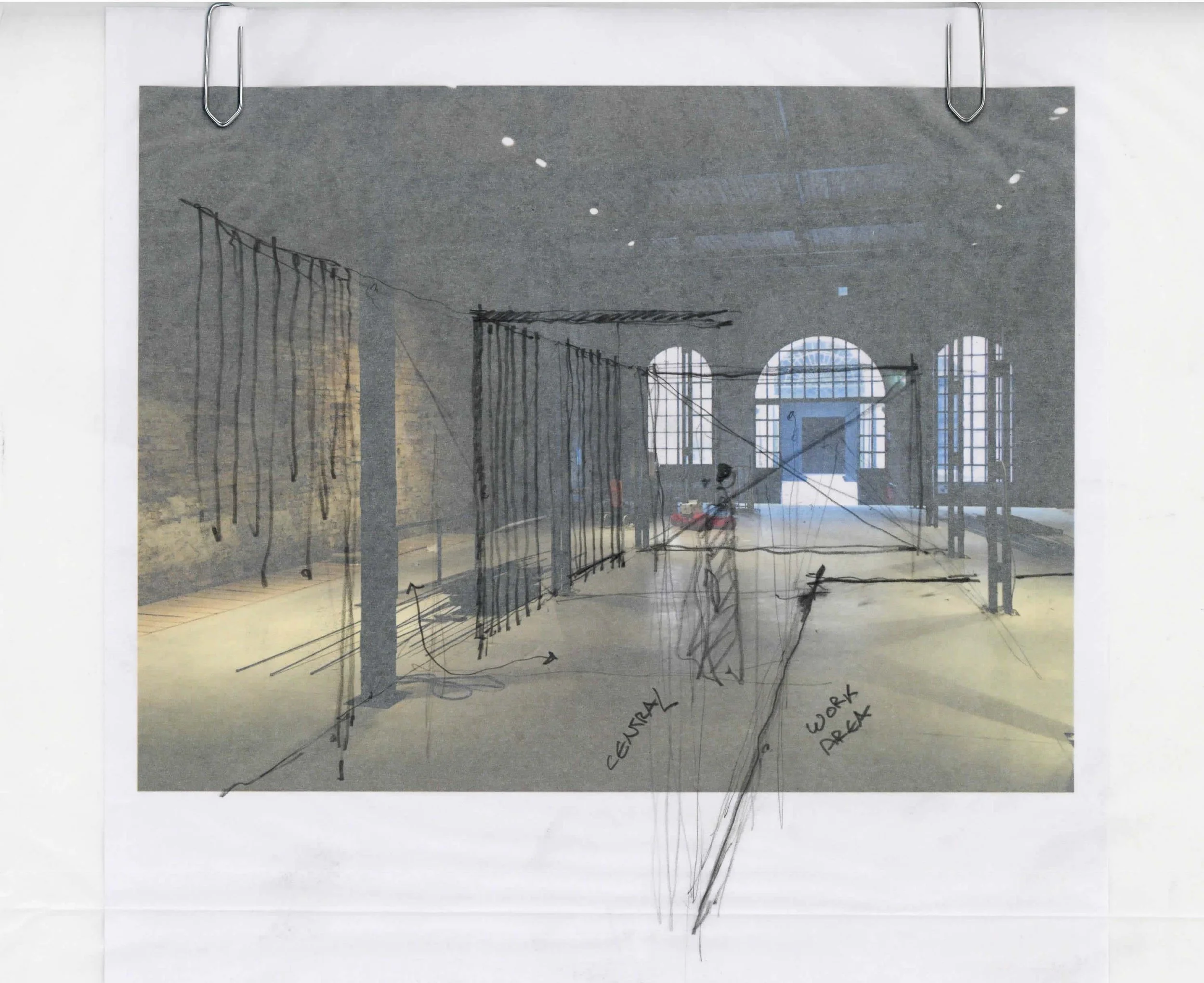
Interior Collage. Yasser Elsheshtawy (pencil on tracing paper)
Inside the Sha’abi House
Designing the UAE Pavilion as a Lived Environment
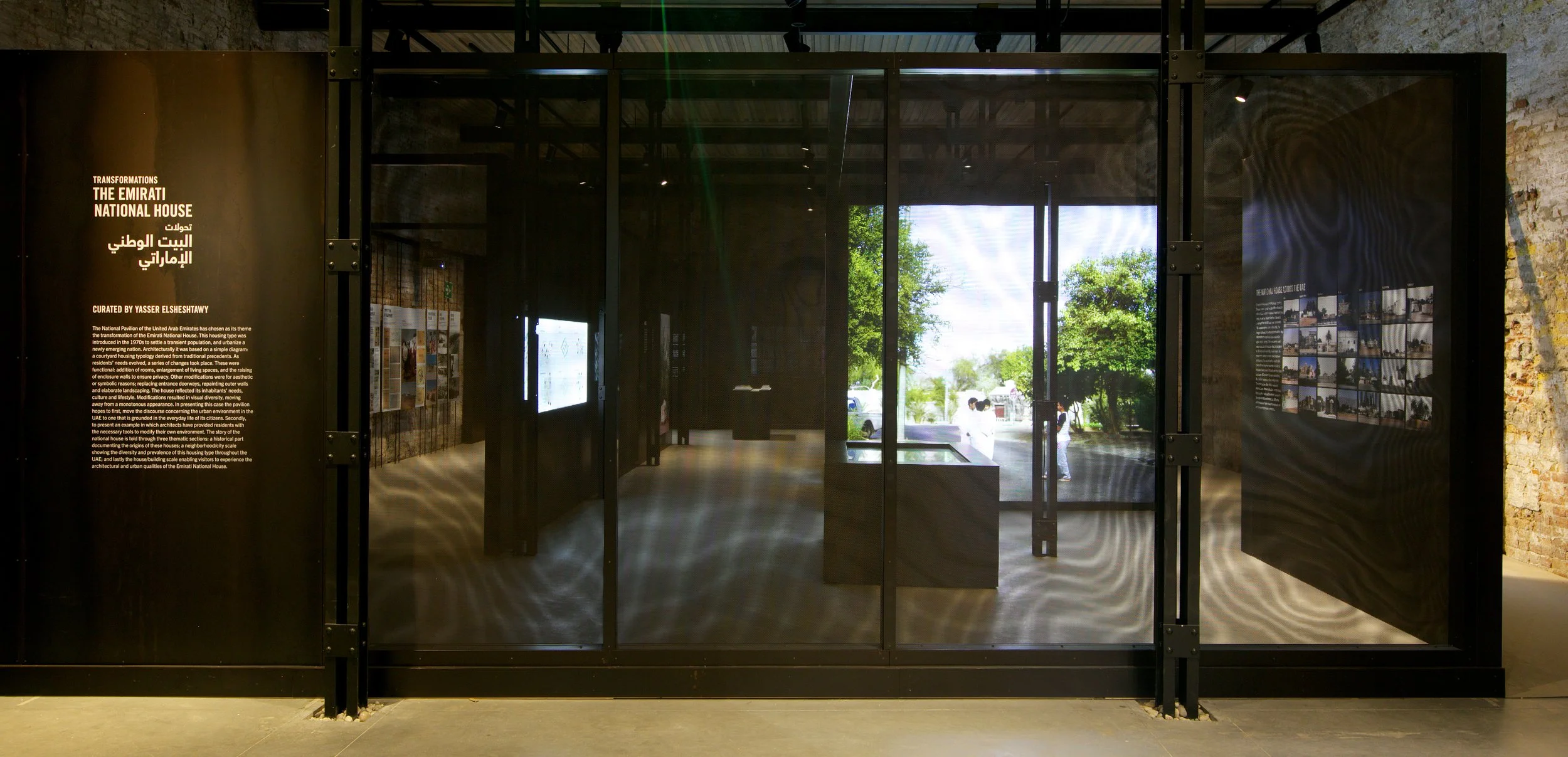
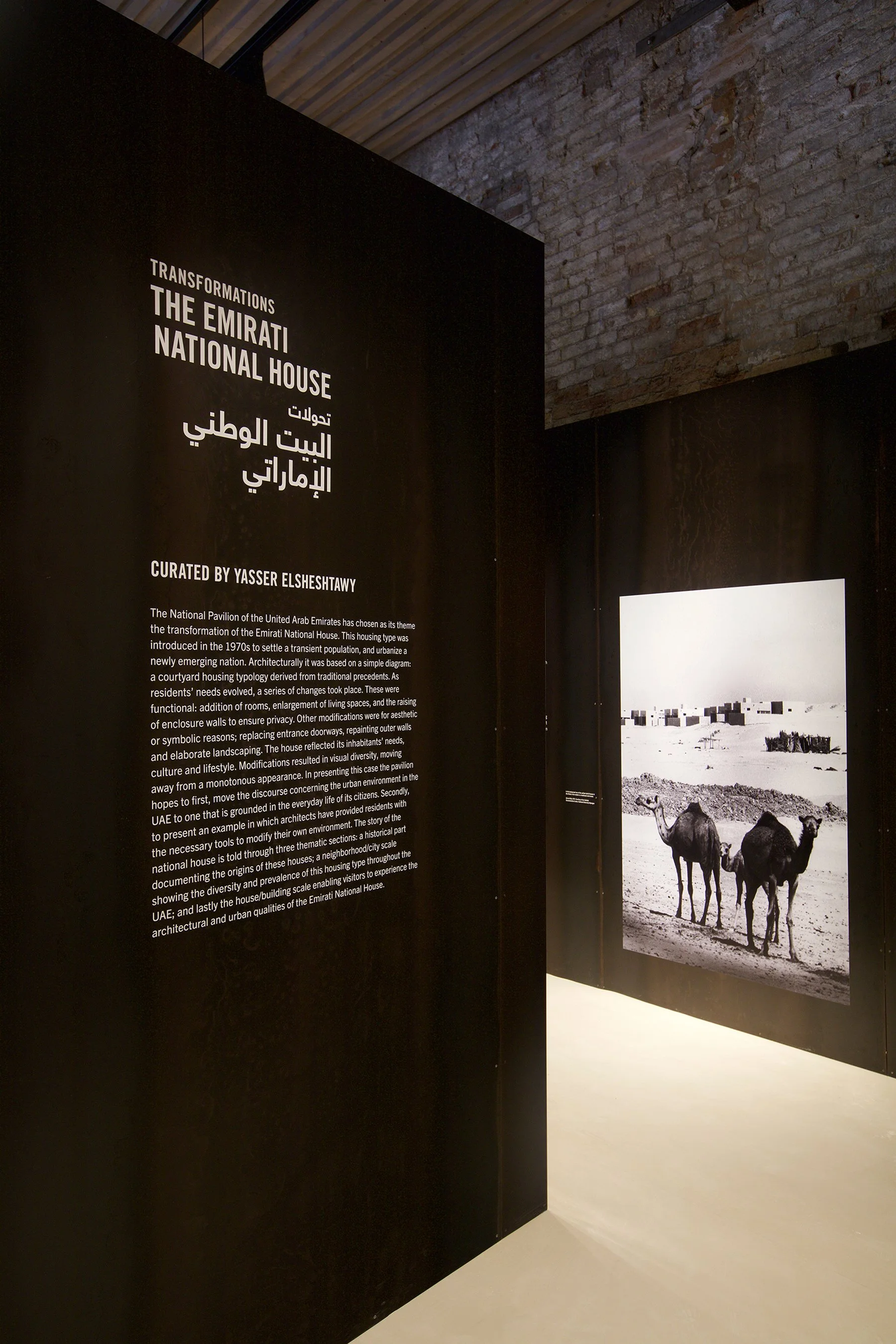
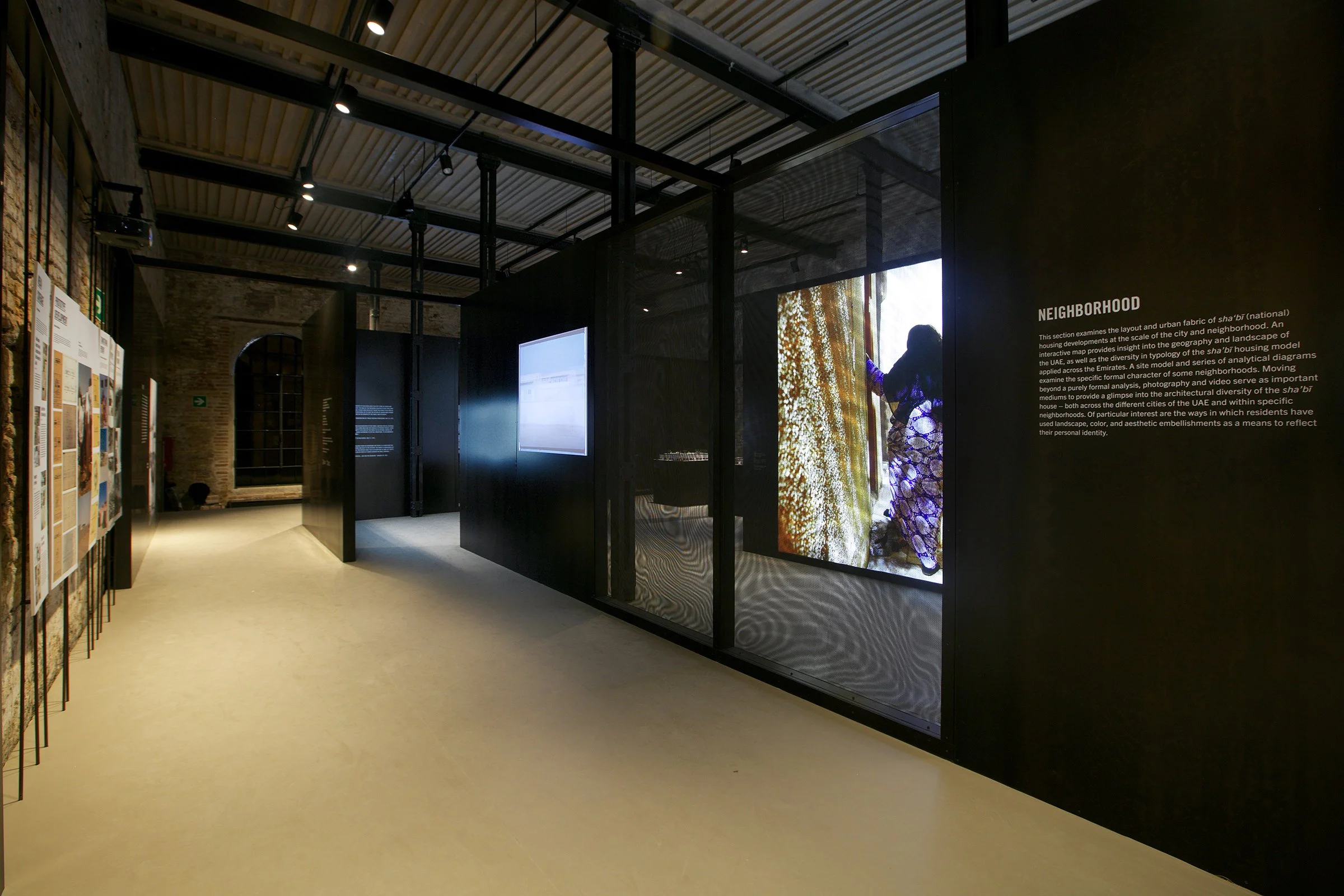
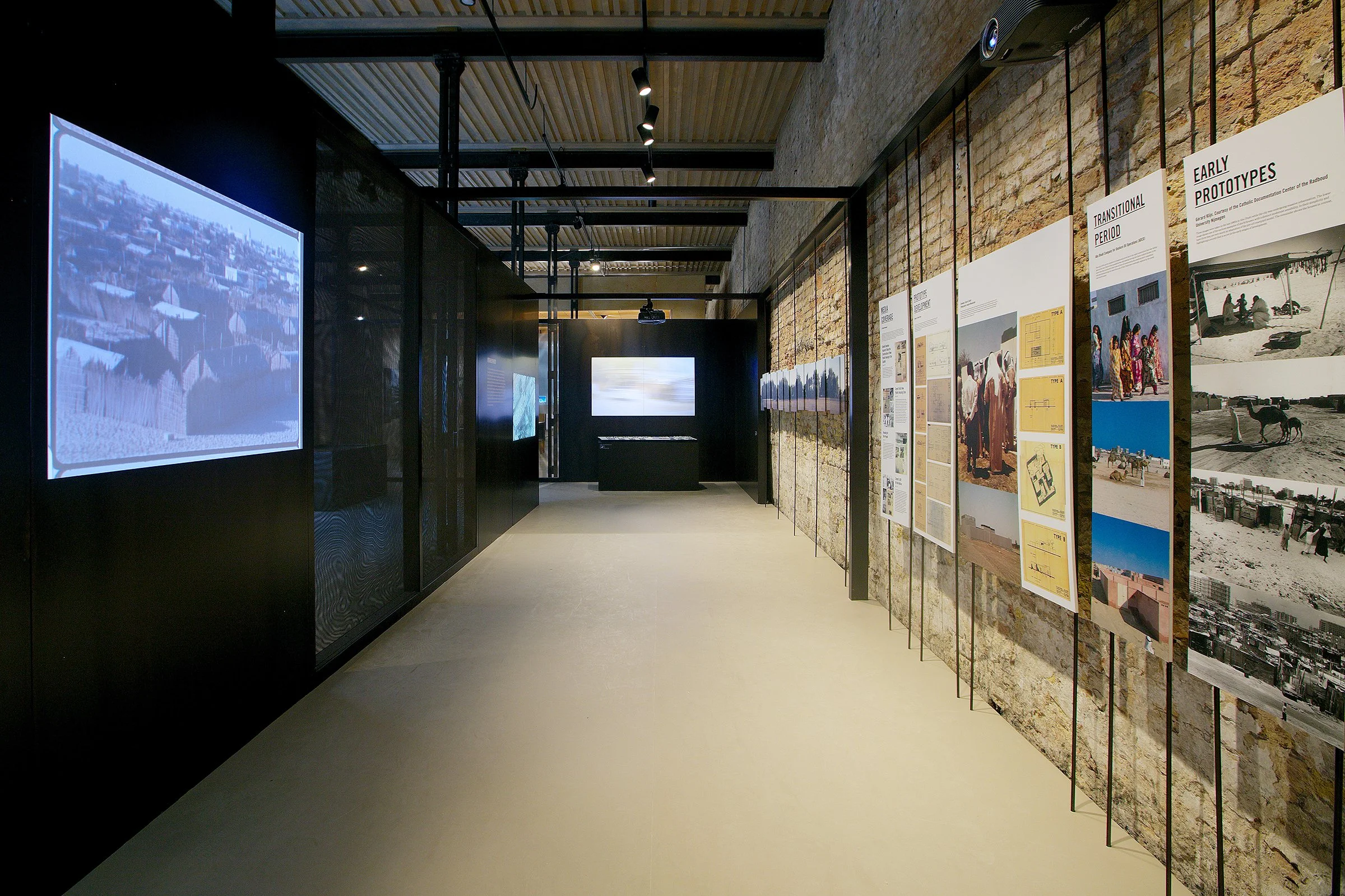
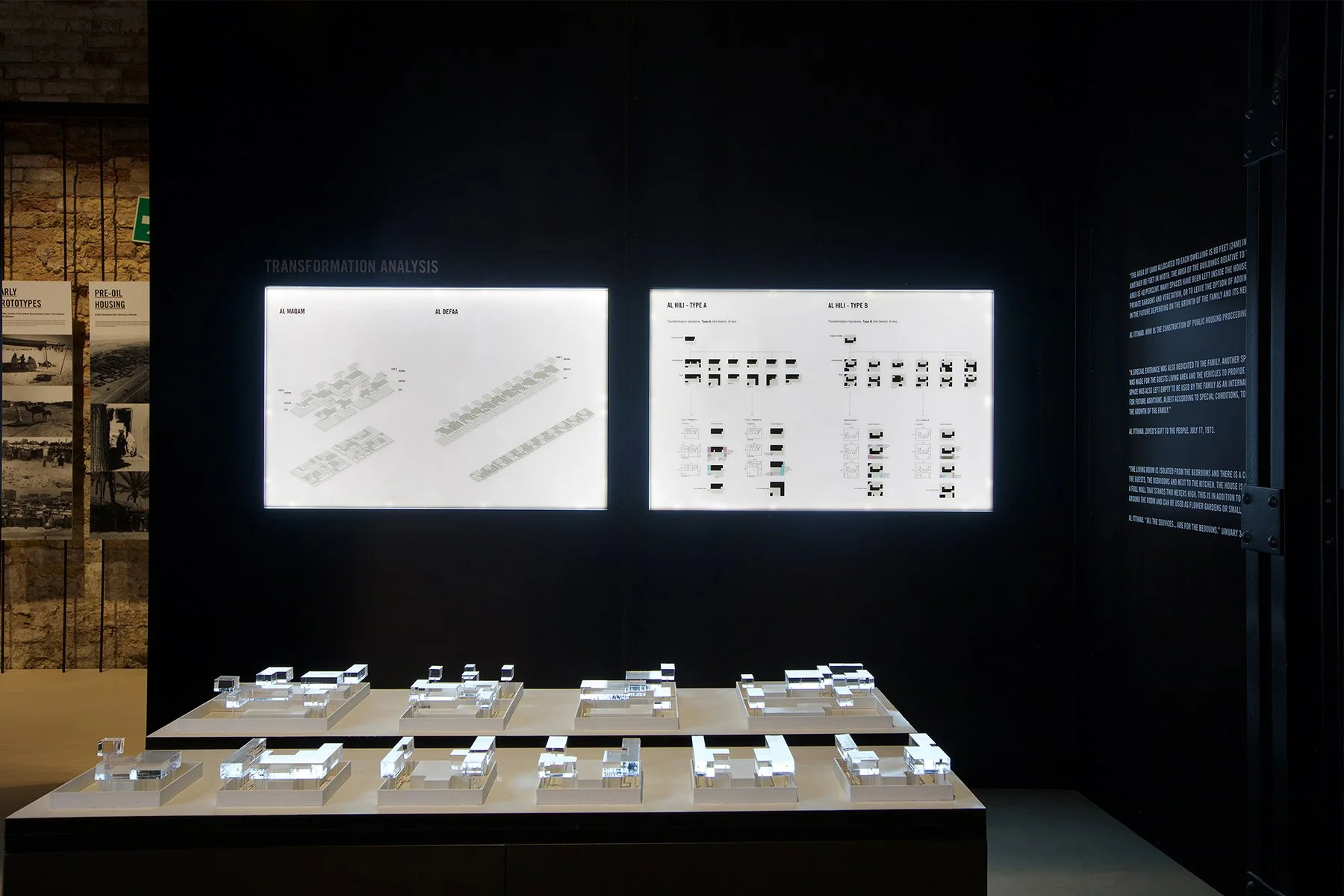
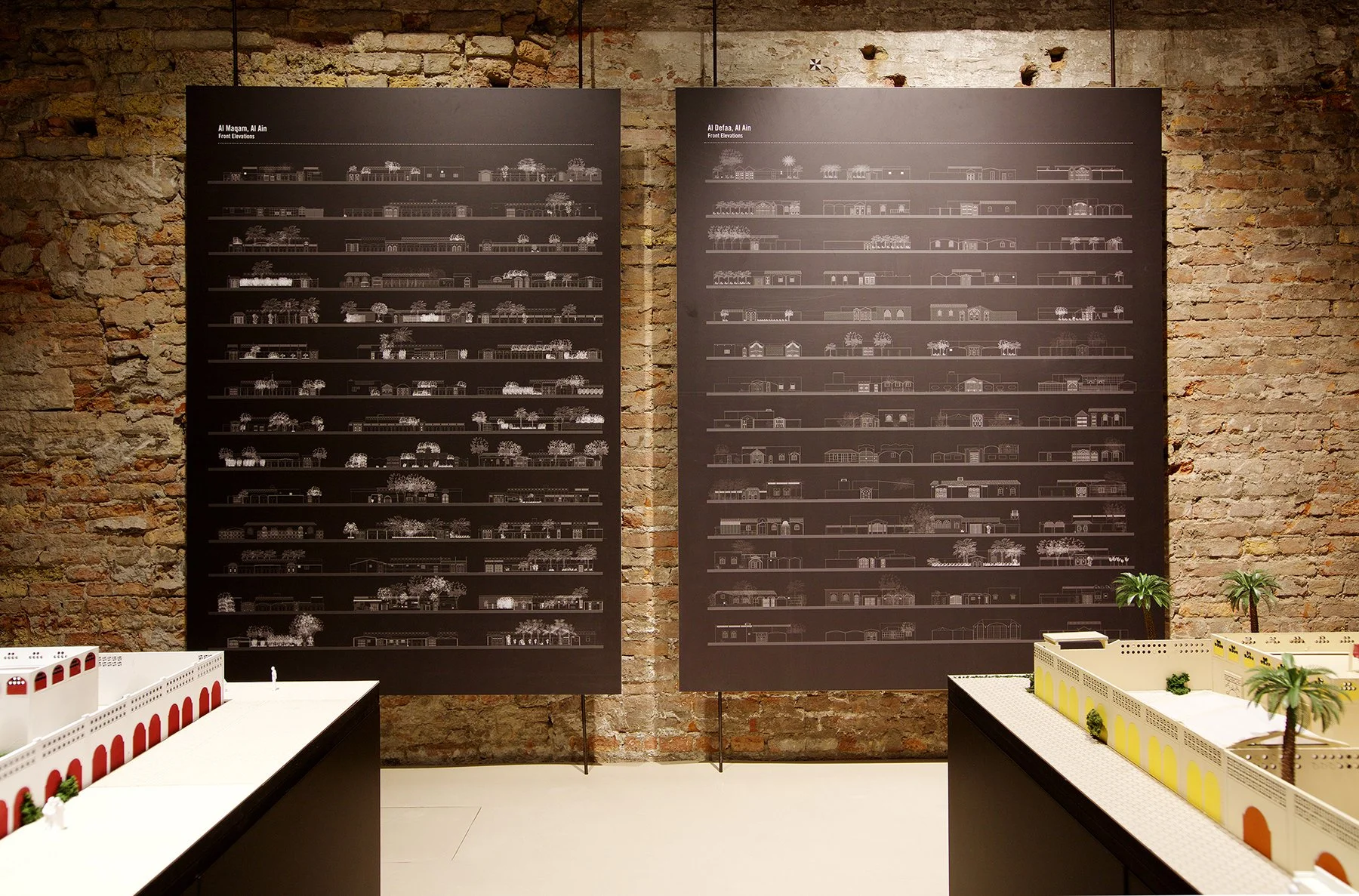
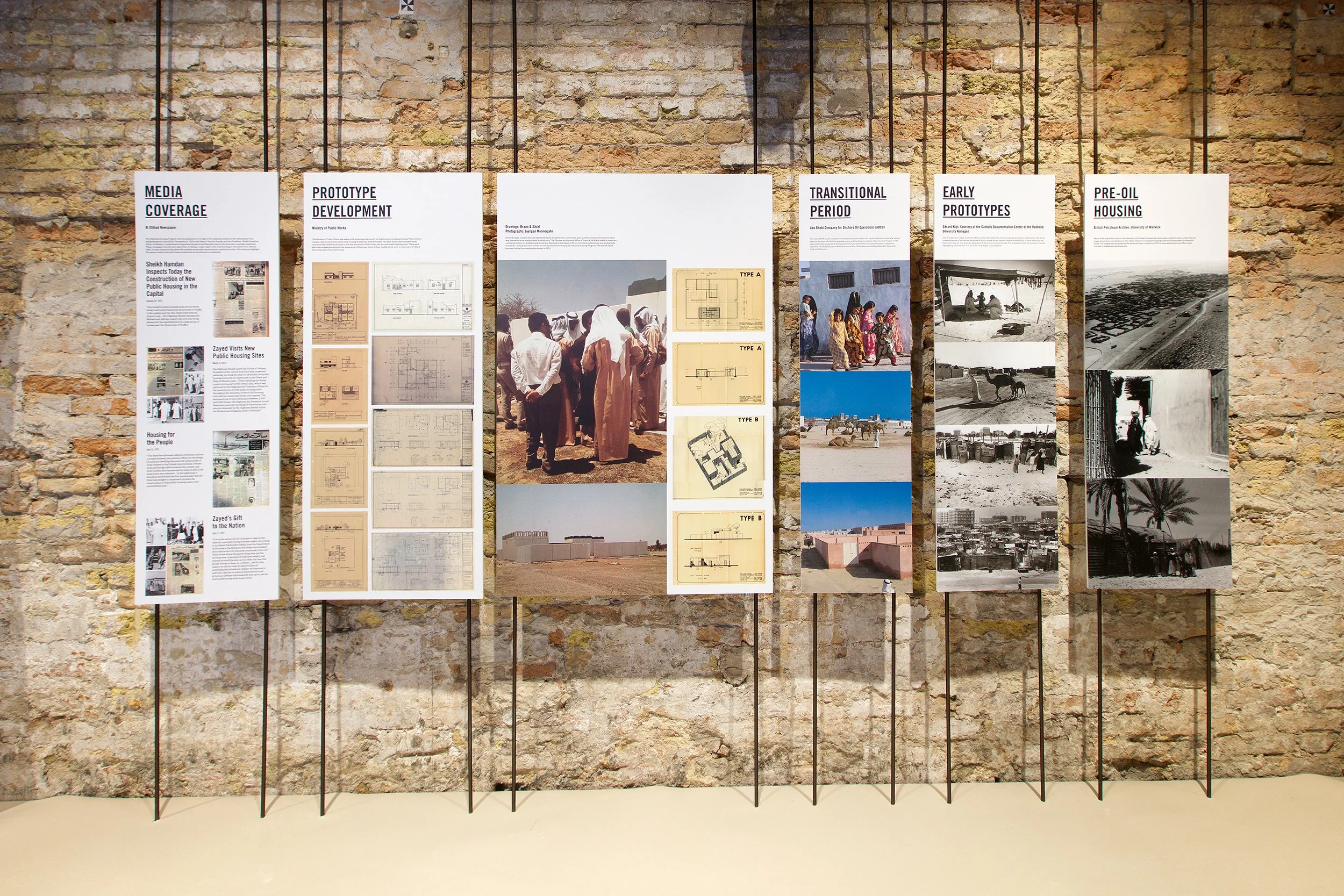
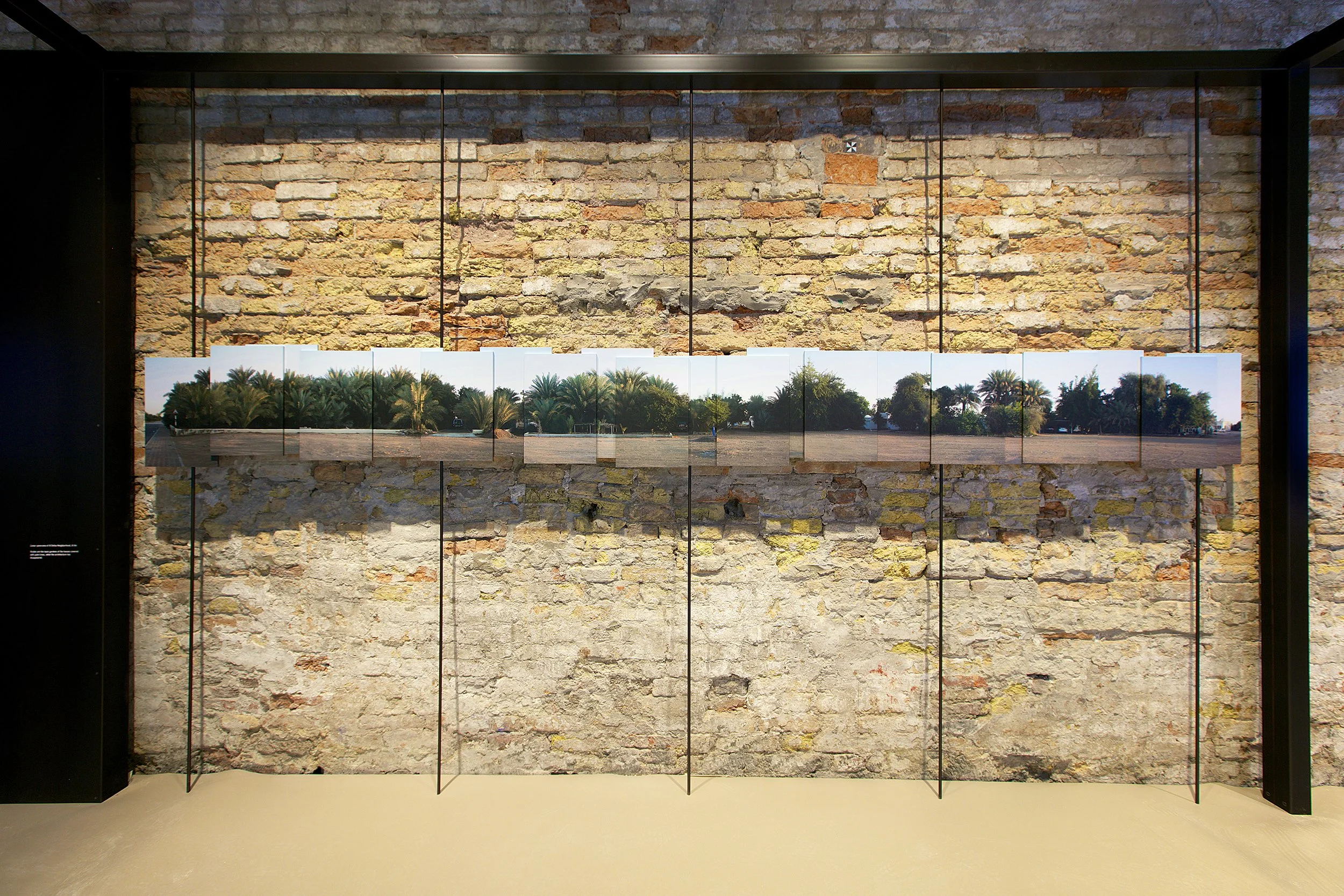
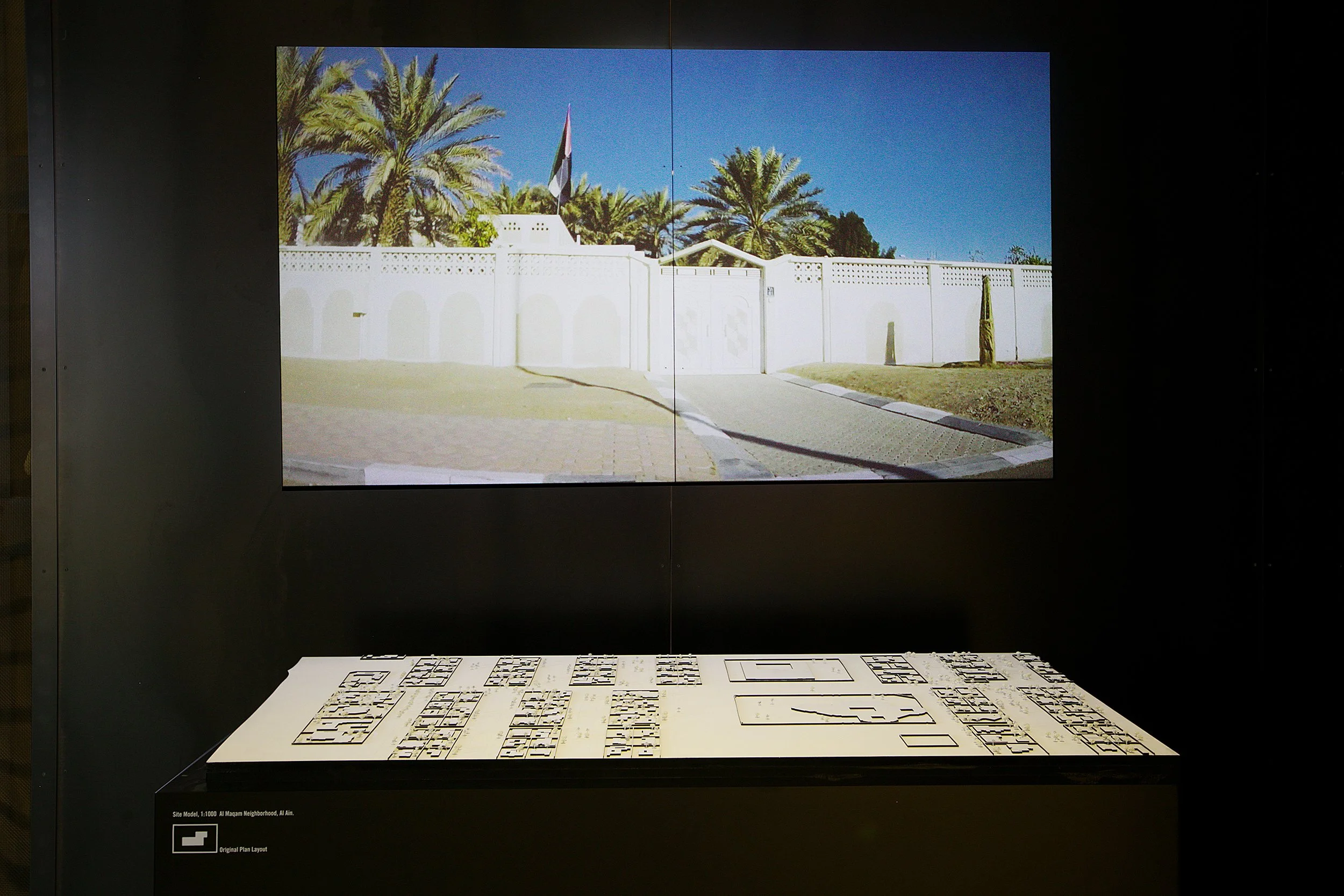
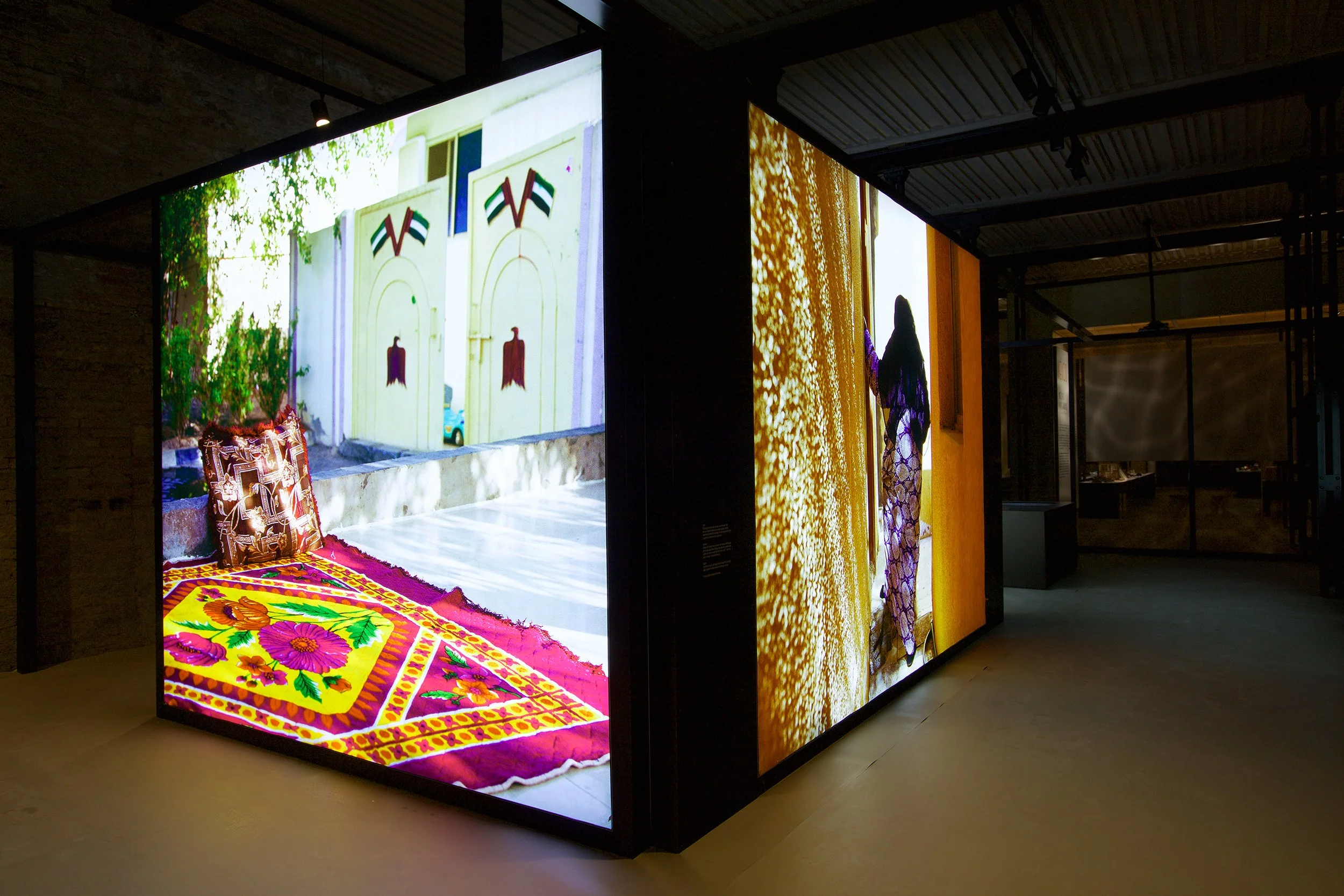
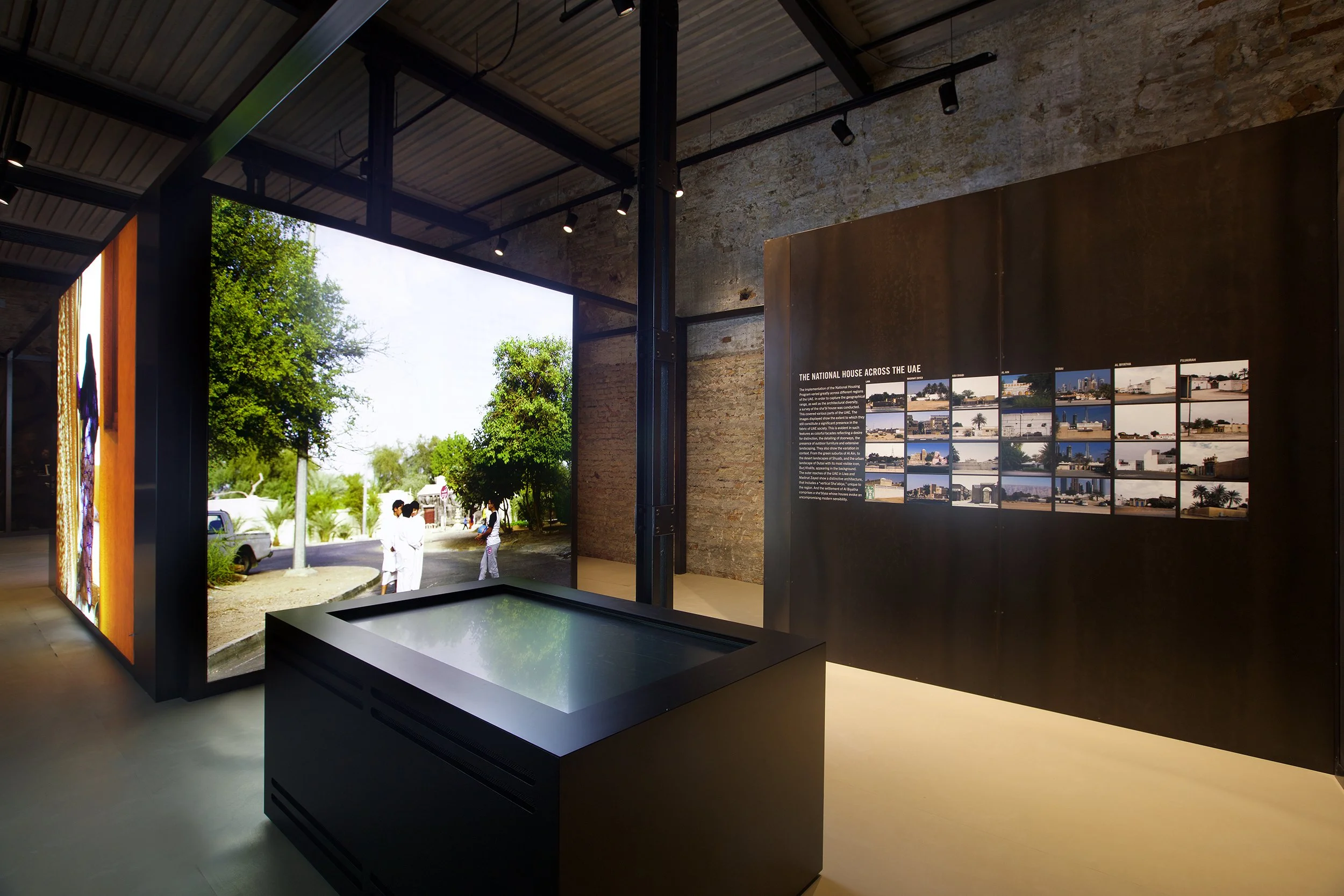
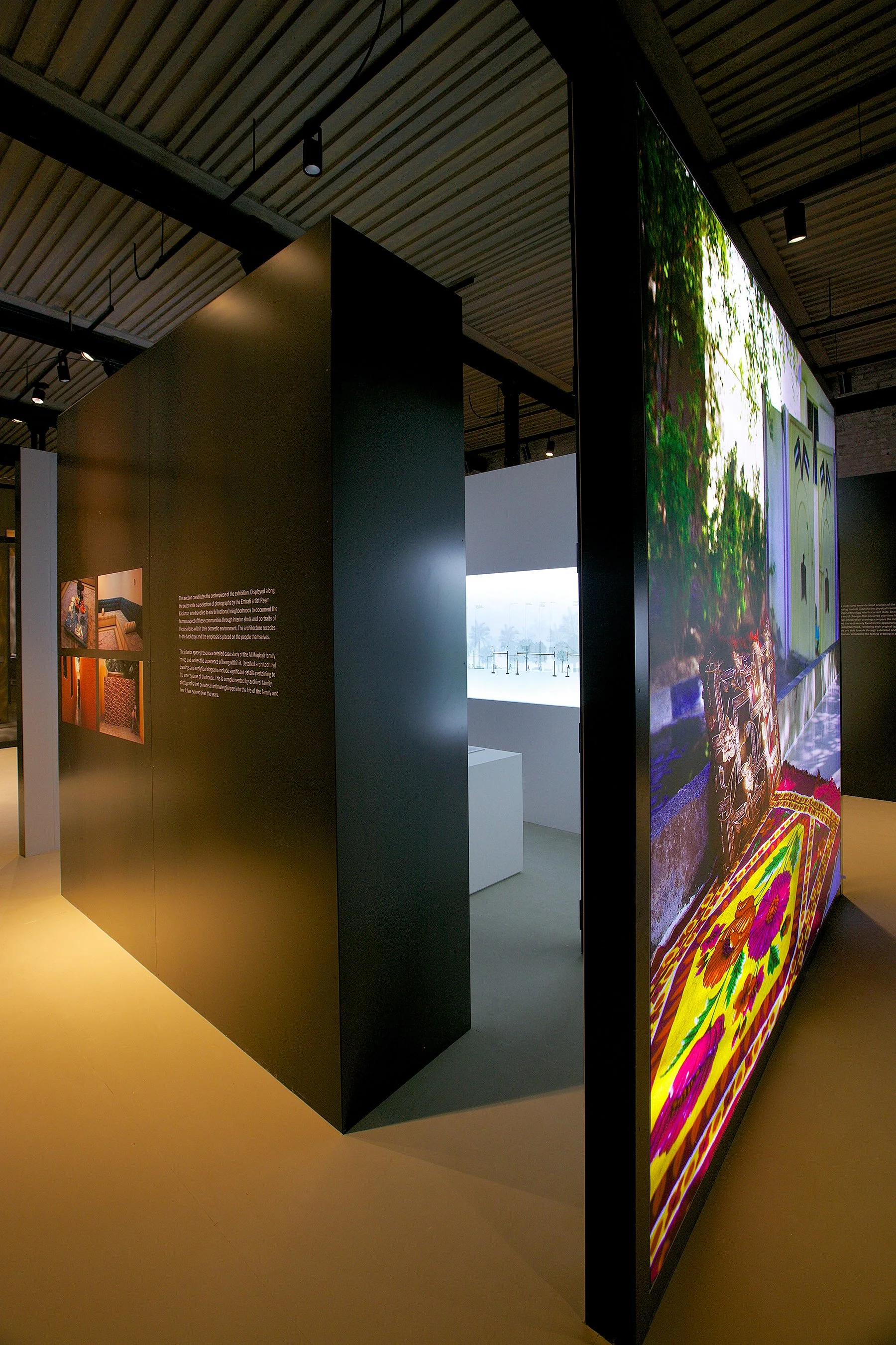
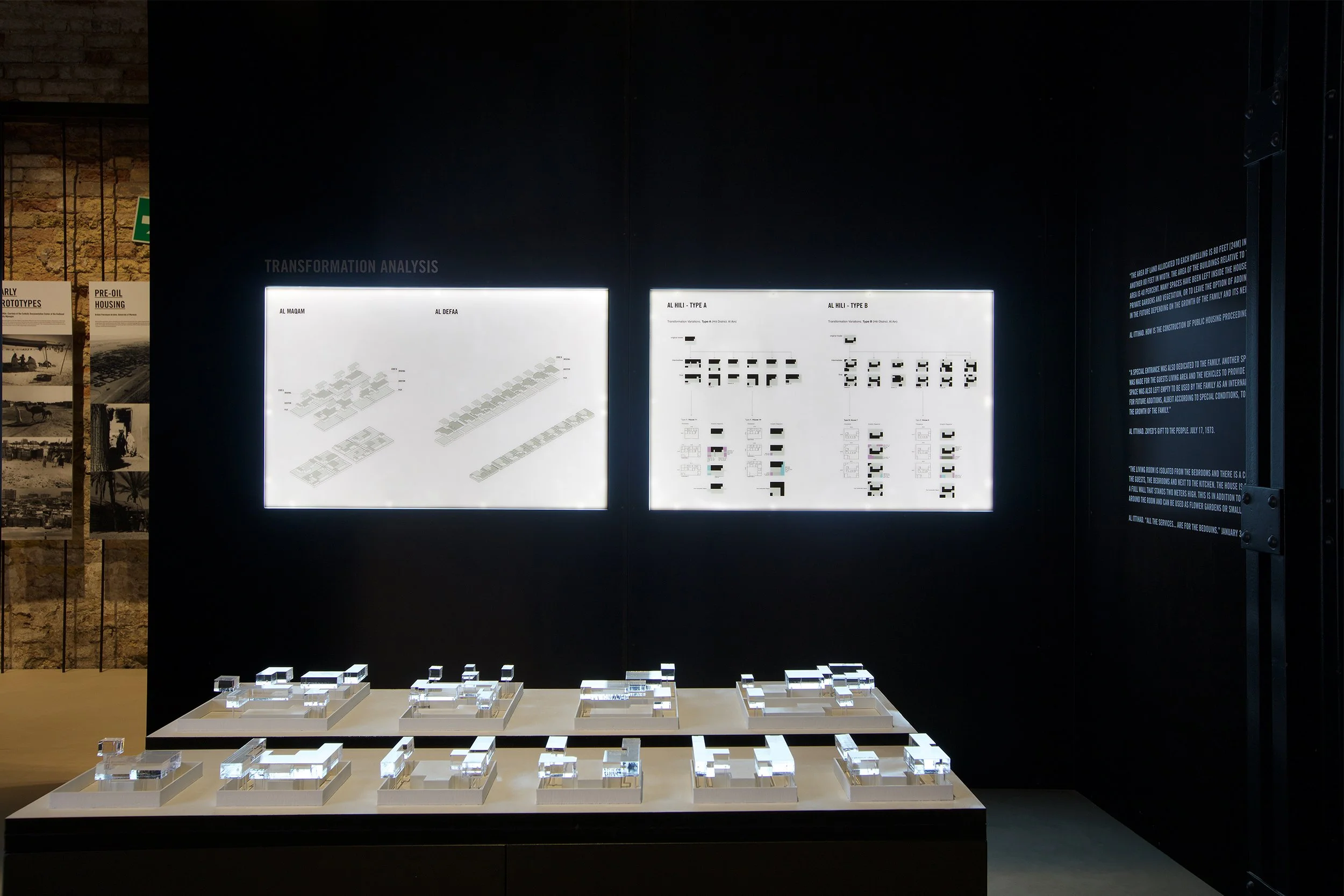
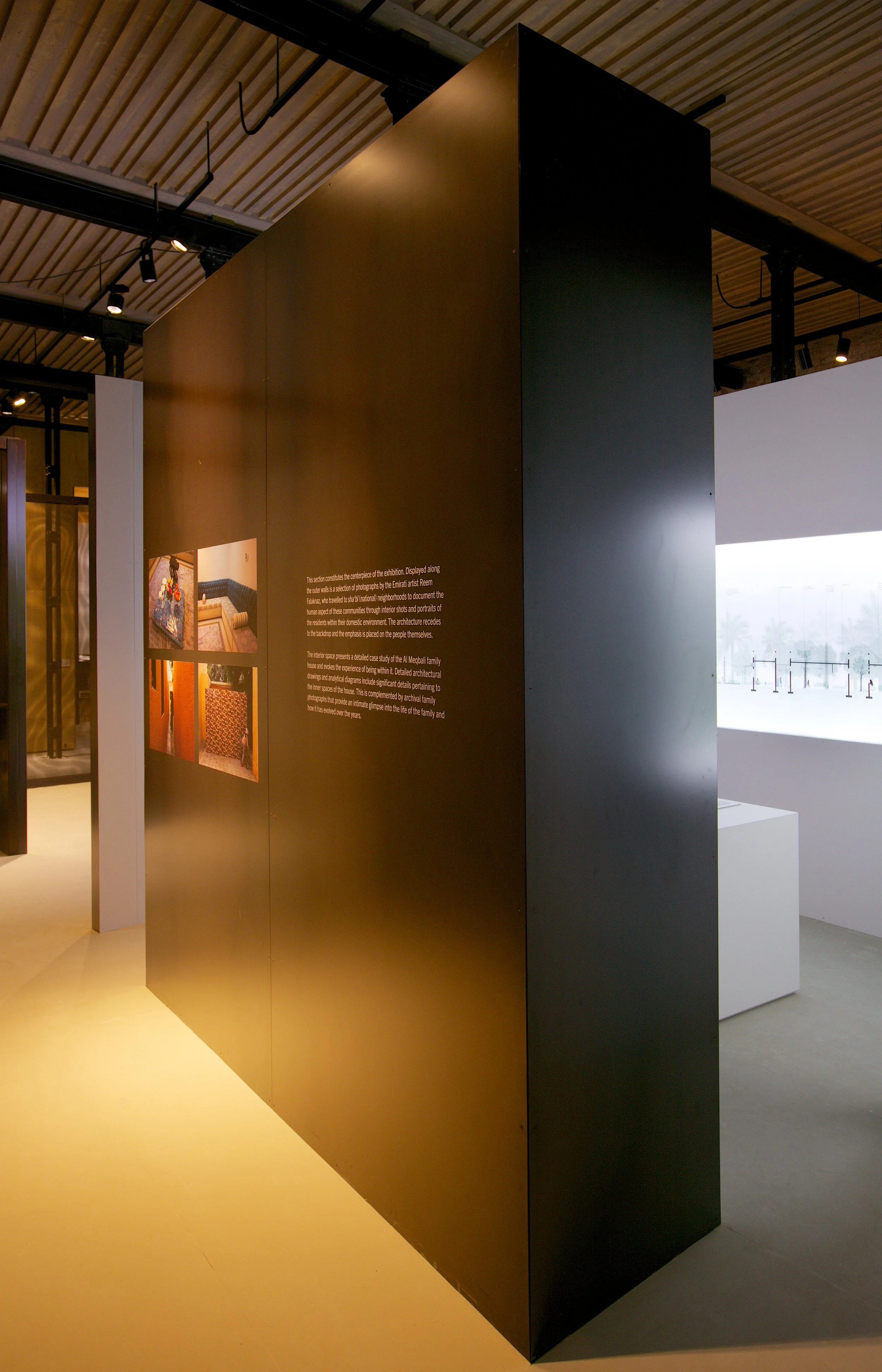
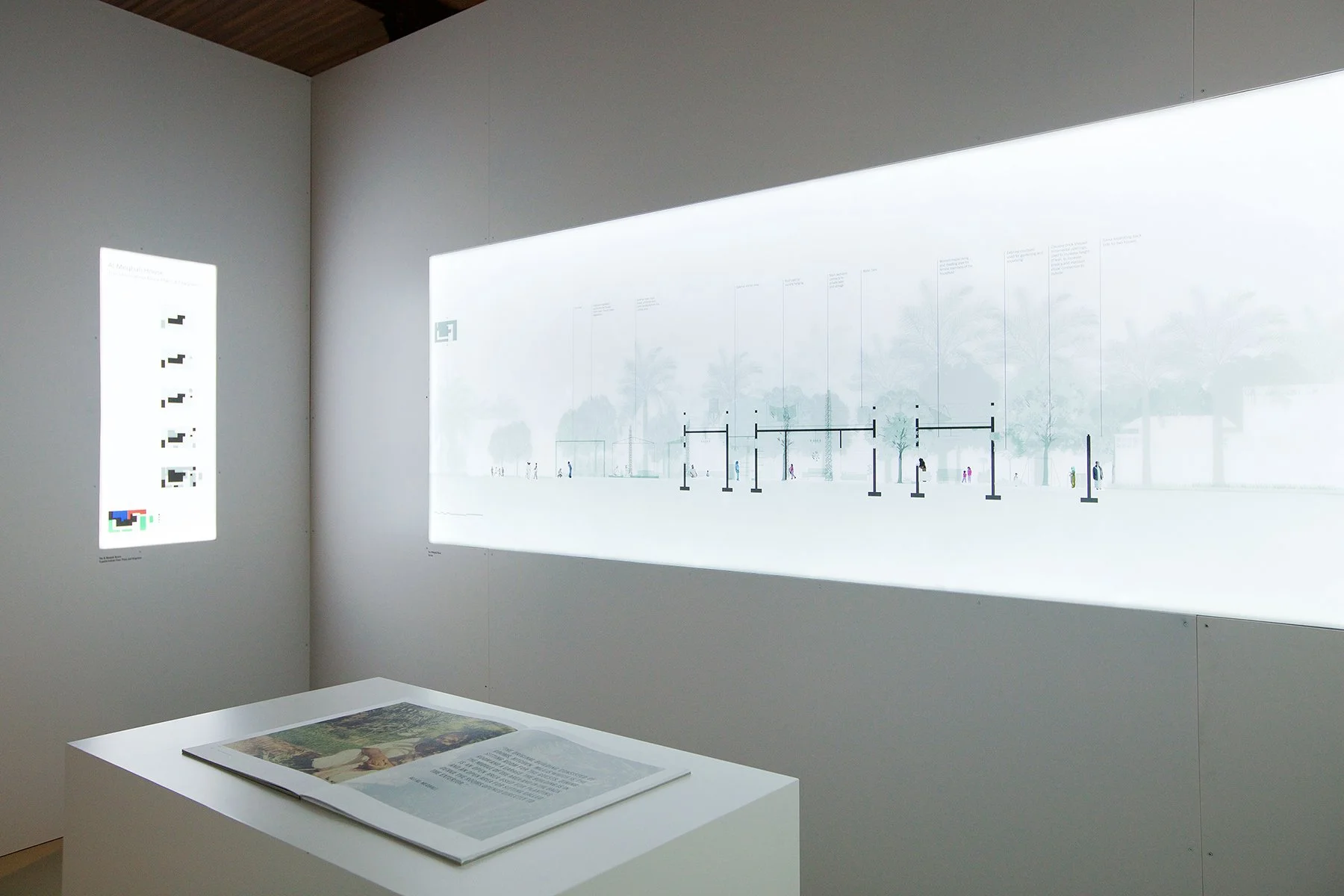
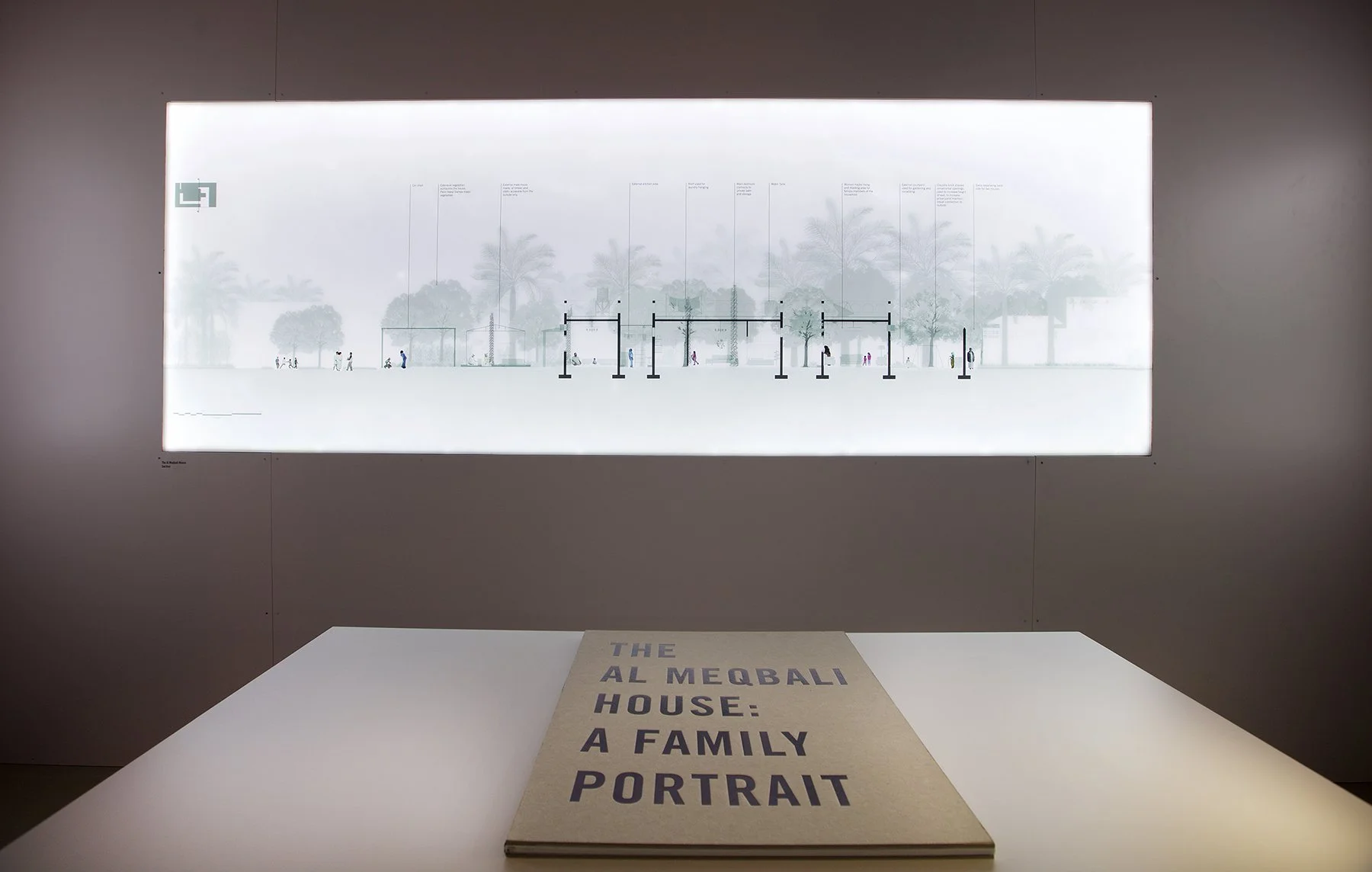
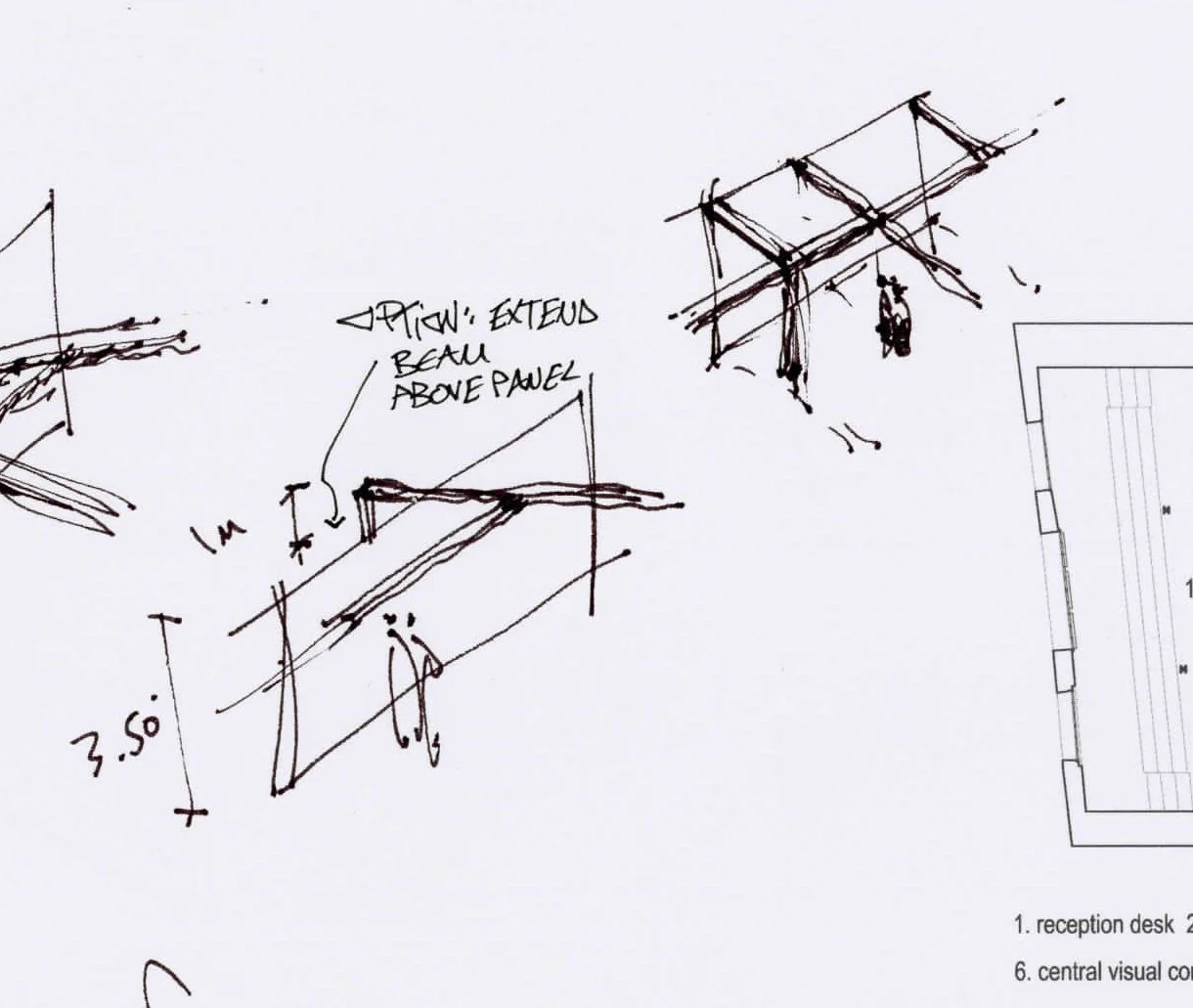
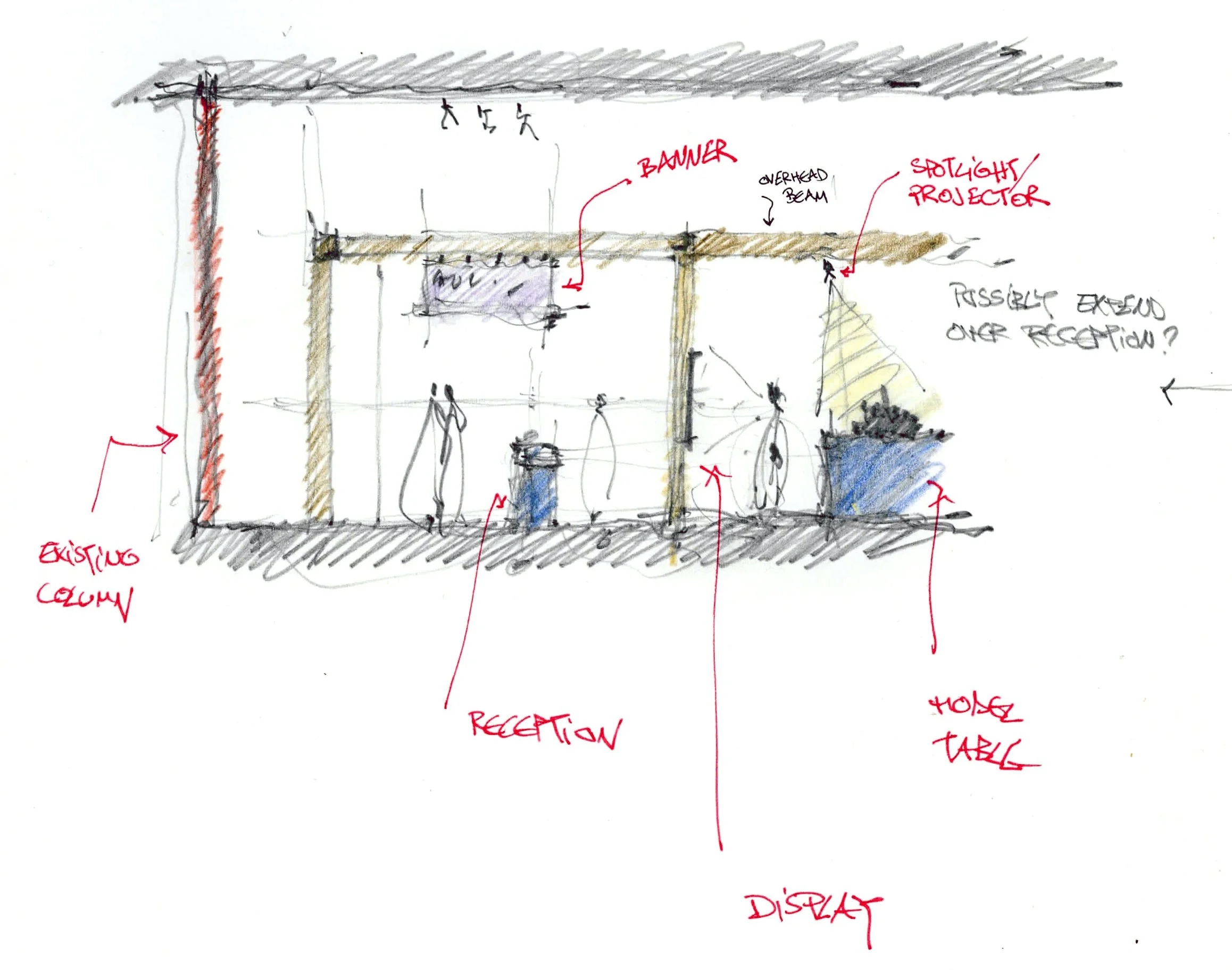
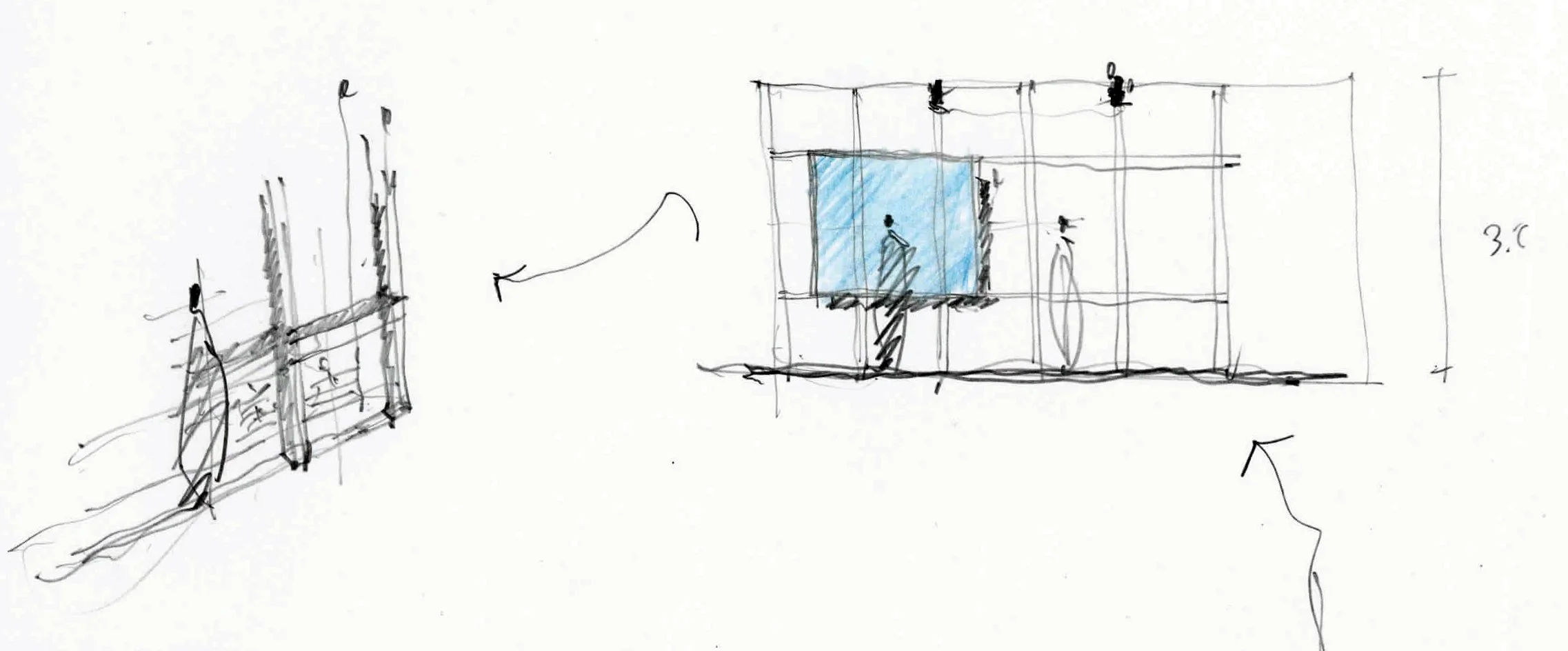
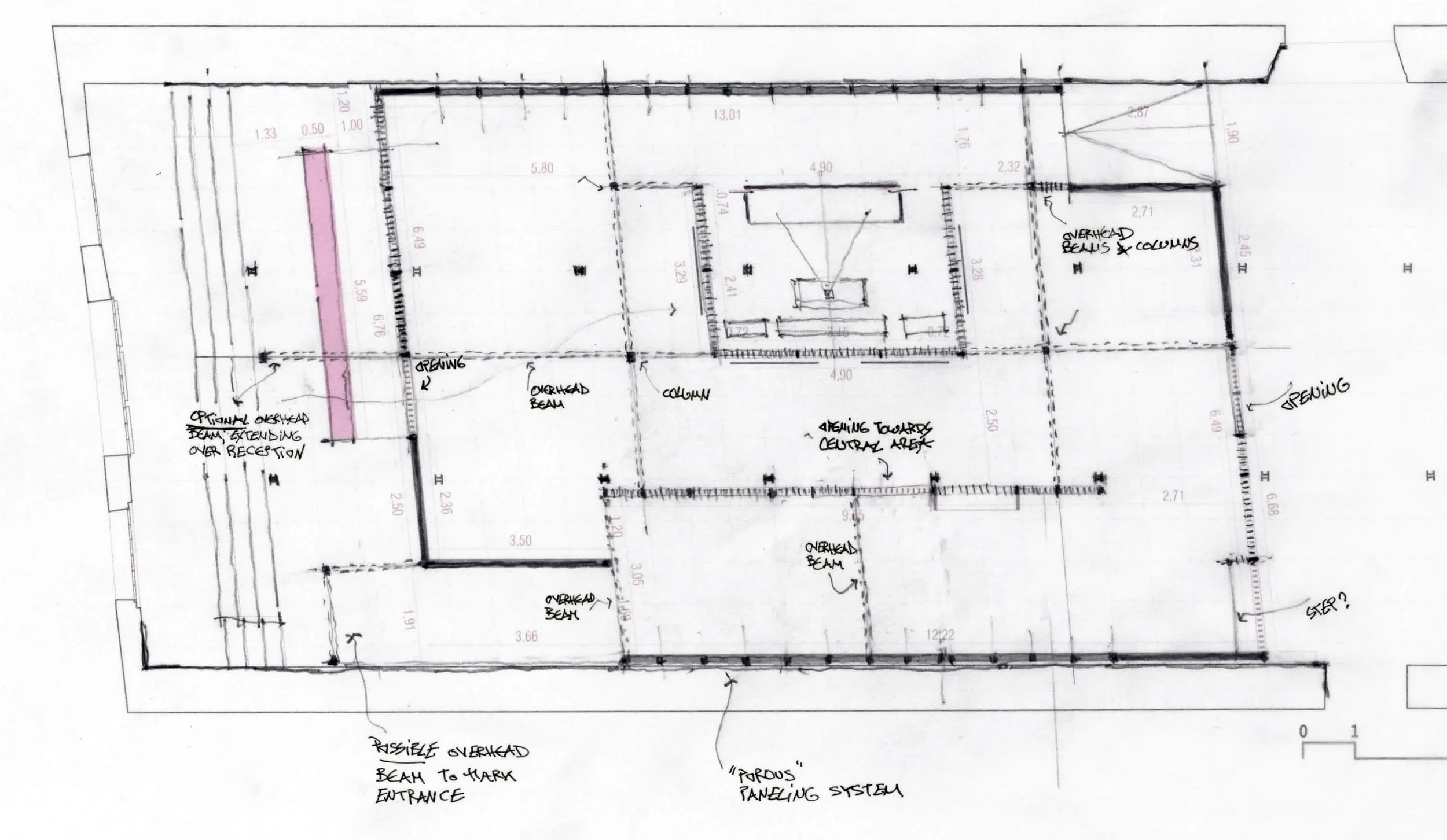
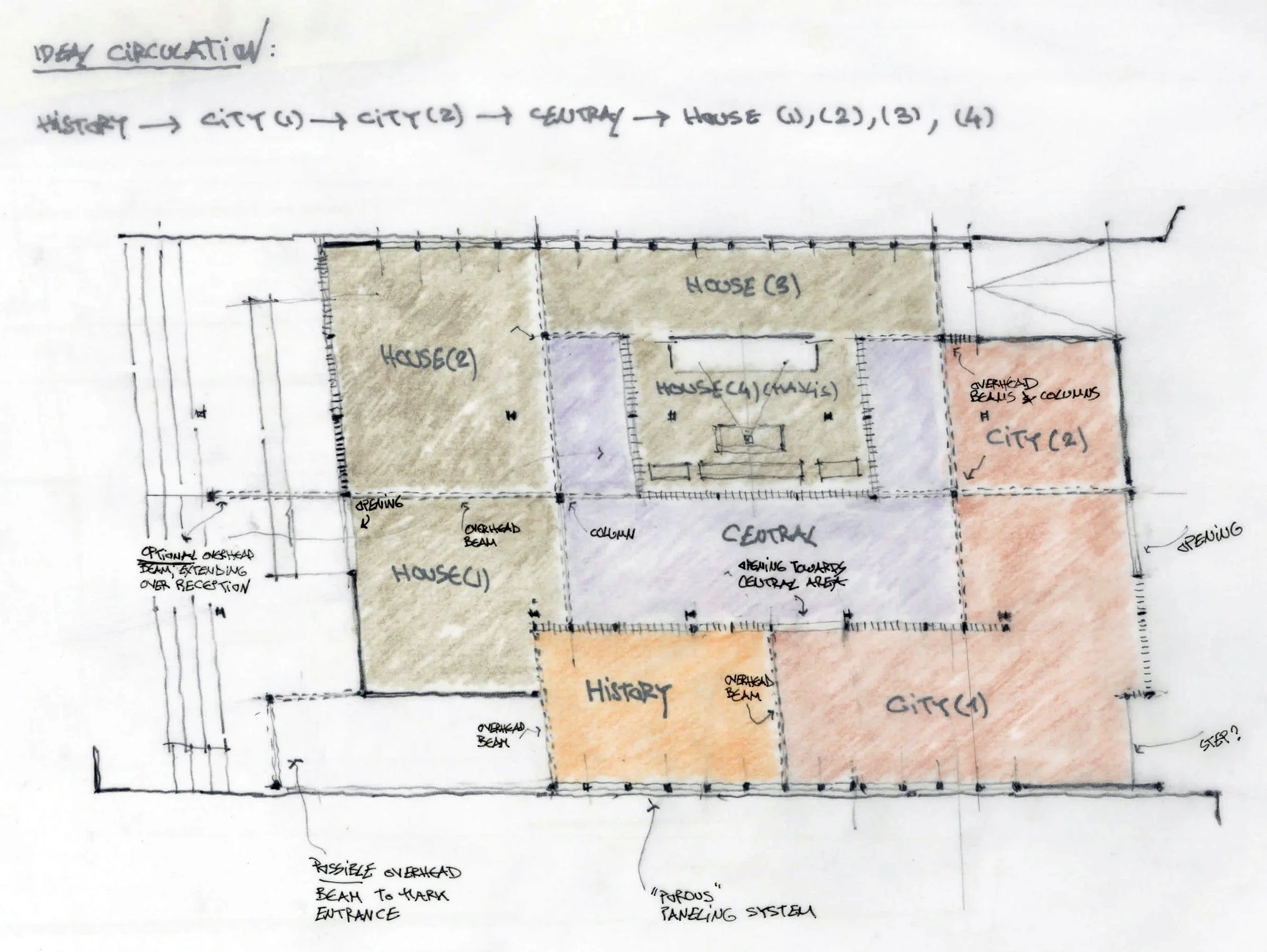
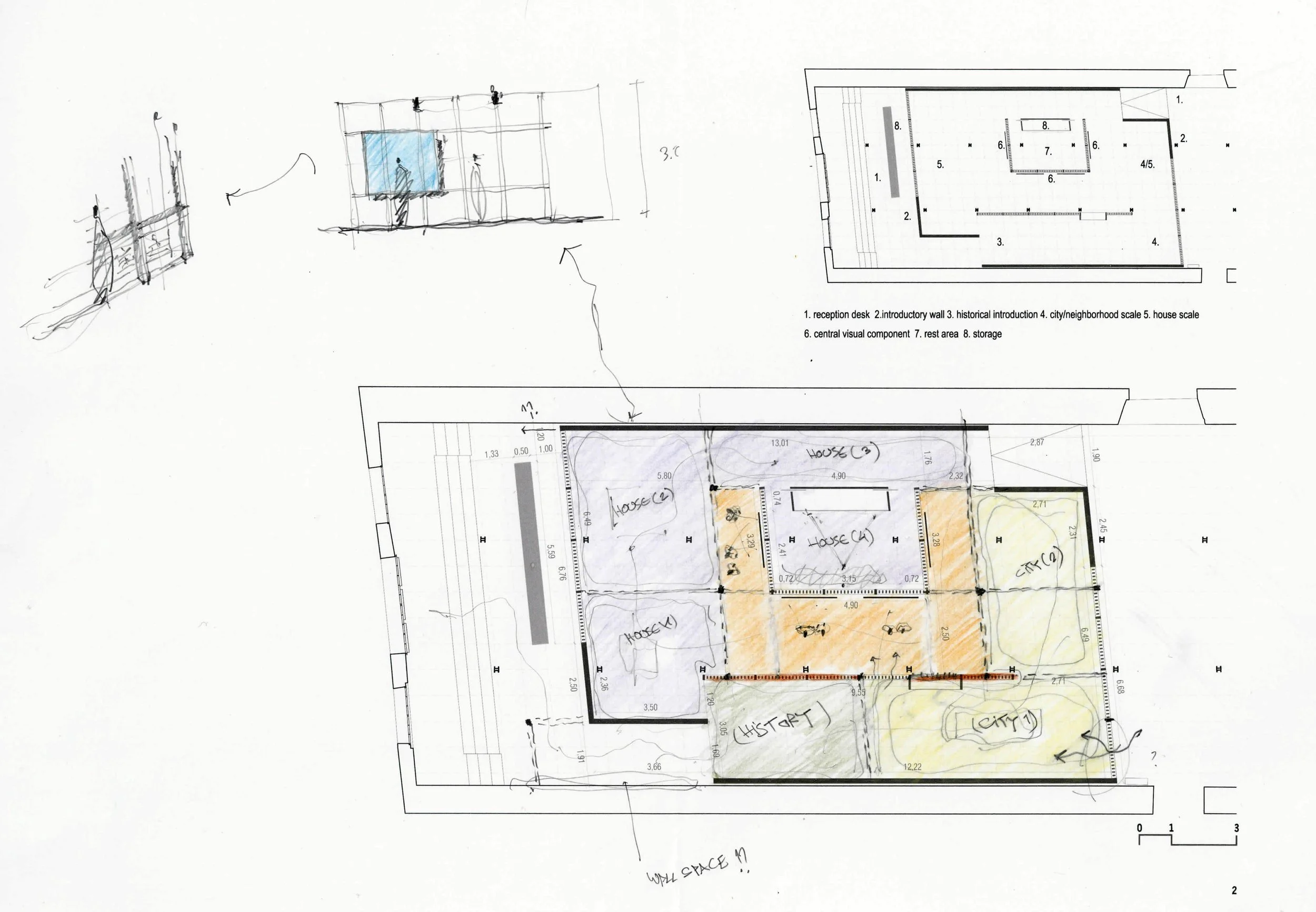
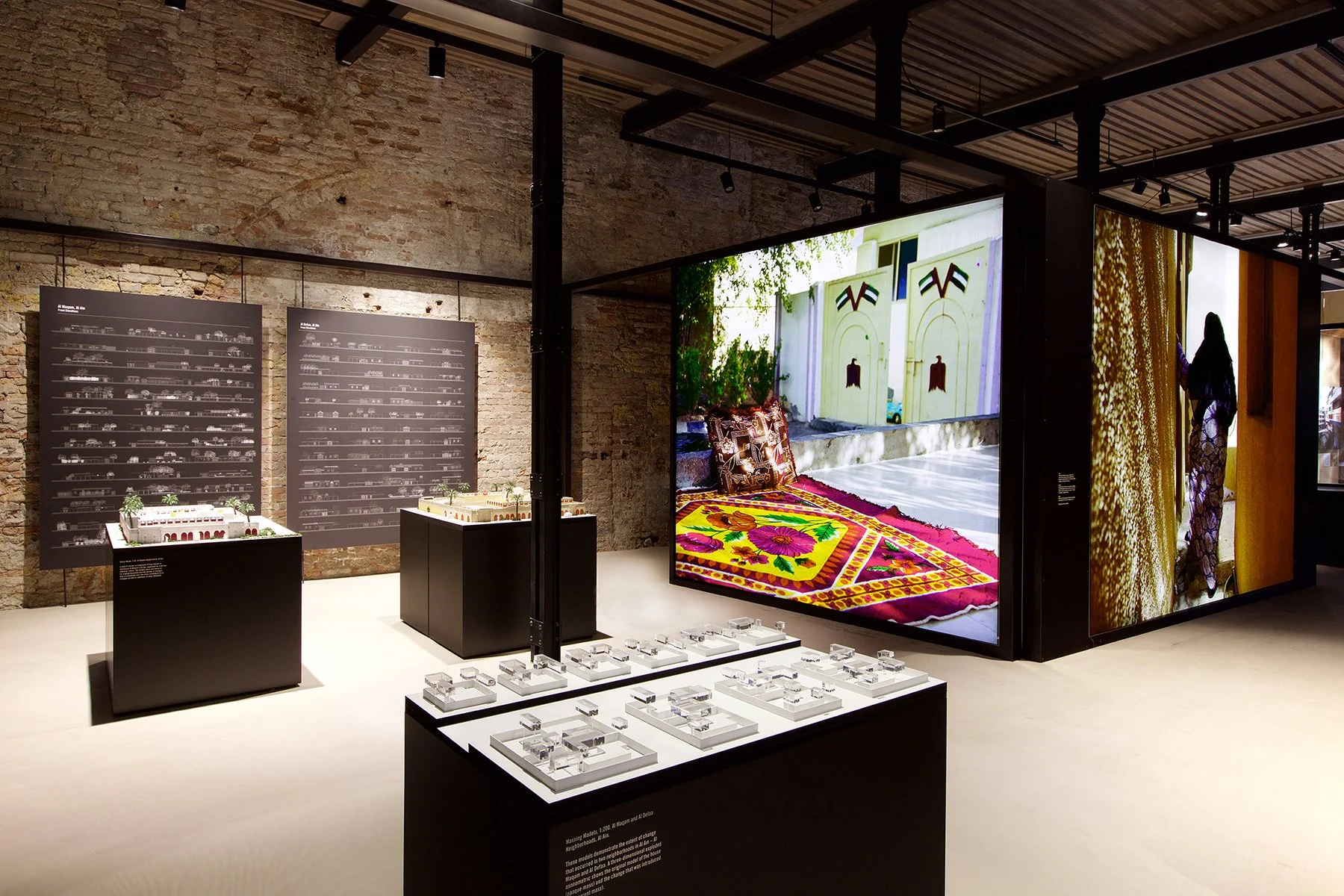
The installation design for the UAE National Pavilion at the 2016 Venice Architecture Biennale was conceived not simply as an exhibition about the sha‘bī house, but as a spatial experience that immersed visitors in the atmosphere, complexity, and intimacy of everyday life within these homes. Rather than presenting the research as a conventional architectural display of drawings and models arranged along walls, the pavilion was designed to evoke the sensation of moving through the rooms and spaces of a lived-in sha‘bī house. Inserted delicately within the historic fabric of the Sale d’Armi at the Arsenale, the intervention relied on a lightweight grid structure placed independently from the existing building, creating a sequence of intimate zones that suggested domestic rooms, corridors, courtyards, and gathering spaces. Overhead beams visually articulated this grid, while mesh-like panels acted as porous screens, allowing partial visibility between spaces and producing layered visual connections reminiscent of the permeability and spatial ambiguity of the houses themselves. Visitors were never meant to experience the exhibition from a single fixed viewpoint; instead, they navigated it gradually, discovering fragments of stories, photographs, diagrams, videos, models, and voices much as one encounters layers of everyday life while moving through an inhabited home.
This approach reflected the central argument of the exhibition itself: that the sha‘bī house was never a static architectural object but a framework continuously transformed by its inhabitants through adaptation, extension, personalization, and occupation over time. Large analytical posters, architectural drawings, and typological studies were juxtaposed with family photographs, oral histories, hand-drawn sketches by residents, and detailed models showing the accretion of rooms and spaces across generations. At the center of one room sat the oversized Meqbali House book, placed on a table as though it belonged to the domestic setting itself, encouraging visitors to pause, sit, and engage with the material intimately rather than consume it as spectacle. The overall material palette and spatial organization intentionally avoided the polished monumental language often associated with Biennale exhibitions, instead emphasizing modesty, tactility, and human scale. In this sense, the pavilion functioned less as a gallery and more as an inhabitable archive—one that translated the social and spatial qualities of the sha‘bī house into an immersive architectural installation.
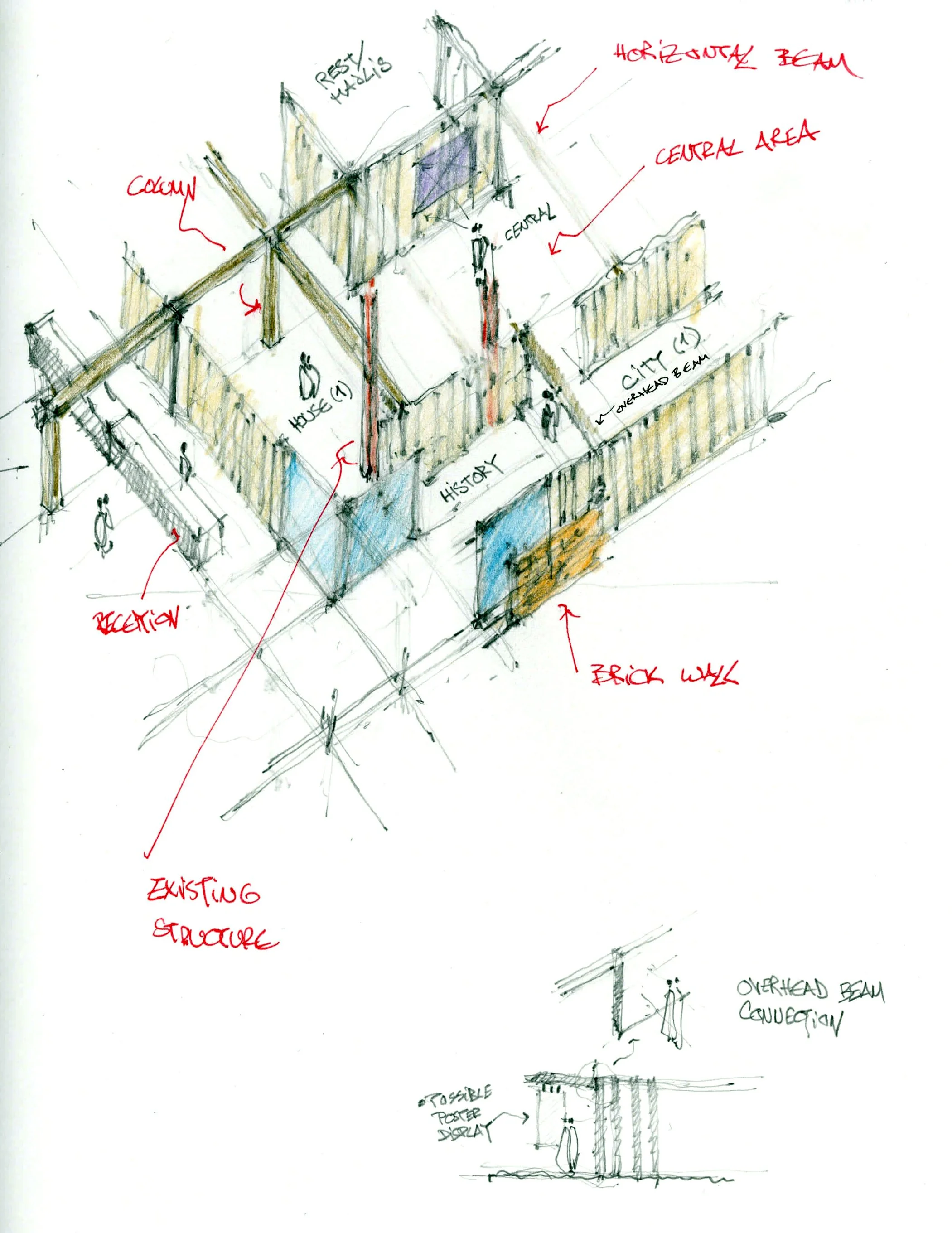
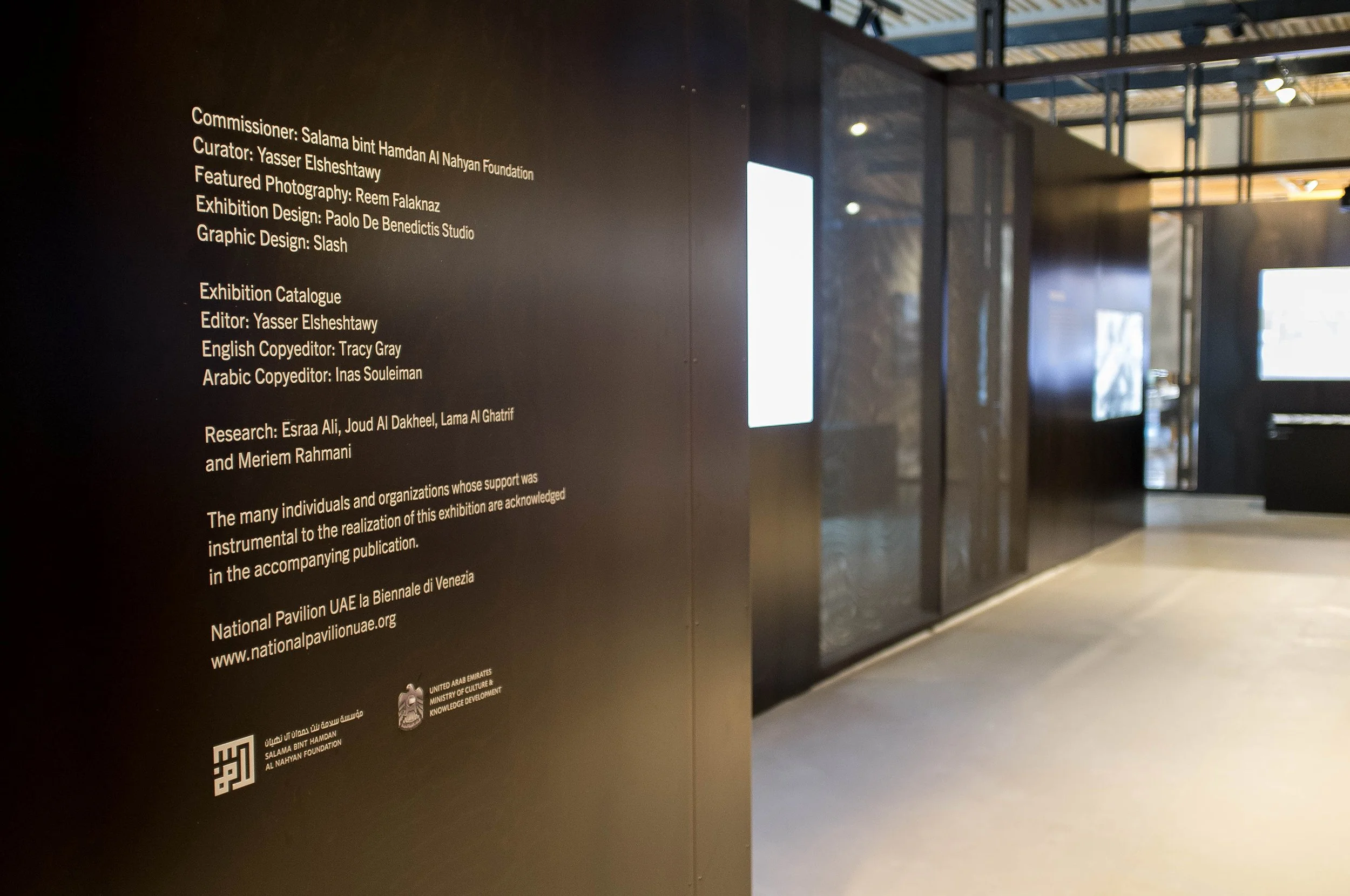
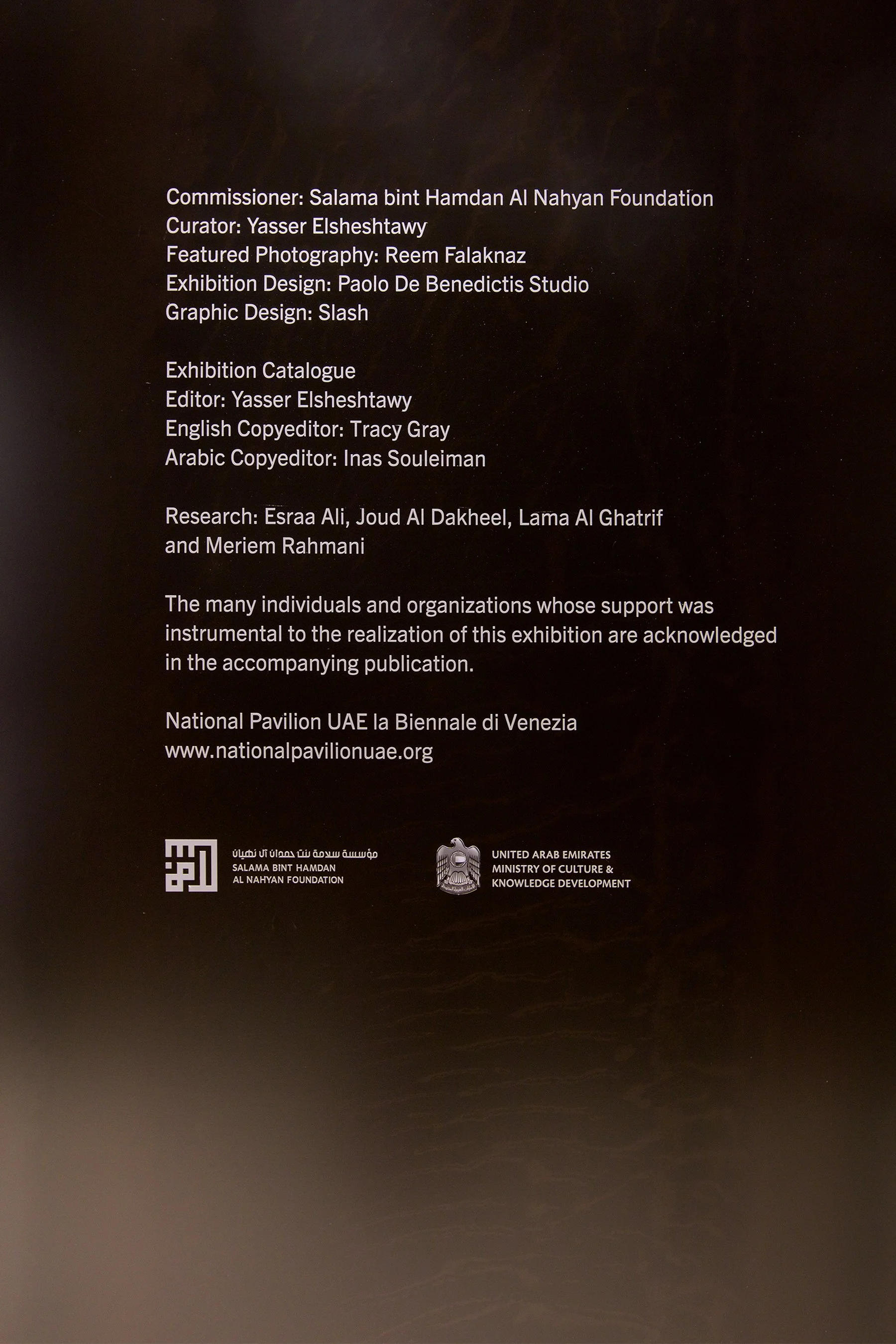
Based on guidance from the curator and a series of meetings held onsite in Venice and online from Abu Dhabi, the final design was completed and construction supervised by Paolo de Benidctis Studio in Venice