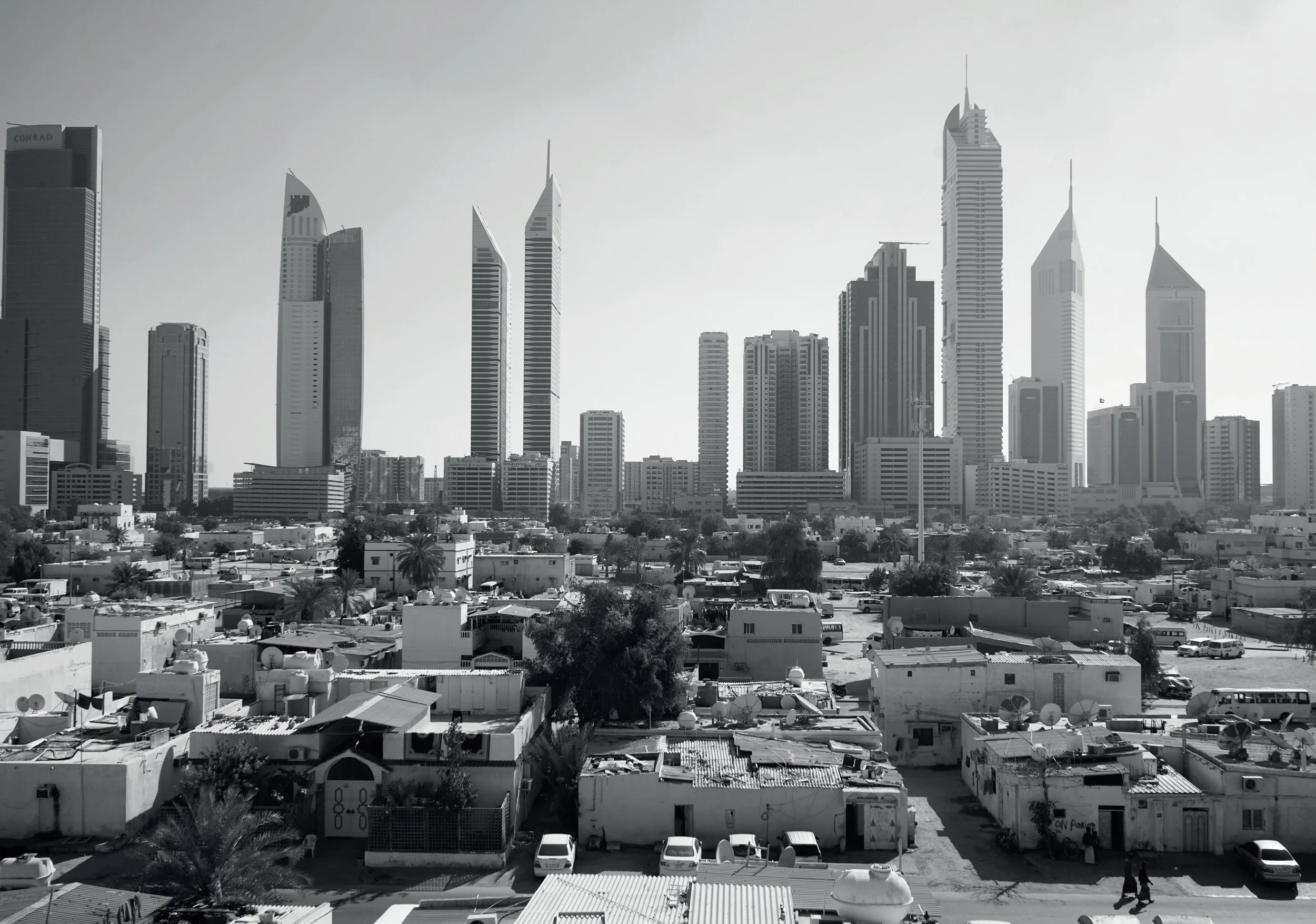
Vanishing Neighborhoods. The Rise and Disappearance of the Sha’abiya
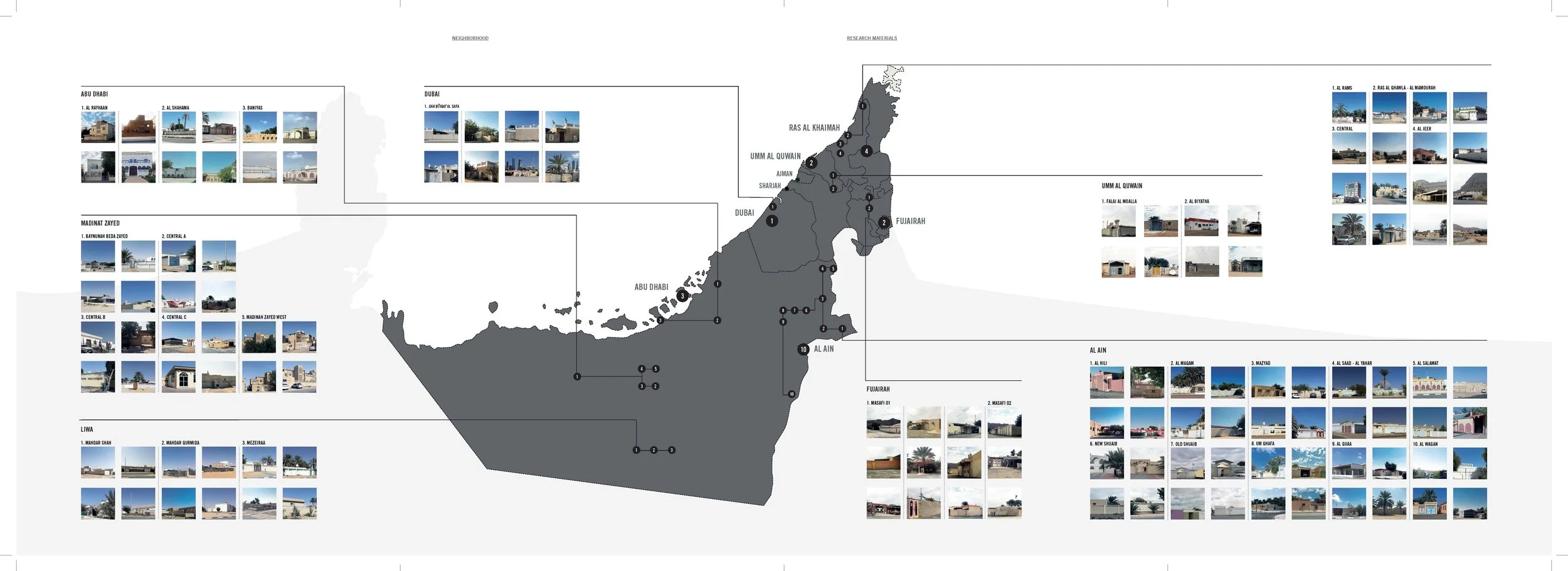
At the neighborhood scale, the Sha’abiya emerged in the early 1970s as a direct extension of the UAE’s post-1971 nation-building agenda, conceived not as isolated housing units but as cohesive settlements embedded within existing tribal geographies. Rather than concentrating populations in emerging urban centers, these neighborhoods were strategically located across the country—from Al Ain and Abu Dhabi to more remote areas such as Liwa, Masafi, and the northern emirates—forming a dispersed yet unified territorial network. Their planning reflected a simple but effective logic: modest single-story houses arranged on generous plots, with space allocated for gardens and informal use, producing a low-density fabric that prioritized privacy, climate responsiveness, and social cohesion. In contrast to the spectacle-driven image of Gulf urbanism, the Sha’abiya represented an alternative urbanity—grounded, lived-in, and deeply tied to everyday practices and cultural norms .
Over time, these neighborhoods evolved into complex, layered environments shaped as much by residents as by initial planning intentions. What began as standardized layouts gradually transformed through incremental modifications—extensions, boundary walls, landscaping, and decorative additions—resulting in a rich architectural diversity and a strong sense of place. Informal gardens flourished, softening the harsh desert environment and contributing to a distinctive spatial character in which houses often disappeared behind dense vegetation. Despite pressures from newer housing programs offering larger plots and more contemporary amenities, many Sha’abiyat have retained their social vitality, sustained by long-term residents and deep attachments forged over decades. Others have undergone demographic shifts, with expatriate populations occupying vacated homes, yet still preserving elements of their original fabric. As such, the Sha’abiya stands today as a dynamic urban form—part historical artifact, part living environment—offering critical insights into community formation, adaptation, and the enduring legacy of early state-led housing in the UAE .
Specific examples underscore both the diversity and the fragility of these neighborhoods. Al Maqam in Al Ain, developed in the late 1970s, illustrates the incorporation of decorative elements such as arches following Sheikh Zayed’s directive to emphasize Islamic architectural identity, while still retaining the original courtyard-based layout. Defaa Sha’abiya in Al Ain—once documented as a vivid example of layered transformations and everyday life—has since been demolished, signaling the vulnerability of these environments in the face of redevelopment pressures. A similar fate has befallen Sha’abiya Shorta in Dubai, another early neighborhood that has disappeared from the urban landscape. Meanwhile, more remote settlements such as those in Liwa, or early neighborhoods like Al Jeer in Ras Al Khaimah, continue to offer insight into the original planning logic and its long-term evolution. Taken together, these cases reveal a shifting condition: the Sha’abiya as both a resilient form of lived urbanism and an increasingly endangered component of the UAE’s architectural heritage .