When the Villagers Opened the Floodgates
Hassan Fathy, Gourna, and the Unfinished Story of Arab Modernism

Liège, Belgium June 9, 2026
I am currently in Liège to serve as an external examiner for a dissertation on the regional distribution of mosques in Belgium—a topic that inevitably raises questions of visibility, architectural language, and identity. As I reflected on these issues, my thoughts turned to Hassan Fathy, who grappled with similar concerns decades ago in his attempt to create a model village for the residents of Gourna near Luxor in Upper Egypt. As I recount in my book “Arab Modernism(s)” his work was driven by a desire to forge an architecture rooted in local culture and tradition, yet it also revealed the complexities and contradictions that arise when identity is shaped from above rather than emerging from the lived experiences of the people themselves.
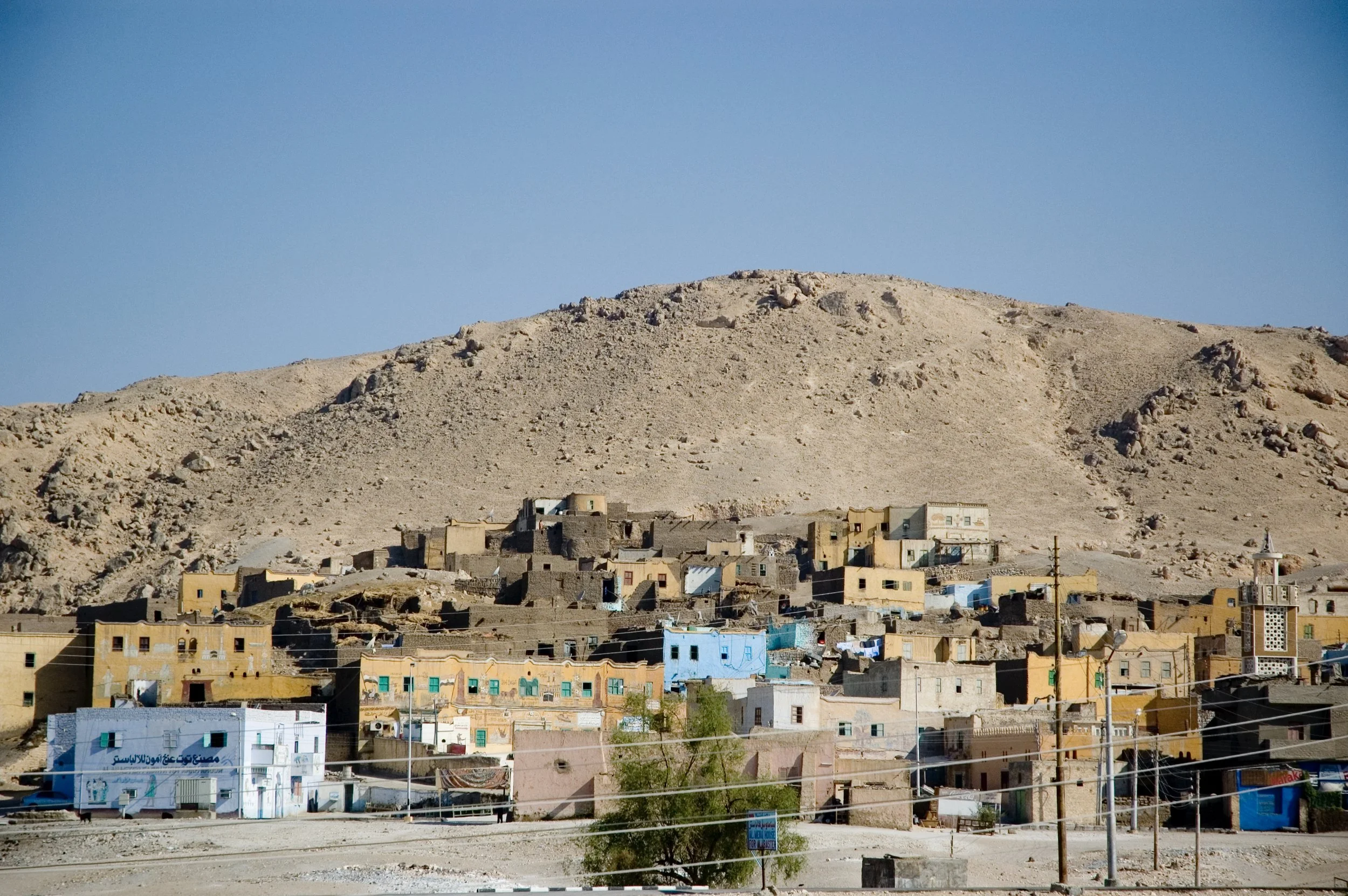
Old Village of Gourna. Luxor. 2006
Some architectural encounters stay with you for a lifetime. Mine began not in a building, but in a book. In 1985, as a young architecture student at Cairo University, I found myself volunteering at the annual conference of the Union Internationale des Architectes (UIA), held on our campus. It was a remarkable event. Architects from around the world descended upon Cairo. We were eager students, fascinated by foreign visitors and grand ideas, though often frustrated by an architectural education that seemed content to teach us how to draw rather than how to think.
One moment from that conference remains etched in my memory. Hassan Fathy, already a legendary figure abroad but curiously neglected within Egypt's own architectural establishment, was awarded the UIA Gold Medal. I still remember, seated among the crowds in the auditorium of Cairo University, watching as the organization's president knelt before him to present the award. It felt symbolic. Here was an architect whom much of the local profession had dismissed as a provincial sideshow, receiving one of the highest international honors.
Yet by then, I already knew who Hassan Fathy was.
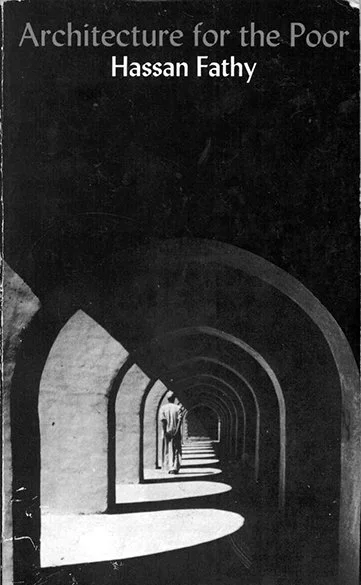
My introduction had come several years earlier through my father. One day he handed me a copy of Architecture for the Poor. Alongside it was a Swiss architectural magazine from the 1960s containing a feature on Fathy's work. The images were mesmerizing. Domes, vaults, courtyards, shaded arcades, villages emerging organically from the earth. They seemed completely different from the architecture we were studying at university. At Cairo University we were taught to admire Le Corbusier, Mies van der Rohe, Walter Gropius, and the canon of Western modernism. Fathy did not appear in the curriculum. Even as a footnote under "vernacular architecture." His architecture, philosophy and world view were deemed not worthy of any serious pursuit.
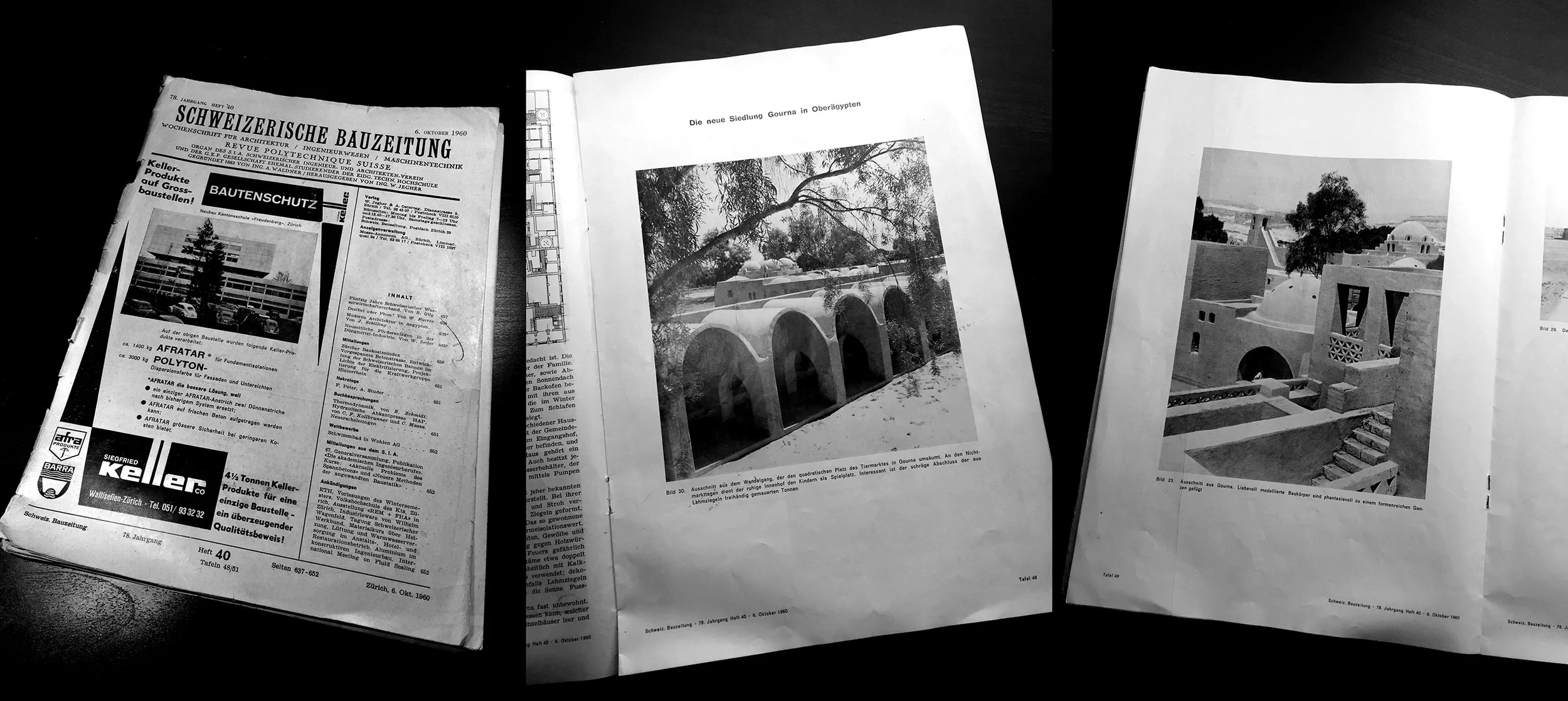
But those photographs captivated me. They suggested another possibility. Here was an architect arguing that modernity did not have to arrive imported from elsewhere. It could emerge from local materials, climate, traditions, and ways of life. To a young student searching for alternatives, Fathy appeared revolutionary. I wanted to see Gourna for myself. The opportunity arrived during a university field trip to Upper Egypt. Like generations of architecture students before us, we traveled south to study Egypt's ancient monuments. Yet my interest was elsewhere. After visiting the Valley of the Kings, I persuaded our supervisor to stop at New Gourna. What I encountered was not the village from the photographs. I remember peering through the bus window, searching for the iconic domes that had fascinated me. Eventually they appeared, but barely. The buildings were crumbling. Additions had been attached to facades. Garbage accumulated in public spaces. The marketplace seemed abandoned. The pristine village from the glossy images had become something altogether different.
Only a handful of us got off the bus. The rest of the group remained behind, too busy with their own petty interests, seeing a ramshackle of crumbling buildings as an affront to serious architecture. As soon as we set step outside the bus a group of children quickly surrounded us and offered to show us "Hassan Fathy's house." Following them through narrow pathways, we explored the remains of the village. Despite the decay, there was still something magical about the place. The mosque retained its intimacy and dignity. The arcades still framed beautiful patterns of light and shadow. The proportions remained exquisite.
Yet there was also sadness.
Standing on the roof of one of the houses, alongside my colleagues Ali and Magdy, looking down at cracked walls and deteriorating courtyards, I found myself asking a question that would stay with me for decades: if this project was so celebrated, why had it failed? The answer, I later discovered, is quite complicated. Fathy envisioned Gourna as an alternative modernity. He wanted to create architecture rooted in local culture rather than imported international styles. Long before architectural historians began speaking of critical regionalism, Fathy was already grappling with the question that philosopher Paul Ricoeur famously posed: how does one become modern while remaining connected to one's sources? In many respects, he anticipated debates that would dominate architecture for decades. Yet Gourna also revealed the limitations of this vision.
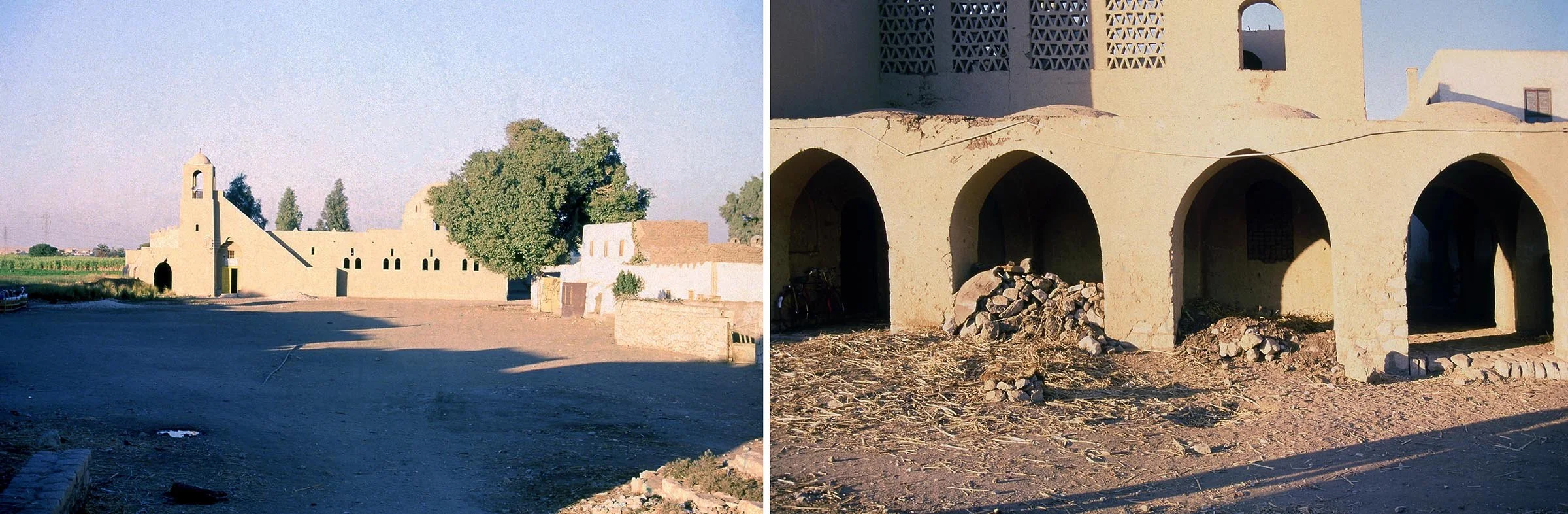
L-R: Village Mosque; Marketplace Arcades (1984)
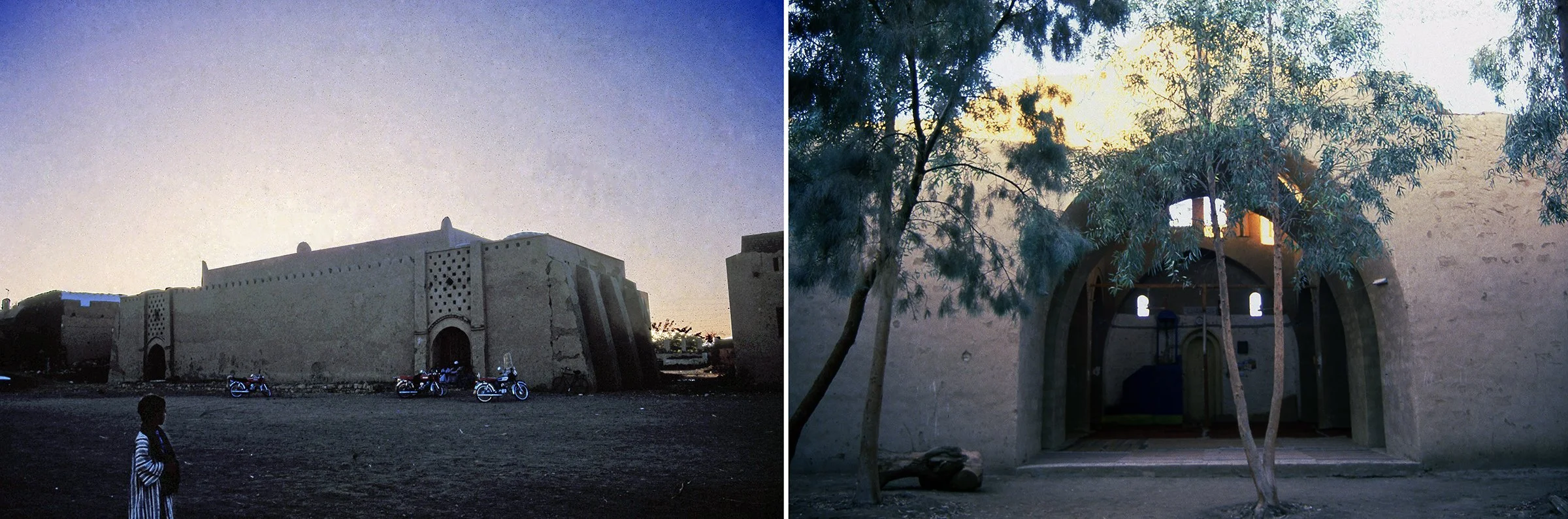
Village Theater; Mosque Courtyard (1984)
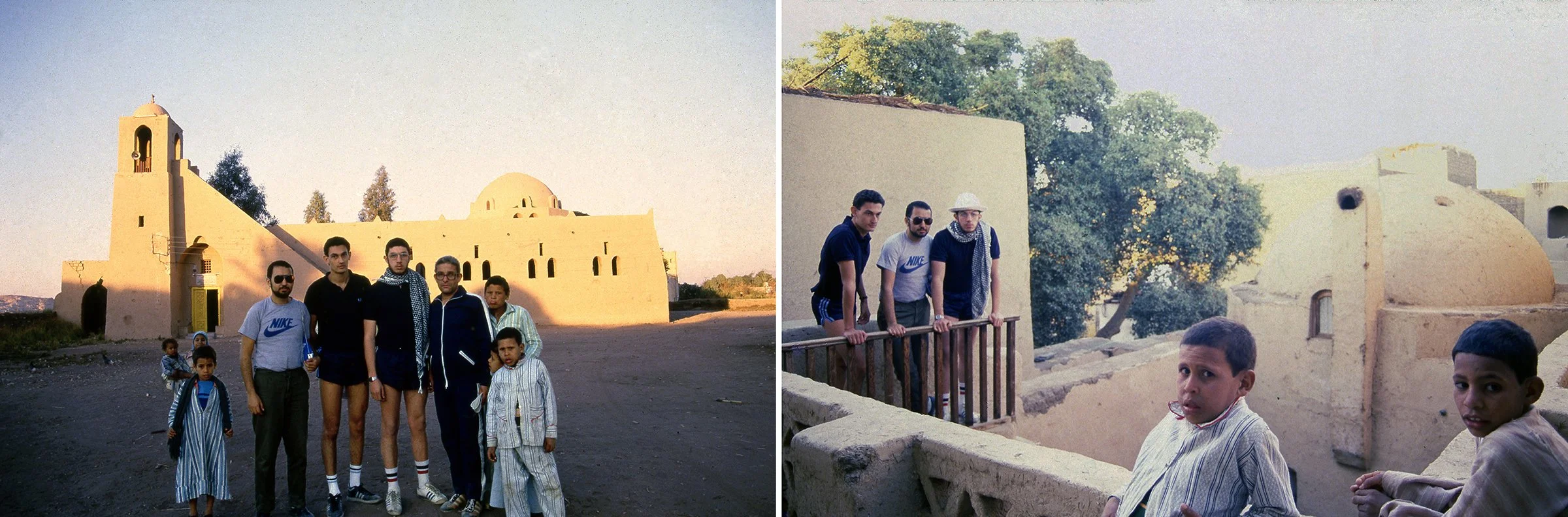
Standing in front of the Mosque (L-R: Myself, Magdy, Ali, Mr. Samir); Rooftop, Hassan Fathy House (Magdy, Myself, Ali)
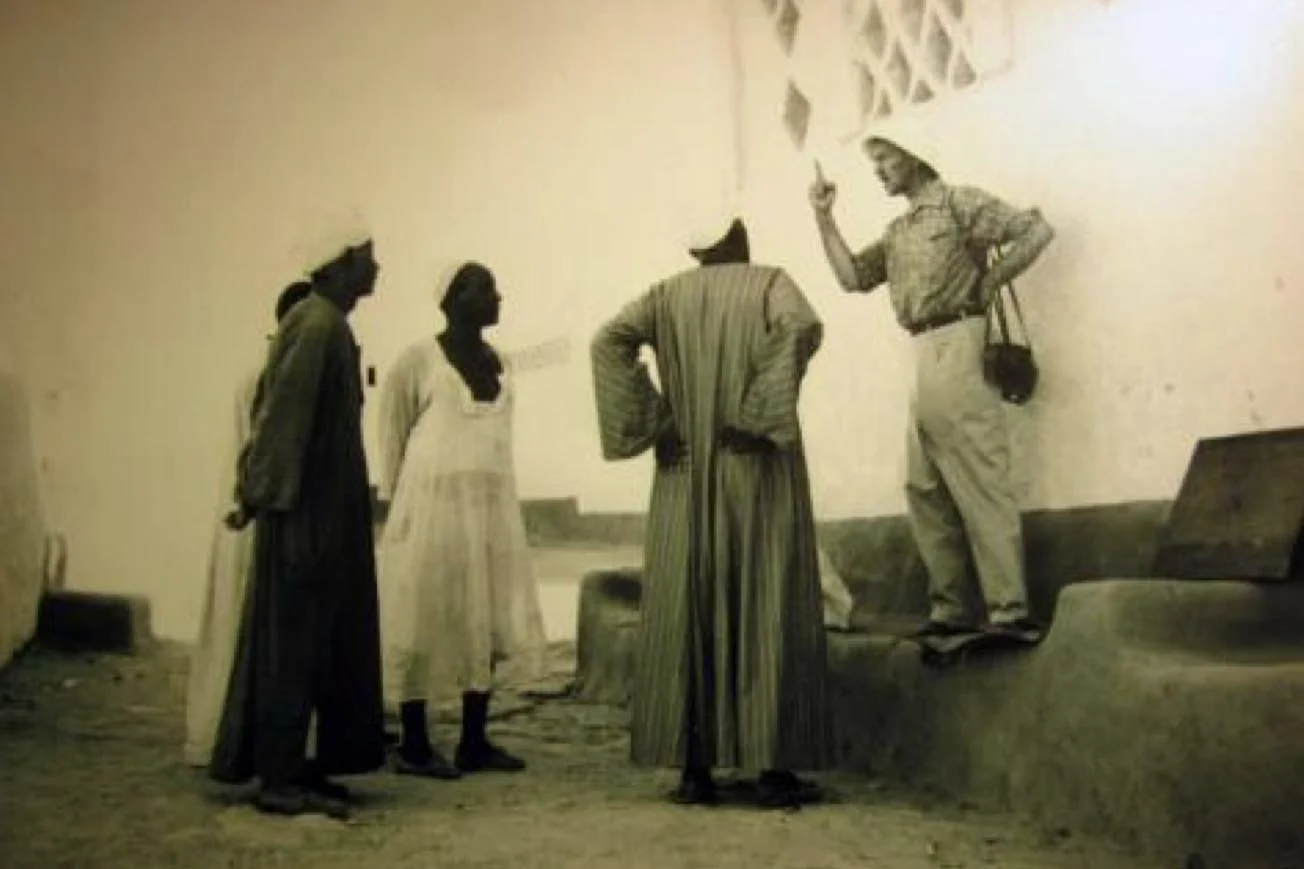
The villagers were not passive recipients waiting for a savior. They had their own priorities, economies, and aspirations. Many resisted relocation. Some saw the domes as resembling tombs rather than homes. Others objected to being removed from their livelihoods. Most significantly, the village did not allow for the incremental growth and adaptation that characterized traditional settlements. The houses were carefully designed, but they were finished objects. Real villages are never finished. This tension appears vividly in Egyptian cultural representations of Gourna. In the novel The Mountain and its film adaptation, the architect becomes a tragic and somewhat arrogant figure, convinced of his own vision yet unable to persuade those he seeks to help. In one memorable scene, villagers attack the new settlement with burning torches. Fiction, perhaps, but rooted in a deeper truth. Reality proved no less dramatic. At one point, villagers reportedly opened floodgates, allowing Nile waters to inundate parts of the settlement.
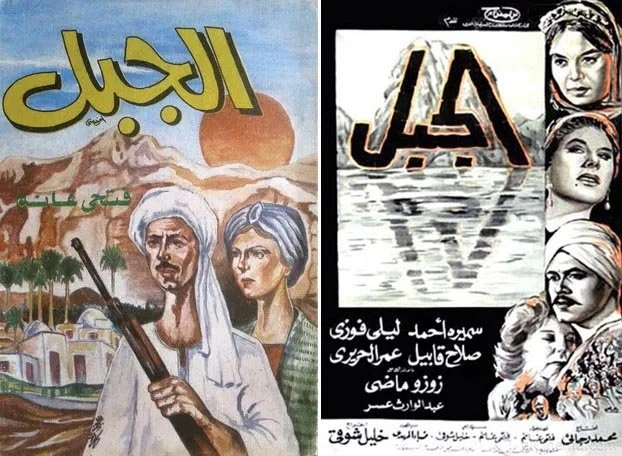
Book Cover & Movie Poster “The Mountain”
Architecture had collided with everyday life.
This, ultimately, is why I describe Gourna as an "interesting failure." Failure does not diminish its significance. On the contrary, it is precisely because Gourna failed that it remains so important. Fathy foresaw many of the shortcomings of orthodox modernism. He understood the importance of climate, identity, local knowledge, and cultural continuity long before these concerns became fashionable. Yet he also fell into a trap common to many modernists: believing that architects know what is best for people.
There was a paternalism embedded within the project. Moreover, an architecture conceived for the poor gradually became an architecture for the wealthy. Over time, Fathy's language of domes, vaults, and courtyards was appropriated by luxury resorts, exclusive compounds, and elite developments. What began as a social project evolved into an aesthetic style. Architecture for the poor became architecture for the rich. And perhaps that is the most revealing lesson of all.
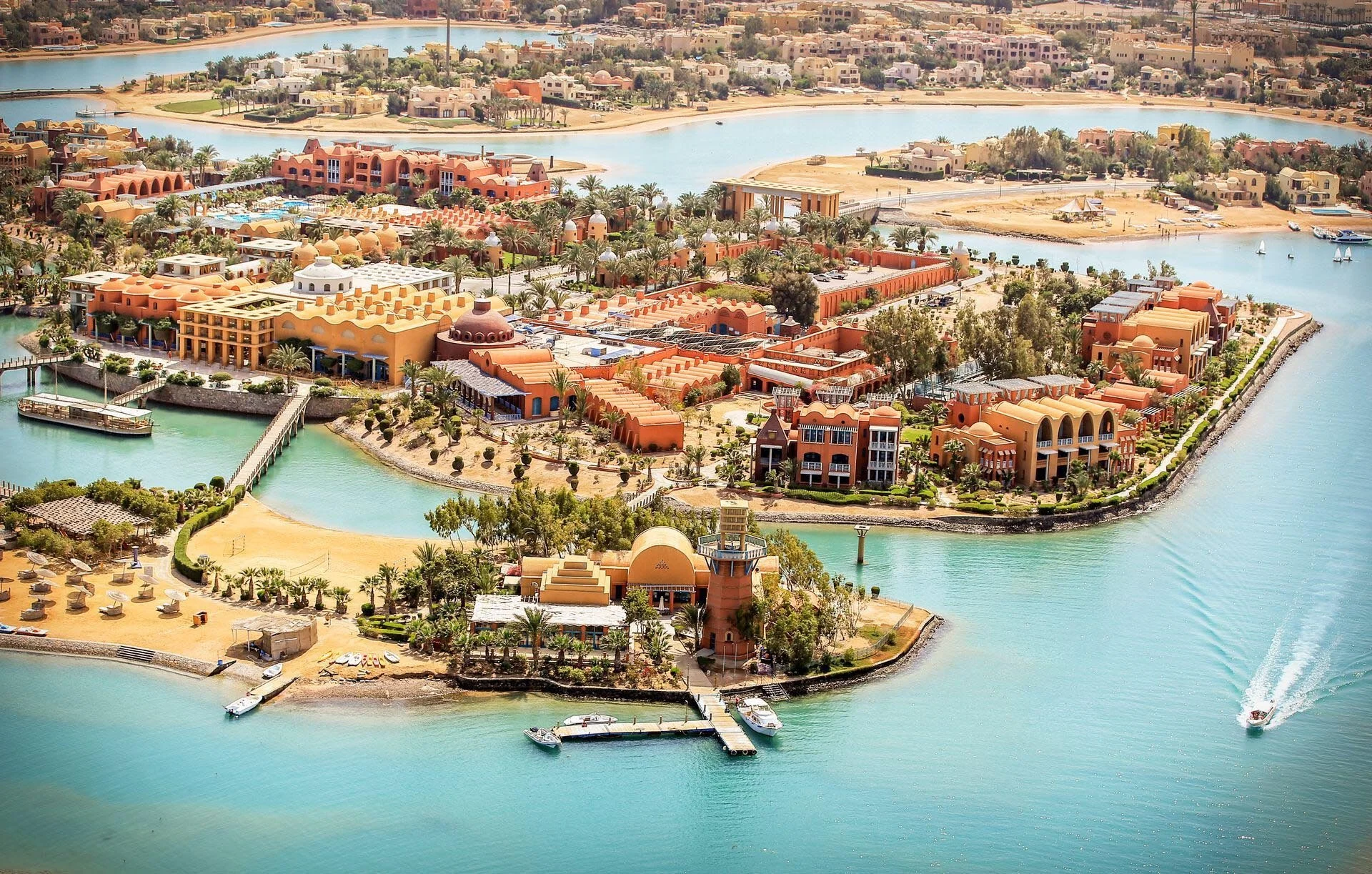
Sheraton Miramar Resort. Architect: Michael Graves. Gouna, Red Sea. Egypt
Modernity in the Arab world was never simply a matter of choosing between tradition and progress. It was a far more complex struggle involving power, identity, representation, and the question of who gets to decide what a better future looks like.
Gourna reminds us that architecture cannot be imposed from above, no matter how noble the intentions. Identity cannot be designed into existence. It must emerge from the people themselves—from their practices, aspirations, adaptations, and everyday lives.
That is why Hassan Fathy continues to fascinate me. He refused to accept the status quo and instead sought in vain to search for an alternative way -- a different way of building, a different way of seeing.
And nearly eighty years later, we are still engaged in the same debate, the same challenges, the same issues.
As if we learned nothing at all.
This blog is adapted from Chapter 2, "Gourna: An Interesting Failure," in my book Arab Modernism(s): Cities, History and Culture, which explores how architects, planners, writers, and ordinary citizens across the Arab world grappled with the promises and contradictions of modernity. The full chapter delves deeper into Gourna's history, its cultural representations, its influence on later architectural movements, and what its legacy tells us about identity, power, and belonging in the modern Arab city. If this is of interest, I invite you explore these issues further on my website or you may also wish to purchase the book through the publisher or Amazon. And it is available in university libraries throughout the world.
