Coda. Returning to the Sha’bī House
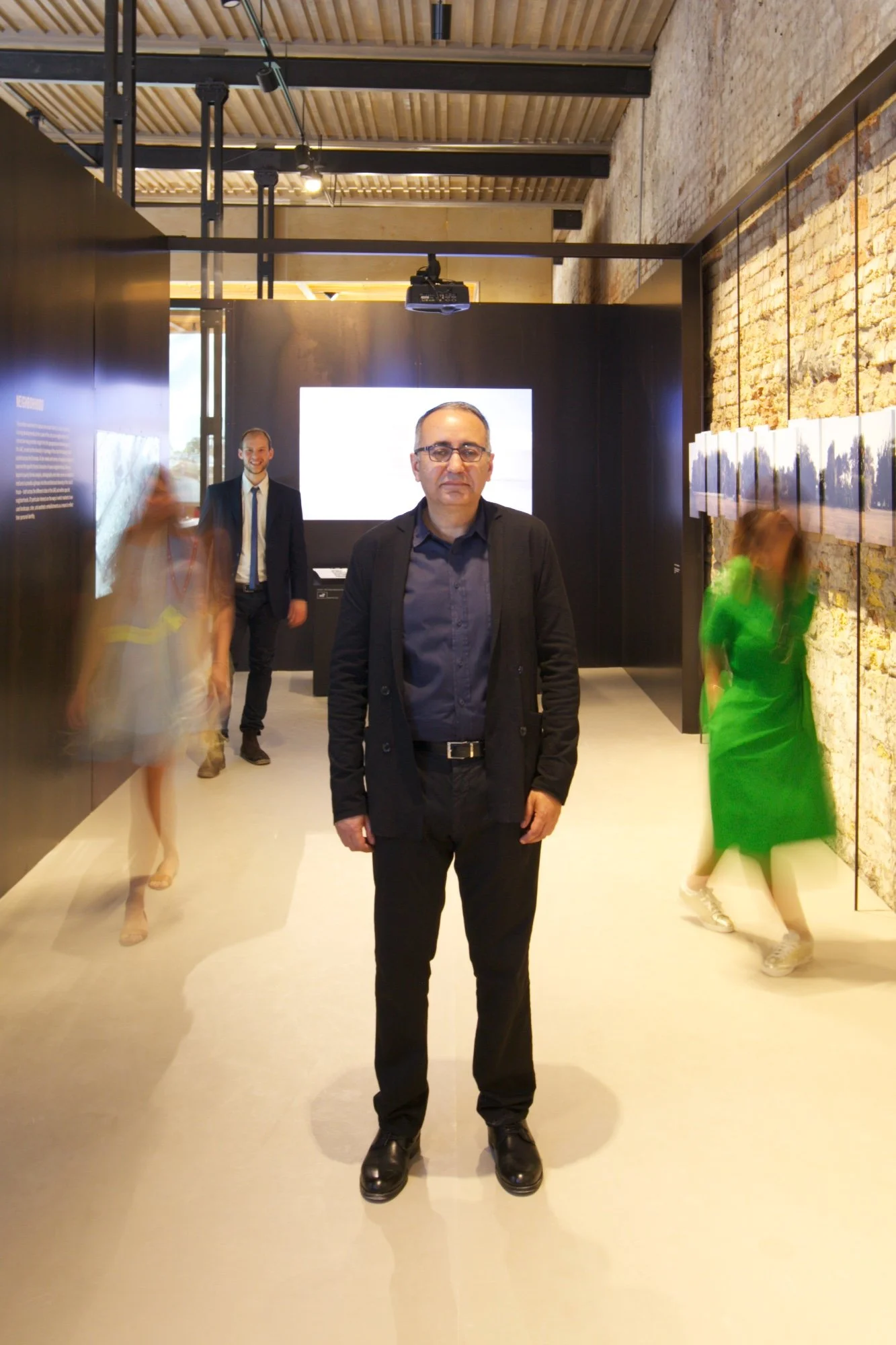
What began for me in Al Ain in 1997 as curiosity about a modest housing typology gradually evolved into a long intellectual and personal journey that culminated in the UAE National Pavilion at the 2016 Venice Architecture Biennale and later in the 2024 research project conducted for the Zayed National Museum. Over time, I came to realize that the Sha’bī house was never simply a housing project, but part of a larger nation-building experiment through which a newly formed state sought to settle Bedouin populations, provide welfare, and construct a modern national identity while remaining attentive to cultural traditions and social habits. Yet behind official narratives emphasizing progress, infrastructure, and rising living standards lay another story—one of transformation, negotiation, resistance, and adaptation carried out quietly by residents themselves.
What ultimately made the Sha’bī house so compelling was its flexibility. Residents continuously modified their homes with remarkable ease, enclosing courtyards, subdividing rooms, inserting tents and gathering spaces, and incrementally expanding houses to accommodate changing family structures and everyday practices. As I argued in my research, the house functioned as a “blank canvas,” a framework within which people could continue forms of inhabitation inherited from nomadic life while negotiating new conditions of modernity. This point was captured poignantly by Sophia Al-Maria in her memoir describing life in Gulf sha‘bī housing during the 1970s and 1980s, where she observed how these houses seemed permanently under construction, expanding fluidly whenever another family member needed space. Her reflections also revealed the gap between official assumptions about privacy and the far more flexible realities of everyday social life. In this sense, the transformations of the Sha’bī house were not signs of failure or disorder, but forms of participation through which inhabitants became active producers of urban space, reclaiming agency from rigid top-down planning models.
The Venice pavilion attempted to spatially express these ideas by allowing visitors to move through the exhibition as though navigating the rooms of a lived-in Sha’bī house. At its center stood the Al Meqbali house, introduced to me through my student Shaikha Al Meqbali, whose family home became one of the emotional anchors of the exhibition. Returning again in 2024 revealed both continuity and fragility: many neighborhoods had changed dramatically through demolition, renovation, or abandonment, yet traces of everyday life and adaptation remained visible. Ultimately, the Sha’bī house remains a living archive of the UAE’s social history—a reminder that cities are shaped not only by planners, governments, and architects, but also by ordinary residents who continuously negotiate, appropriate, and transform the spaces they inhabit.