Documenting the Sha’abi House. Exhibitions, Research, and the Architecture of Everyday Life
The Sha’abi House project generated a diverse body of publications that together document, interpret, and critically reflect on one of the Gulf’s most significant yet often overlooked housing experiments. Moving across exhibition catalogues, research reports, academic essays, and public-facing publications, these works trace the evolution of the Sha’abi house from a state-led modern housing initiative introduced in the early years of the UAE to a lived, transformed, and deeply personalized environment shaped by its inhabitants over decades. They also reveal how this modest architectural typology became a lens through which broader questions of identity, modernization, belonging, memory, and everyday urban life in the Gulf can be understood.
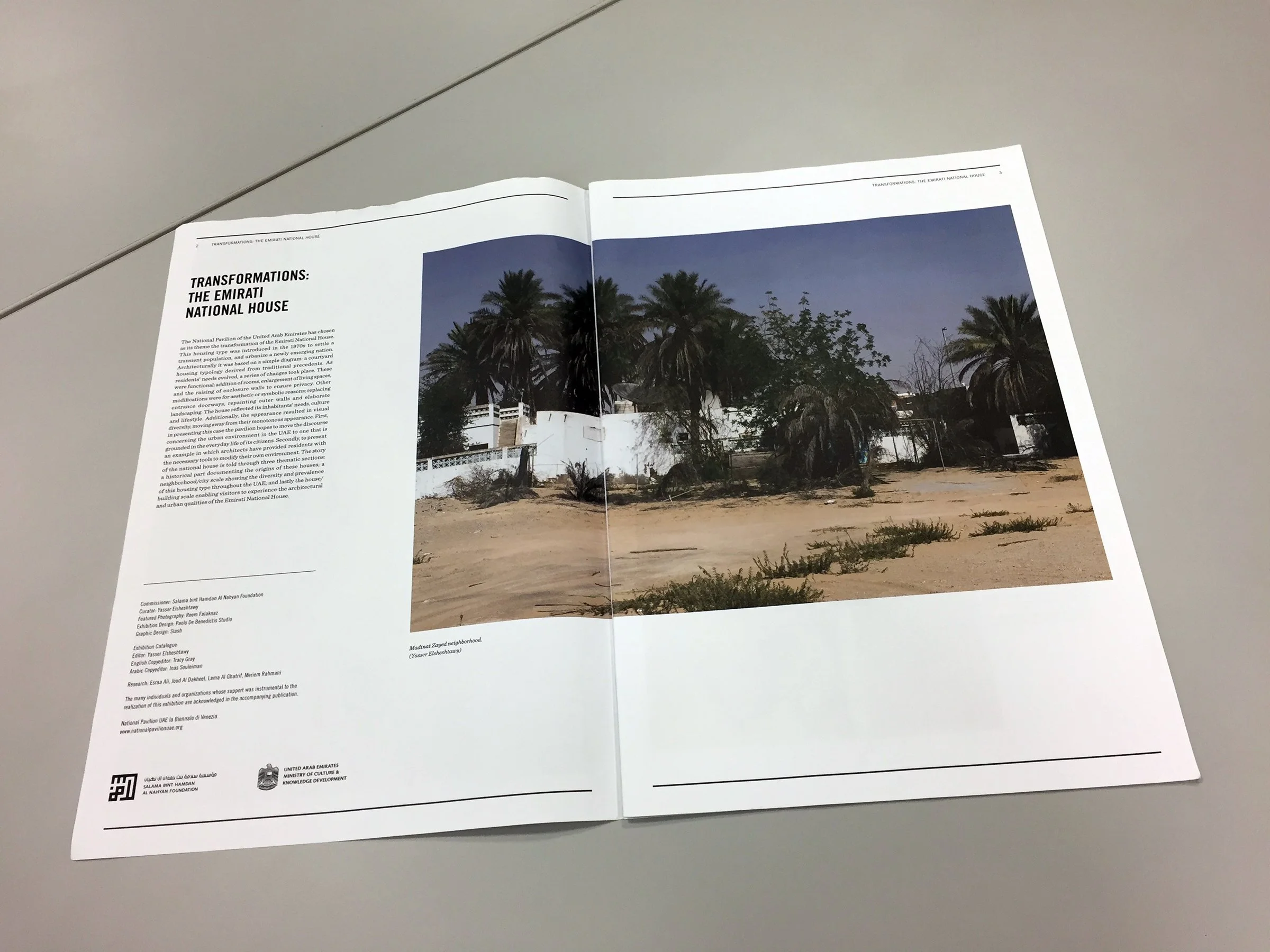
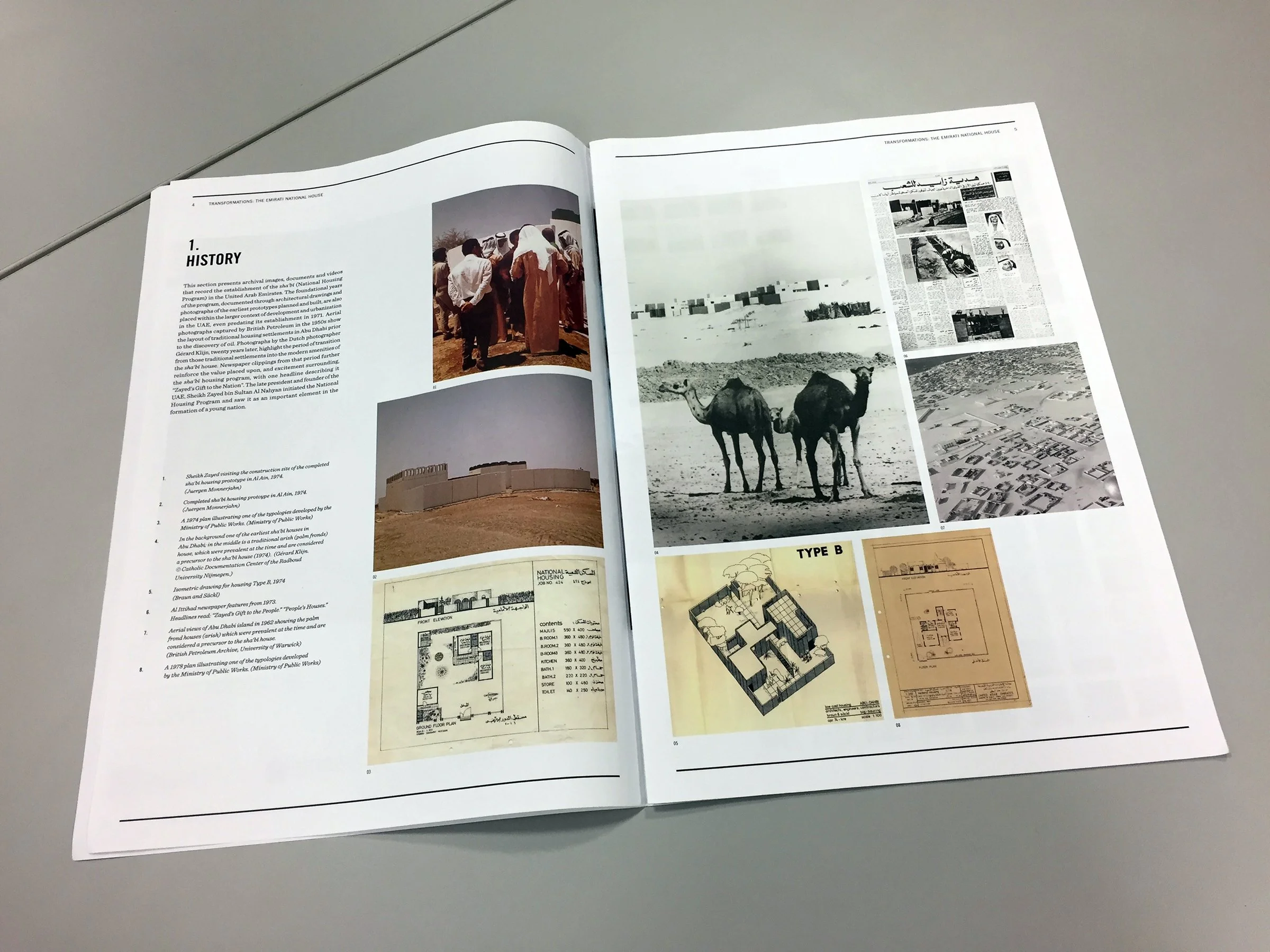
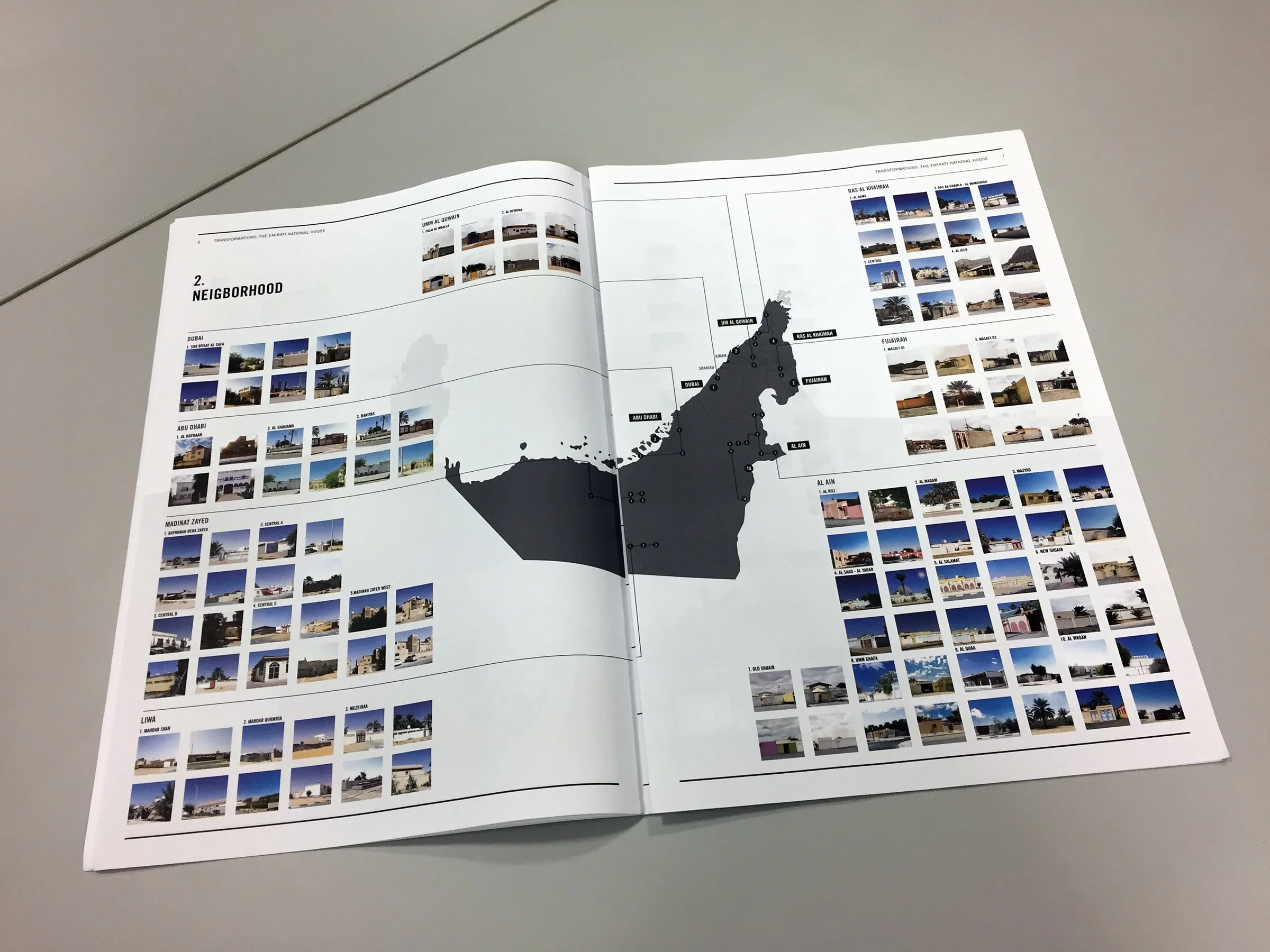
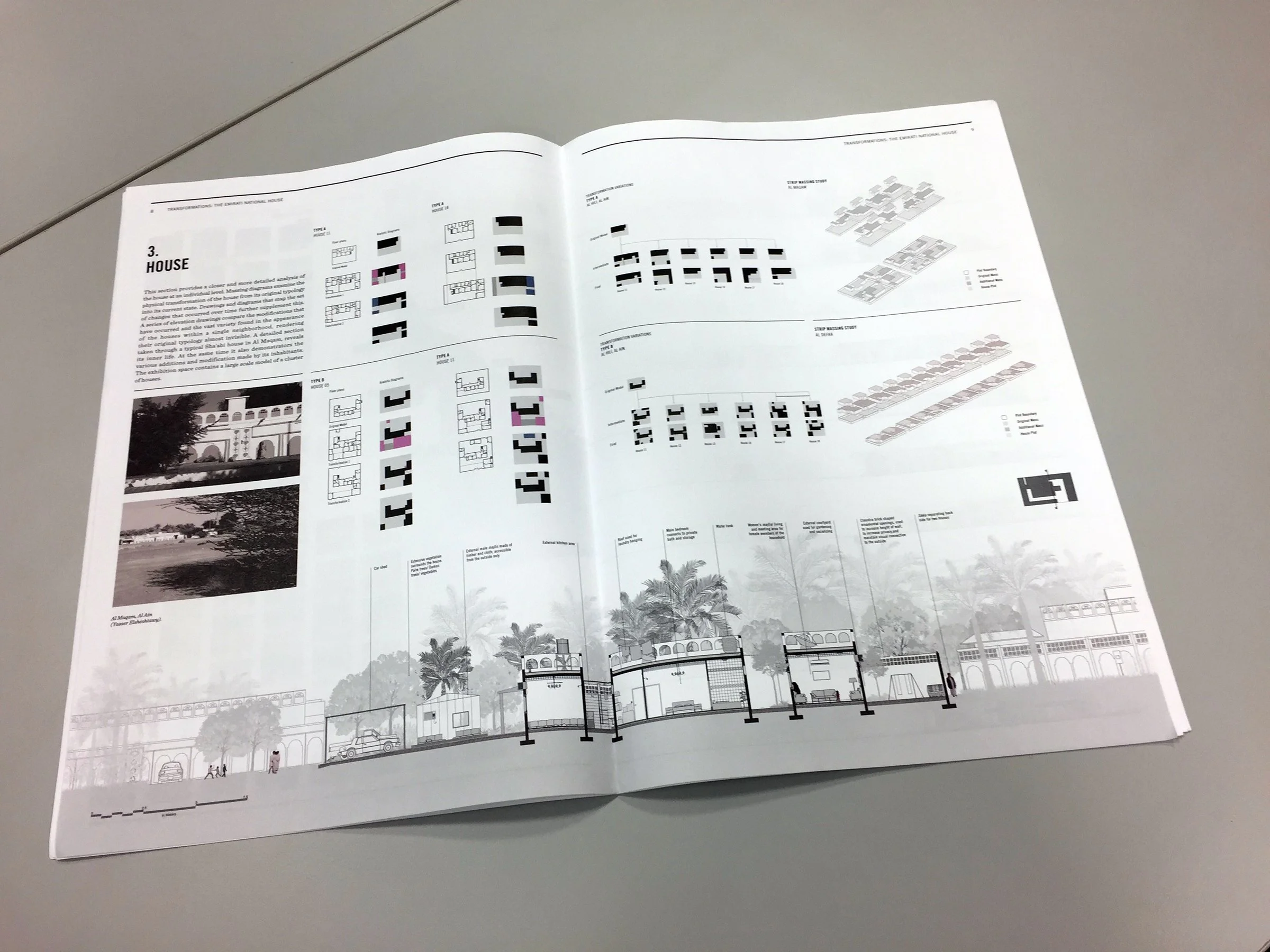
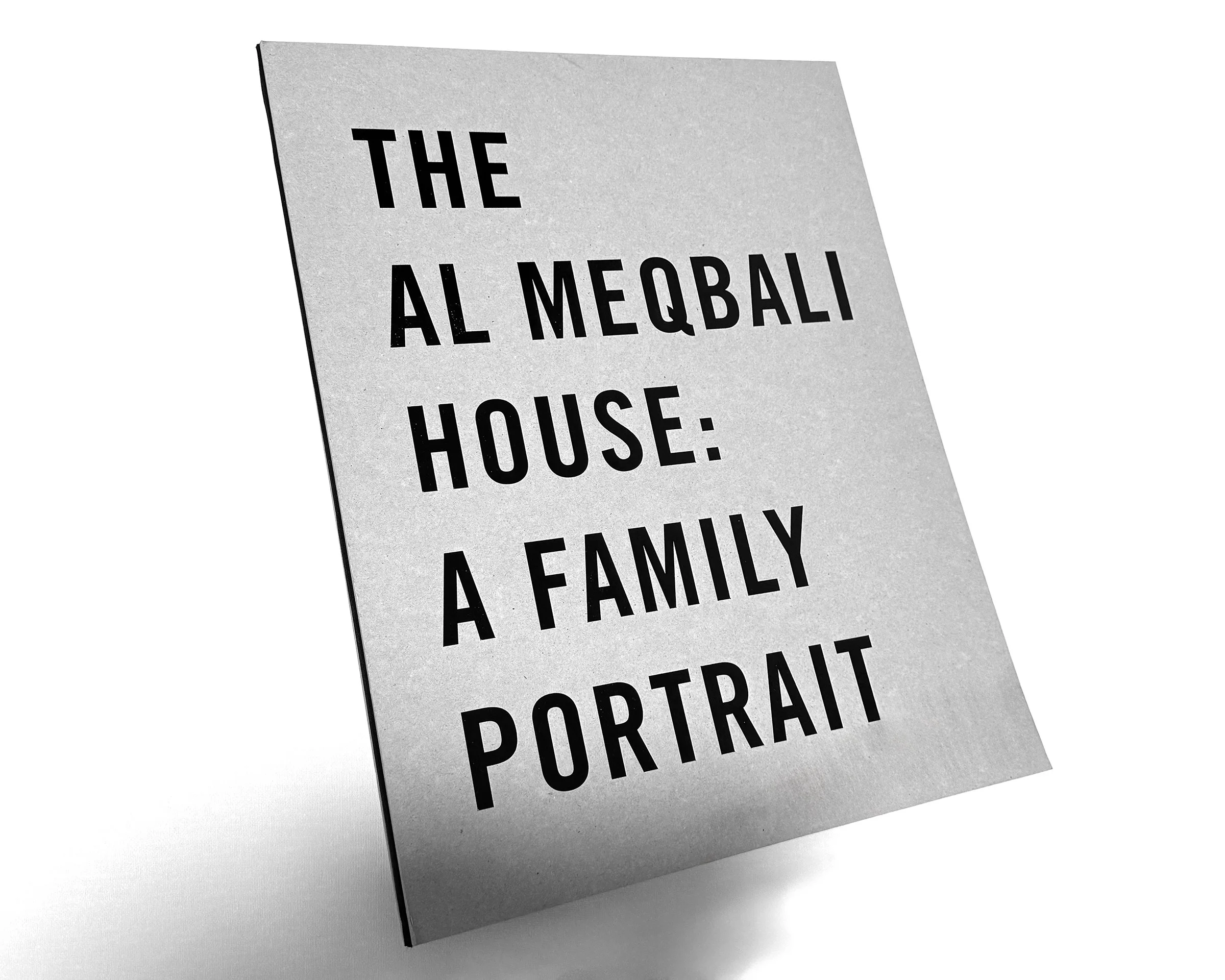
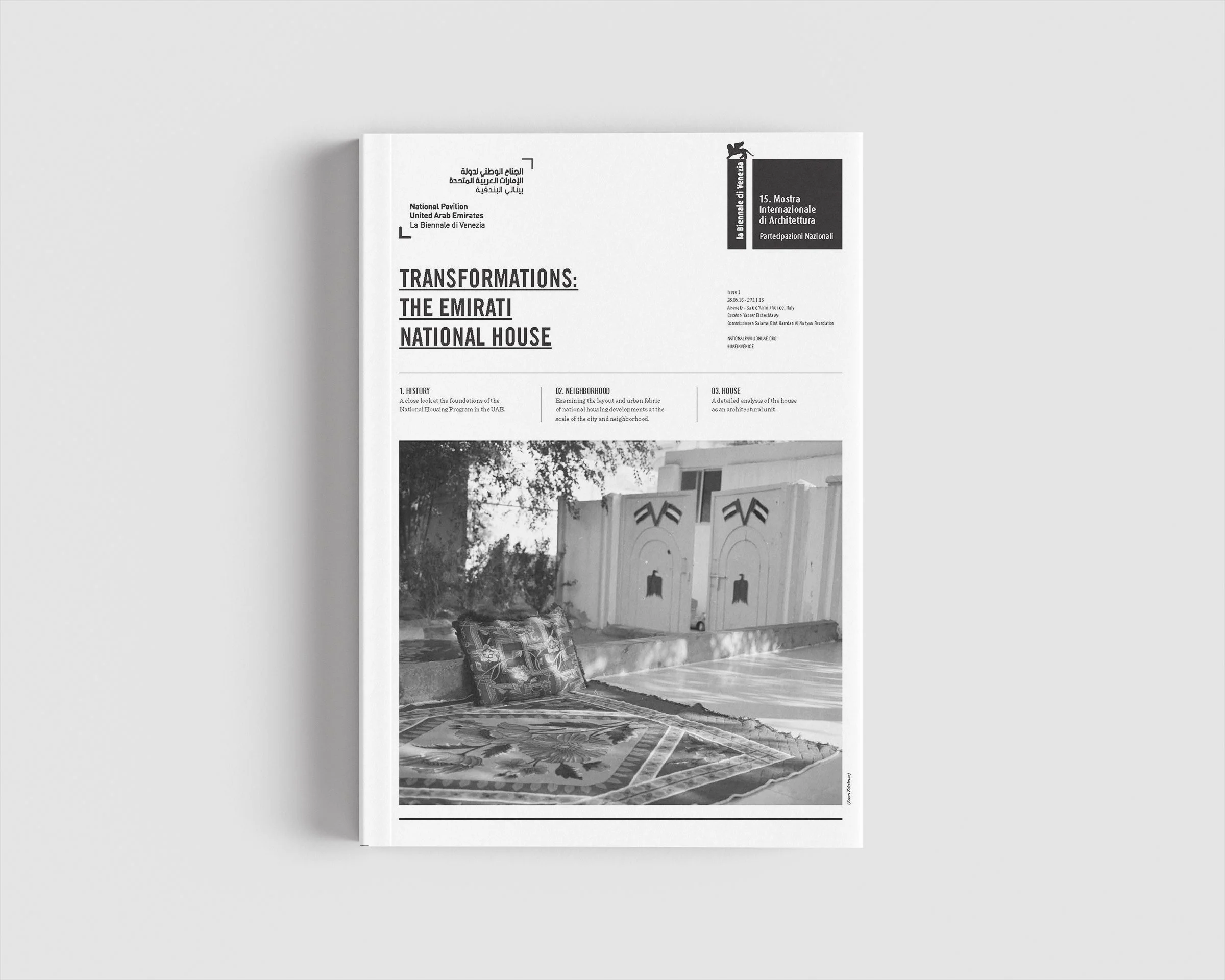
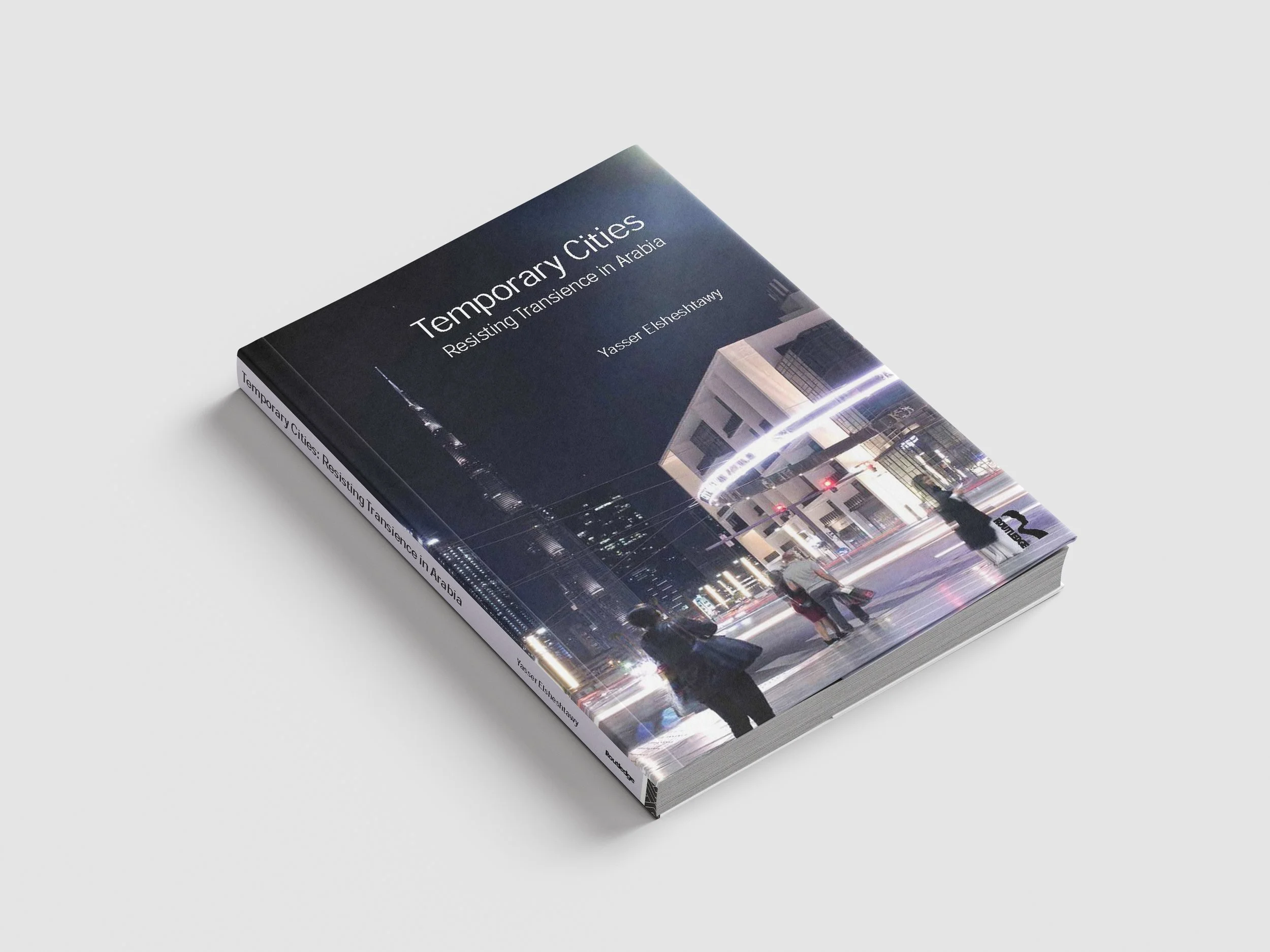
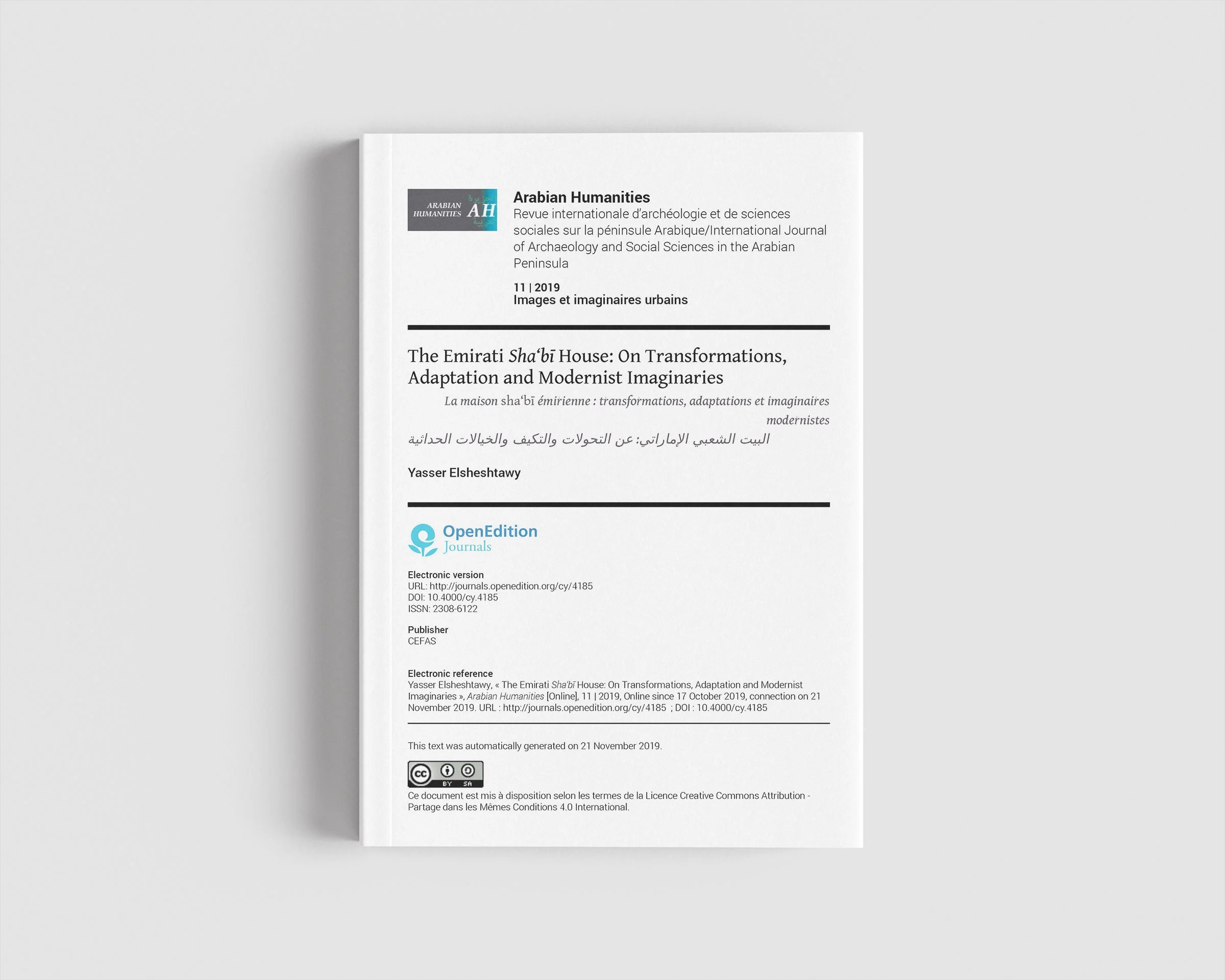
At the center of this body of work was the main publication produced for the UAE National Pavilion (NPUAE) at the Venice Architecture Biennale, which documented the exhibition and its underlying research while situating the Sha’abi house within the social and political transformations that accompanied the formation of the UAE. Complementing it was the large-format “Meqbali House” book — conceived as a centerpiece of the exhibition itself — which carefully reconstructed the spatial and social evolution of a single house through drawings, photographs, interviews, and archival material. Alongside these more substantial volumes was a newspaper-style publication distributed to visitors, designed to communicate the project in an accessible and immediate way while echoing the everyday character of the neighborhoods being documented. Beyond the exhibition, the research developed into more critical academic reflections, including a peer-reviewed article published in Arabian Humanities and a chapter in the book Temporary Cities, both of which examined the Sha’abi house through broader debates surrounding urbanism, modernity, informality, and social transformation in Gulf cities.
The project continued to evolve through a 2024 research report prepared for the Zayed National Museum, in which Sha’abi neighborhoods across Abu Dhabi were revisited years after earlier fieldwork conducted prior to 2017. Returning to these districts revealed how profoundly these environments had changed over time through demolition, subdivision, extensions, adaptation, and shifting patterns of inhabitation. Together, these publications form an evolving archive of the Sha’abi house and its many lives — architectural, social, emotional, and political. This section offers selected glimpses into these publications and the ideas they contain. Full access to the respective documents, however, remains subject to the policies of the institutions, publishers, and organizations through which they were originally produced and distributed.
Transforming the People’s House
Inside the Landmark Publication of the UAE National Pavilion
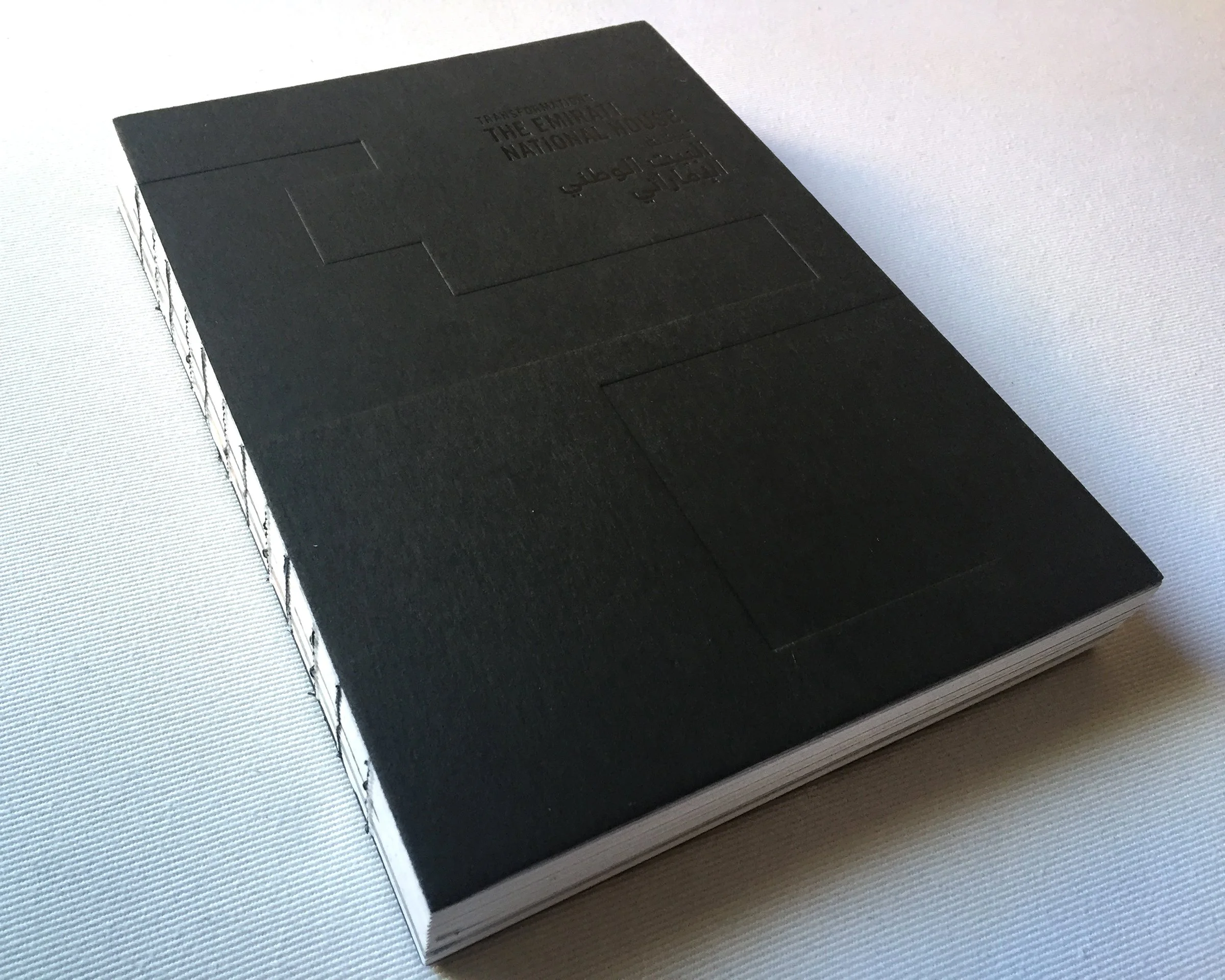
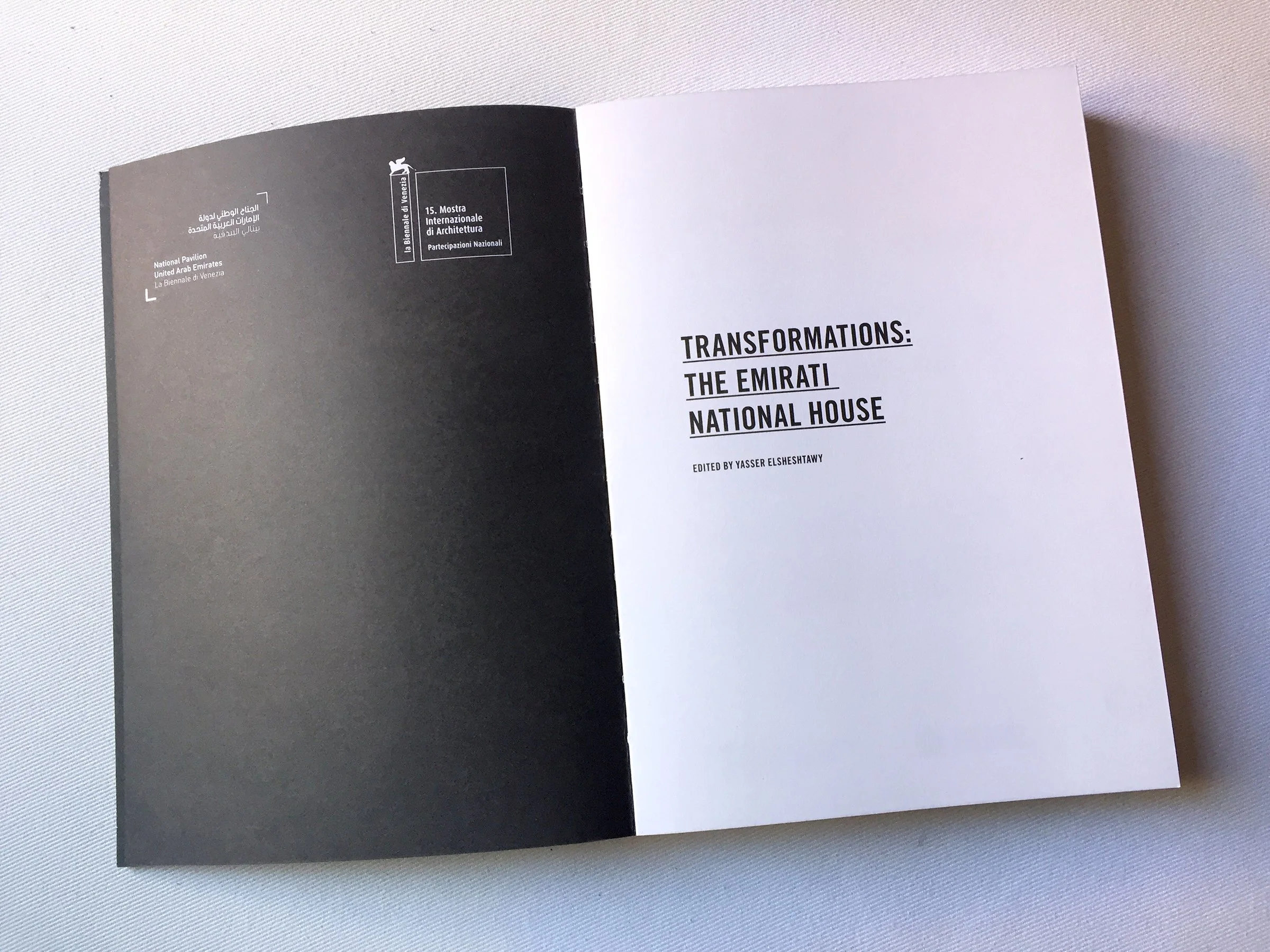
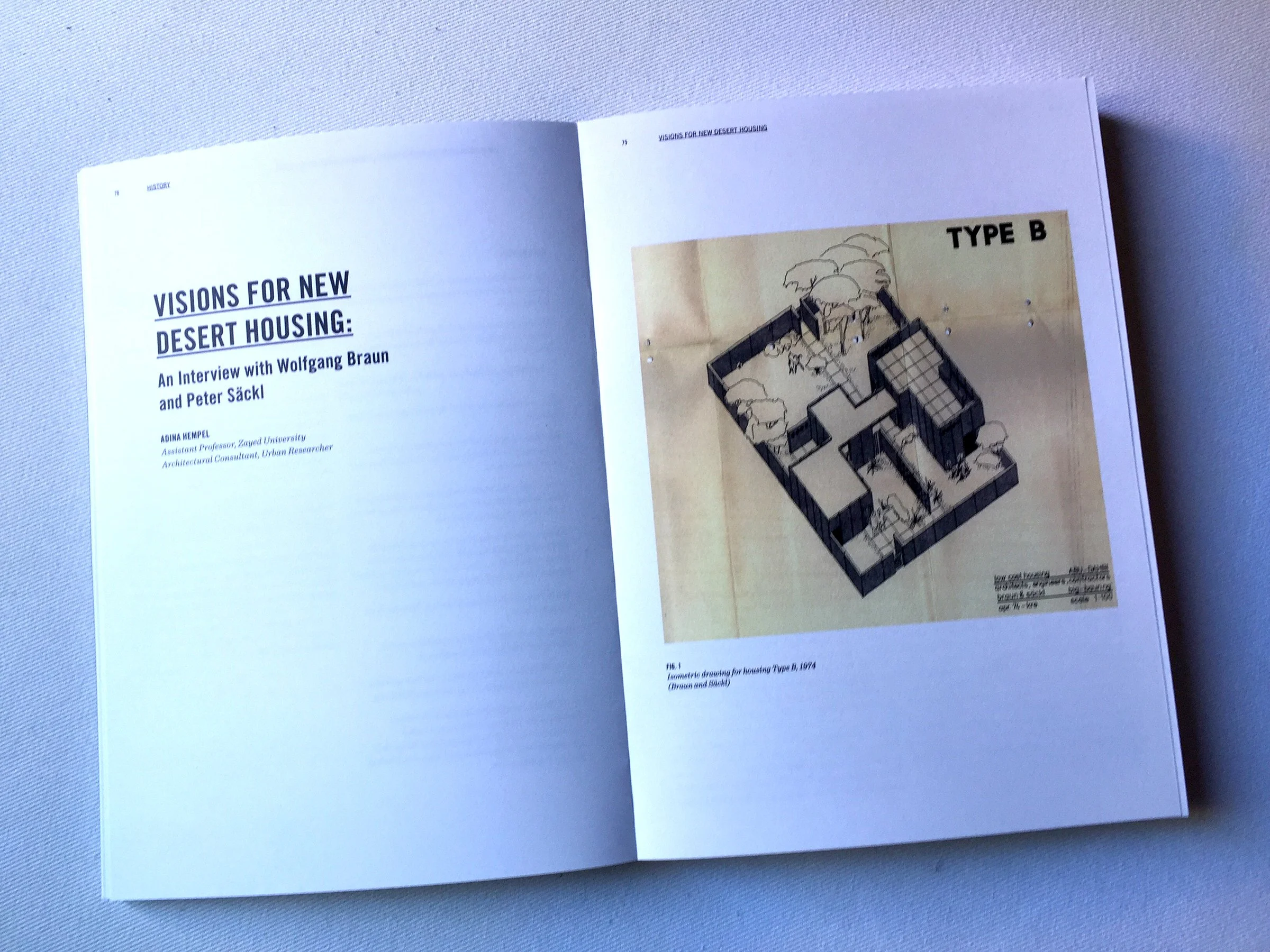
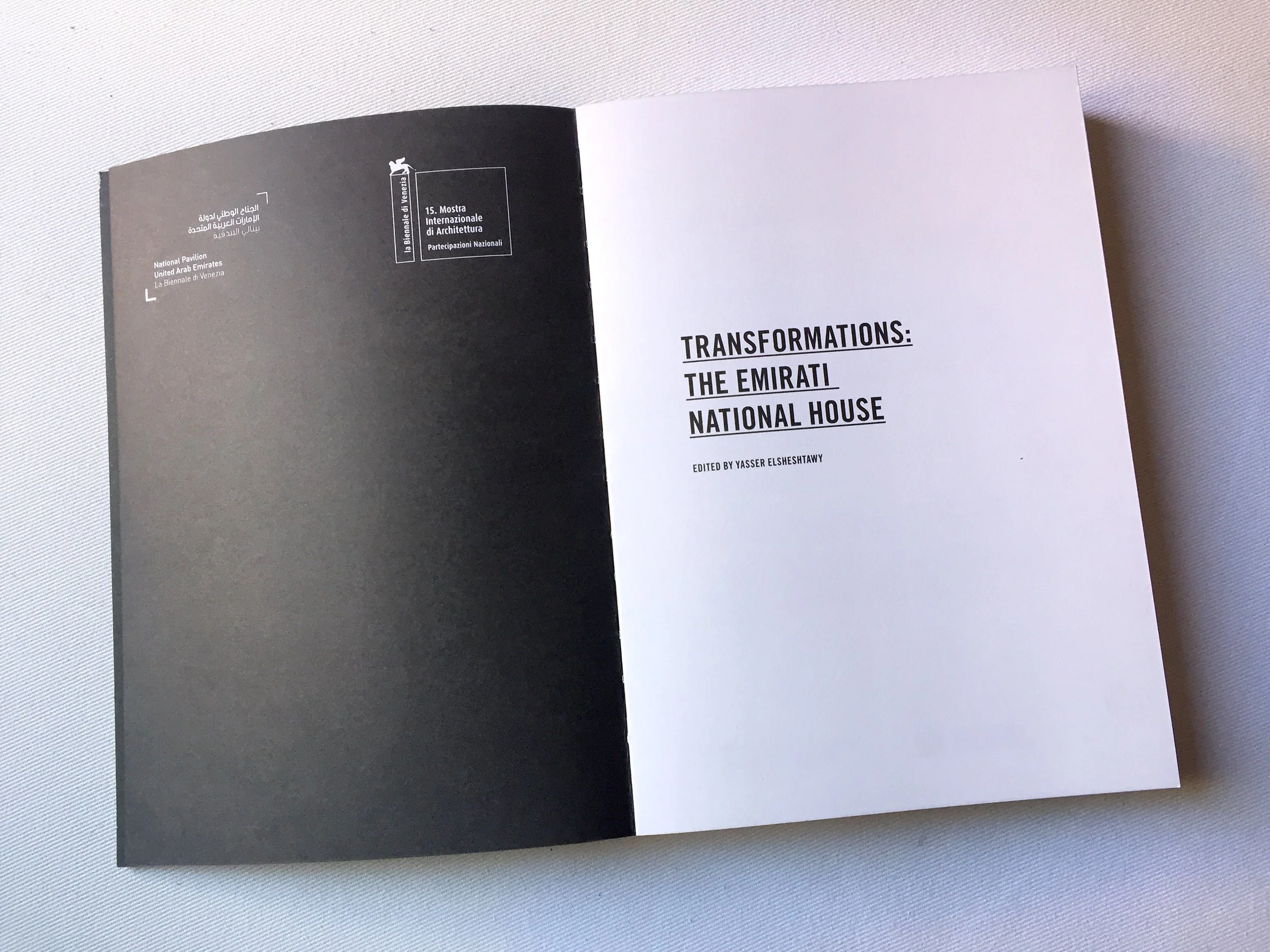
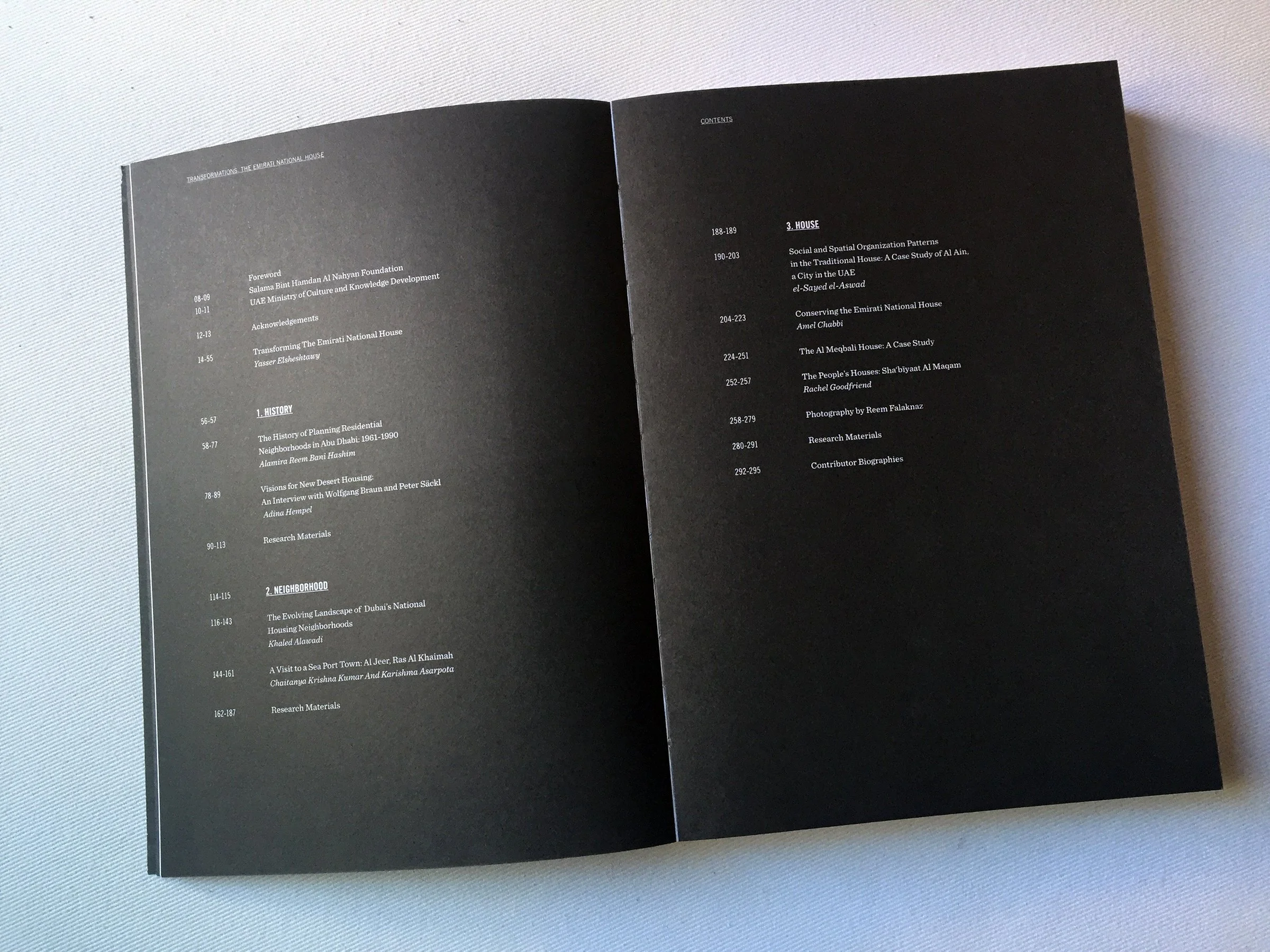
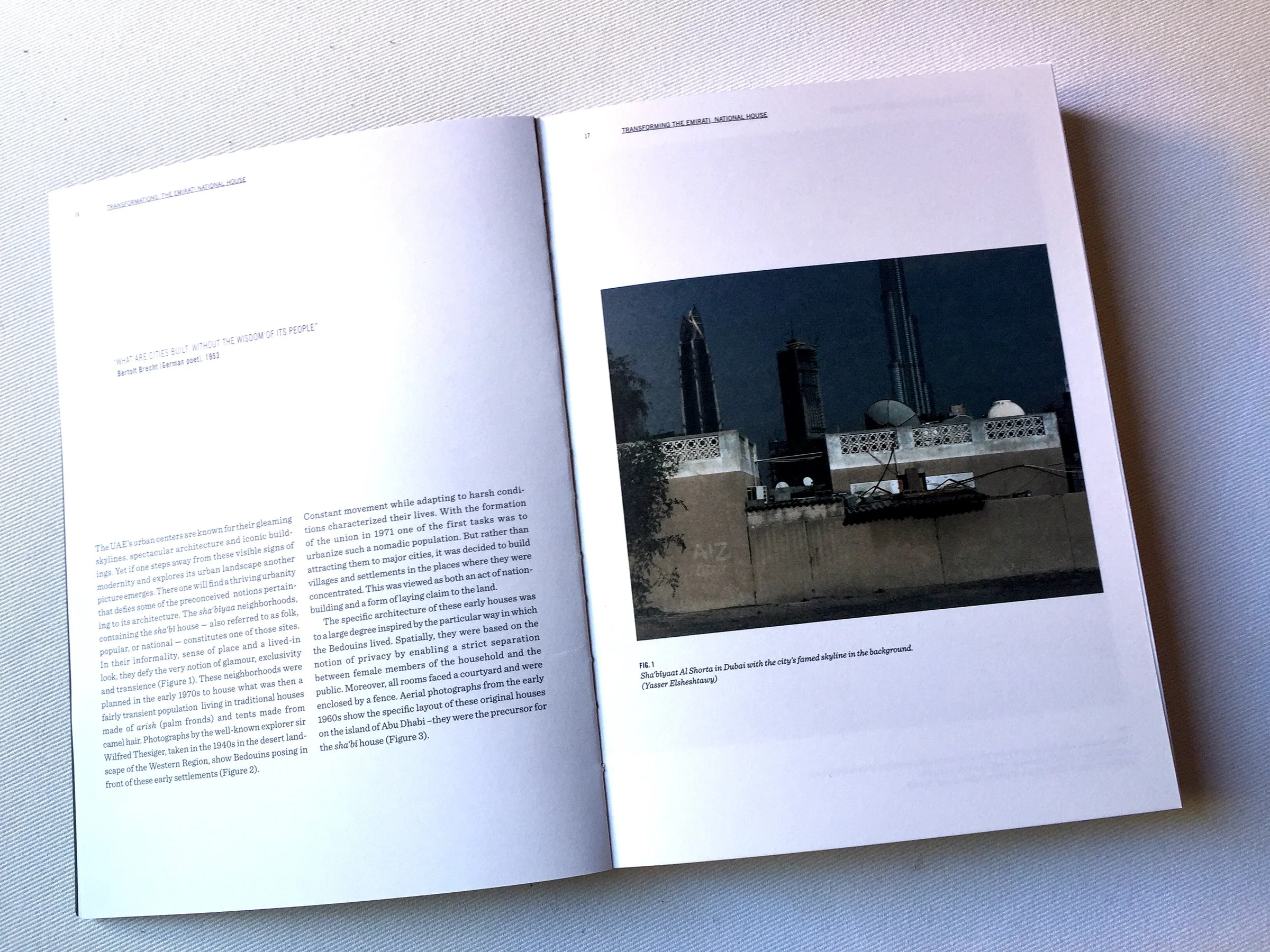
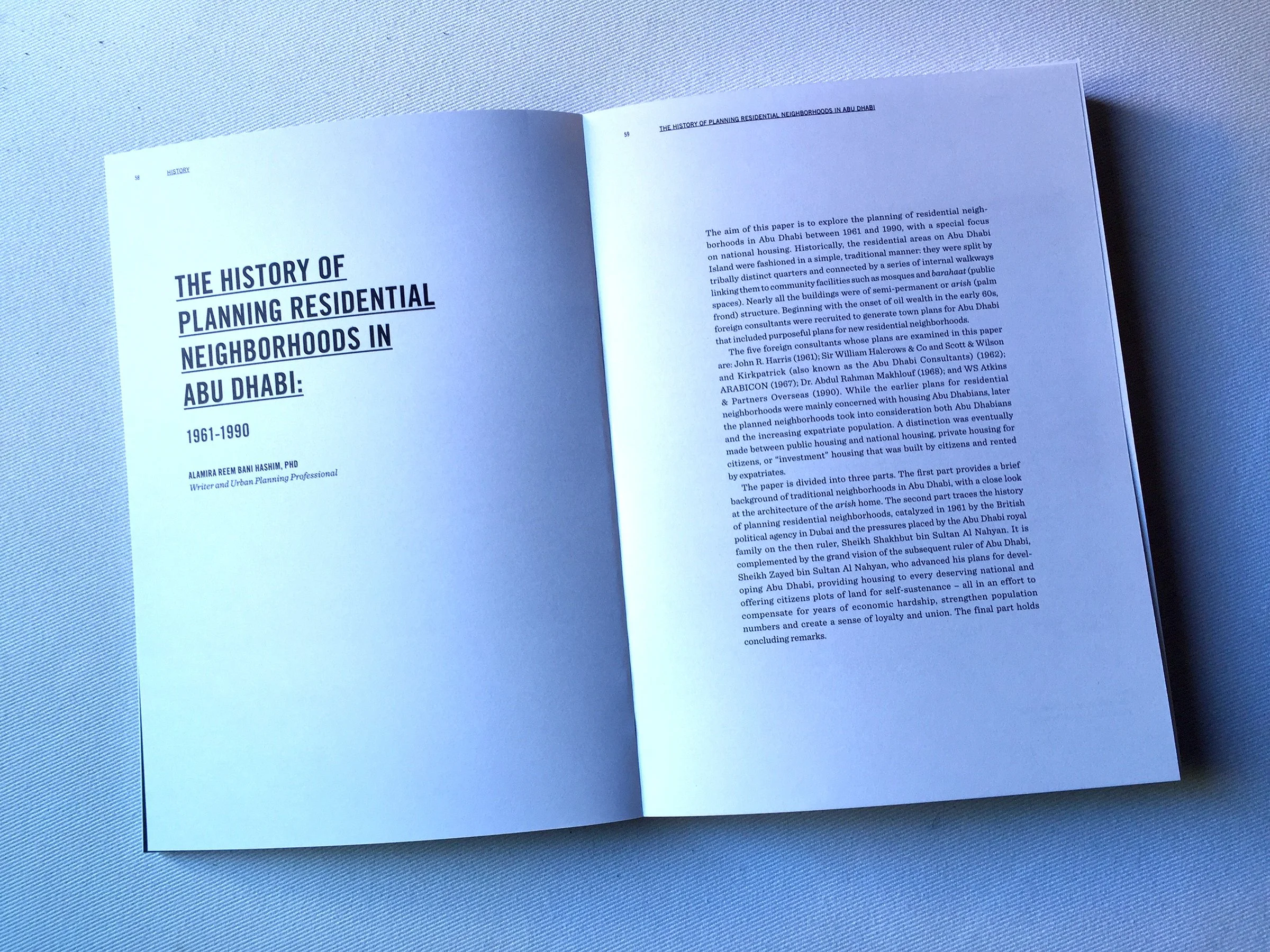
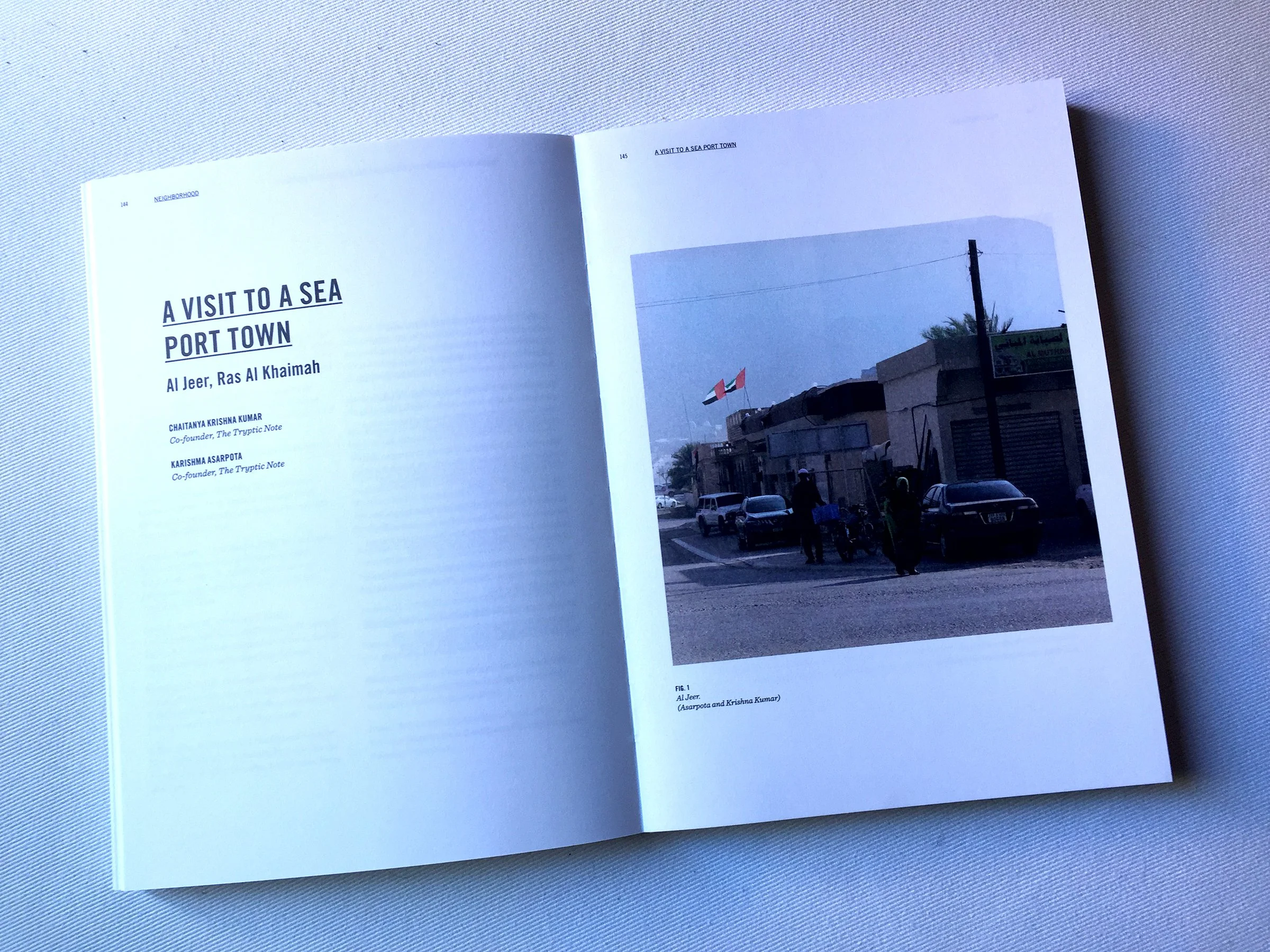
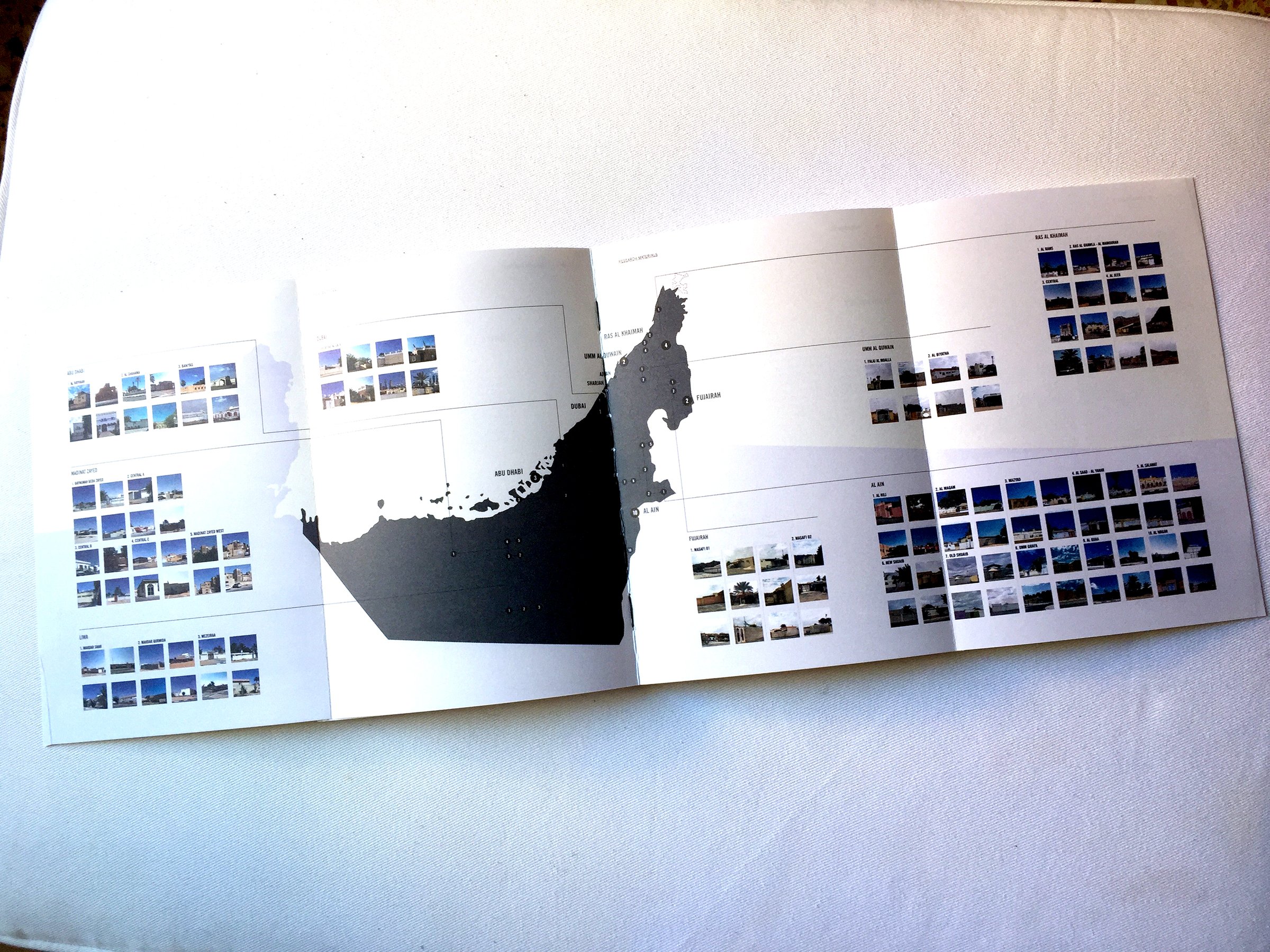
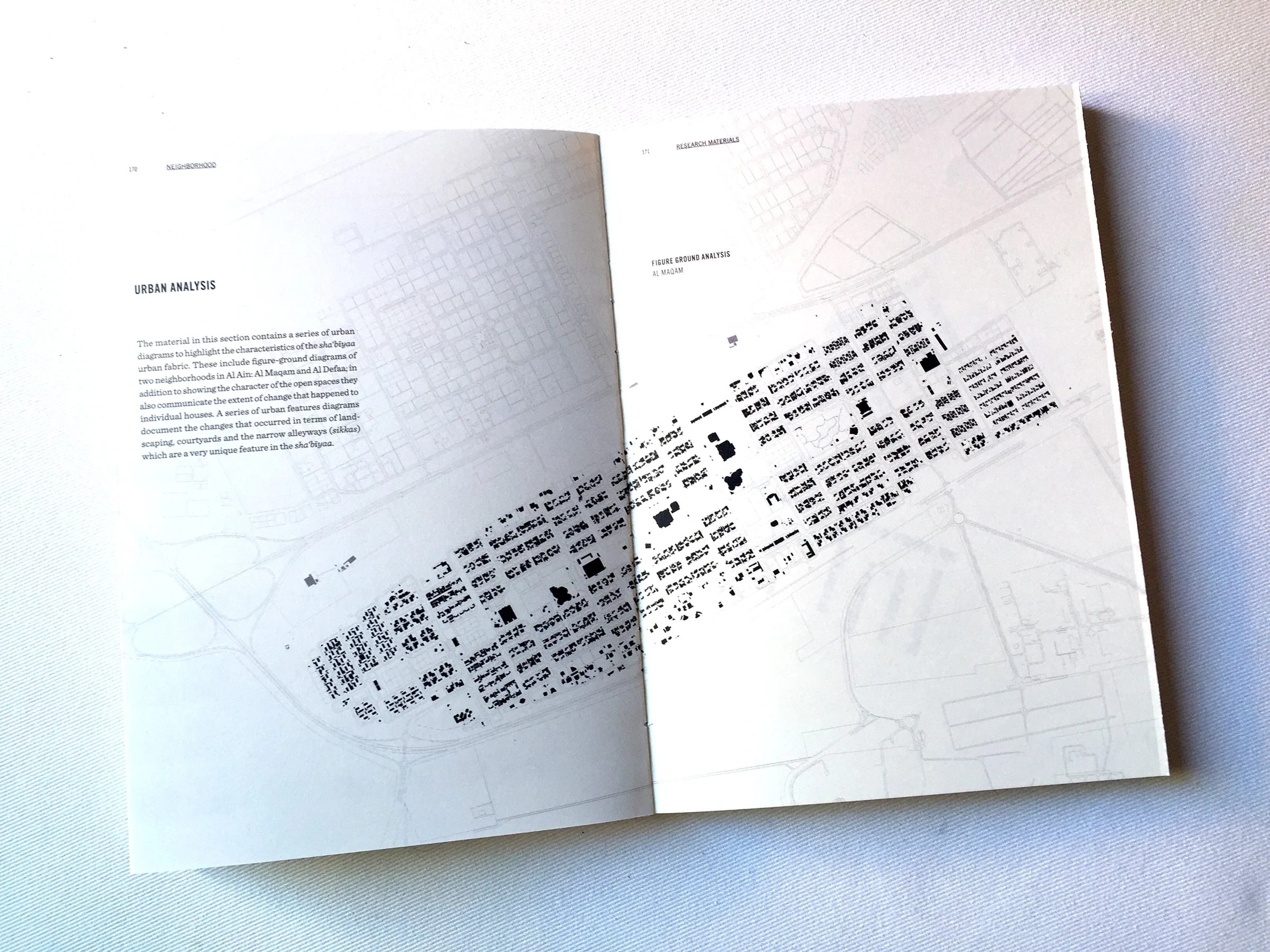
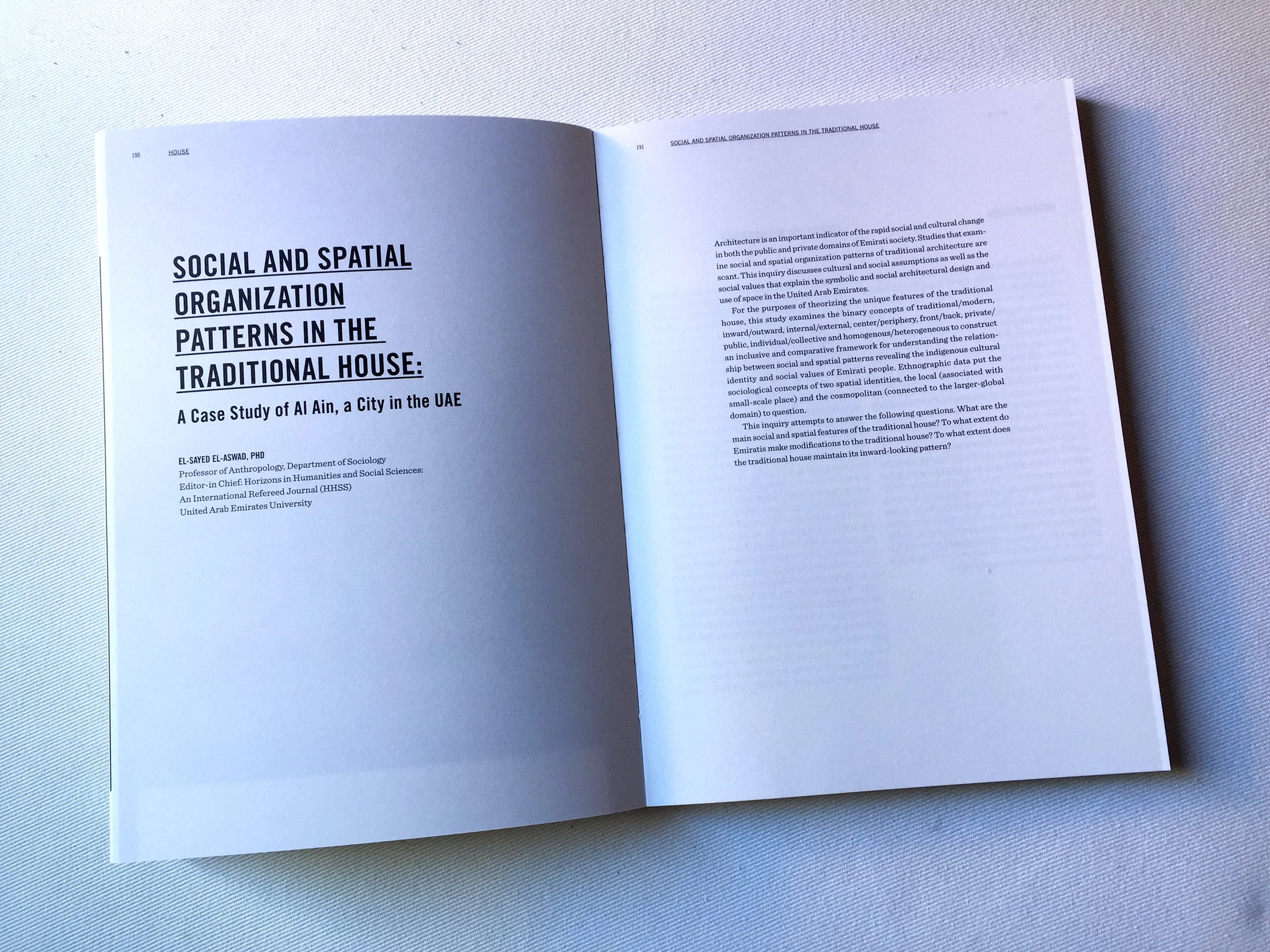
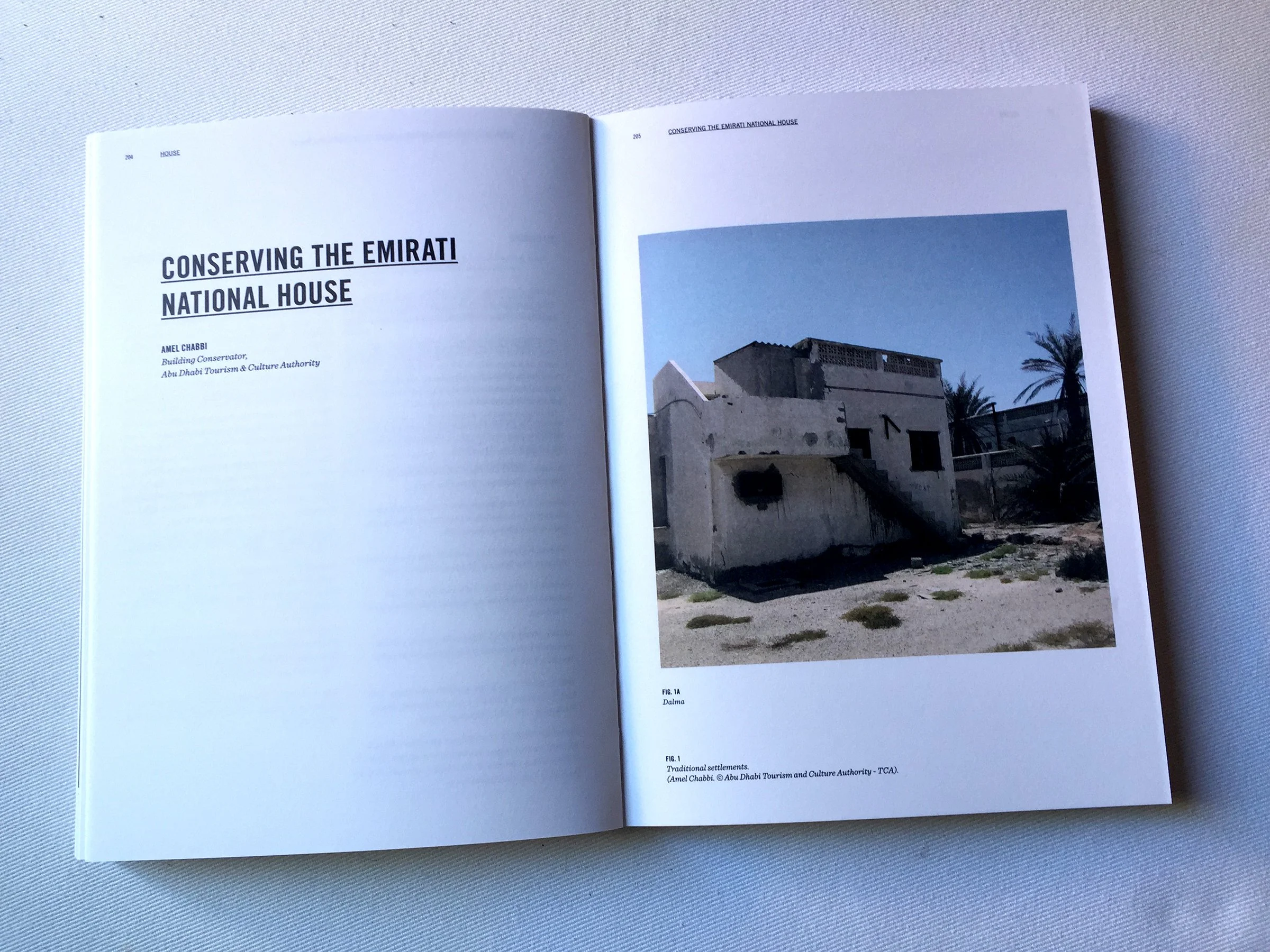
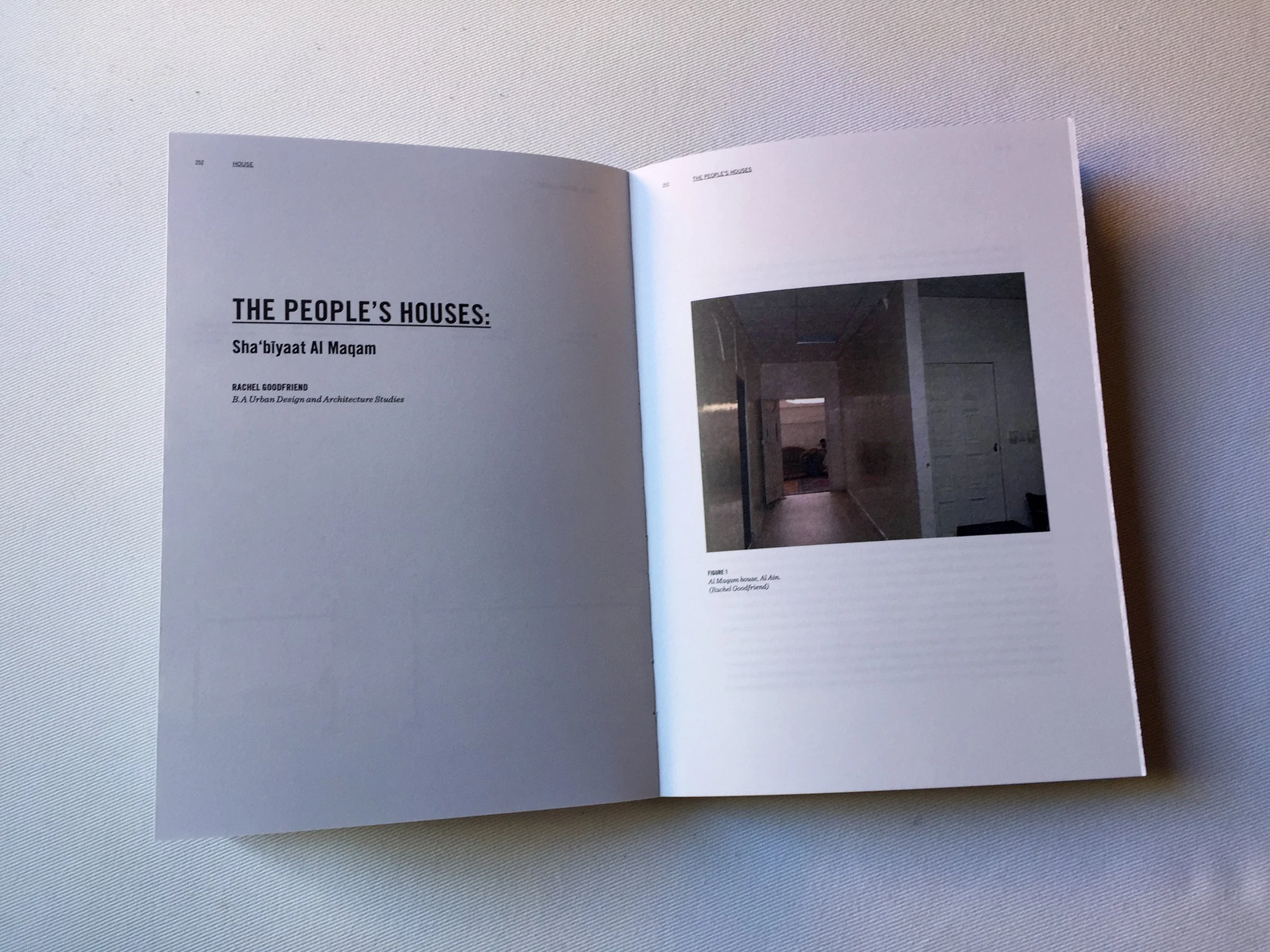
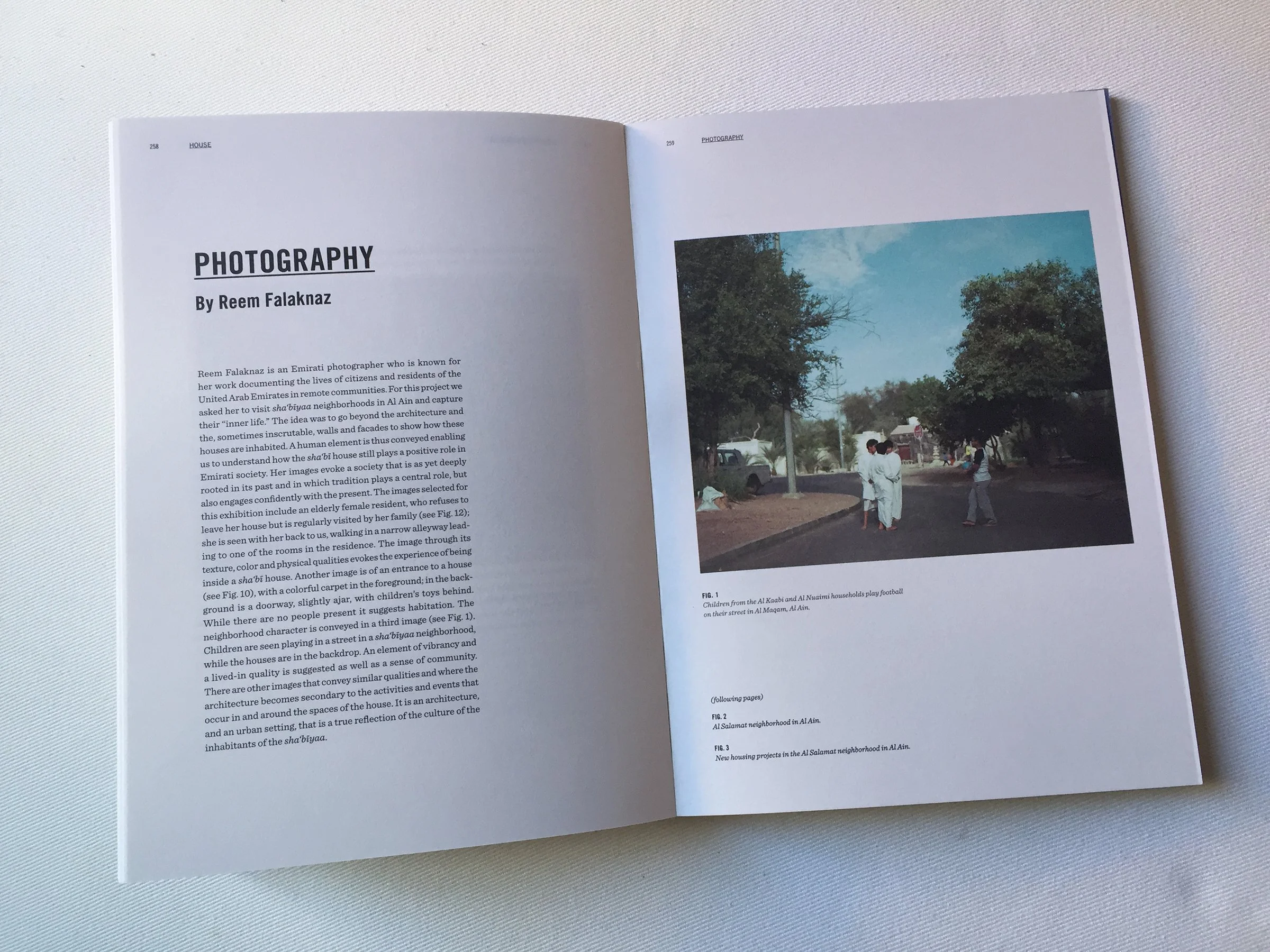
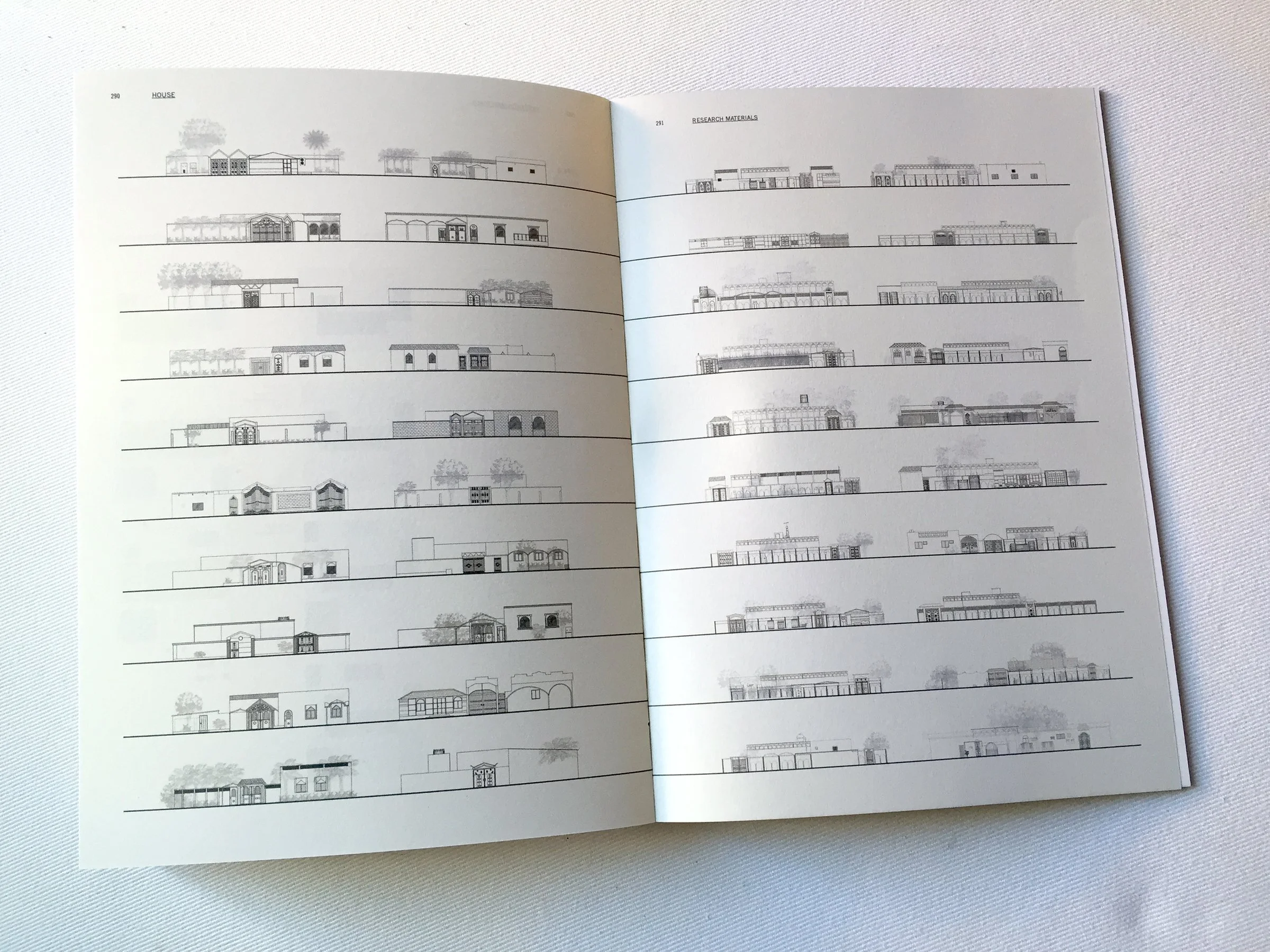
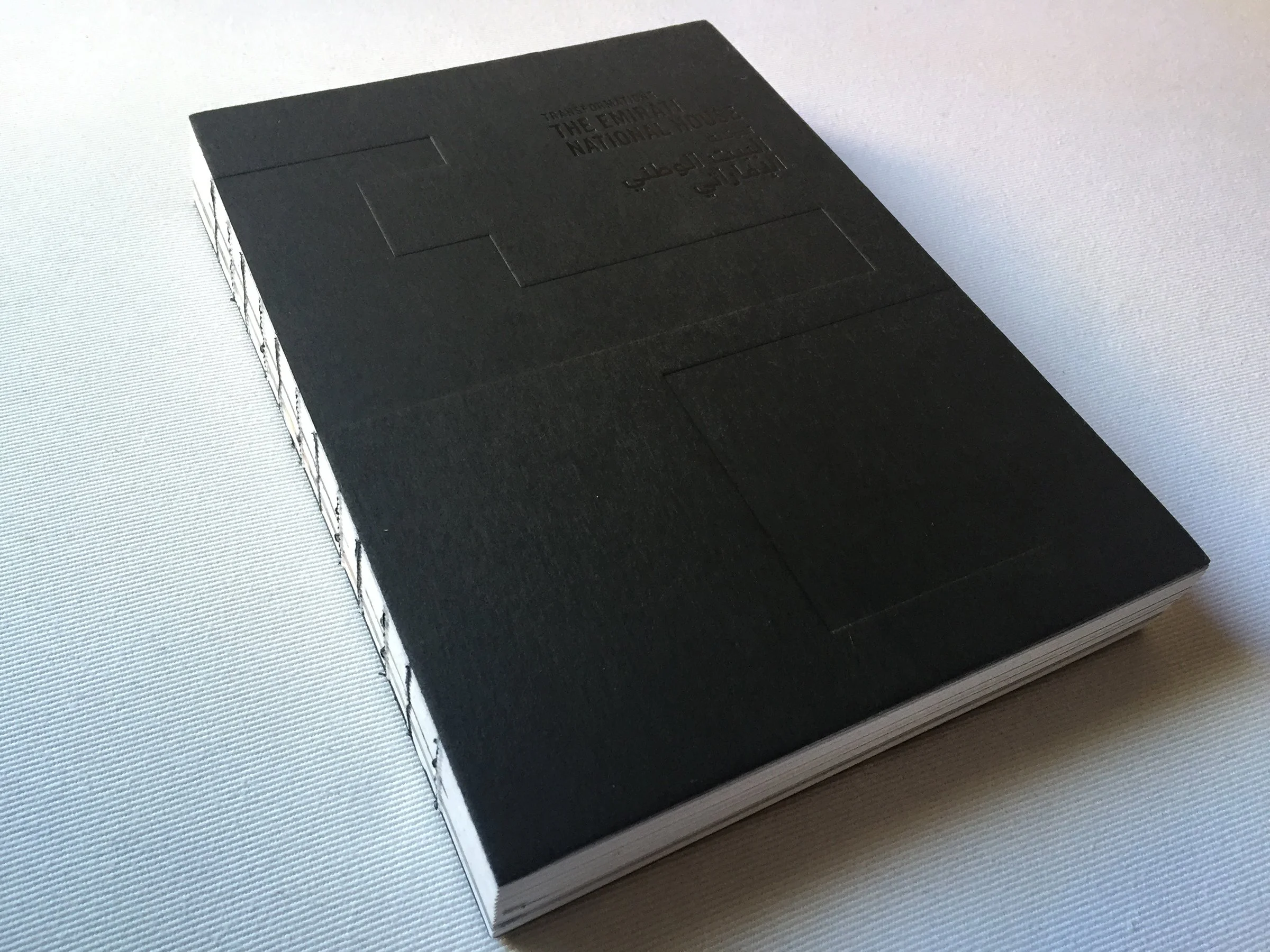
Produced as the principal publication accompanying the UAE National Pavilion at the 2016 Venice Architecture Biennale, Transformations: The Emirati National House examines the evolution of the UAE’s sha‘bī house—the state-provided “people’s house” introduced after the formation of the UAE in 1971. The volume opens with an introduction by H.E. Sheikh Nahayan bin Mubarak Al Nahayan, then Minister of Culture and Knowledge Development, underscoring the project’s national and cultural significance. Bringing together architectural research, urban history, ethnography, archival material, photography, and analytical drawings, the publication includes contributions by urban planner Reem Bani Hashim on Abu Dhabi’s housing history and masterplans; architect Adina Hempel on the prefabricated housing competition in Al Ain; and architect Khaled Al Awadi on the gradual disappearance of Dubai’s sha‘bī neighborhoods under rapid urban transformation.
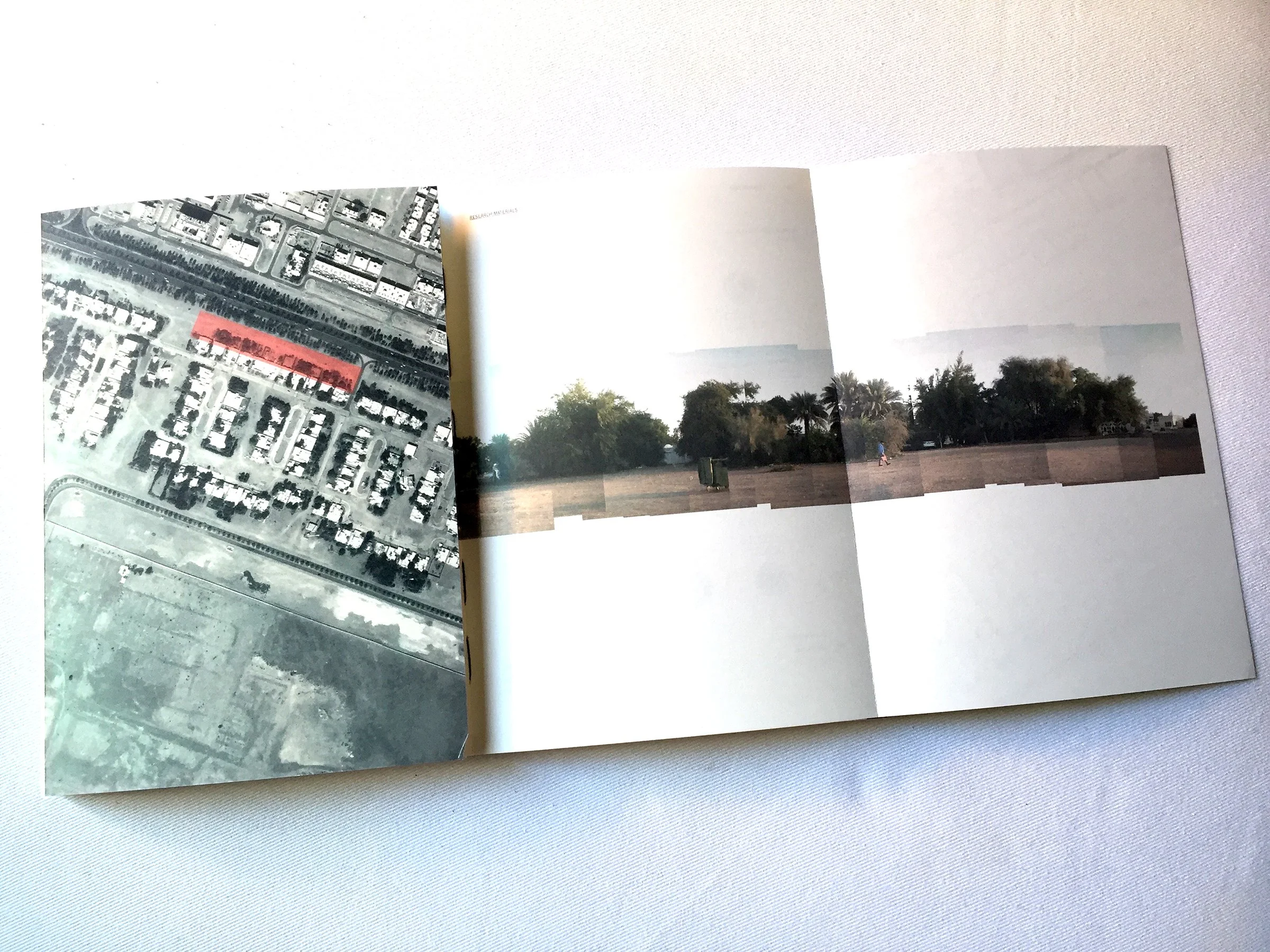
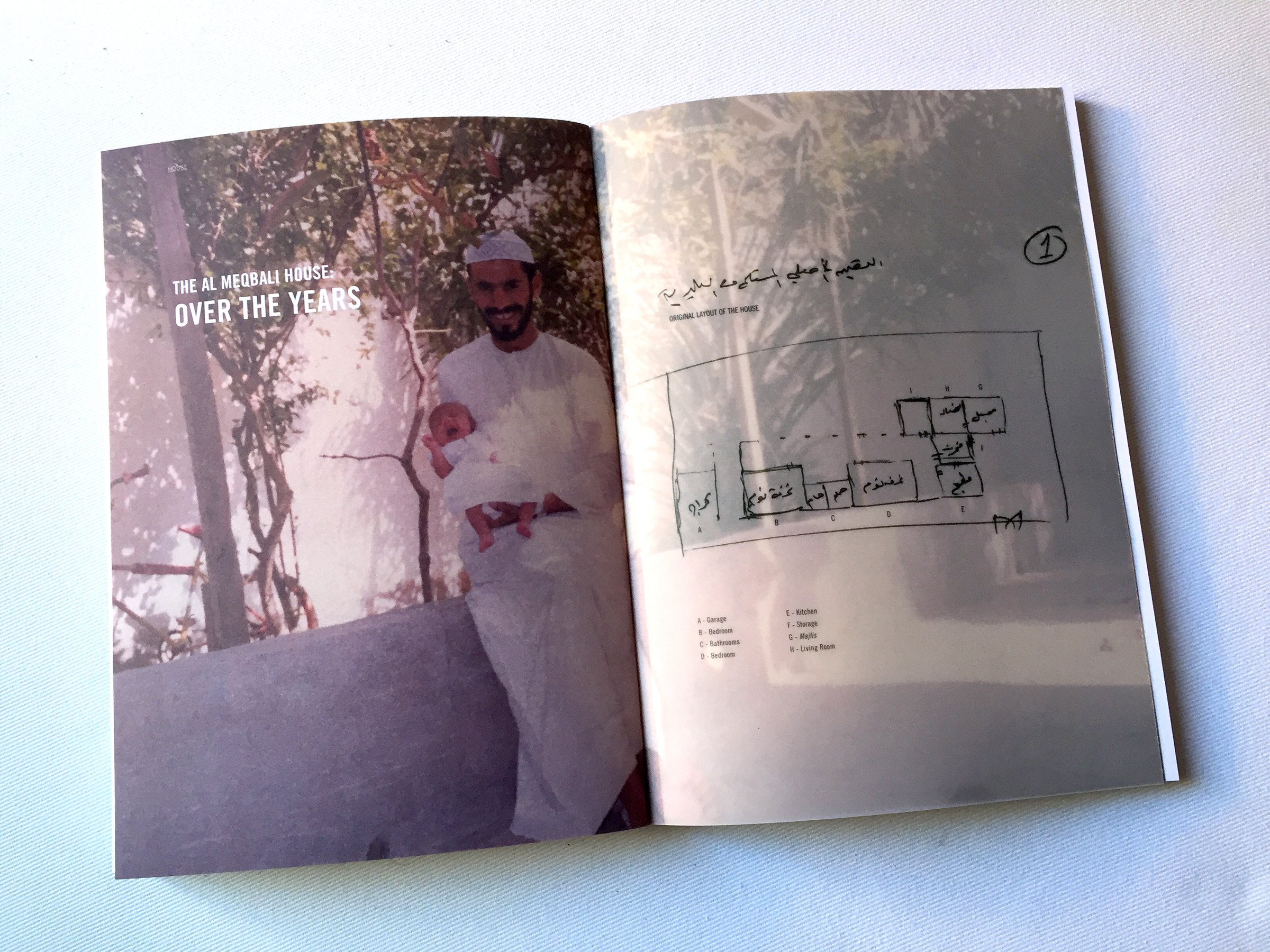
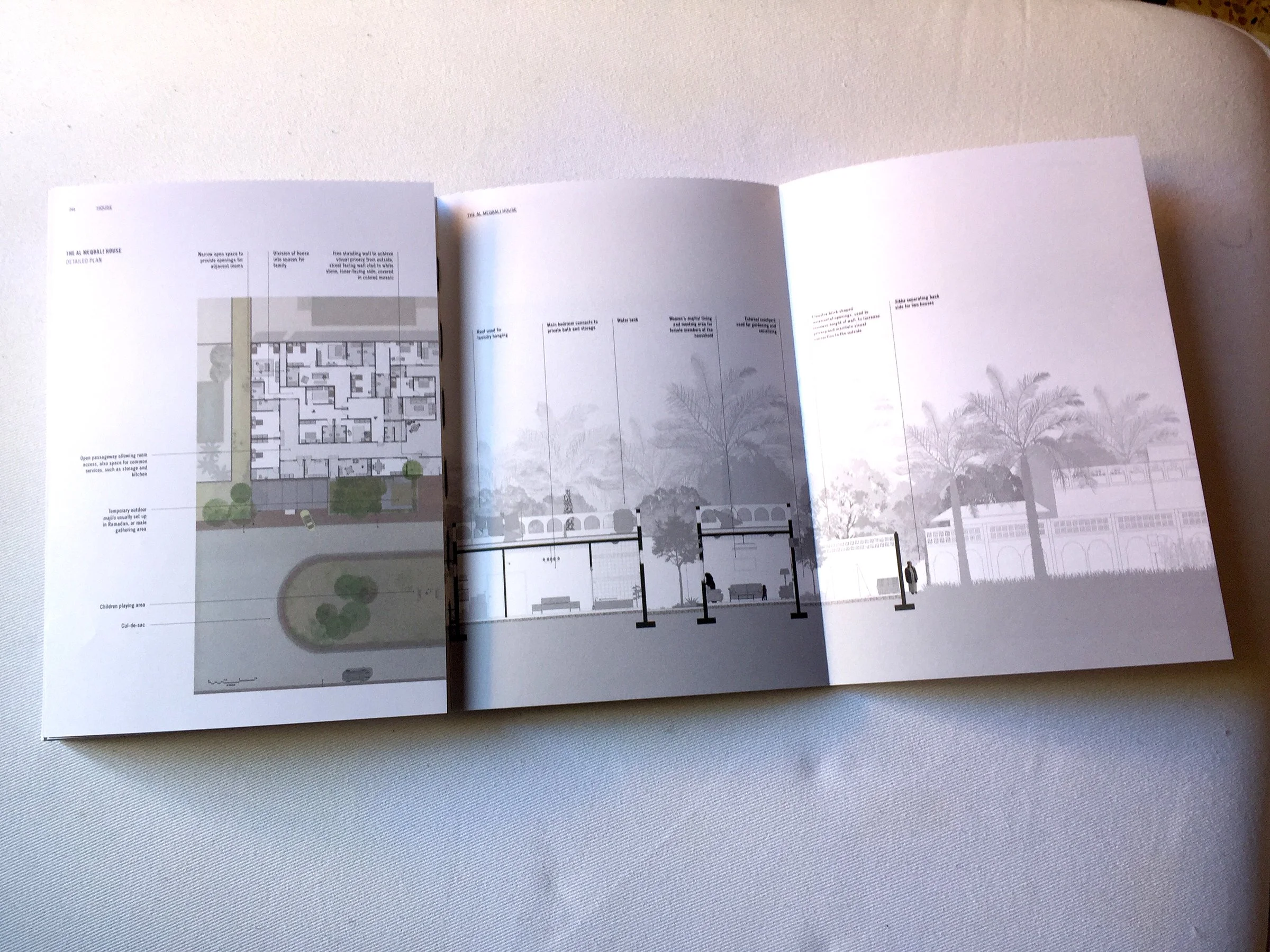
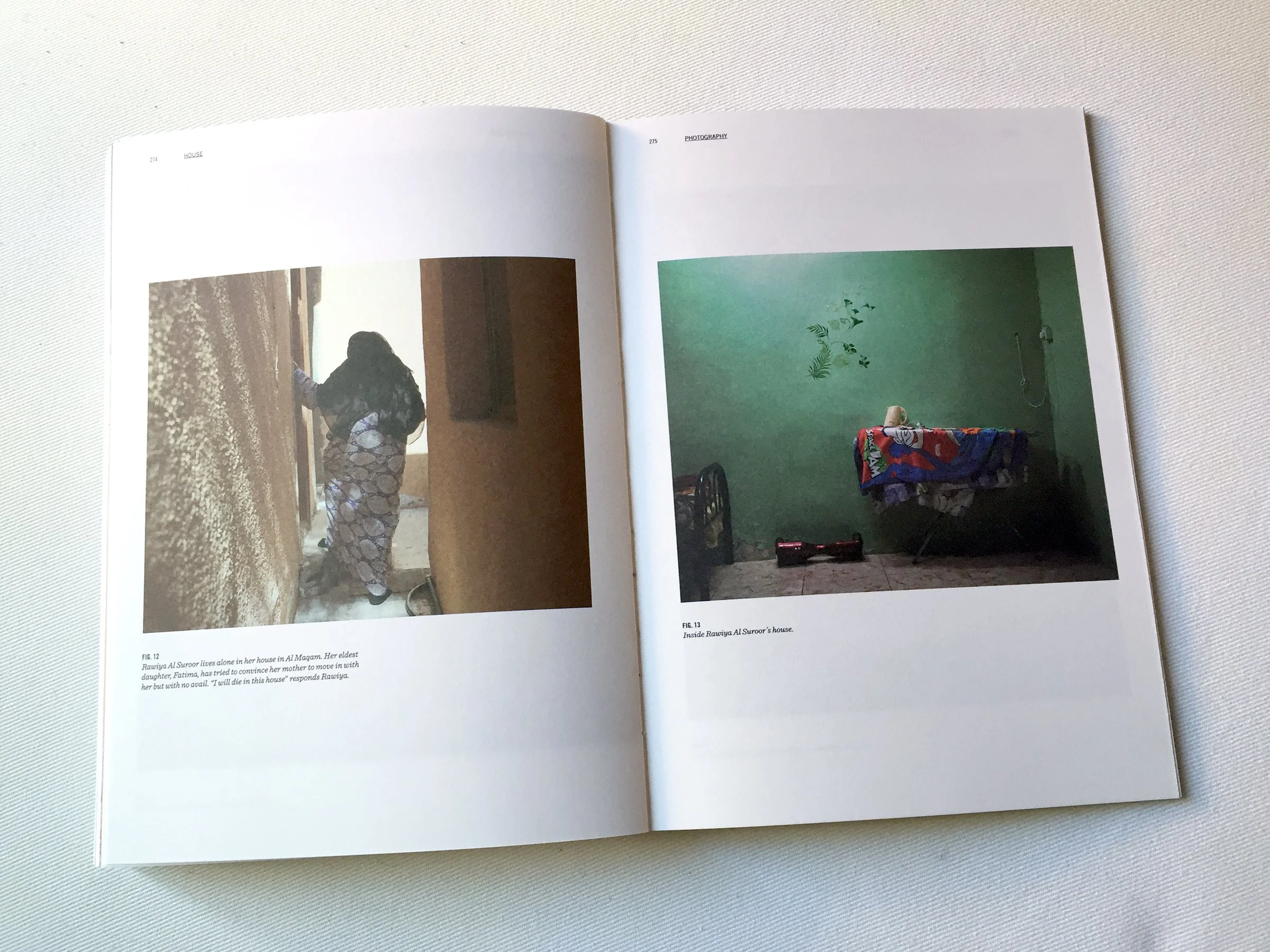
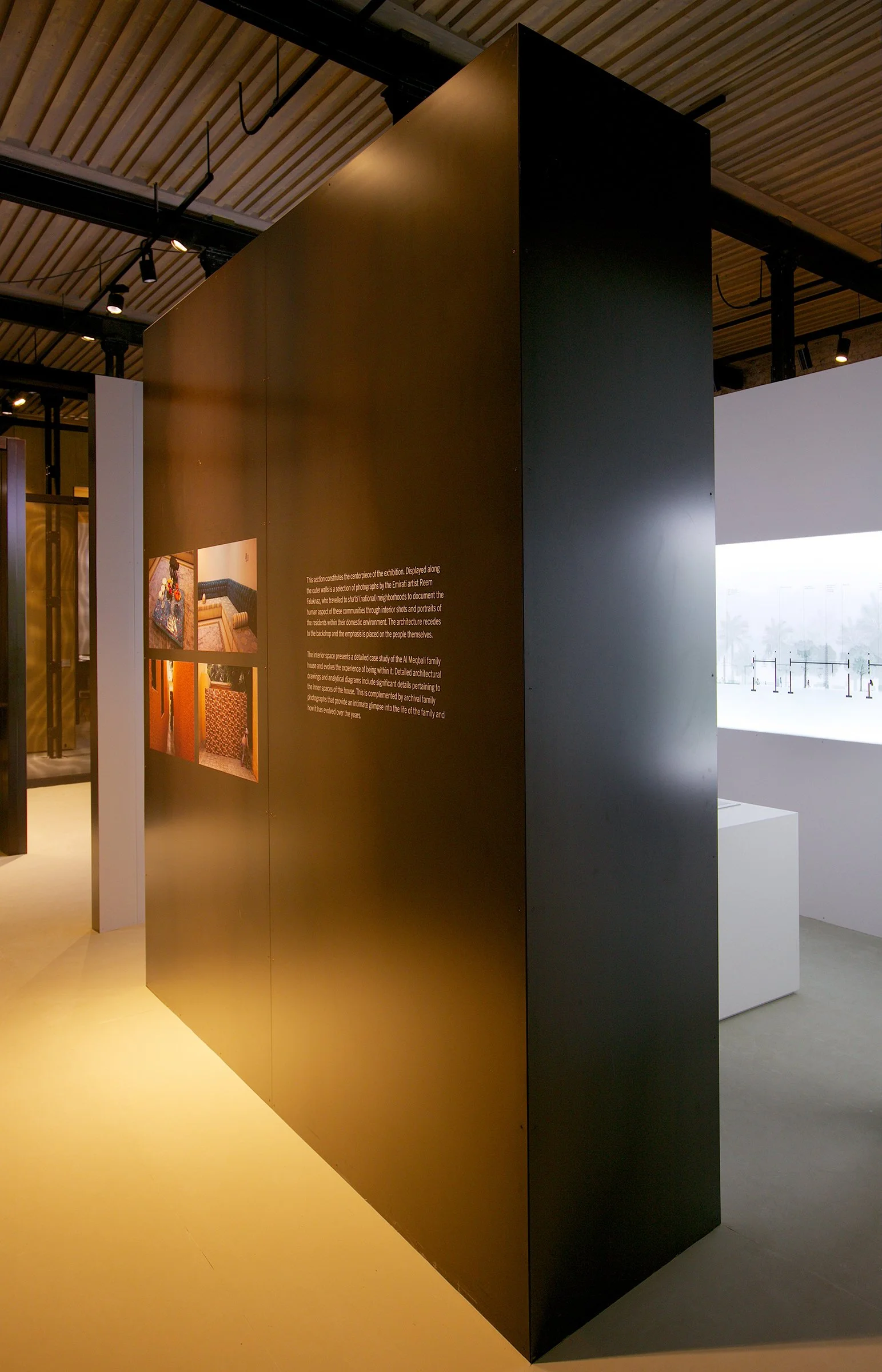
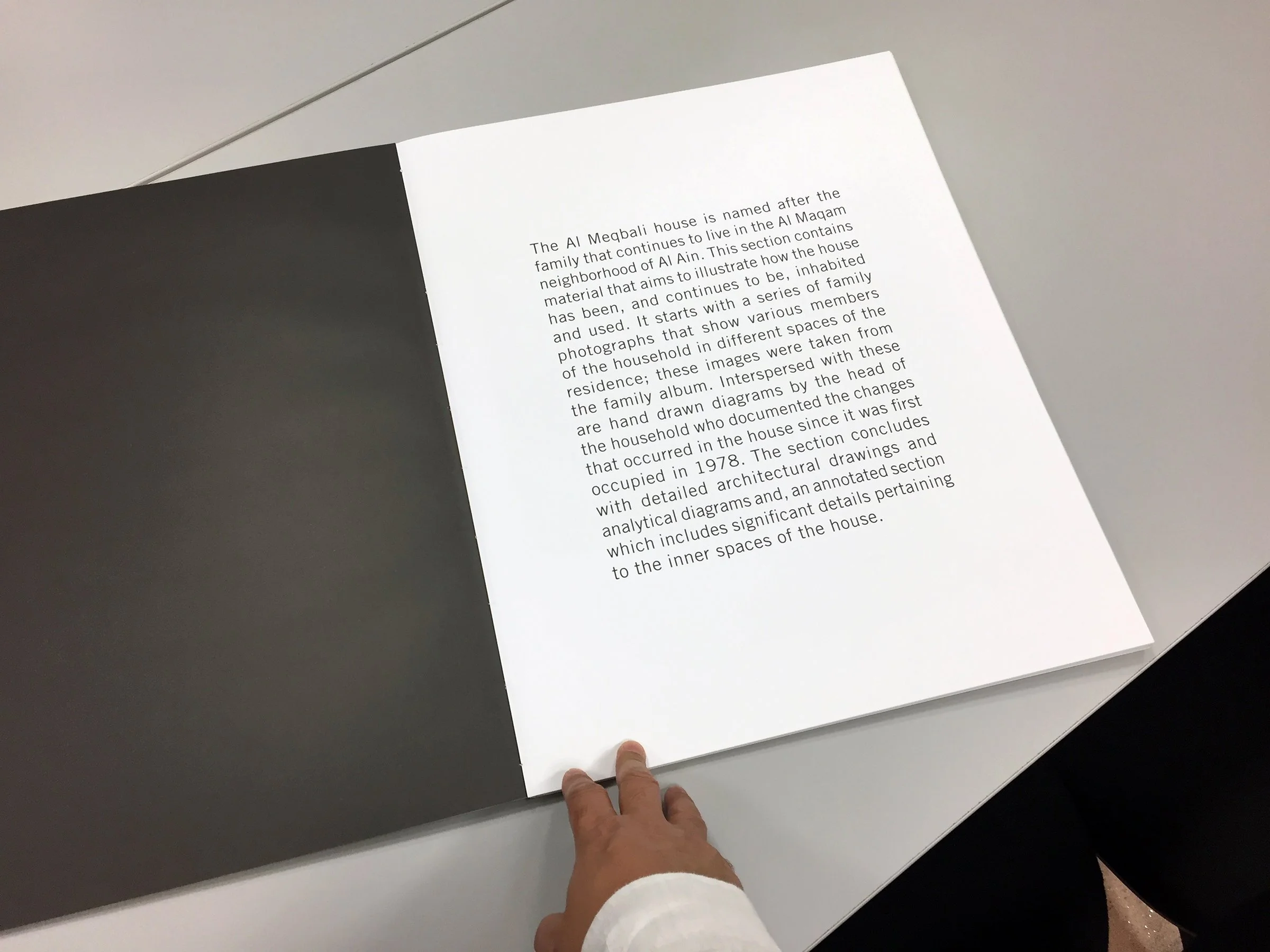
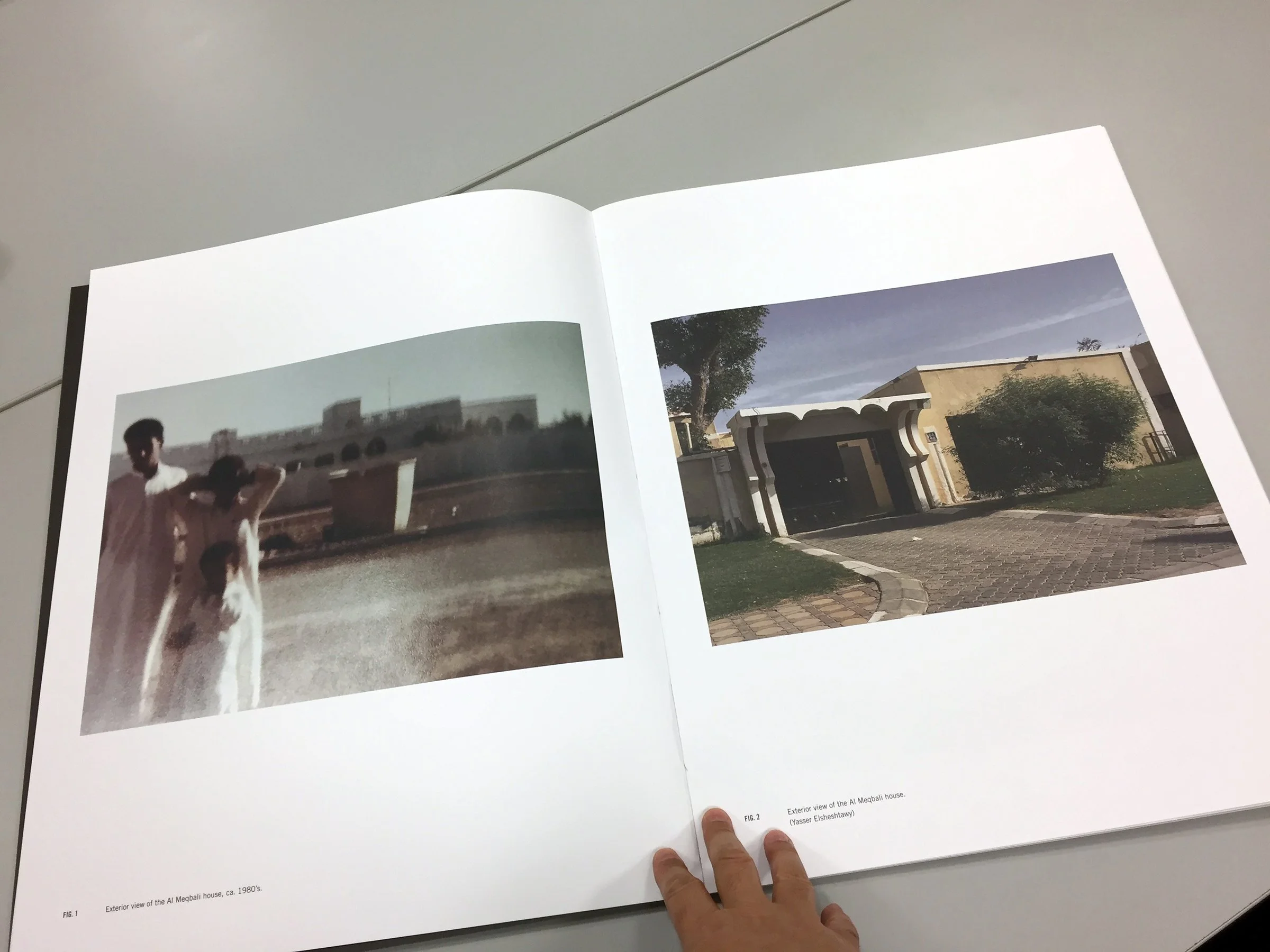
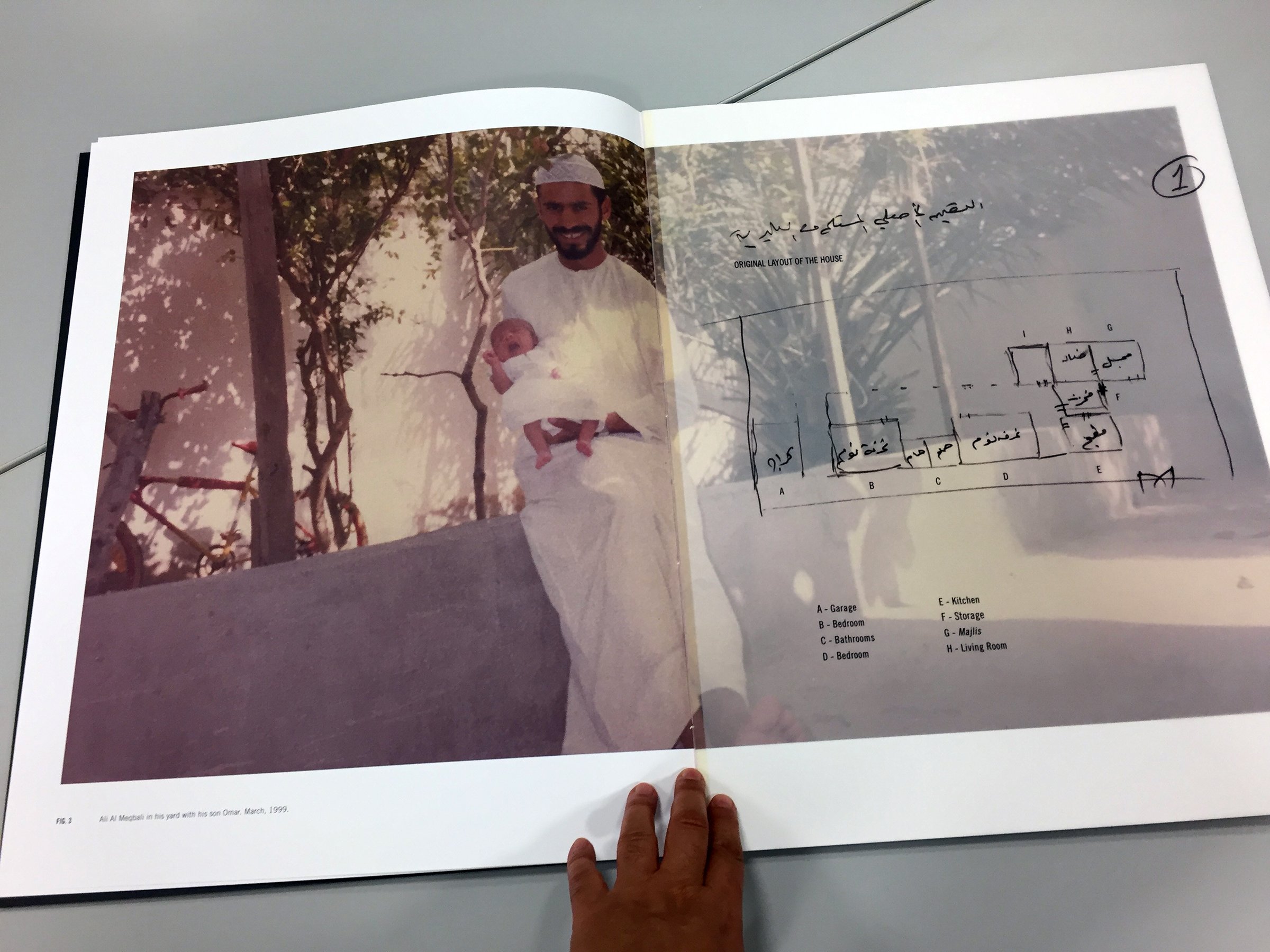
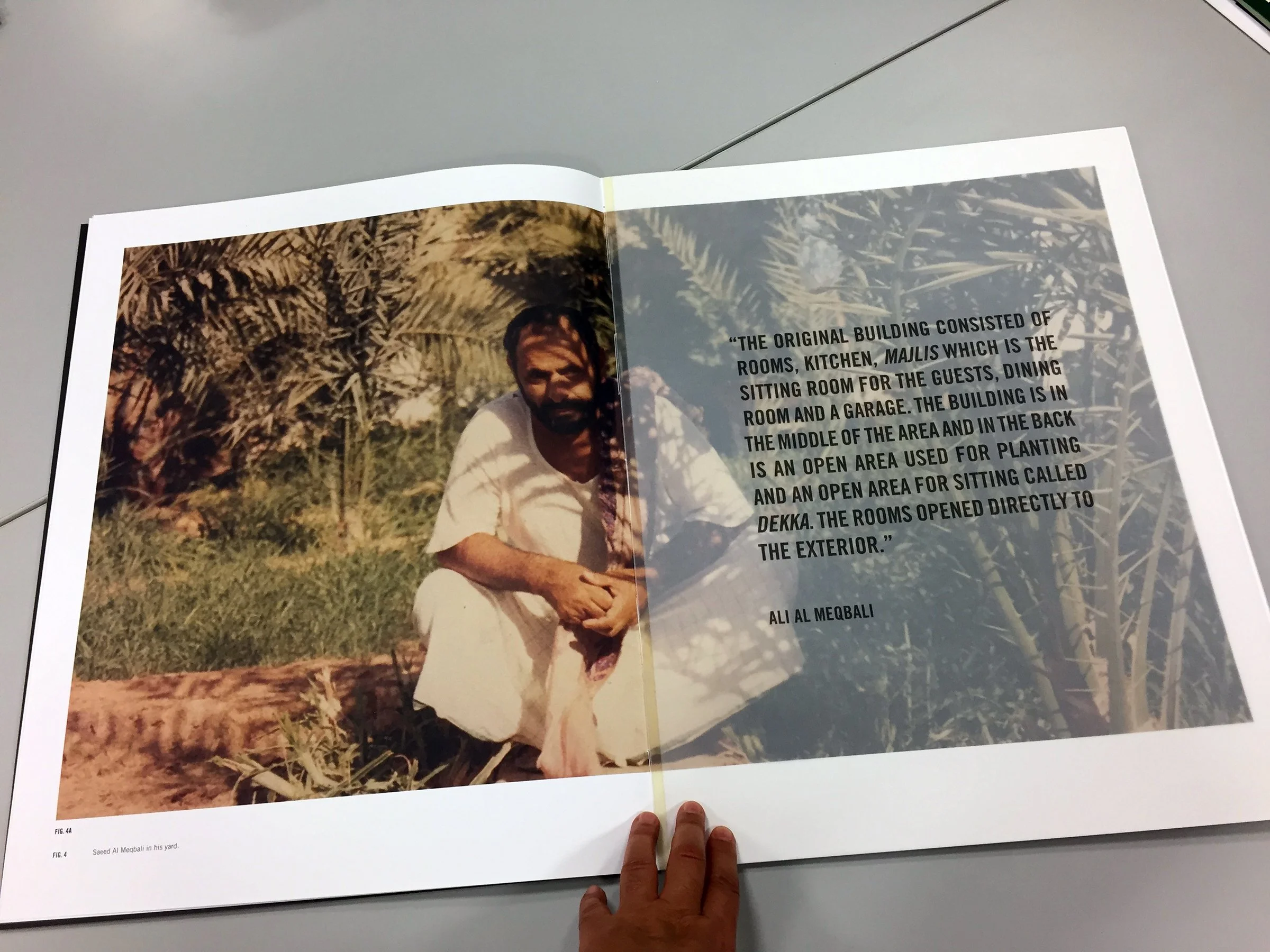
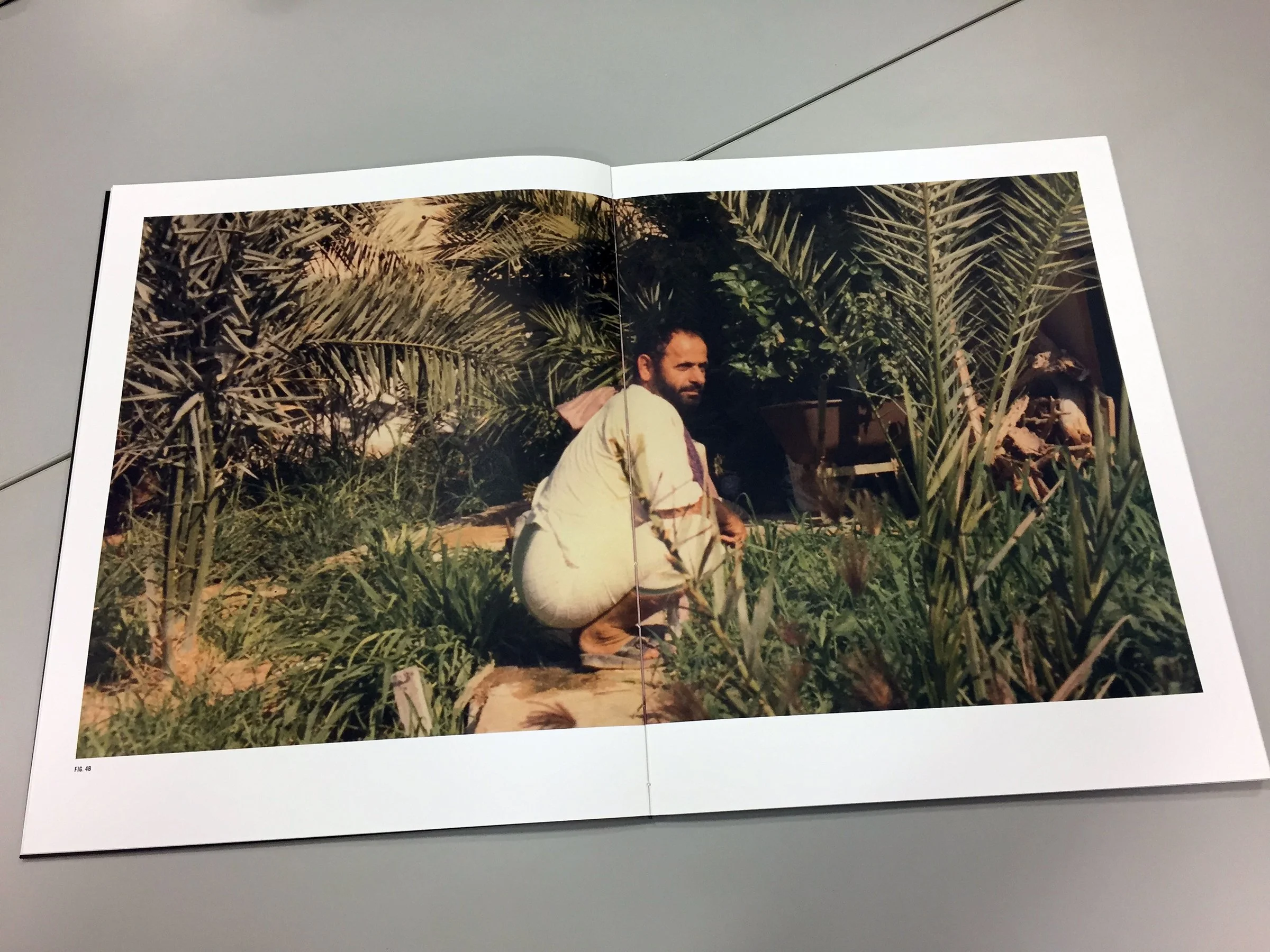
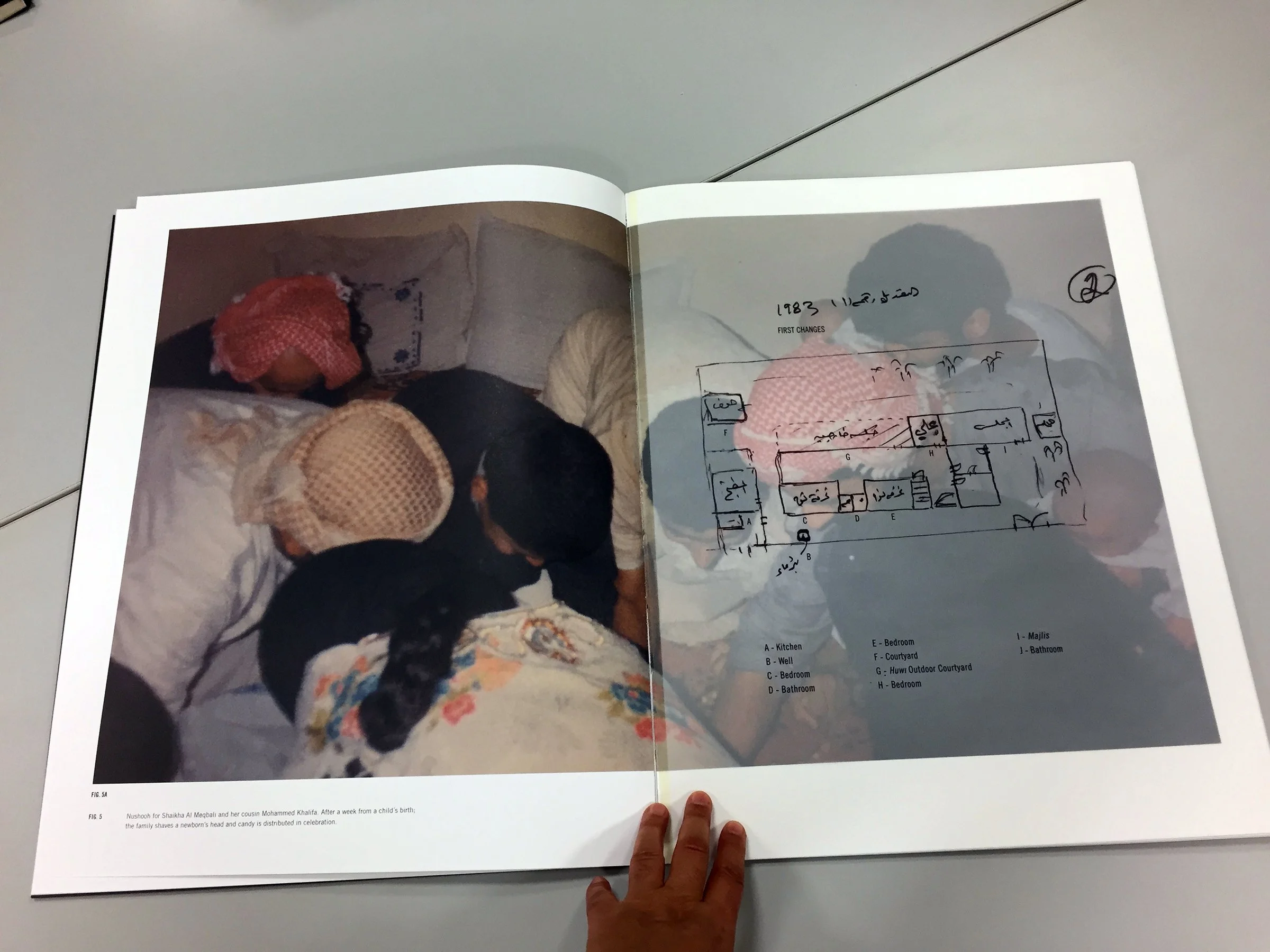
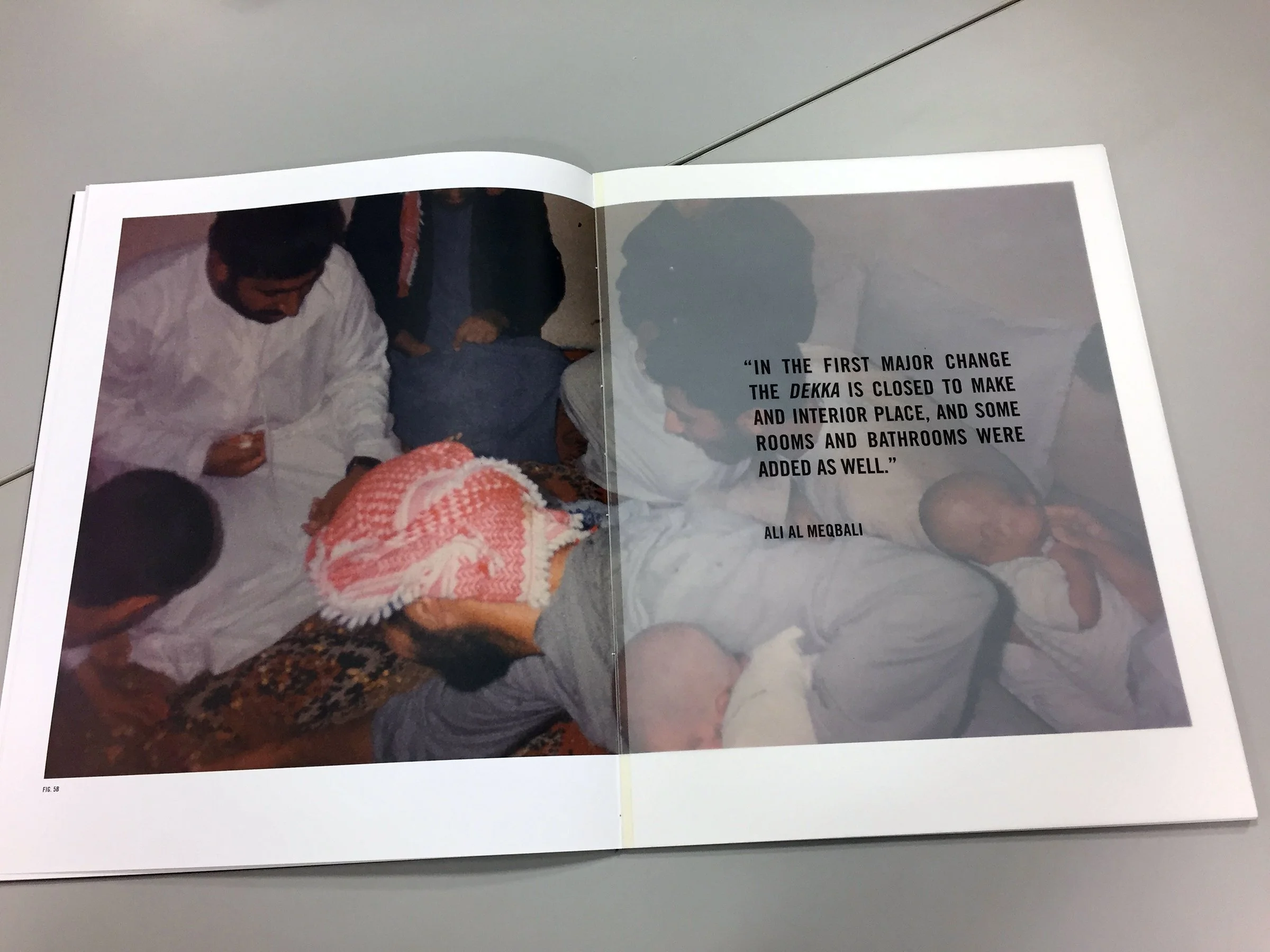
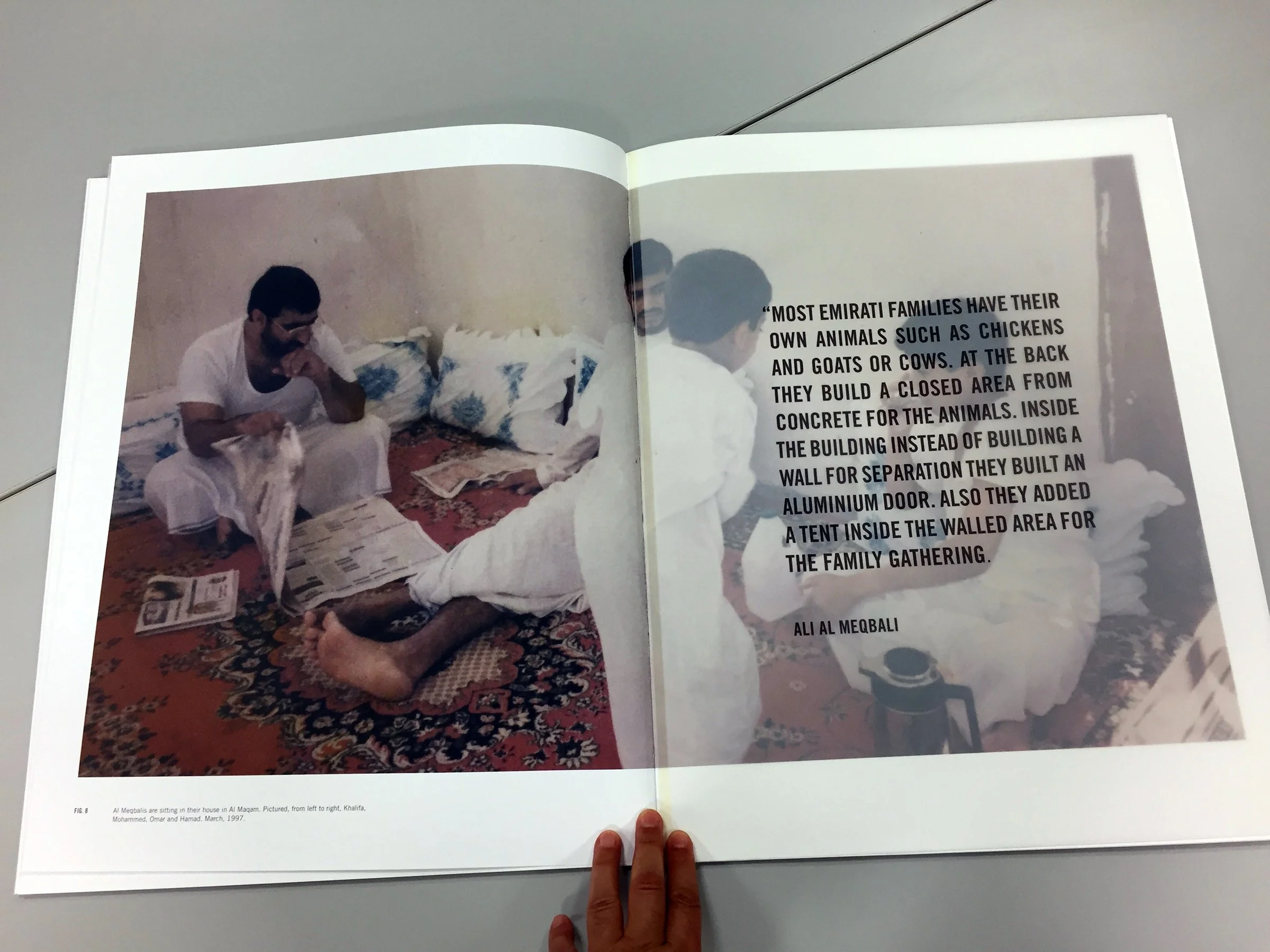
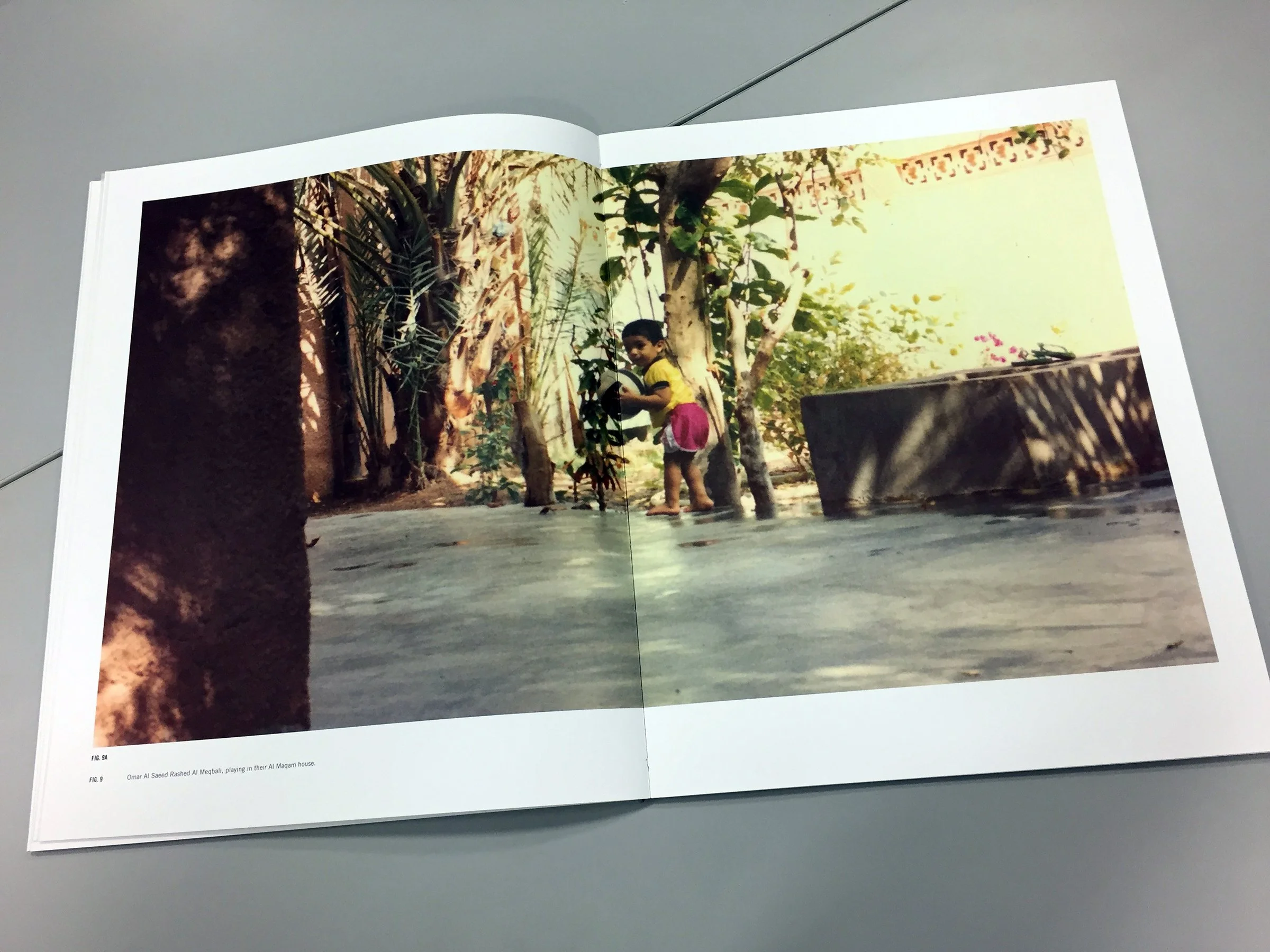
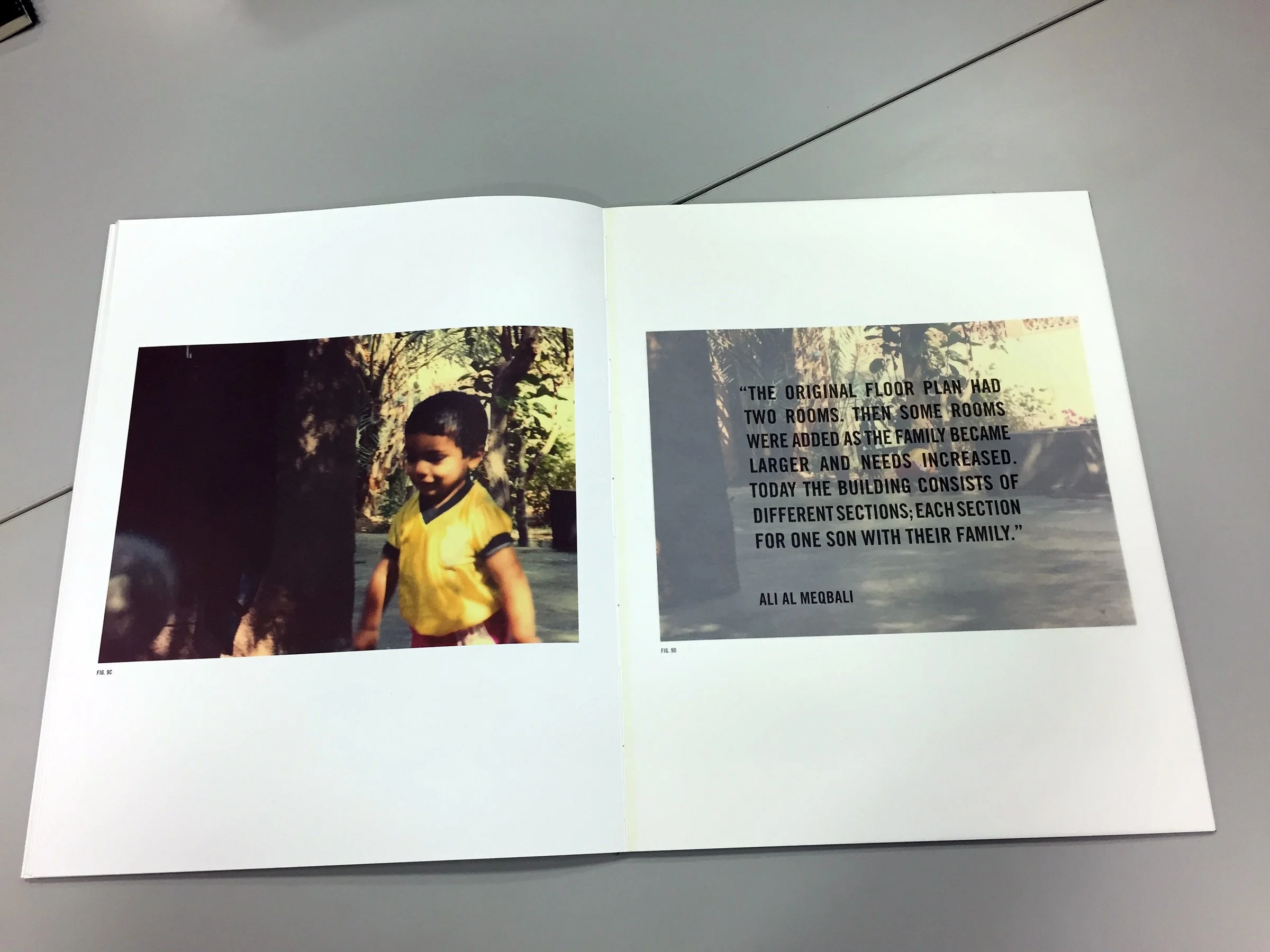
A major centerpiece of the book is the Al Meqbali house in Al Maqam, Al Ain, accessed through the family of one of Elsheshtawy’s students, Shaikha Al Meqbali, whose family home became central to the exhibition. The case study documents how a standardized government house was transformed over decades through additions, enclosed courtyards, gathering spaces, animal sheds, and subdivided living quarters responding to changing family needs. Presented through family photographs, hand-drawn sketches by the head of the household documenting the house’s evolution since 1978, and detailed analytical drawings, the project reveals how residents appropriated and personalized a modernist housing prototype into a layered environment shaped by memory, kinship, and everyday life.
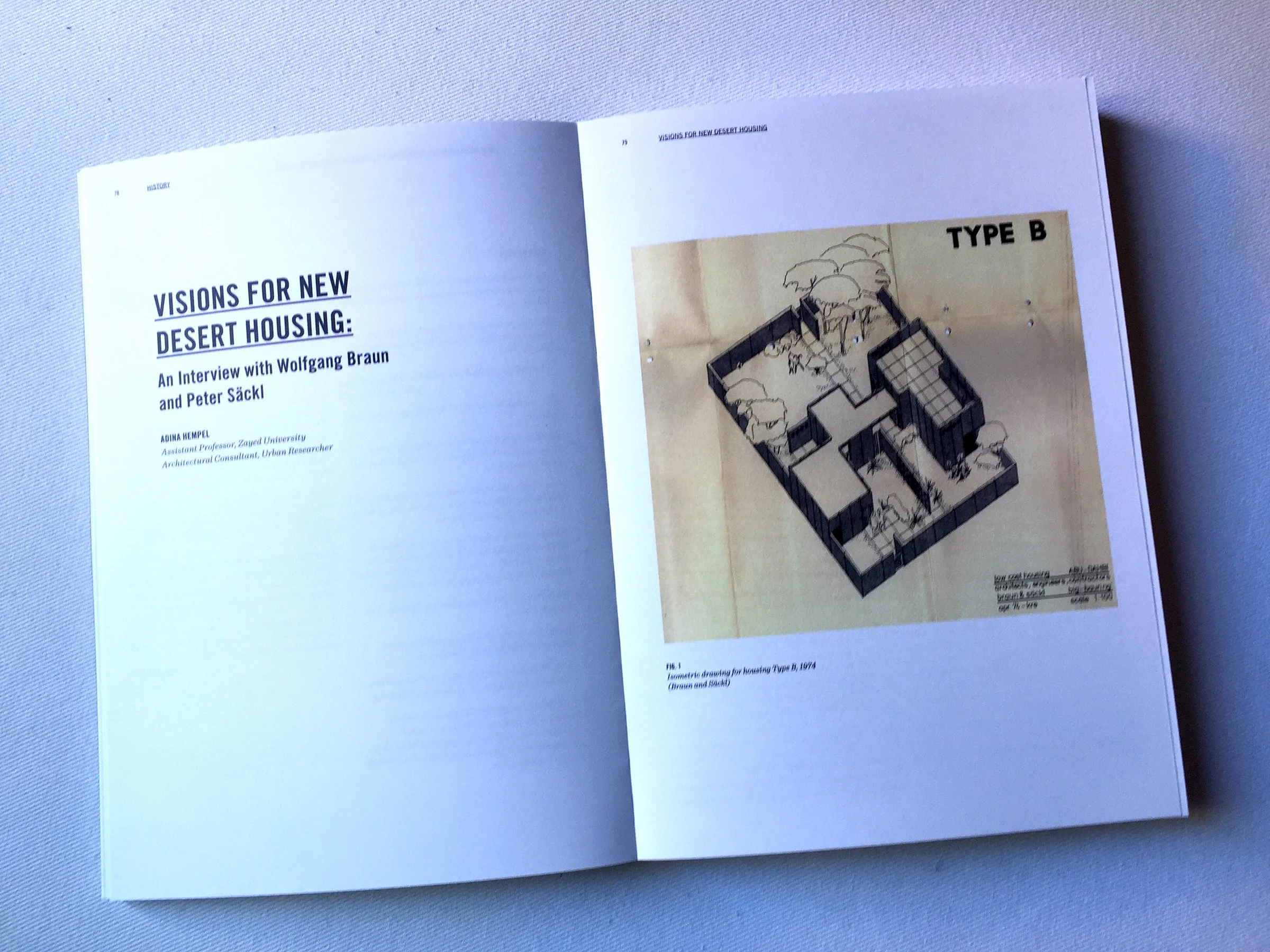
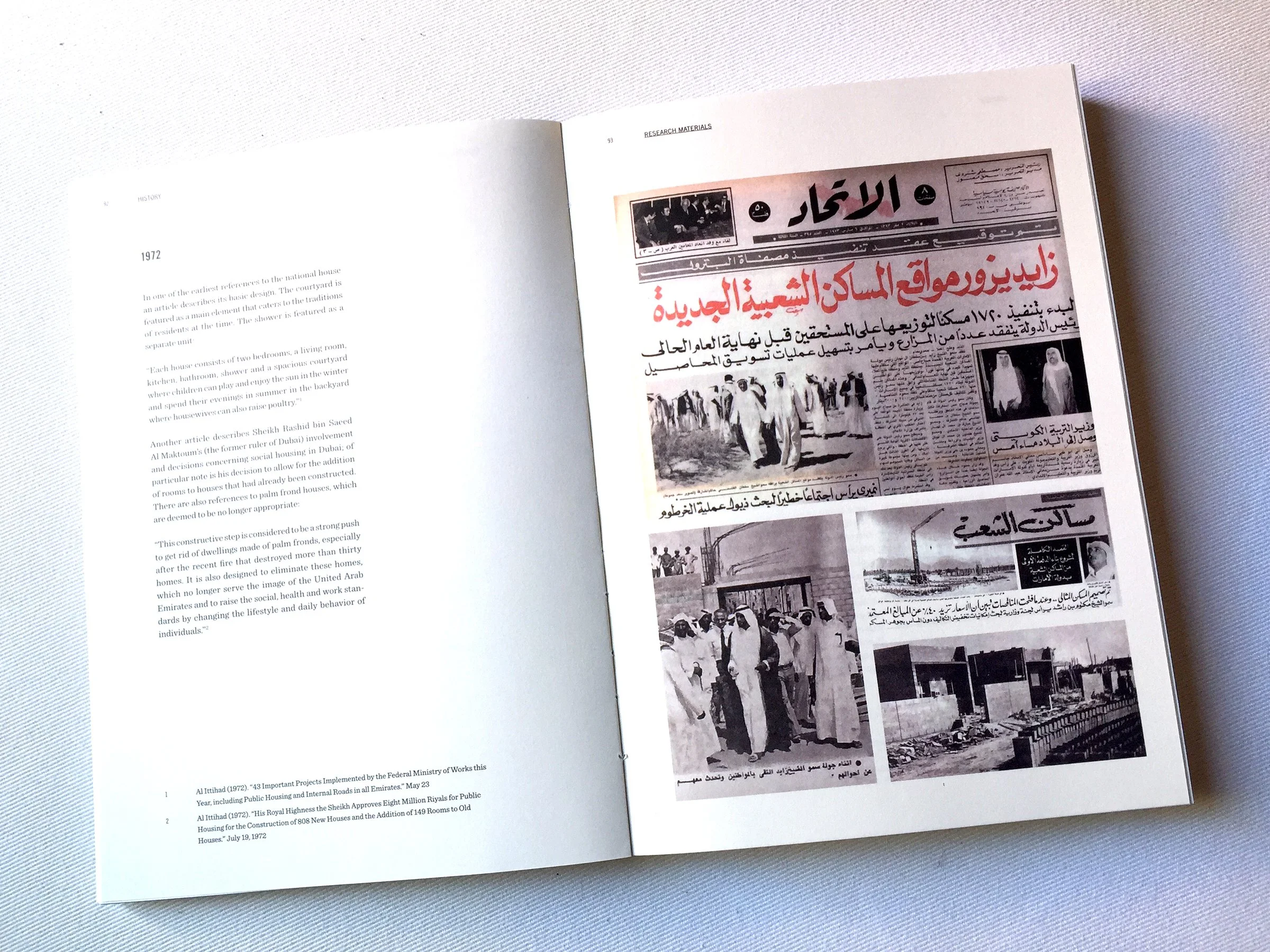
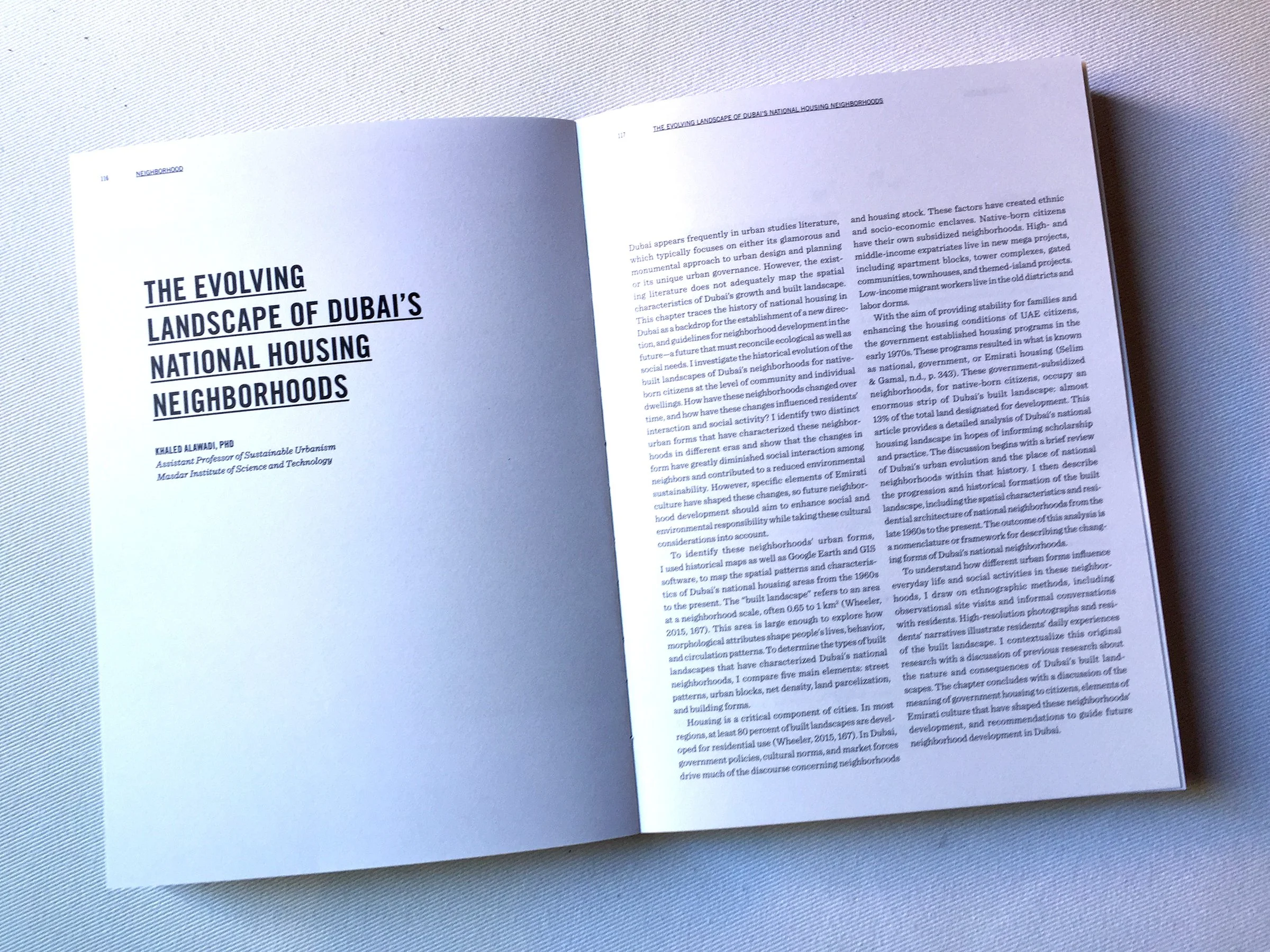
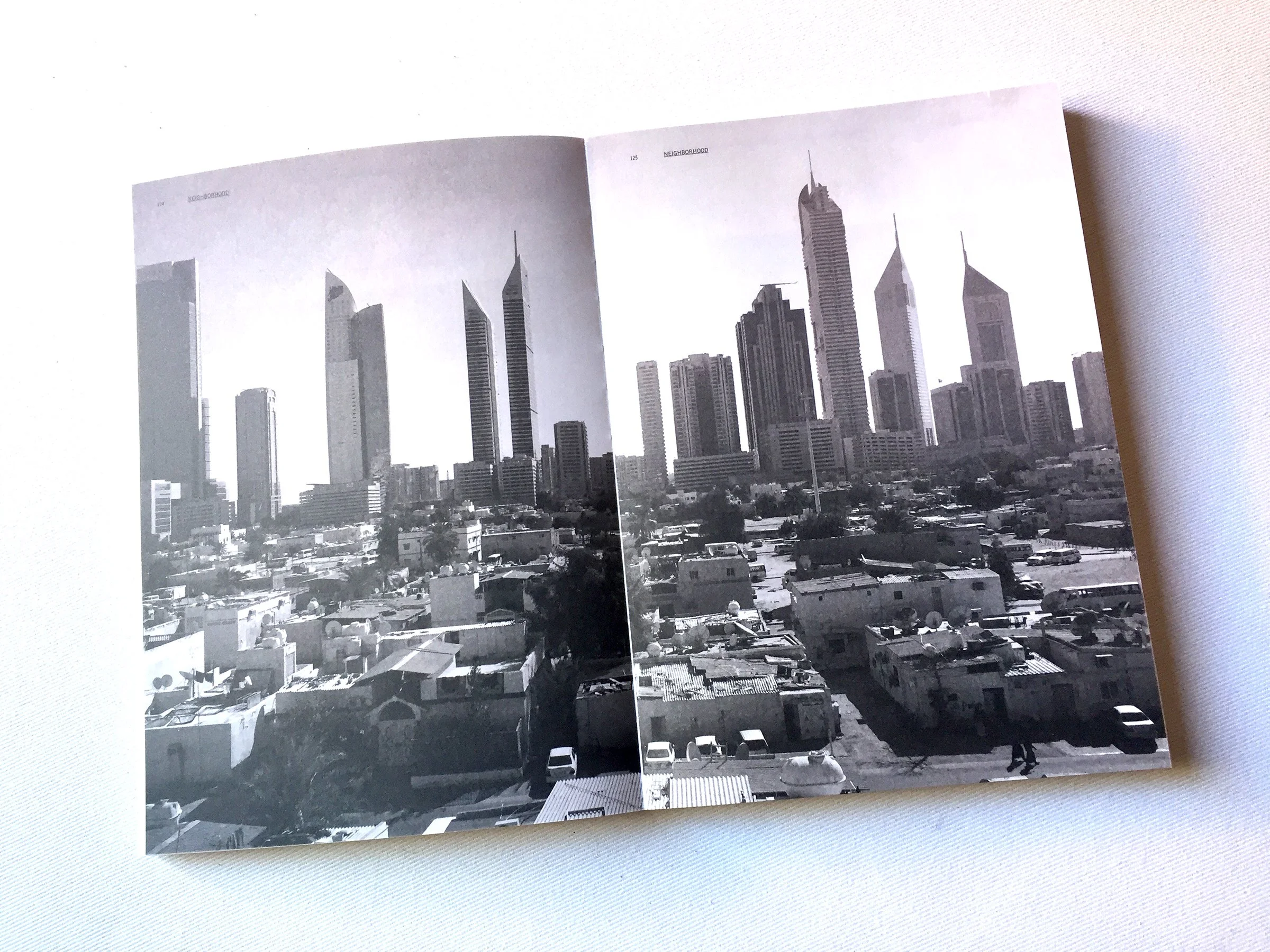
The Meqbali House Book
An Intimate Archive of Family, Memory, and Transformation
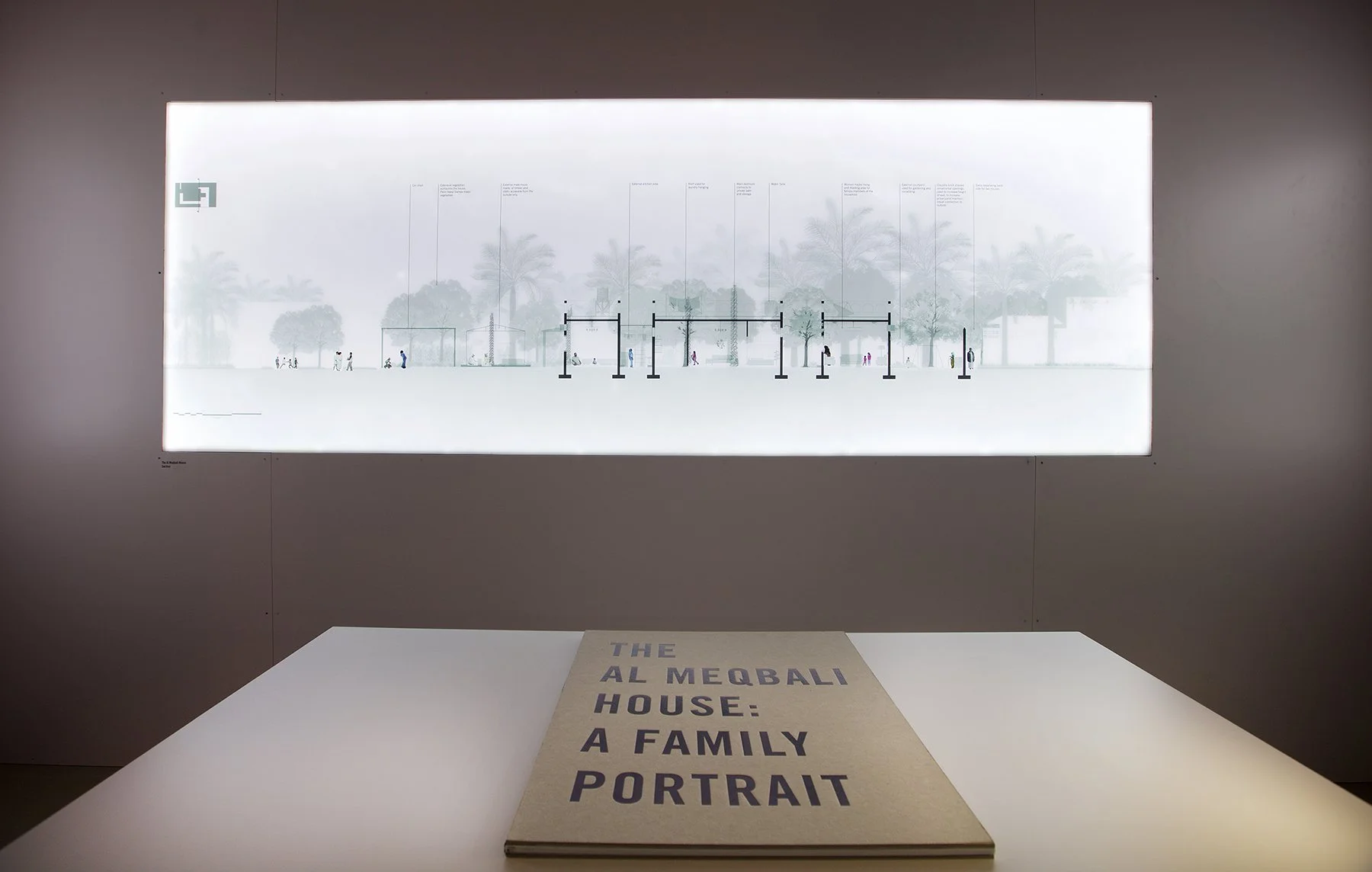
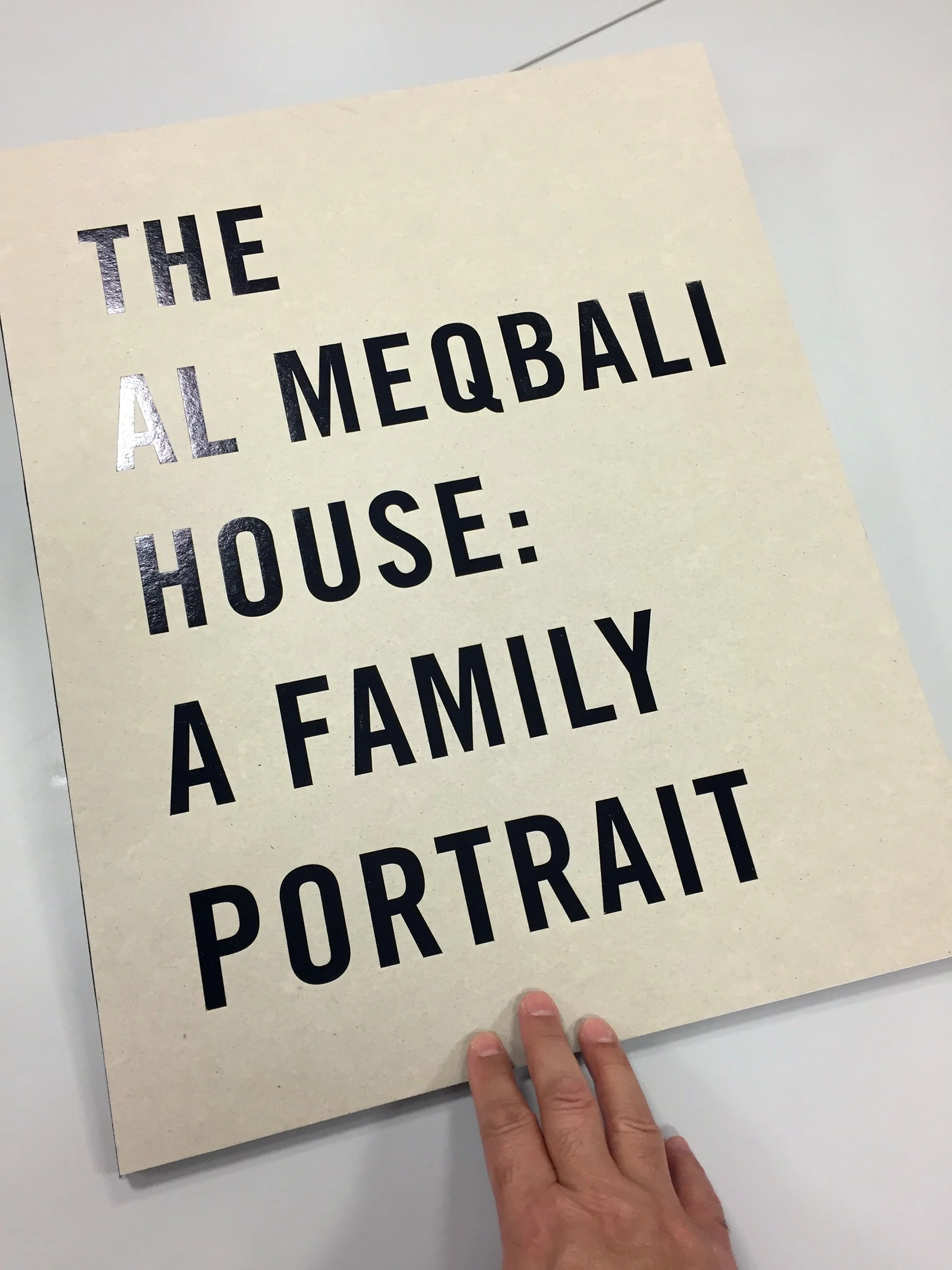
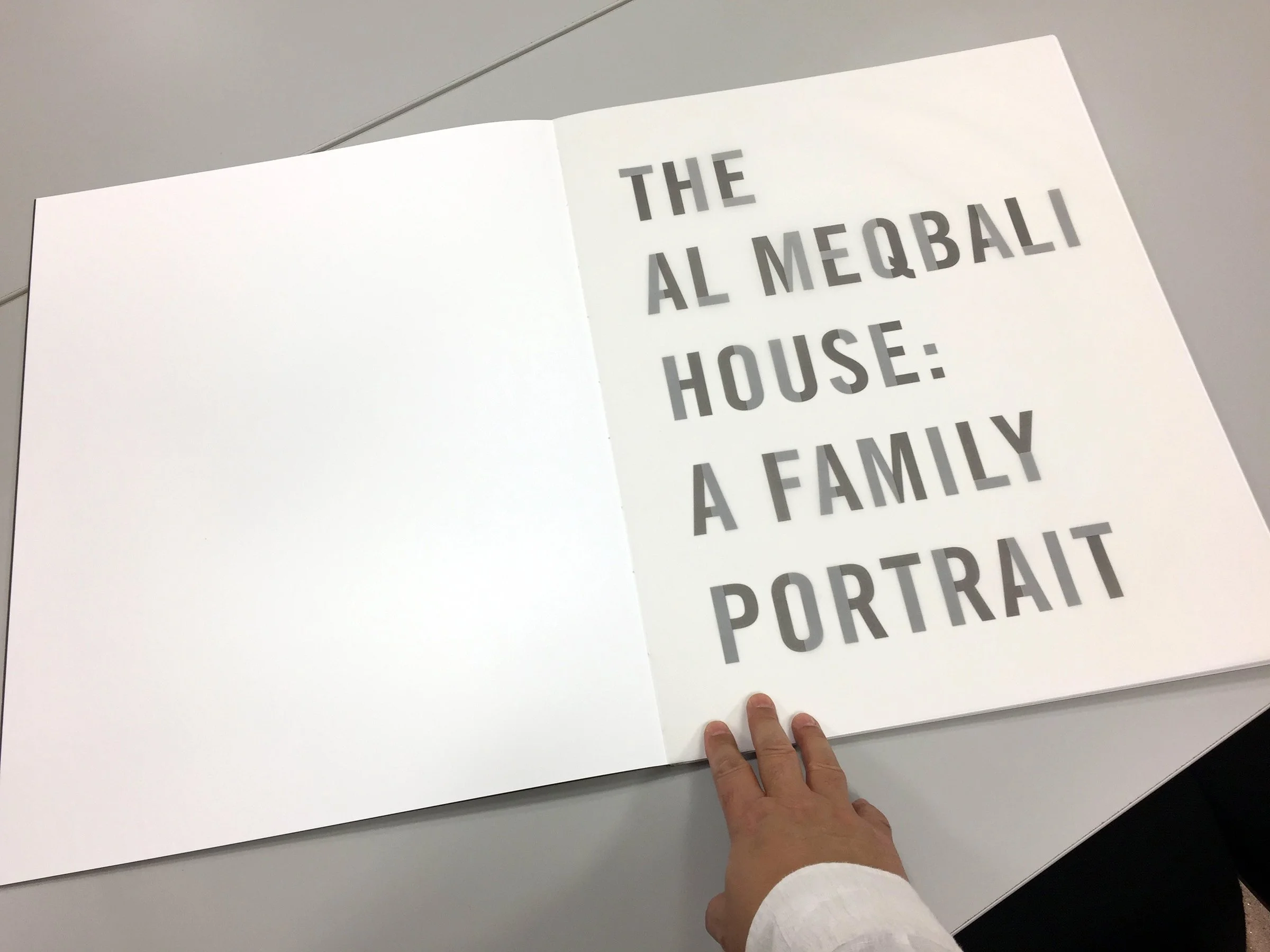
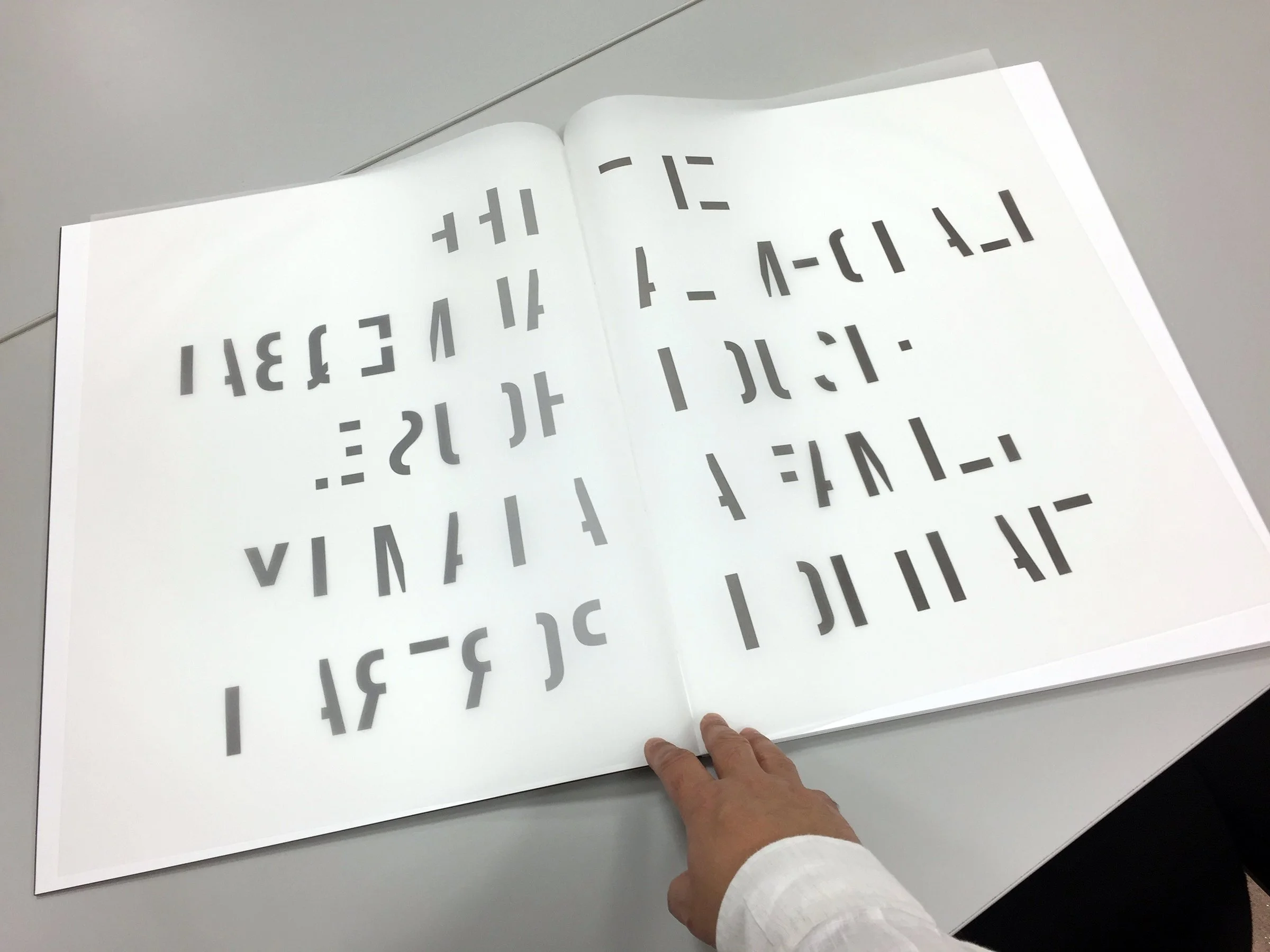
Conceived as the centerpiece of a room entirely dedicated to the Al Meqbali house within the UAE National Pavilion at the 2016 Venice Architecture Biennale, the “big book,” as we came to call it, was both an architectural object and a deeply personal family archive. Placed prominently on a table at the center of the exhibition space, the oversized volume invited visitors to stand, gather, and immerse themselves in the evolving story of a single sha‘bī house in the Al Maqam neighborhood of Al Ain. The book documented the transformation of the house over decades through detailed architectural drawings, analytical diagrams, and a remarkable series of hand-drawn sketches produced by the family patriarch, Ali Al Meqbali, tracing additions, extensions, enclosed courtyards, and changing domestic arrangements since the house was first occupied in 1978. Interwoven with these drawings were intimate family photographs depicting everyday rituals, celebrations, children playing in the courtyard, gatherings, and moments of ordinary life that no architectural survey alone could ever capture. The project emerged after Shaikha Al Meqbali, one of my students at UAE University, introduced me to her family home, which ultimately became one of the emotional and intellectual anchors of the entire exhibition. Produced only as a limited edition, the book was never commercially distributed. As curator of the pavilion, I retained one copy, while another was presented to Shaikha and her family in recognition of their generosity and trust in allowing their home and memories to become part of this public archive.
The Pavilion Newspaper
Folding the Sha’abi House into Everyday Life
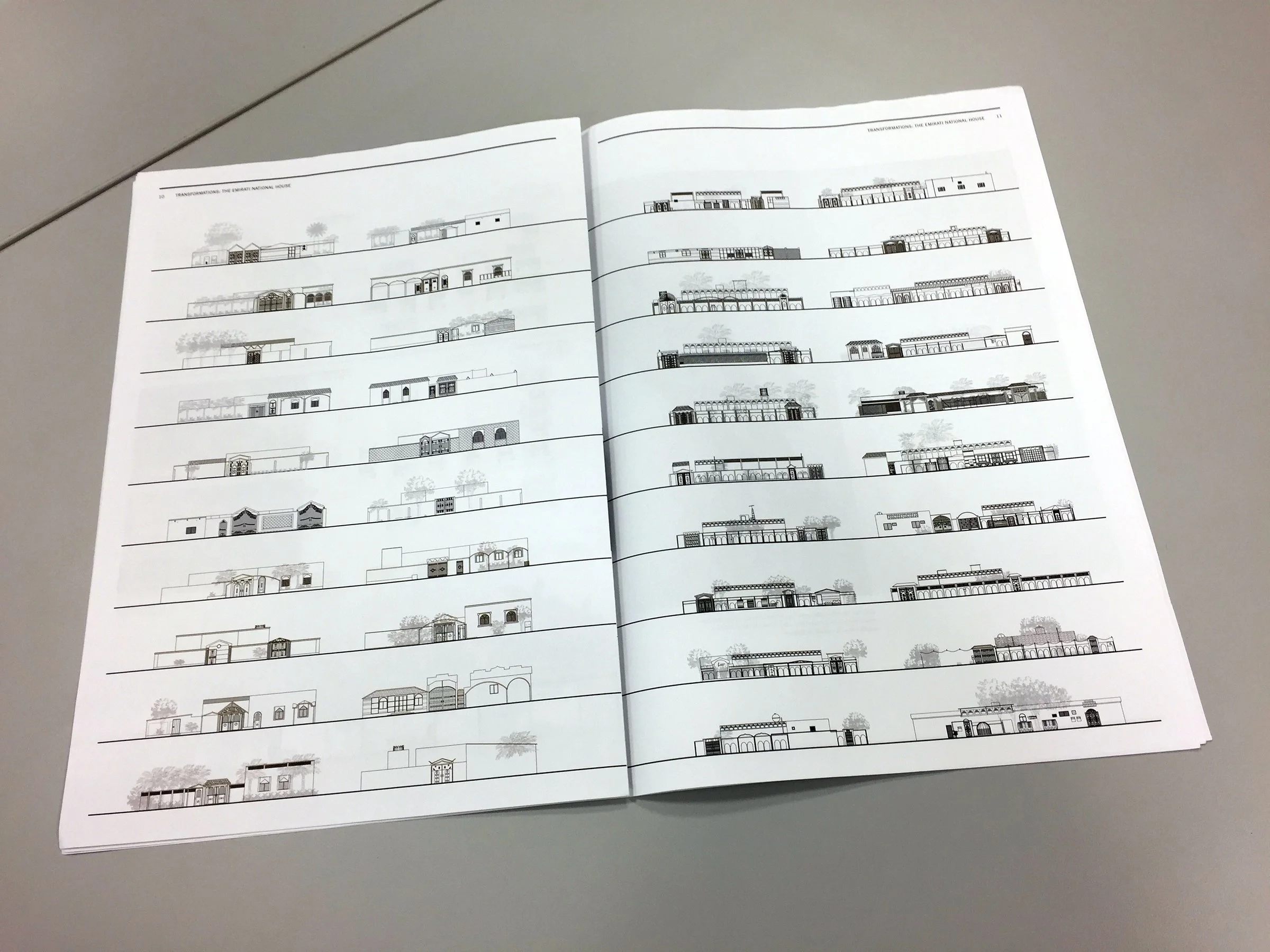
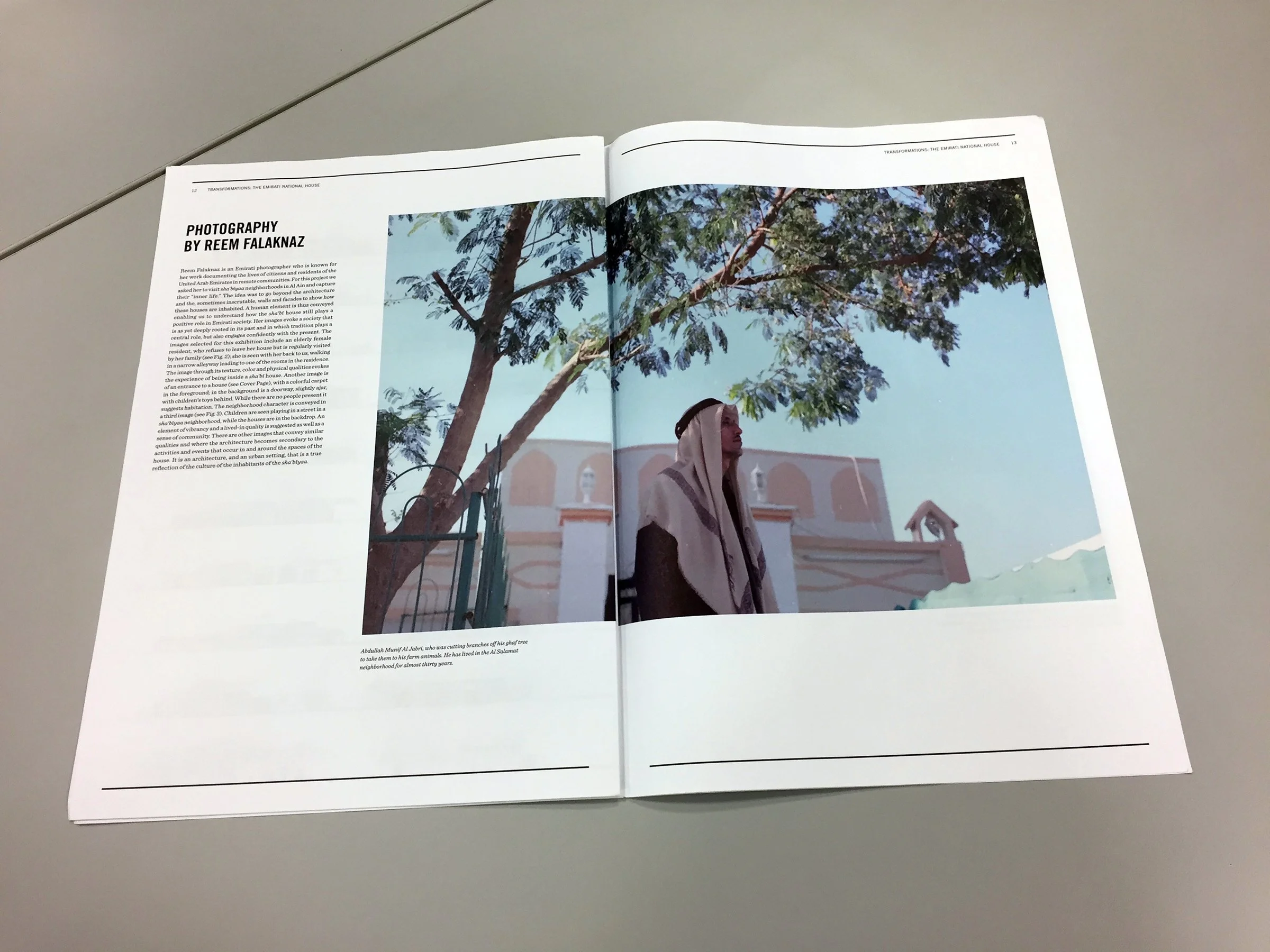
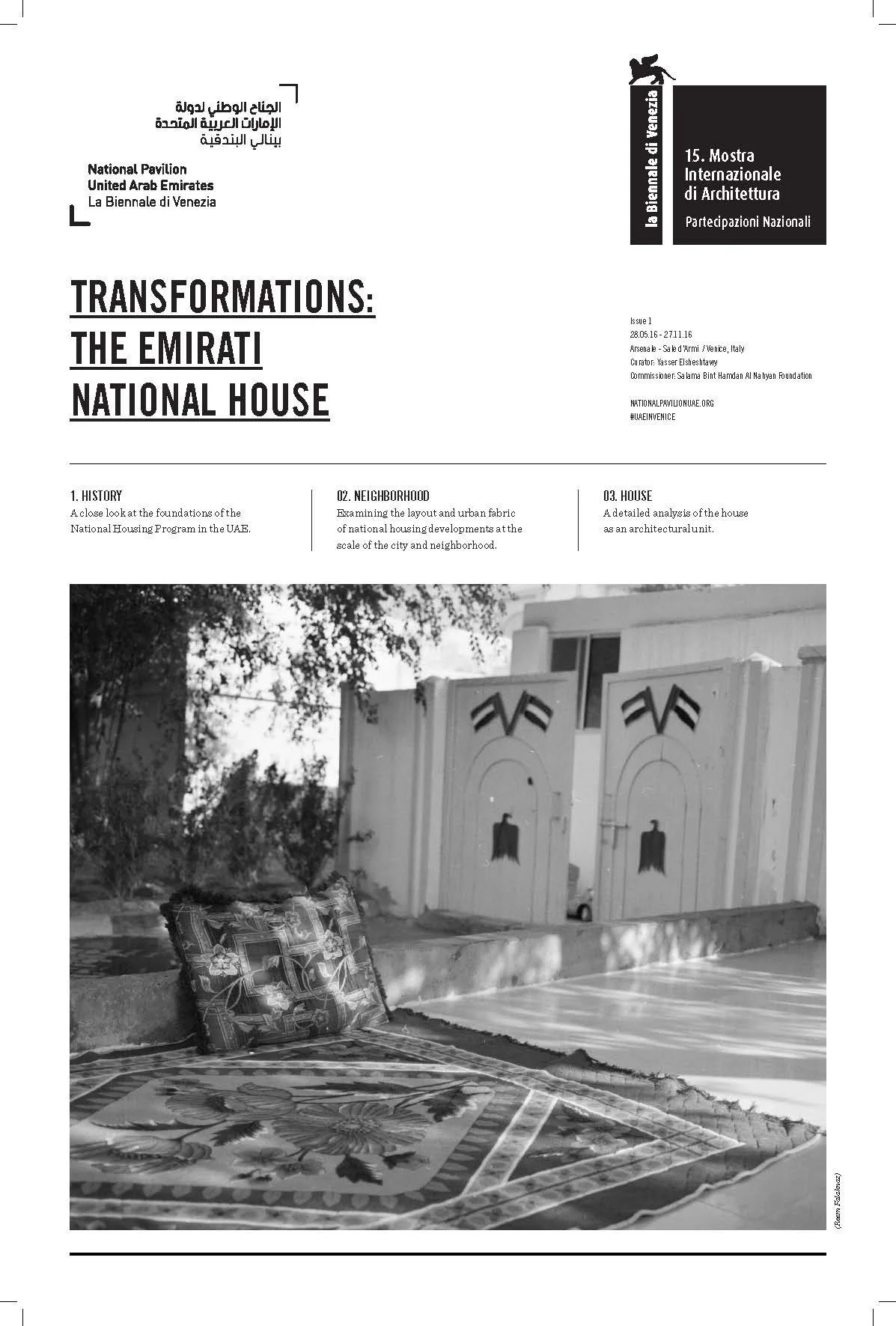
Alongside the formal exhibition catalogue and the large-format Meqbali House book, the UAE Pavilion also produced a newspaper-style publication designed to circulate through the Biennale in a more informal and accessible way. The idea emerged from my experience visiting the 2014 Venice Architecture Biennale, where I was struck by how many pavilions used newspapers as portable extensions of their exhibitions—objects visitors could casually pick up, fold under their arms, read during lunch or on the vaporetto, and later carry back to their hotel rooms. I wanted the UAE Pavilion to have something similar: a publication that echoed the everyday nature of the sha‘bī house itself, modest, approachable, and easy to inhabit. The newspaper condensed the project’s key themes, photographs, drawings, and narratives into a format that was immediate and tactile, allowing visitors to engage with the exhibition beyond the pavilion space itself. My only regret was that it was not printed on actual newsprint paper, though the final result still captured much of the intended spirit. Produced in a limited edition, copies were distributed primarily during the Biennale’s first VIP preview days, with the remaining stock handed out over the following days of the exhibition. Together with the pavilion tote bag, it became one of the exhibition’s most popular takeaways—an object that visitors carried with them through Venice, extending the life of the pavilion into cafés, hotel rooms, gardens, and conversations long after they had left the exhibition space.