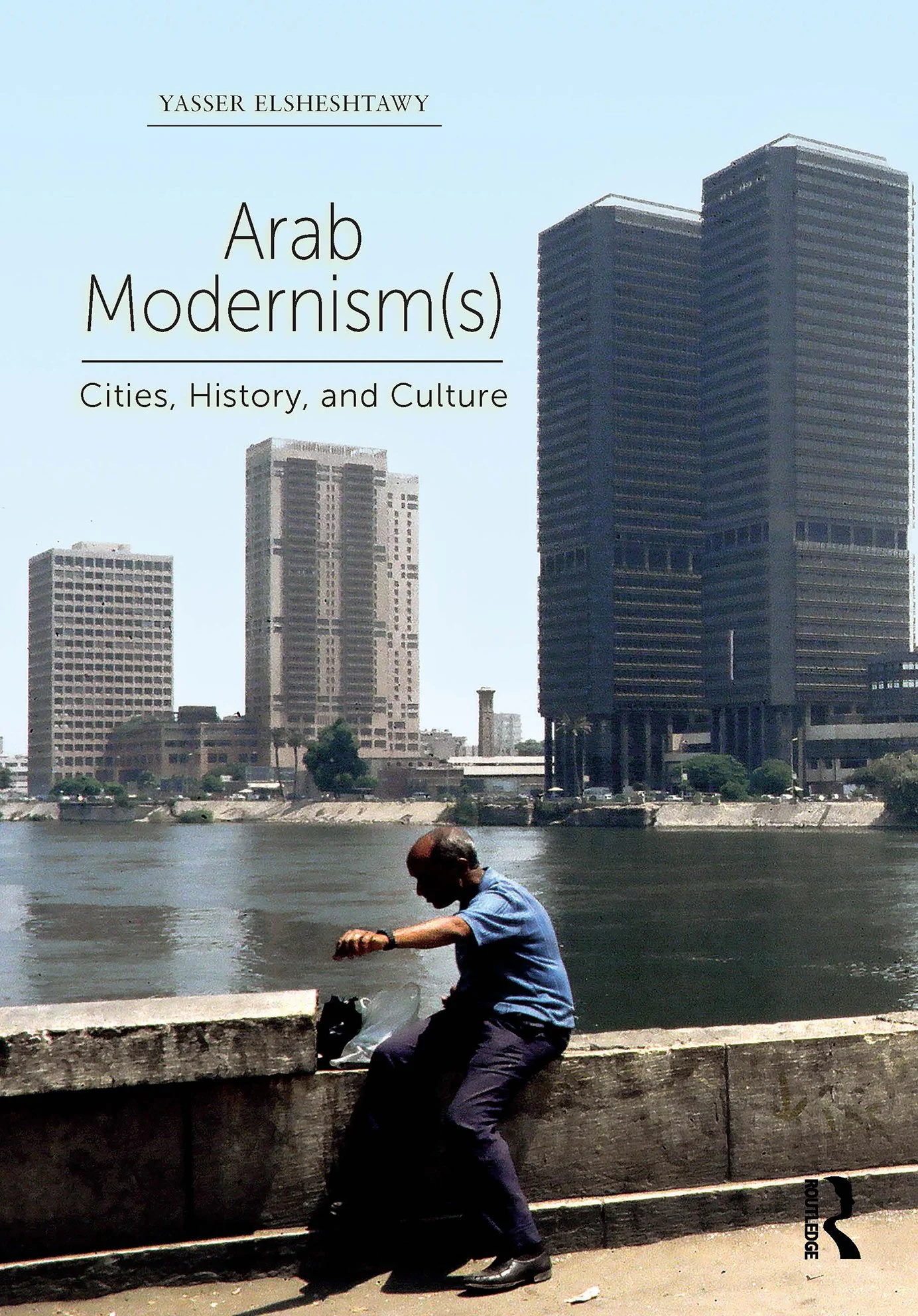
Arab Modernism(s): Cities, History and Culture
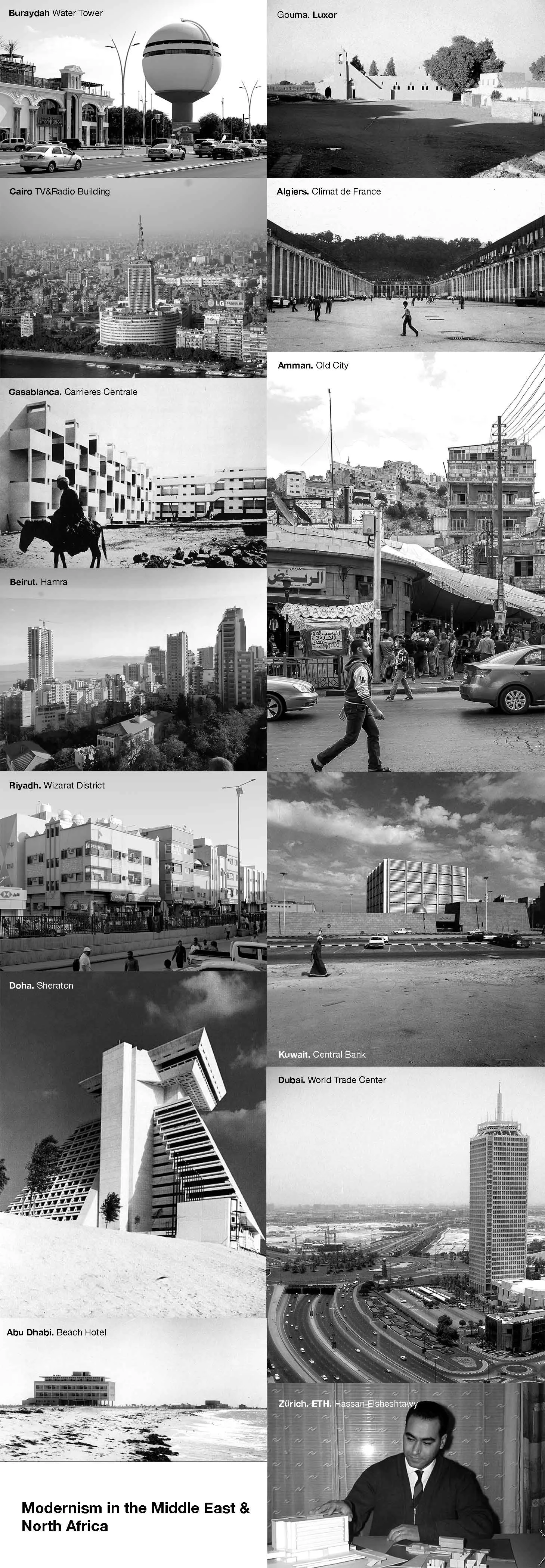
Arab Modernism(s) is an exploration of how the Arab world encountered modernism—sometimes inadvertently, sometimes deliberately—and how those encounters continue to shape the built environment of its cities today. Adhering to my late father’s belief that ‘cities are nothing without people’, I write not just about the buildings, but the lives lived in and around them. My narrative weaves together personal anecdotes and works of fiction and film, thus providing a textured backdrop to my central theme: the evolution of modernism in Arab cities. Following the introduction, the next ten chapters each focuses on a different city or town, moving from Hassan Fathy’s Gourna to Cairo, Algiers, Rabat and Casablanca, Amman, and Beirut and then to the Gulf cities of Riyadh, Kuwait, Doha, and Abu Dhabi and Dubai. The book closes with a Coda – a tribute to my father, Hassan Elsheshtawy.

Reviews
“Arab Modernism(s): Cities, History and Culture is a most welcome culmination of Yasser Elsheshtawy’s decades-long foray into the architecture and urbanism of Arab cities, past, present and future. As one of the leading scholars on this subject, Elsheshtawy successfully brings together his thoughtful critical toolbox to re-examine the region’s multi-varied encounter with modernity. With great agility, Elsheshtawy moves from the Arab world’s old cities to the region’s new centers of power, engaging with themes that cut across the region: the contrast between informal settlements and high-profile developments, the ongoing role of colonial legacies on spatial hierarchies and social fabrics, the role of international architects in gentrification and cultural erasure or the contested realm of memory and preservation, amongst other. The result is a crucial contribution that finally undoes assumed notions around modernity, tradition and identity. This book is a must read for anyone interested in Arab cities and a testament to Elsheshtawy’s unique capacity to offer multi-layered depths of understanding as well as passion for the complex legacies and possible futures of Arab cities. “
Amale Andraos. Columbia University. GSAPP
“Establishing the broader Middle East as the domain of his inquiry, Yasser Elsheshtawy’s new book takes stock of the highly variable modernist influences on the cities and conurbations of the region. Algiers, Riyadh, Beirut, Doha, Cairo, and more — the book walks readers through the abandoned projects, the grandiose aspirations so typical of the modernist era, the aging infrastructures around which many of these cities once blossomed, and the glistening new skylines that have burst forth on the Arabian Peninsula in recent decades. With Elsheshtawy, readers travel into these cities, meander their streets and byways, connect with those cities’ durable histories, and gauge the seams and interstices where urban public life often takes shape. The built landscapes that are the legacy of modernism are his entry point, but Elsheshtawy’s focus is, as always, on the people who inhabit these urban spaces.
This remarkably ambitious undertaking arrives at the perfect juncture. Few other urbanists are capable of surmounting the panoptic regional vantage point from which he surveys the cities of the region. And his comprehensive, detailed, and balanced assessment of the modernist legacy is full of surprises: the autobiographical thread woven through these chapters is most welcome, as are the illuminating connections he draws with a bright constellation of literary work.
As a critical and fair-minded assessment of the enduring modernist legacy, Elsheshtawy’s book is about form, function, and architectural style, certainly. But it’s also about people, and about the diverse urban lives that these spaces and structures have allowed and sometimes encouraged.
The book will be treasured by many.”
Andrew Gardner. University of Puget Sound
“Yasser Elsheshtawy’s Arab Modernism(s): Cities, History, and Culture provides a lively and incisively argued study that contributes important new thinking to debate about the global impact of architectural modernism. Compared with the prevailing scholarly bias towards Europe and North America, the author offers a pioneering account of how the Arab world encountered, absorbed and refashioned modernism and how those encounters have continued to shape the built environment. Weaving together an impressive grasp of architectural theory and practice with personal anecdotes and insights from literary fiction and films, Elsheshtawy presents a kaleidoscopic survey of the heritage and lived experience of architectural modernism in cities from north Africa, the Middle East and the Gulf. In doing so, the narrative highlights significant issues that include the relationship of modernism to cultural identity, colonial legacies, oil wealth and globalization, commodification, spatial inequality, marginalization of migrant workers, sustainability and urban resilience. Case studies highlight numerous little-known projects from across the region alongside celebrated schemes such as Hassan Fathy's Gourna Village at Luxor and Le Corbusier’s Plan Obus in Algiers. Its final chapter supplies a moving tribute to the author's father Hassan, whose architectural work bridged modernist ideals and regional traditions. It is a fitting conclusion to a book that is intellectually rigorous but always deeply personal.”
John R. Gold. University College London
-
This opening chapter sets the conceptual and ethical framework of the book by interrogating what it calls the fetishization of modernism in Arab cities. Rather than treating modernism as a coherent project or stylistic inheritance, the chapter frames it as something that often arrived “in spite of us”—as an episode, an interruption, or an accident rather than an organic social transformation. Drawing on literary epigraphs from Season of Migration to the North and the Bahrain Pavilion at the Venice Architecture Biennale, the chapter situates Arab encounters with modernism within a longer history of ambivalence, desire, resistance, and misrecognition.
-
This chapter examines Hassan Fathy’s New Gourna Village as a pivotal yet contested experiment in Arab modernism. Conceived in 1945 as a state-led relocation project near Luxor, Gourna was intended to provide sustainable, vernacular housing for displaced villagers. Fathy’s design—rooted in mud-brick construction, domes, and courtyards—sought to reconcile modern architecture with local traditions, offering an early alternative to the International Style. While celebrated internationally, the project was rejected by its intended inhabitants and ultimately failed, raising critical questions about authorship, participation, and the viability of a context-based modernism. Through a personal narrative of architectural discovery and a 1984 field visit to the village, the chapter traces the project’s evolution and symbolic weight. Drawing on literary and cinematic representations such as The Mountain, as well as theoretical critiques by Timothy Mitchell and Panayiota Pyla, it situates Gourna within wider debates on postcolonial identity, development, and architectural essentialism. Fathy’s trajectory—from scientific rationalism under Greek planner Doxiadis to a spiritually charged pan-Arabism—mirrored broader regional shifts in architectural patronage and ideology. The chapter concludes by examining how Fathy’s aesthetics were appropriated in projects such as Al-Azhar Park, the Sheraton Miramar, and the Children’s Park in Cairo. These examples illustrate how a once radical vision became a commodified language of nostalgic luxury. Framed by Edward Said’s reflections on historical memory and Tayeb Salih’s critique of postcolonial identity, the chapter positions Gourna as a revealing failure—an enduring lens through which to interrogate the promises and contradictions of modernism in the Arab world.
-
This chapter critically examines Cairo’s urban transformation through the lens of modernism, informality, memory, and exclusion. Tracing the city’s development from its historical foundation as a desert settlement to its contemporary status as a sprawling megalopolis, it explores the tensions between heritage and modernization, state power and everyday life. Drawing on personal narratives, cinematic representations, and literary depictions—from Naguib Mahfouz to Ahmed Naji—the chapter highlights how Cairo’s architectural modernism and planning ideals have often served authoritarian agendas while marginalizing its urban poor. Key case studies—such as the luxury enclave of Uptown Cairo overlooking the slum of Manshiet Nasser, the erasure of the historic Maspero district, and the construction of the New Administrative Capital—illustrate how neoliberal and militarized urbanism have reshaped the city into a fractured landscape. The chapter shows how urban policy has increasingly favored elite enclaves and spectacle-driven projects at the expense of inclusive, equitable development. It argues that Cairo’s modernist legacy is not only built in concrete but also inscribed with displacement, nostalgia, and social injustice. Rather than a cohesive metropolis, Cairo emerges as a city of juxtapositions: informal vs. formal, slum vs. gated compound, memory vs. amnesia. Through literary, visual, and autobiographical materials, the chapter foregrounds the lived experience of Cairenes navigating a city where modernist dreams have often turned dystopian. It concludes by arguing that Cairo’s future cannot be envisioned without reckoning with the violence of its present and the persistence of its past—traces that refuse to be erased.
-
This chapter explores the architectural and urban legacy of Algiers, tracing its transformation from a colonial cityscape to a complex postcolonial metropolis shaped by resistance, neglect, and contested modernities. It begins by unpacking the spatial legacy of French occupation—particularly the dual city structure of European quarters and indigenous neighborhoods—and looks at how colonial modernism, through projects like Le Corbusier’s Plan Obus and Fernand Pouillon’s Climat de France, was deployed as a tool of control, surveillance, and assimilation. These architectural interventions sought to remake Algerian society but were ultimately subverted, repurposed, or resisted by the very populations they aimed to contain. Through film and literature—including The Battle of Algiers, Omar Gatlato, Mariner of the Mountains, and novels by Albert Camus and Kamel Daoud—the chapter analyzes how Algiers has been represented and imagined, revealing the city’s psychological and spatial fragmentation. It also critically engages with post-independence efforts to project a modern national identity, such as Oscar Niemeyer’s visionary but unrealized projects, and recent controversial proposals like Jean Nouvel’s plan for the Casbah, framed as a postcolonial reprise of orientalist urbanism. By examining historical preservation efforts, informal urban practices, and contemporary megaprojects, the chapter situates Algiers at a crossroads—caught between the inherited trauma of colonial planning, the failures of postcolonial state-led modernization, and the pressures of neoliberal globalization. Algiers emerges as a palimpsest city, where architectural modernism is both a legacy of domination and a contested field for cultural expression, resistance, and redefinition in the 21st century.
-
This chapter is a critical examination of the urban and architectural development of Rabat and Casablanca, revealing how colonial legacies, state policies, and global capital have shaped Morocco’s modern cities. It begins by tracing the French Protectorate’s urban strategies—particularly the “dual city” model implemented by Henri Prost—which segregated European and Moroccan populations and embedded lasting socio-spatial hierarchies. In Rabat, colonial and postcolonial planning continue to enforce exclusionary patterns, while contemporary megaprojects like the Bouregreg River Development deepen these divides under the guise of modernization. Casablanca, Morocco’s economic hub, has experienced rapid urbanization and the proliferation of slums, leading to state-led interventions such as the “Villes sans Bidonvilles” program. Yet these efforts often displace the urban poor without addressing the structural roots of informality and exclusion. Through a detailed case study of Carrières Centrales in Casablanca, the chapter shows how colonial-era social housing became a site of resistance and contested urban space. It further explores how tramway projects, although intended to integrate marginalized districts, instead catalyze gentrification and displacement. By weaving in literary and cinematic representations—such as Rashid Aday’s Another Day in Rabat and Nabil Ayouch’s Ali Zaoua and Horses of God—the chapter underscores how culture offers alternative narratives that challenge official visions of progress. Ultimately, the chapter argues that Moroccan urbanism, from colonial segregation to neoliberal spectacle, continues to produce and manage exclusion. It calls for a reimagining of urban development that prioritizes equity, social inclusion, and the everyday lives of the marginalized.
-
This chapter looks at Amman’s urban and architectural development through the lens of modernism, displacement, and socio-spatial division. Unlike other Arab capitals with deep-rooted identities, Amman is a city of arrivals—shaped by waves of migration, refugee flows, and a fractured national identity. The chapter traces four distinct architectural phases, from the early 20th-century synthesis of regional traditions and Ottoman forms, through post-independence modernist ambitions, to neoliberal megaprojects and contemporary regeneration efforts. Key figures such as Jafar Tukan, Sayed Karim, and Ammar Khammash are discussed alongside landmark projects like the Jordan National Bank, the University of Jordan, and the Al-Hussein Youth City complex, which embodied Jordanian modernist ideals of progress and public life. Yet Amman’s transformation has been marked by stark inequalities. Developments such as the Abdali District and Jordan Gate Towers illustrate how neoliberal urbanism, driven by Gulf capital and speculative planning, has deepened the divide between affluent West Amman and marginalized East Amman. Through case studies, films like The Alleys, and Abdulrahman Munif’s Tale of a City, the chapter foregrounds the lived experiences of ordinary residents, highlighting how everyday life, memory, and resistance are inscribed in rooftops, alleyways, and informal settlements. Ultimately, the chapter argues that Amman’s urban future lies not in imported models of luxury and exclusivity, but in embracing its plural histories and fostering inclusive, grounded development. Modernism in Amman, while fractured, remains a vital framework for reimagining the city as a shared and evolving home.
-
This chapter unpacks Beirut’s complex urban and architectural history through the lenses of modernism, memory, violence, and representation. It traces the city’s transformation from a cosmopolitan Mediterranean hub to a fragmented postwar metropolis marked by spatial inequality and neoliberal redevelopment. Beginning with a historical overview, the chapter highlights Beirut’s evolution under Ottoman, French, and post-independence governance, culminating in a mid-century modernist boom exemplified by iconic projects like the Phoenicia Hotel, Geffinor Center, and the Barakat Building. A key focus is the post–Civil War reconstruction led by Solidere, a private company tasked with rebuilding downtown Beirut. While aiming to restore the city’s global stature, the project is critiqued for its erasure of memory, privatization of public space, and failure to engage the everyday lives of Beirut’s residents. The chapter juxtaposes this artificial modernity with informal neighborhoods and heterotopic spaces depicted in literature and film, including West Beirut, Capernaum, and novels by Hoda Barakat and Rabih Alameddine. These works reveal a city shaped as much by absence and trauma as by spectacle and design. The chapter also revisits forgotten planning efforts, such as Doxiadis’ unbuilt housing proposal, and examines the aftermath of the 2020 port explosion, which exposed the failures of Beirut’s urban governance and reignited grassroots movements for equitable reconstruction. Through personal narrative, cinematic and literary analysis, and urban critique, the chapter presents Beirut as a layered city—where beauty, decay, and resistance coexist, and where the future remains tethered to unresolved histories.
-
This chapter traces the transformation of Riyadh from a compact desert town to a sprawling, hyper-modern capital, examining how architecture and urban planning were mobilized to construct a national identity, project state power, and accommodate rapid social and economic change. It opens with a historical overview of Riyadh’s urban form prior to the oil boom, highlighting its courtyard houses, mud-brick structures, and fortified compounds—forms rooted in social norms and environmental adaptation. With the rise of oil wealth in the 1960s, the city underwent massive restructuring under state-led development plans, culminating in the influential Doxiadis master plan and later efforts to impose a modernist grid. Through key case studies—such as the Diplomatic Quarter, the Ministry of Foreign Affairs, and King Saud University—the chapter explores how Riyadh became a laboratory for architectural experimentation, shaped by global design firms and local aspirations. These projects reveal tensions between tradition and modernity, representation and function, and global aesthetics and regional identity. The chapter also foregrounds the everyday experience of Riyadh’s residents, including gendered mobility, spatial segregation, and the hidden geographies of migrant labor. It reflects on the contradictions of a city simultaneously marked by Islamic conservatism and cosmopolitan ambition. Recent initiatives such as the Riyadh Metro and Vision 2030 megaprojects are assessed critically, not only for their transformative potential but for the erasures they entail. Ultimately, the chapter positions Riyadh as a paradigmatic example of Gulf urbanism—where modernism is both a symbol of progress and a contested terrain of power, memory, and social negotiation.
-
This chapter examines Kuwait’s urban and architectural transformation in the post-oil era, tracing how the city shifted from a maritime settlement defined by thresholds and intimacy to a sprawling modernist capital marked by exclusion and spatial fragmentation. It foregrounds the ways in which modernization was not merely a response to oil wealth, but a deliberate state-led project of erasure, control, and identity formation. The chapter explores key architectural and planning moments—from the demolition of the historic core to the adoption of a suburban housing model that reinforced socio-political hierarchies. Through detailed case studies, including the landmark Al-Sawaber housing complex, the chapter interrogates the failures and possibilities of modernist design in the Gulf, revealing how ambitious visions were often undermined by neglect, stigma, and political expedience. The chapter also addresses the marginalization of stateless Bidun populations, showing how their spatial exclusion reflects broader dynamics of citizenship and belonging. Drawing on literature, film, and visual art, including Bas Ya Bahr, The Bamboo Stalk, and Kuwaiti artist Dana Al Rashid’s digital exhibitions, the chapter amplifies counter-narratives that challenge Kuwait’s sanitized urban image. These cultural works depict a city haunted by memory, silence, and suppressed histories. Ultimately, the chapter argues that Kuwait’s modernity is shaped as much by its absences—of inclusion, memory, and social justice—as by its monumental architecture. It concludes with a reflection on grassroots initiatives like the “Secret Garden,” suggesting that alternatives to exclusionary urbanism are possible, emerging not from master plans but from shared practices of care and civic imagination.
-
This chapter follows Doha’s urban and architectural transformation, specifically its emergence as a modest pearling town to a hyper-modern capital emblematic of Gulf spectacle and statecraft. Organized in three phases, the chapter first examines the early modernist period of the 1950s–1970s, when projects like Al Rumailah Hospital and the Sheraton Hotel embodied a desire for progress through imported architectural forms, often at the cost of historical erasure. The second phase, defined by efforts to craft a national identity, is marked by projects such as Souq Waqif and Msheireb Downtown Doha—revitalizations that perform authenticity while sometimes reinforcing exclusion. These developments co-opt traditional aesthetics in service of a curated national narrative, marginalizing migrant communities who sustain the city’s growth. The third phase, what the chapter calls the “urbanity of spectacle,” centers on landmark projects like the Museum of Islamic Art, the National Museum of Qatar, Lusail City, and The Pearl. These projects assert Qatar’s global presence through architecture, yet often produce alienating, uninhabited urban forms. Drawing on fieldwork, migrant narratives, and literary works such as Sophia Al-Maria’s The Girl Who Fell to Earth, the chapter critiques the disjuncture between image and lived experience in Doha’s built environment. Through an analysis of everyday spaces, hidden geographies, and the politics of representation, the chapter argues that Doha’s modernization is not a linear story of progress, but a contested process marked by displacement, spectacle, and ambivalent encounters with modernity—revealing the city’s deep entanglement with visibility, control, and aspiration.
-
This chapter situates Dubai and Abu Dhabi as twin laboratories of Gulf urbanism, where architectural ambition, state power, and global capital intersect to produce radically new spatial forms. Beginning with the rise of oil-fueled development in the 1960s, the chapter considers how both cities embarked on modernization projects that transformed their urban landscapes, institutions, and social relations. While Dubai projected itself as a global city through spectacle, infrastructure, and liberalized economic zones, Abu Dhabi adopted a more measured, state-centric model that fused modernist planning with cultural and institutional consolidation. Key projects—such as Dubai’s Burj Khalifa, and Abu Dhabi’s Cultural Foundation, as well as Saadiyat Island’s museum cluster —are critically analyzed to understand how urban space has been used to craft national identity, attract investment, and manage populations. The chapter integrates first-person observations, archival research, and cinematic representations to foreground both the monumental and the marginal. Special attention is given to informal and hidden spaces—migrant camps, old souks—revealing how they coexist uneasily with the official narrative of progress. Rather than a singular story of success, the urban history of these two cities is one of tension: between visibility and invisibility, heritage and erasure, spectacle and everyday life. The chapter argues that the Gulf’s urban modernity is not only materialized in iconic skylines but also in the quiet improvisations of those left out of official visions. These counter-narratives open up space to imagine a more inclusive and historically grounded urban future.
-
Concluding the book this final chapter turns inward—toward a personal narrative that honors the life and work of Hassan Elsheshtawy, the author’s father. More than a biographical tribute, the chapter offers an alternative entry point into the region’s architectural modernity: one shaped not only by theory or politics, but by memory, migration, pedagogy, and built form. It reconstructs the life of an Egyptian architect educated in Zurich and Hannover, who brought a disciplined yet adaptive modernist ethos to projects across Egypt, Saudi Arabia, and Germany. From the Benha Sports Club to the family house in Maadi, from institutional buildings in Riyadh to teaching posts in Amman and Cairo, his work reflected a belief in architecture as public service—rooted in clarity, care, and context. Through richly narrated personal anecdotes, archival records, and field visits, the chapter weaves together a story of architectural legacy passed from father to son. Rather than reducing architecture to iconic structures, it emphasizes architecture as lived experience—spaces remembered, inhabited, and quietly transformed. The final reflection brings this theme full circle, highlighting how Hassan Elsheshtawy’s values—discipline without dogma, tradition without nostalgia, design with dignity—mirror the book’s broader concerns with memory, inclusion, and justice. This coda becomes both farewell and renewal: a reminder that behind every city are individuals whose lives and labors give shape to its form. In honoring a father’s architectural journey, the chapter affirms the enduring significance of architecture as a human—and humanizing—endeavor.
Events. Lectures. Podcasts
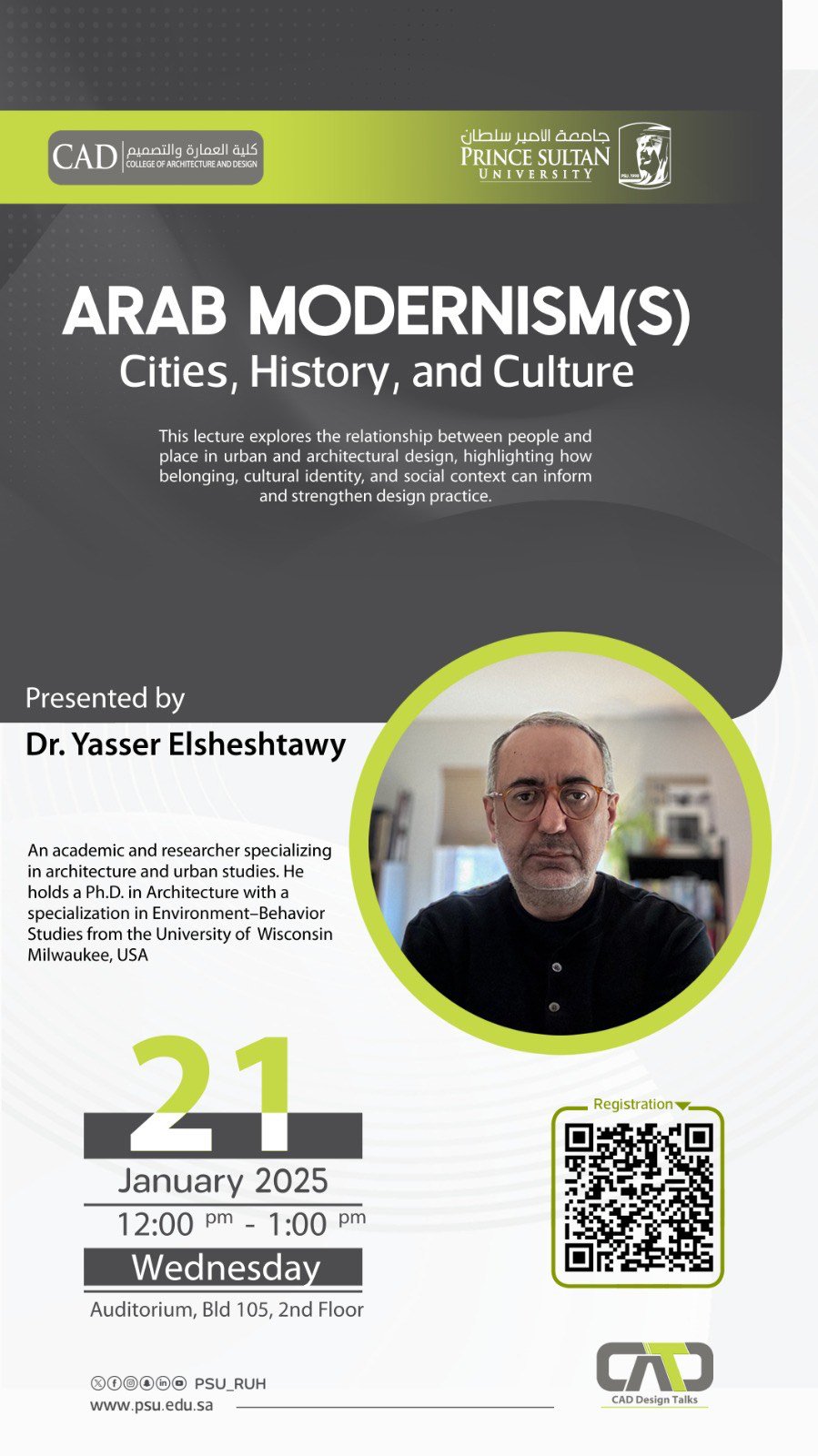
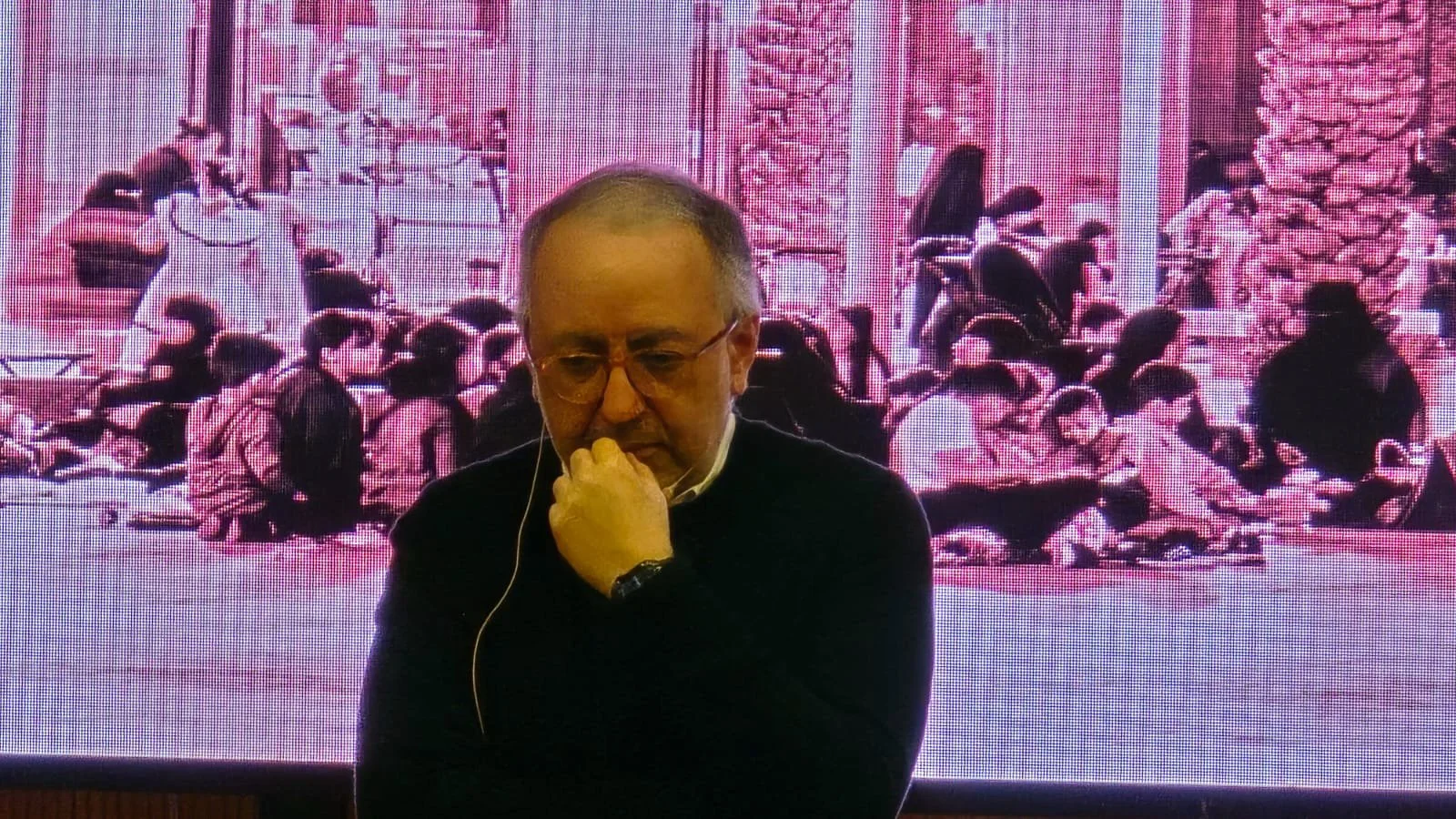
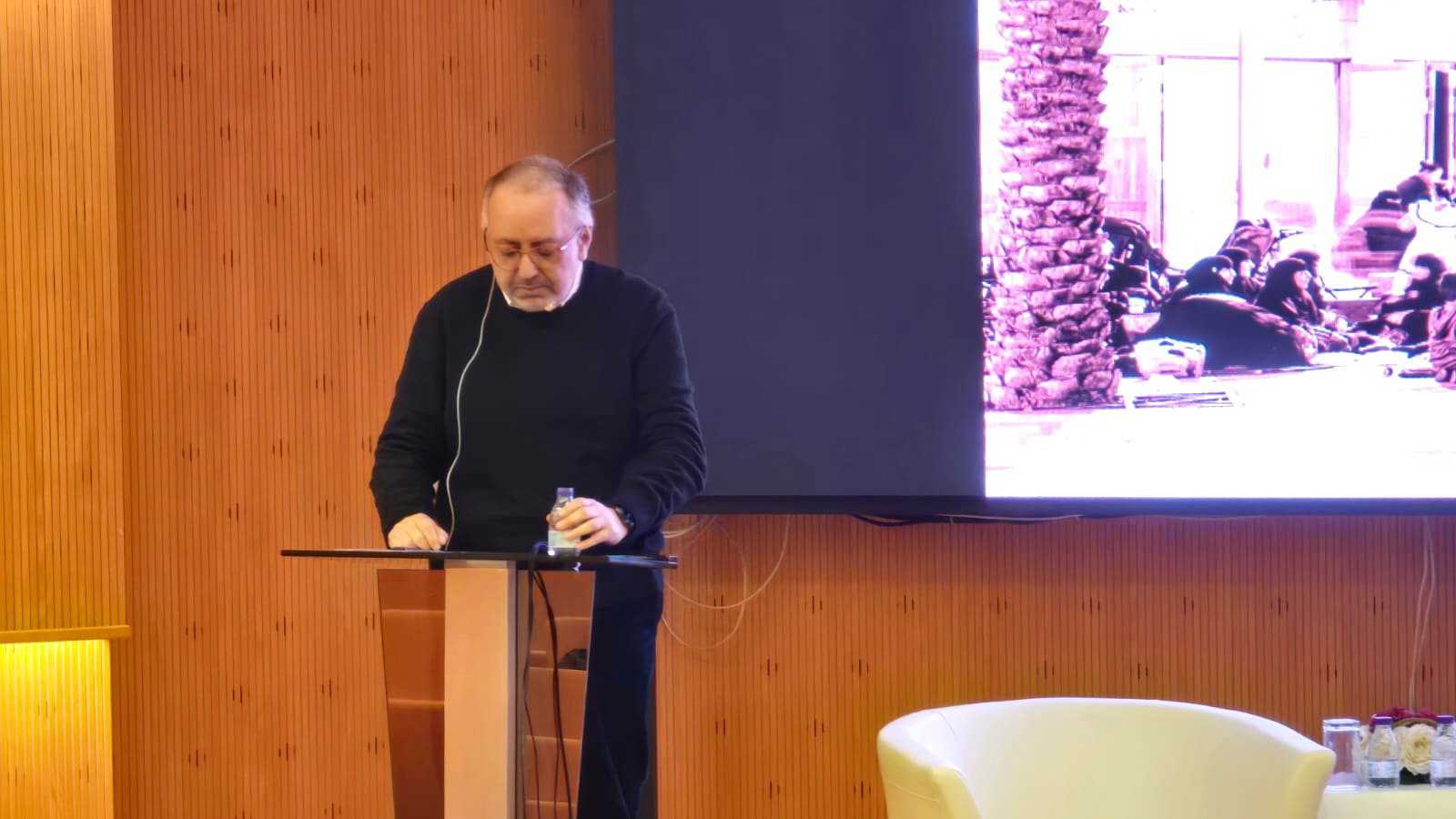
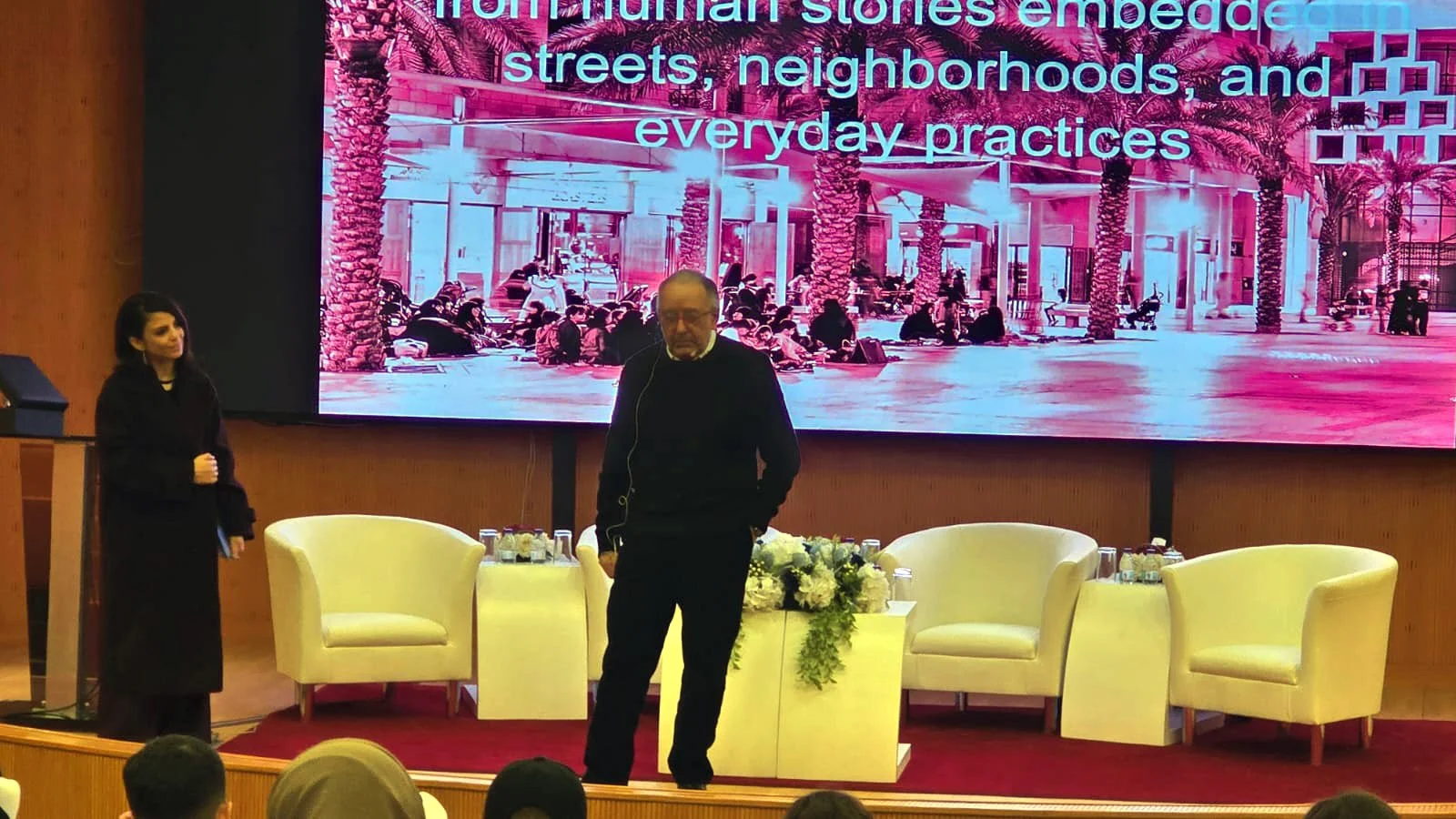
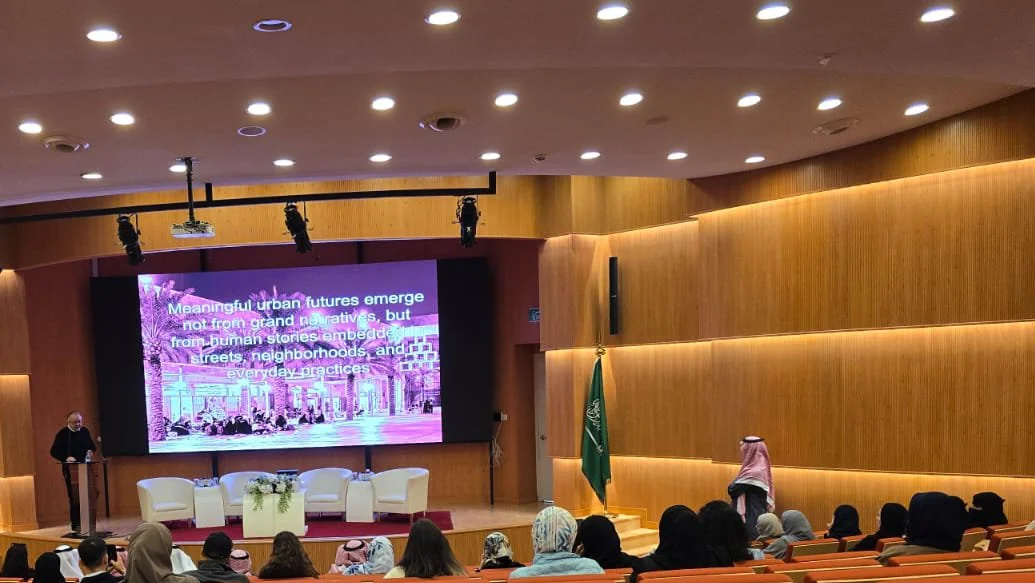
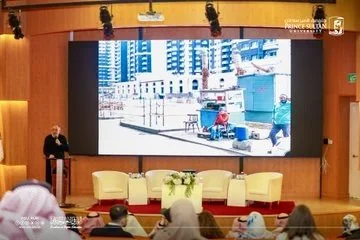
Lecture at Prince Sultan University. Riyadh. January 21. 2025

afikra - عفكرة Podcast
Building Successful Modern Arab Cities | Yasser Elsheshtawy
March 22. 2024
Yasser Elsheshtawy – adjunct professor of architecture at Columbia’s GSAPP and non-resident fellow at the Arab Gulf States Institute in Washington – joins us on the Tasmeem Doha podcast to talk about his keynote speech from the conference “(Re)Constructing Urban Spaces: Unearthing the Palimpsest in Arabia”. This conversation delves into the concept of permanence and erasure in modern cities, looking individually at Abu Dhabi, Dubai, Doha and Riyadh as examples of modern urban spaces and realizations of our urban imaginaries. Thinking about cities as a culmination of societal and historic layers, Elsheshtawy shares insights on the lifecycles of cities, what we can learn from Dubai, and what he considers to be the most livable Arab City.
Urban Futures in the Middle East — with Yasser Elsheshtawy and Mona Fawaz
January 28. 2022
