Berlin: Among Ruins, Rebels, and Angels

Some cities impress. Others linger. Berlin belongs to the latter category. It is a city that confounds, a place where the past never quite recedes and the present remains perpetually unfinished. Every visit has felt less like arriving in a city that can be easily comprehended, and more like engaging in a process of discovery.
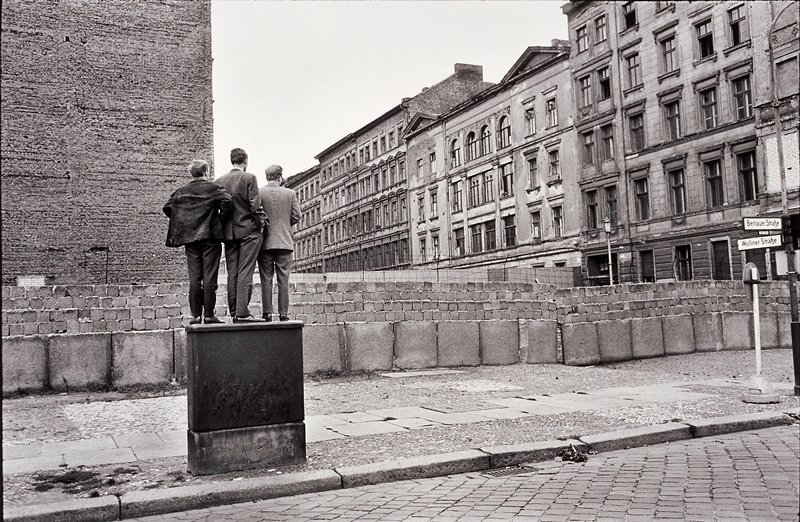
The Berlin Wall. Henry-Cartier Bresson
My first encounter with Berlin took place in the 1970s when my family lived in Hannover. At the time, the city felt distant and mysterious, an island surrounded by another political world. Whenever my father announced that we were driving to Berlin, the journey itself became part of the experience. Crossing East Germany, in our Mercedes Benz, the landscape seemed muted and gray, the atmosphere tense and cautious. Then suddenly Berlin would appear, vibrant and alive, as though someone had adjusted the contrast of the world. I did not yet understand the politics of division, but I understood that crossing borders could change how a place felt.
Years later, as a university student from Cairo, I returned to Berlin with the Egyptian Youth Hostel organization. We stayed near Wannsee (a lake) and spent our days and evenings wandering the city. One night, two friends and I remained downtown long after the buses had stopped running. We found ourselves stranded near the Europa Center, spending the night beneath the watchful presence of the Kaiser Wilhelm Memorial Church, now a relic damaged from World War II. Police officers accompanied by German Shepherds patrolled the empty streets while we waited for dawn. Nothing dramatic happened, yet the experience revealed something essential about Berlin: its mixture of unease and freedom, vigilance and possibility.
During that visit, I met my father’s old friend Hegazy, who had built a successful life in Berlin. He welcomed me into his apartment, where the smell of Egyptian food briefly dissolved the distance between Germany and home. Looking back, I realize that cities are often understood not through monuments but through people. Hegazy’s Berlin was different from the Berlin of train stations and nightlife. It was a city of belonging.
A later visit in 1986 reinforced Berlin’s peculiar character. Traveling by train through East Germany, armed guards entered the carriage to inspect passports and luggage. Their presence transformed an ordinary journey into a reminder of political realities. Yet upon arriving at Bahnhof Zoo, we entered a completely different world—crowded, chaotic, and cosmopolitan. Outside the Europa Center, I witnessed an argument between Algerian and African migrants, escalating into a fight while nearby people laughed, played, and splashed in a fountain. Moments later, neo-Nazis appeared to report the disturbance to the police. It was a scene that could only belong to Berlin: joy and menace existing side by side.
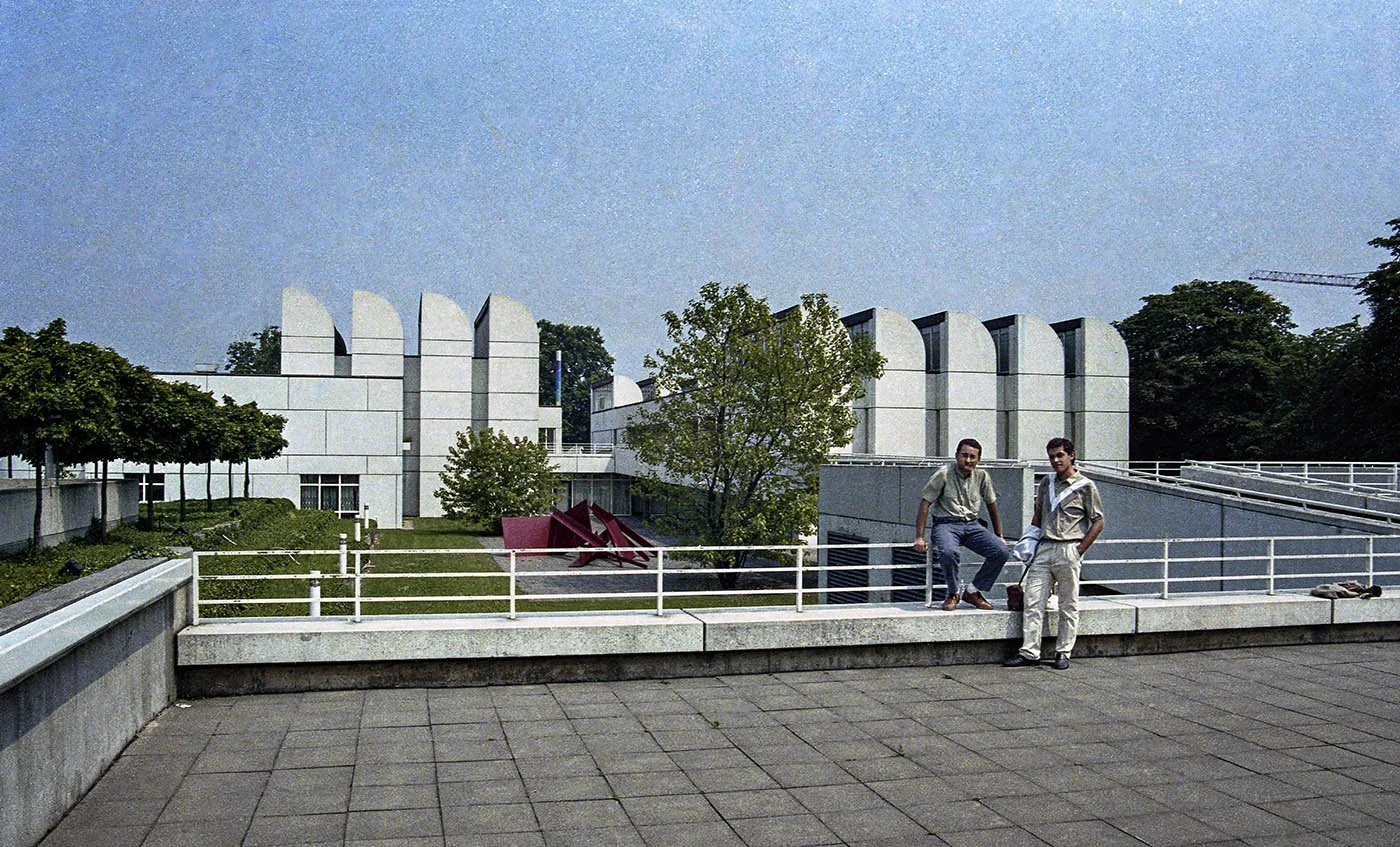
With my friend Nasser in front of the Bauhaus Archive. 1984
When I returned in 2004 as a professor of architecture, Berlin felt remarkably unchanged despite the disappearance of the Wall. What struck me most was an encounter with an Egyptian woman who had traveled much farther than I had. She waited in a museum, illuminated beneath a skylight, her gaze fixed across centuries. It was Nefertiti.
Standing before her in the Neues Museum, I felt both pride and discomfort. Berlin had taken something profoundly Egyptian and transformed it into one of its greatest treasures. The encounter captured the city’s contradictions: admiration and appropriation, reverence and loss. Few places force visitors to confront such complexities so directly.
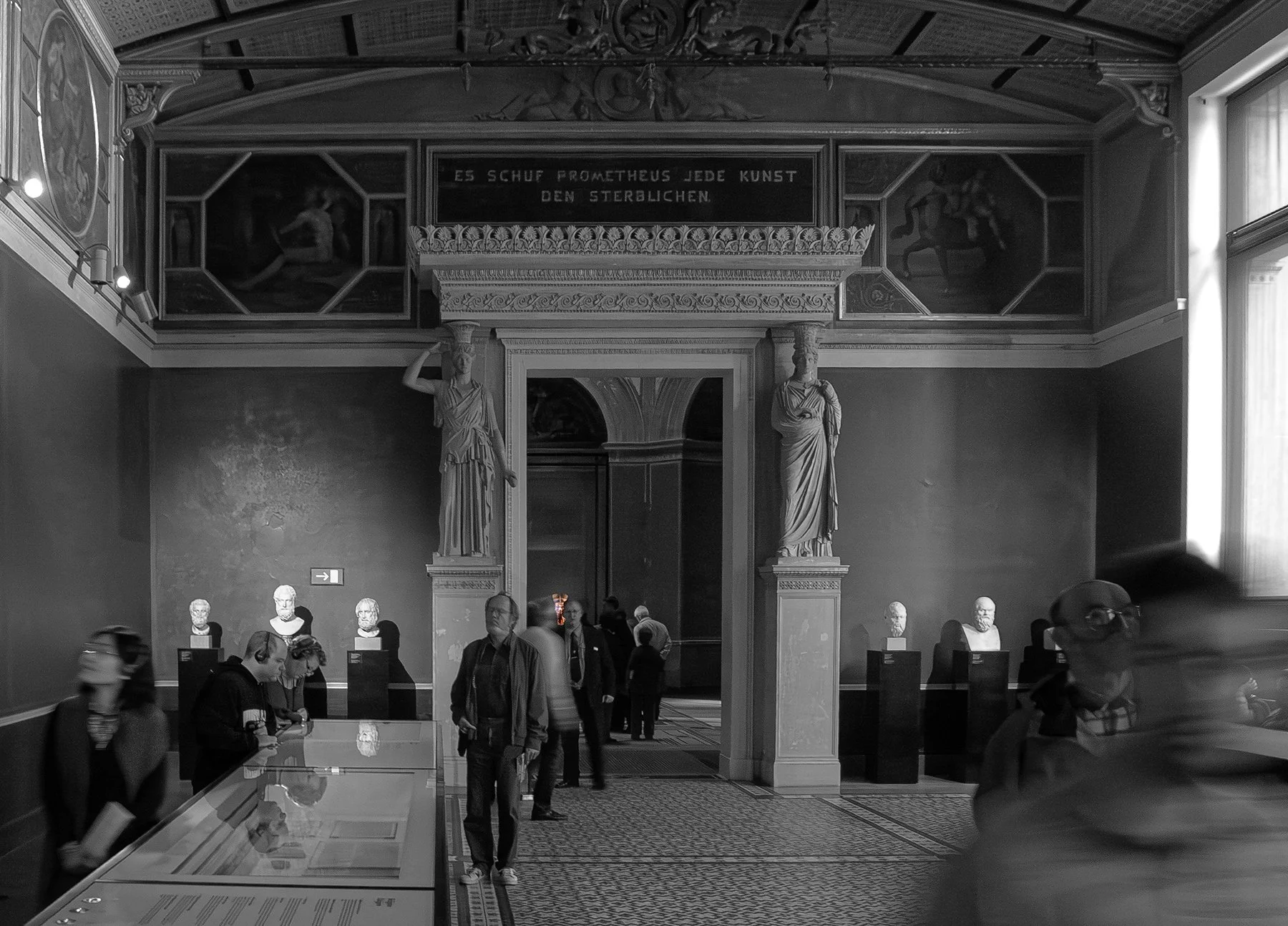
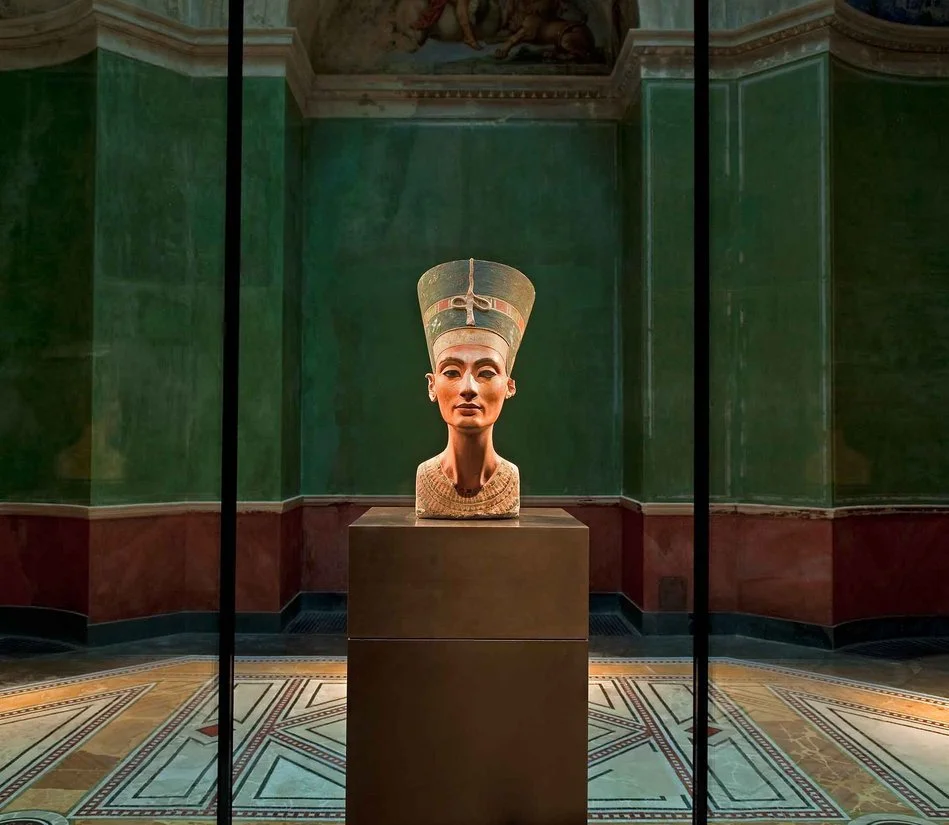
Nefertiti at the Neues Museum
Those contradictions are embedded in Berlin’s architecture. The Holocaust Memorial transforms remembrance into a physical experience of uncertainty and disorientation. The Jewish Museum turns absence into architectural form. Norman Foster’s Reichstag dome symbolizes transparency while standing atop a building burdened by history. Everywhere, architecture becomes a conversation with memory.
Cinema perhaps captures Berlin even more effectively. Wim Wenders’s Wings of Desire presents a city observed by angels drifting above rooftops and streets, listening to the private thoughts of its inhabitants. The film understands Berlin as a repository of longing. In contrast, Andrzej Żuławski’s Possession reveals a darker city, one shaped by paranoia and division. I remember vividly, the gorgeous Isabelle Adjani tormented by a dark force while traversing the city’s streets and tunnels. Together, the films portray Berlin as both poetic and unsettling.
Yet Berlin is not merely a city of ghosts. During a symposium in 2007, I visited the Spree River and learned about local resistance to corporate redevelopment. Activists had occupied a riverside site and transformed it into YAAM (Young African Art Market), a vibrant cultural space filled with music, art, and public life. Against considerable pressure, they successfully fought for public access to the riverfront. The episode revealed another side of Berlin: a city where citizens still believe they can shape urban space rather than simply consume it.
Perhaps this explains why Berlin continues to fascinate me. Unlike cities that seek perfection, Berlin embraces incompleteness. It does not conceal its scars or smooth over its contradictions. History remains visible in the gaps between buildings, in preserved ruins, in the spaces where something once stood.
On my last evening there, I stood on the Oberbaum Bridge watching the lights shimmer across the Spree. Trams crossed the river, cyclists passed by, and the city hummed with its familiar restlessness. Berlin seemed neither fully past nor fully present. It existed somewhere in between—a city still becoming.
Perhaps that is Berlin’s greatest lesson. Cities do not need to be whole to be meaningful. Sometimes it is their fractures, their uncertainties, and their unfinished stories that make them unforgettable.
Next week I will return to Berlin once again, this time to deliver a lecture at the Zentrum Moderner Orient on my book, Arab Modernism(s): Cities, History and Culture. I find myself wondering how I will experience the city after all these years. Will I still see the Berlin of childhood journeys through East Germany, of sleepless nights near Bahnhof Zoo, of Nefertiti and the Spree, of rebels occupying riverbanks and angels hovering above rooftops? Or will another Berlin reveal itself entirely?
Perhaps that is the city’s enduring gift: it never allows itself to be fully known. Each visit feels less like a return than a new encounter, another chapter in an unfinished conversation between memory, history, and a city that continues to reinvent itself without ever escaping its past.
And hopefully Nefertiti will be there waiting for me.
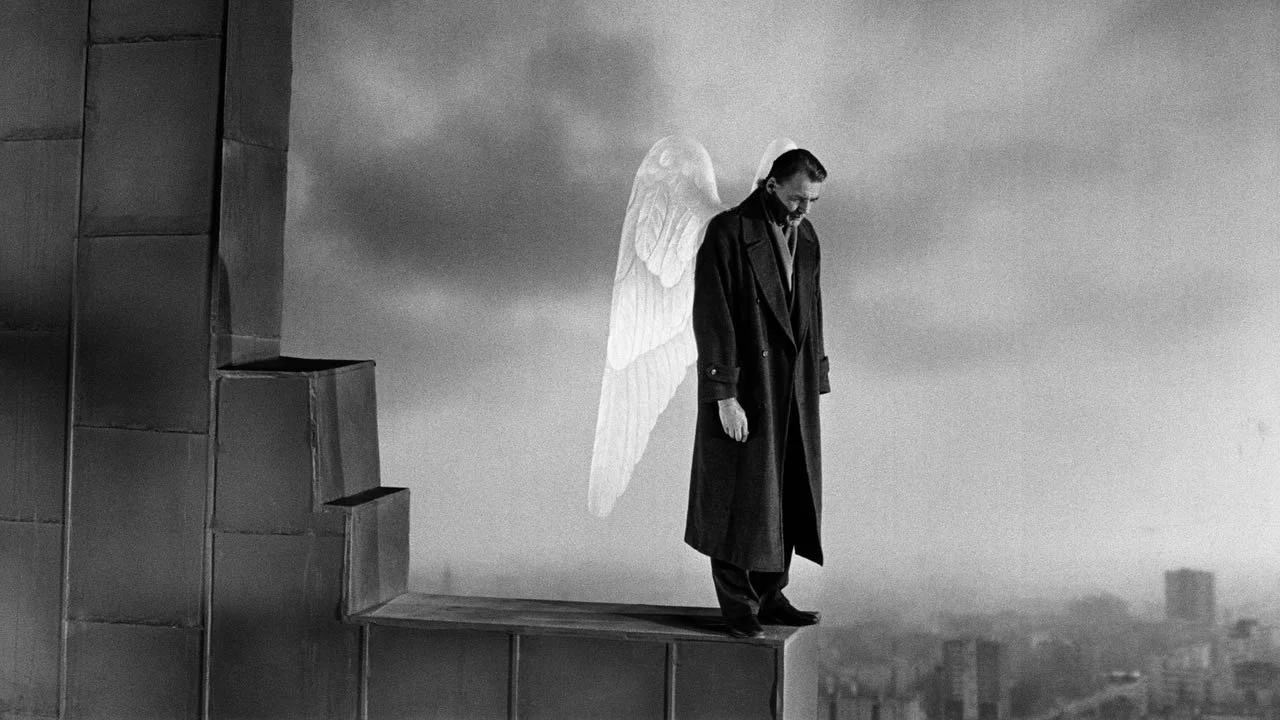
The Angel in “Wings of Desire”
For an inside look at the book you can peruse a website which contains summaries of chapters, images and videos.
