Turning into a Chicken
Feathers and the Fantasy of Disappearing from an Absurd City

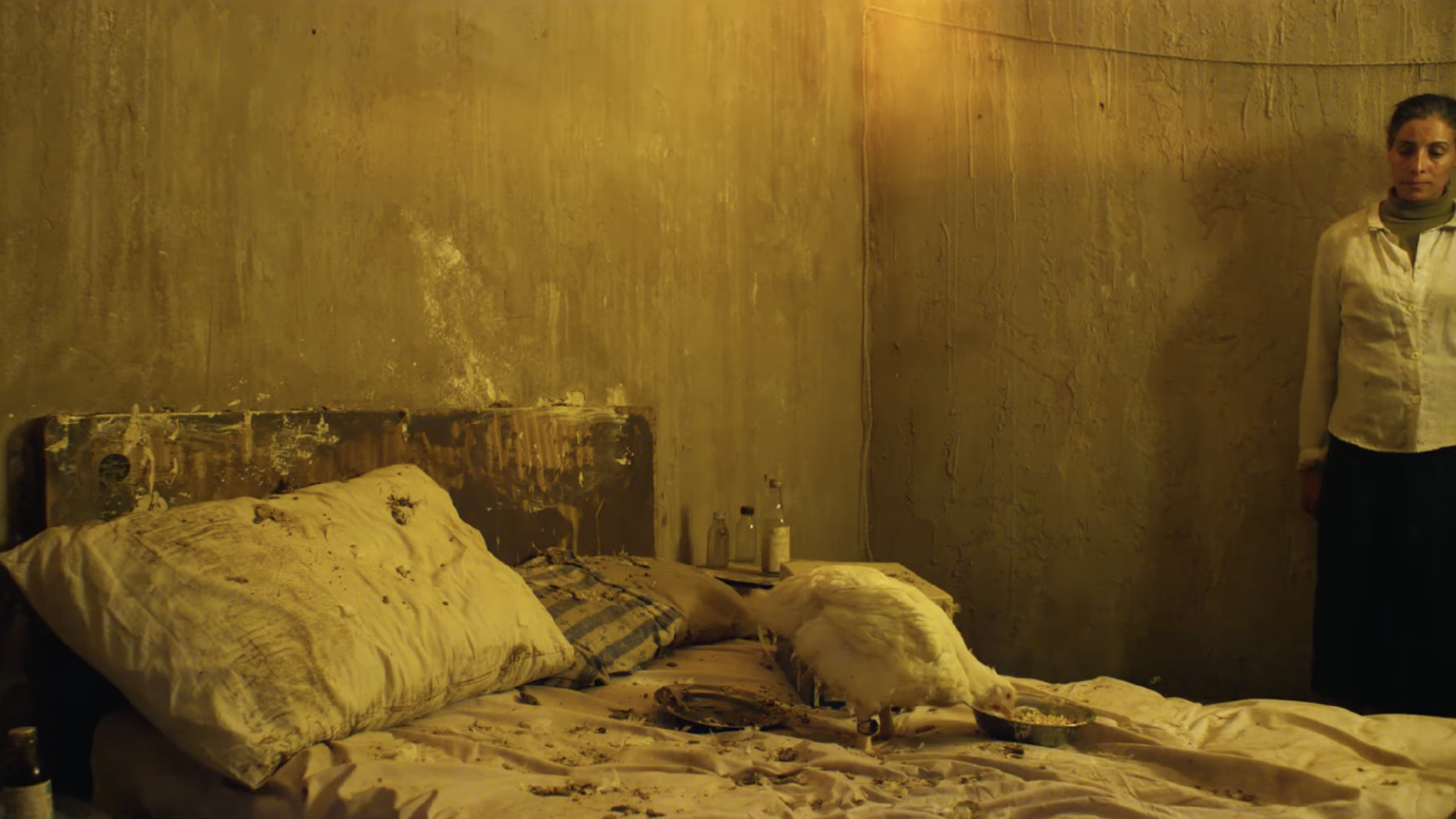
From the movie “Feathers.” The Chicken & the Wife
A Movie Review
Every once in a while, a film comes along that fundamentally alters how one sees the world. More rarely, a film changes the way one understands a city. I recently watched such a film. Omar El Zohairy's Feathers (Reesh), released in 2021, is among the most unsettling and thought-provoking Egyptian films I have encountered in years. Upon its release, it generated considerable controversy, with some viewers accusing it of presenting an excessively bleak image of Egypt while others praised its uncompromising artistic vision. Having finally watched it, I found myself less interested in the debate than in what the film reveals about cities, inequality, and the lived consequences of modernization.
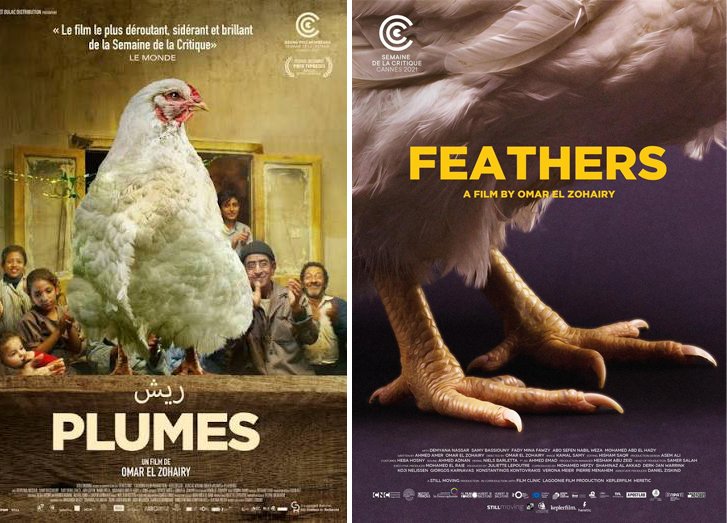
Movie Posters
Although the story unfolds far from Cairo and never explicitly references the capital, it resonated deeply with many of the themes I explored in my chapter, "Modernizing Cairo: Urban Transformations and the Inexorable March Towards the Desert," in Arab Modernism(s): Cities, History and Culture. More than any planning document or architectural blueprint, Feathers captures the social reality that lies beneath the glossy images of development that increasingly dominate representations of contemporary Egypt.
The premise is deceptively simple. During a birthday party held in a cramped apartment, an amateur magician accidentally transforms the family's domineering father into a chicken. What follows could easily have become a whimsical comedy, yet El Zohairy takes the story in a very different direction. The father remains a chicken, and the mother, who until that moment had existed largely as an invisible servant within her own household, is suddenly forced to navigate an unforgiving world on behalf of her children. As she searches desperately for ways to reverse the transformation, consulting doctors, veterinarians, magicians, and religious figures, she gradually confronts a society structured around indifference, exploitation, and hierarchy. The absurdity of the plot soon fades into the background. What remains is a powerful meditation on poverty, patriarchy, and survival.
What fascinated me most about Feathers was not the narrative itself but the world it has created. The family's apartment is among the film's most important characters. Stark, unfinished, and stripped of comfort, it evokes the harsh realities faced by millions of Egyptians. The walls appear permanently stained by neglect, the furnishings are sparse, and every room conveys a sense of exhaustion. Yet the apartment never feels exceptional. On the contrary, it appears painfully ordinary. Watching these scenes, I was reminded of a point I make repeatedly in my Cairo chapter: beneath the images of luxury compounds, gated communities, and spectacular new developments lies another Egypt, one inhabited by the overwhelming majority of the population. It is the Egypt of informal neighborhoods, overcrowded apartments, precarious livelihoods, and daily struggles that rarely appear in official narratives of progress and modernization.
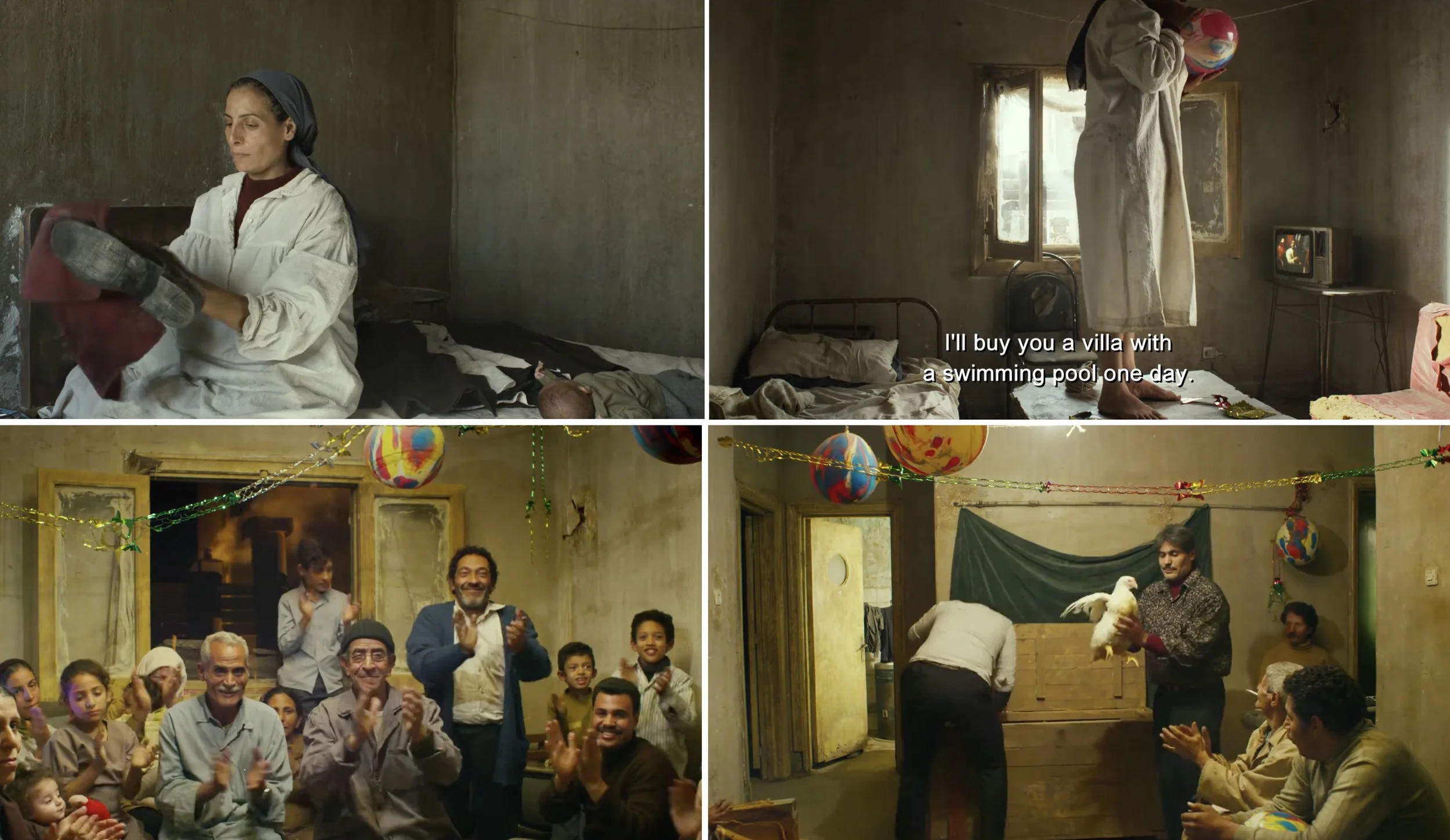
Movie Stills: the apartment, birthday party, and the magic trick
The industrial landscape that dominates much of the film reinforces this impression. A massive factory looms constantly in the background, shaping the rhythms of everyday life. Dust, smoke, concrete, and machinery define the environment. The landscape feels desolate and oppressive, yet also strangely familiar. It recalls not only Egypt's industrial towns but also large parts of Cairo itself, particularly the vast informal districts that stretch endlessly beyond the carefully manufactured images projected by government officials and real estate developers. In Arab Modernism(s), I describe Cairo as a city of palaces and slums, a place where extraordinary wealth coexists with profound deprivation. Few films have captured this duality as effectively as Feathers. The apartment and the factory are not merely settings. Together they constitute an argument about the nature of contemporary Egypt and about the people who remain largely invisible within dominant narratives of national development.
One of the film's most memorable sequences involves a mysterious government office, the Ministry of Housing, that the mother must repeatedly visit in order to pay rent. The institution is never fully revealed in its totality. Instead, the viewer encounters little more than a grilled metal opening. No employees are visible. No offices can be seen. The only indication of authority is a hand extending through a small aperture to collect money before disappearing once again behind the wall. The scene possesses unmistakably Kafkaesque qualities. The state appears as a faceless and inaccessible force, omnipresent yet strangely absent, capable of demanding compliance without ever explaining itself. Watching this sequence, I was reminded of countless encounters with bureaucratic institutions across Egypt and elsewhere in the Arab world, where procedures often appear detached from logic and where individuals are left to navigate systems they neither understand nor control. The result is not simply frustration but a profound sense of alienation.
Equally revealing is the period during which the mother finds employment in an opulent villa. For a brief moment the film transports us into another Egypt altogether. Marble floors gleam beneath carefully filtered light. Sculptures adorn expansive interiors. Swimming pools shimmer within manicured gardens. The contrast with the world she inhabits could not be more dramatic. Yet despite the luxury surrounding her, she remains invisible. She cleans floors, polishes surfaces, and silently observes a lifestyle that appears entirely beyond reach. When she attempts to hide scraps of food for her children, she is dismissed without hesitation while being chased by a dog. The sequence is devastating precisely because it reveals how closely wealth and poverty coexist while remaining separated by seemingly insurmountable barriers. The villa and the apartment belong to the same country. Yet they might as well exist on different planets.
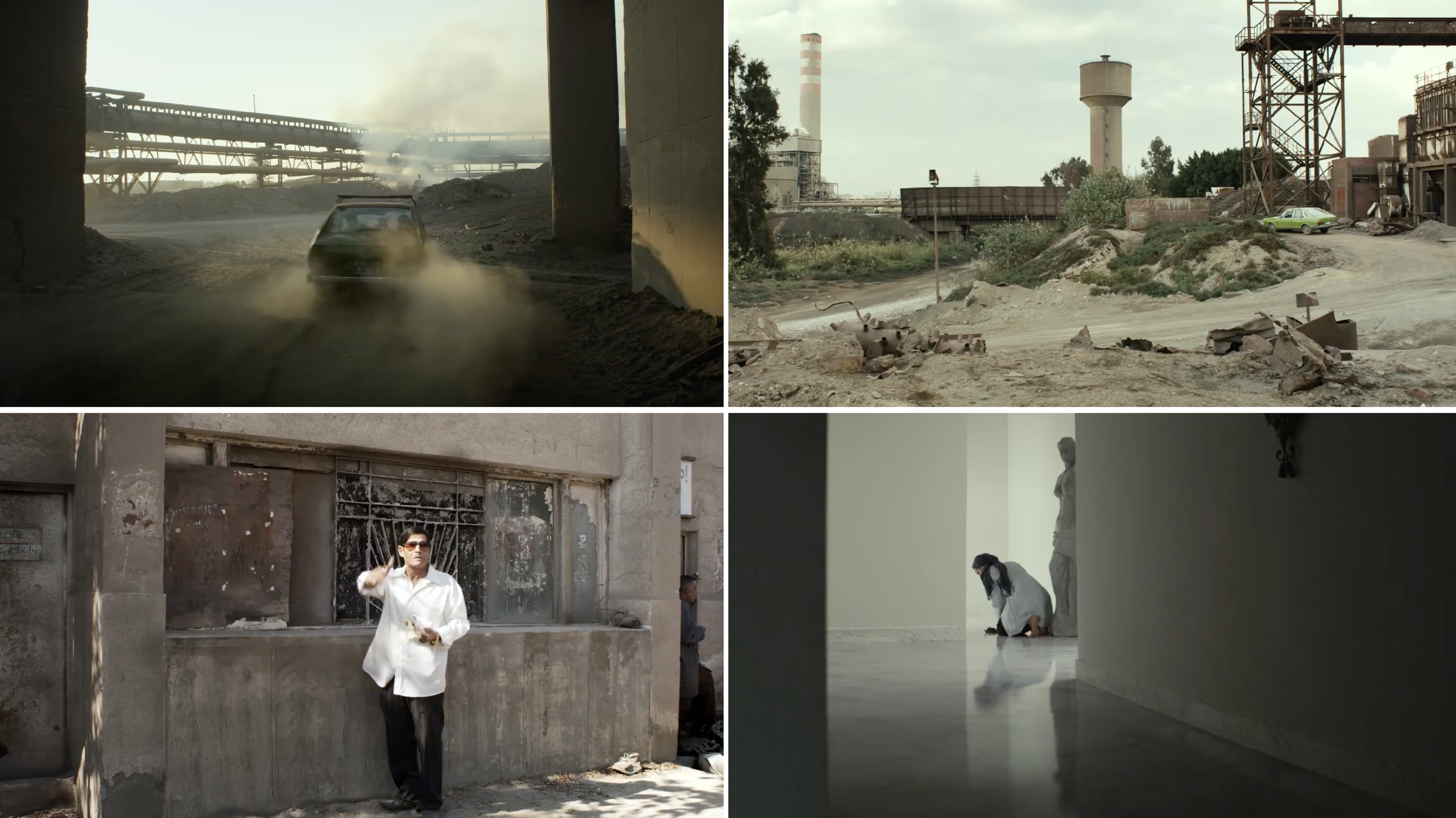
Movie Stills: Factory; Ministry of Housing; Villa
This tension lies at the heart of contemporary Cairo. Over the past several decades, Egypt's urban future has increasingly been projected outward into the desert. New Cairo, Sheikh Zayed, Madinaty, and most recently the Administrative Capital all promise a more modern, efficient, and prosperous future. Their promotional materials depict gleaming towers, landscaped boulevards, monorails gliding effortlessly across futuristic landscapes, and residents enjoying a quality of life that appears disconnected from the congestion and dysfunction associated with the historic city. Yet while these developments dominate public discourse, the overwhelming majority of Egyptians continue to inhabit a very different reality.
Indeed, one of the central arguments of my Cairo chapter is that modernization in Egypt has increasingly become a spatial project of escape. Rather than confronting the challenges facing the existing city, planners and policymakers repeatedly seek solutions elsewhere, constructing new urban worlds in the desert while hoping that the problems of the old city will somehow disappear. But cities do not disappear. Nor do the inequalities embedded within them. The result is an increasingly fragmented urban landscape in which resources are directed toward spectacular projects while existing neighborhoods struggle with overcrowding, inadequate infrastructure, environmental degradation, and limited economic opportunities.
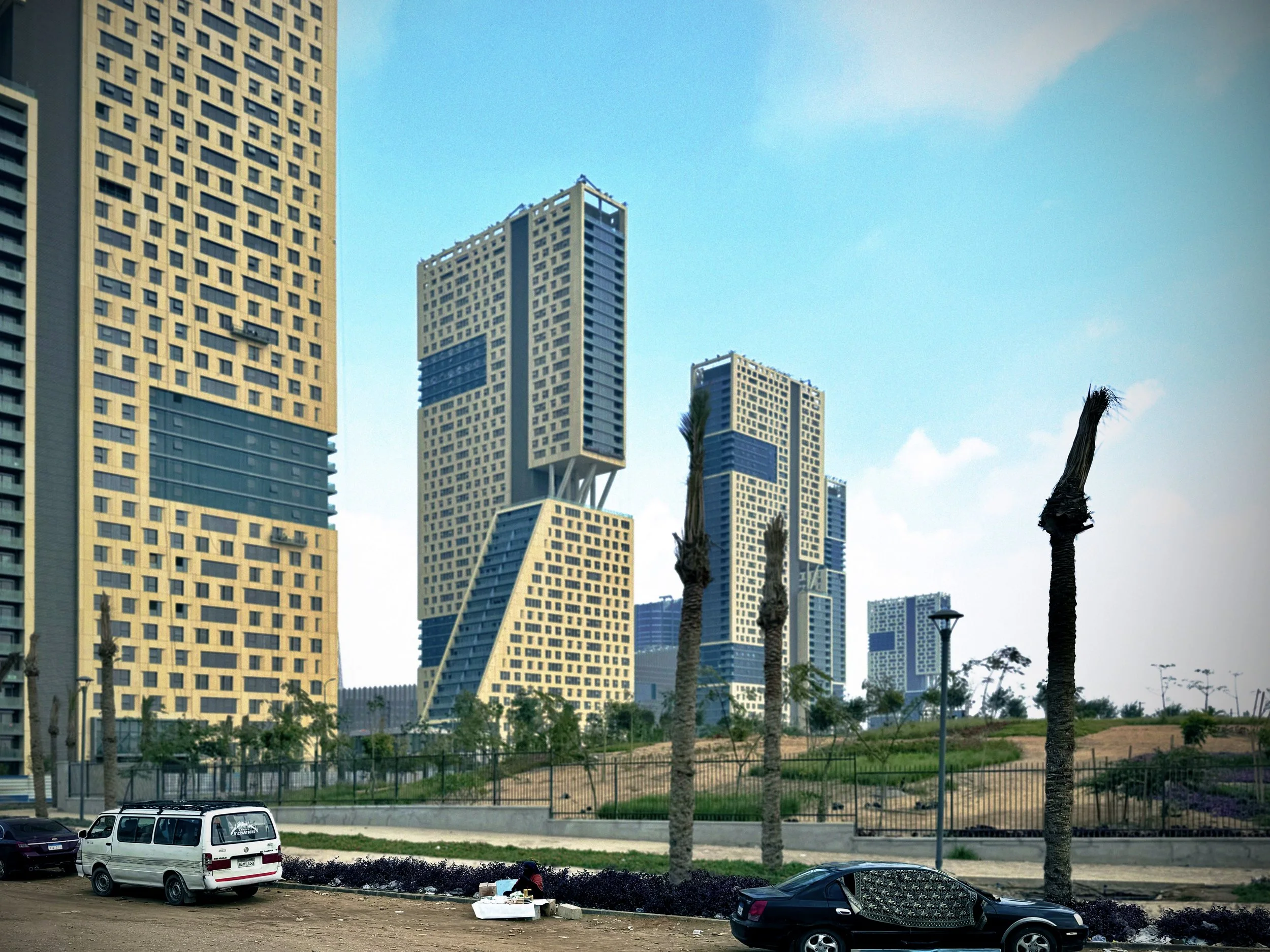
An informal vendor in front of the Administrative Center. Administrative Capital (Elsheshtawy)
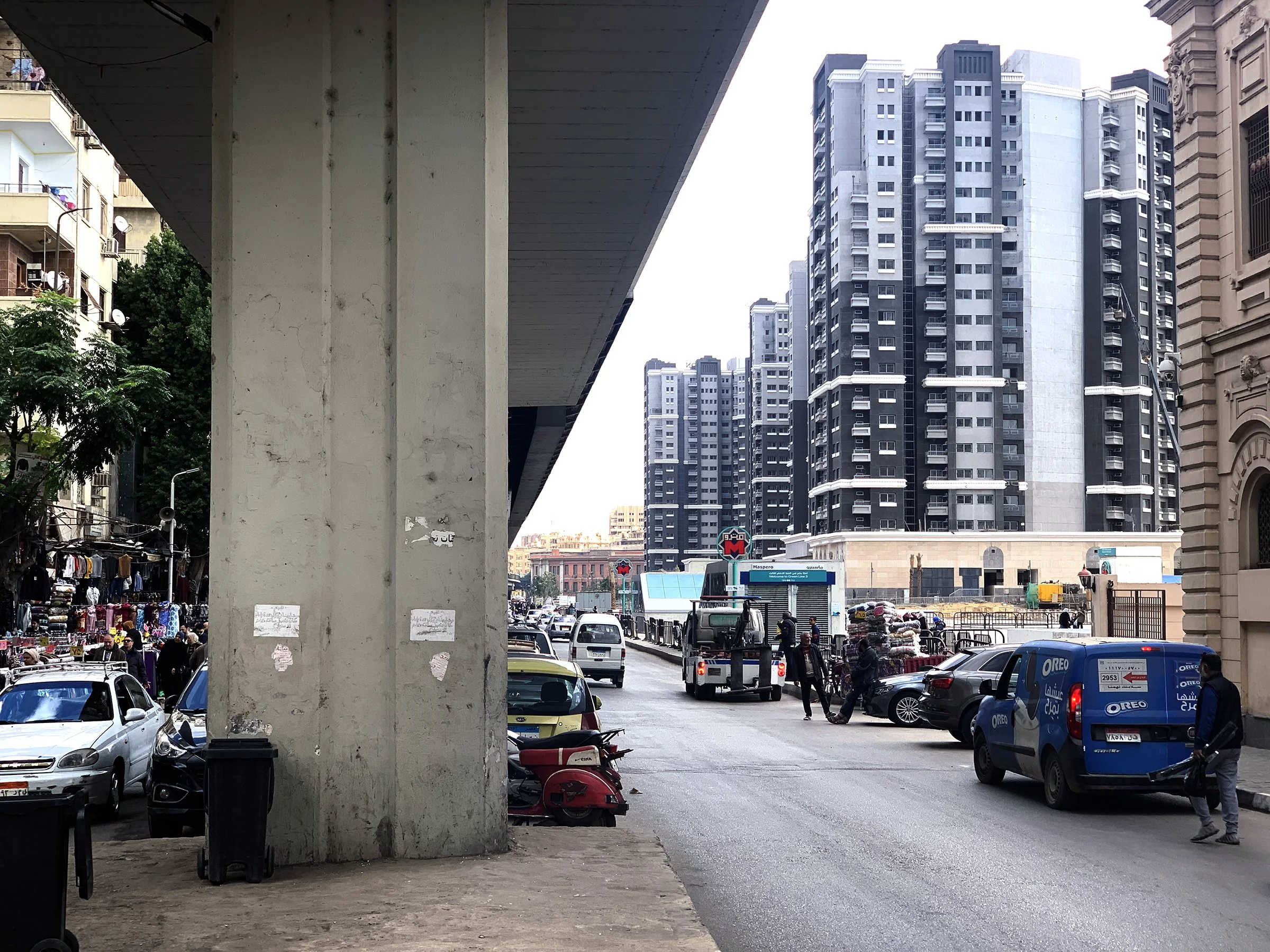
To the left: WIkalat al-Balah (used items market); right: Maspero Development (Elsheshtawy)
What makes Feathers so powerful is that it forces us to confront this reality directly. The film's landscapes may not be Cairo, but emotionally and socially they feel deeply connected to it. They reveal an Egypt that many privileged Egyptians rarely encounter and that official representations often ignore. The film offers no easy solutions and little hope. Instead, it presents a world governed by absurdity, where adaptation becomes the only viable response. This is perhaps why the central premise works so well. In lesser hands, the transformation of a man into a chicken would have remained a comic device. Here it becomes something else entirely.
By the film's conclusion, the mother has undergone a profound transformation. No longer the passive and invisible figure encountered at the beginning, she emerges as a survivor capable of navigating a hostile world. Yet her transformation is both inspiring and tragic. Survival, after all, is not the same as justice. Adaptation is not the same as empowerment. The burdens she carries remain immense, and the structures that produced her suffering remain firmly in place.
Perhaps the strongest evidence of the film's power lies in the reaction it provoked. Following its success at Cannes and other international festivals, Feathers became the target of a patriotic backlash in Egypt. Prominent actors walked out of screenings, parliamentarians denounced the film, and critics accused it of tarnishing Egypt's image by depicting poverty, squalor, and marginalization. Their argument was revealing: Egypt, they insisted, had moved beyond such realities. The "new republic" was eliminating slums, constructing modern housing, and building a brighter future. In other words, Feathers was criticized not because it was inaccurate, but because it contradicted the official narrative of progress that has come to dominate public discourse. Yet the film's unsettling power derives precisely from its refusal to look away. While state-sponsored imagery celebrates monorails, smart cities, and the Administrative Capital, Feathers turns its gaze toward those who remain outside these visions of the future. The controversy therefore was never really about a chicken or even about a film. It was about who gets to represent Egypt and which Egypt is allowed to be seen. For all its absurdity, Feathers may ultimately be one of the most honest portrayals of contemporary Egypt precisely because it insists on showing the realities that grand narratives of modernization would prefer to leave hidden
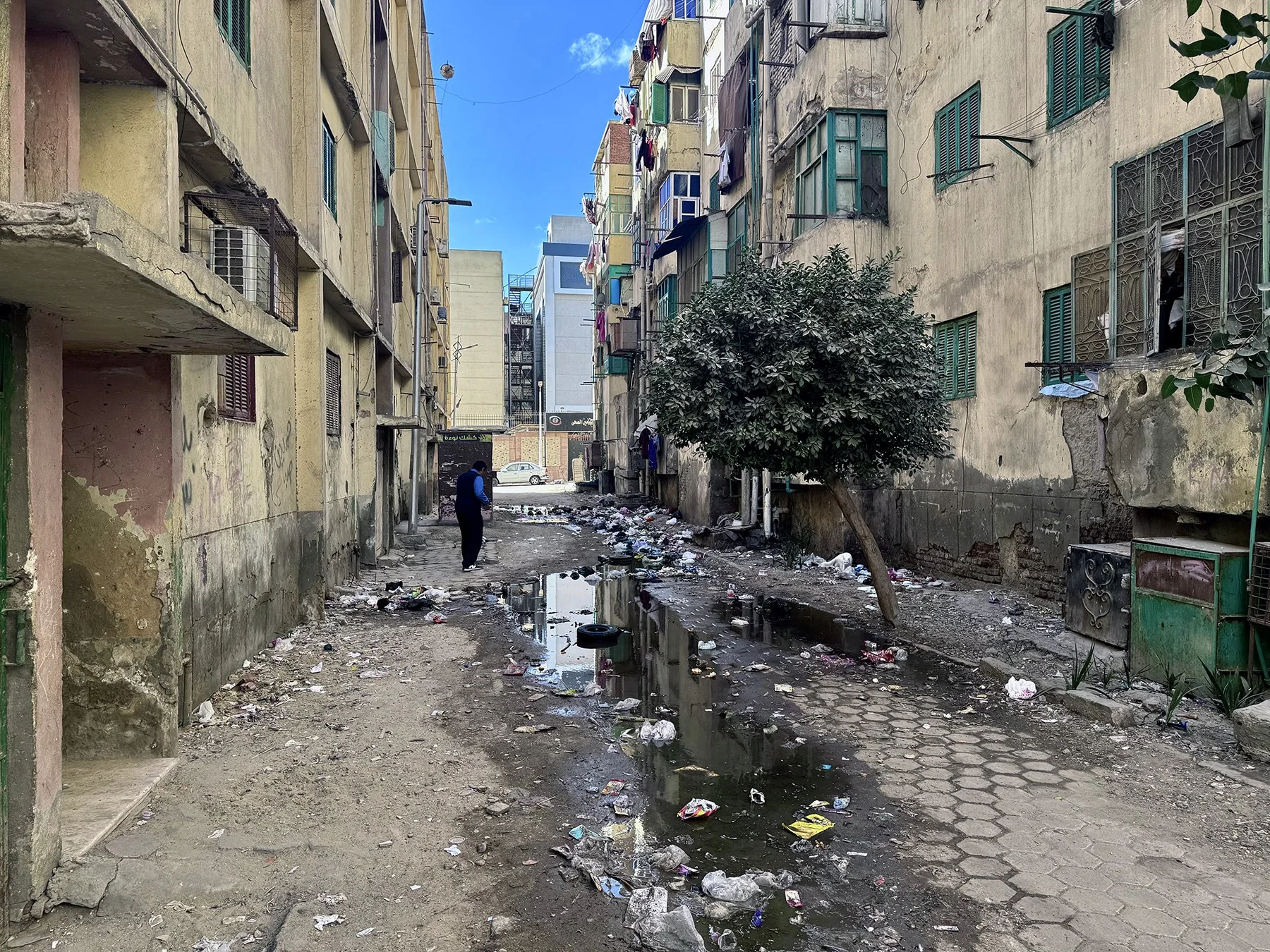
Top Video: Asmarat Housing Development (relocated slum dwellers). Ring Road Cairo. Bottom: Masaken Zeinhom. Public Housing. Central Cairo (Elsheshtawy)
After watching the film, I found myself thinking once again about Cairo. A city forever reinventing itself. A city perpetually chasing the next vision of modernity. A city of gated compounds and informal settlements, luxury towers and crumbling apartment blocks, monumental ambitions and everyday struggles. Above all, a city whose contradictions continue to deepen even as new projects promise to transcend them.
Perhaps this is why Feathers lingers in the mind long after the credits roll. It forces us to confront truths that are often obscured by the spectacle of development. It reminds us that no amount of architectural grandeur, technological innovation, or urban expansion can erase the realities experienced by the majority of the population. And perhaps it suggests that, for many people, the fantasy is not that a man might turn into a chicken. The fantasy is believing that modernization alone can solve the inequalities that define contemporary Egypt. In the world of Feathers, escape comes through transformation.
In Cairo, one sometimes wonders whether turning into a chicken, and moving into a gated compound, might be the most rational response to an increasingly irrational urban reality.
