The Unbearable Lightness of Transience: Dubai’s Iranian Hospital and the Persistence of Memory
In 2008, as part of a mapping project undertaken through my Urban Research Lab, I set out to explore Dubai’s neighborhoods in a systematic way. The aim was simple: to move beyond the skyline and the spectacle, and to understand the city at ground level—through its streets, its communities, and the spaces that stitched them together. One of those explorations took me to Jumeirah. At the time, Jumeirah was already associated with villas, beaches, and an emerging landscape of cafés and boutiques. But I was less interested in the main road and more curious about what lay behind it, in the quieter urban fabric that rarely appears in glossy representations of the city. That is how I found myself seeking out the Iranian Hospital.
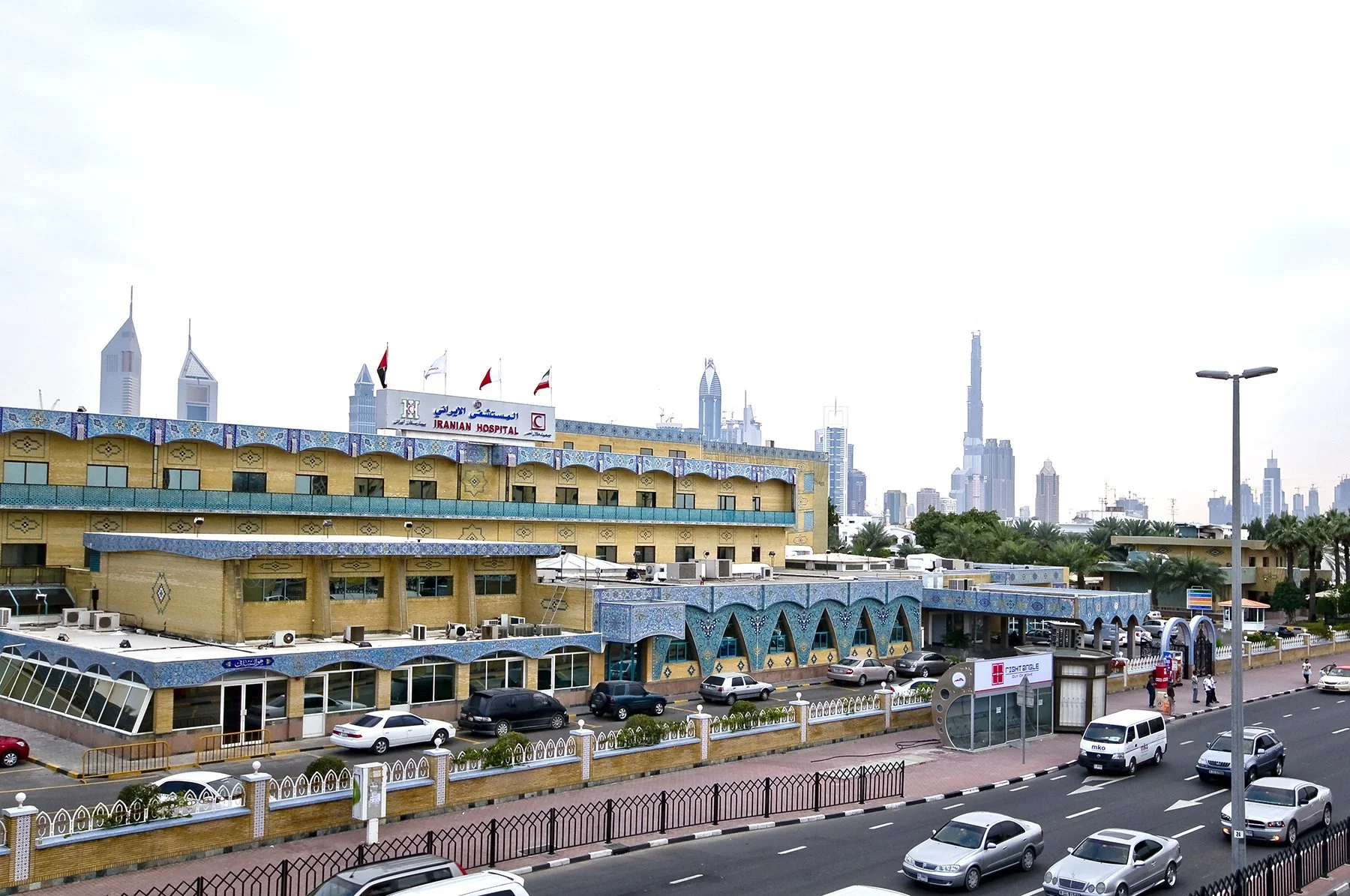
General View (2008)
The Iranian Hospital was not simply another medical facility. Established in 1970 by the Iranian Red Crescent Society, it had long served as a vital institution in Dubai’s social and urban landscape. While it was founded by and associated with the Iranian community, its reach extended far beyond that. It treated Emiratis, expatriates, migrant workers, and long-time residents alike. In a city often defined by fragmentation—by nationality, income, and geography—the hospital functioned as a shared civic space. It provided essential services, but it also represented something more intangible: a reminder of Dubai’s longstanding connections across the Gulf, and of the layered relationships that shaped the city long before the current era of mega-projects.
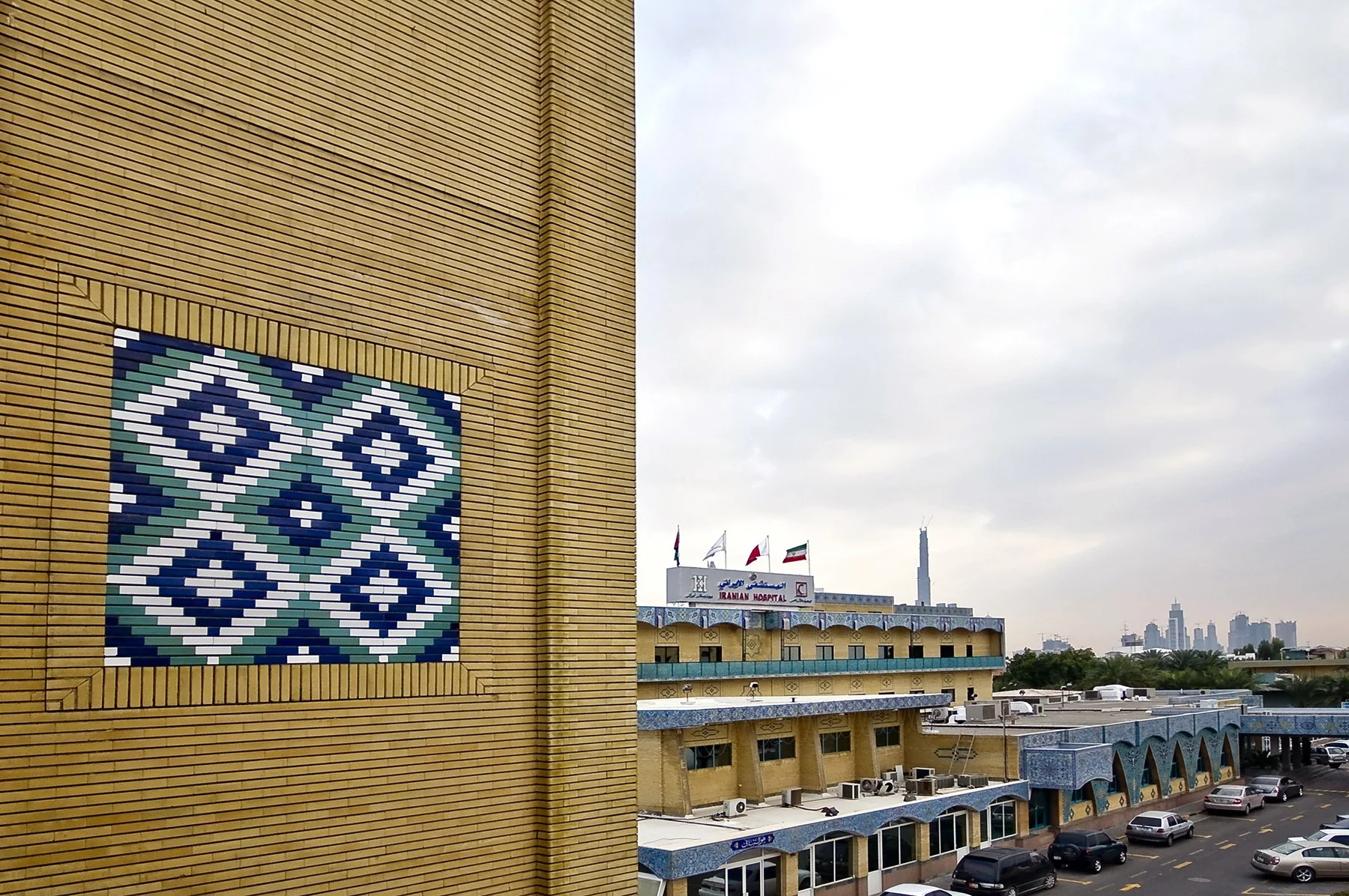
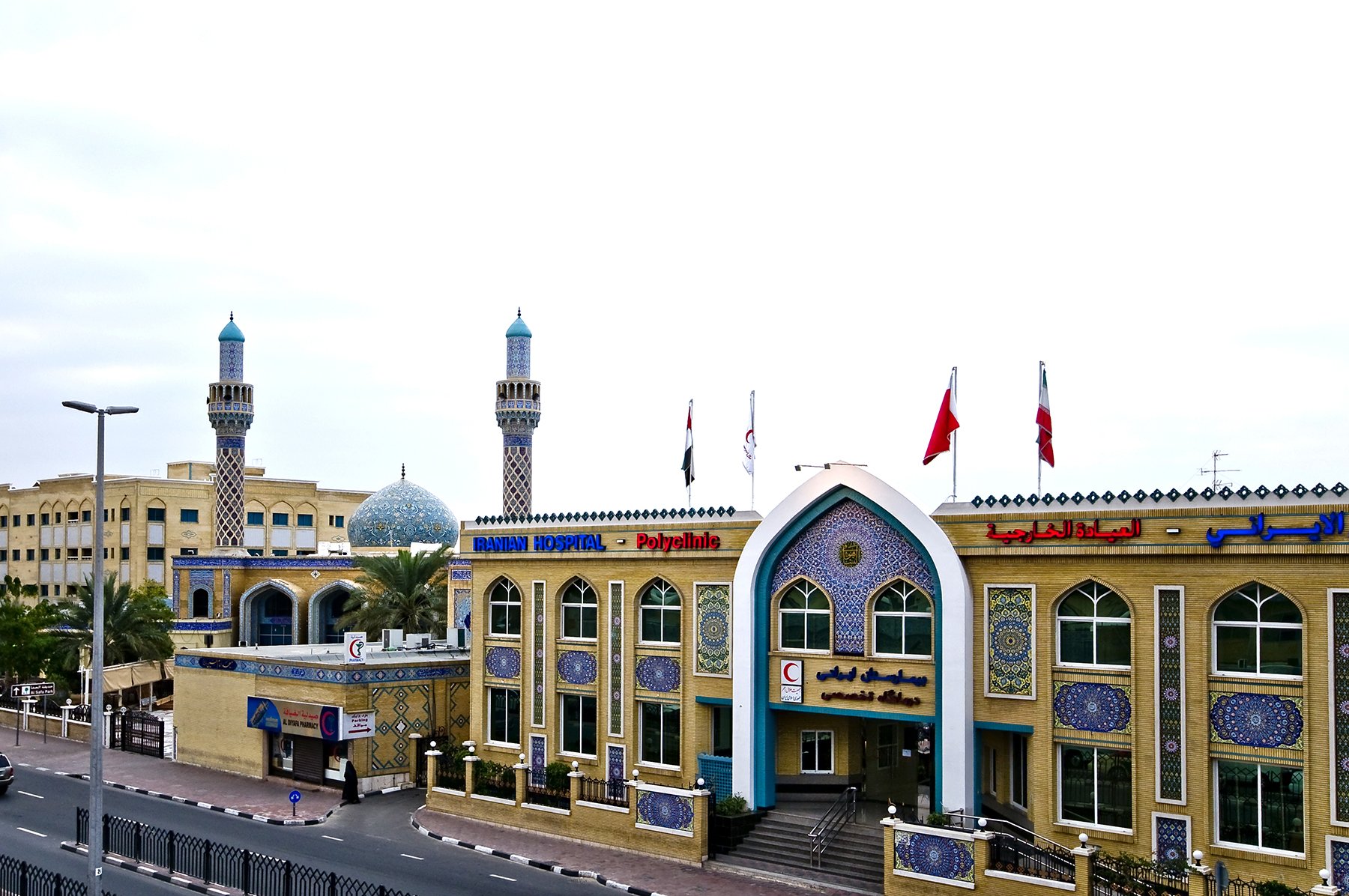
What drew me there, however, was not only its social role but its architecture. The complex stretched across several blocks, with an outpatient facility located on the opposite side of the road. The buildings were unlike anything else in Dubai. Their style was a hybrid—part Persian, part what its designers interpreted as Islamic—yet unmistakably rooted in a particular cultural sensibility. Decorative ceramic tiles adorned façades. Geometric motifs framed entrances. Arched openings and patterned surfaces softened the institutional character typical of hospitals. Passing through the complex, one had the distinct sensation of being transported elsewhere—into a Persian urban environment that felt authentic and lived-in, not staged or theatrical. This was not the simulated exoticism of themed retail environments. It was the opposite of the Persian Court at Ibn Battuta Mall, where cultural motifs are reduced to spectacle and consumption. The Iranian Hospital, by contrast, was real. It functioned. It served people. Its architecture was embedded in everyday life.
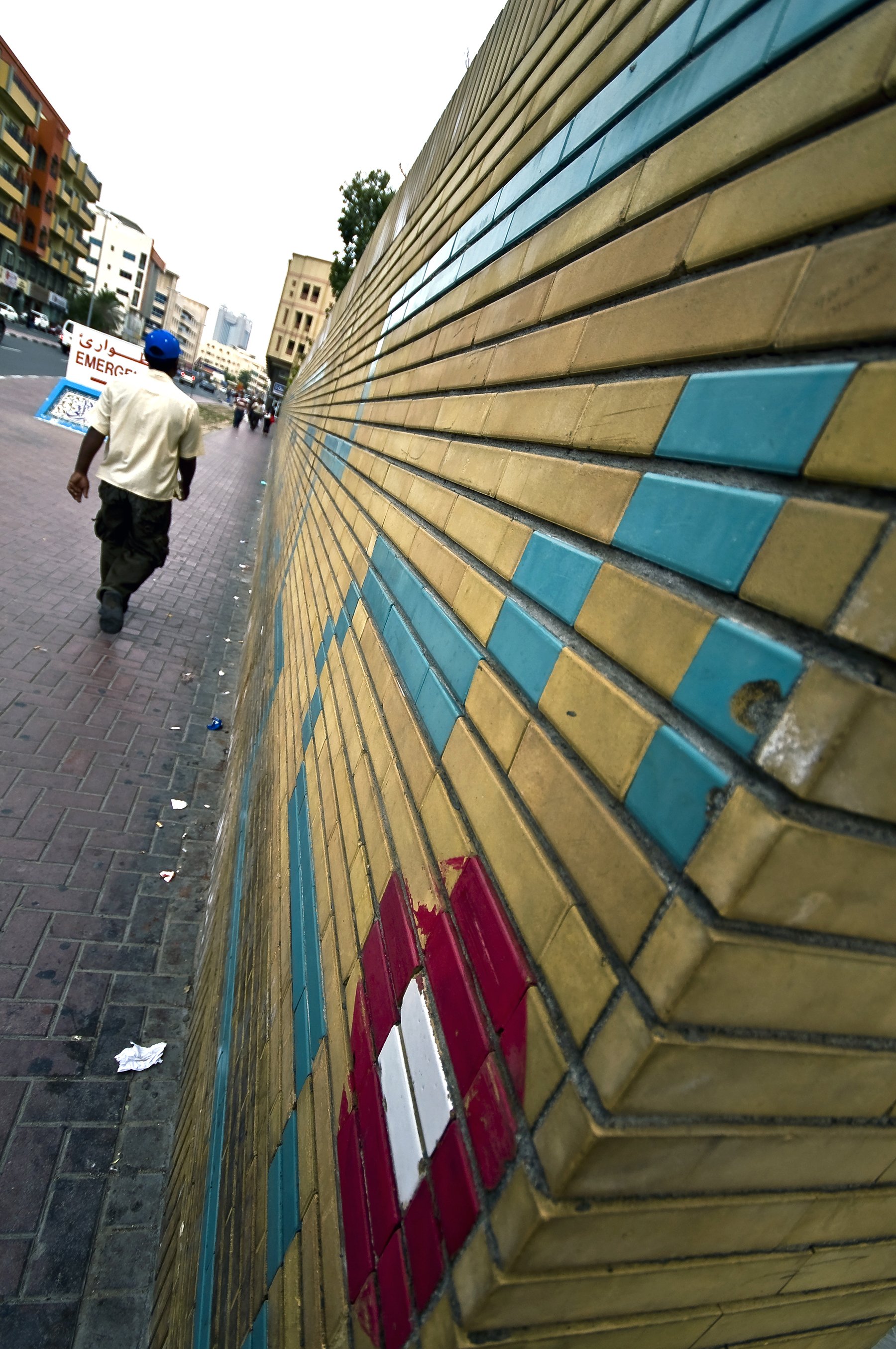
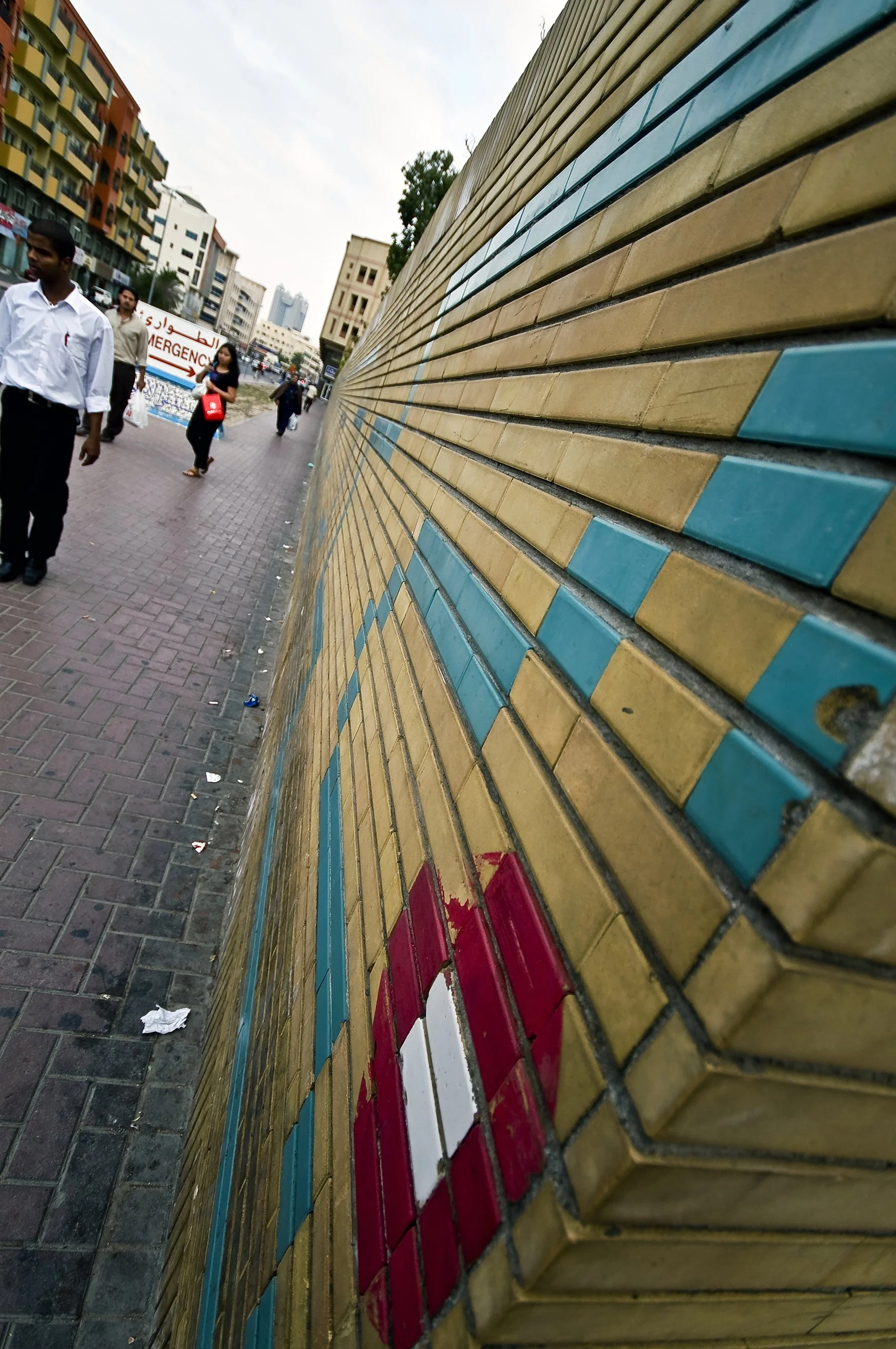
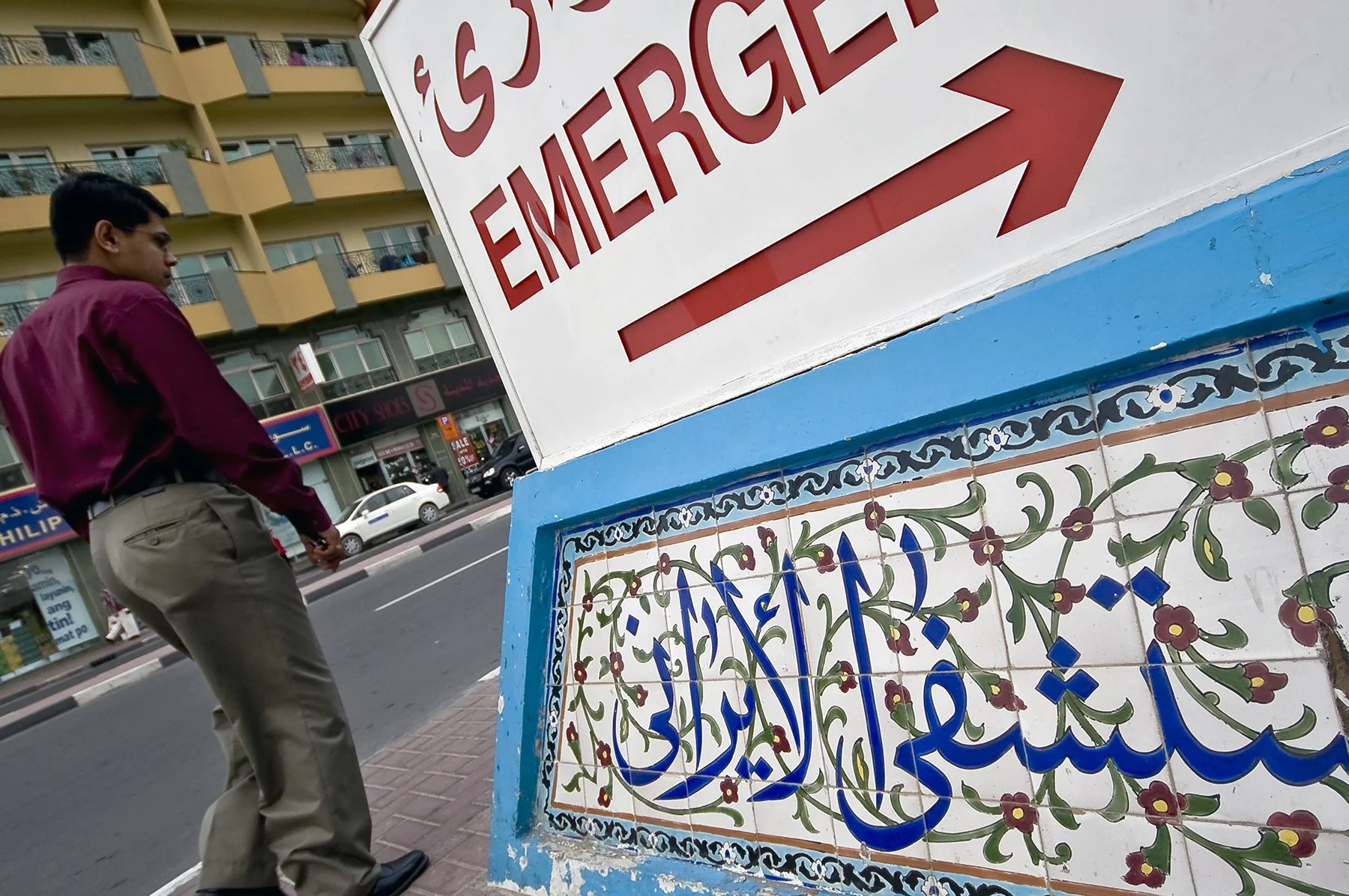
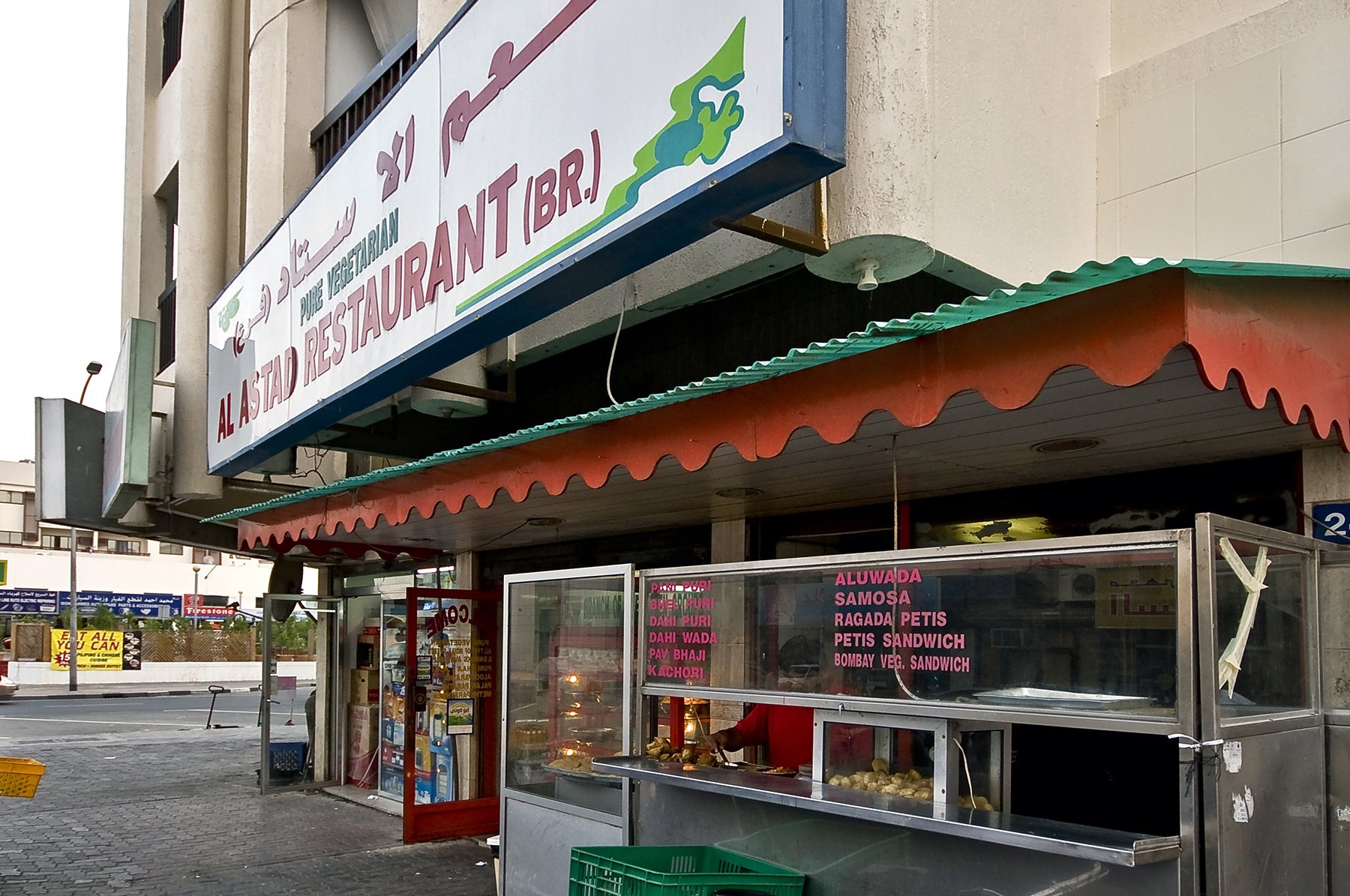
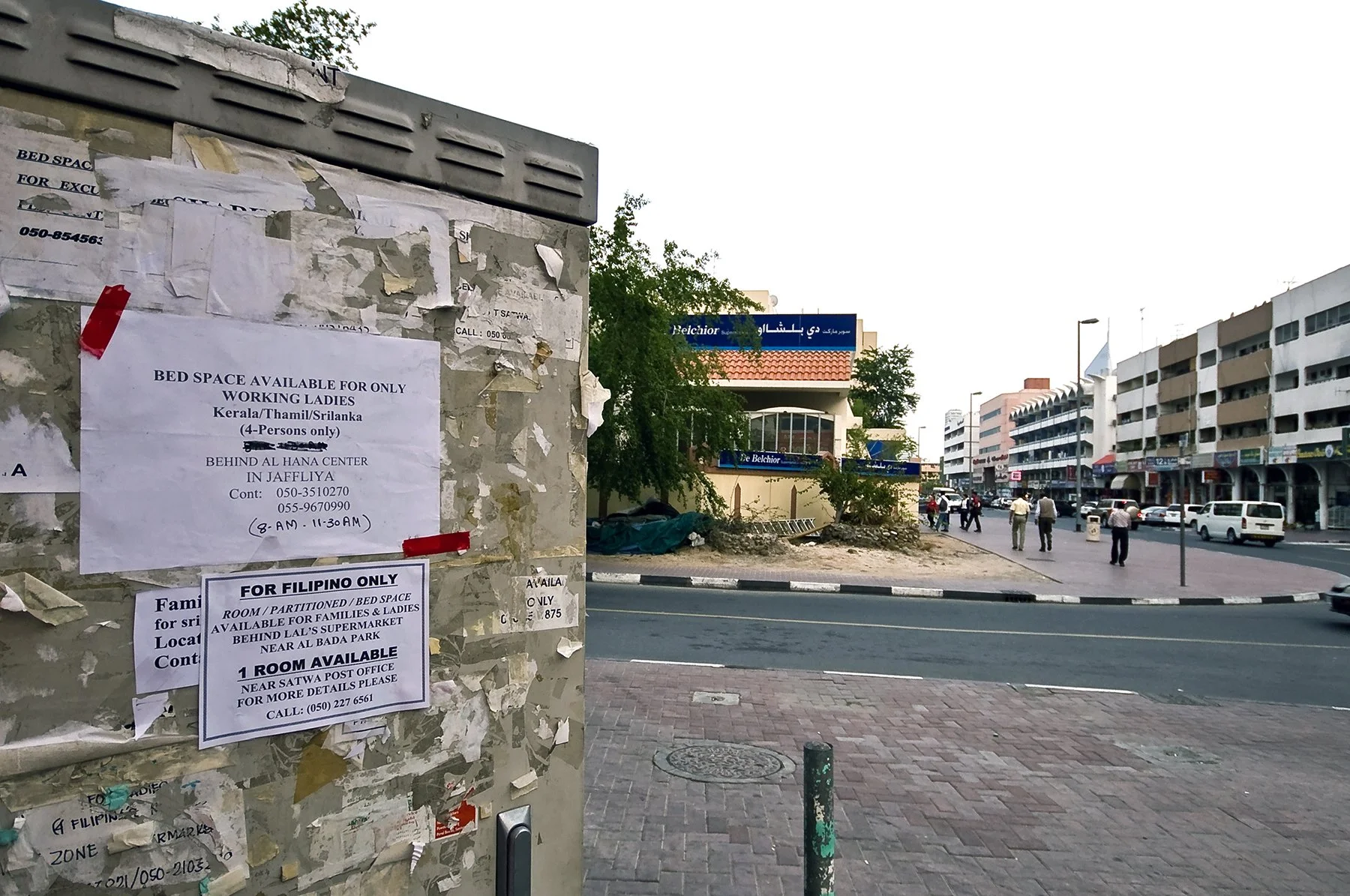
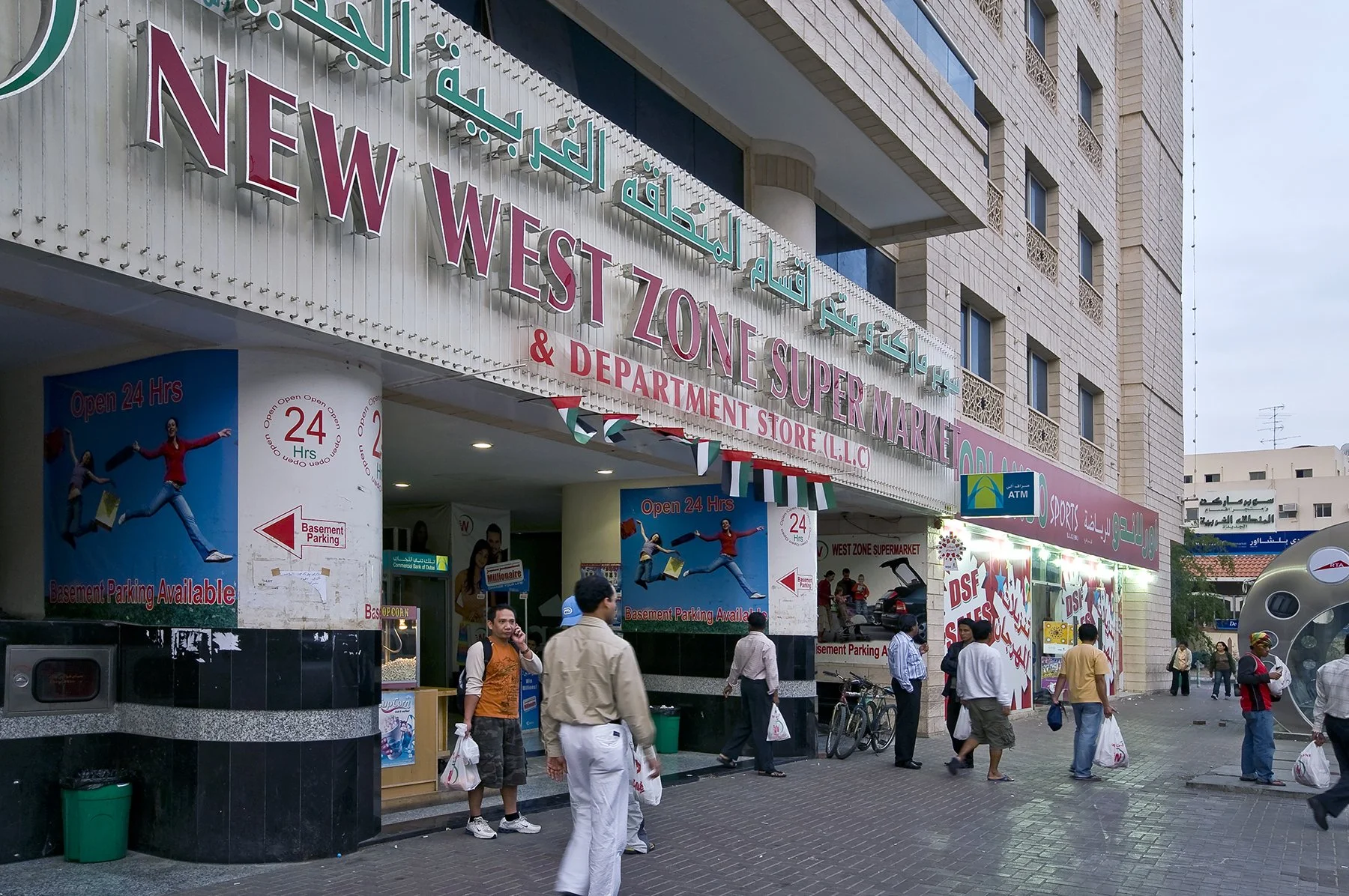
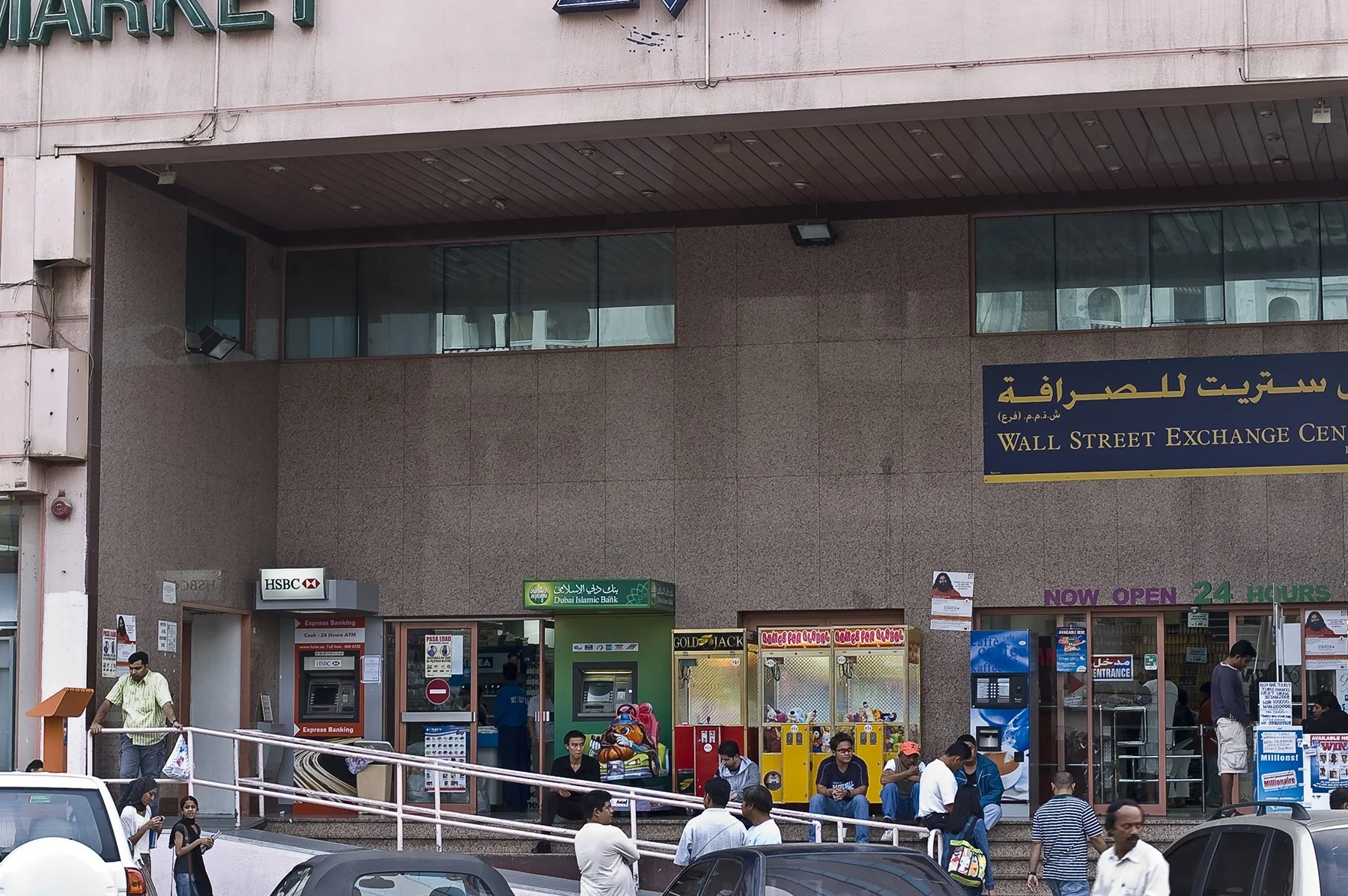
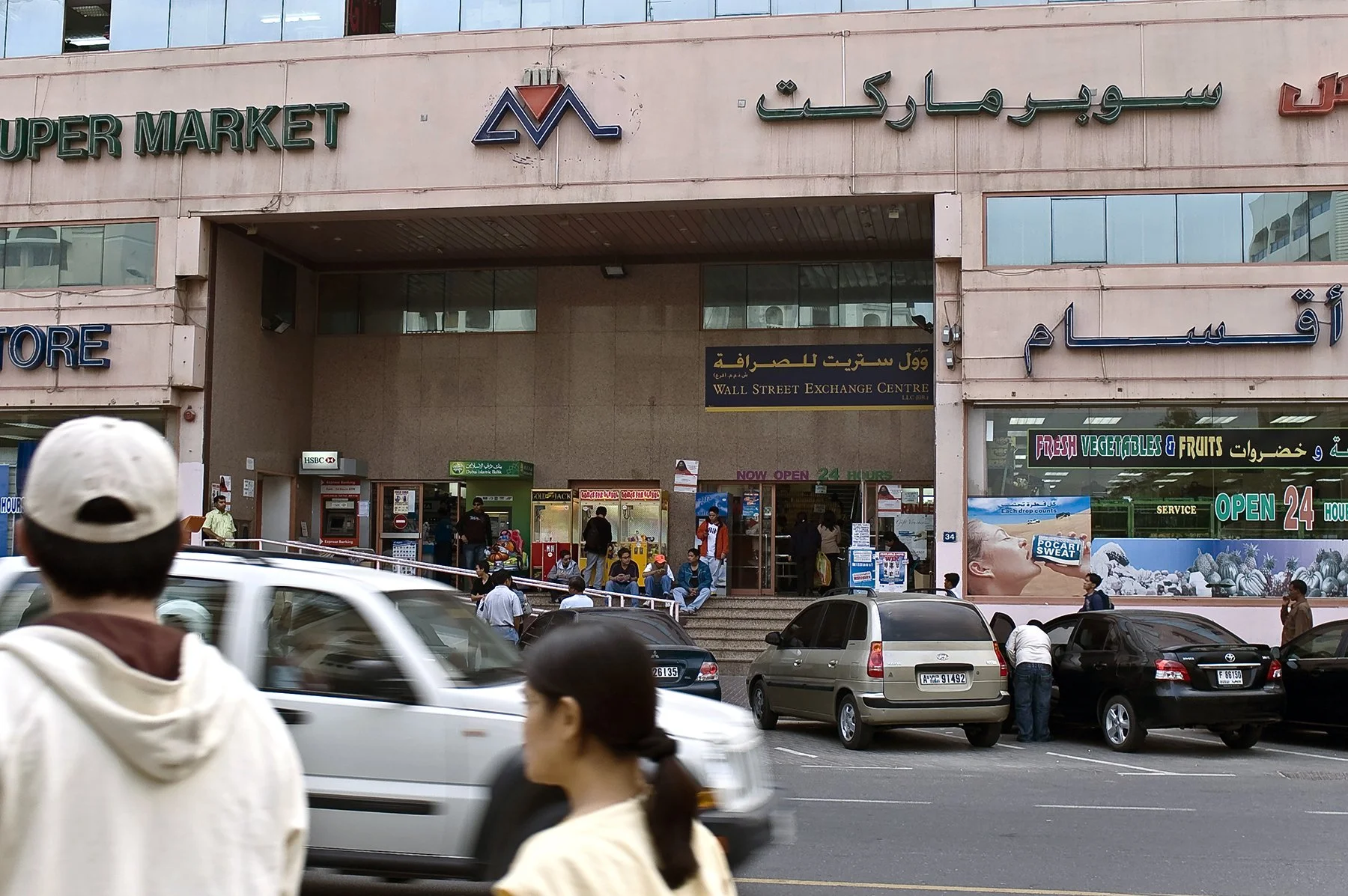
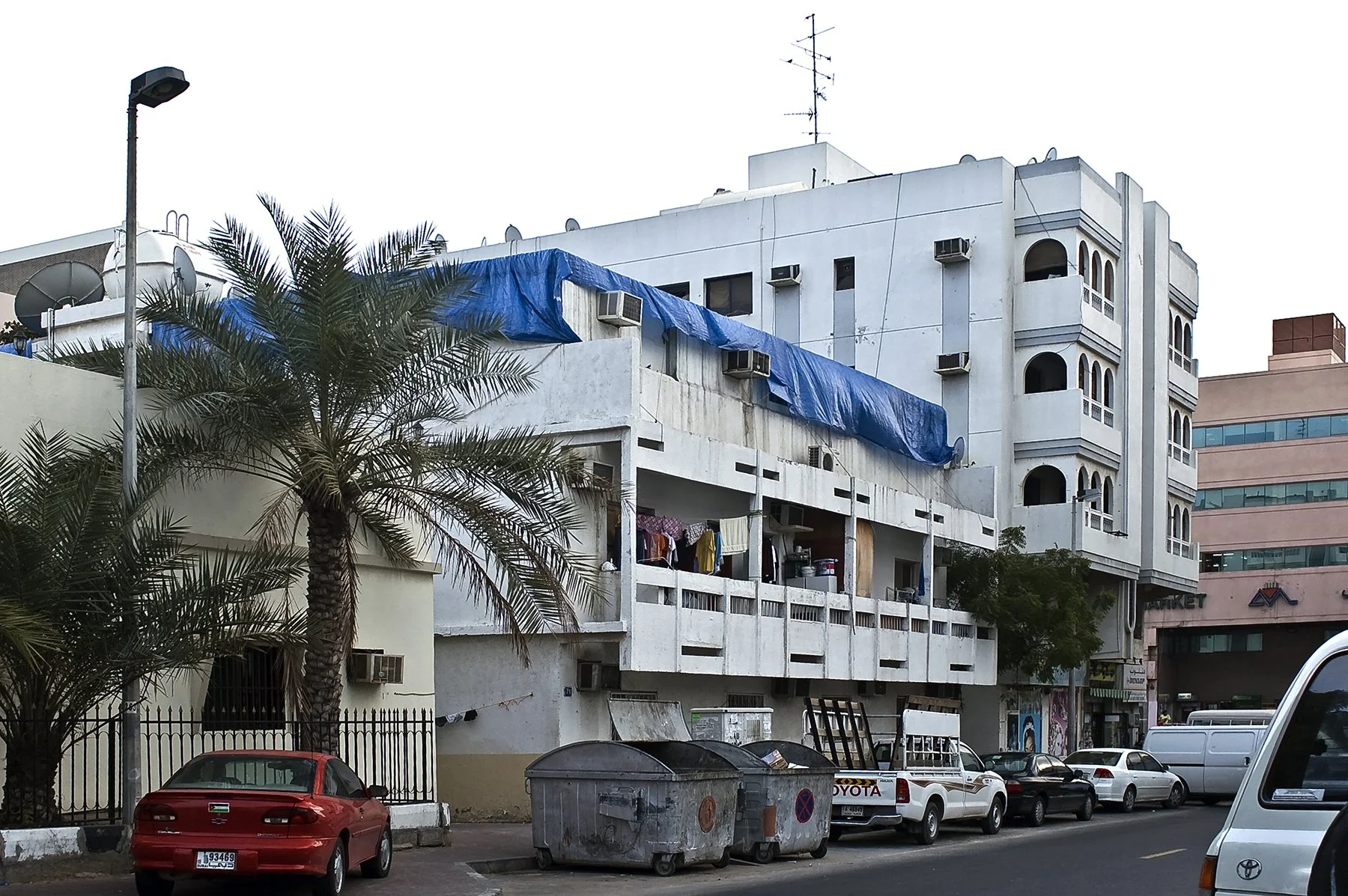
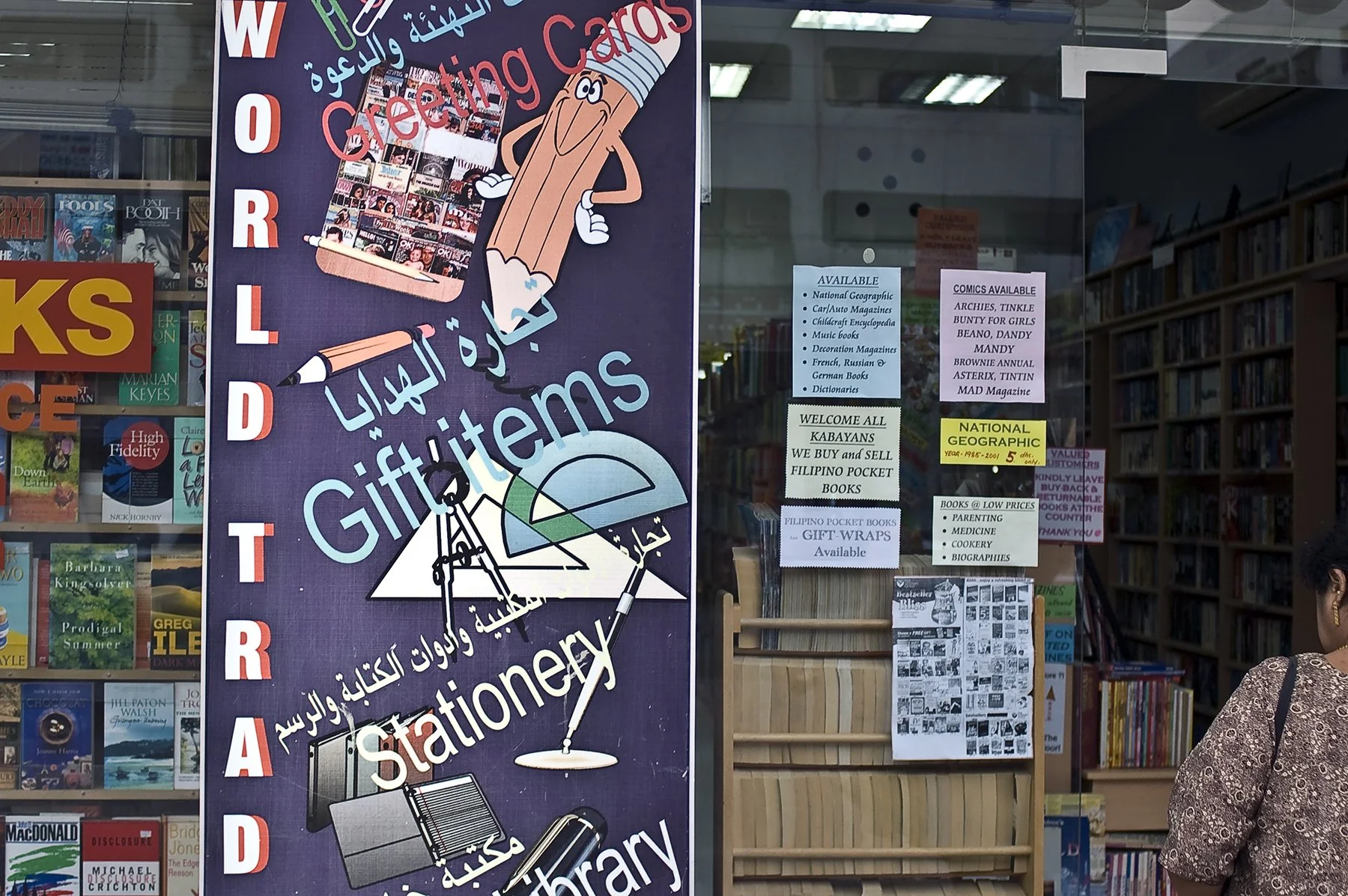
Equally striking was how the hospital connected to its surrounding neighborhood. This was not an isolated compound but part of a broader urban tapestry. Nearby was what many residents informally referred to as “Little Manila,” along Hudeiba Street, a hub of Dubai’s Filipino community. At its center stood Al Maya Lals supermarket, owned and operated by an Emirati businessman, yet catering largely to Filipino residents. The store was more than a retail outlet; it was a social anchor, a place where languages mixed and everyday routines unfolded. From there, the urban fabric extended toward Satwa, with its unmistakable South Asian character—tailors, small groceries, and inexpensive eateries. Among them was Ravi, the Pakistani restaurant that has achieved near-legendary status in Dubai. These spaces, modest and unassuming, formed a continuous corridor of everyday urban life. The Iranian Hospital sat within this constellation, reinforcing the sense that Dubai was not merely a collection of isolated enclaves but a real city with a soul—contrary to the clichés often promoted by Western, regional, and sometimes even local media.
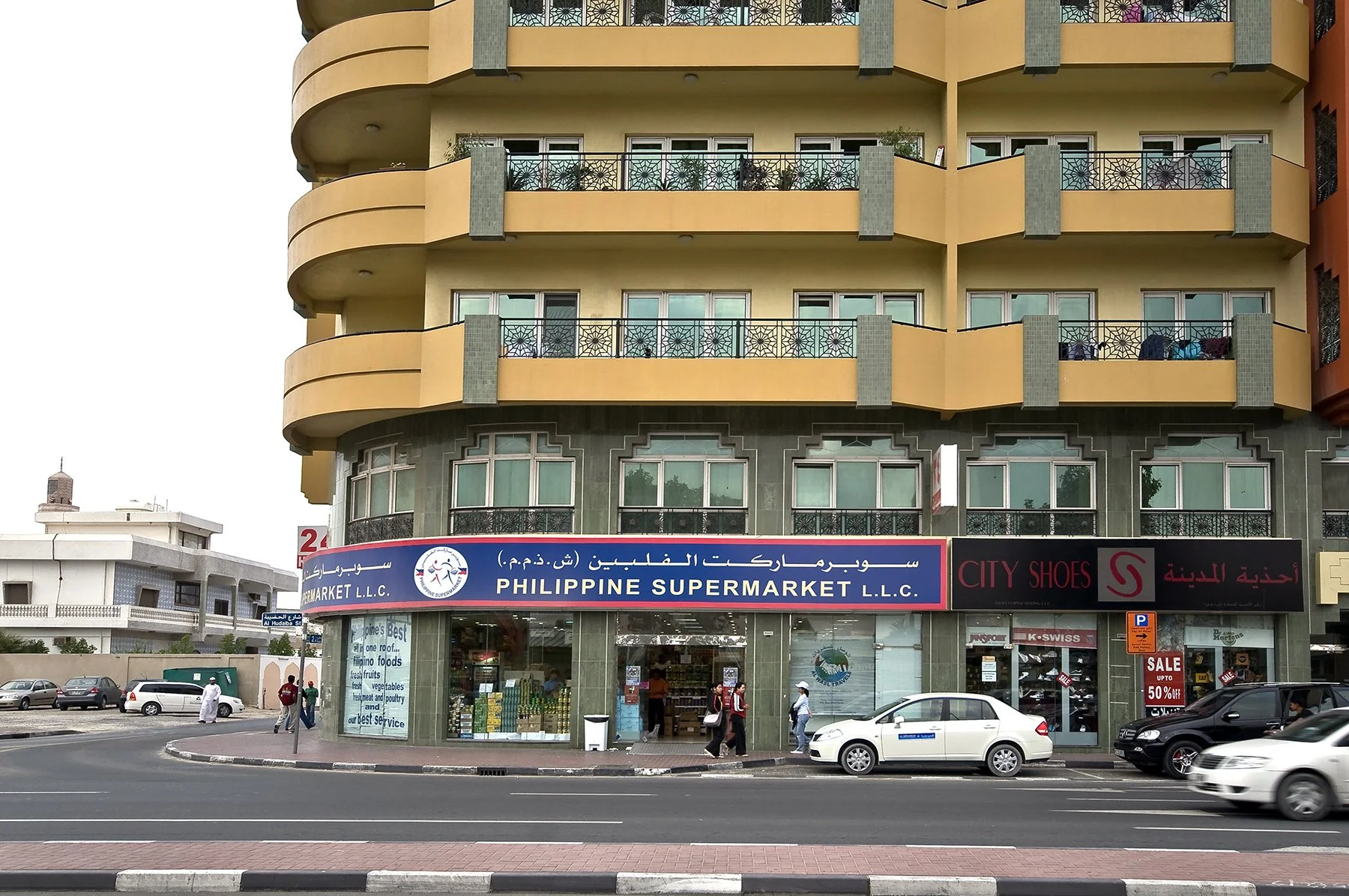
Hudeiba Street
So what happened?
Let me say clearly that this is not a political post. I understand and appreciate the motives behind recent decisions. These are difficult times. The UAE, and Dubai in particular, have found themselves entangled in a conflict they did not choose. Security considerations are real, and governments must act in the interest of national safety. Yet the consequences of such actions ripple beyond immediate concerns, touching the urban fabric and collective memory of the city.
Following recent hostilities and attacks by Iran, authorities ordered the closure of Iranian-affiliated institutions and outposts across Dubai. Community centers were shuttered. Cultural associations were suspended. Among these closures was the Iranian Hospital. Reports indicated that services were halted, patients redirected, and staff placed in uncertainty. The fate of the complex itself remains unclear. Will it reopen under different management? Will it be converted into a commercial facility—a shopping mall, perhaps, or a food court? Will it become another hospital, stripped of its distinctive Persian features and rebranded into something generic? Or will it be demolished altogether, replaced by a high-end development in the mold of City Walk or similar lifestyle projects?
In any of these scenarios, something irrevocable takes place. The city risks reinforcing the perception of itself as transient—a place where memory holds little value, where institutions emerge and disappear with little regard for their historical or cultural significance. Under the banner of progress, elements of the built patrimony are erased. What disappears is not only architecture, but the stories embedded within it: the patients who were treated there, the families who passed through its courtyards, the communities that found in it a shared point of reference.
The ultimate losers are the residents of the city—all of them. Emiratis, expatriates, long-term migrants, and newcomers alike. Because memory is not the property of a single group. It is collectively produced and collectively experienced. When a place like the Iranian Hospital disappears, the loss is shared. It weakens the threads that tie people to the city, reinforcing the notion that Dubai is merely a stopover—a place to work, consume, and move on from, rather than a place to belong.
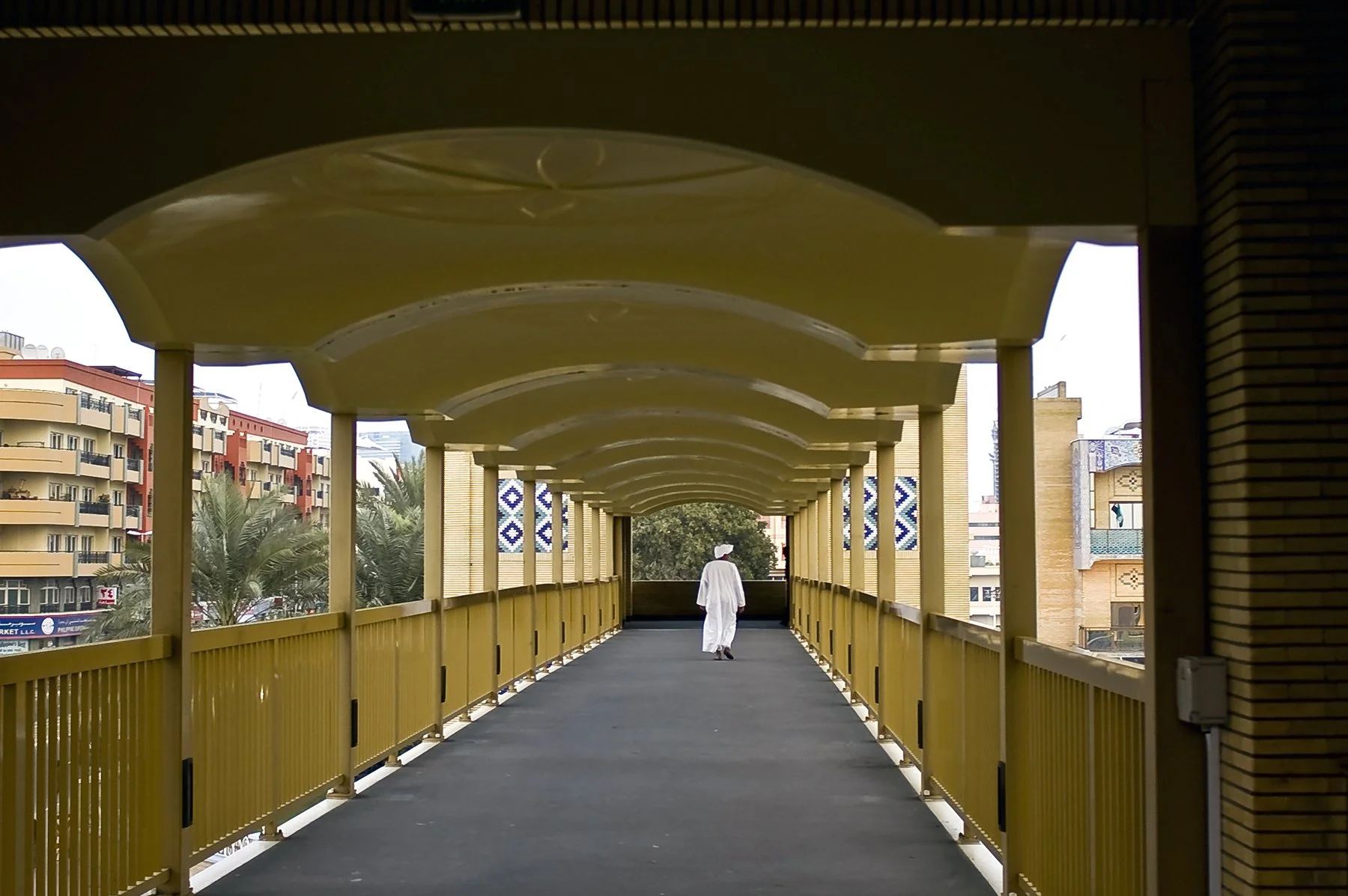
Passing through
Memory matters. It connects us to the past and guides us toward the future. Without it, cities become interchangeable landscapes, devoid of depth. In moments like this, the words of the UAE’s founding leader, Sheikh Zayed bin Sultan Al Nahyan, offer a powerful reminder: “He who does not know his past cannot make the best of his present and future, for it is from the past that we learn.”
Because ultimately, a city without memory is a soulless city.
If interested my recently released book “Arab Modernism(s)” contains a detailed chapter about Dubai
