Spatial Marginalization and Exclusion
Sawaber, Memory, and Kuwait’s Invisible City

“Among all the seamen who ply the Persian Gulf, the mariners of Koweyt hold the first rank in daring, in skill and in solid trustworthiness of character. Fifty years since their harbour with its little town was a mere nothing; now it is the most active and the most important port of the northerly Gulf, Aboo-Shahr (Bushire) hardly or even not excepted. Its chief; Eysa, enjoys a high reputation both at home and abroad, thanks to good administration and prudent policy; the import duties are low, the climate is healthy, the inhabitants friendly, and these circumstances, joined to a tolerable roadstead and a better anchorage than most in the neighborhood, draw to Koweyt hundreds of small craft which else would enter the ports of Aboo-Shahr or Basra.”
-- W. G. Palgrave (1865) describing Kuwait.
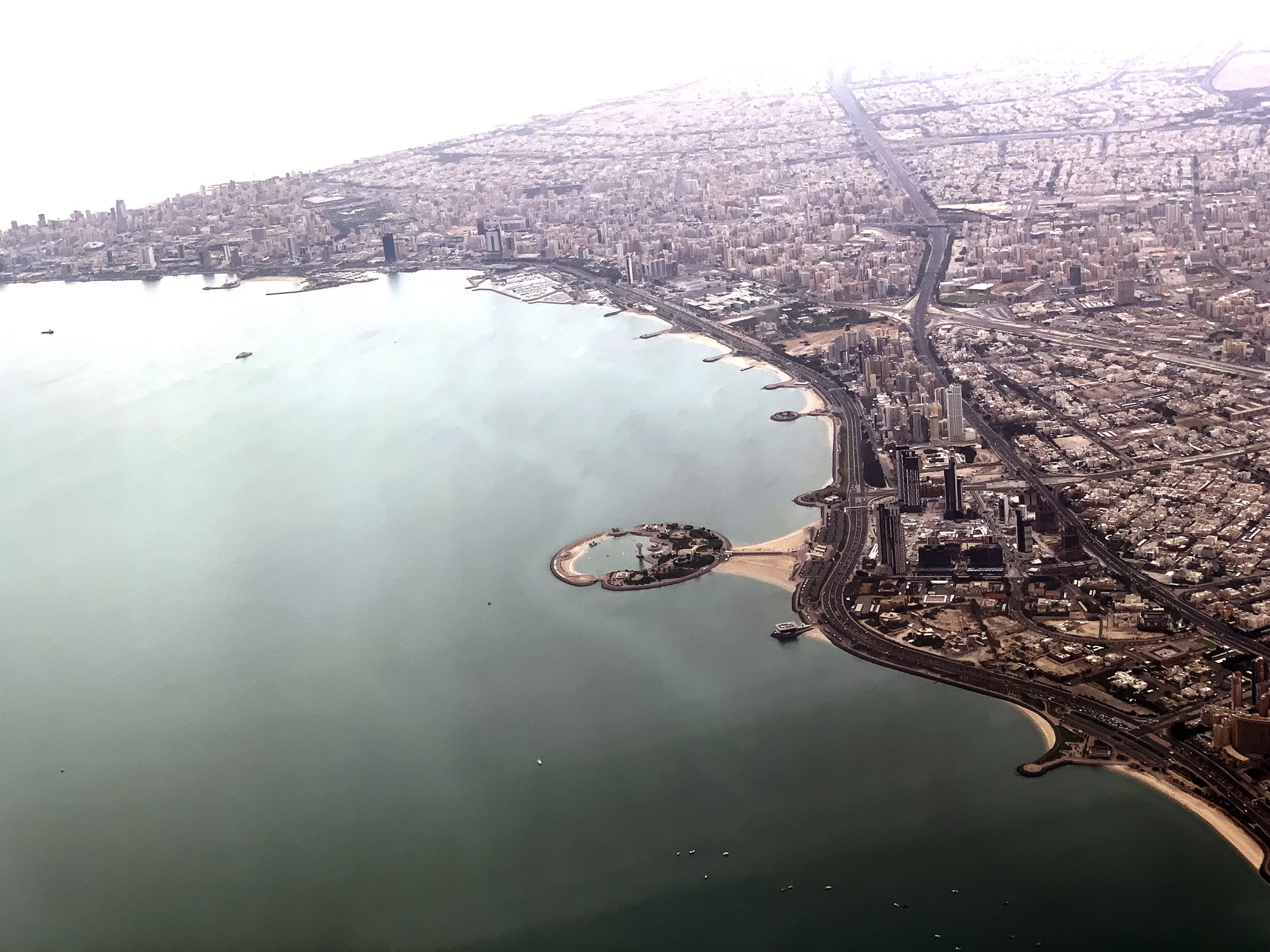
Aerial View. Kuwait. 2023 (Elsheshtawy)
In my previous blog about Doha, I started by reflecting on a bear sculpture sitting in its international airport, and used that as a starting point to ruminate about the meaning of home and belonging. Now I want to write about Kuwait, a city that at first sight may seem like any other city in the Gulf. But it is quite different as I discovered during my very first visit in 2007. Arriving at the airport, I was confronted with the sight of US soldiers in full gear as they were about to start their tour. That by itself was not particularly unusual -- soldiers from various countries are all over the Gulf and the region -- but still the visibility and normalcy of it all was unsettling to say the least. But what convinced me that I was dealing with a different cultural sensibility is the rather matter-of-fact, no-nonsense manner of immigration officers -- a far cry from the much more pleasant and welcoming manner of their counterparts in Dubai, Abu Dhabi and elsewhere. Later, while participating in the UN-ESCWA forum to which I was invited and which was held at the Arab Towns Organization Headquarters -- a building reflecting a sort of so called “Islamic” architectural style I began to explore and discover the city. Hotels were heavily fortified, and entering them required passing through security checkpoints; I stayed downtown and, in the evening, I would walk around -- marvel at the modernist buildings while also discovering that downtown does not really belong to Kuwaitis -- instead it is dominated by South Asian, Egyptian and other laborers. As opposed to the more refined neighborhoods containing spectacular villas where Kuwaitis resided.
One episode from that conference left an indelible impression on me. The discussion centered on the UN’s millennium development goals which focused on poverty reduction and the elimination of slums. A group of elderly Kuwaiti women objected loudly to the discussion. One raised her hand and said emphatically that any discussion of poverty does not pertain to Kuwait where it did not exist. She was immediately admonished -- a Lebanese economist noted that the laborers living in camps and marginalized neighborhoods are impoverished and they are as much part of this city as any Kuwaiti -- they had contributed to the construction of the city, and without them it would not exist in the same way. A much more severe rebuke came from a Kuwaiti, head of the countries’ branch of the International Labour Organization (ILO), who implored them to look around their neighborhoods to realize that poverty is very much part of the city’s fabric. It needs to be said though that there were moments of generosity, kindness that I encountered -- one of them involved a visit to the restored Mubarakiya Souk; a traditional market evoking the city’s past and reflecting its identity and culture. It was not an open-air heritage reconstruction but a living market catering to the everyday needs of Kuwaitis. Since that visit I returned to Kuwait many times, which leads me to this blog.
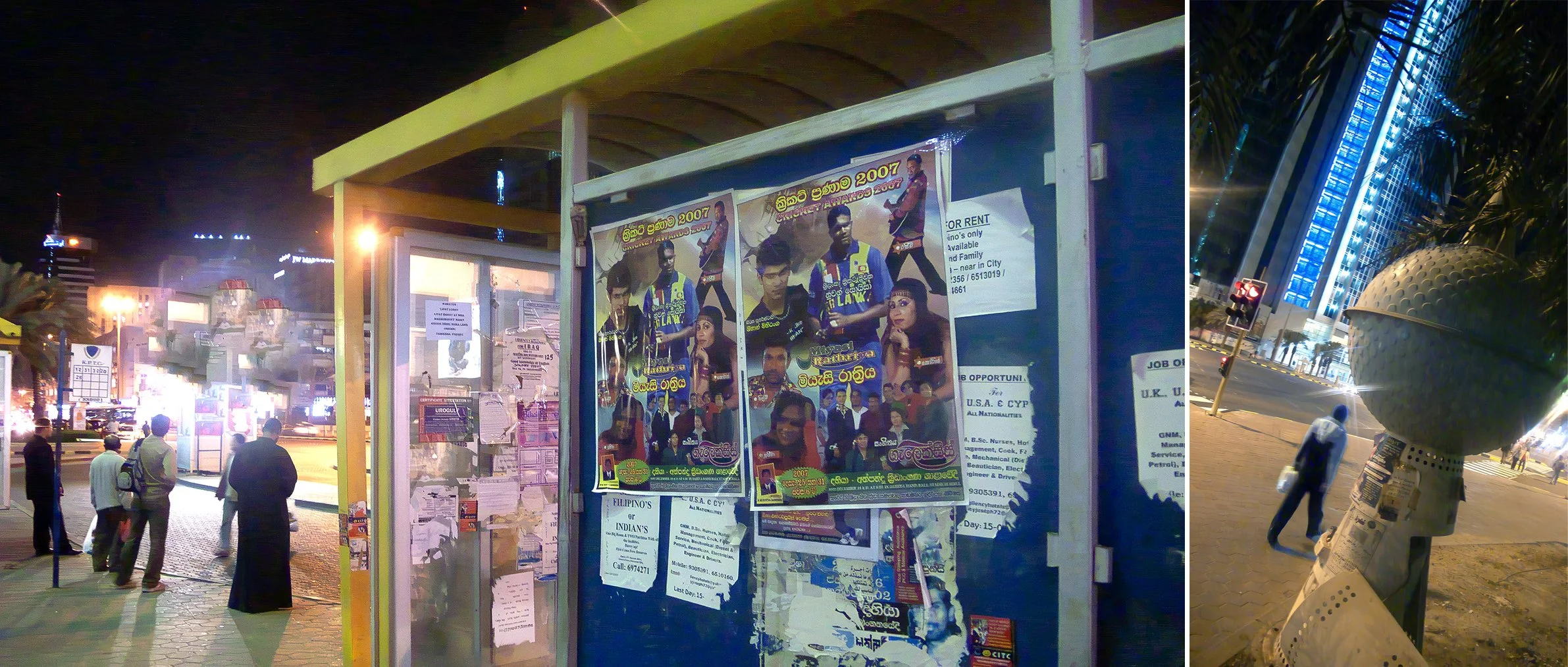
Downtown Kuwait. 2007 (Elsheshtawy)
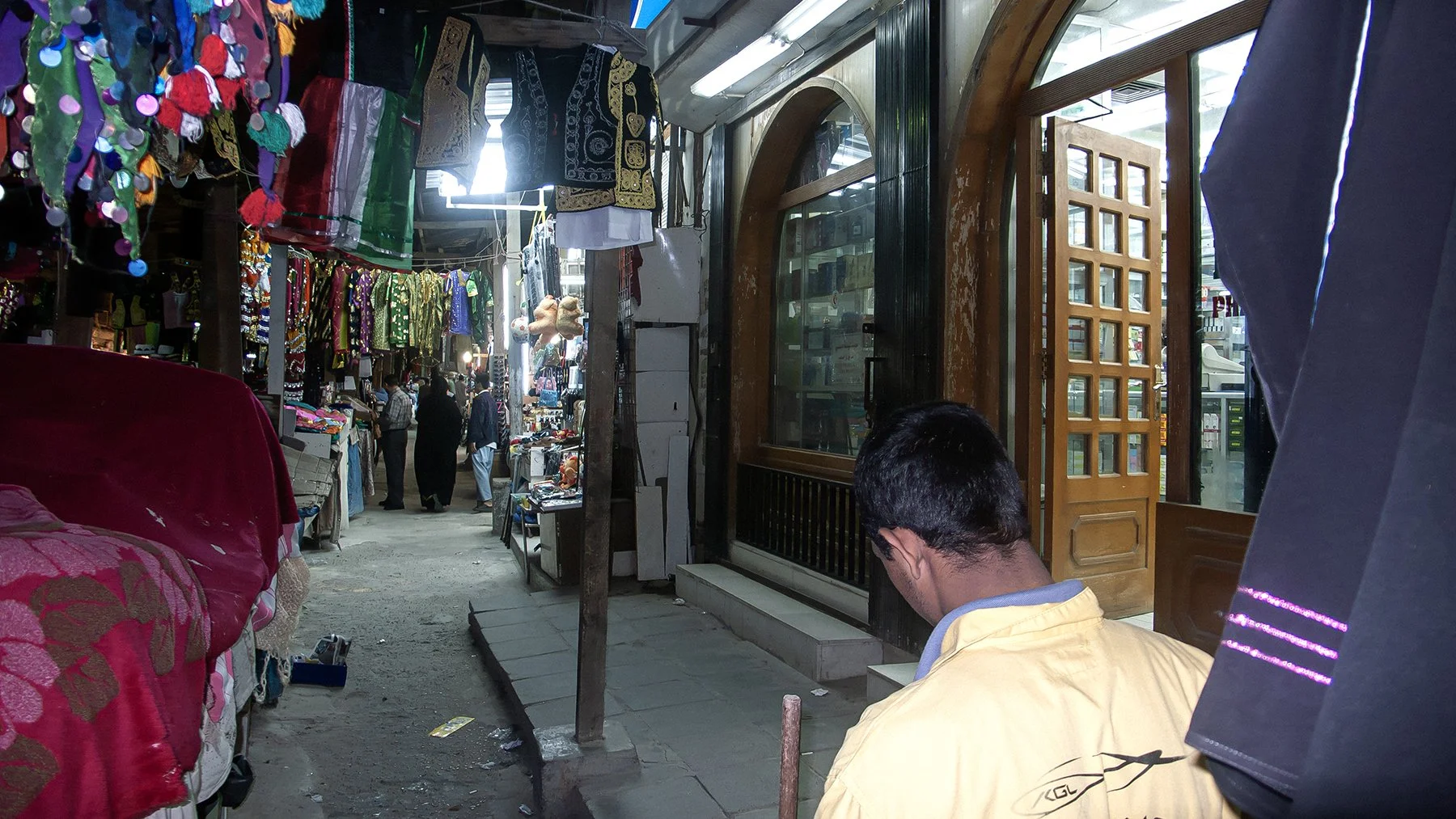
Old Souk. Kuwait. 2007 (Elsheshtawy)
While reflecting on my Kuwait chapter in Arab Modernism(s): Cities, History and Culture, I found myself lingering over its opening pages more than the chapters that followed. I had titled the prologue "Before Concrete and Glass: Echoes of a Vanished Shoreline," and rereading it reminded me that before Kuwait became synonymous with oil, prosperity, and modern architecture, it was defined by something altogether more fragile. There was the sea, but there was also the desert. Between them lay a modest settlement whose existence depended upon negotiating two unforgiving landscapes. The sea offered livelihood through pearl diving and trade, but every departure carried uncertainty and the possibility of never returning. The desert promised refuge but little abundance. Together they produced an urban culture shaped less by permanence than by resilience. Coral-stone houses clustered along narrow alleys, shaded courtyards protected families from the harsh climate, and the settlement grew incrementally in response to necessity rather than grand urban visions. It was a city where architecture reflected vulnerability as much as prosperity. The discovery of oil, of course, changed all that, transforming society at an astonishing pace and modernizing the city. But that transformation came at a cost—namely, exclusion.
And the one project that captured exclusion more than any other was Al-Sawaber. When Arthur Erickson designed the housing complex during the 1970s, he was not simply producing another modernist megastructure. He was attempting something remarkably ambitious: creating a dense urban neighbourhood that recovered many of the social qualities of the old city while embracing the possibilities of modern architecture. Elevated walkways connected buildings, shaded courtyards encouraged encounters, and communal spaces invited children to play while neighbours watched over one another. Unlike the endless suburban villas that increasingly came to define Gulf urbanism, Sawaber imagined high density not as a problem but as an opportunity. Former residents still recall those years with remarkable affection. Children moved freely between apartments, friendships developed across shared spaces, and everyday life unfolded in ways that echoed older neighbourhoods without reproducing them literally. It is tempting today to remember Sawaber only through photographs of its decay -- captured with aching honesty through the lens of the late photographer Tarek al-Ghussein in his haunting black and white images -- yet doing so overlooks what it once represented: perhaps the Gulf's most convincing attempt to reconcile modern architecture with traditional urban life.
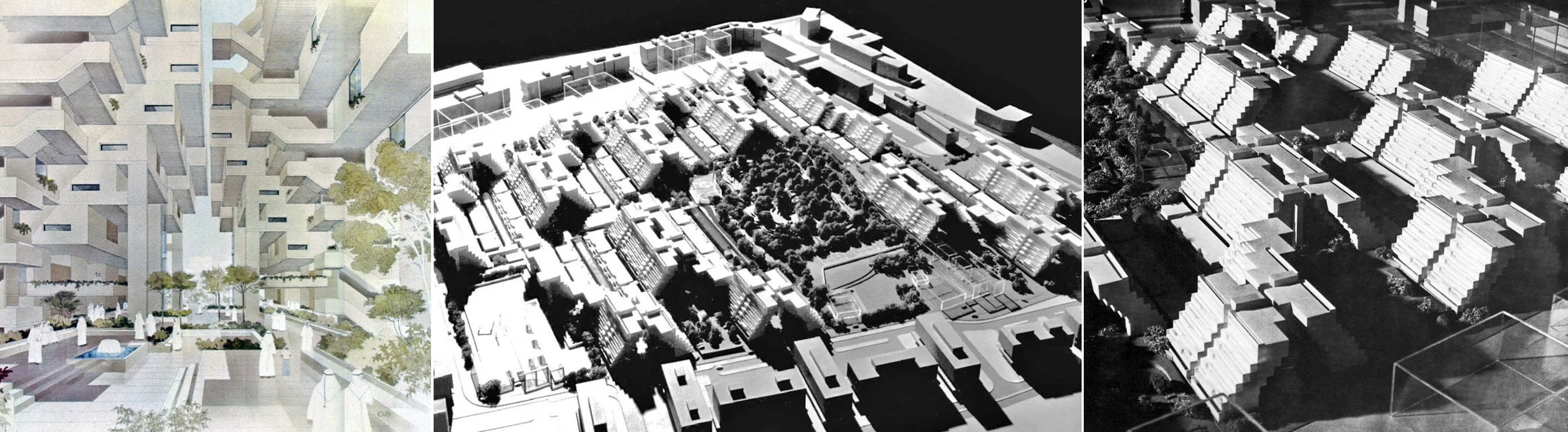
Original Sawaber Proposal. Arthur Erickson
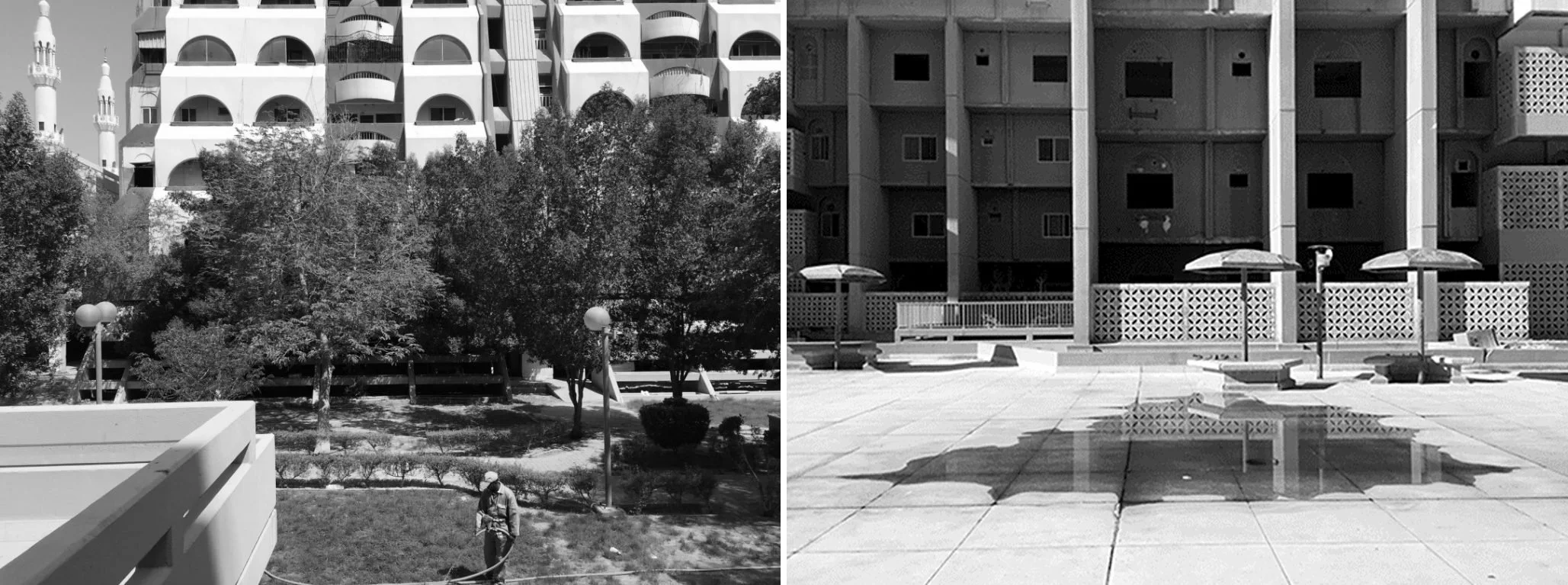
Sawaber before Demolition. Tarek al-Ghussein
Its decline, therefore, cannot simply be blamed on architecture. Like so many modernist housing projects around the world, Sawaber became the victim of forces extending far beyond its design. Maintenance deteriorated, infrastructure failed, ownership became increasingly complicated, apartments were subdivided, speculation intensified, and public discourse gradually transformed the complex into a symbol of failure. Once stigma attached itself to the buildings, demolition became almost inevitable. Yet destroying Sawaber solved very little. It merely erased another chapter of Kuwait's urban history while leaving unresolved the social questions that had contributed to its decline in the first place.
It was while thinking about Sawaber that I encountered the work of Kuwaiti artist Dana Al Rashidi. Her Architecture of Memory series does far more than document disappearing buildings. It mourns disappearing worlds. Her haunting depictions of Sawaber -- and other modernist icons -- during its demolition capture something absent from planning reports and official histories: grief. Buildings disappear physically long before they disappear emotionally. People continue inhabiting places through memory long after bulldozers have completed their work. Her paintings remind us that architecture does not simply organize space. It also structures lives, routines, friendships, and memories that cannot simply be erased by demolition.
Literature reaches similar conclusions through different means. Saud Alsanousi's The Bamboo Stalk tells the story of a young Filipino man, the son of a Kuwaiti father and a Filipina domestic worker, caught between identities, belonging fully neither to Kuwait nor to the Philippines. His struggle is often discussed as one of nationality and citizenship, yet it is equally a story about space. Some neighbourhoods welcome him while others exclude him. Some houses become inaccessible. Some identities open doors while others quietly close them. Reading the novel after revisiting Sawaber, I realized that marginalization is never merely social. It is profoundly spatial. It is experienced through the places one inhabits but never quite possesses, through cities that welcome one's labor while withholding belonging.
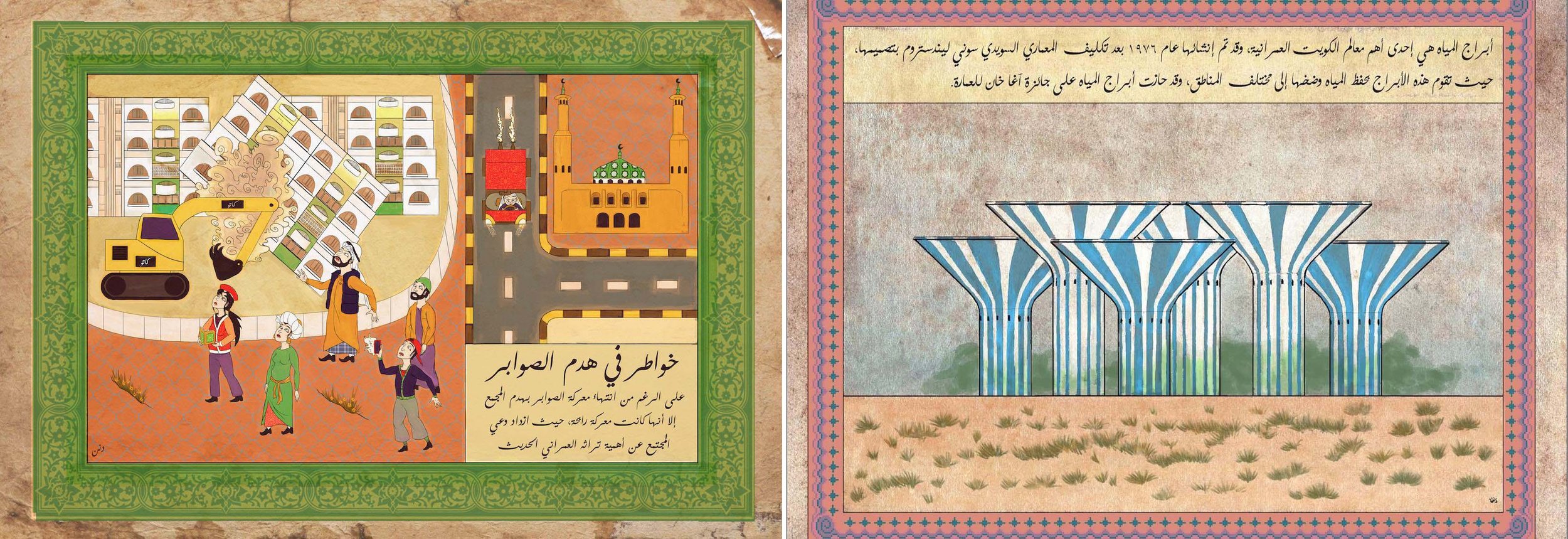
“Architecture of Memory.” Dana Al Rashidi
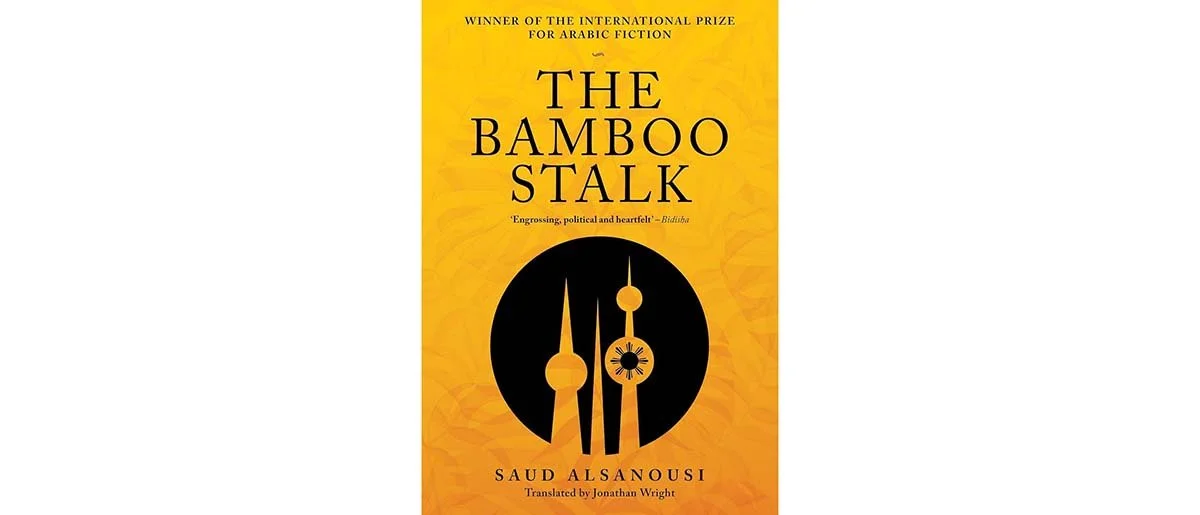
These artistic works reveal dimensions of Kuwait that architectural histories alone rarely capture. They remind us that cities are not experienced through master plans or iconic buildings but through ordinary lives unfolding within them. They also explain why Kuwait has remained with me long after writing its chapter in Arab Modernism(s). The city raises questions that extend well beyond its own borders. How does modernization reshape not only skylines but societies? How does planning produce visibility for some while rendering others invisible? And perhaps most importantly, how can cities preserve memory without sacrificing the future?
Yet despite these difficult questions, I remain optimistic. Across Kuwait, a younger generation of architects, historians, artists, filmmakers, and writers has begun recovering forgotten urban histories. Rather than celebrating demolition as inevitable progress, they are documenting neighborhoods before they disappear, preserving modern buildings once dismissed as obsolete, recording oral histories, and challenging official narratives of modernization. Their work suggests that memory itself can become a form of resistance, allowing cities to recover stories that concrete alone can never preserve.
Before oil, Kuwait looked toward the sea because survival depended upon it. Today the sea no longer determines the city's fortunes, but it still offers an important lesson. Tides erase footprints with remarkable ease, yet they also return again and again to the same shore. Cities are much the same. Buildings disappear, neighborhoods are demolished, and generations move on, but memories have a curious way of resurfacing. Through the work of architects, artists, filmmakers, novelists, and ordinary residents who refuse to forget, another Kuwait continues to exist beneath the concrete and glass.
Here the words of Palgrave in the epigraph should provide some solace: Kuwait was once a tolerant and welcoming place and it can be like that again. Perhaps that is where hope ultimately lies—not in recovering a city exactly as it once was, but in ensuring that those who occupied its margins are finally recognized as part of its story, as they always were. Only then can architecture move beyond being just about buildings to nurturing a more generous understanding of belonging.
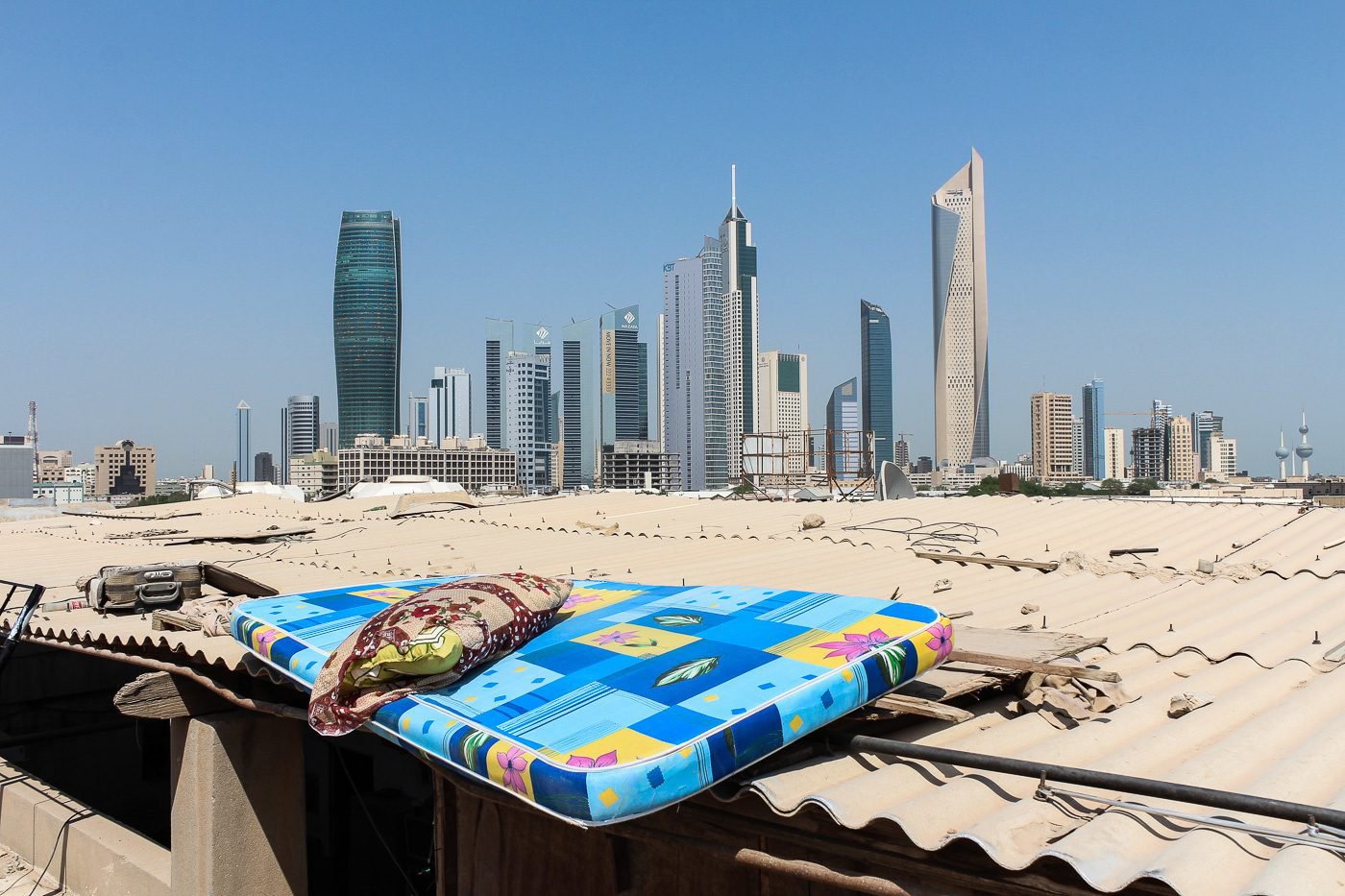
Kuwait. 2012. Sharq. A view of Kuwait's financial center from the rooftop of a building in Sharq where low-income migrant laborers live. © Faisal Al Fouzan
