The Cairo Archive
The Medium Format Collection
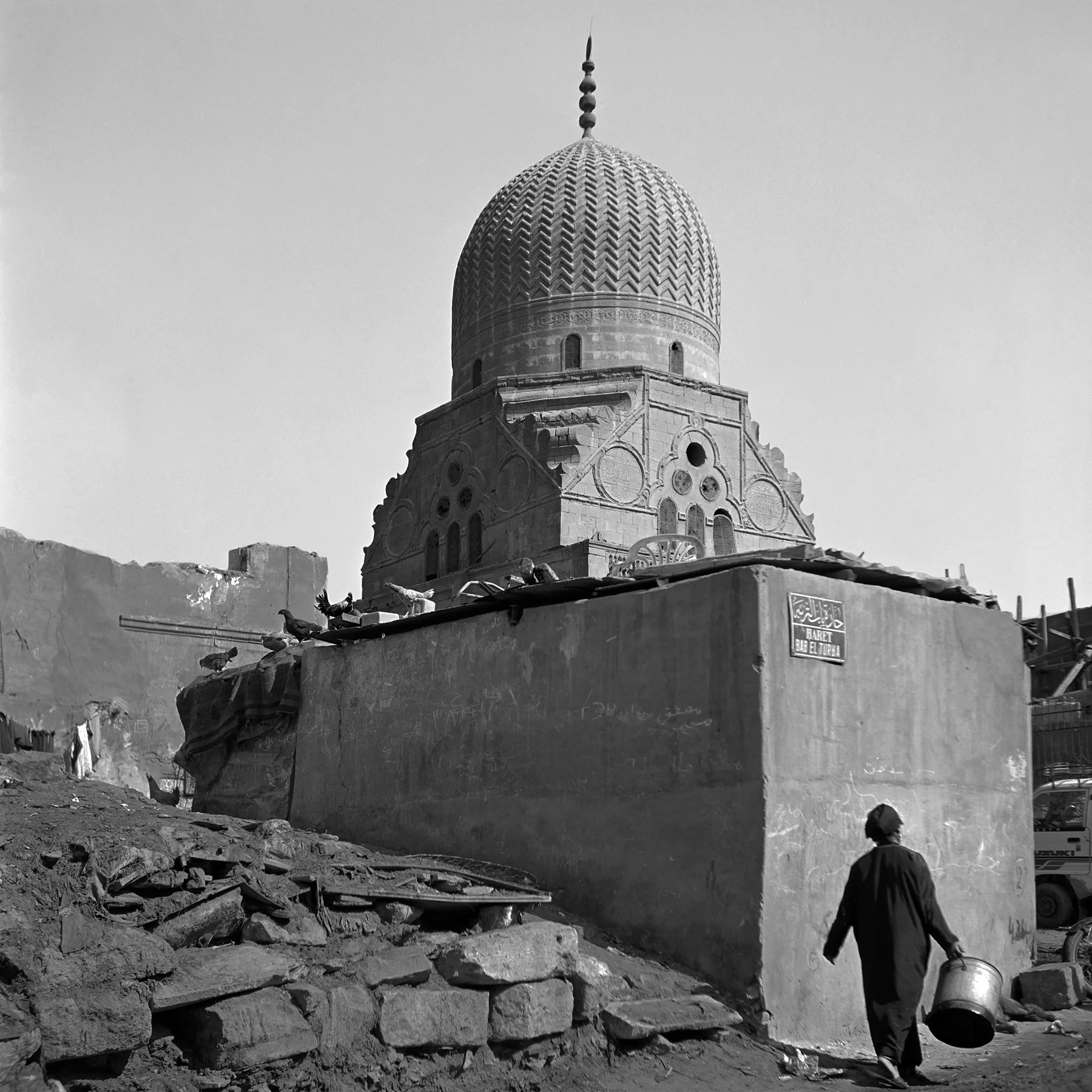
This collection presents a carefully curated archive of medium-format photographs of Cairo taken in 1994, documenting a city whose everyday landscapes were already beginning to fade. The images capture fragments of urban life—streets, buildings, people, and architectural details—observed through the lens of an architect attentive to the subtle rhythms and spatial textures of the city. Together they form a visual record of Cairo at a particular historical moment, preserving scenes that have since disappeared or been transformed by rapid urban change.
The collection is organized around a series of thematic groupings that reflect recurring elements within the urban environment: Garlic Market, Doorways–Windows–Thresholds, Portraits–People, and Mosques–Minarets. Each theme highlights a different dimension of the city’s architectural and social fabric—from the dense activity of local markets to the quiet geometry of architectural openings, from the faces of Cairo’s inhabitants to the enduring presence of its religious landmarks. Seen together, these images offer an intimate portrait of the city’s everyday spaces and the layered urban culture that once animated them.
All photographs originate from medium-format negatives, which have been carefully scanned at very high resolution to create a digital archive that preserves the tonal richness and detail of the original images. These archival digital files are available for research and educational purposes, providing valuable visual documentation for universities, research centers, scholars of urban history, and others interested in the architecture, heritage, and urban environment of Cairo.
Beyond their aesthetic value, the photographs function as a form of urban memory—a visual archive of streets, buildings, and social encounters that quietly shaped the city’s character. At a time when Cairo continues to undergo profound transformation, this collection offers a rare glimpse into a moment when its historic urban landscapes still retained a fragile but powerful presence.
Garlic Market
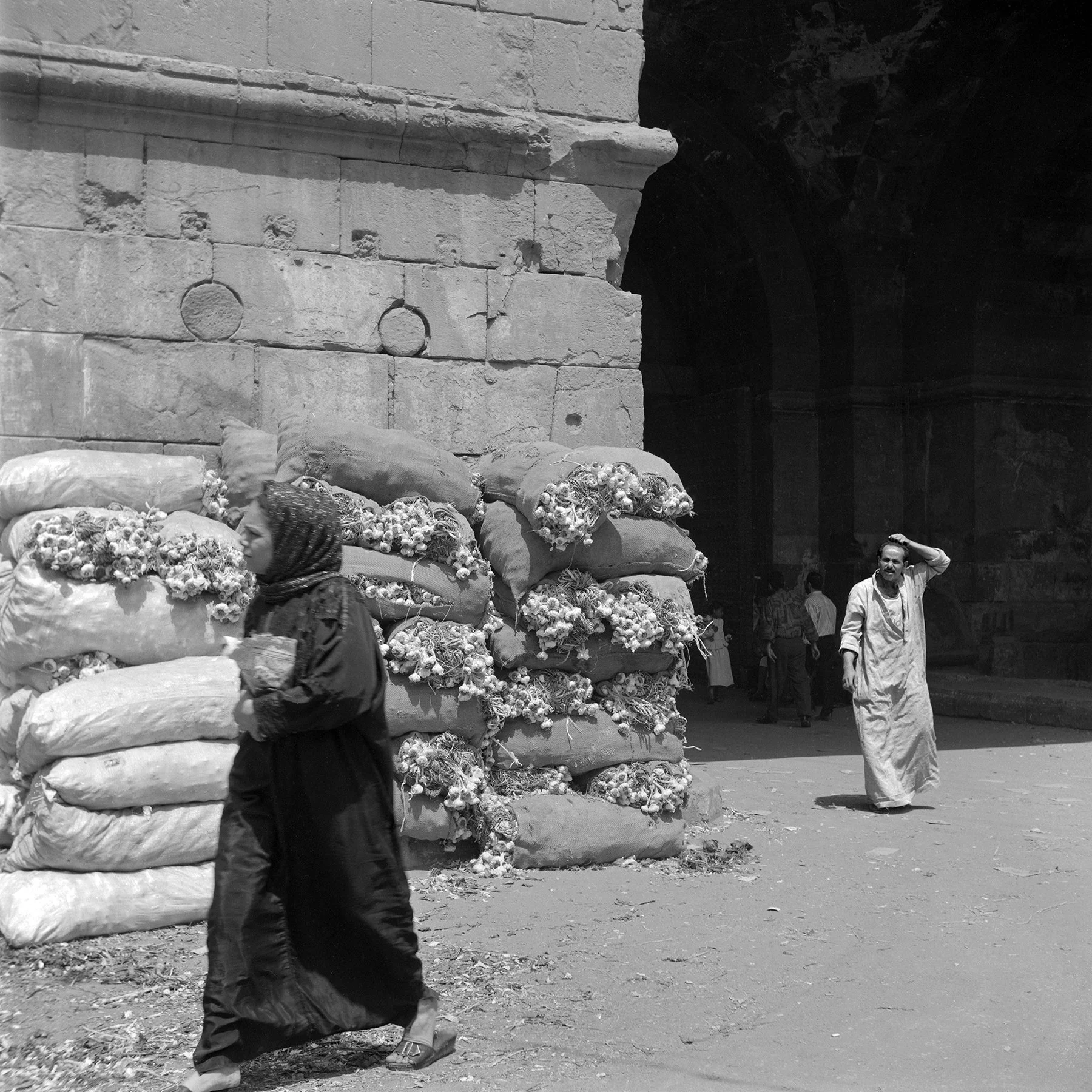
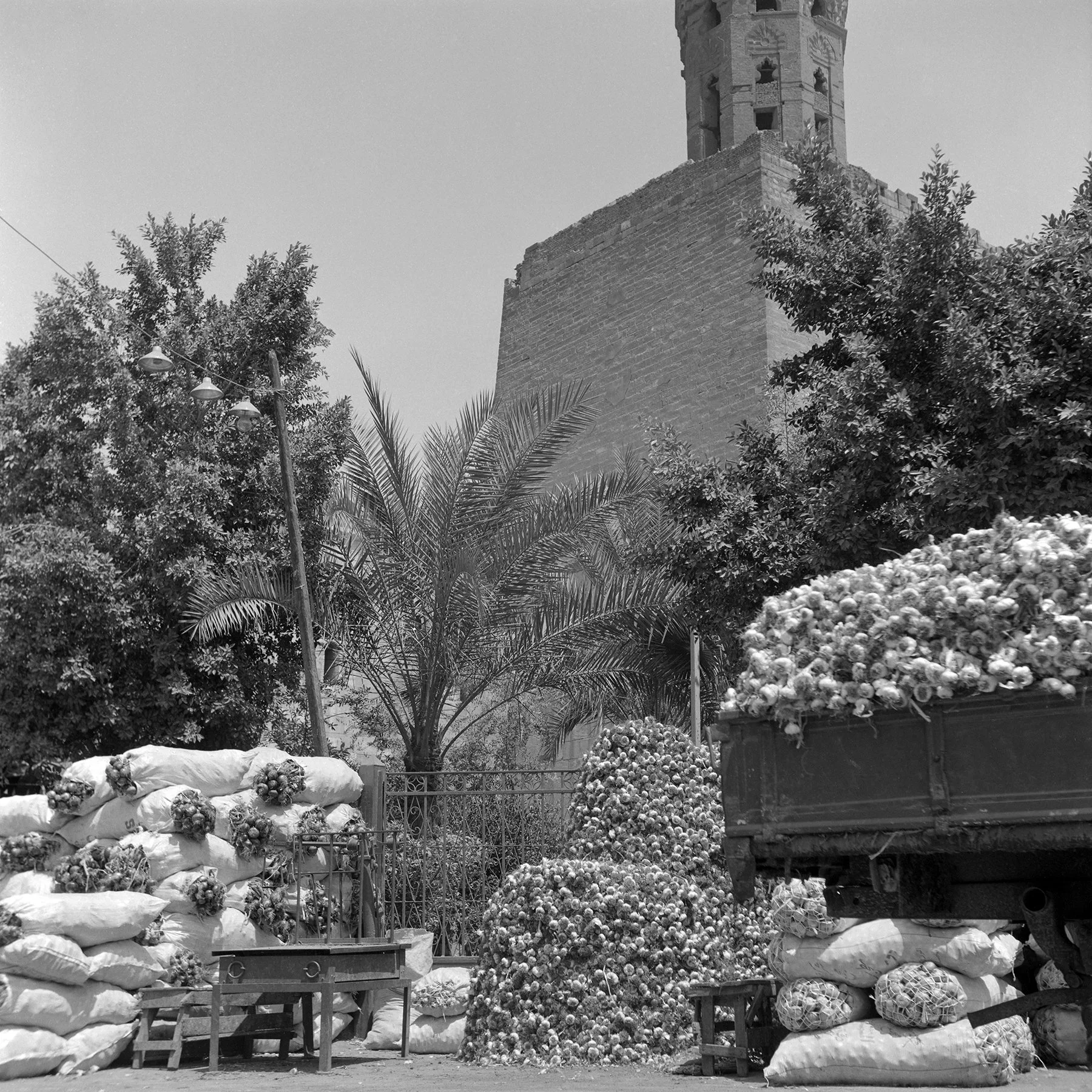
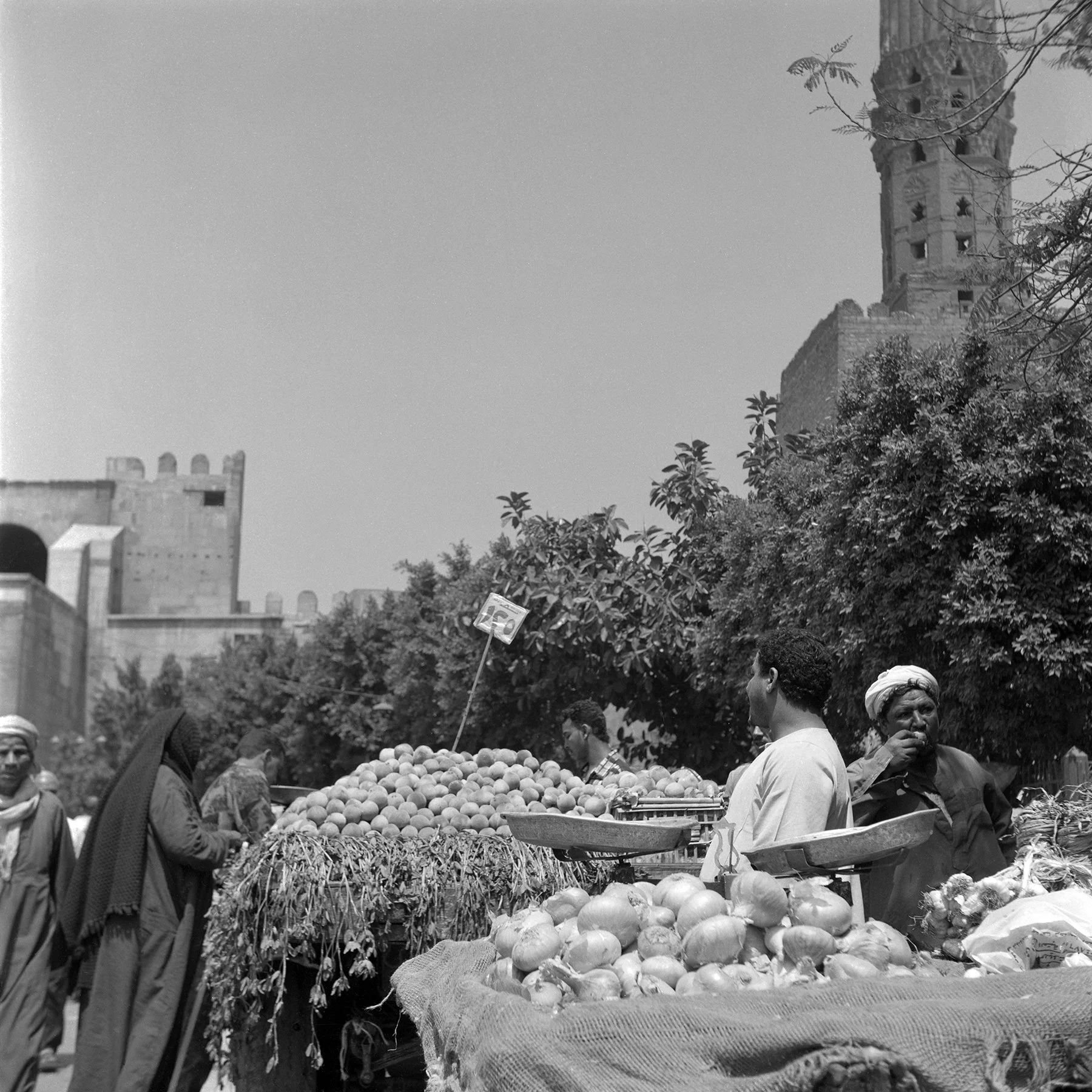
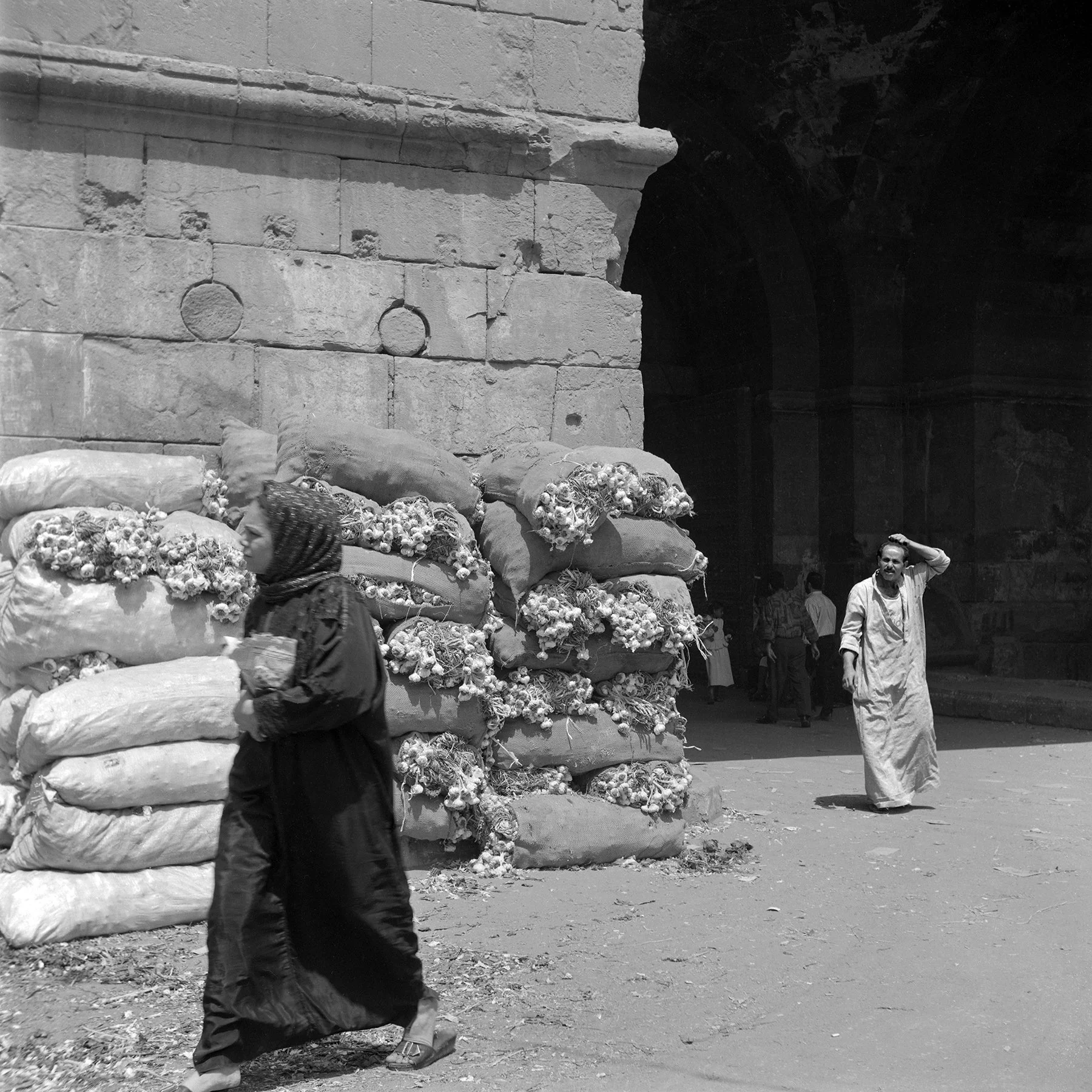
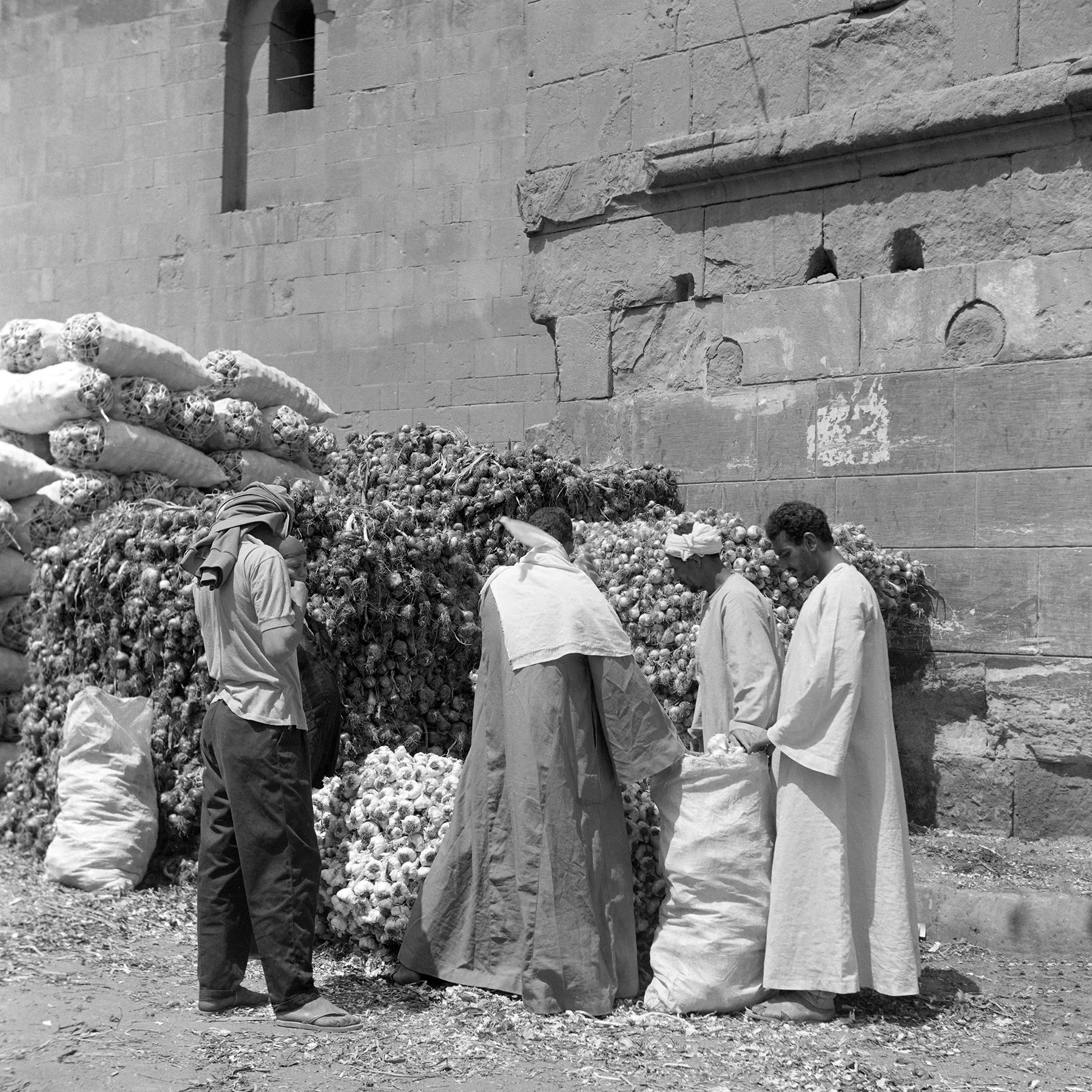
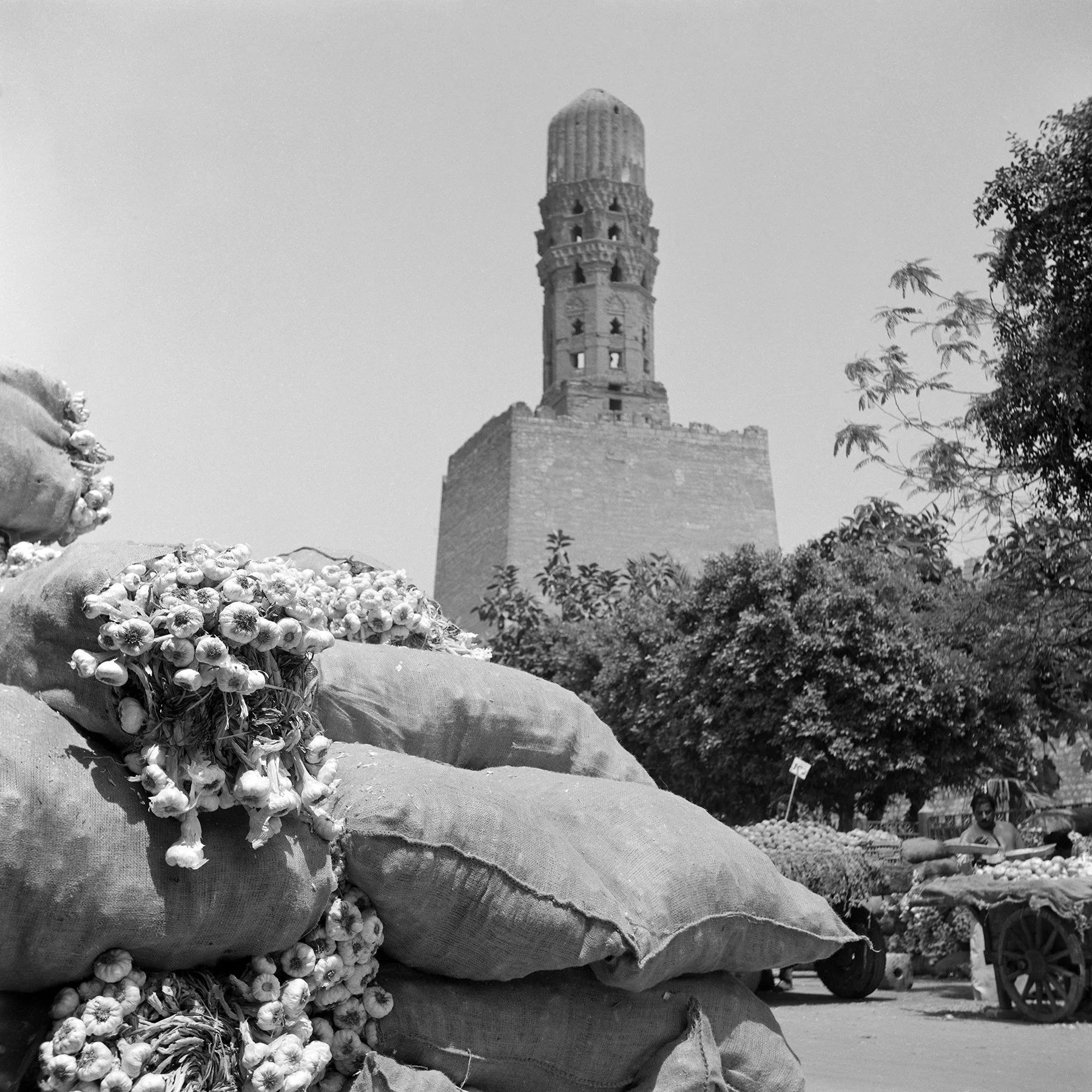
The Garlic Market photographs emerged from a chance encounter during a Friday walk through the historic streets of Old Cairo in 1994. Wandering along Al-Muizz Street, I continued north until reaching Bab al-Nasr, near the imposing walls of the Fatimid city and the nearby Al-Hakim Mosque. There, almost unexpectedly, I stumbled upon a vast open space transformed into an informal wholesale market devoted almost entirely to garlic and onions. The scene was extraordinary: piles of produce stacked high, traders negotiating loudly, porters carrying sacks across the square, and a constant flow of people arriving and departing. The market occupied a surprisingly large area, alive with movement, noise, and the everyday choreography of commerce. I spent hours observing and photographing the interactions that unfolded—moments of exchange, conversation, and labor that revealed the vitality of Cairo’s informal urban life. Today, this market has disappeared, making these images a rare record of a place and a social world that no longer exists.
cai-med-01
cai-med-02
cai-med-03
cai-med-04
cai-med-05
Doorways · Windows · Thresholds
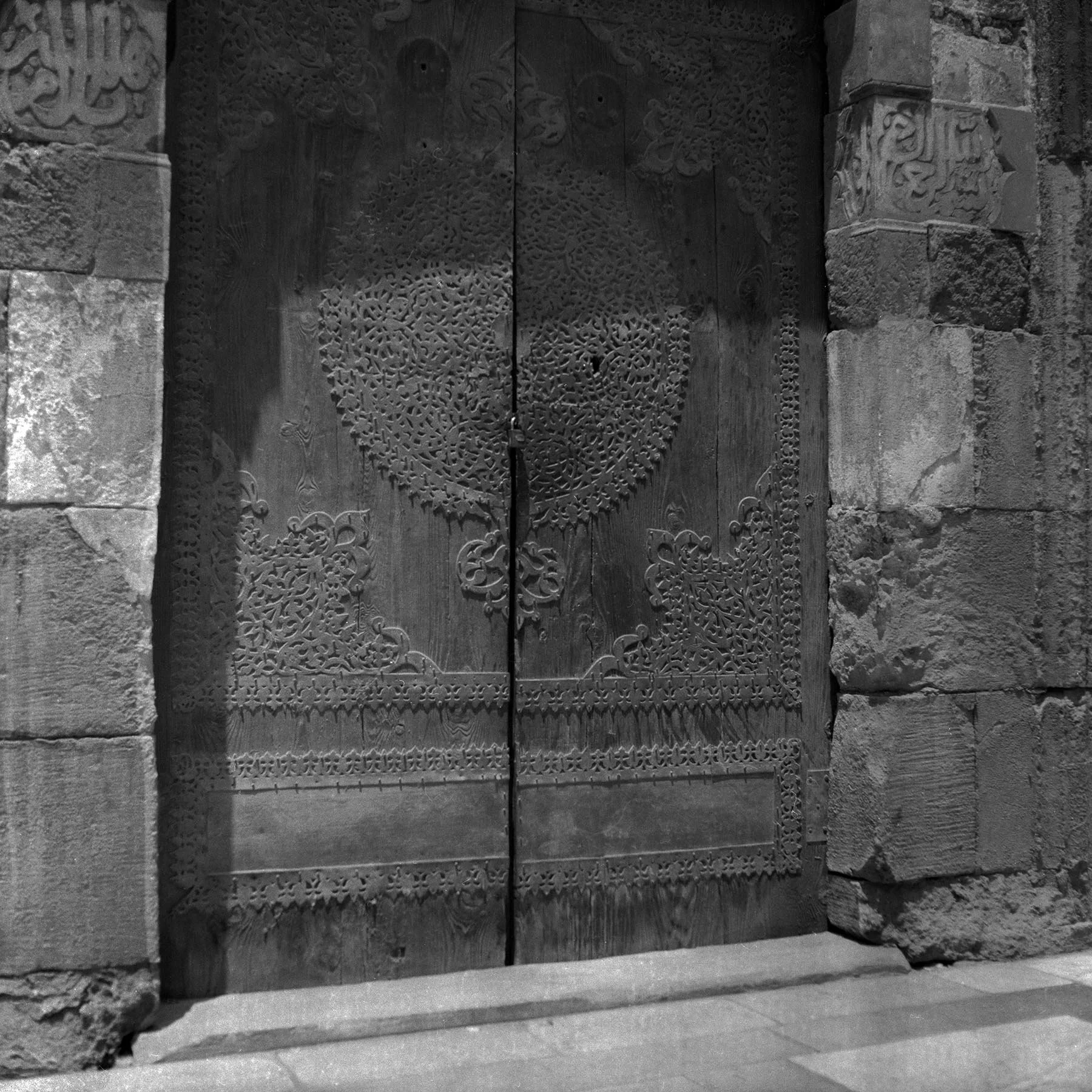
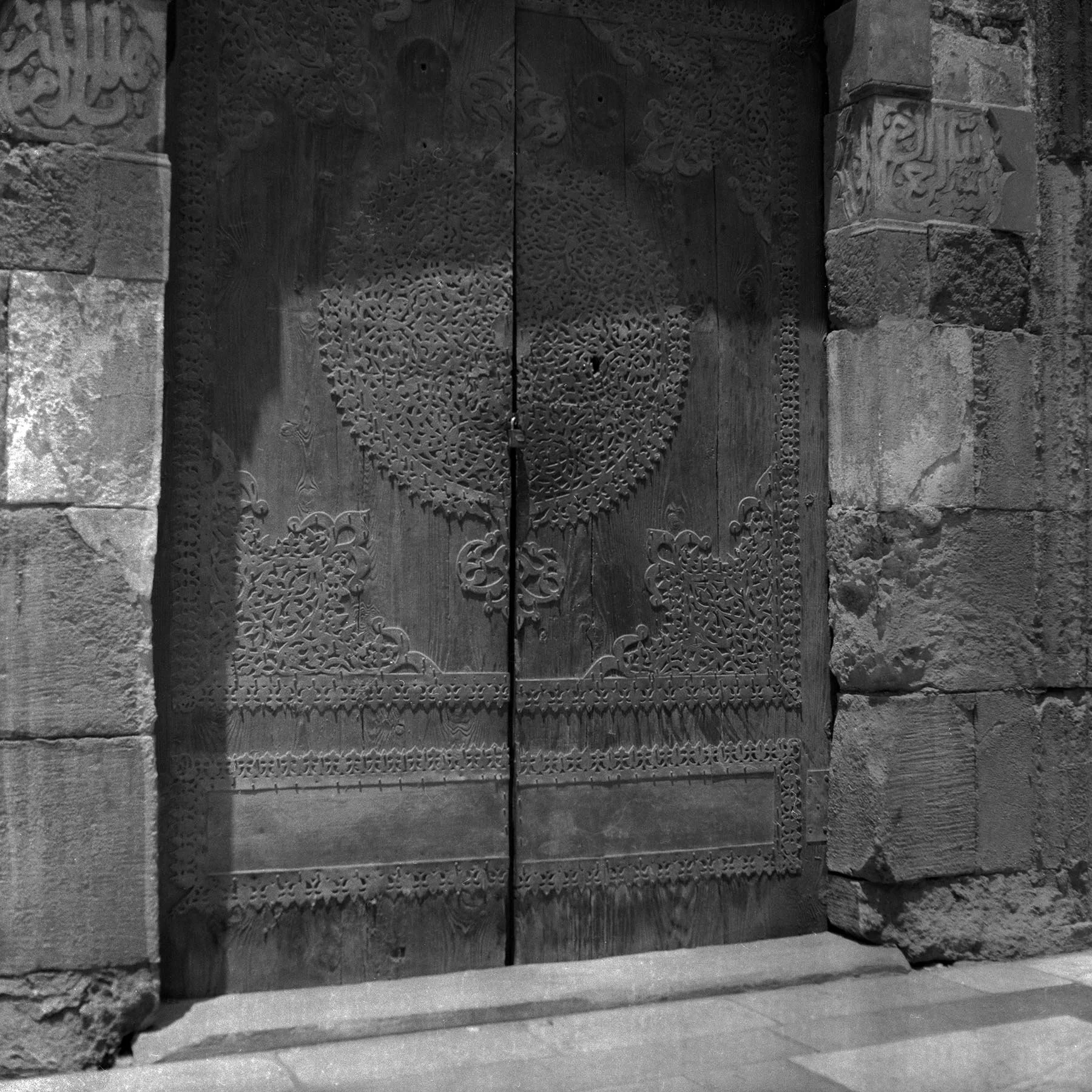
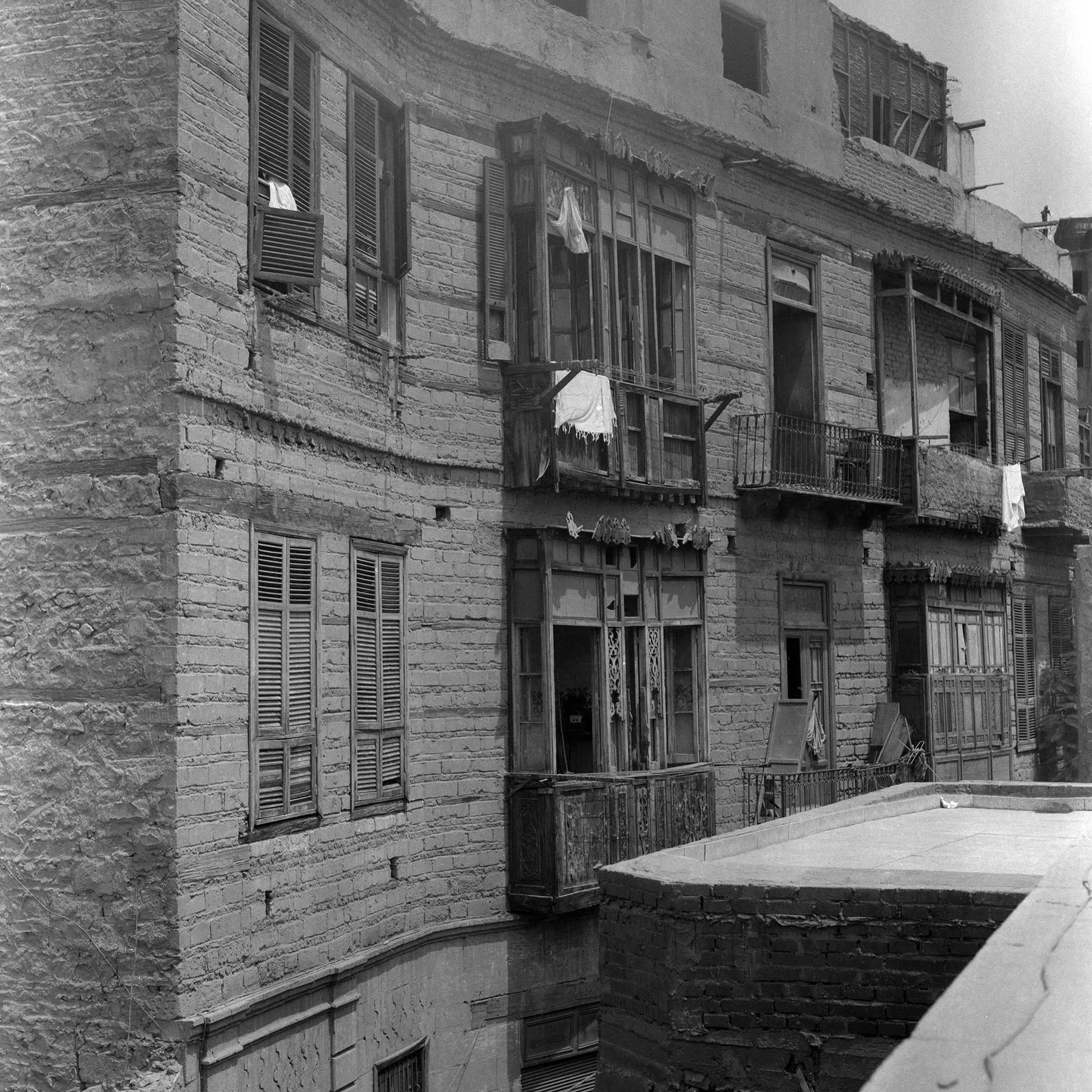
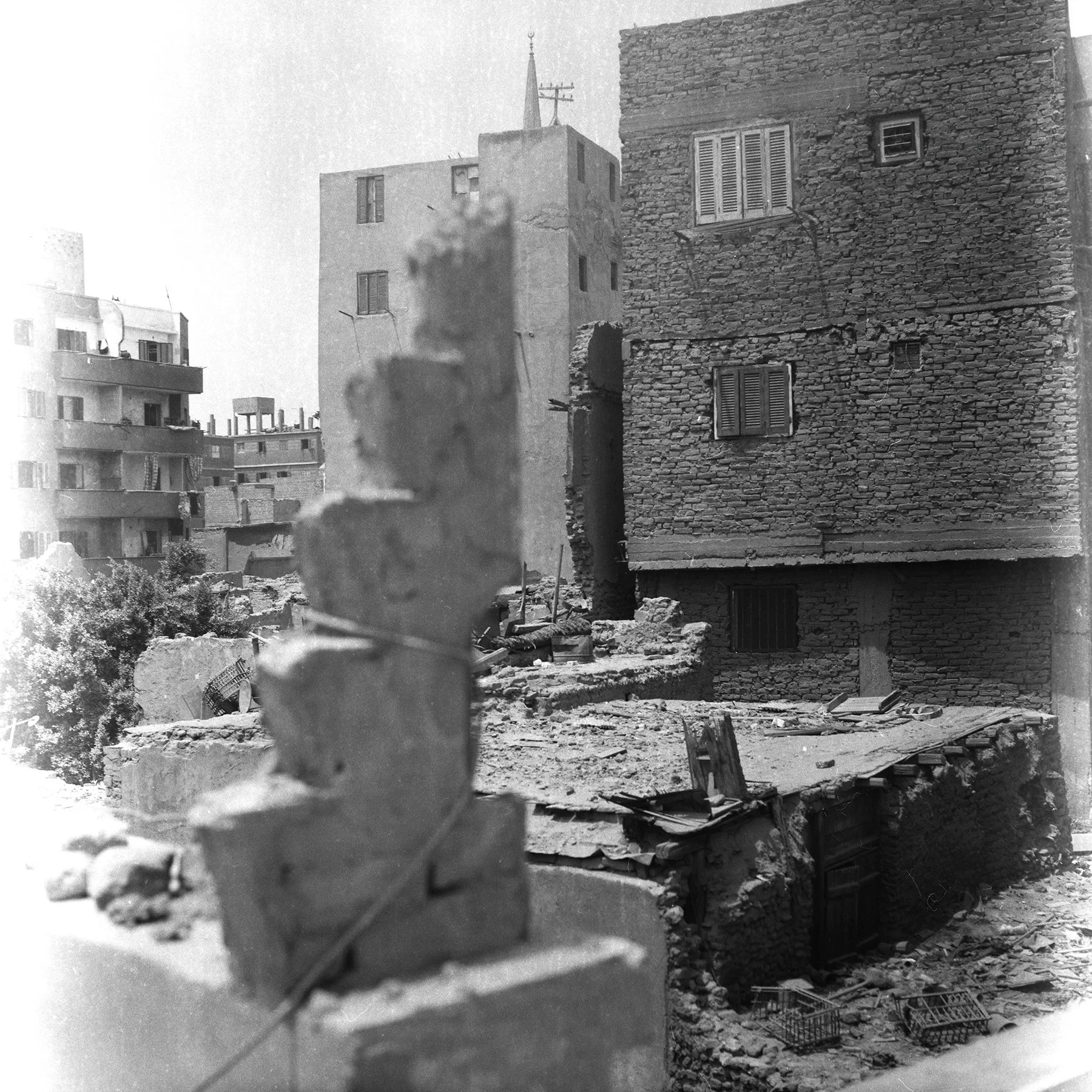
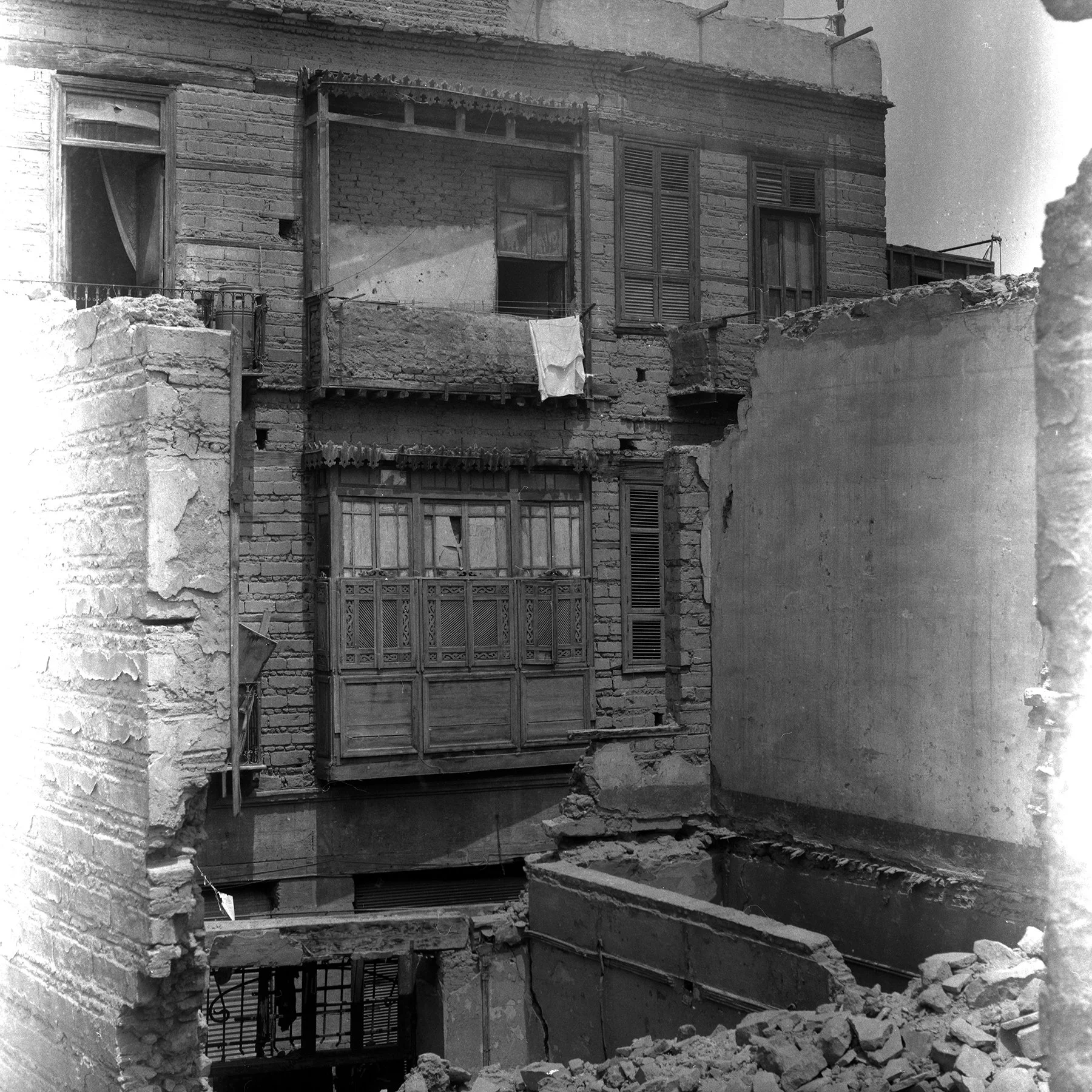
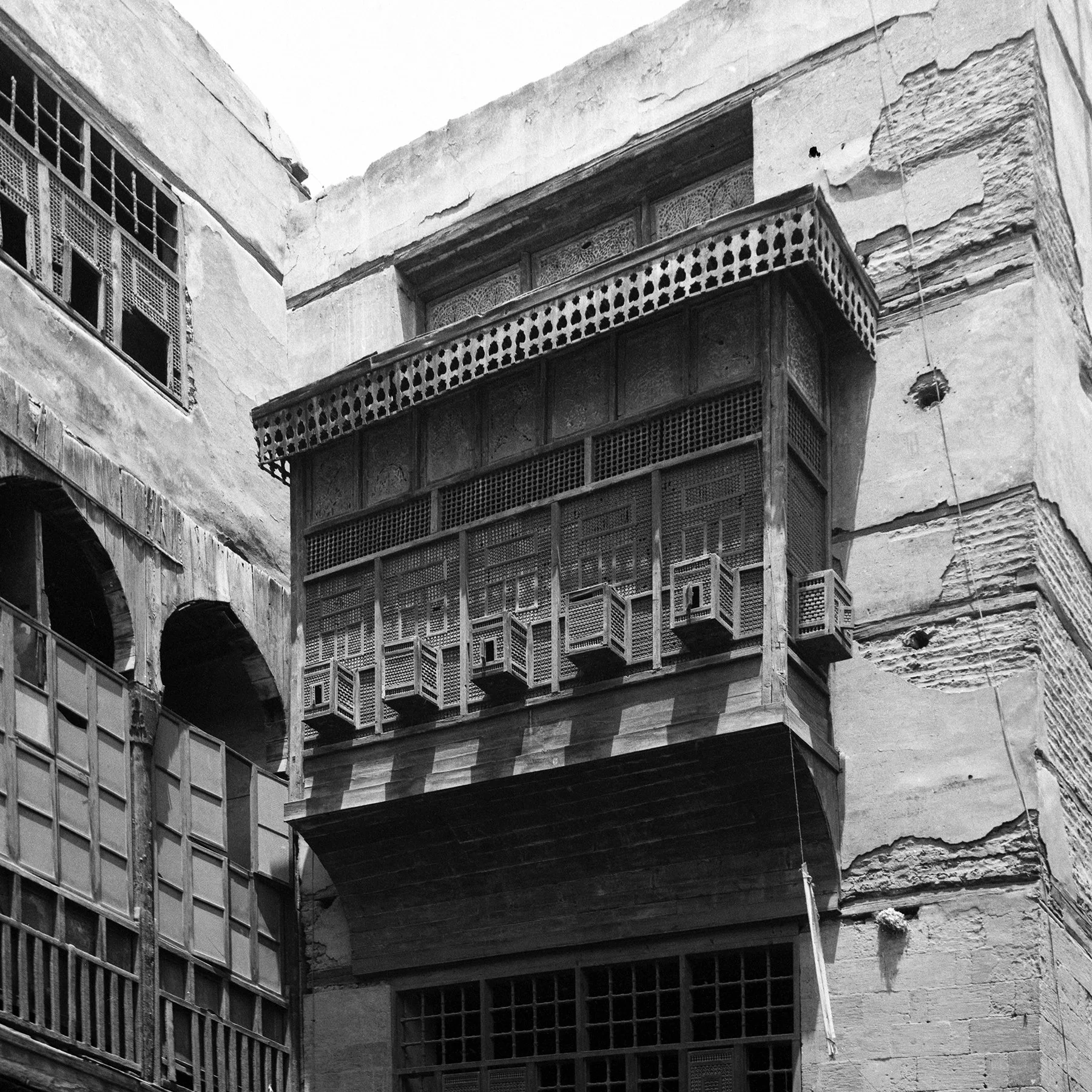
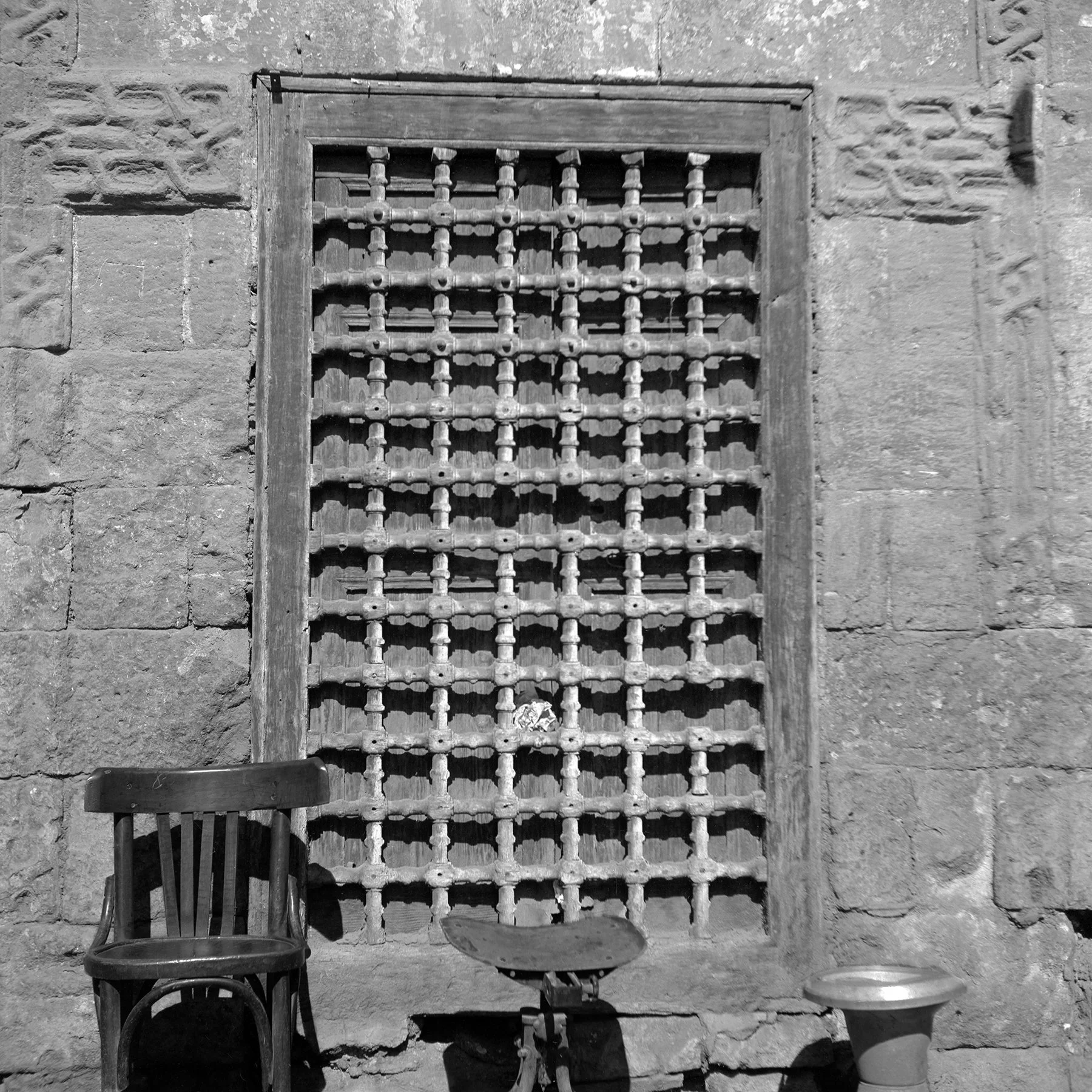
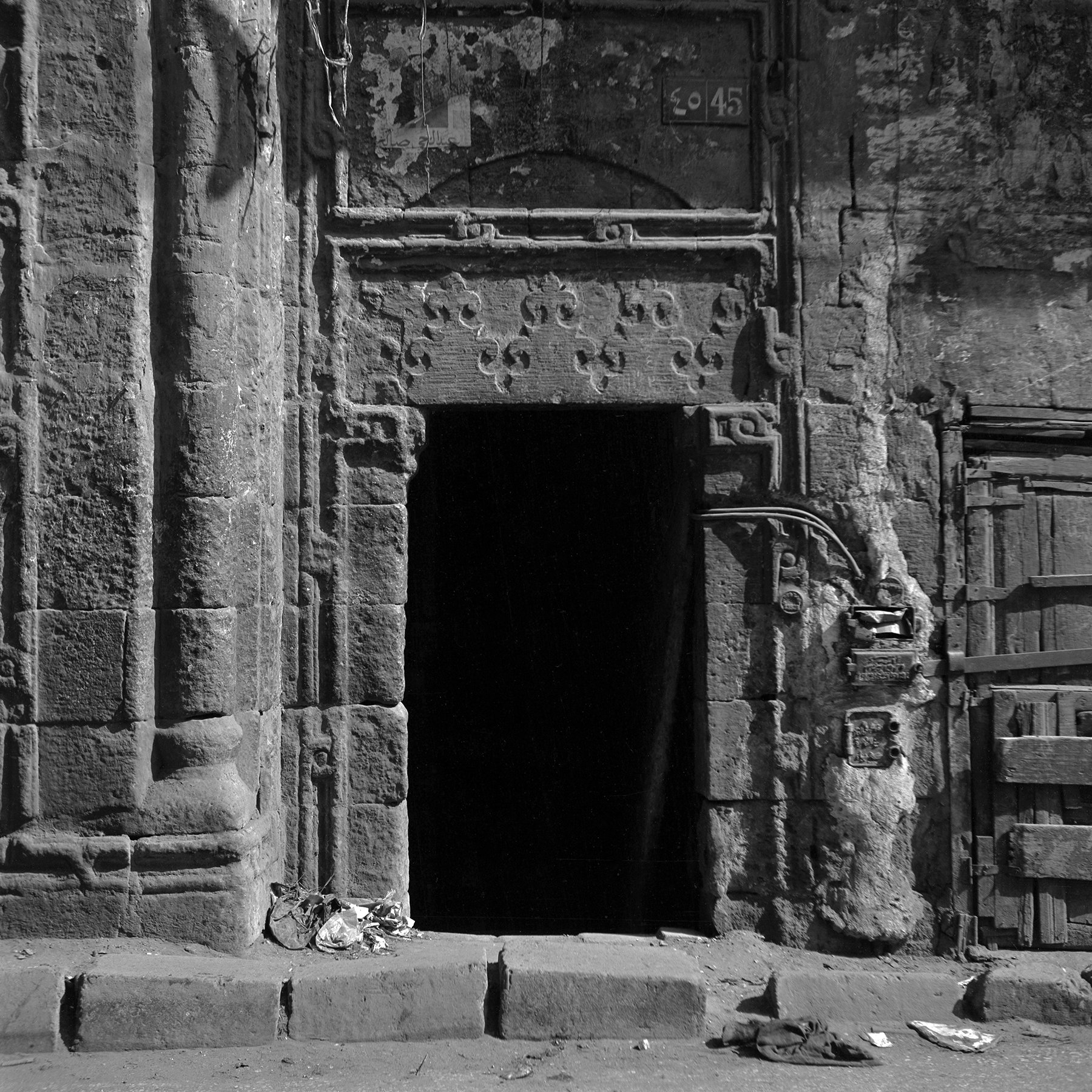
The photographs in the Doors, Windows, and Thresholds series focus on the quiet architectural details that shape the everyday experience of Cairo’s historic neighborhoods. Taken in 1994 during long walks through the city’s older districts, these images linger on entrances, openings, and transitional spaces—wooden doors worn by time, shuttered windows overlooking narrow streets, and thresholds that mark the subtle boundary between public life and private interiors. In Cairo, such elements are more than decorative features; they reveal layers of craftsmanship, patterns of habitation, and the ways residents adapt architecture to climate, privacy, and social interaction. Many of the doors are weathered, patched, or partially obscured by signs of daily life, while windows frame glimpses of balconies, curtains, or shadows within. These details, often overlooked in broader views of the city, offer a more intimate understanding of its urban fabric. Together, the images form a study of architectural fragments—small yet expressive elements that speak to the material culture of Cairo and to a built environment that has since undergone significant transformation.
cai-med-06
cai-med-07
cai-med-08
cai-med-09
cai-med-10
cai-med-11
cai-med-12
Portraits · People
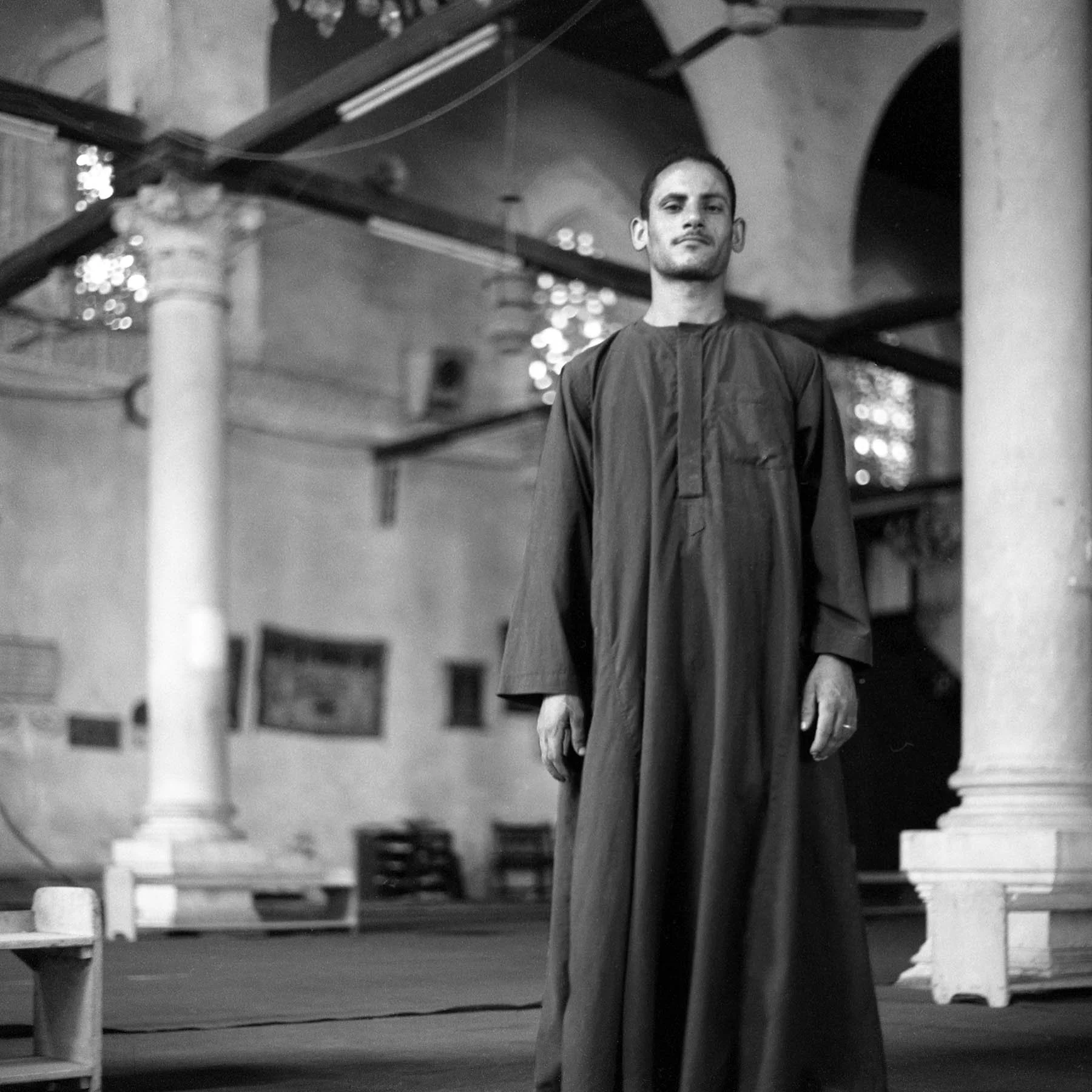
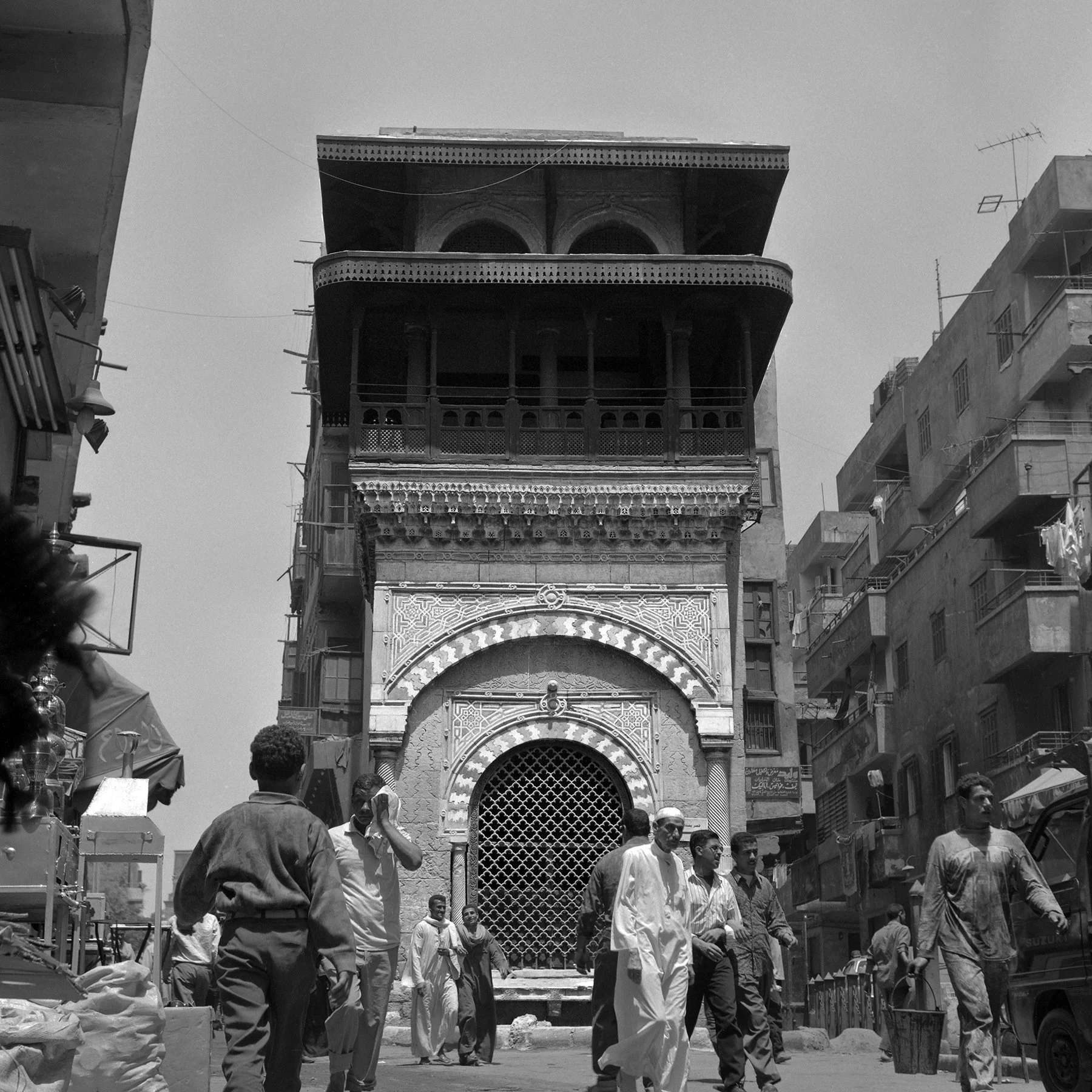
The Portraits and People series turns the lens toward the individuals who animate Cairo’s streets, mosques, and passageways. Taken in 1994 during extended walks through the city, these photographs capture brief encounters and passing moments that reveal the human presence embedded within Cairo’s architectural landscape. Some images are quietly staged through spontaneous interaction: a mosque porter standing proudly in the vast interior of a prayer hall, or a woman emerging from the monumental entrance of the Mohamed Ali Mosque, momentarily framed by its imposing architecture. Others record fleeting scenes observed in motion—a pair of friends pausing to look out over the city from a high vantage point, pedestrians moving hurriedly along Al-Muizz Street, or a solitary villager walking pensively through the passage between the Sultan Hassan and Al-Rifa‘i mosques. Together these portraits and street scenes offer glimpses of everyday life within Cairo’s historic spaces, revealing how people inhabit, traverse, and give meaning to the city’s built environment. Seen today, they also serve as a quiet reminder that the character of a city resides not only in its architecture, but in the individuals whose lives unfold within it.
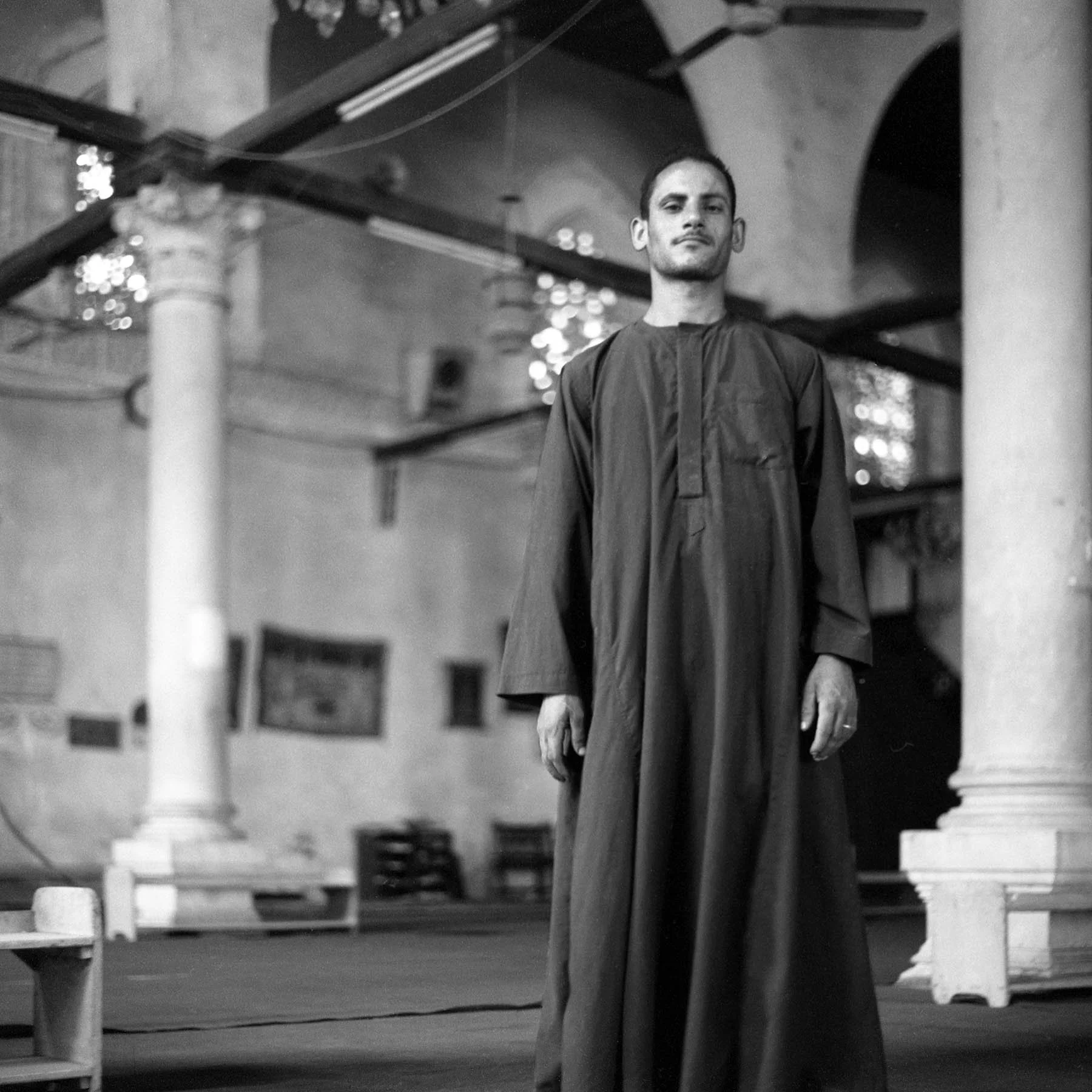
cai-med-13
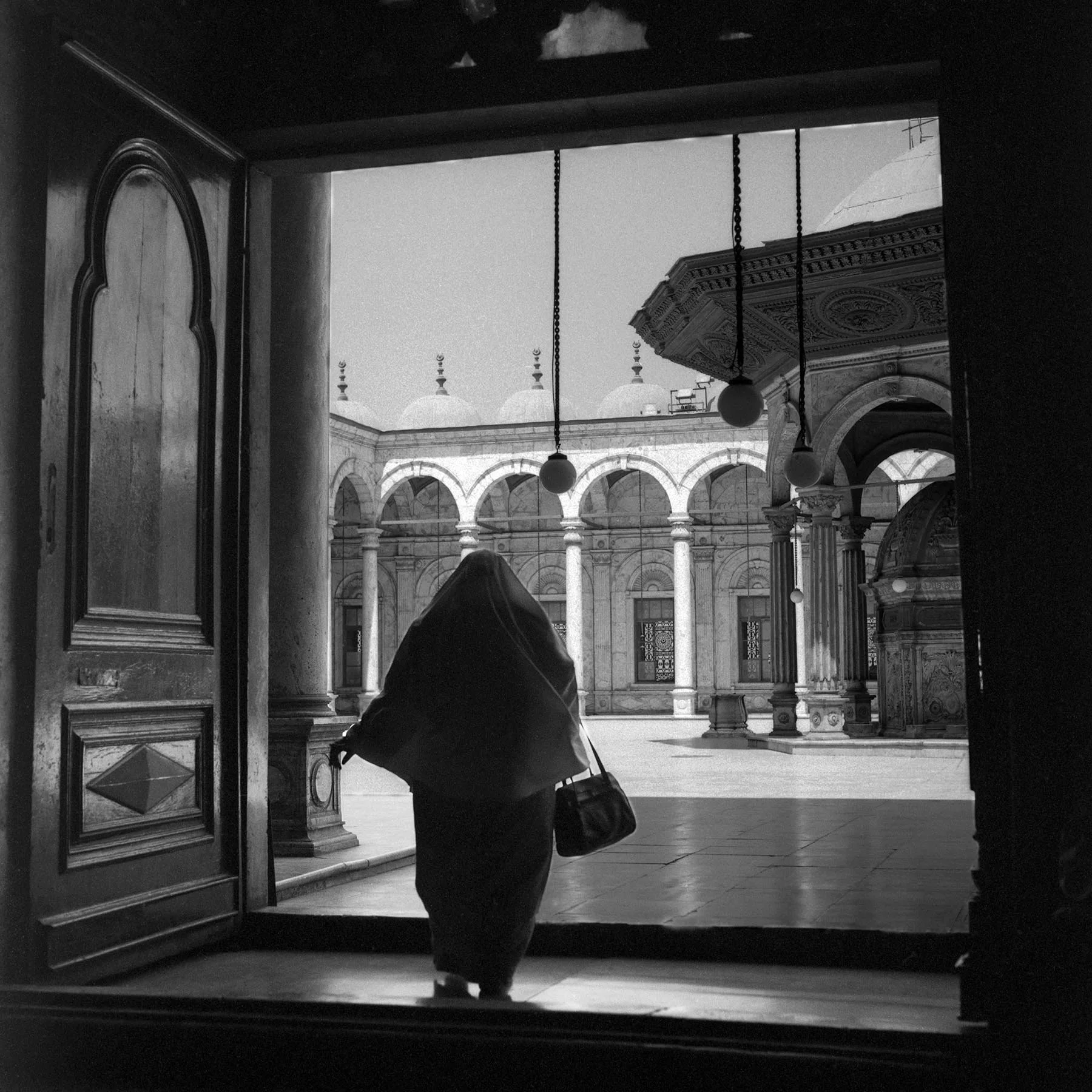
cai-med-14
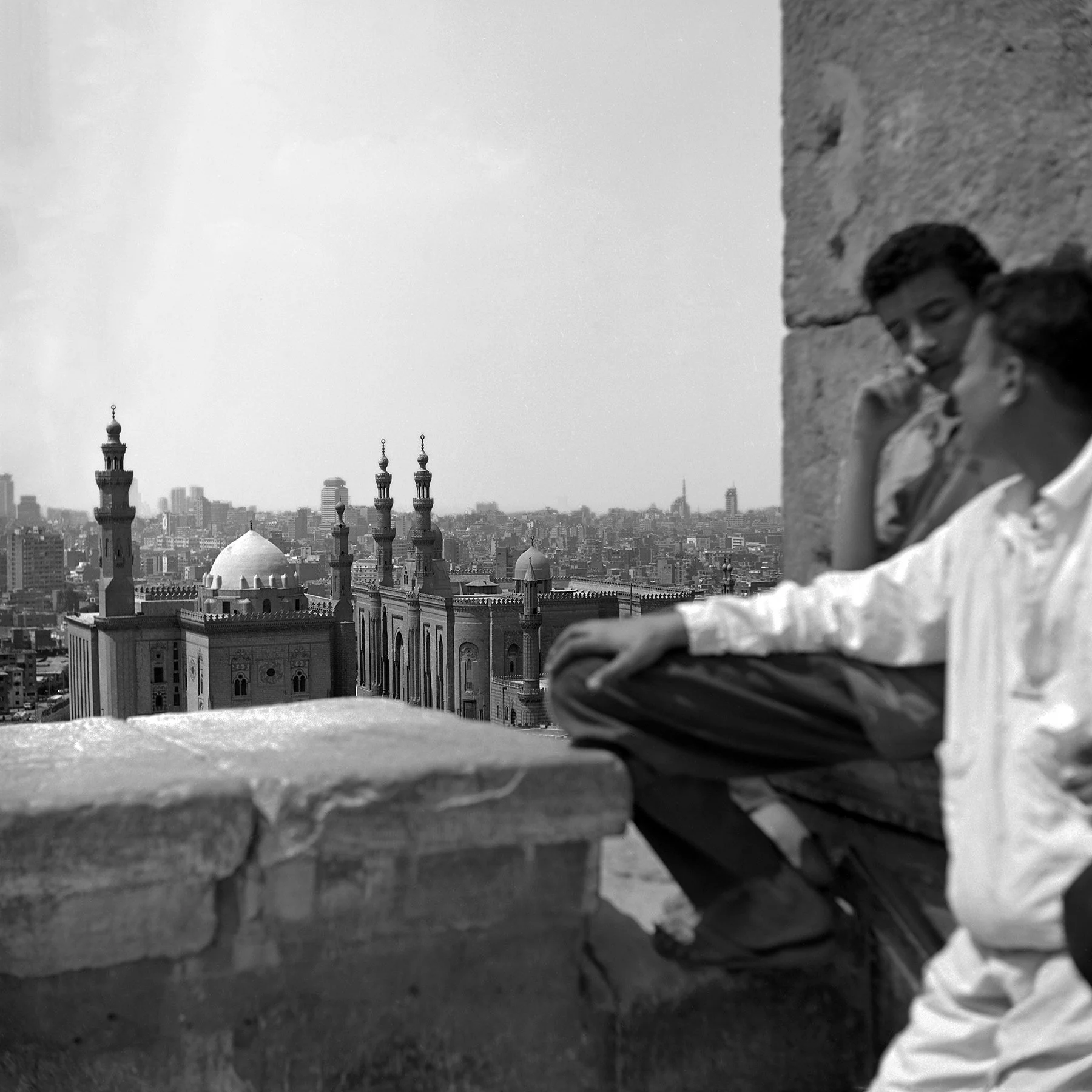
cai-med-15
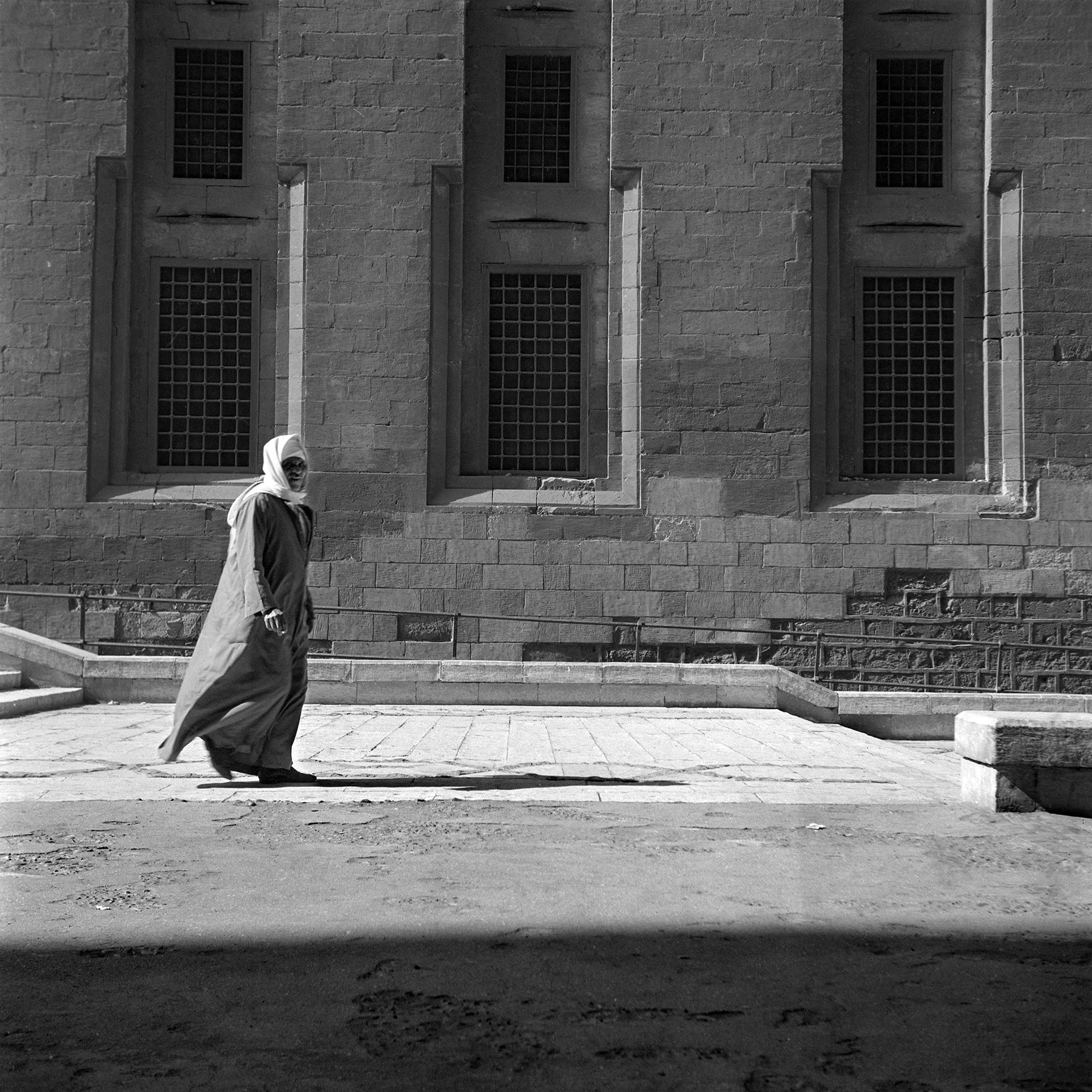
cai-med-16
cai-med-17
Mosques · Minarets
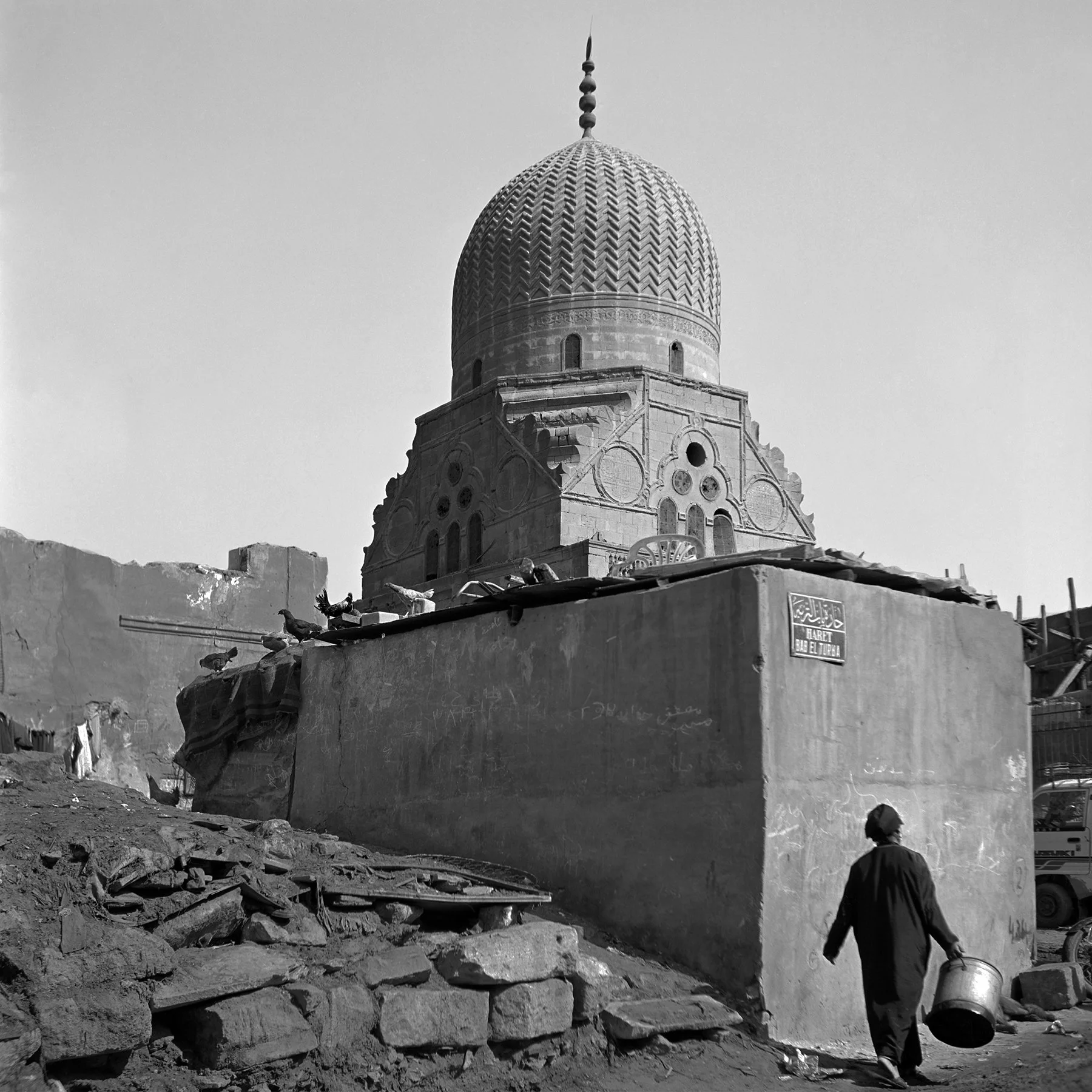
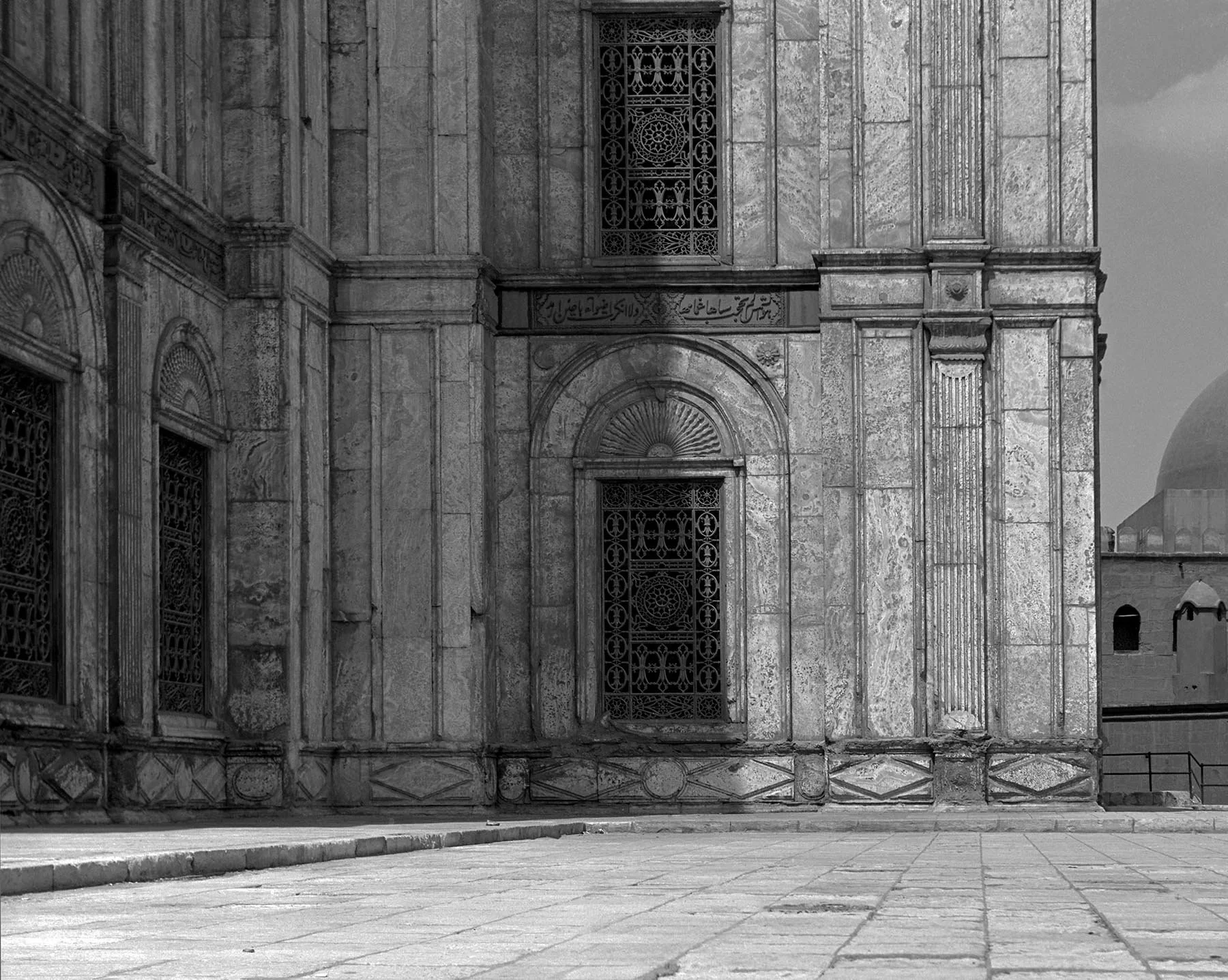
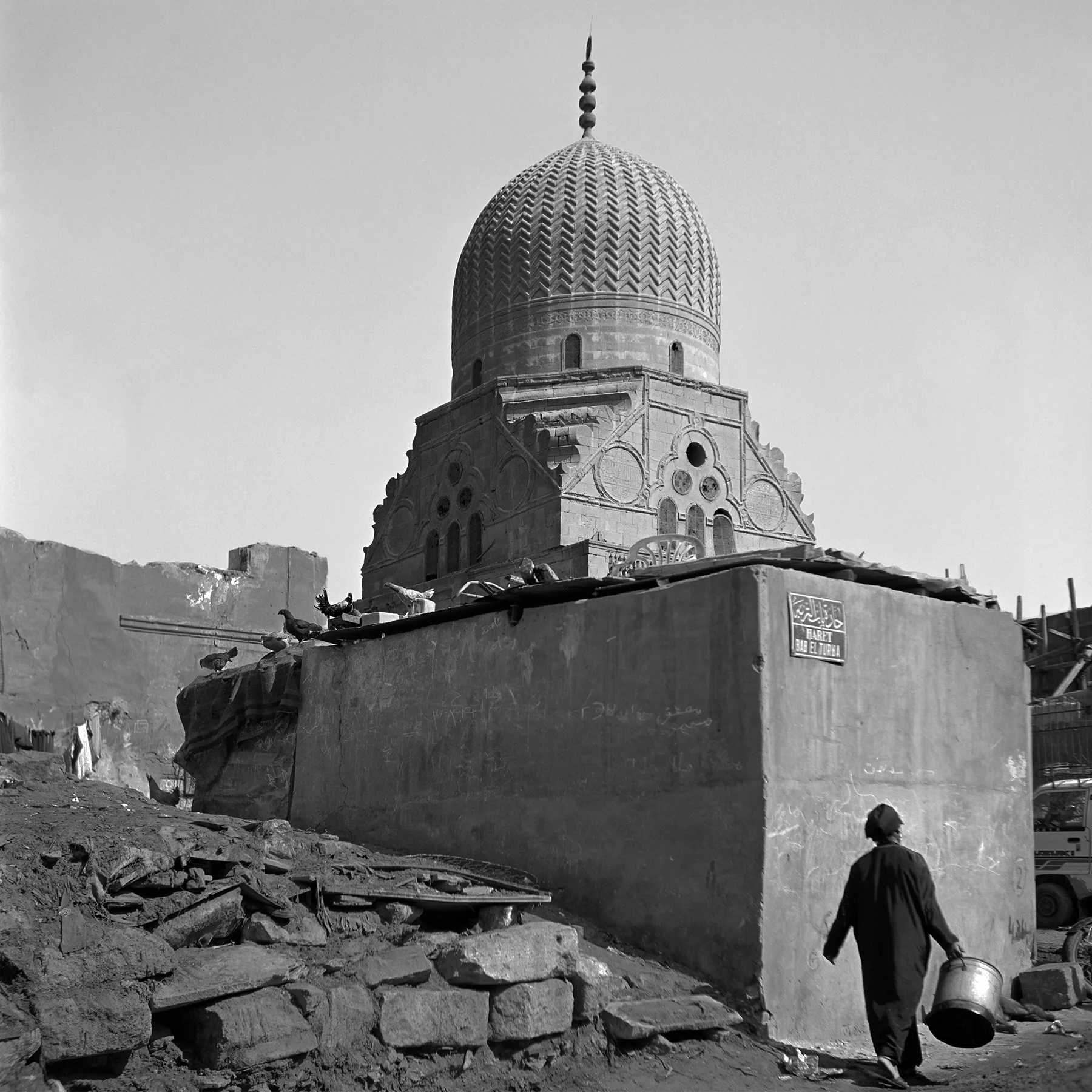
The Mosques and Minarets series explores the architectural presence of Cairo’s religious monuments as they appear within the everyday fabric of the city. Photographed in 1994 during walks through historic districts, these images focus not only on monumental structures but also on the fragments and perspectives through which these buildings reveal themselves in the urban landscape. Some photographs dwell on the exquisite craftsmanship of the Mohamed Ali Mosque, where intricate marble detailing reflects a refined imperial aesthetic. Others capture more poetic contrasts: a dome rising majestically from a weathered and crumbling base, suggesting the layered passage of time that defines Cairo’s historic architecture. The series also includes the breathtaking vertical elegance of the Al-Ghuri mosque minaret, paired with the graceful dome of the Farag ibn Barquq Mosque, where Mamluk architecture reaches a remarkable synthesis of form and ornament. In quieter moments, the camera turns to the serene expanses of the Ibn Tulun Mosque, whose vast courtyard and austere geometry evoke a sense of stillness rare in the dense city surrounding it. Together these images reveal how Cairo’s mosques and minarets function not only as landmarks of faith and history, but also as enduring anchors within a constantly changing urban landscape.
cai-med-18
cai-med-19
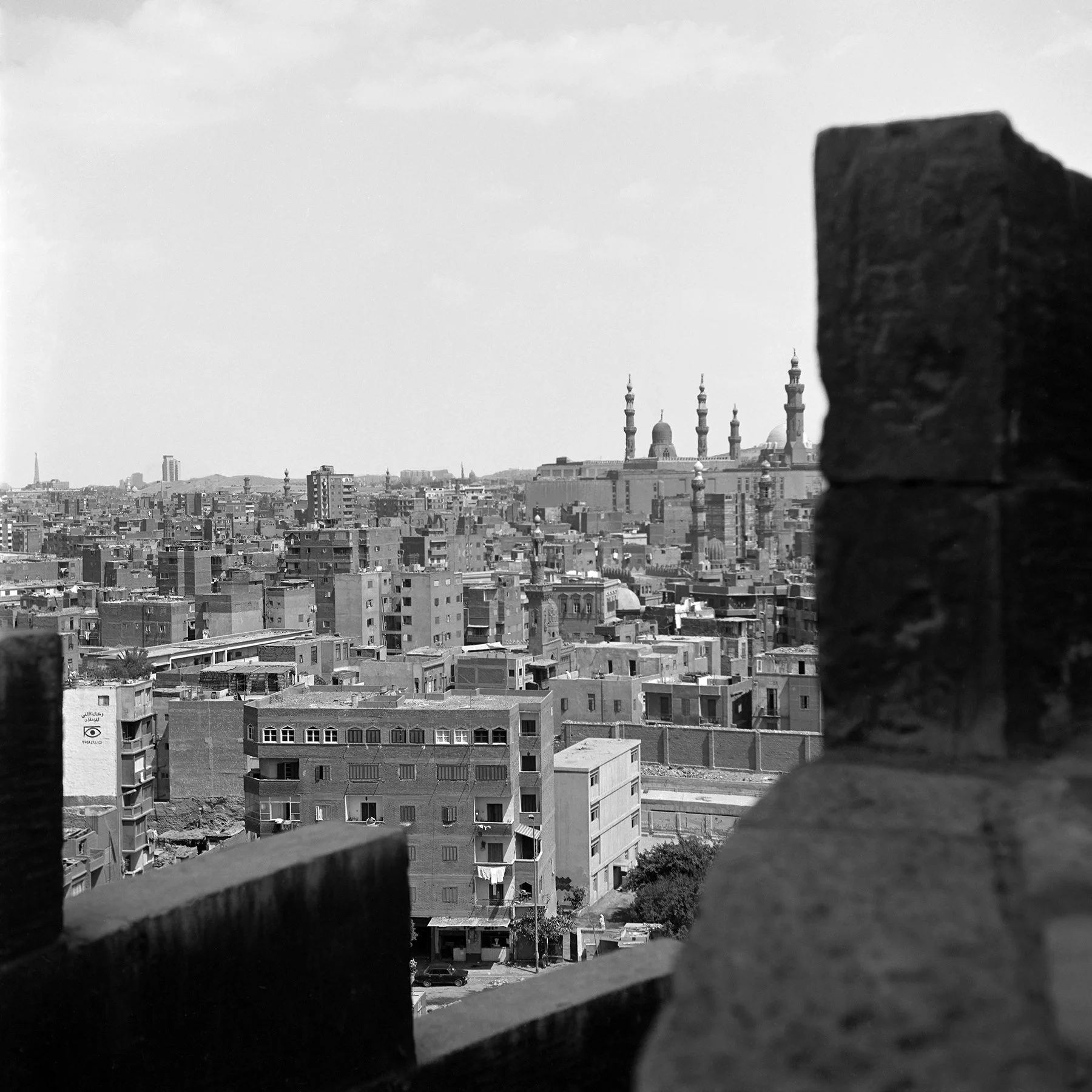
cai-med-20
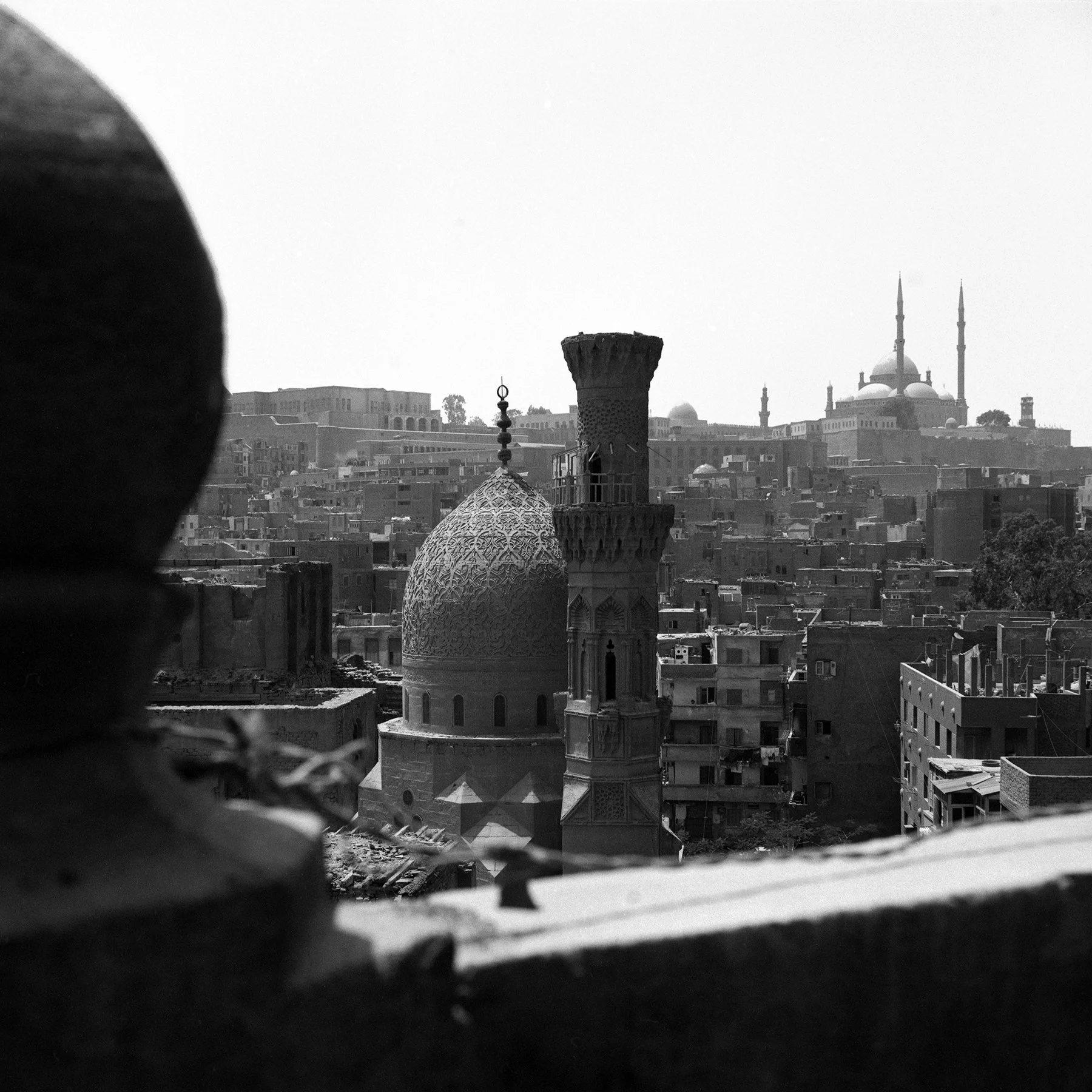
cai-med-21
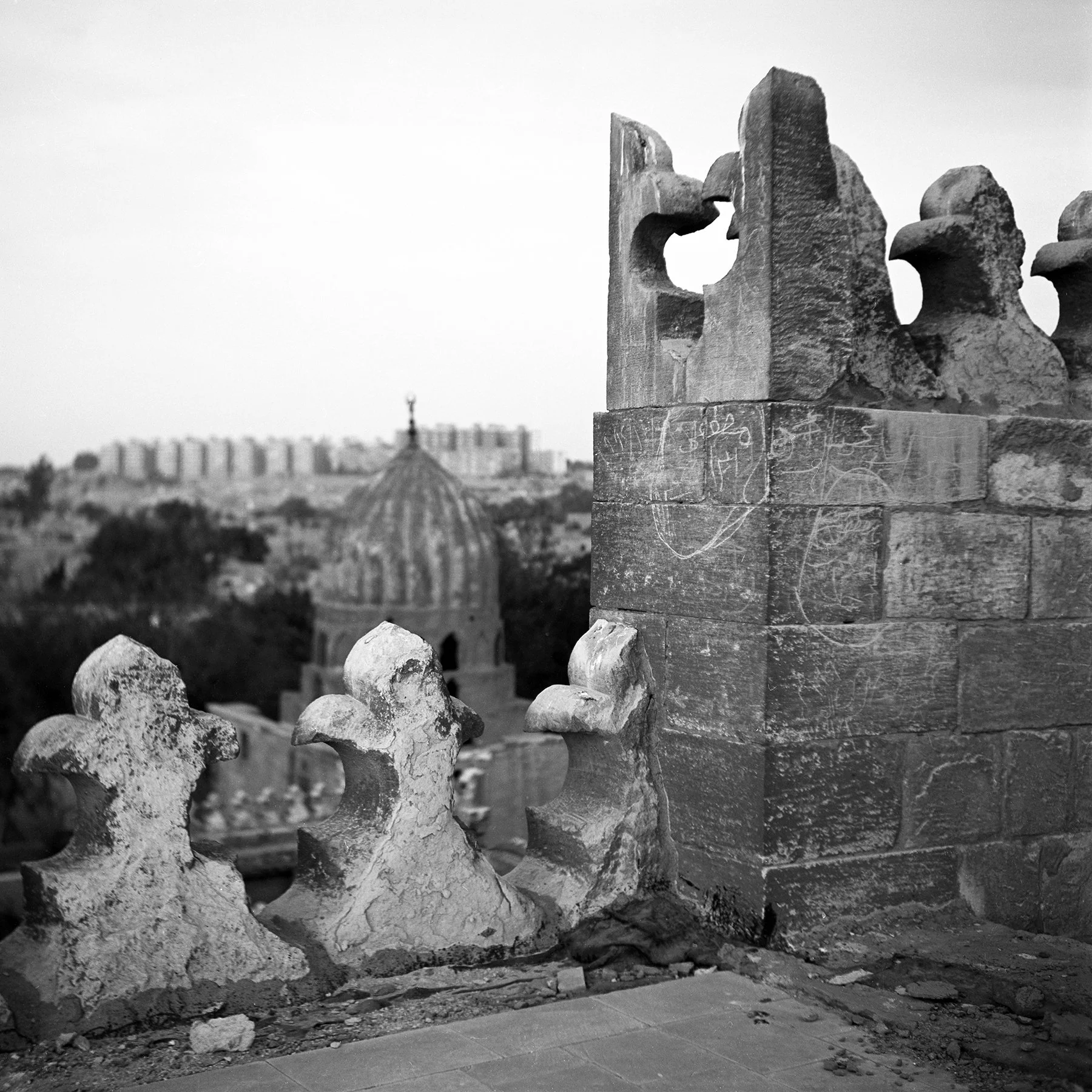
cai-med-22
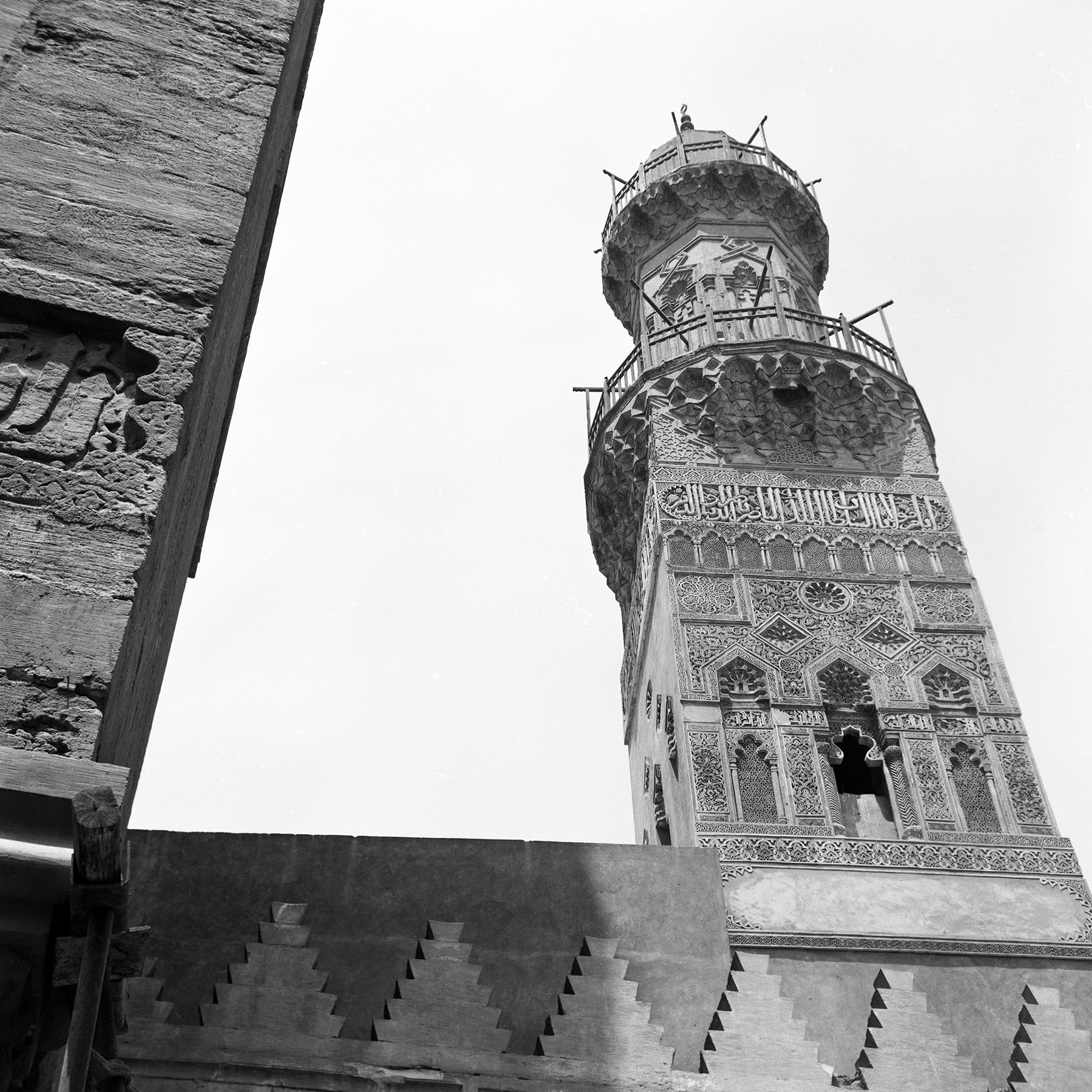
cai-med-23
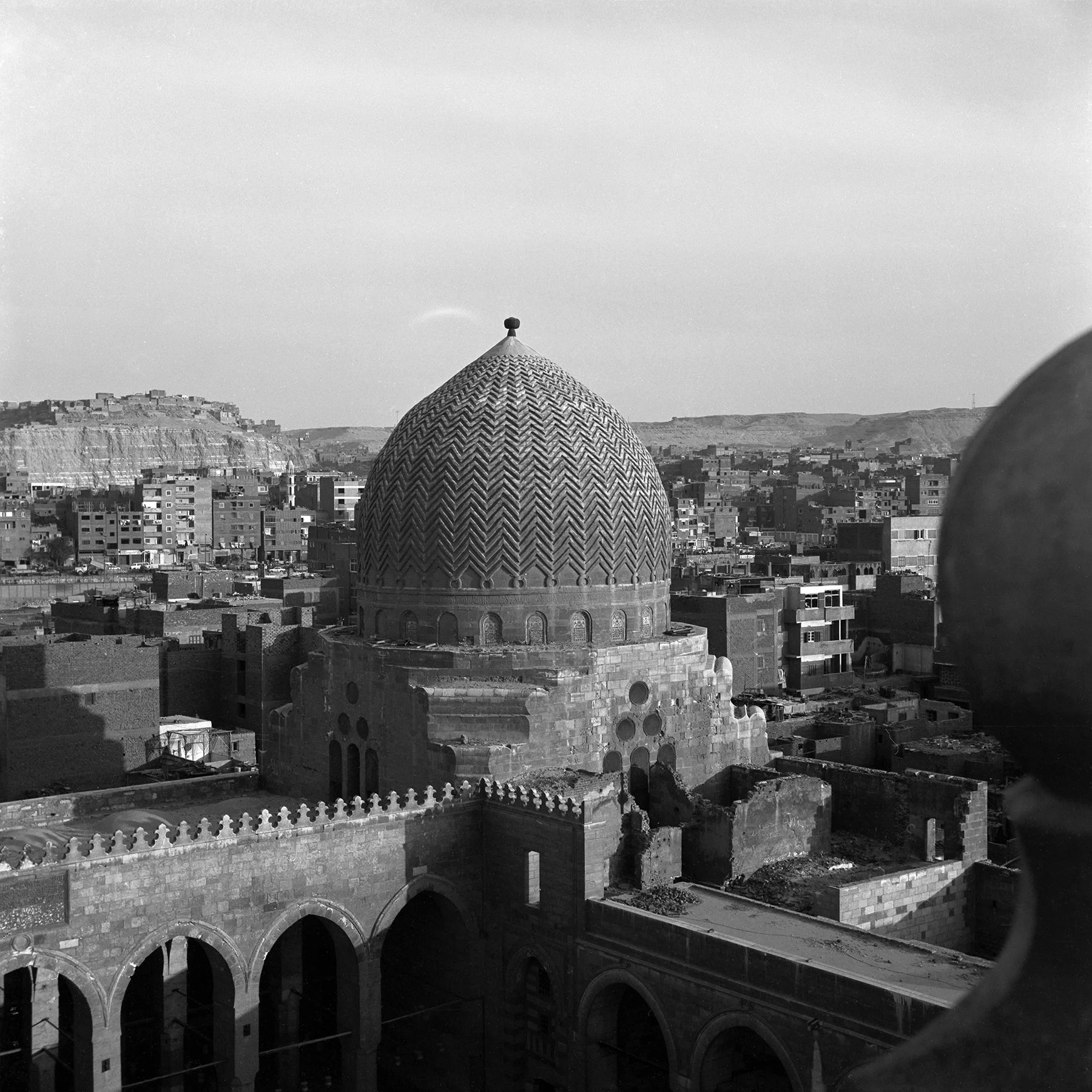
cai-med-24
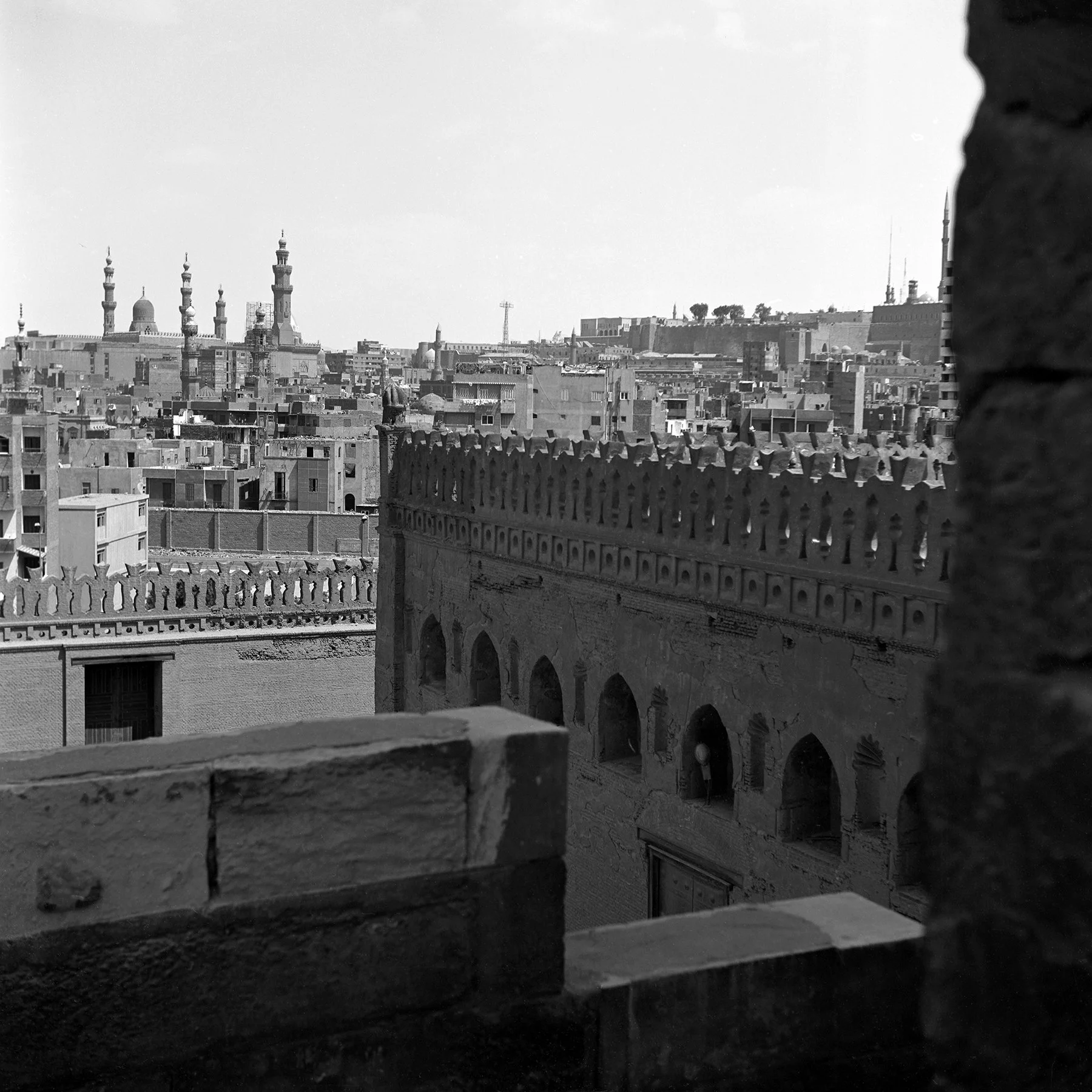
cai-med-25
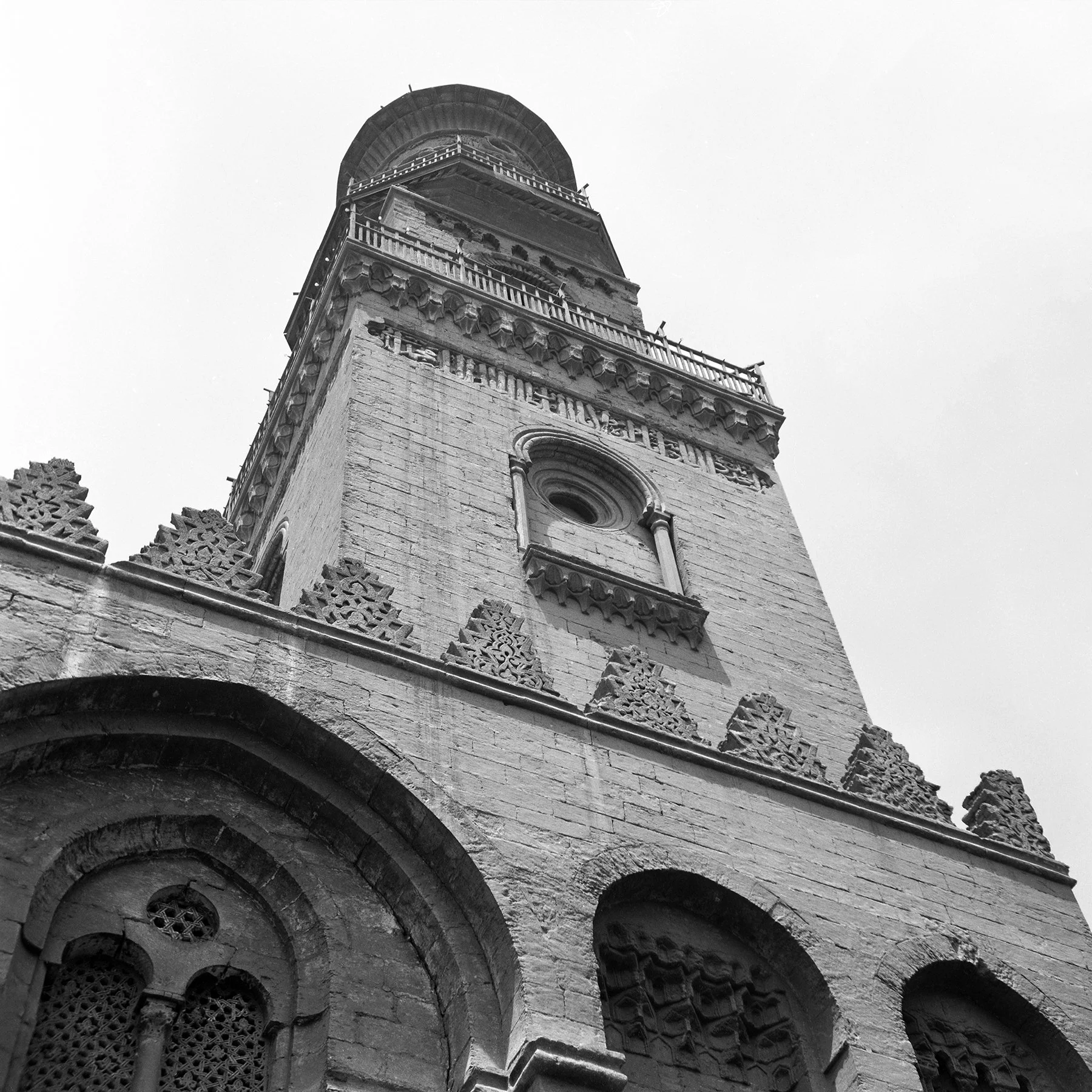
cai-med-26
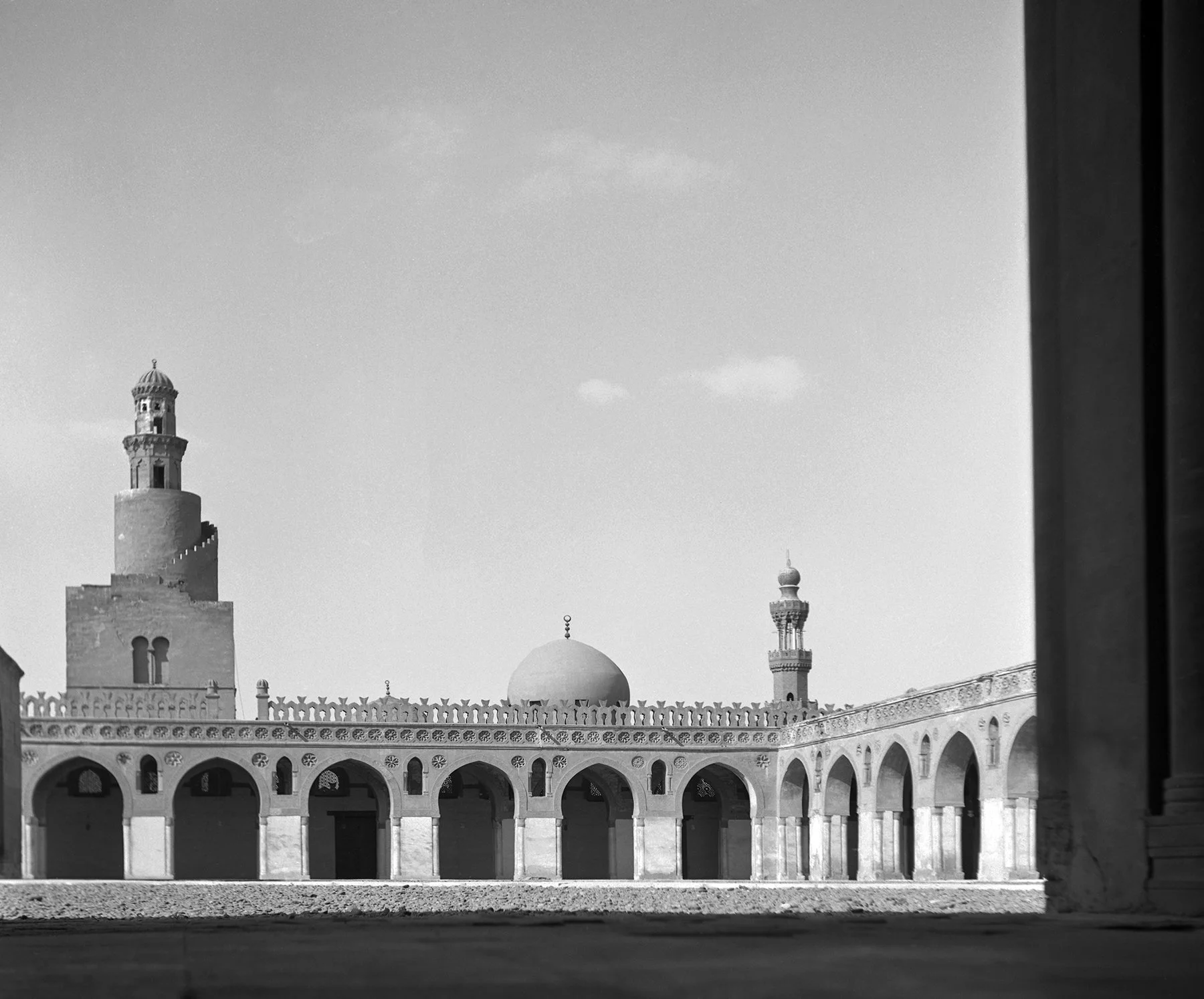
cai-med-27
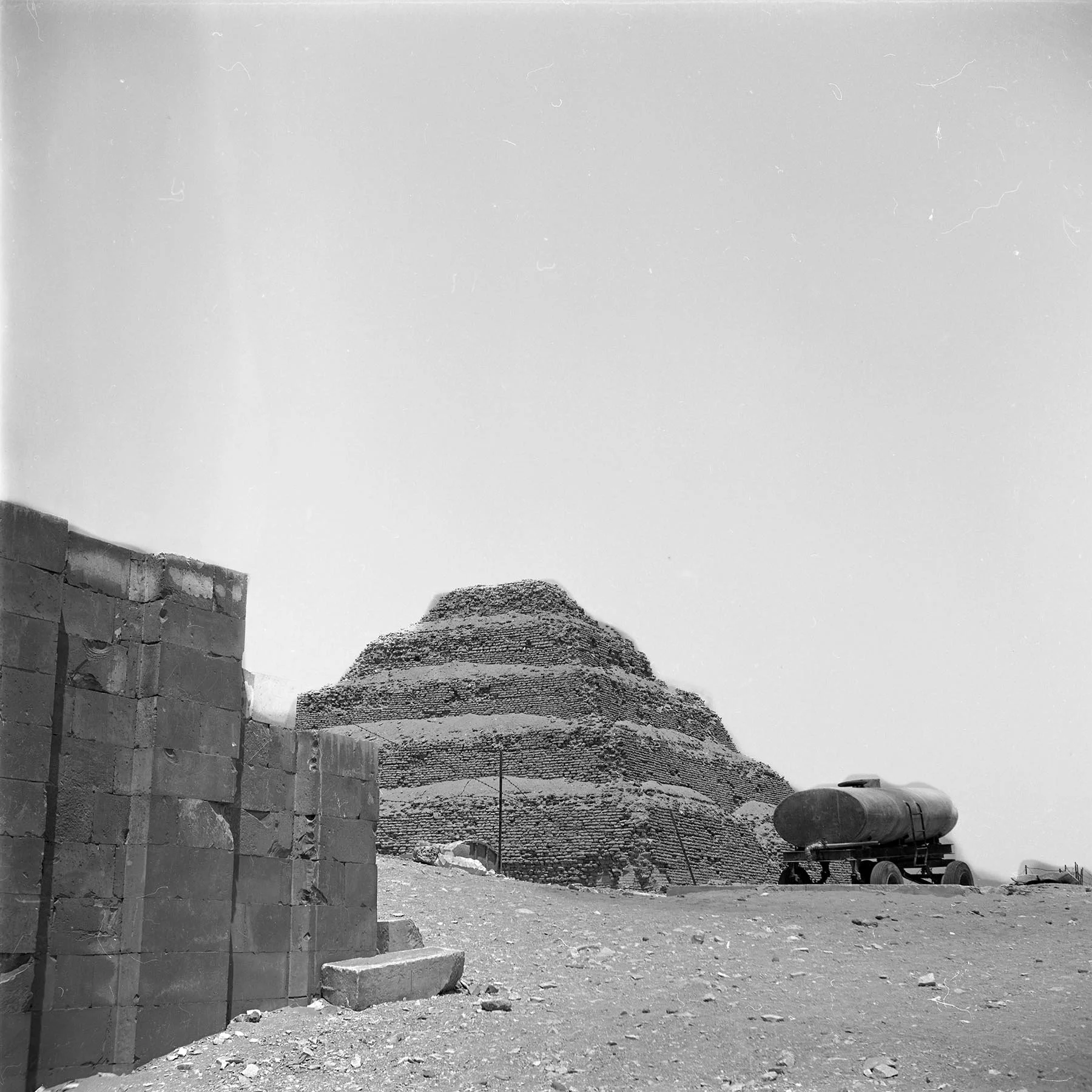
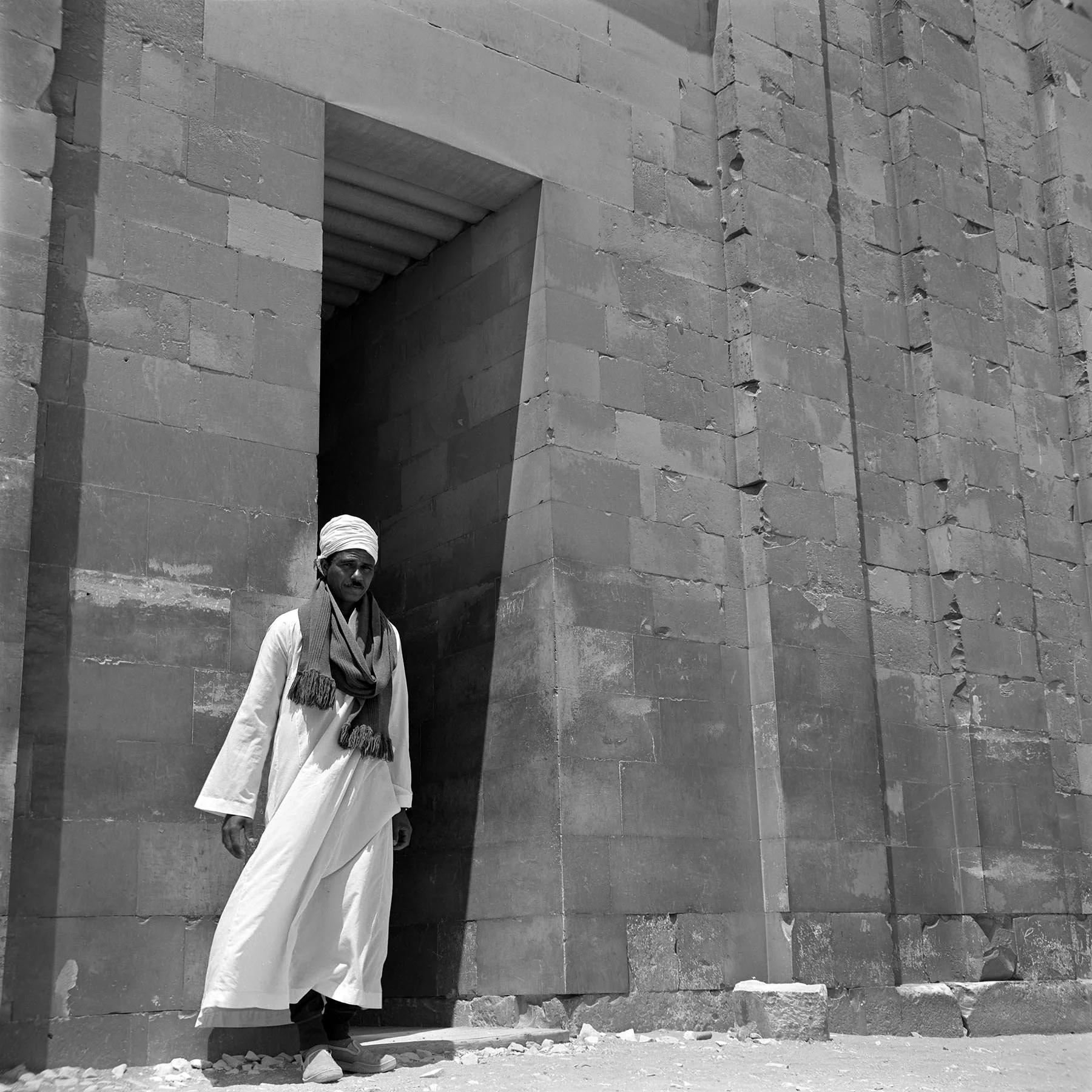
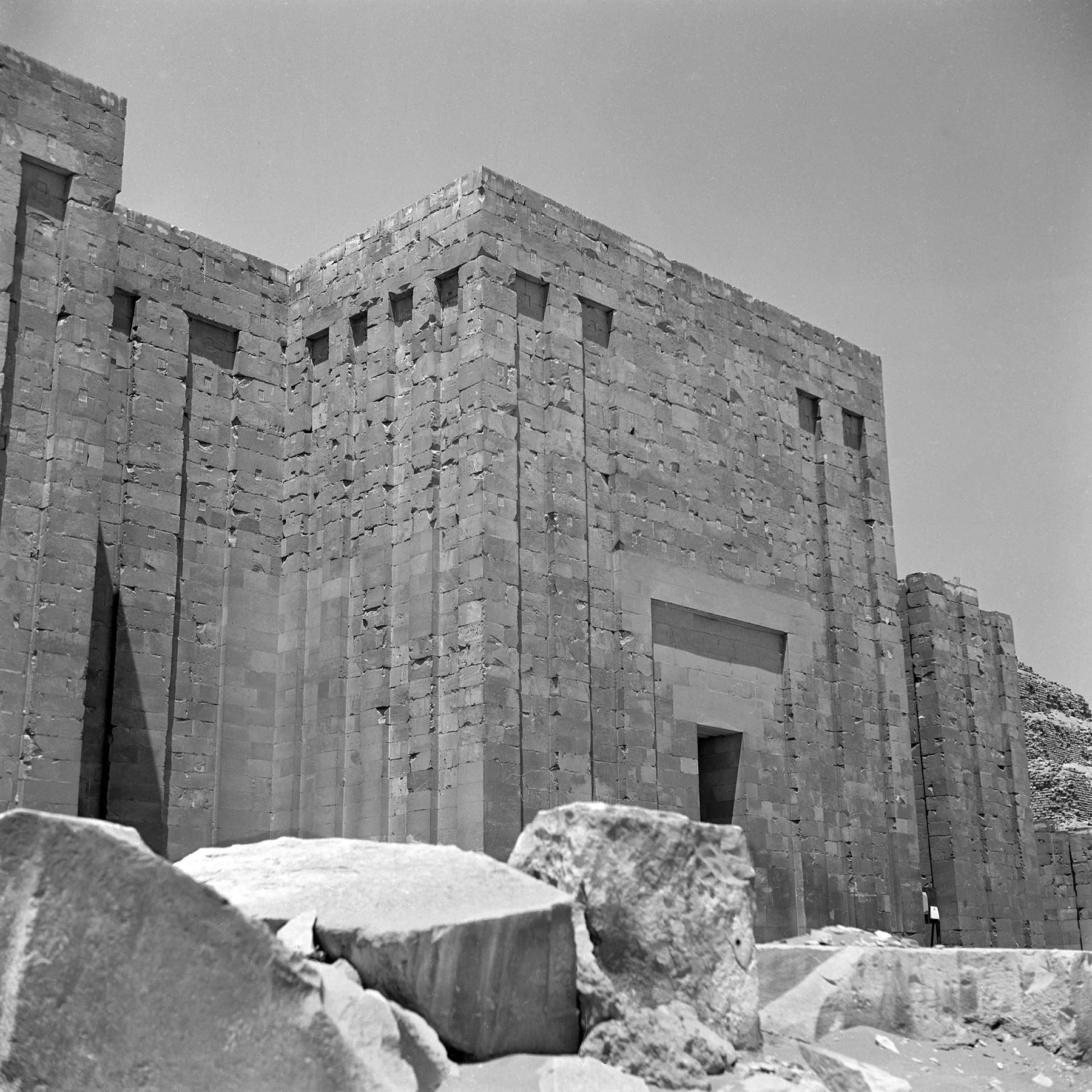
Step Pyramid Complex of Djoser
The Step Pyramid Complex of Djoser at Saqqara is one of the oldest and most remarkable monuments in Egypt, marking the earliest large-scale use of stone in monumental architecture. Built during the Third Dynasty, the pyramid rises in a series of stacked terraces—a striking and innovative design whose stepped form still invites speculation, perhaps reflecting an evolution from earlier mastaba tombs or symbolizing a stairway to the heavens. Though modest in scale compared to the pyramids of Giza, the complex possesses an extraordinary architectural clarity and is widely seen as a precursor to the spatial compositions later perfected in temples throughout Upper Egypt. Located outside Cairo and far from the crowds that gather at Giza, the site offers a quieter encounter with Egypt’s architectural origins, where the simplicity of form and the vast desert setting combine to create a monument of enduring elegance and historical significance.
Vanishing Cairo
Medium-Format Photographs from an Urban Archive, 1994
Some images in this collection are available as museum-quality reproductions produced from the original negatives, which have been scanned at the highest possible resolution to preserve the full tonal depth and detail of the analog photographs. Each print is created using professional Epson photographic printers on Hahnemühle Digital FineArt paper, renowned for its exquisite texture and long-term archival quality. The result is a refined fine-art print that combines the authenticity of film photography with the precision of contemporary archival printing, offering collectors, institutions, and scholars a distinctive visual record of Cairo’s architectural and urban heritage. A select set of images are also available as gelatin silver print reproductions, developed by myself in a darkroom. All images are also available as digital files. See the link to the right to access the store for more details