The Passage Between Memory and Rubble
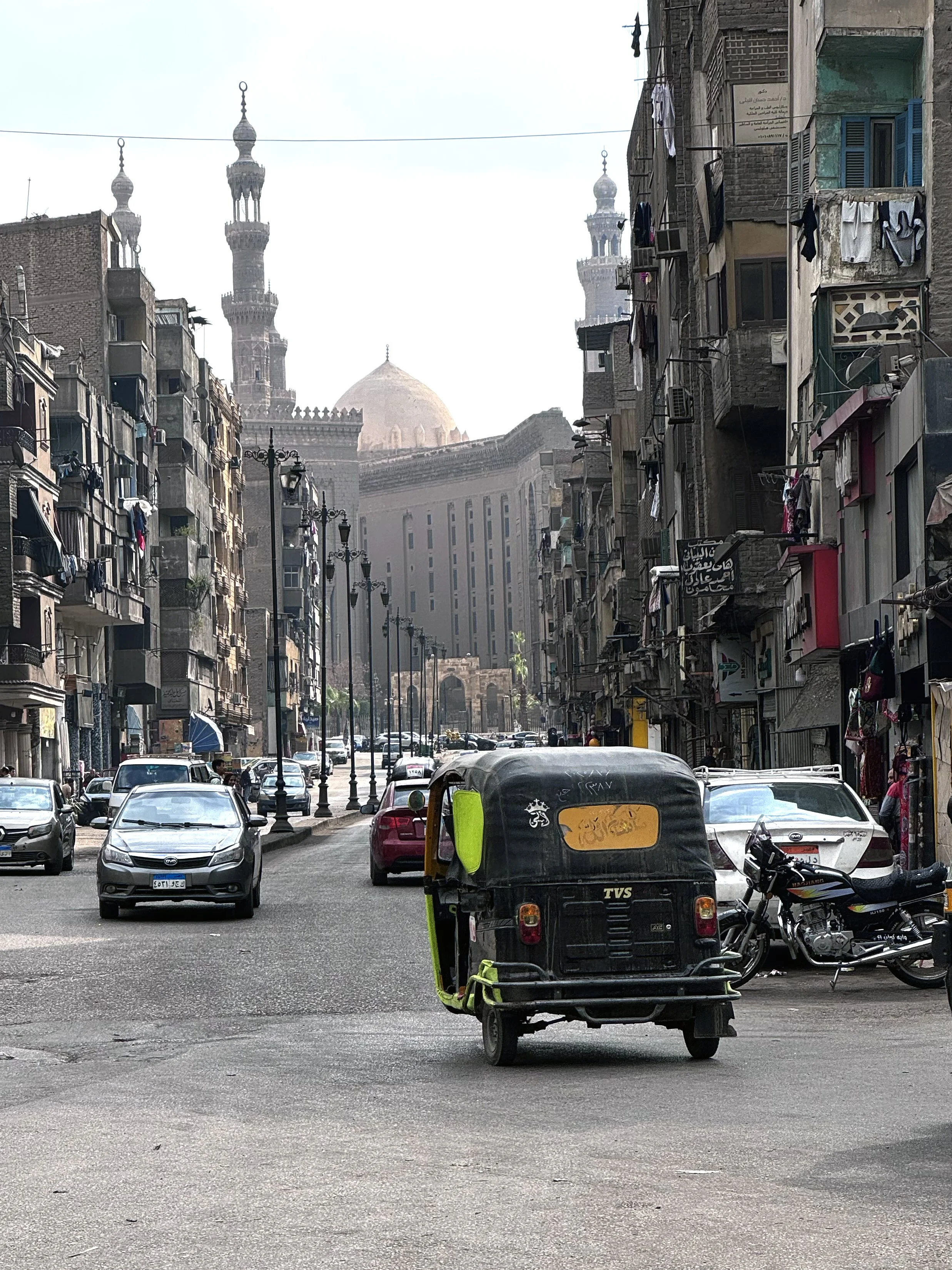
The Sultan Hassan/Rifa’i Passage as seen from Mohamed Ali Street
On January 2nd, 2026,I returned to the Qala’a district — to the terrain of my youth — as part of my research for My Cairo. It was not simply a field visit. It was a reckoning.
I ordered an Uber instead of arriving the way I once would have: by bus, on foot, drifting through streets without a plan. The car cut through public housing blocks, slid under a bridge, and merged onto the Autostrade. At the Sayyida Aisha bridge, the driver gestured upward and said, almost casually, “They will demolish this too.”
Demolition has become a reality that permeates Cairo like dust.
We arrived at the maydan near the monumental complex of the Madrasa of Sultan Hassan and the Rifa'i Mosque. The stones still radiate a gravity that resists time. Yet what always struck me was not architecture but security: barricades, a ticketing office, an official who stopped me gently, asking whether I was Egyptian. Because, foreigners must pay. His tone was cordial. Bureaucracy, it seems, now mediates entry into memory.
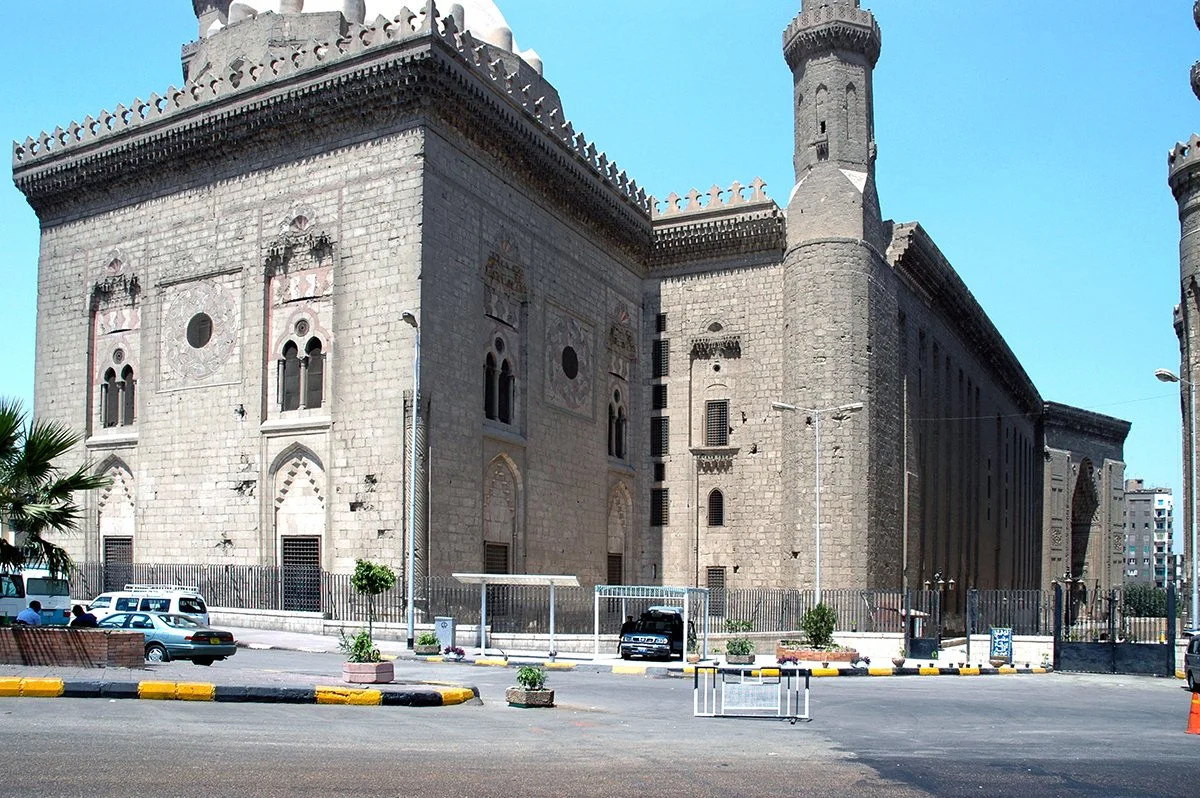
Entrance to the Passage protected by Security forces and barriers
I left the monumental passageway between the two mosques and made my way to its extension, Mohamed Ali Street, toward Hag Sa’id — a fried liver restaurant that once anchored my wanderings. Friday prayer was underway; the metal shutters were down. The street was still unapologetically shaʿabi — coffee shops with plastic chairs spilling into the asphalt, vegetable vendors arranging tomatoes in pyramids, waiters hovering among customers, young men thrusting restaurant flyers into passersby.
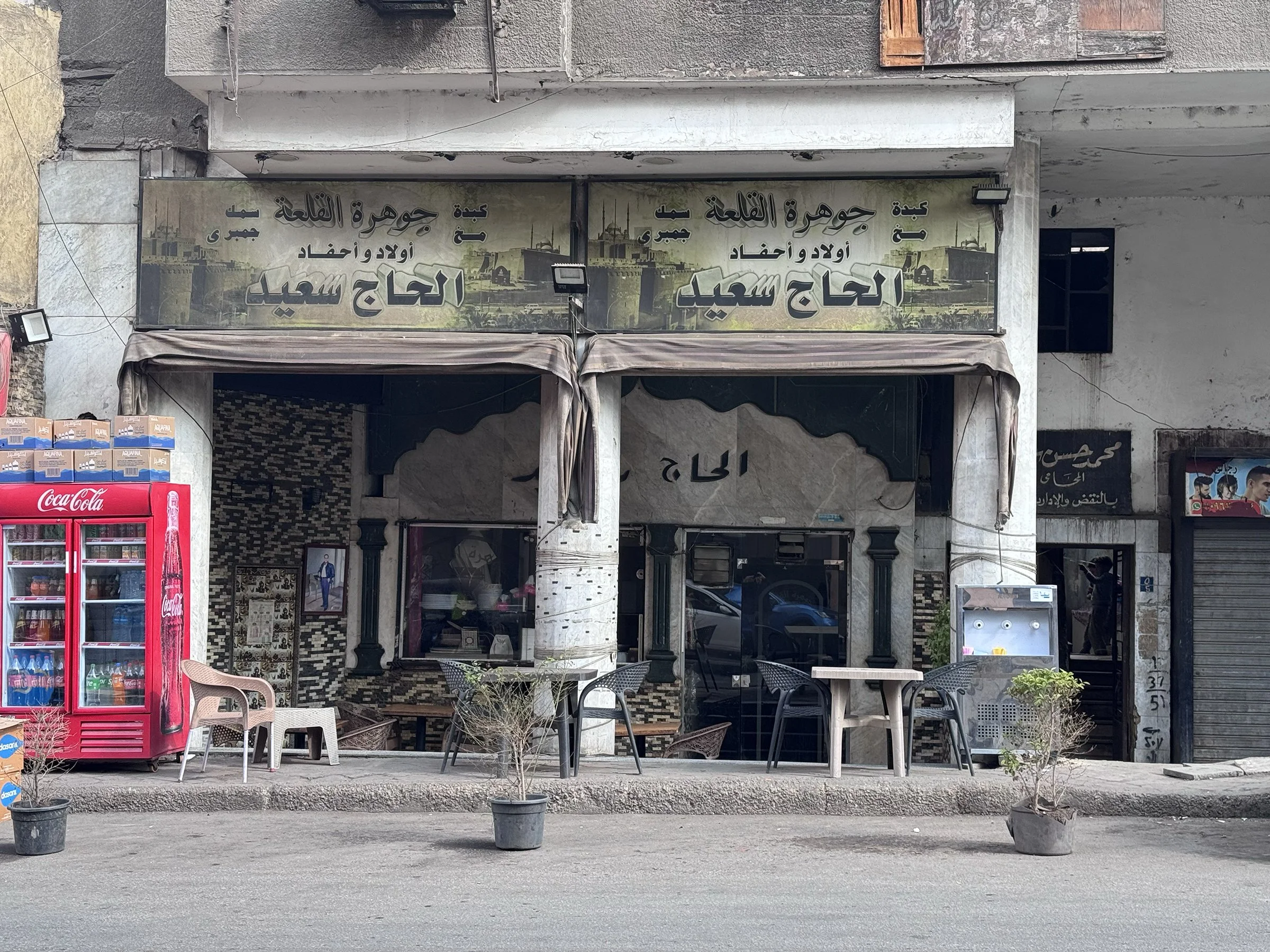
Hag Sa’id Restaurant
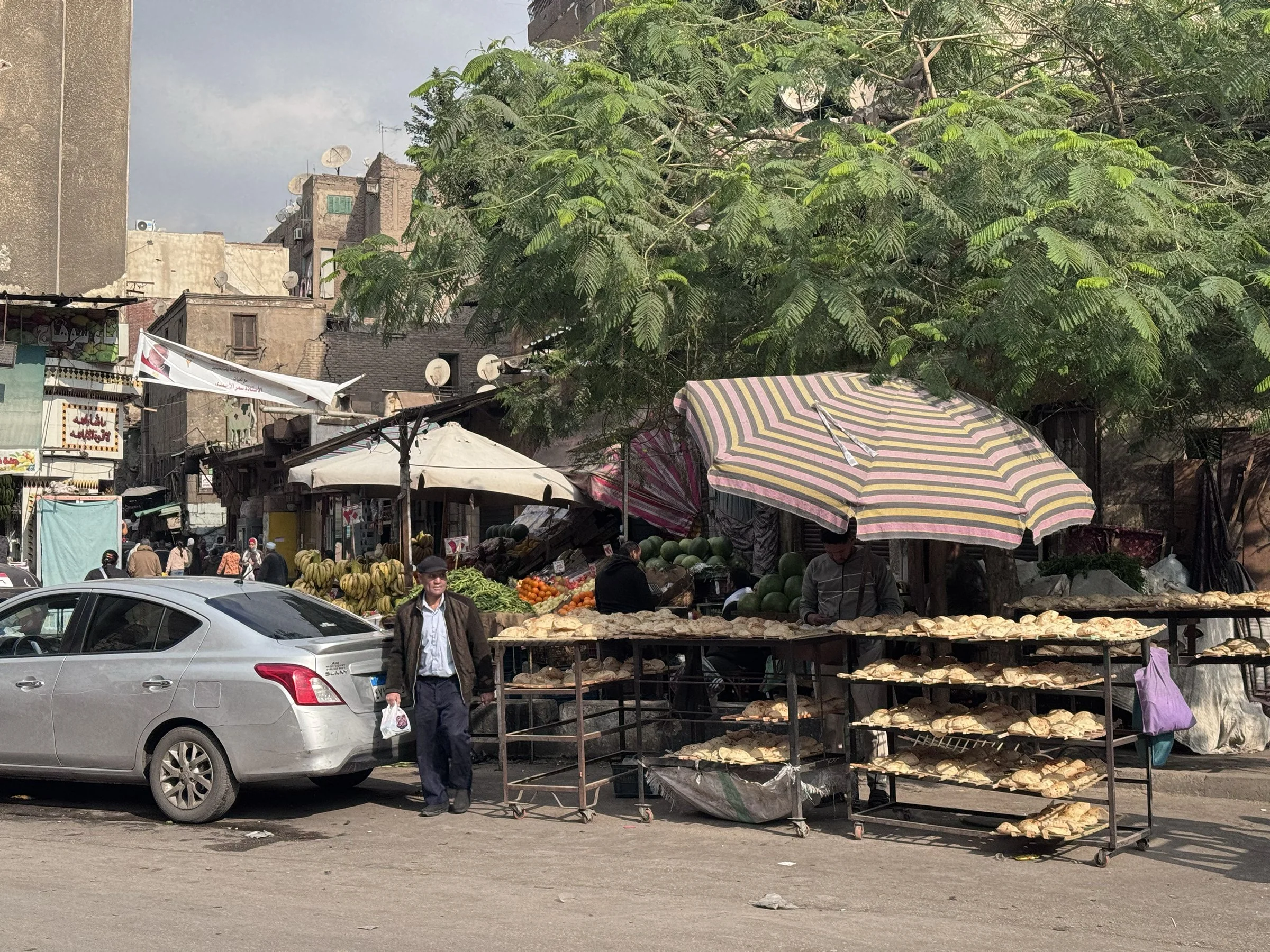
Outdoor Fruit and Vegetable Market
But something was missing.
Mohamed Ali Street was once the artery of music — instrument makers, oud shops, rhythms leaking into the street. That soundscape has thinned. The instruments are gone. The music has migrated elsewhere. What remains is improvisation, survival, noise.
I returned to the ahwa across from Hag Sa’id and ordered tea with mint. The mint arrived not as garnish but as abundance — a full bushel submerged in a glass of water, defiant in its generosity. Men were returning from prayer, some were adjusting their galabiyyas (traditional Egyptian garment for men), greeting one another. I sat, watching, the way I once did decades ago — as a young man studying architecture, observing facades and gestures with equal intensity.

The Ahwa across from the Passage
The stones have not changed much. The proportions of the street remain intact. But the social choreography has shifted.
After tea, I tried to re-enter the Sultan Hassan–Rifa‘i passage from the Mohamed Ali side. Closed. Inside, only a few tourists hovered under the monumental arches, dwarfed by Mamluk stone and the weight of dynastic ambition. Once, this passage felt porous — an urban seam stitching together devotion, commerce, and casual wandering. Now it feels curated, filtered.
On the ride back, the city offered another narrative.
We drove under the Sayyida Aisha bridge — the same bridge slated for demolition. The Uber driver told me he used to live there. His family had a building in the area. They were forced to leave due to ongoing development. Compensation? 180,000 EGP, he said (3,600 USD). It lasted a couple of years in rent. Now he lives with his father. The entire area, including parts of the historic cemetery, is being cleared. I asked what would replace it. He smiled with a mixture of irony and resignation: “Mamsha.” A promenade. A walkway. For tourists. Outside, traffic had coagulated into a massive jam — machinery, concrete barriers, rerouted flows. The future, it seems, arrives first as congestion.
In My Cairo, I wrote about the Situationists and their dérive — drifting through the city to construct a psychogeography of experience rather than spectacle. They called their map The Naked City, fragments stitched together not by streets but by memory. This return to Qala’a felt like a dérive in reverse. Instead of discovering hidden corners, I was searching for what had once anchored me — the intangible sense of belonging that made Cairo feel like home in ways no other city ever has.
But, I felt strangely disconnected.
The feeling that once washed over me in this district — of density, grit, sacred proximity, and everyday improvisation — did not fully return. It hovered at the edges, elusive. Perhaps belonging is not recoverable with the passage of time. Perhaps it resides not in buildings but in temporal remembrances — in who we were when we first encountered them.
And yet, sitting at that ahwa, holding the warm glass of tea, inhaling mint and exhaust and distant prayer, I felt something shift. For a brief, fleeting moment, the present thinned. The Qala’a district I once knew returned: the 1980s transitioned into 2026, the young student over the returning scholar, the restless observer over the reflective writer.
Cairo did not feel the same though.
But it lingered.
In the angle of light hitting the stone of Sultan Hassan.
In the uneven pavement I had once crossed countless times.
In the rhythm of men walking home from Friday prayer.
Cities change. They are demolished, redeveloped, monumentalized, sanitized. Bridges fall; promenades rise. Cemeteries become development zones. Meanwhile, the official narrative speaks of renewal, improvement, progress.
But beneath that narrative lies another city — the one carried within those displaced, those returning, those remembering.
Perhaps that is what this series will be about: not hidden cities in the geographic sense, but cities hidden beneath redevelopment, beneath nostalgia, beneath ourselves.
A city of passages.
A city that no longer exists in full — yet refuses to disappear.
For a moment at the ahwa, I was transported back to My Cairo. Not as an author revisiting research sites, but as a young man discovering the world through its streets. The sensation lasted only seconds. Then the traffic horns returned, the Uber notification pinged, and the present reclaimed its ground.
But the passage remains.
