Writing Arab Modernism(s) in a Time of Reckoning
In January 2026, my book Arab Modernism(s): City, History, and Culture finally arrived. Its publication should have felt like an arrival — a moment of culmination. Instead, it felt like standing at a threshold, aware that the journey that produced it had altered me in ways I am still trying to understand.
The book’s origin goes back two years earlier, to January 2024, to a lunch in London.
I had met my editor and dear friend Ann Rudkin at the Hoxton Hotel along the South Bank. I was in the city briefly, the Thames gray and subdued outside the windows, the winter light diffused. We were meant to celebrate the completion of another project — Riyadh: Transforming a Desert City. That book had taken its toll. Years of research, travel, writing, revising. I felt, perhaps naively, that I had said what I needed to say about Arab urbanism.
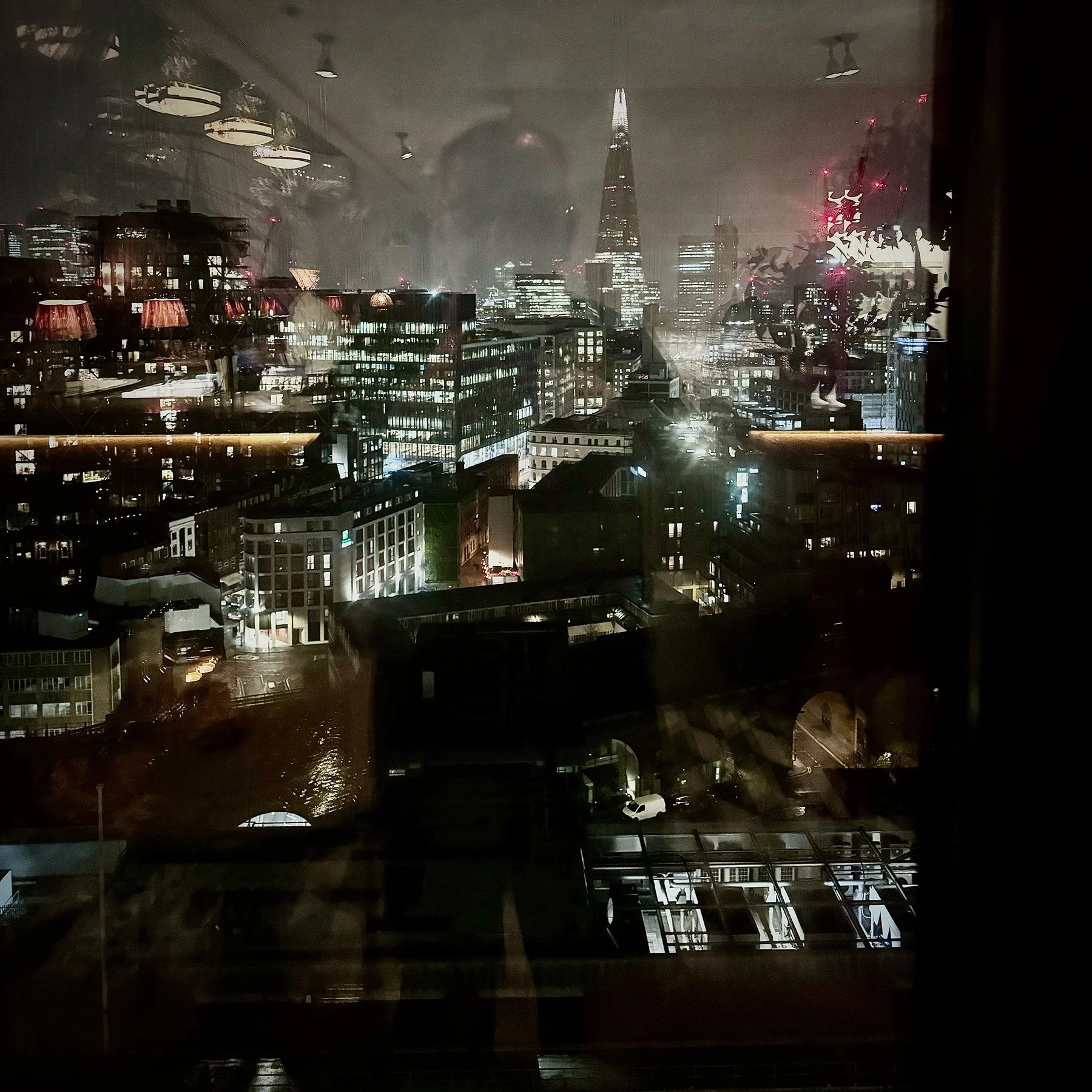
View of London from the Hoxton Hotel
Over salads — we both insisted on keeping it light — and drinks that warmed the conversation, Ann leaned across the table and suggested, almost casually, that I should write another book on Arab cities.
I resisted immediately.
I had already written extensively on the subject. Was there still an audience? Would there be funding? Did I have the time, the resources, the stamina? The academic world is not generous with time, and publishing is rarely kind to those who repeat themselves. I had no desire to rehearse old arguments. We discussed possible funding sources. We speculated. We left it unresolved. London carried on outside — buses crossing bridges, pedestrians threading along the river. The conversation should have dissolved into the background noise of travel.
But it did not.
Back in the United States, life went on unimpeded. I returned to teaching at Columbia’s GSAPP — courses on Housing in the Arab World and on Arab Cities and Cinema. I was also writing policy-oriented pieces for the Arab Gulf States Institute and, more recently, for Arabian Gulf Business Insight. And there was a funded research project with the Zayed National Museum. My days were structured, productive, full.
Yet Ann’s suggestion lingered.
What had changed — though I did not immediately articulate it — was my own vantage point. Leaving the UAE after two decades and returning permanently to the United States had shifted something fundamental in how I saw Arab cities. Distance reframes memory. Teaching reframes long held beliefs. Since 2018, my students at Columbia had been interrogating the very assumptions I once carried with certainty. Their projects, their critiques, their insistence on linking housing to inequality, cinema to spatial politics, modernism to displacement — these conversations unsettled me deeply.
Arab cities no longer appeared to me simply as case studies in adaptation or resilience. They appeared as contested terrains — fragile, ambitious, unequal, improvisational.
Slowly, the idea of the book transformed into something that was tangible and real.
When I finally decided to proceed, I made one condition for myself: this would not be another purely historical account. It would not simply catalogue buildings and planning policies. I wanted it to be personal. I wanted each city to unfold not just through archival material and scholarly analysis, but through my own encounters — walking its streets, observing its contradictions, recalling earlier visits. I did not visit every city discussed, but I visited many. And I carried with me memories of earlier decades — of Kuwait, Doha, Riyadh, Rabat, Amman, Beirut — juxtaposed against the present.
I also knew I wanted to include my father — the late Architect Hassan Elsheshtawy.
What began as a small gesture became the concluding chapter — an homage to his work and, perhaps unconsciously, a meditation on inheritance. Modernism in the Arab world was not abstract in my life. It was drawn on tracing paper at our dining table. It was discussed in fragments. It was built, sometimes successfully, sometimes not. Including him was not nostalgia. It was acknowledgment.
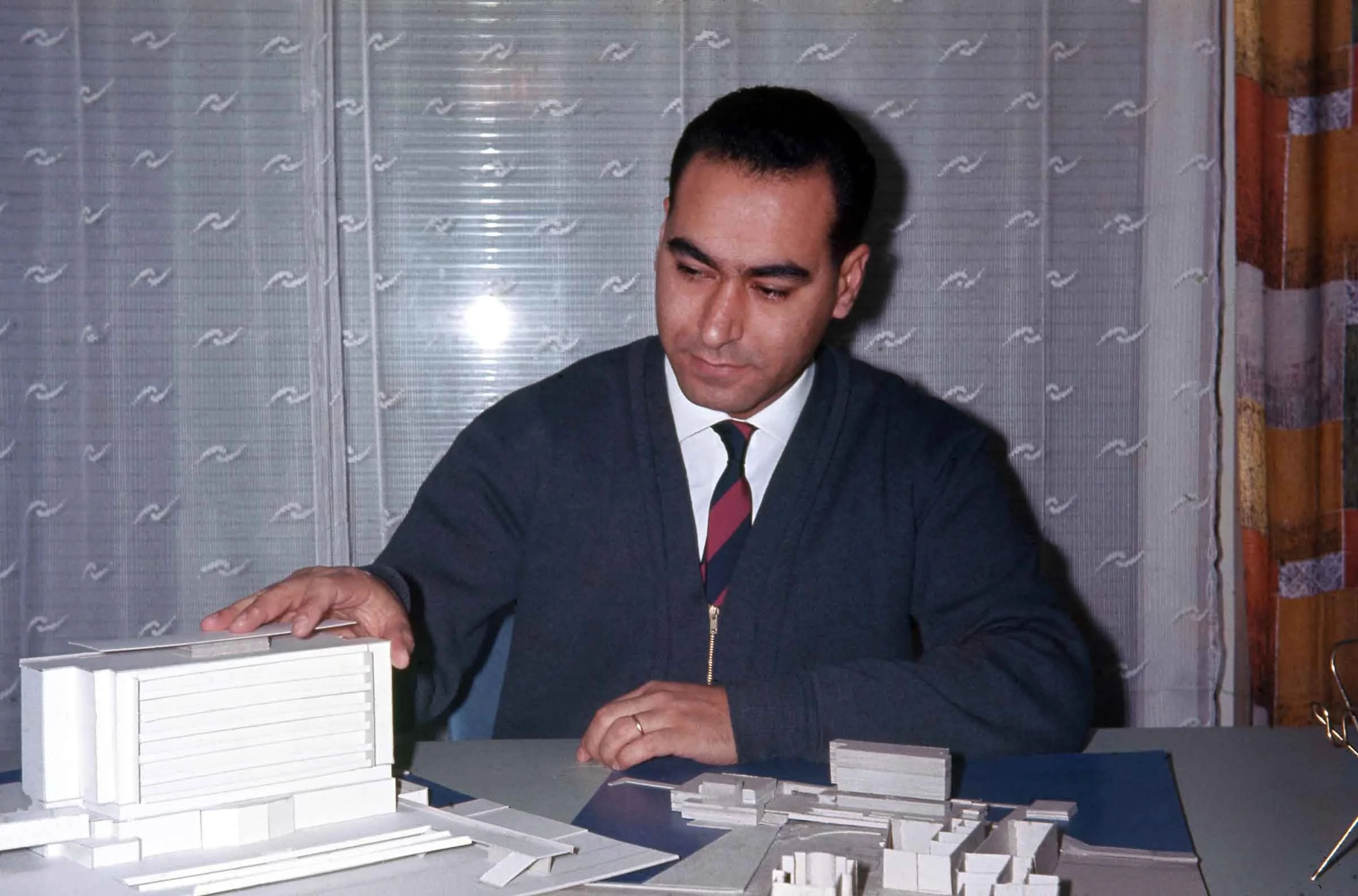
My Father, Hassan Elsheshtawy, and his thesis project at the ETH-Zürich
Research also became a process of discovery.
I rediscovered manuscripts like George Saba Shiber’s account of Kuwait. I encountered the archival images of Zahir Sultan. I immersed myself again in cinematic portrayals, literary narratives, and the quieter stories that circulate beneath official histories. The more I read, the clearer it became that the dominant narrative — that modernism in the Arab world was simply imposed, a colonial incident, a rupture — was too reductive.
I kept returning to the phrase from Bahrain’s 2014 Venice Architecture Biennale entry: “It was more of an incident than modernity.” In Arabic, haditha and hadatha — incident and modernity — echo one another. The implication was that modernism arrived as disruption, as event, as something done to the region.
كانت حادثا اكثر من كونها حداثة
But the book forced me to confront a more complex truth.
Modernism was absorbed, modified, contested, appropriated. It became part of the built patrimony of these cities. Residents were not passive recipients. They adjusted, resisted, negotiated. They infused imported forms with local meaning. They shaped urban trajectories in ways that defy simplistic binaries of imposed versus authentic.This argument is not new. Many scholars have made it. But while writing, I realized that I was not merely revisiting a debate. I was tracing something more urgent.
Working on the book changed me.
I began to see cities less as objects of study and more as repositories — of memory, aspiration, trauma, and hope. Unpacking the modernist project as it unfolded in alleyways and housing estates revealed not just architectural transformations, but the lived experiences of ordinary people navigating change. I became increasingly aware of the injustices that accompanied modernization — the displacements, the exclusions, the inequalities embedded in master plans and megaprojects.
And then the present intruded.
Across the Arab world, a new wave of modernization is reshaping urban landscapes. In Cairo, the New Administrative Capital rises in the desert while neighborhoods like Maspero are cleared. In Amman, the Abdali development towers over older quarters. In Rabat, the Bouregreg River project reframes the city’s historical core. ّIn the Gulf glittering skylines rise in the Middle of the desert. These projects promise progress, global stature, investment. But they also reconfigure cities for a narrower audience, privileging spectacle and capital over continuity and social harmony.
Perhaps this is the book’s deeper message — though I only recognized it fully after finishing it.
It is not merely about how Arab cities encountered modernism in the twentieth century. It is a warning about how they are encountering neoliberal urbanism in the twenty-first.
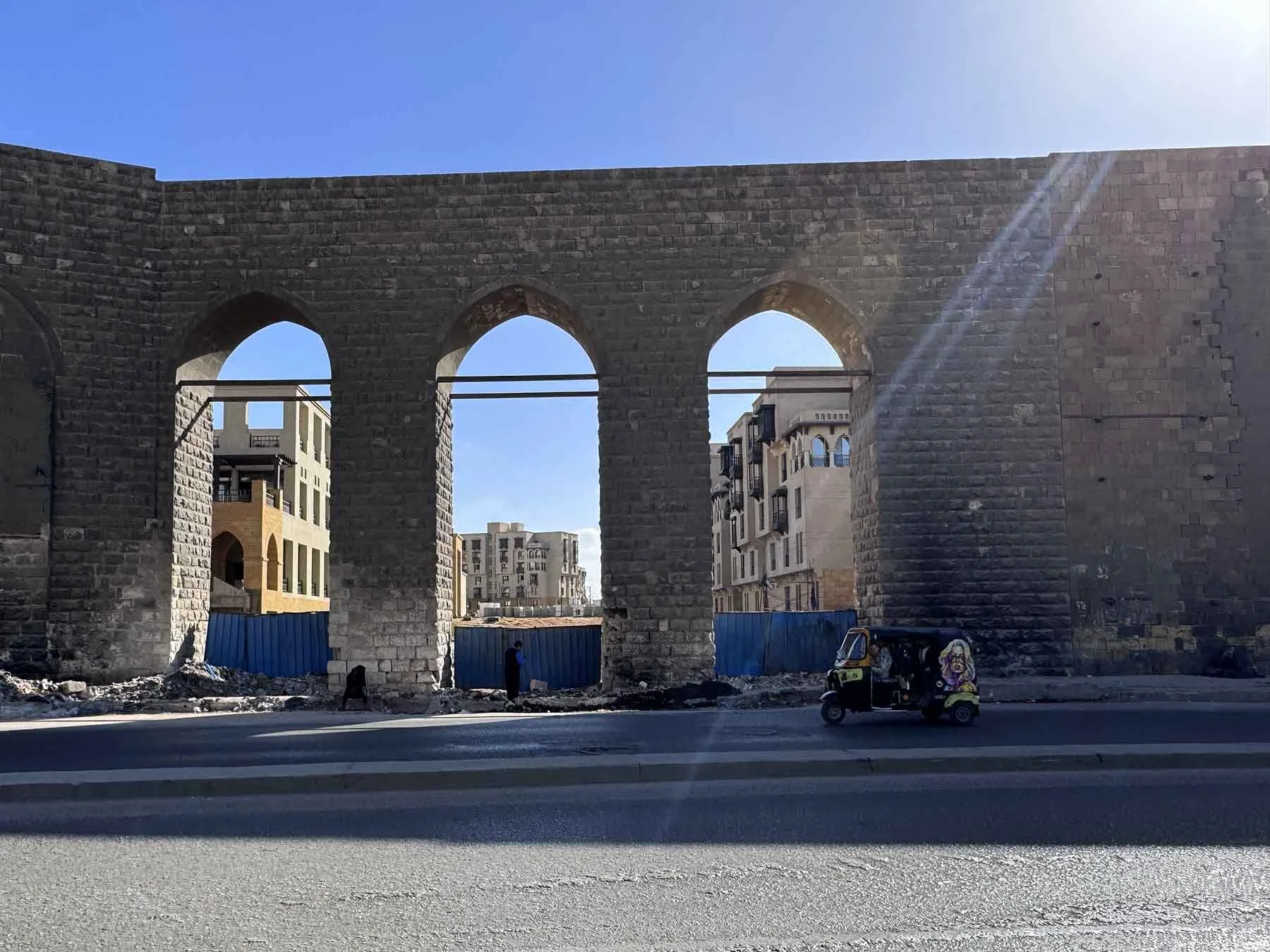
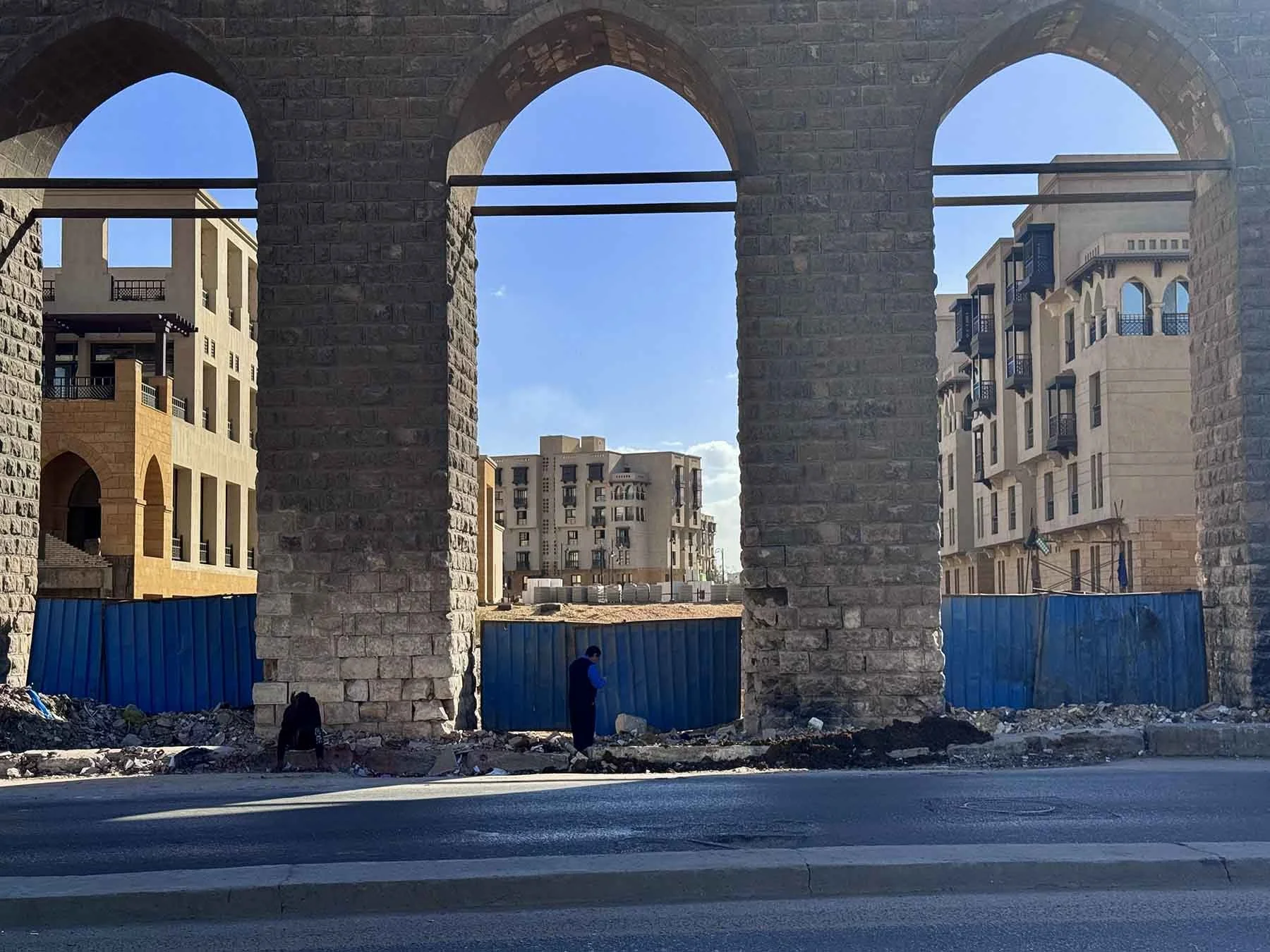
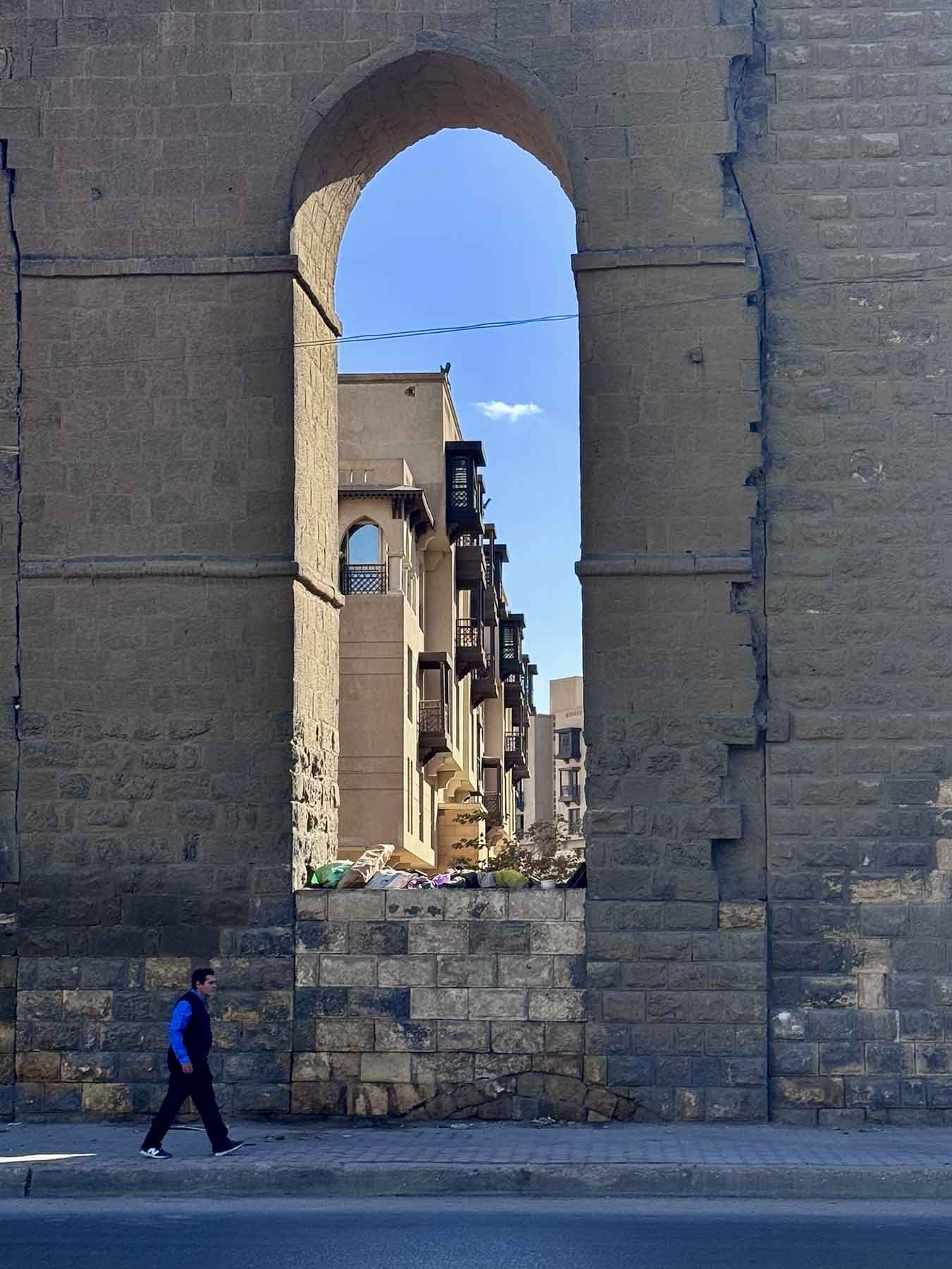
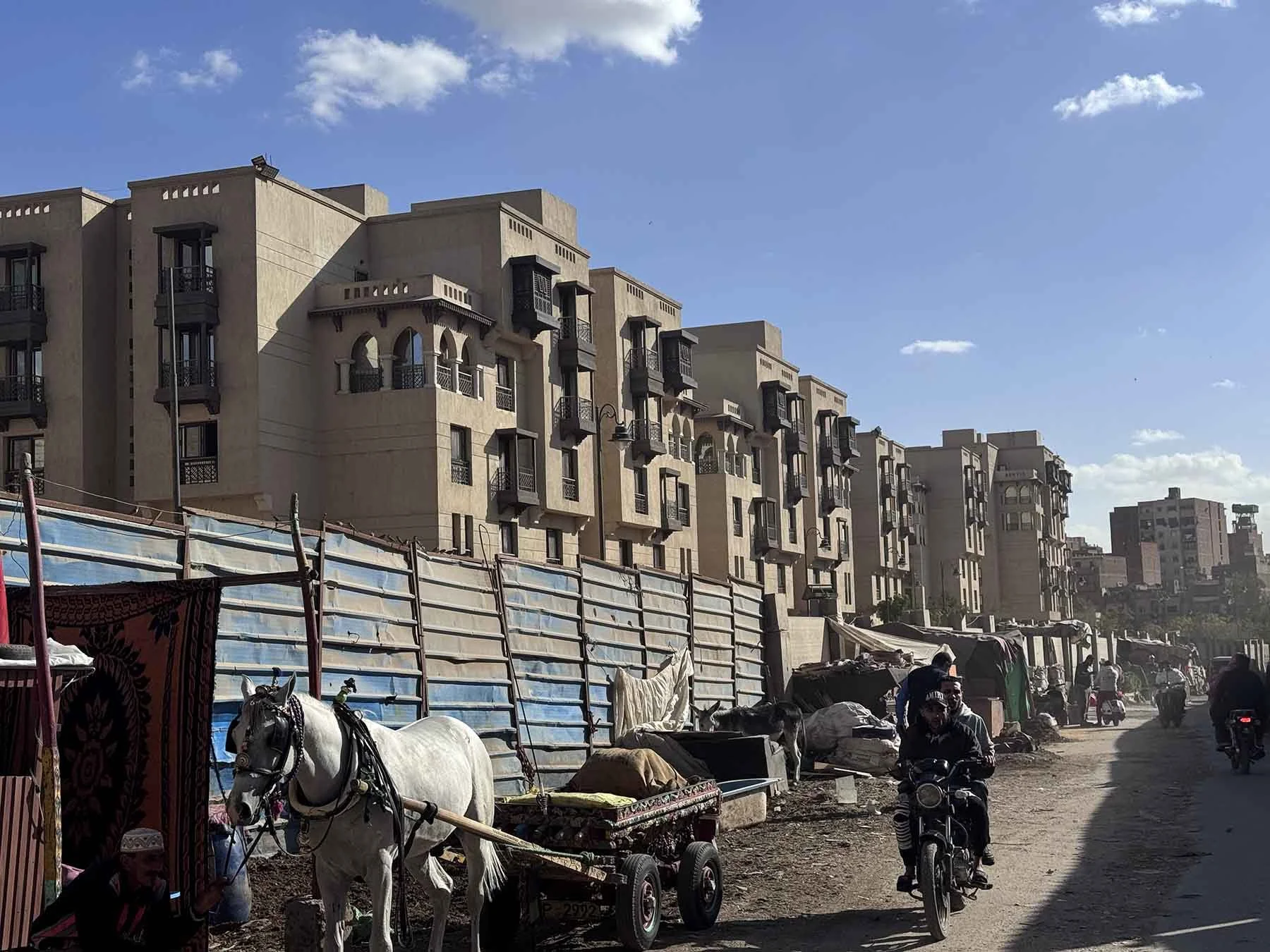
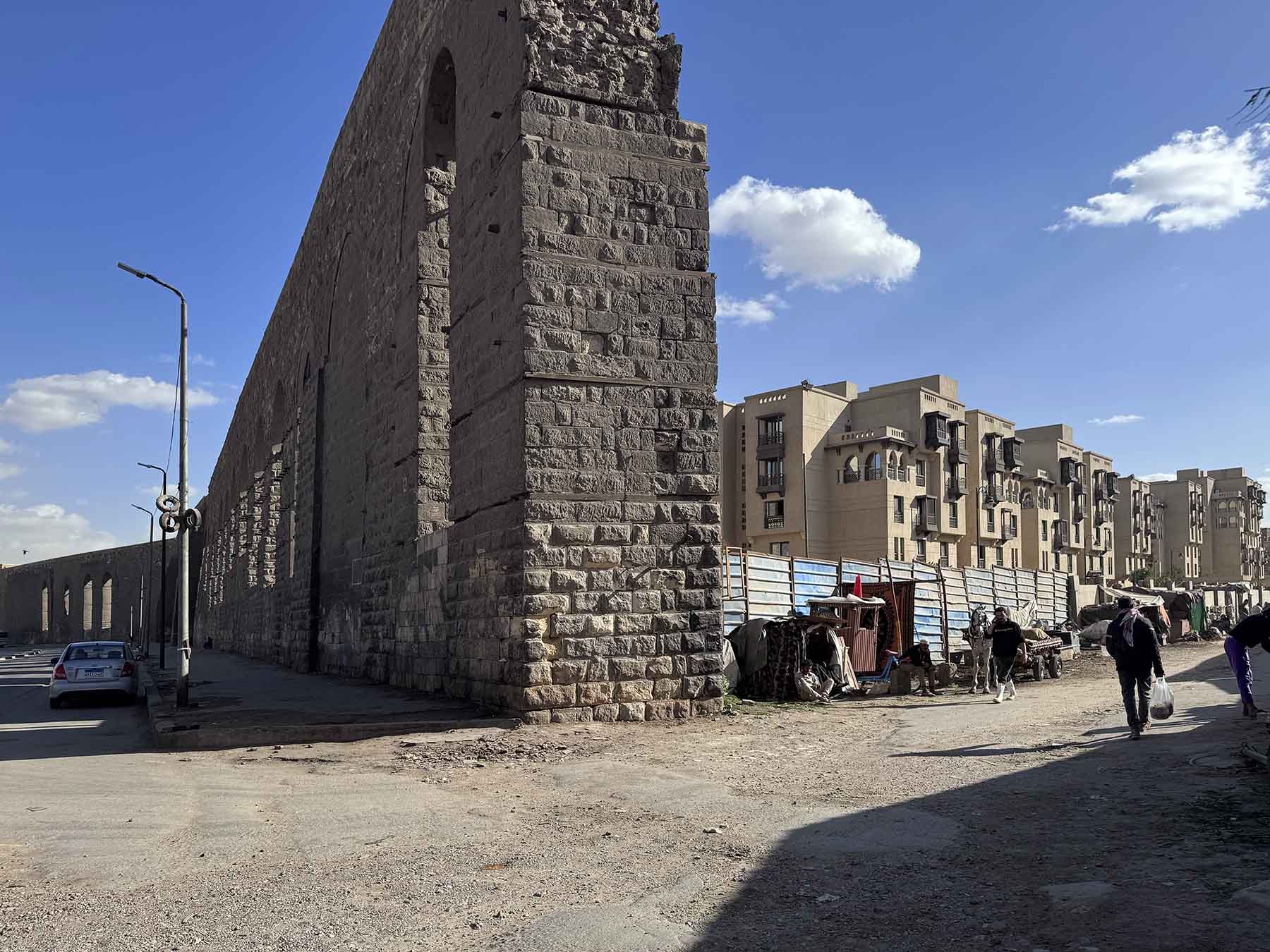
In early 2026, shortly before the book’s release, I walked through Cairo again. This time, the walk began with my friend Hussein, near the historic Sayyida Nafisa mosque and led toward a public housing project. Rubble lay scattered. Cemeteries had been unearthed and flattened. The smell of dust and decay hung in the air, thick and unsettling. We walked past the ancient aqueduct of Magra al-‘Oyoun, now being restored to attract tourists. Behind it stood an upscale housing development — immaculate, largely empty. Yet within the aqueduct’s niches, the city’s homeless had found shelter.
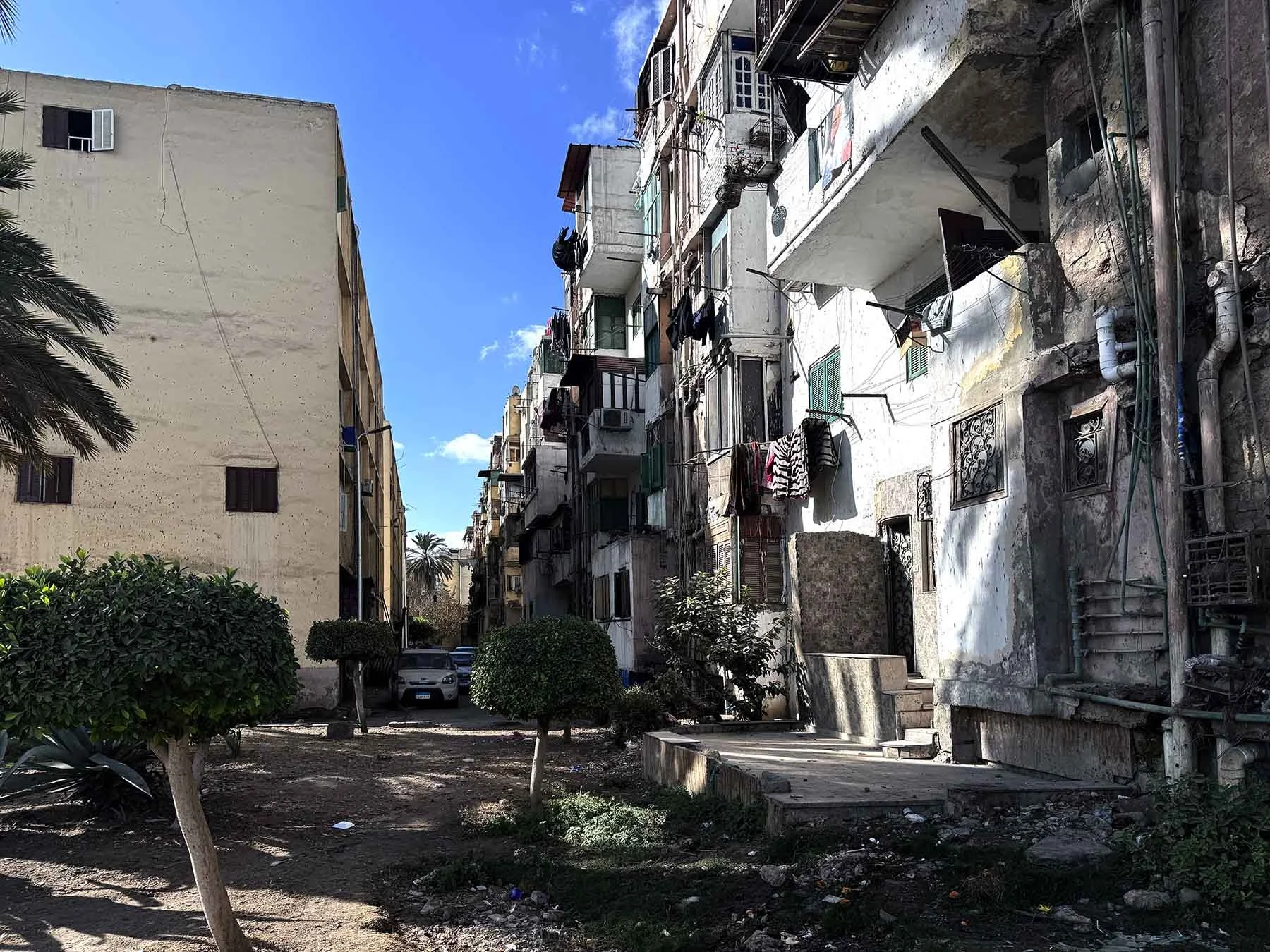
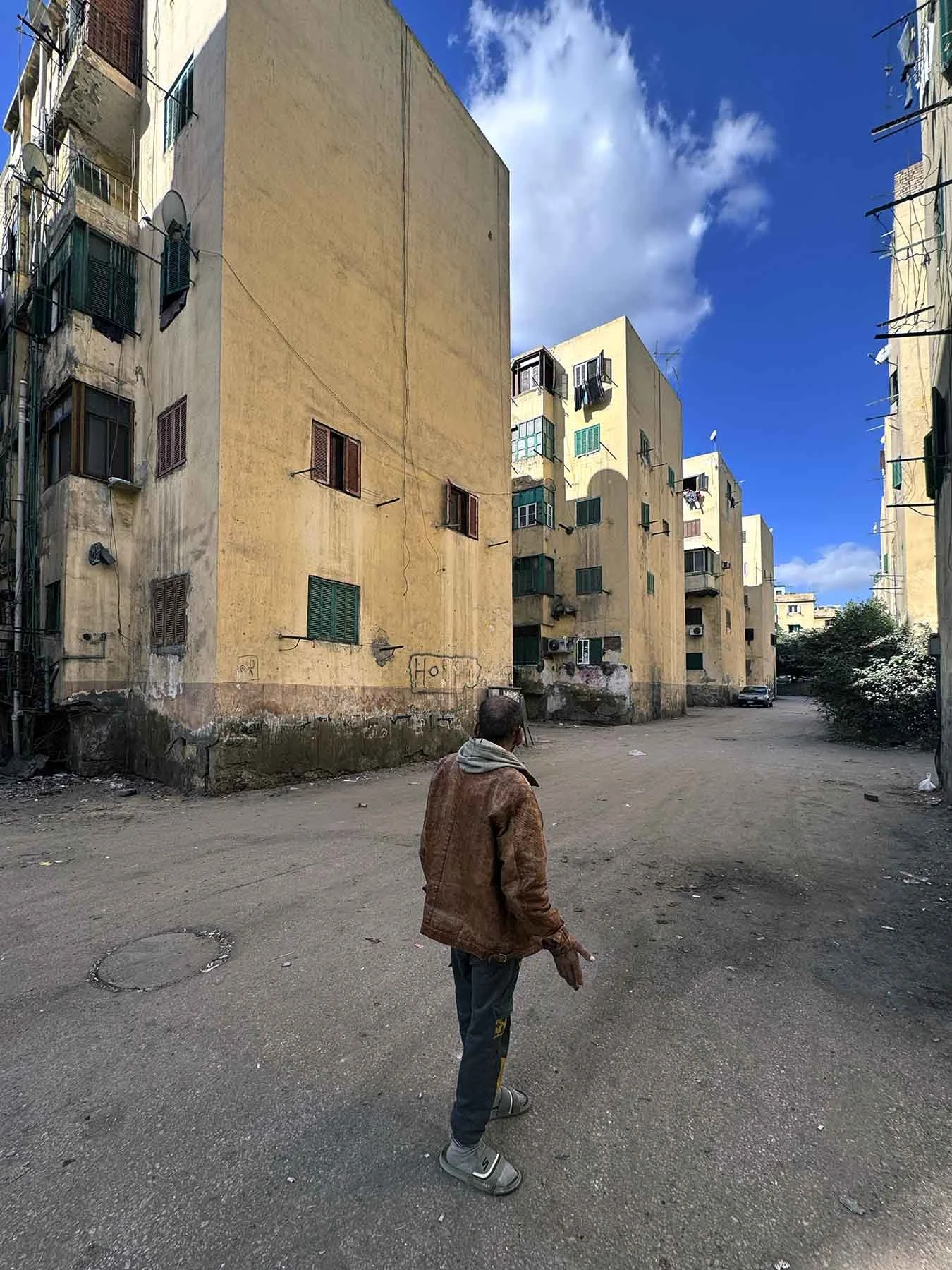
We continued toward Masaken Zeinhom. The public housing blocks were surrounded by sewage, dirt, neglect. I stood there wondering how people live in such conditions — and yet they do. They endure, improvise, adapt. Entire worlds unfold in spaces that planners rarely visit and investors rarely consider.
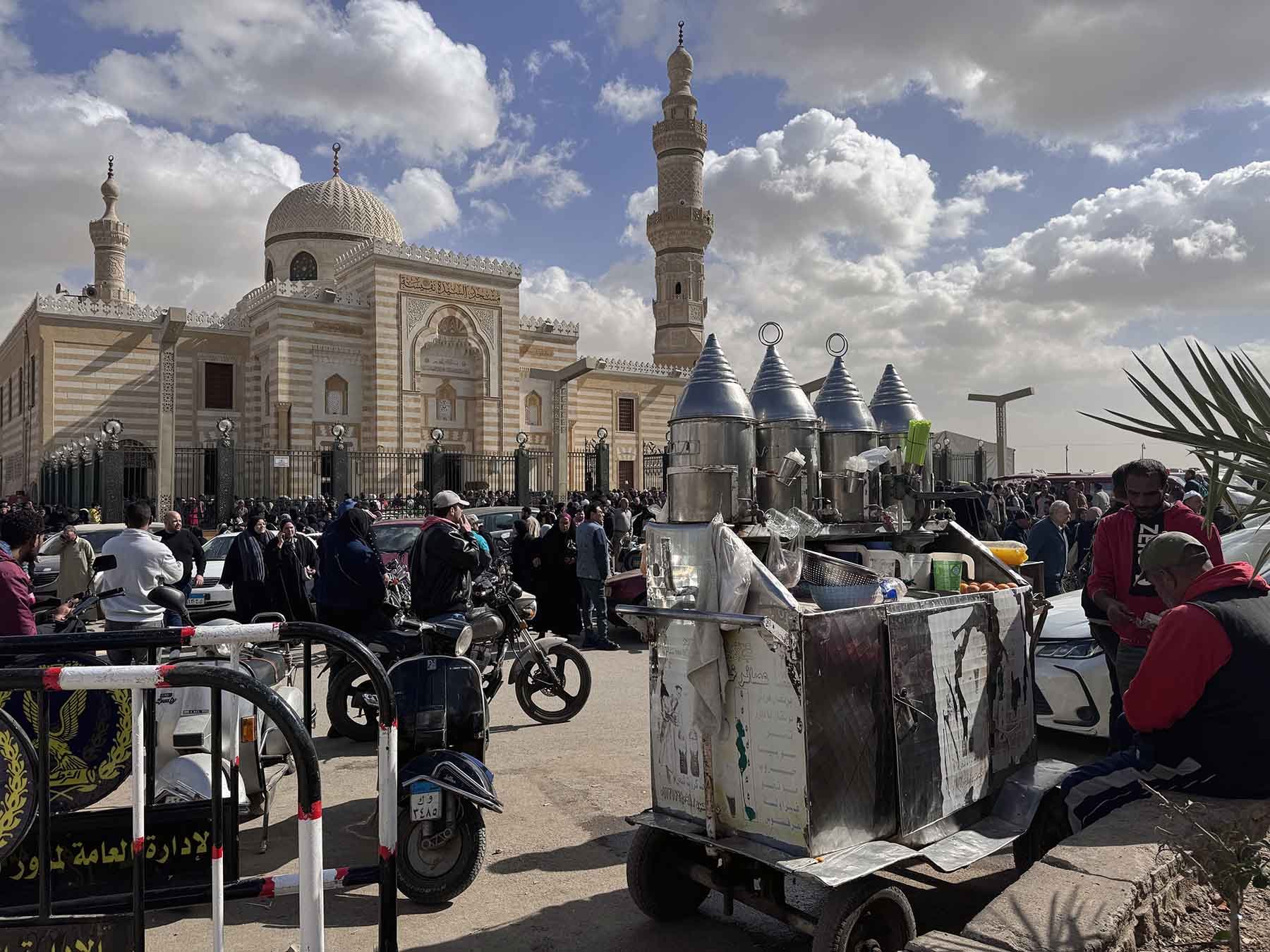
Say’yida Nafisa Mosque
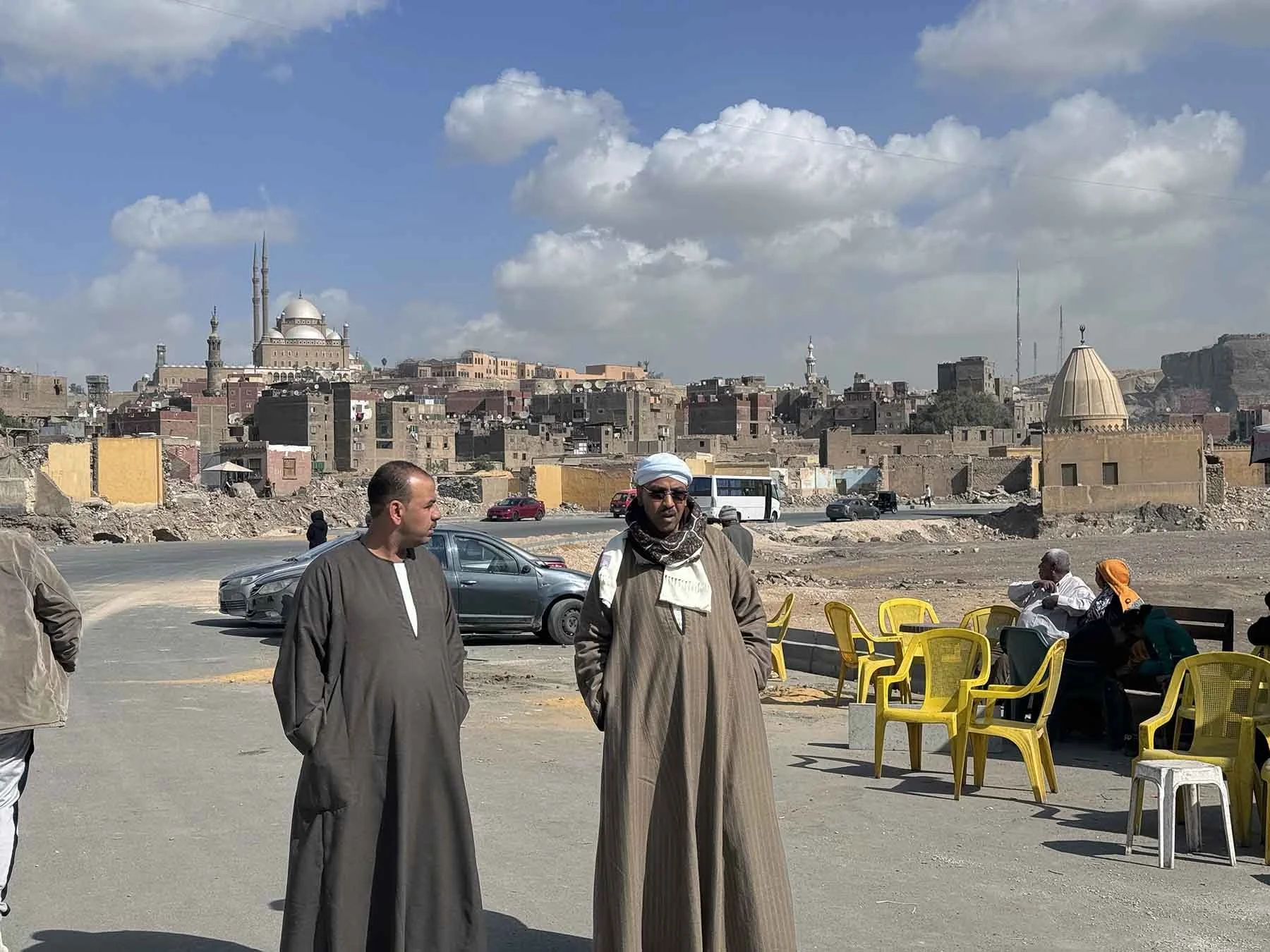
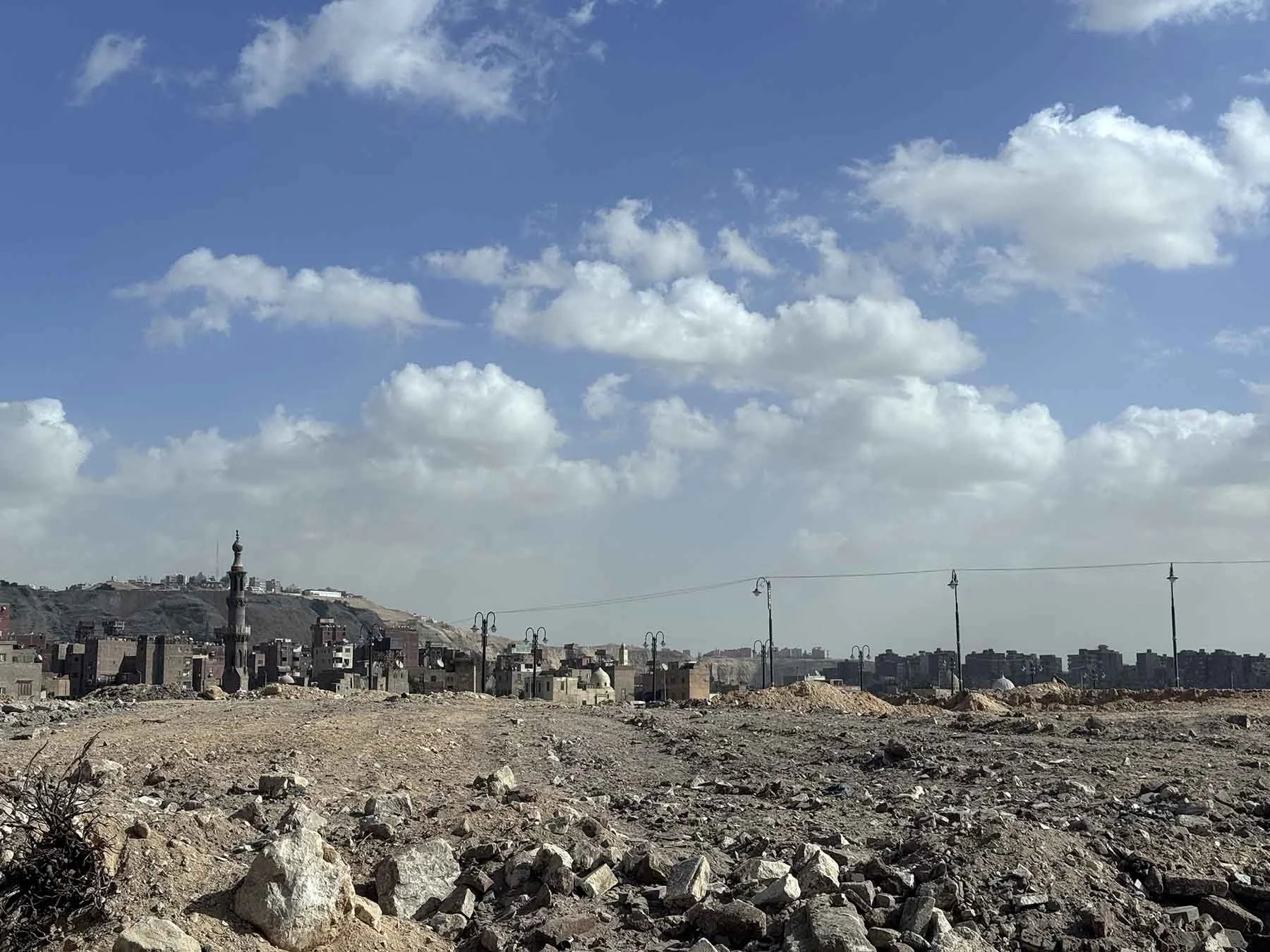
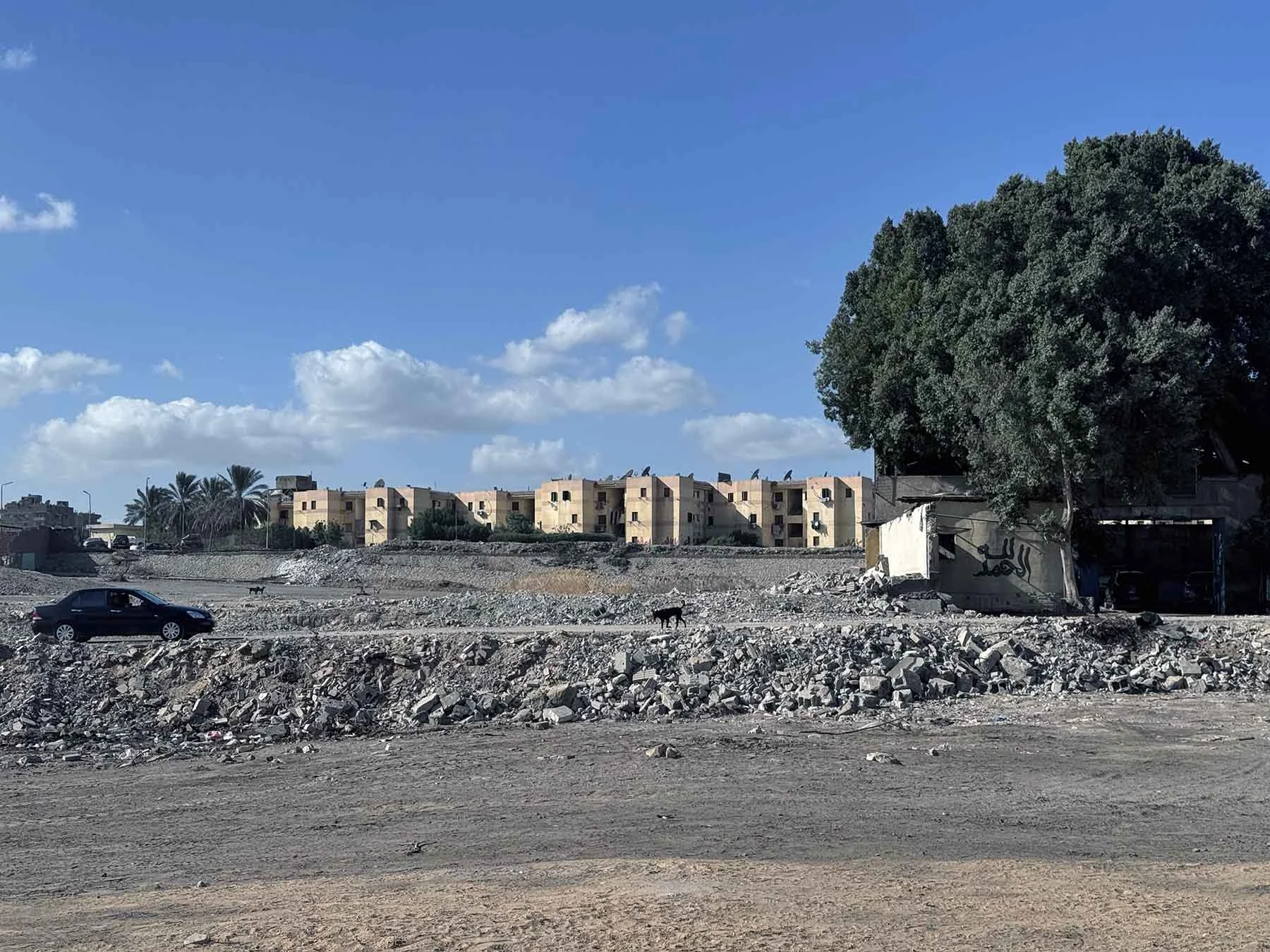
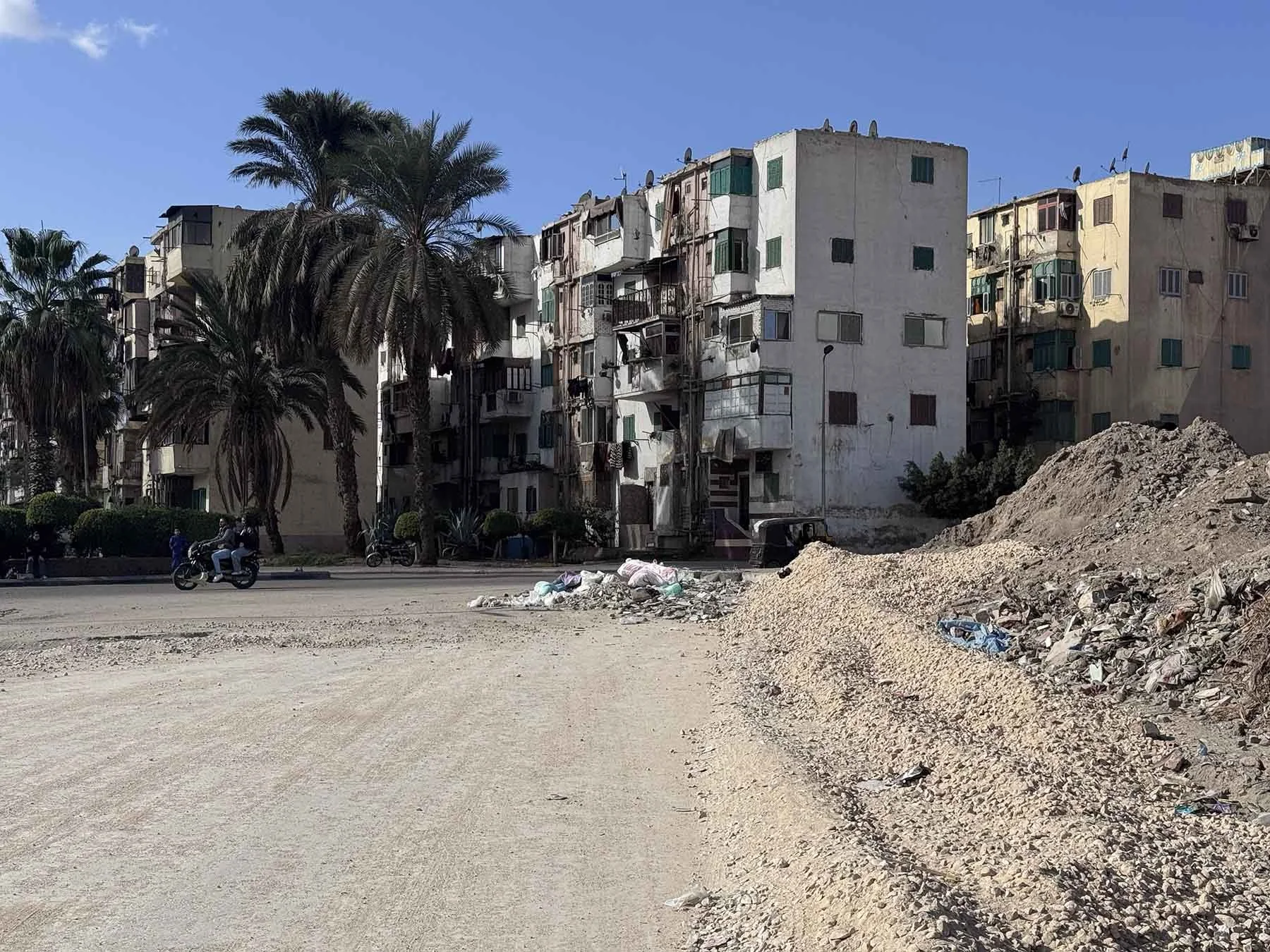
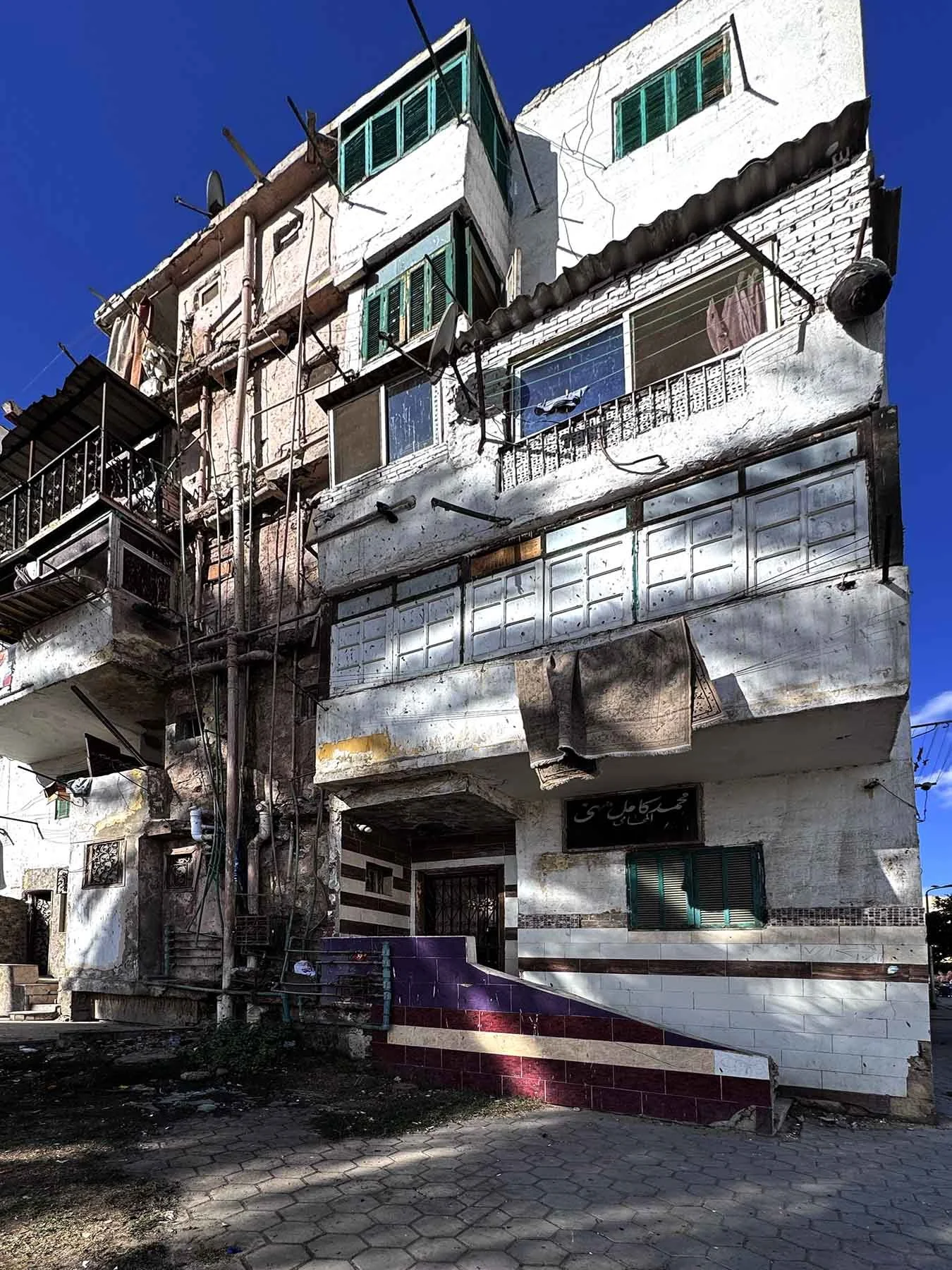
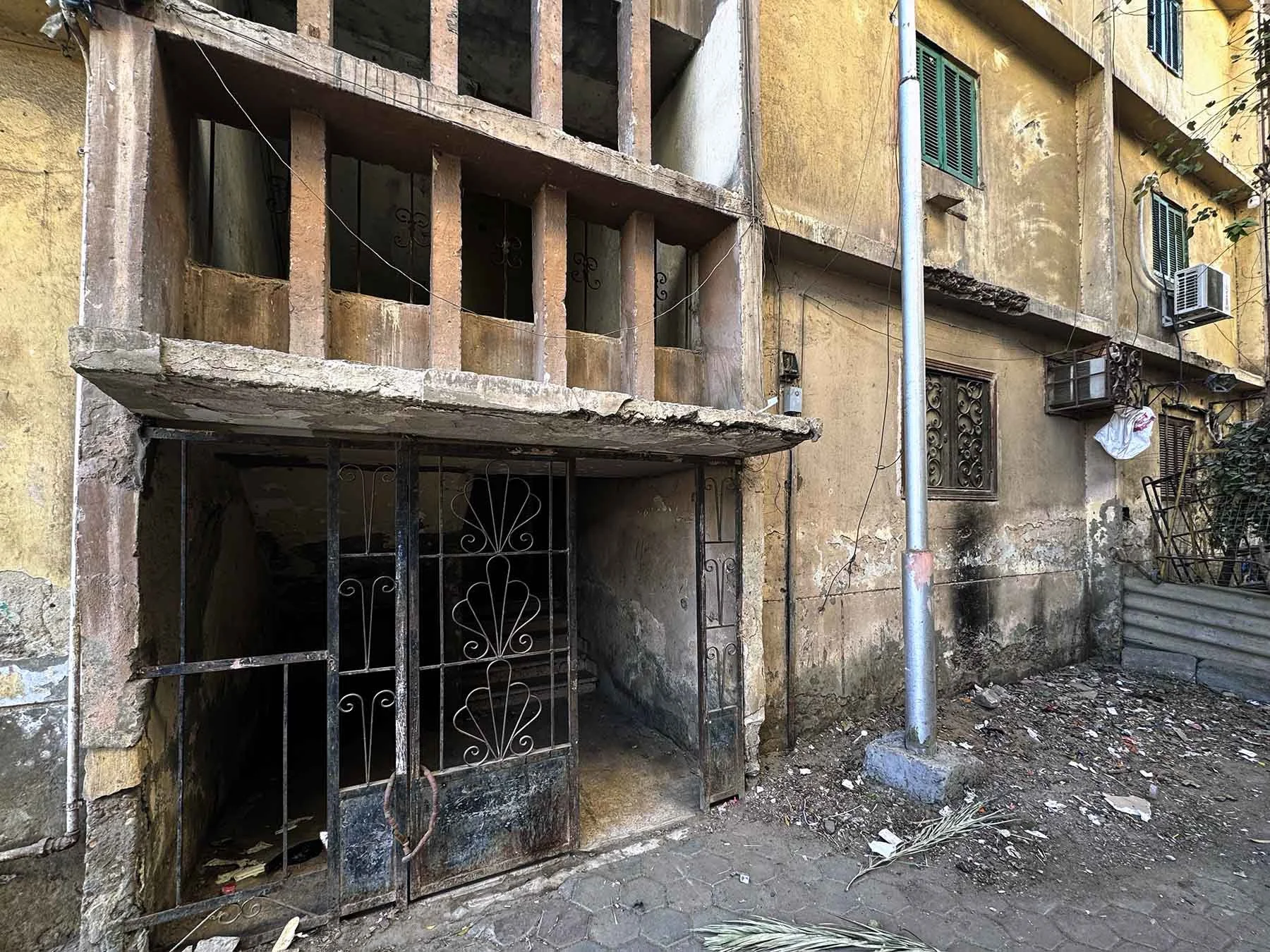
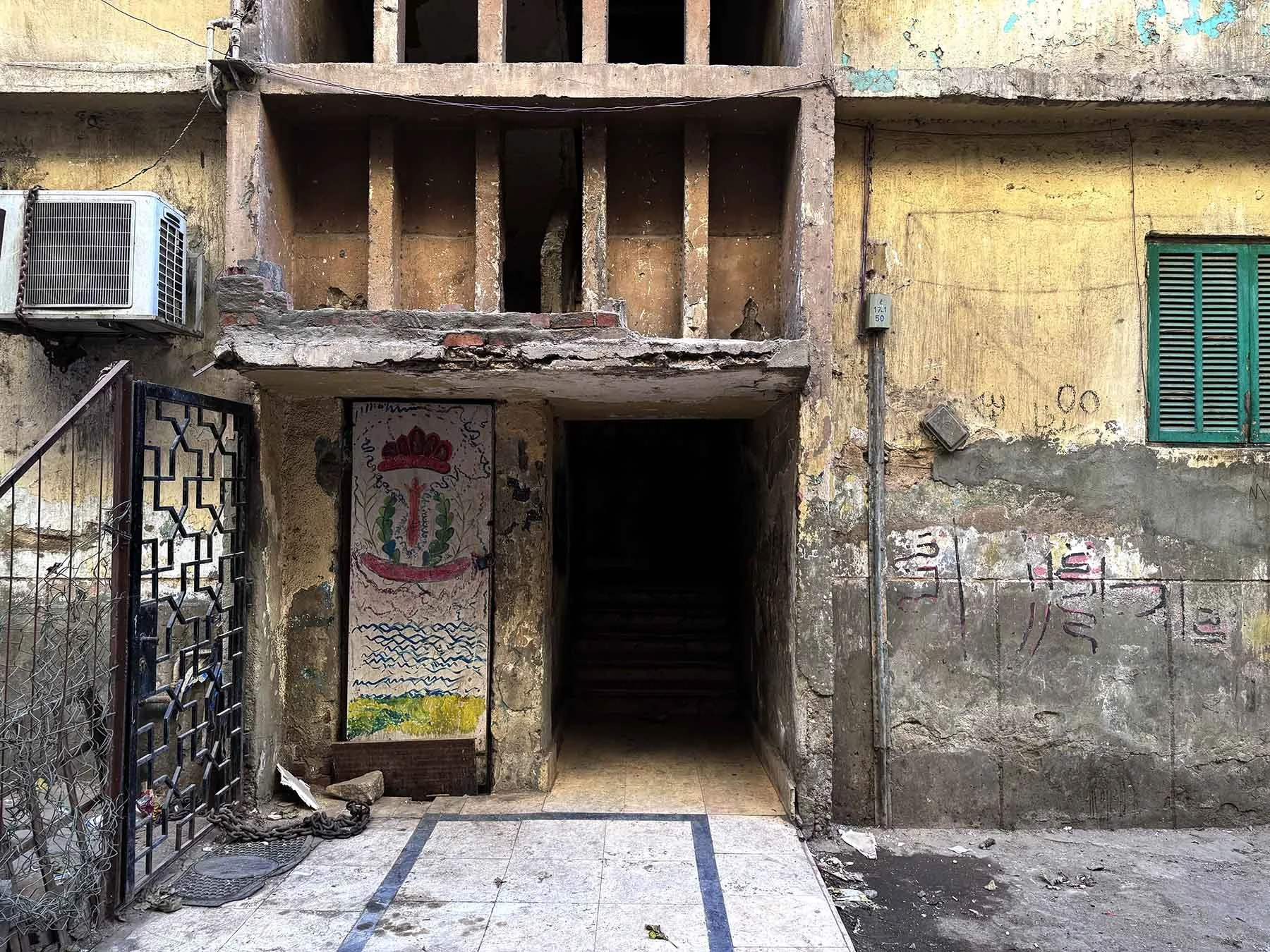
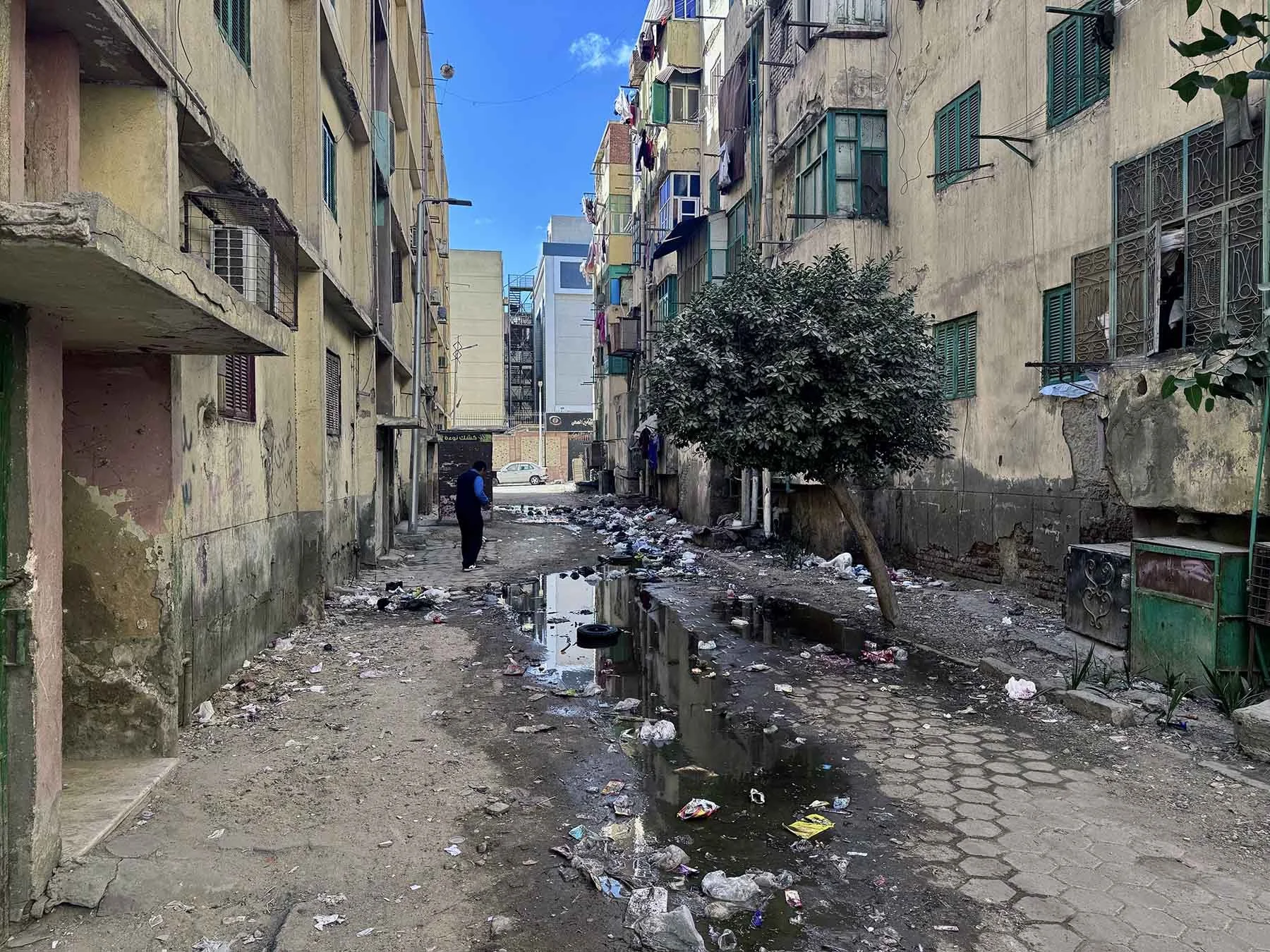
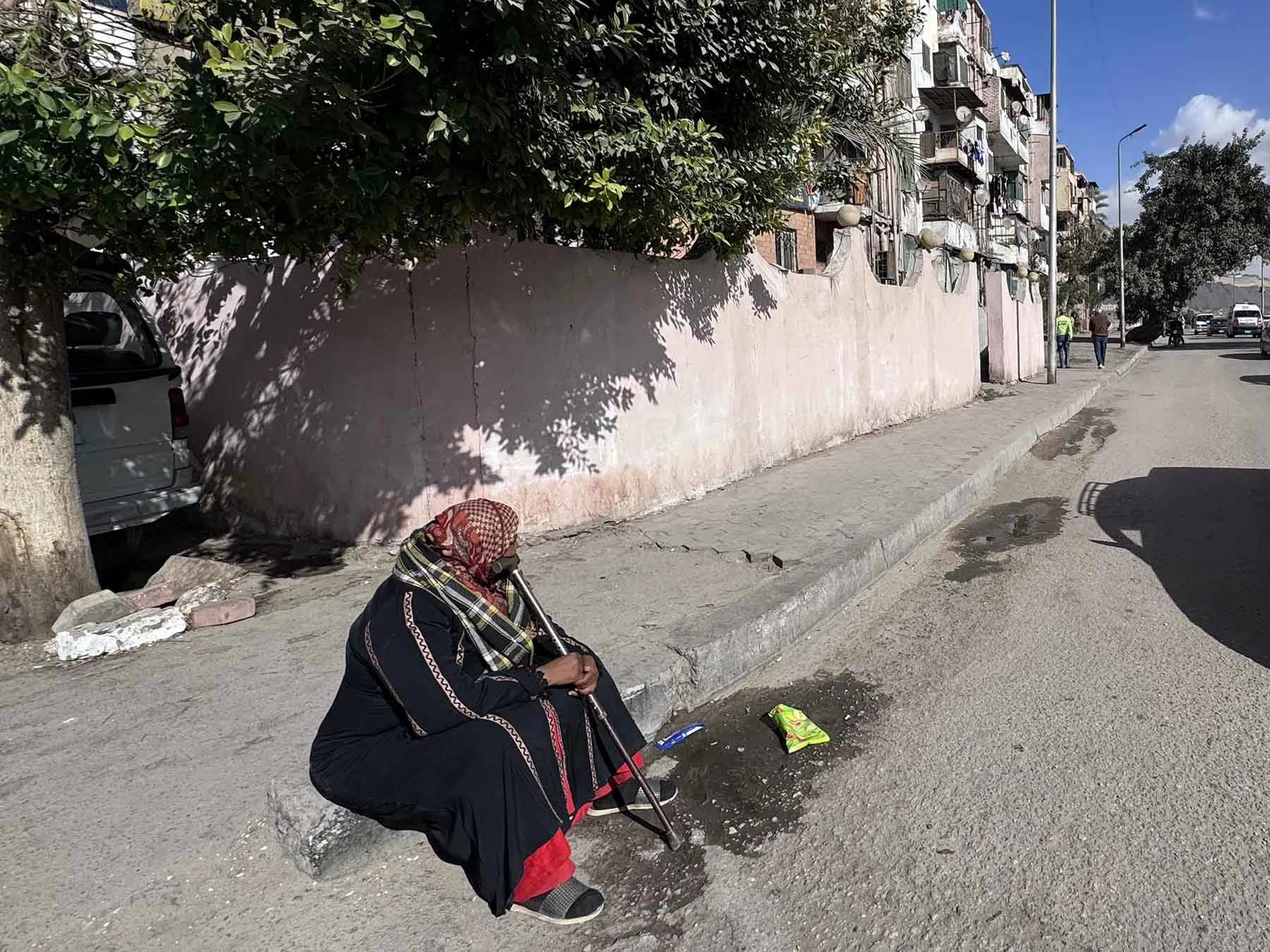
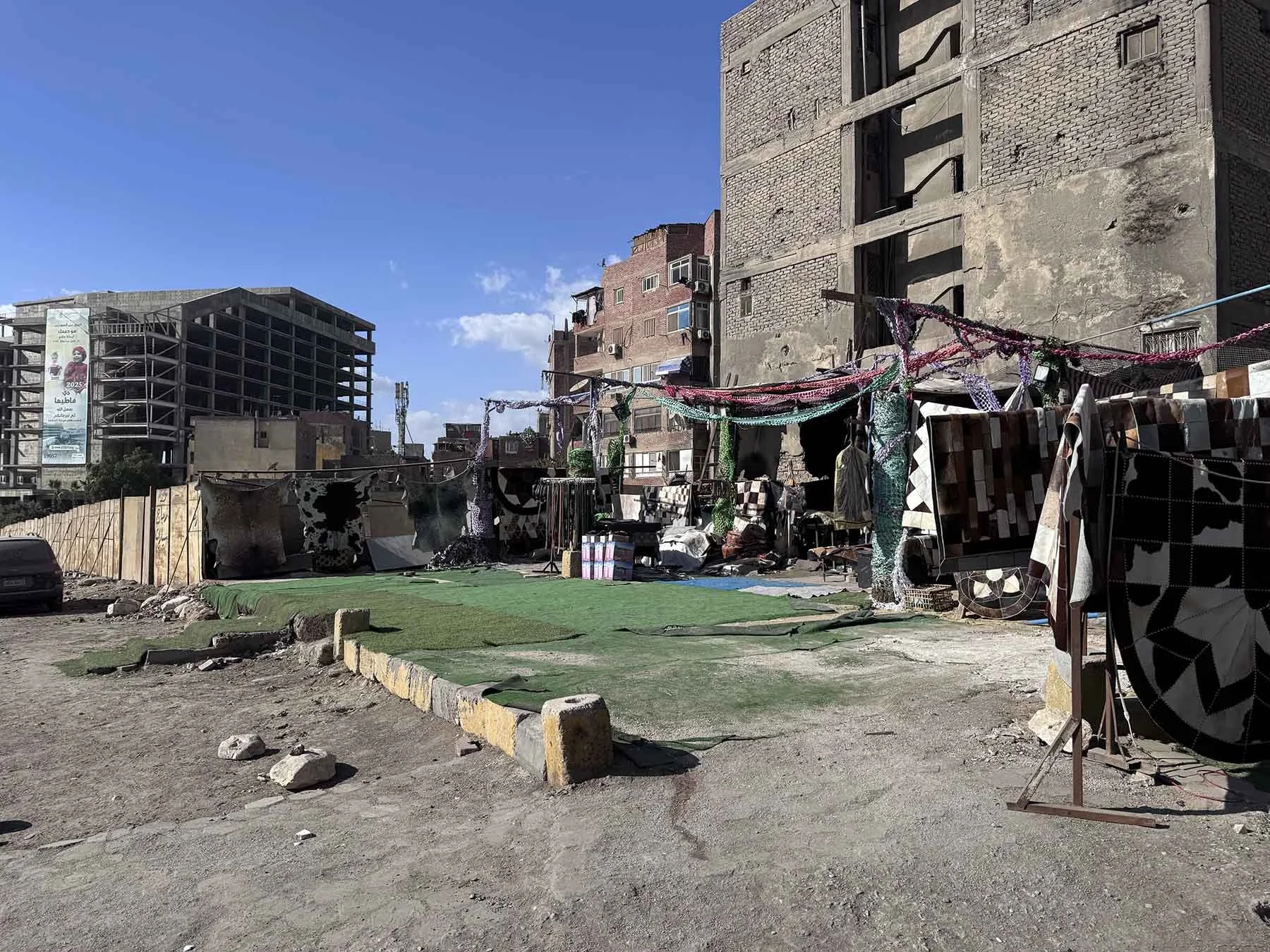
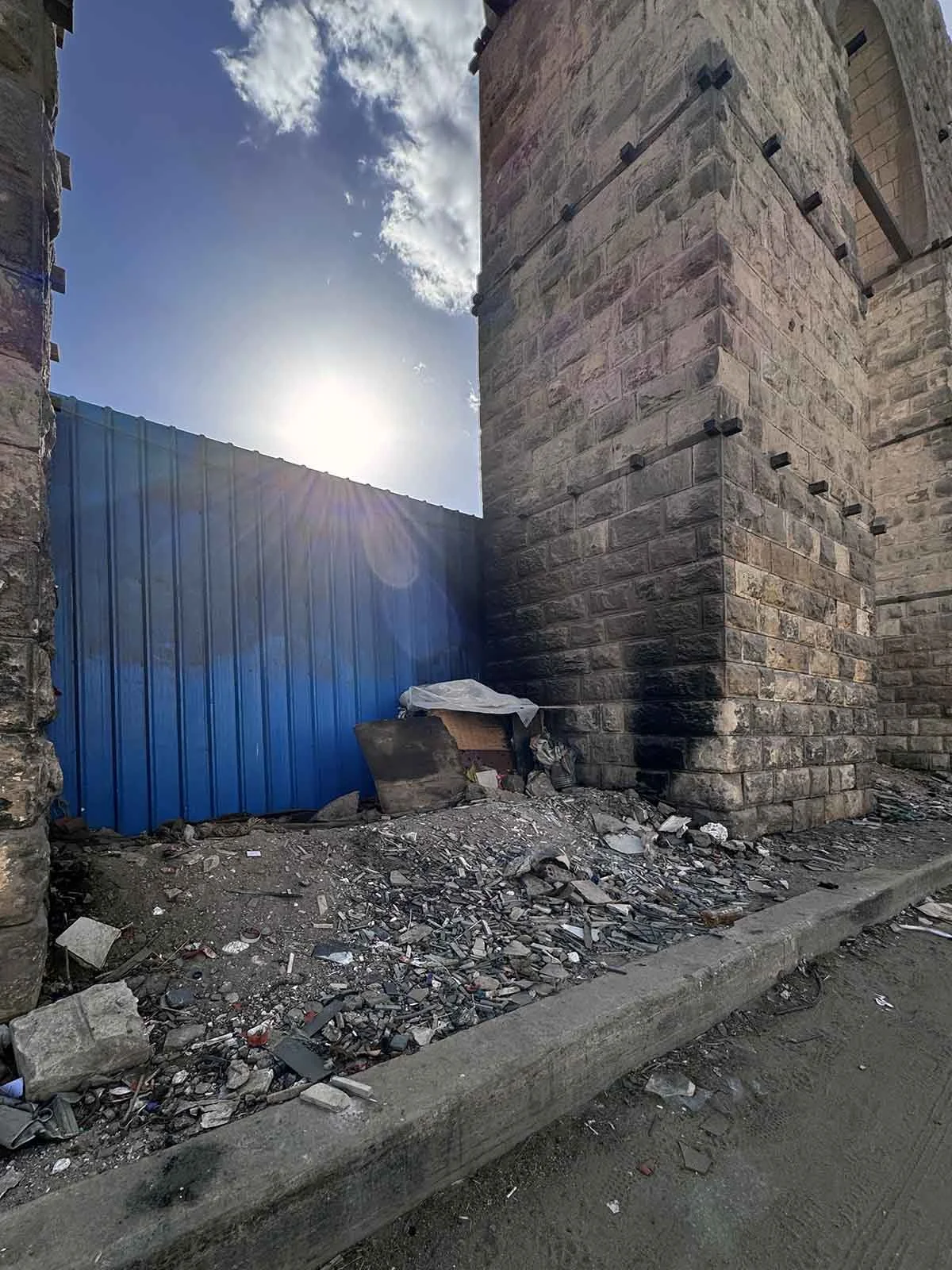
Looking towards Masaken Zeinhom
The contradiction was unbearable in its clarity.
On one side: curated heritage, luxury apartments, master plans.
On the other: squalor, displacement, invisibility.
If the needs and desires of those living in places like Masaken Zeinhom are not accounted for, then every attempt at modernization — no matter how glossy, no matter how ambitious — is ultimately fragile.
Perhaps that is why this book was necessary.
Not to celebrate modernism.
Not to condemn it simplistically.
But to insist that cities are not abstract projects. They are lived terrains.
Any urban vision that forgets this — that forgets the people in the aqueduct’s shadow, in the public housing blocks, beneath the demolished bridges — is already incomplete.
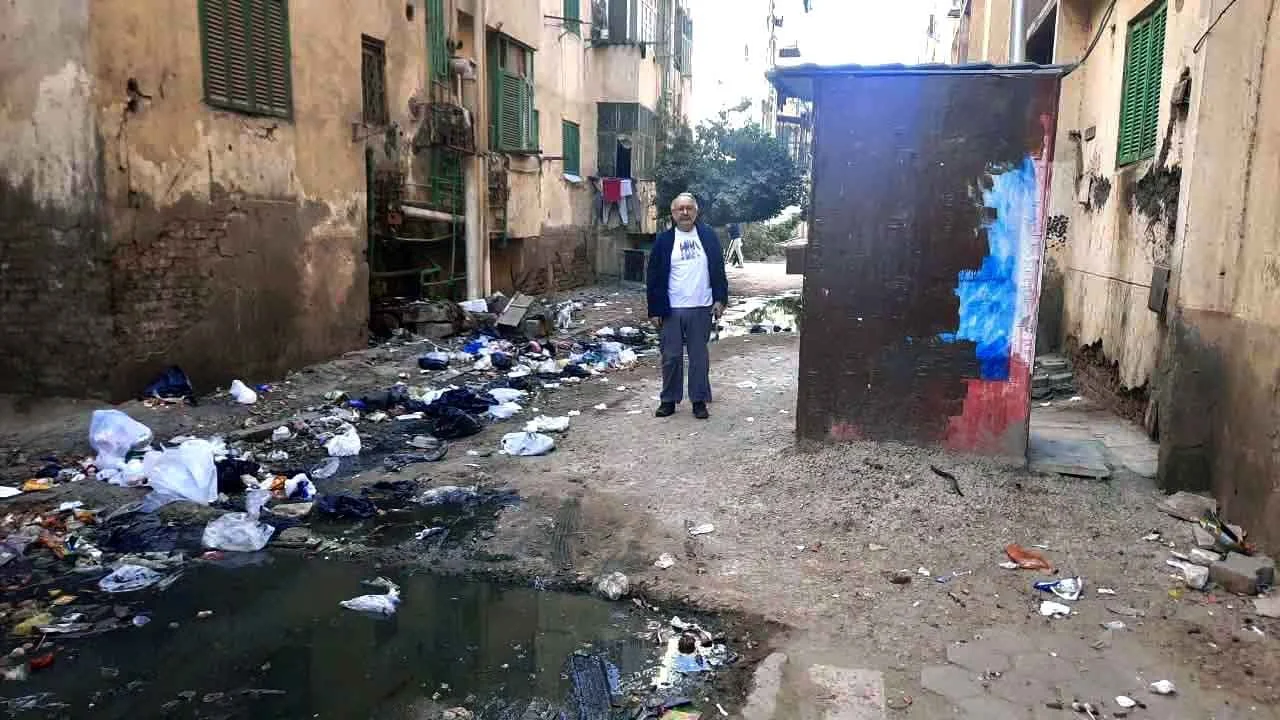
Standing in the middle of Masaken Zeinhom
When Arab Modernism(s) was published, I felt less like I had completed something and more like I had entered into a longer conversation — one that began before me and will continue long after.
If Hidden Cities lingers in the personal geographies we carry, then Arab Modernism(s) lingers in the unresolved geographies cities carry within them. I set out to trace buildings and plans, but I ended up tracing doubts, convictions, and uncertainty. The book changed the way I see cities. It also changed the way I see my place within them.
