Chapter 11. Parallel Modernities. Abu Dhabi, Dubai, and “Never the Twain Shall Meet”
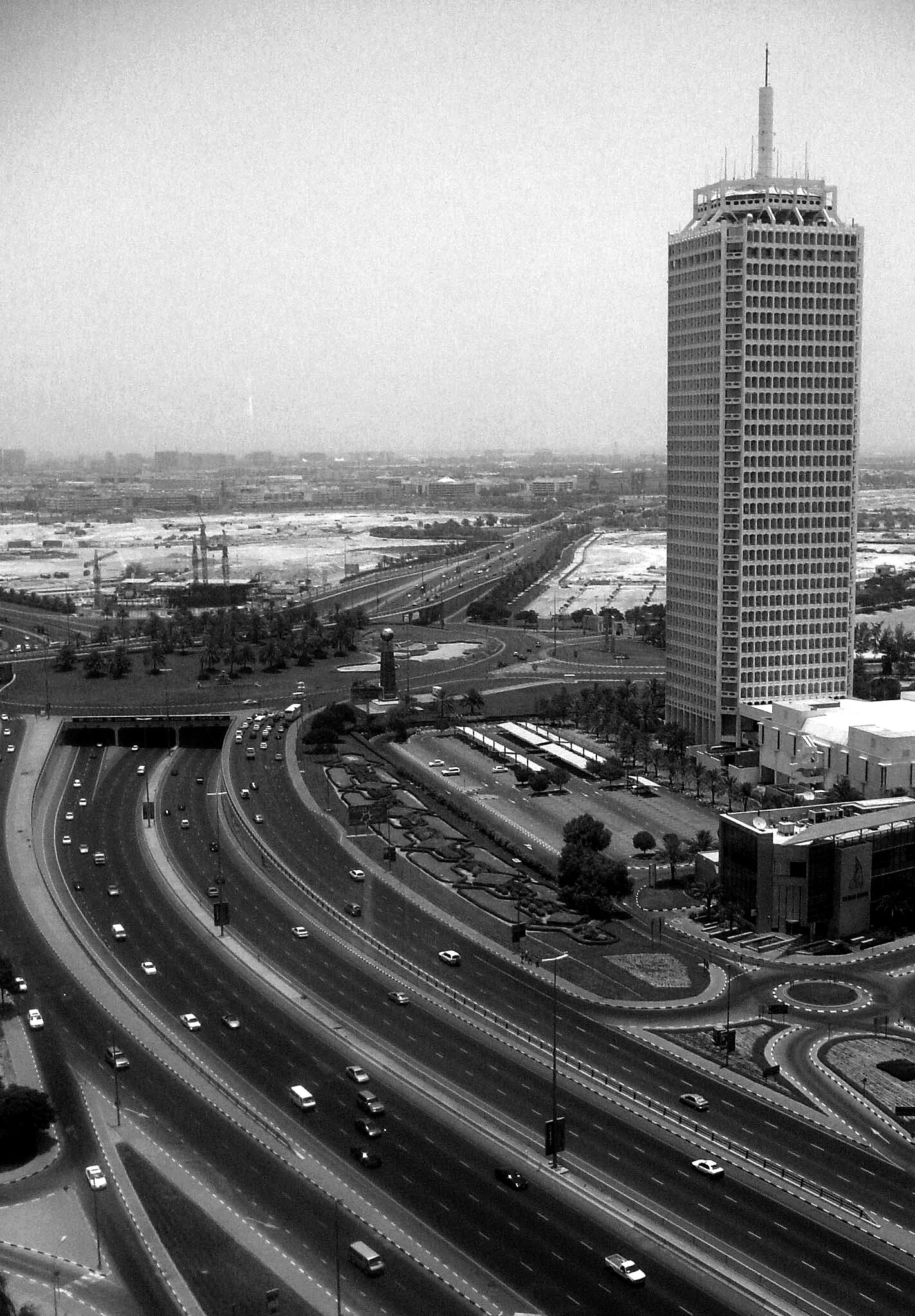
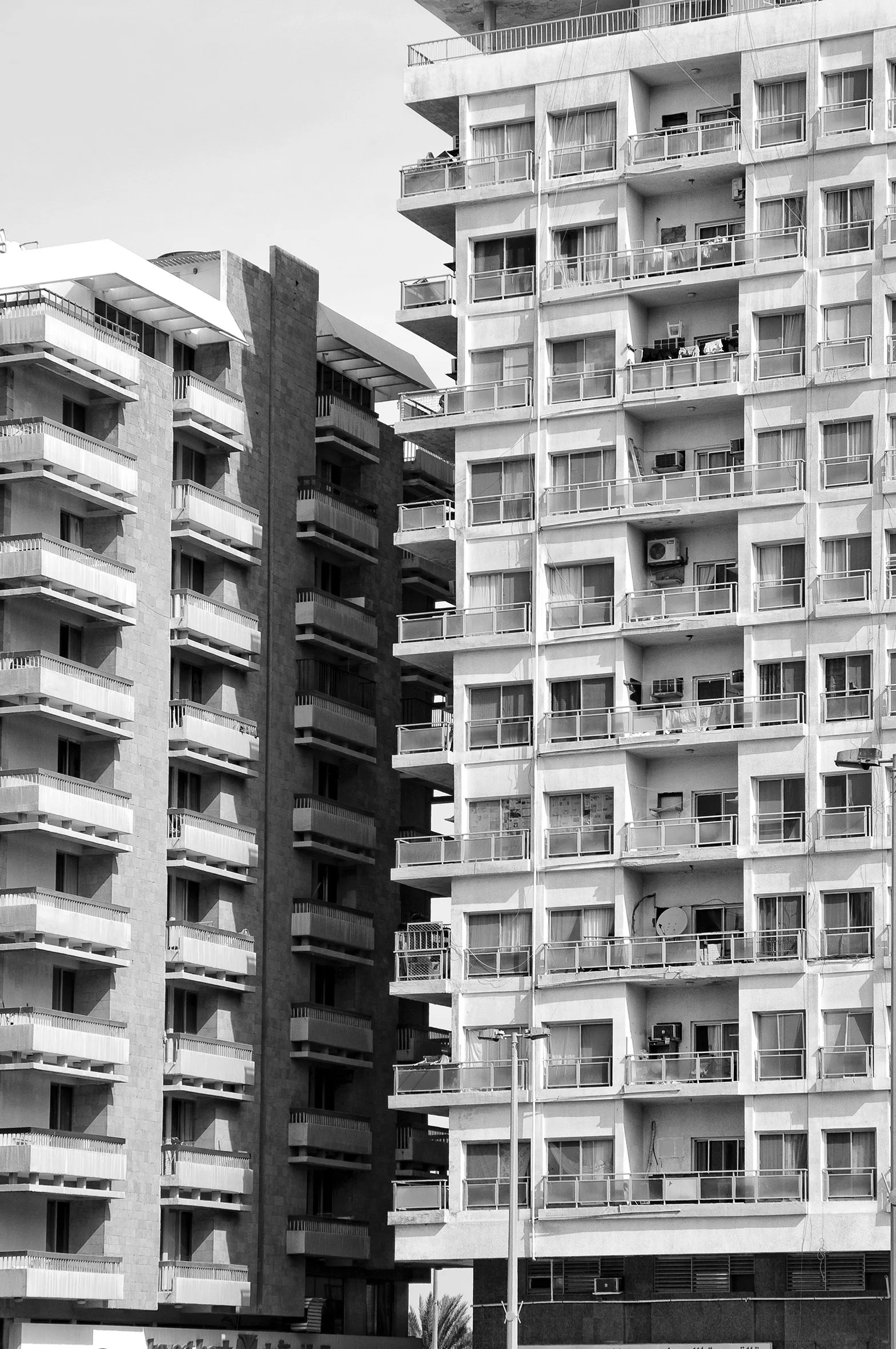
This chapter situates Dubai and Abu Dhabi as twin laboratories of Gulf urbanism, where architectural ambition, state power, and global capital intersect to produce radically new spatial forms. Beginning with the rise of oil-fueled development in the 1960s, the chapter considers how both cities embarked on modernization projects that transformed their urban landscapes, institutions, and social relations.
While Dubai projected itself as a global city through spectacle, infrastructure, and liberalized economic zones, Abu Dhabi adopted a more measured, state-centric model that fused modernist planning with cultural and institutional consolidation. Key projects—such as Dubai’s Burj Khalifa, and Abu Dhabi’s Cultural Foundation, as well as Saadiyat Island’s museum cluster —are critically analyzed to understand how urban space has been used to craft national identity, attract investment, and manage populations.
The chapter integrates first-person observations, archival research, and cinematic representations to foreground both the monumental and the marginal. Special attention is given to informal and hidden spaces—migrant camps, old souks—revealing how they coexist uneasily with the official narrative of progress. Rather than a singular story of success, the urban history of these two cities is one of tension: between visibility and invisibility, heritage and erasure, spectacle and everyday life. The chapter argues that the Gulf’s urban modernity is not only materialized in iconic skylines but also in the quiet improvisations of those left out of official visions. These counter-narratives open up space to imagine a more inclusive and historically grounded urban future.
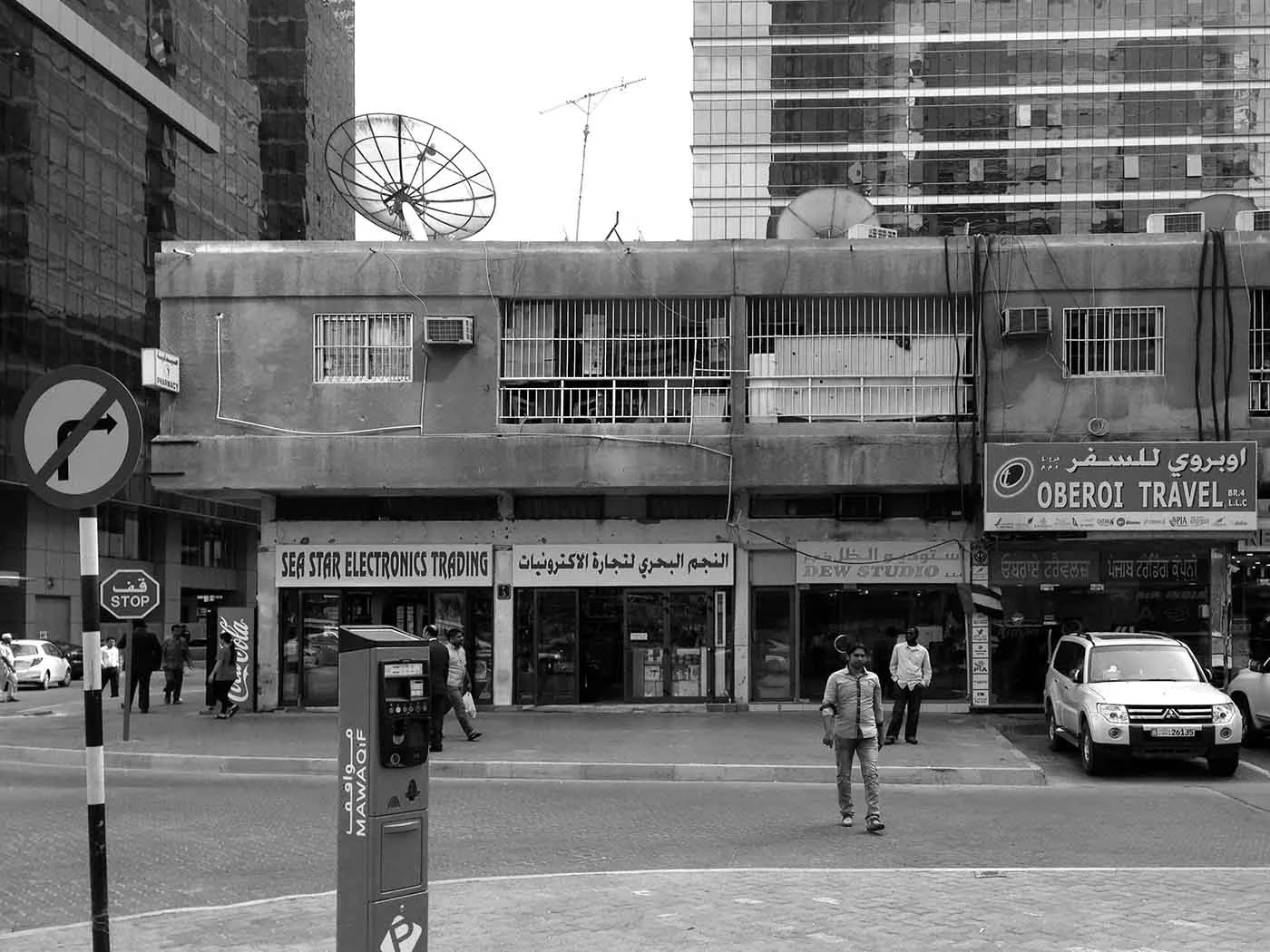
Sayegy Building. Abu Dhabi. 2016
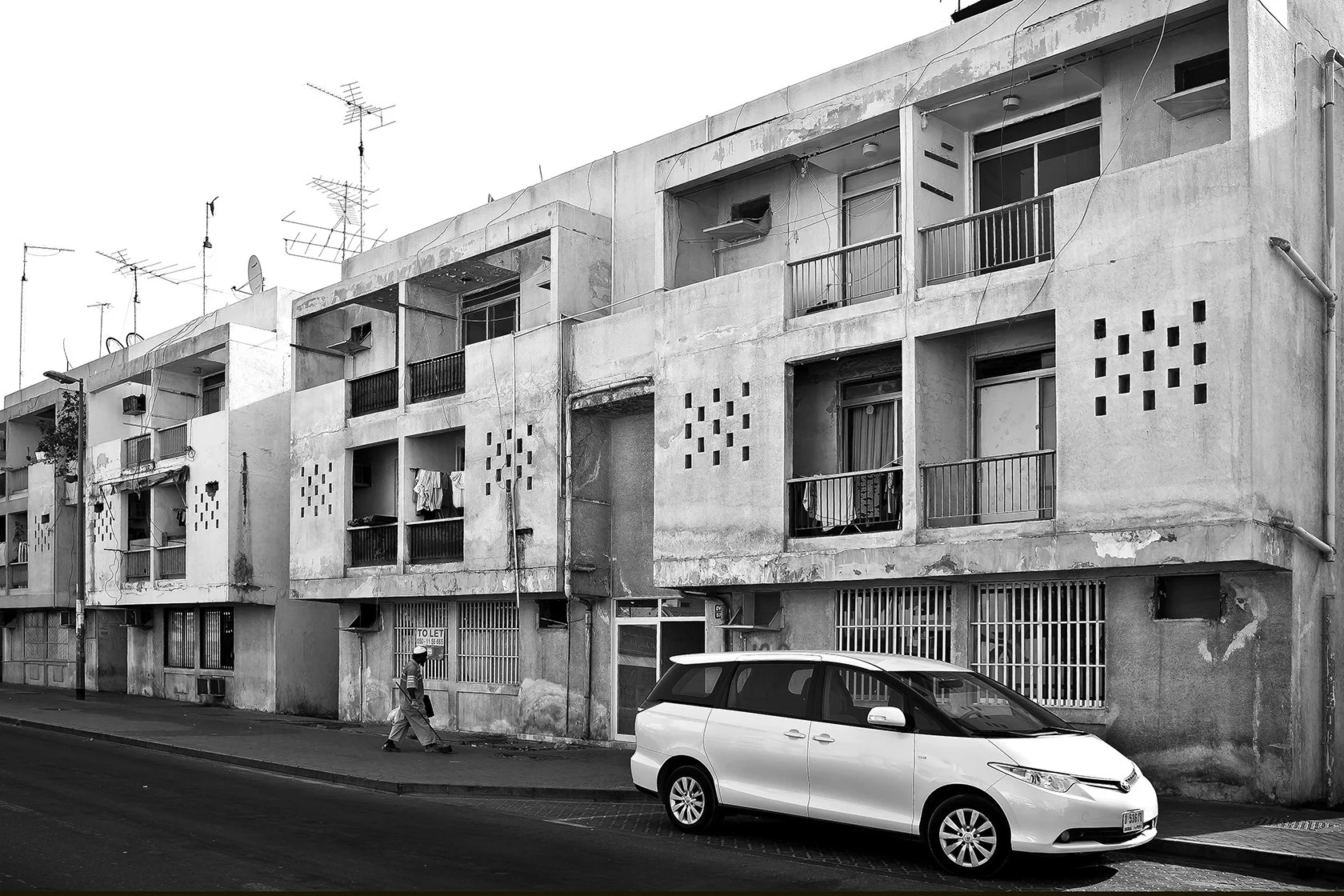
Hor Al Anz. Dubai. 2016
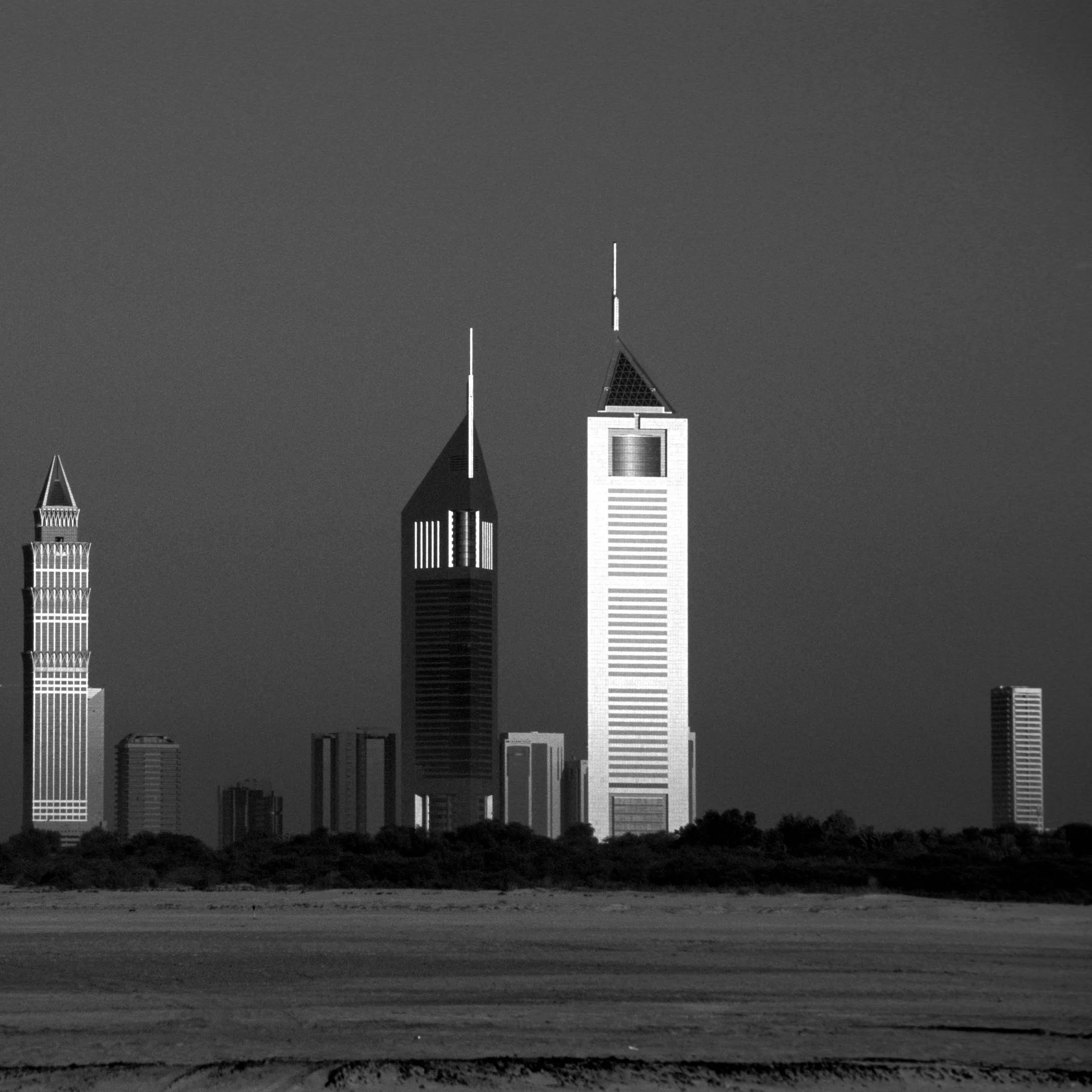
Emirates Towers. Dubai. 2001
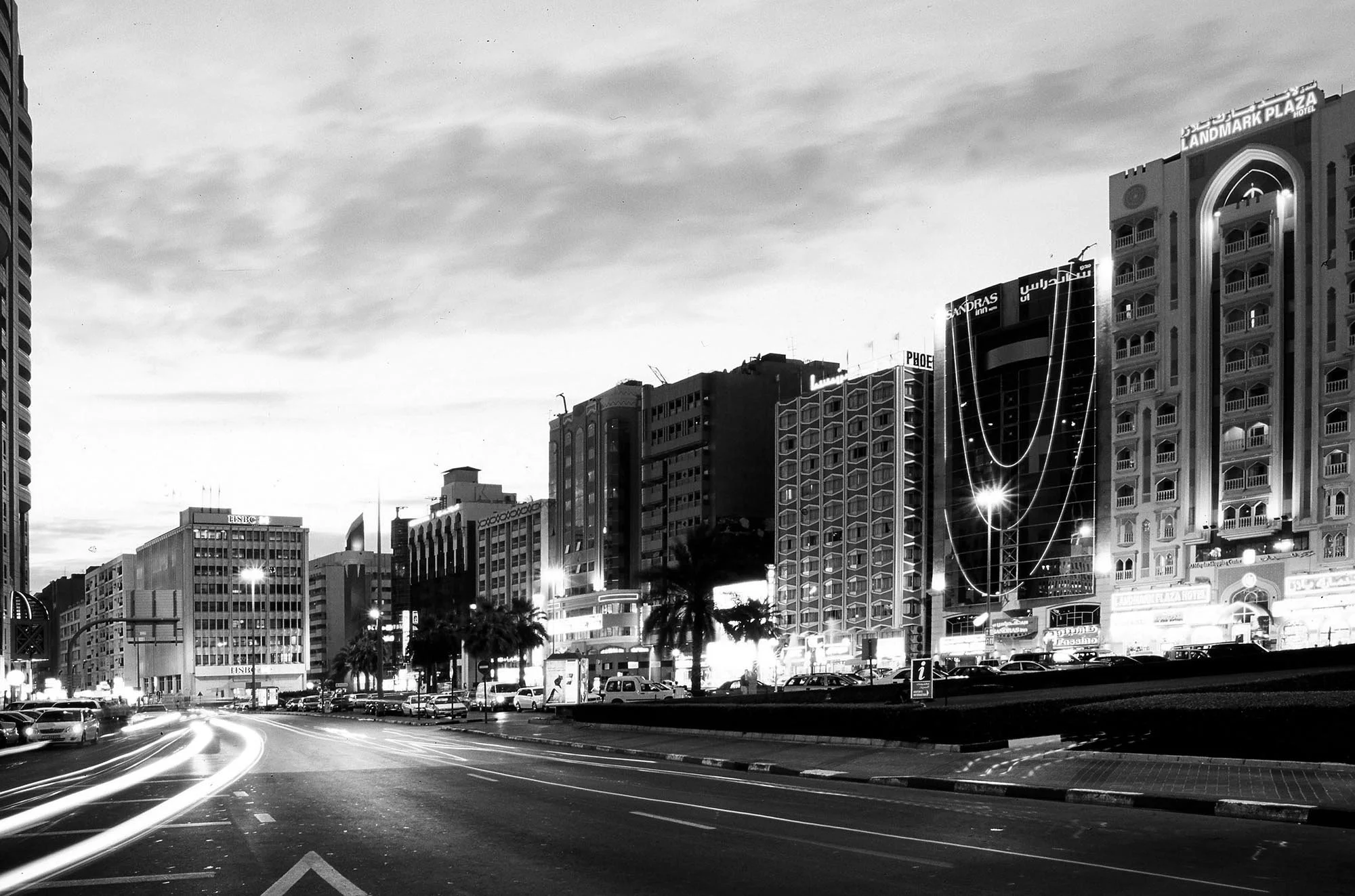
Baniyas Square. Dubai. 1998
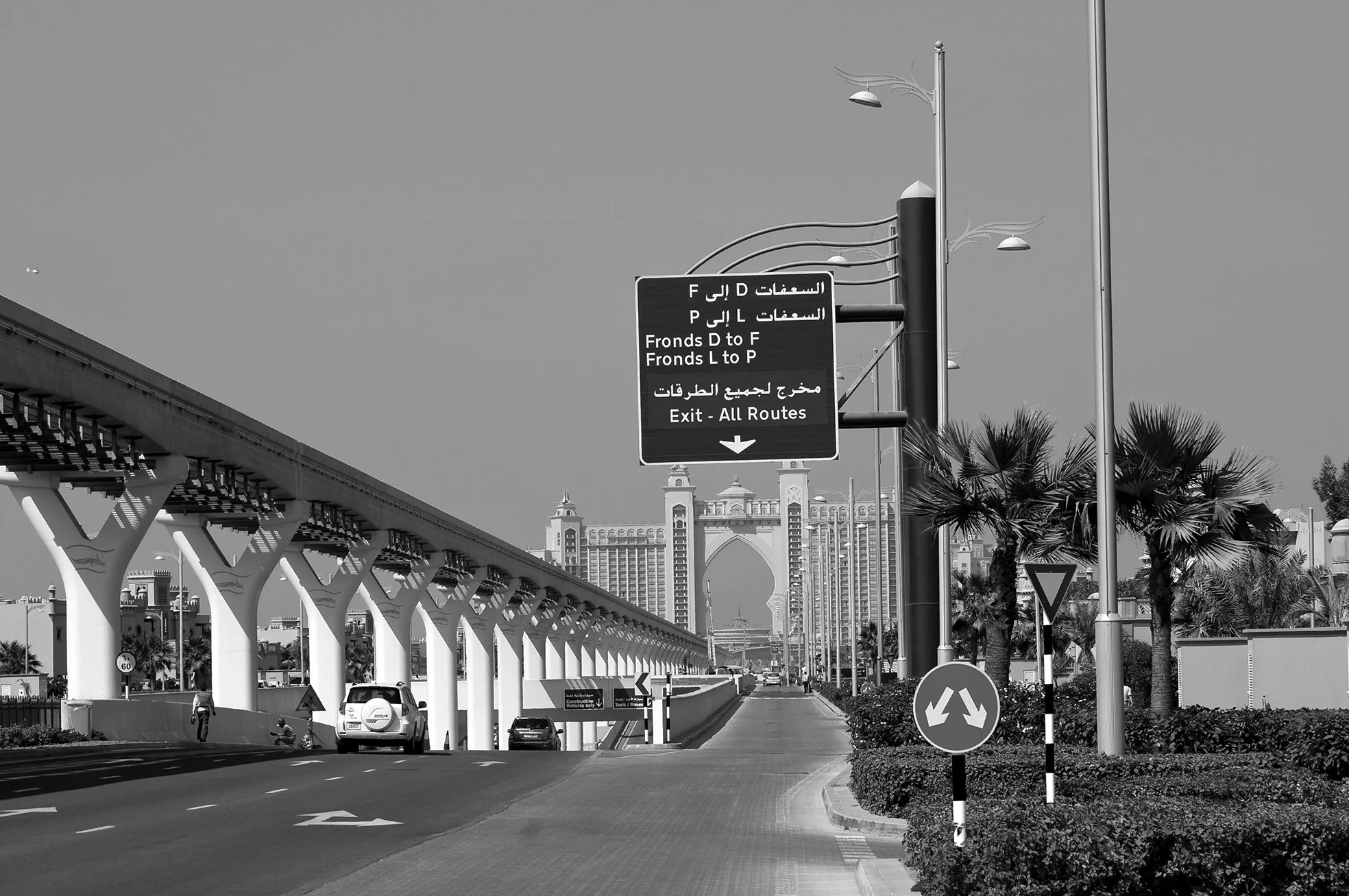
Palm Island Jumeirah. 2004
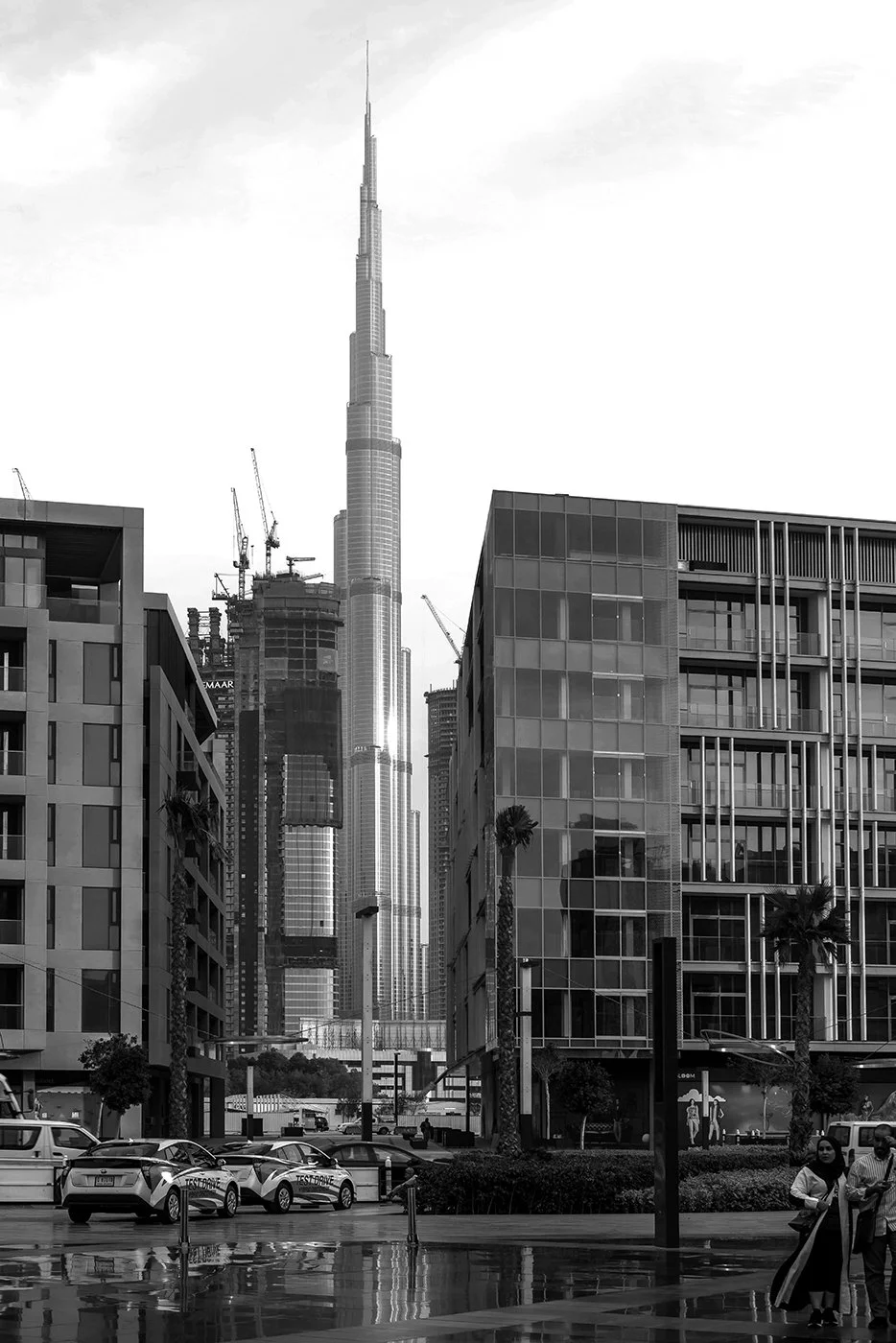
Burj Khalifa. 2024
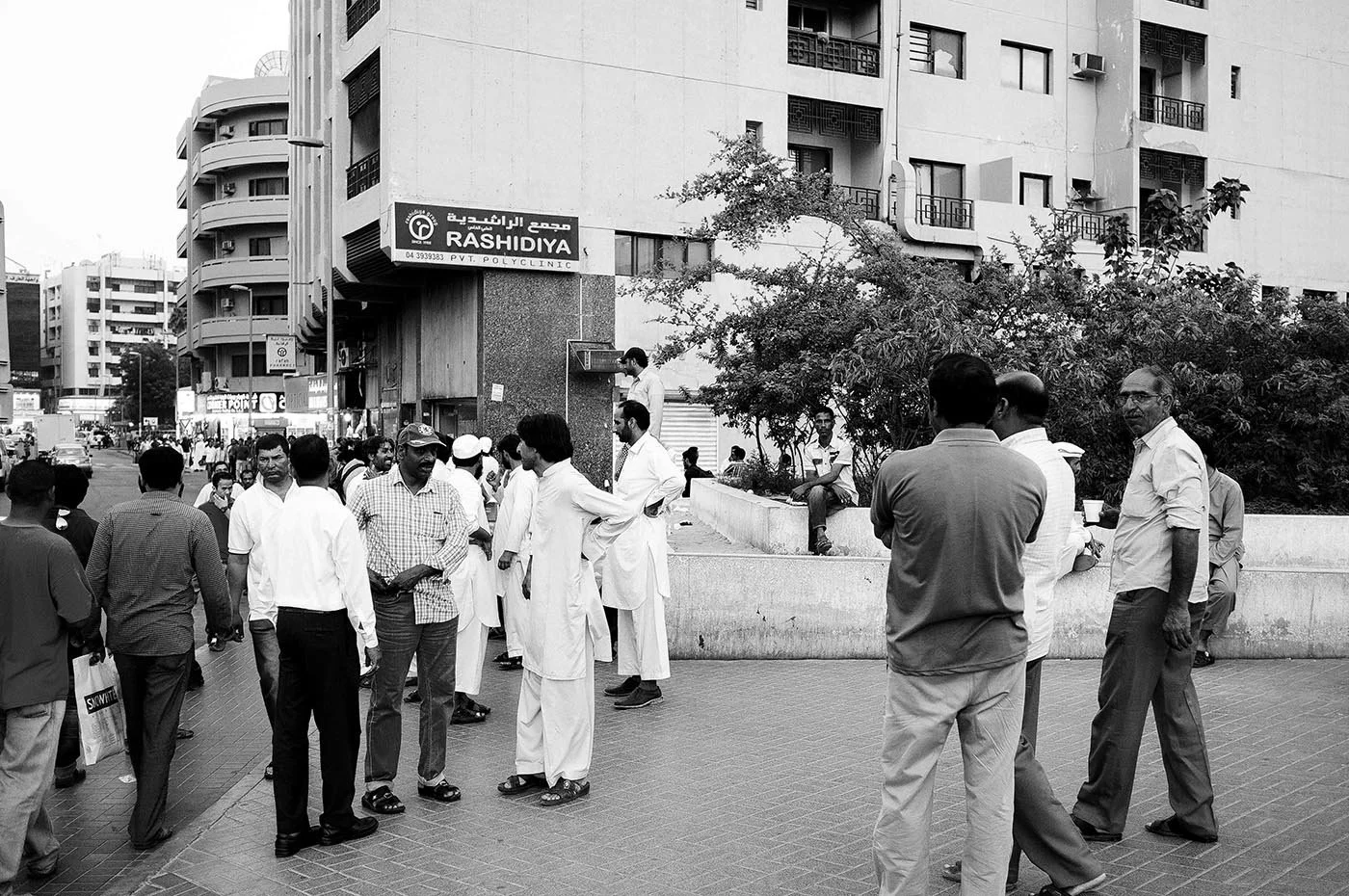
Ghubeiba. Dubai. 2012
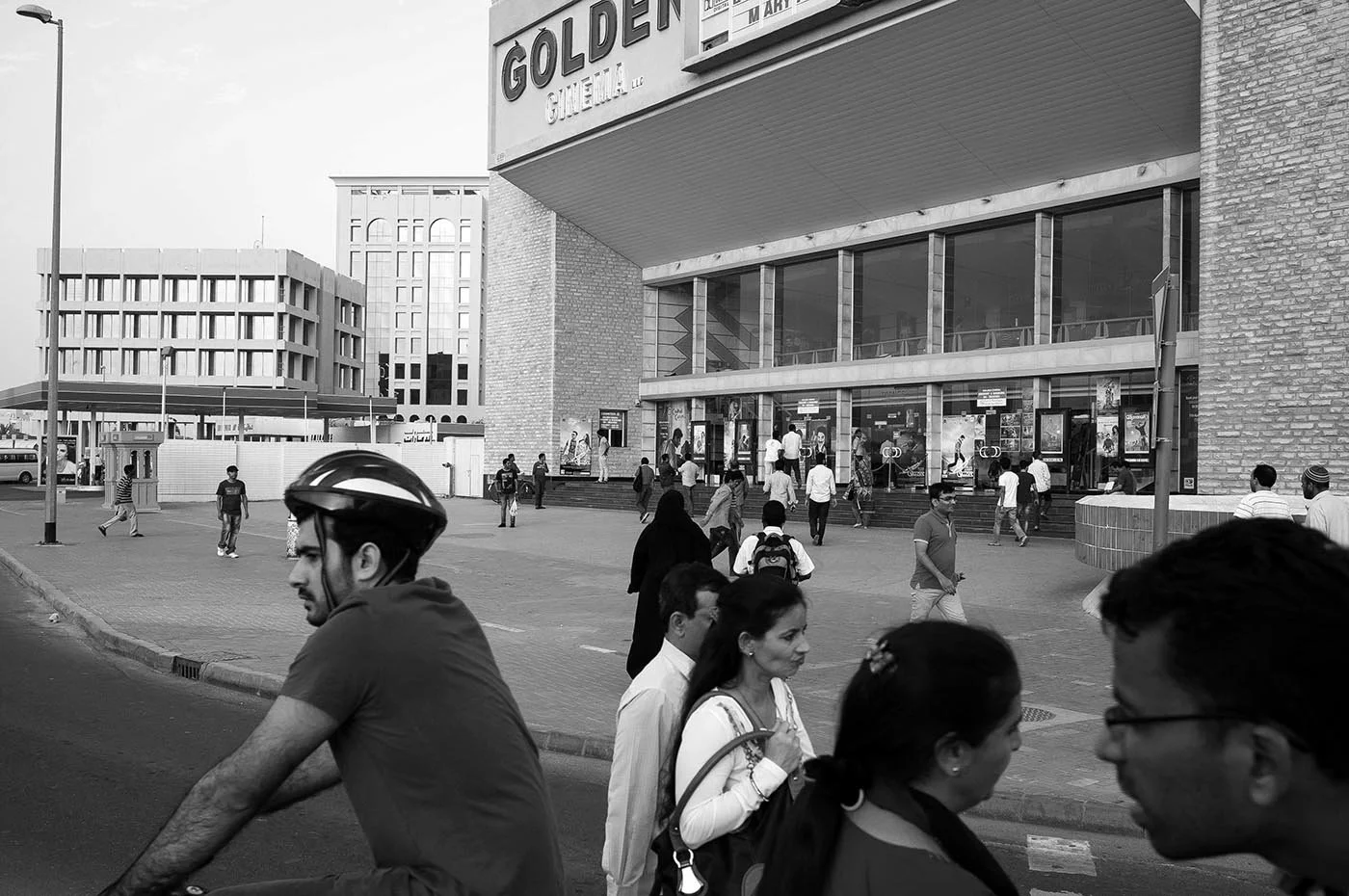
Golden Cinema. Dubai. 2014
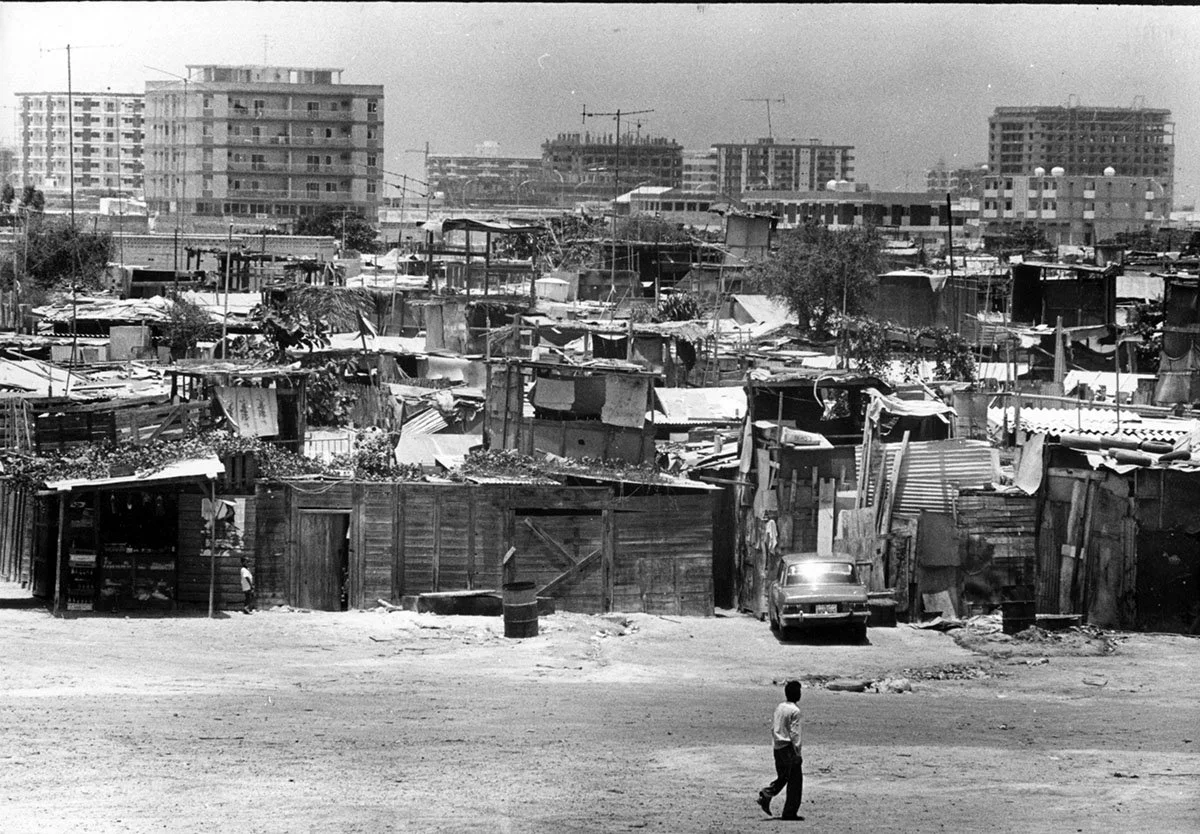
Abu Dhabi. 1972
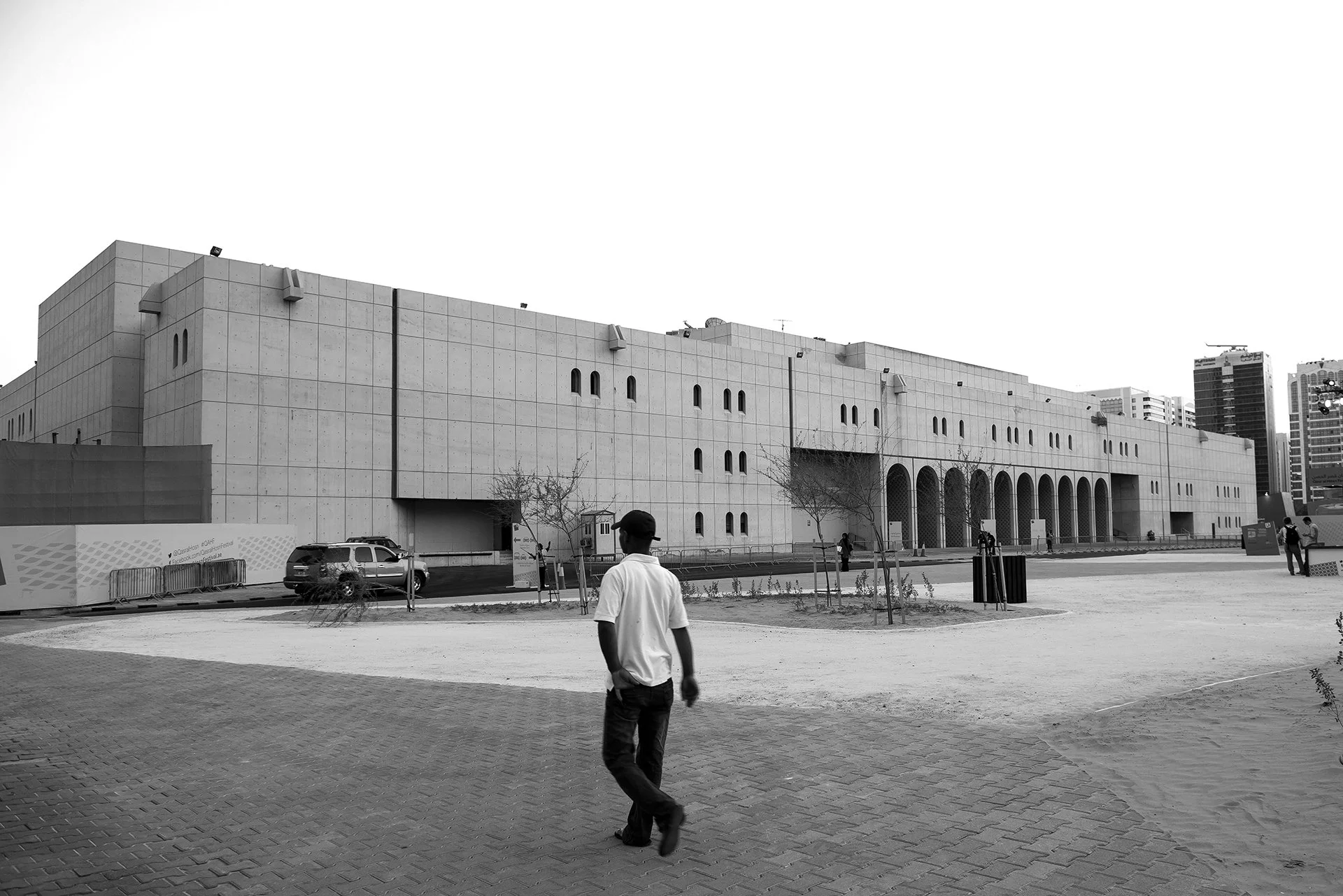
Cultural Foundation. Abu Dhabi. 2012
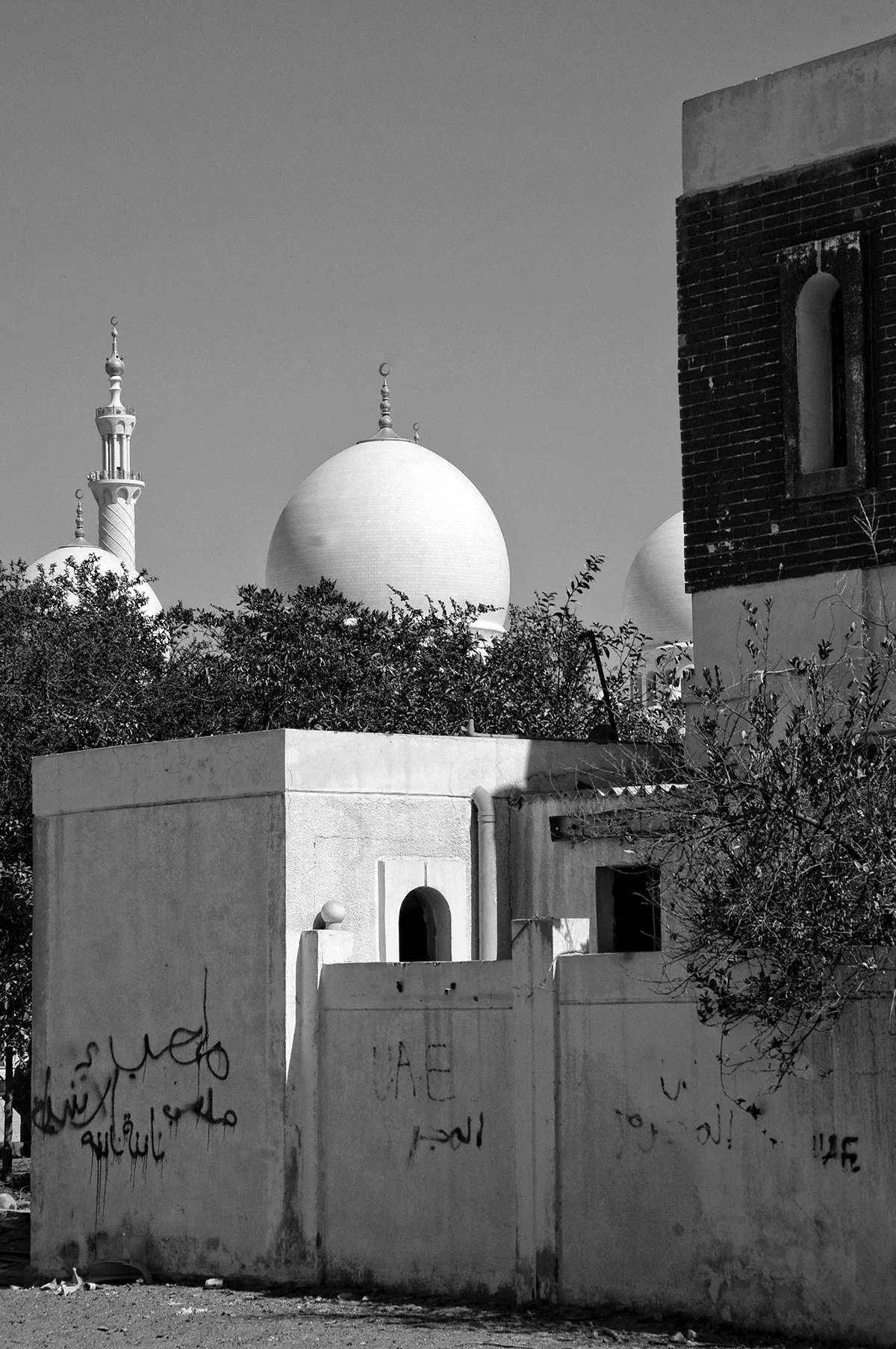
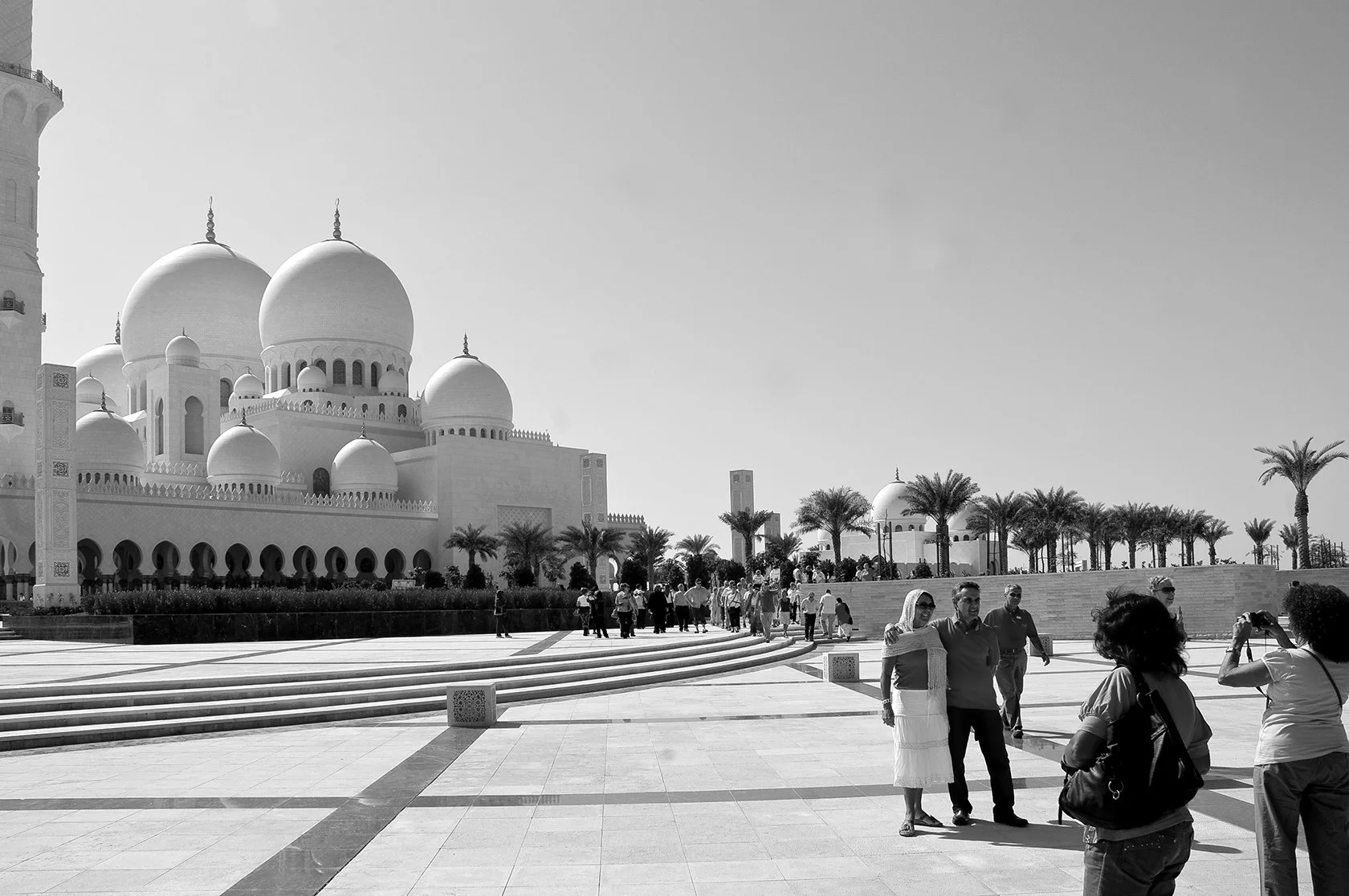
Sheikh Zayed Mosque. Abu Dhabi. 2014
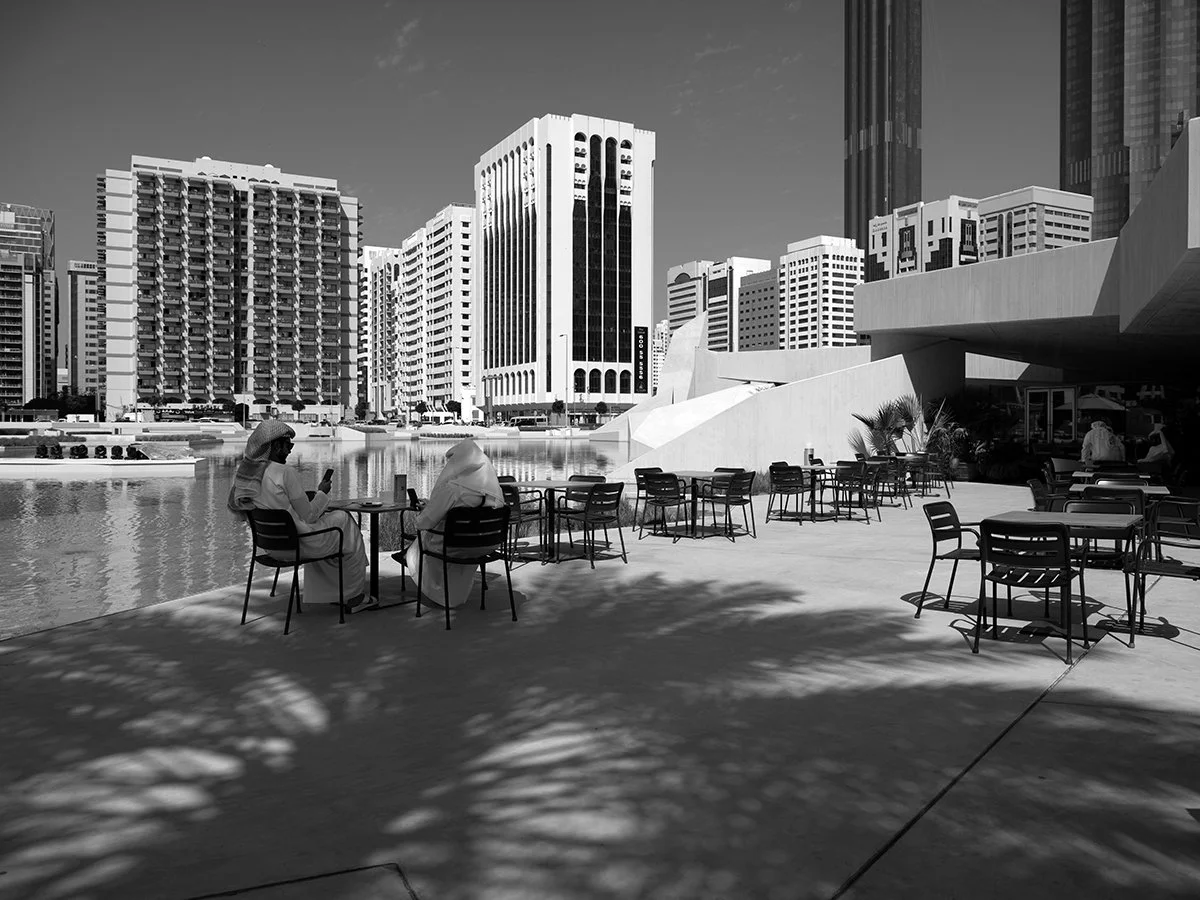
Qasr Al Hosn Development. Abu Dhabi. 2024
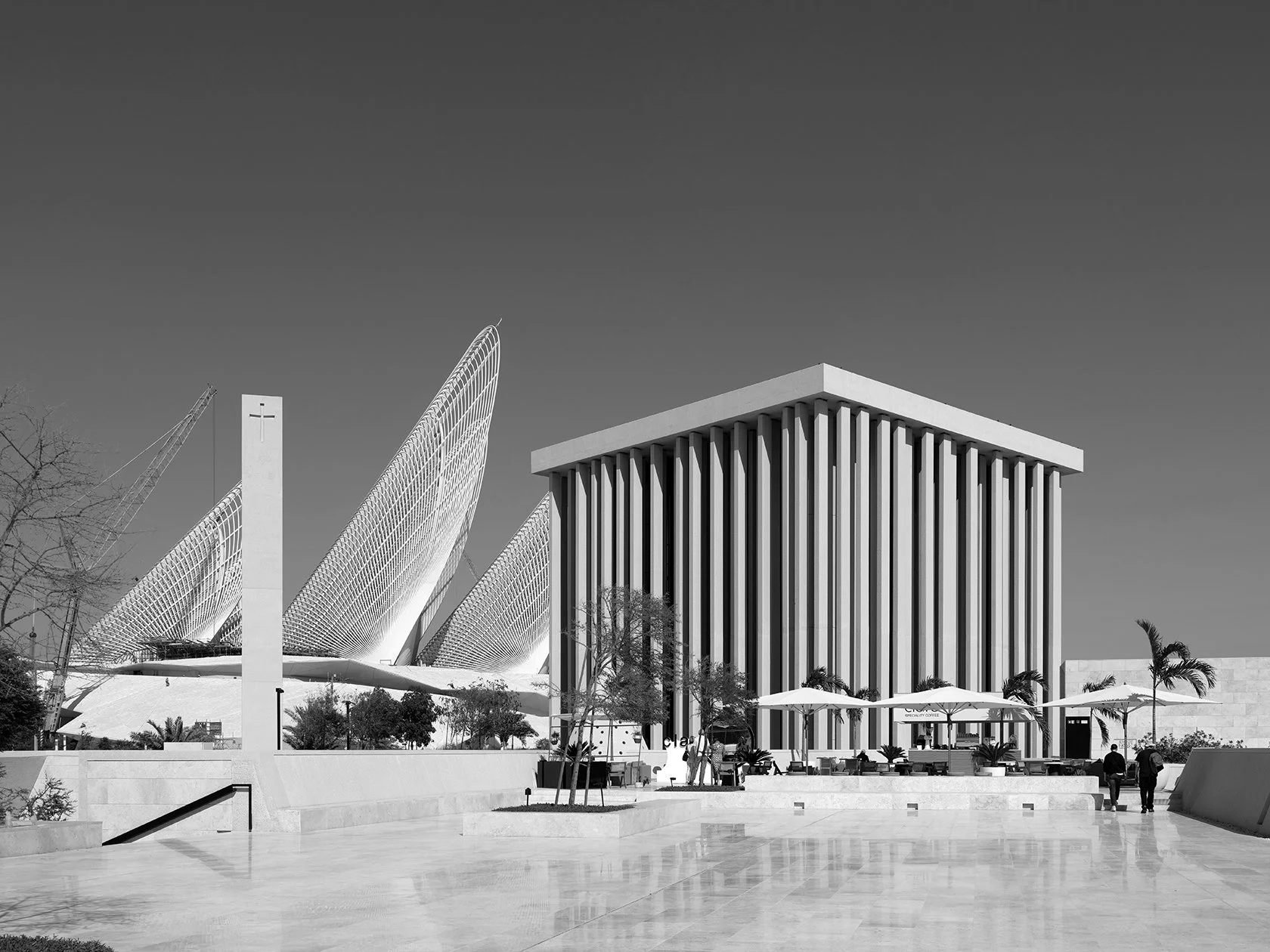
Abrahamic House. Abu Dhabi. 2024
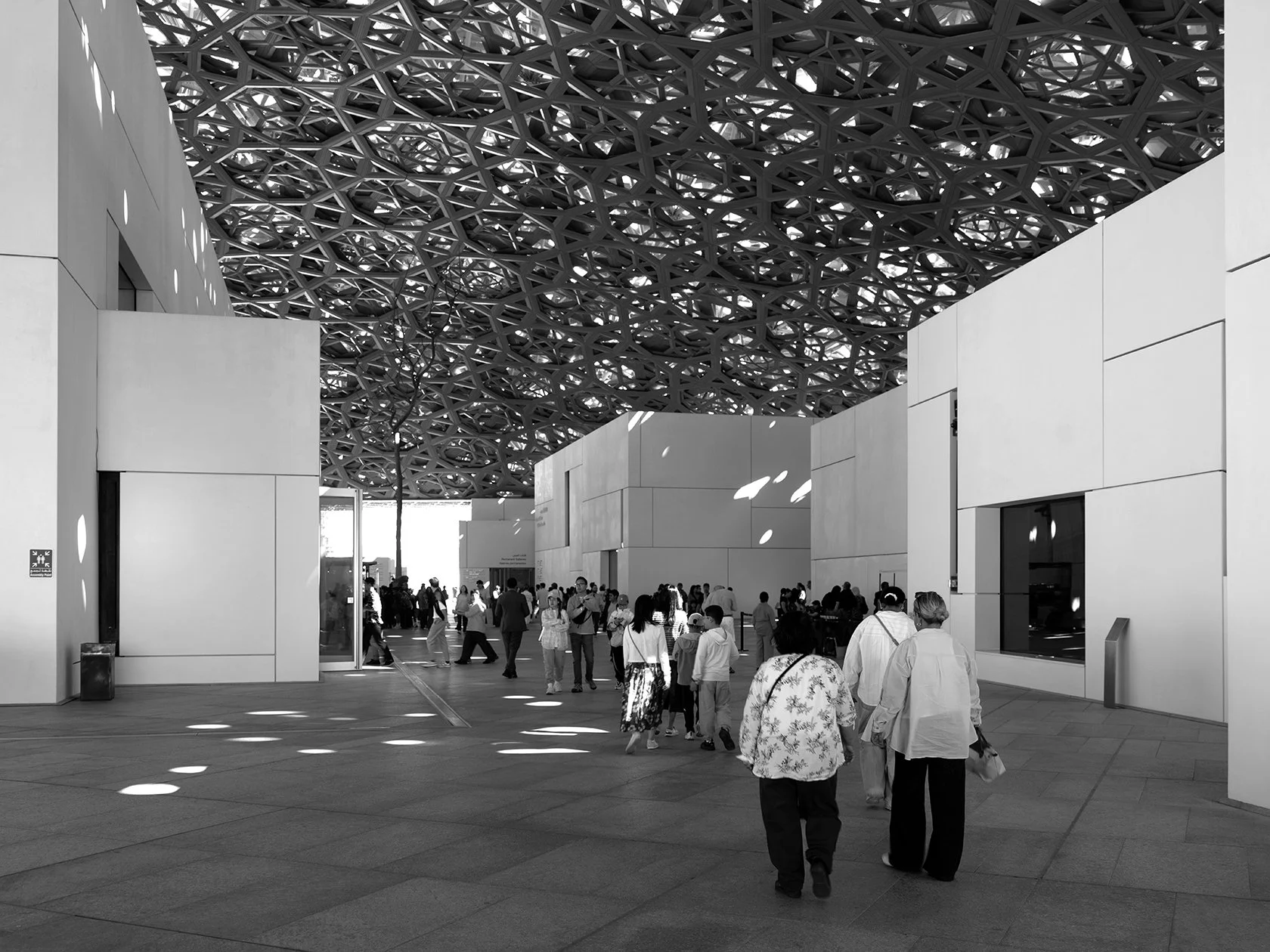
Louvre Abu Dhabi. 2024
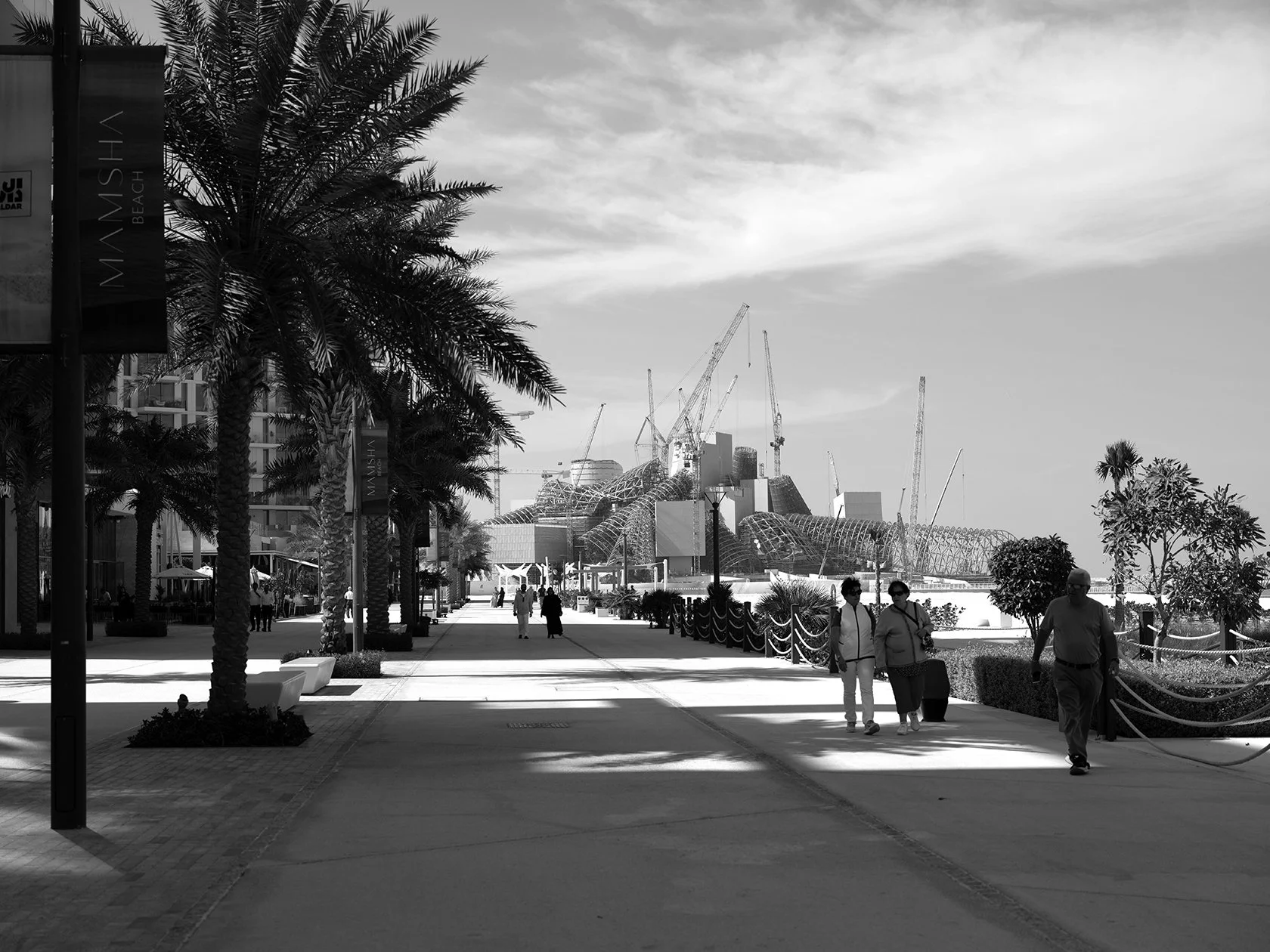
Mamsha Sa'adiyat. Guggenheim. Abu Dhabi. 2024
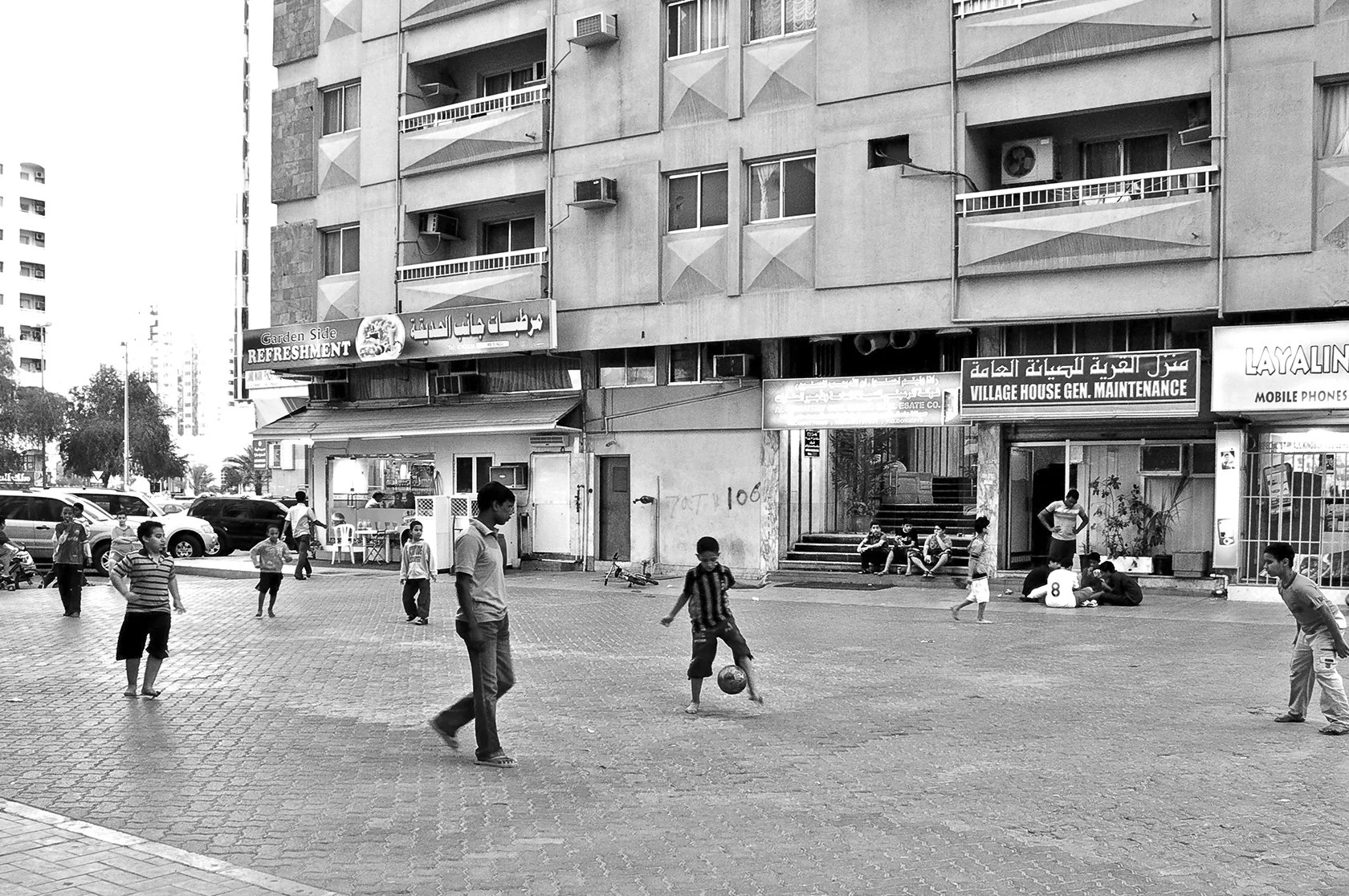
Mina Seyahi. Abu Dhabi. 2012
The Evolution of Dubai & Abu Dhabi from the 1960s to the 1970s
Dubai
Abu Dhabi
Passing through the creek and Business Bay. 2017
The streets of Abu Dhabi
Eddie & Me. Huang’s World. Dubai Episode. 2017
In the Season 2 finale, Eddie arrives in Dubai, the opulent heart of the United Arab Emirates, to explore how the city’s extreme wealth drives technology, culture, food and also to look at how new residents are diversifying the city. With the help of FTEN, Eddie examined how the city is balancing cultures old and new—with 1,000-year-old cooking methods on the one hand and gleaming