Chapter 10. Doha: Urban Palimpsests & the Erasure of Memory
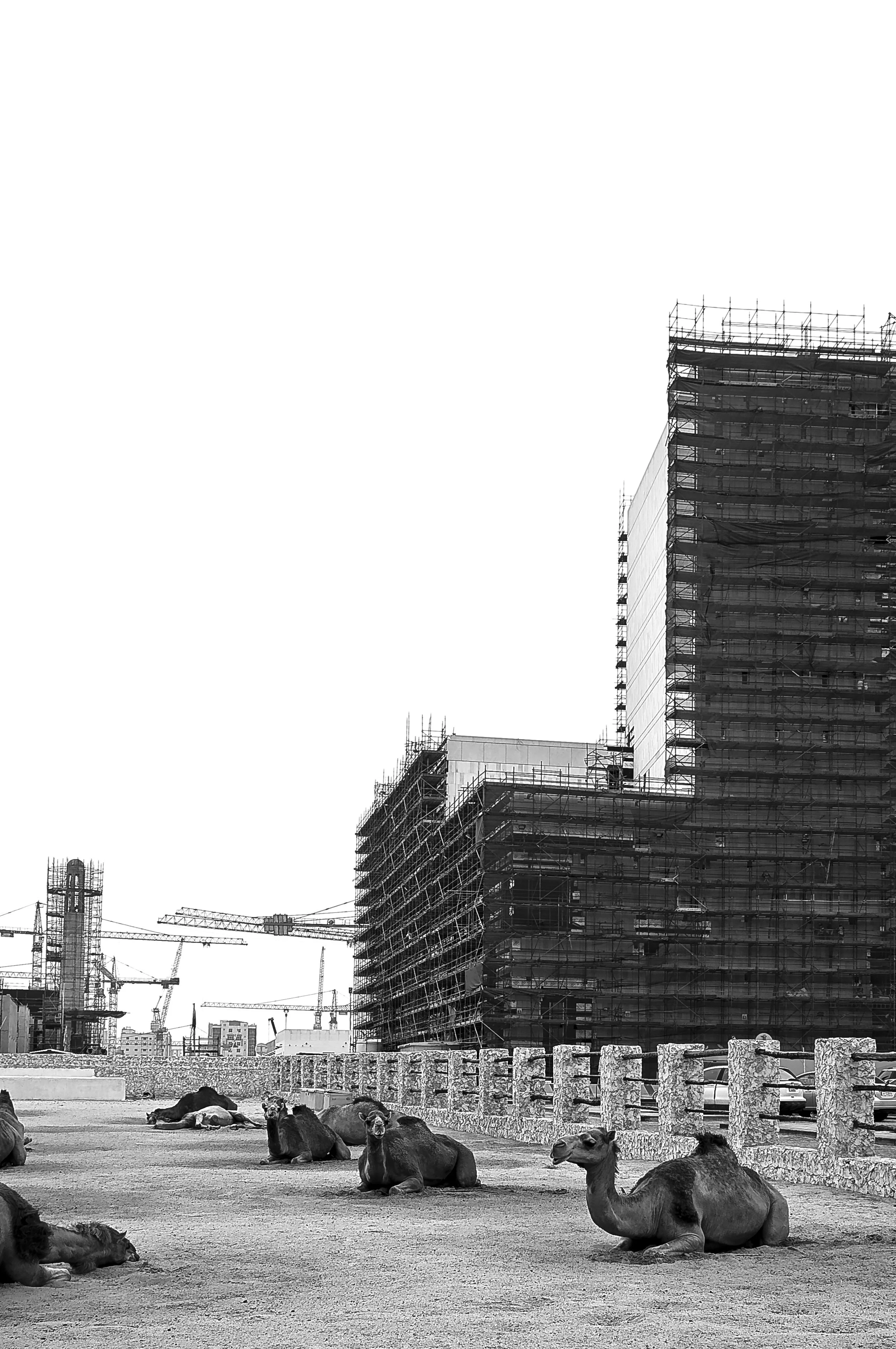
This chapter follows Doha’s urban and architectural transformation, specifically its emergence as a modest pearling town to a hyper-modern capital emblematic of Gulf spectacle and statecraft. Organized in three phases, the chapter first examines the early modernist period of the 1950s–1970s, when projects like Al Rumailah Hospital and the Sheraton Hotel embodied a desire for progress through imported architectural forms, often at the cost of historical erasure. The second phase, defined by efforts to craft a national identity, is marked by projects such as Souq Waqif and Msheireb Downtown Doha—revitalizations that perform authenticity while sometimes reinforcing exclusion.
These developments co-opt traditional aesthetics in service of a curated national narrative, marginalizing migrant communities who sustain the city’s growth. The third phase, what the chapter calls the “urbanity of spectacle,” centers on landmark projects like the Museum of Islamic Art, the National Museum of Qatar, Lusail City, and The Pearl. These projects assert Qatar’s global presence through architecture, yet often produce alienating, uninhabited urban forms.
Drawing on fieldwork, migrant narratives, and literary works such as Sophia Al-Maria’s The Girl Who Fell to Earth, the chapter critiques the disjuncture between image and lived experience in Doha’s built environment. Through an analysis of everyday spaces, hidden geographies, and the politics of representation, the chapter argues that Doha’s modernization is not a linear story of progress, but a contested process marked by displacement, spectacle, and ambivalent encounters with modernity—revealing the city’s deep entanglement with visibility, control, and aspiration.
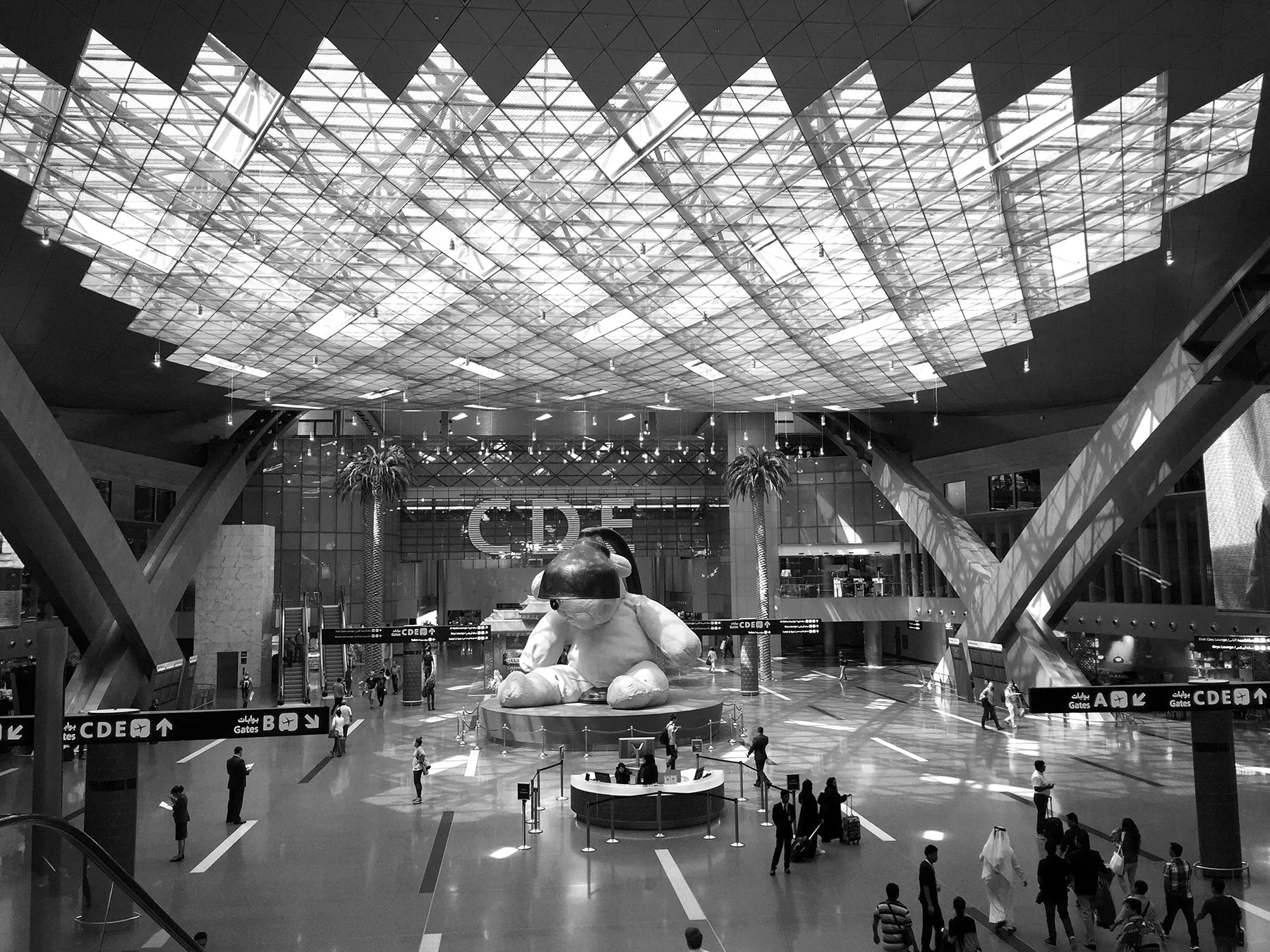
The iconic "Lamp Bear" sculpture by Urs Fischer at Doha Airport
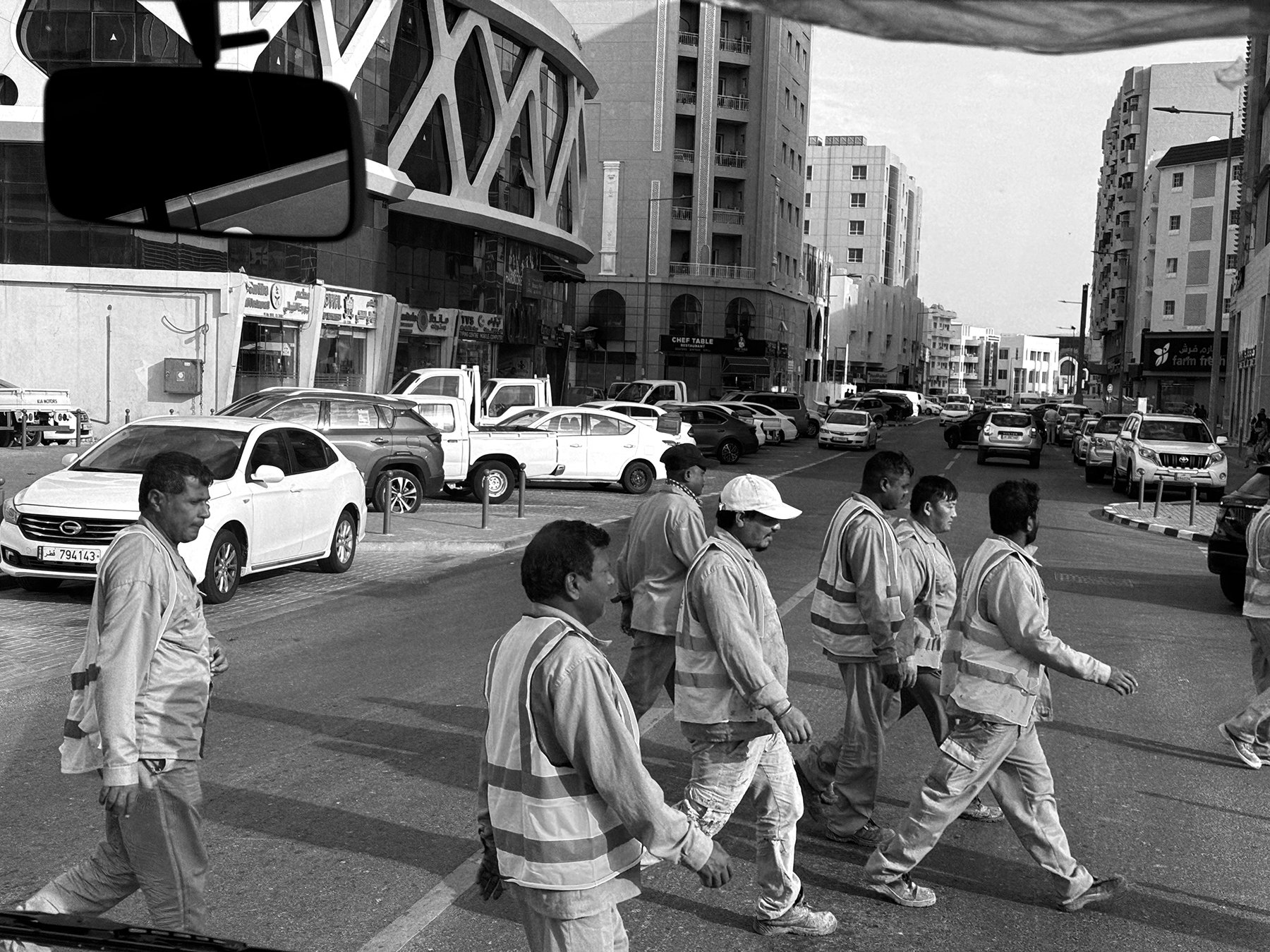
Laborers crossing a street in central Doha
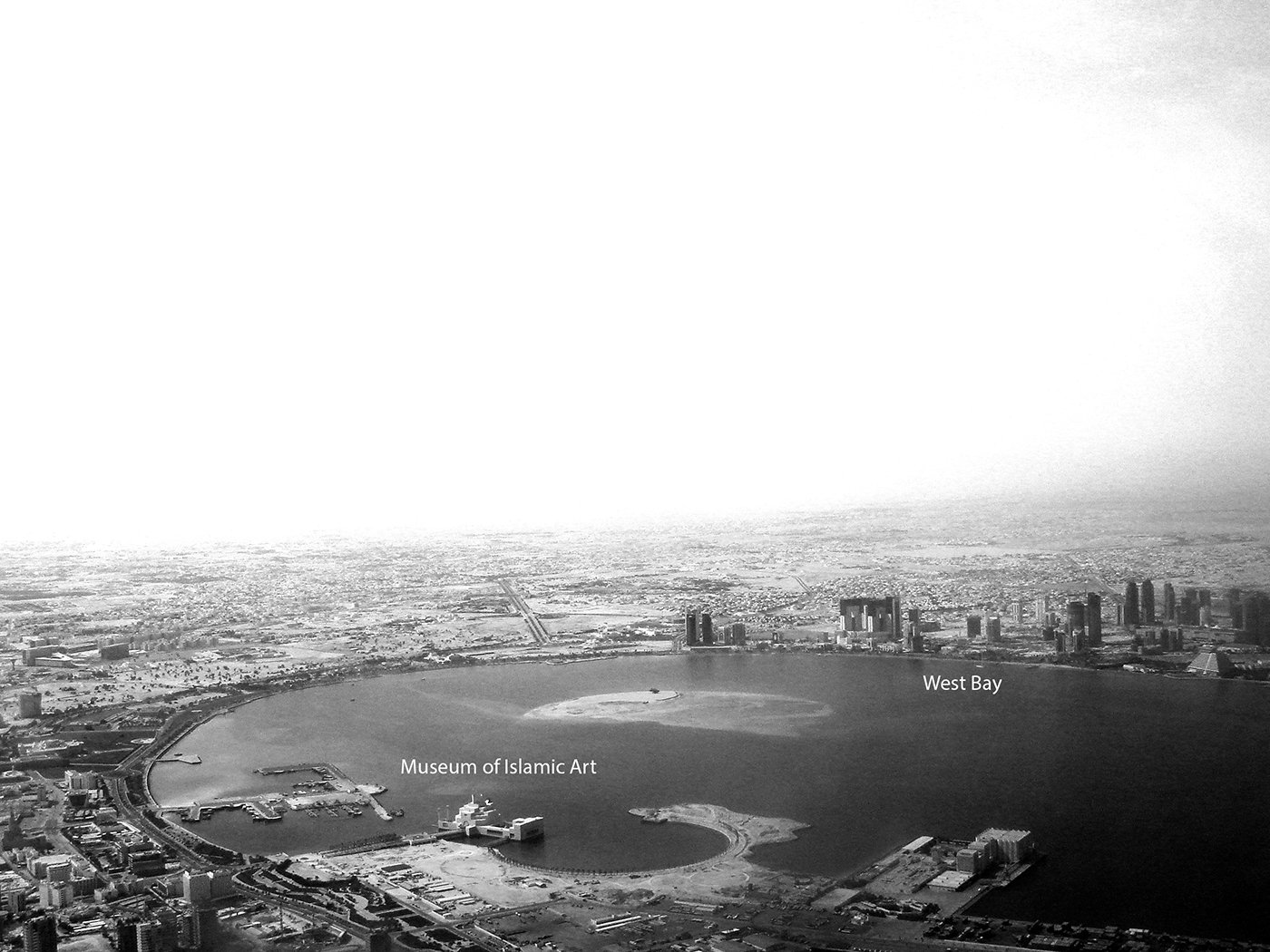
Aerial View of Doha’s Corniche . 2007
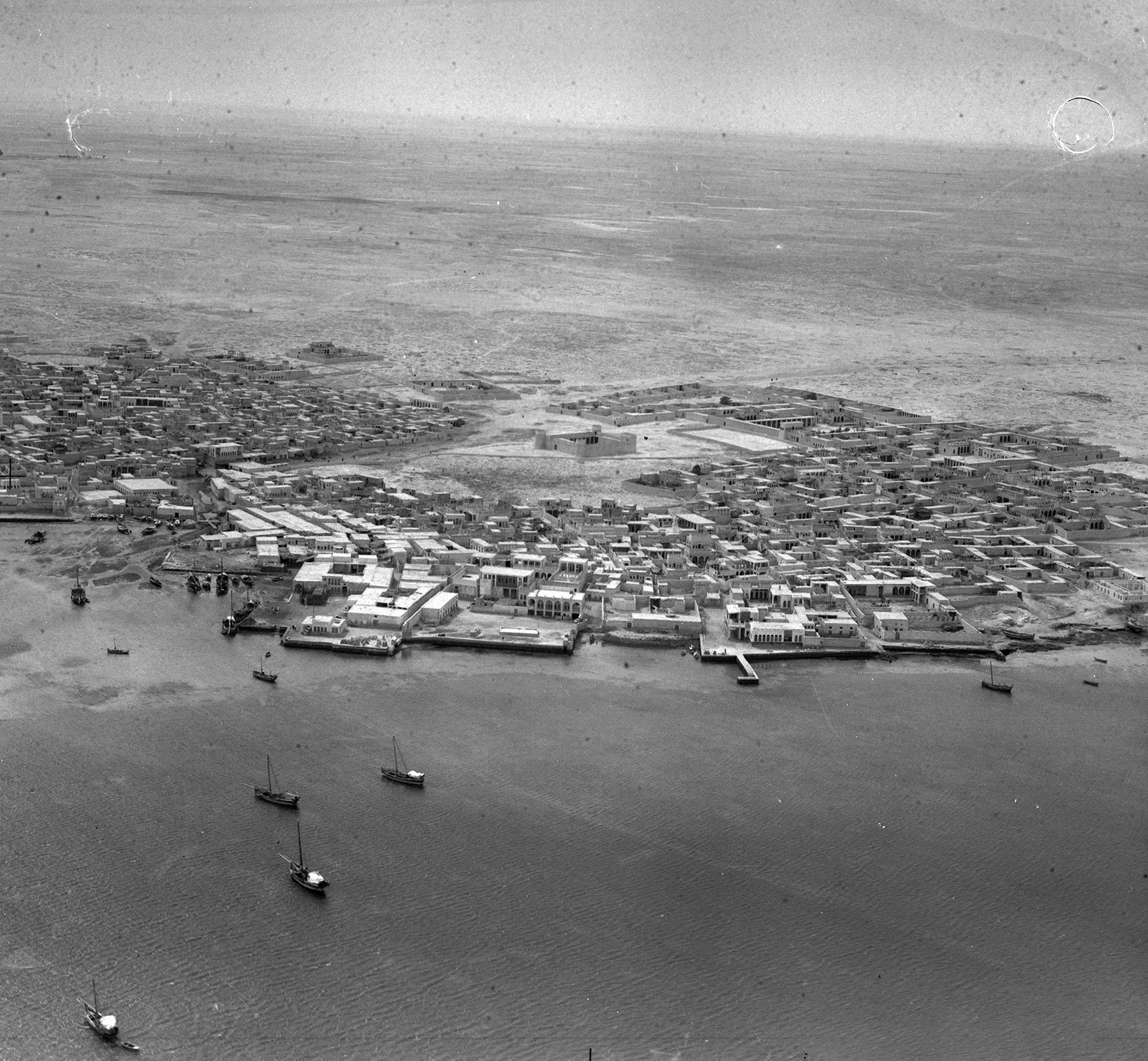
Doha aerial photograph, 1947
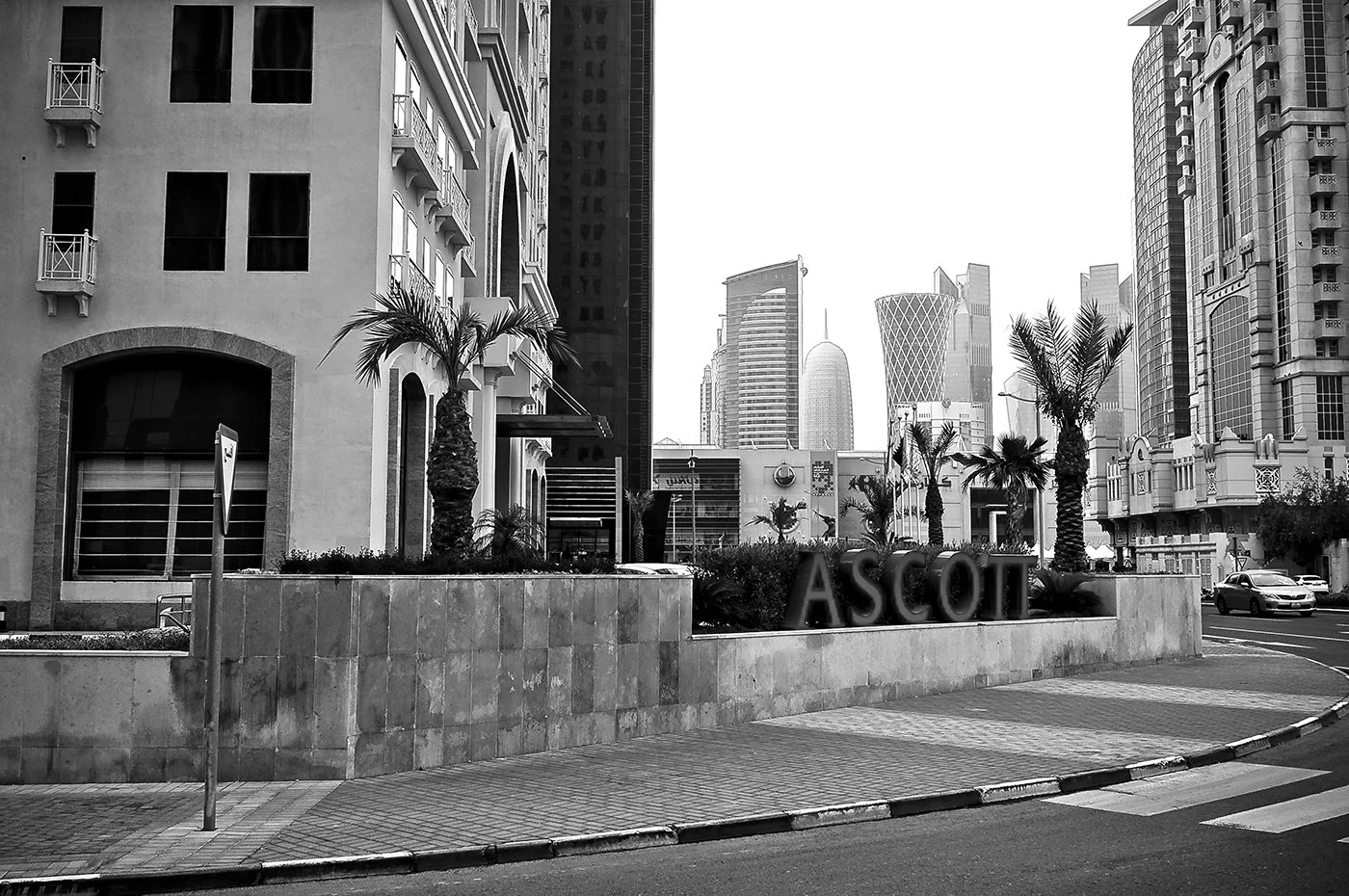
Empty streets in West Bay. 2013
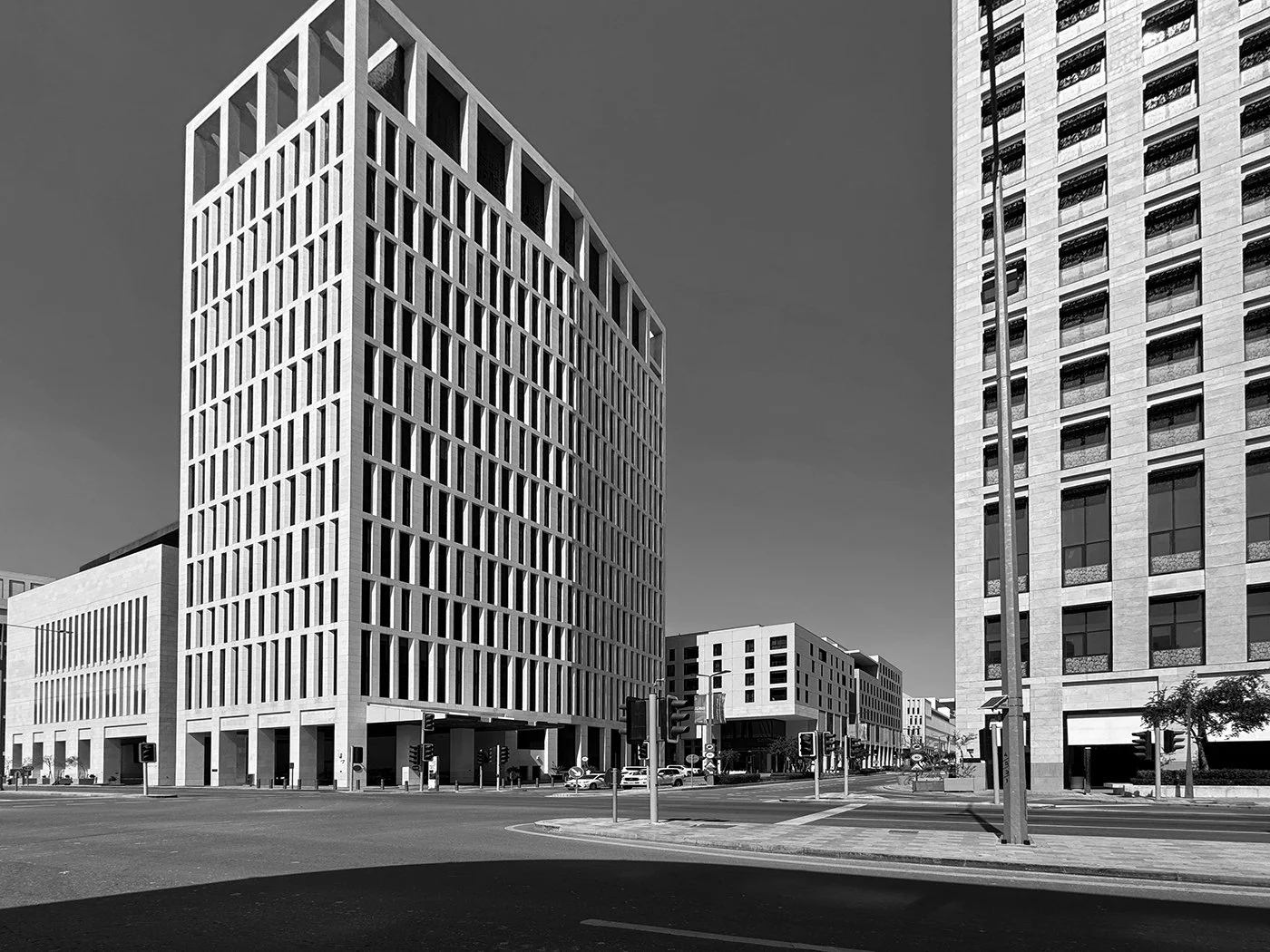
Msheireb. District Edge. 2024
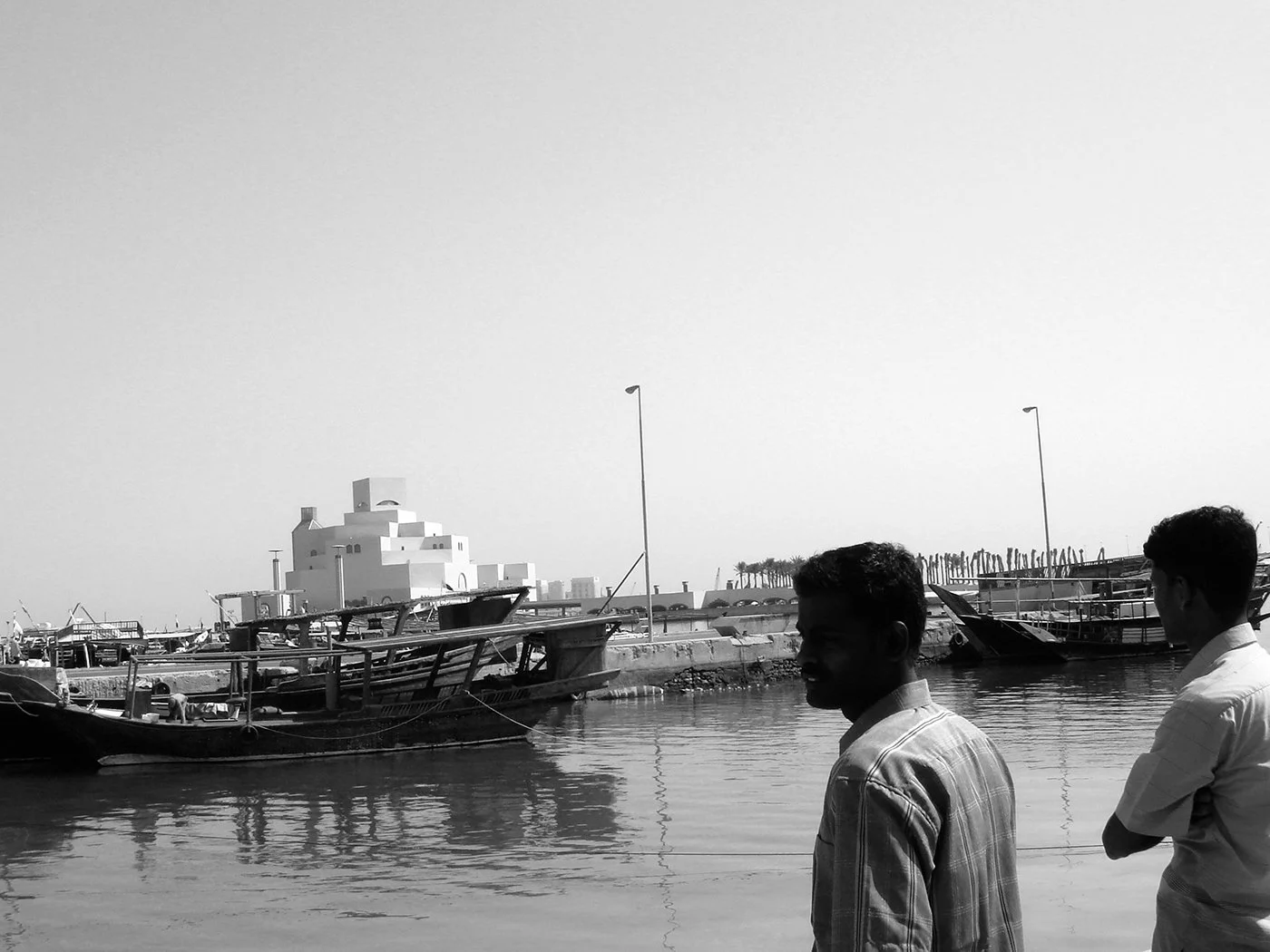
Migrant workers observing the Museum of Islamic Art. 2007
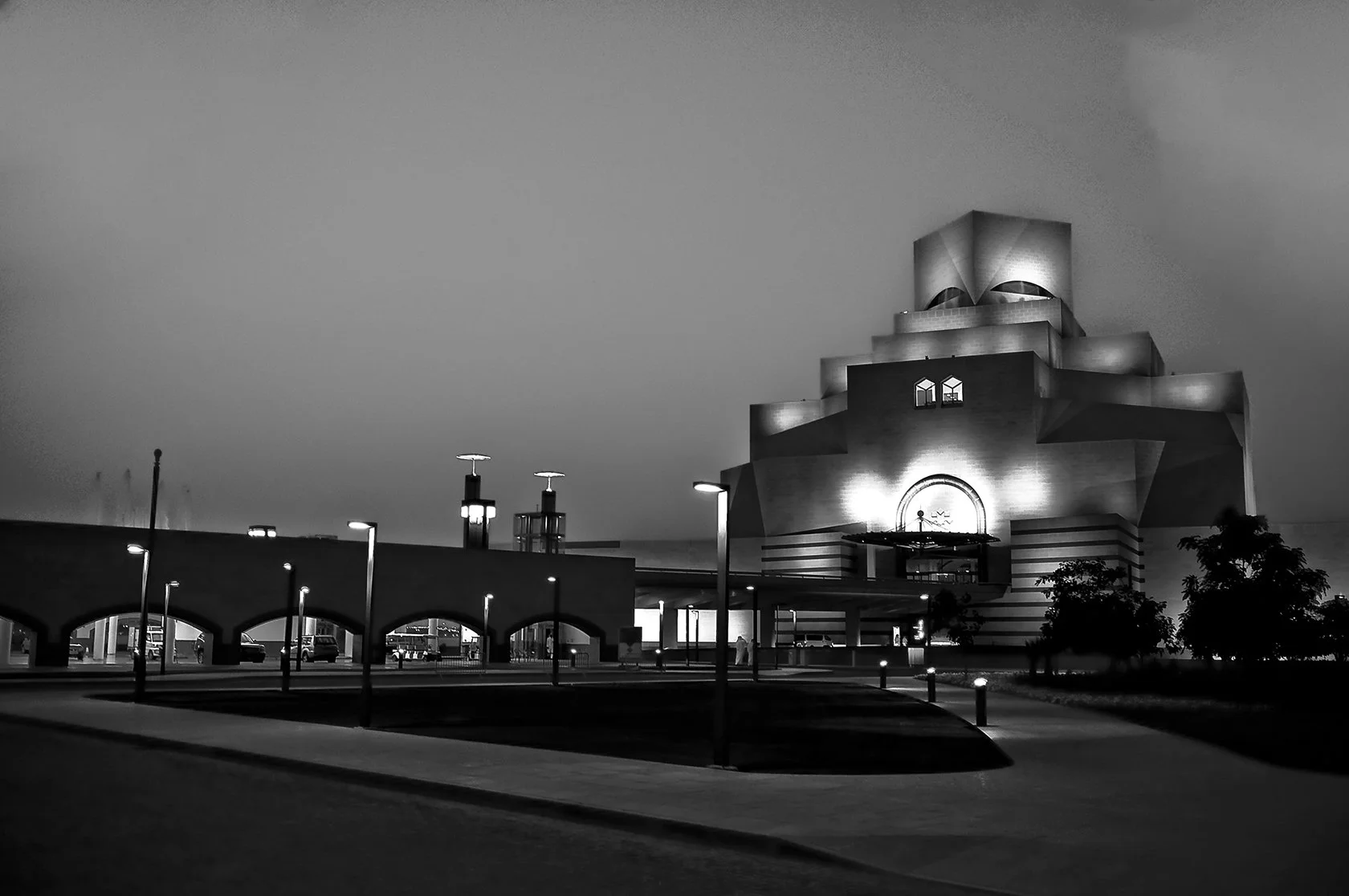
Museum of Islamic Art at night. 2013
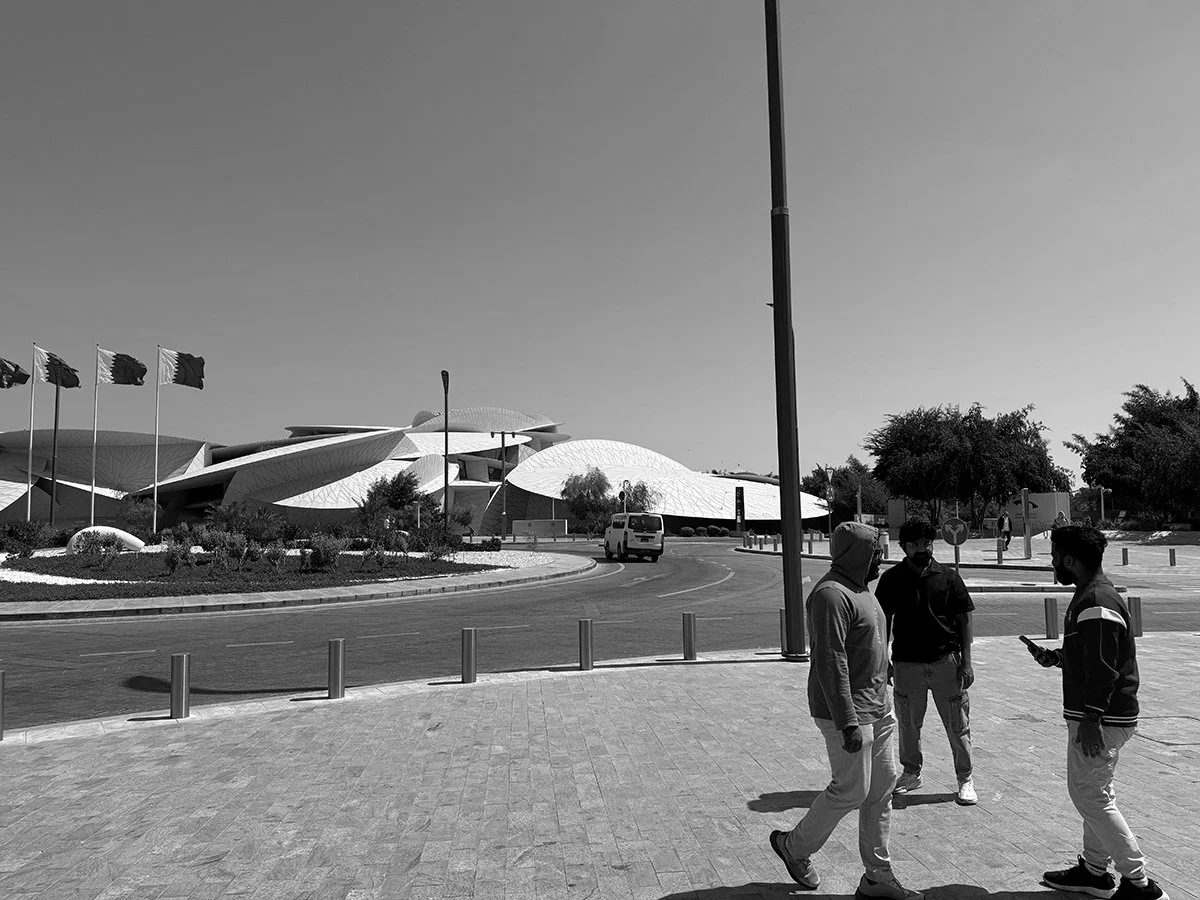
Migrant workers in front of the National Museum of Qatar. 2024
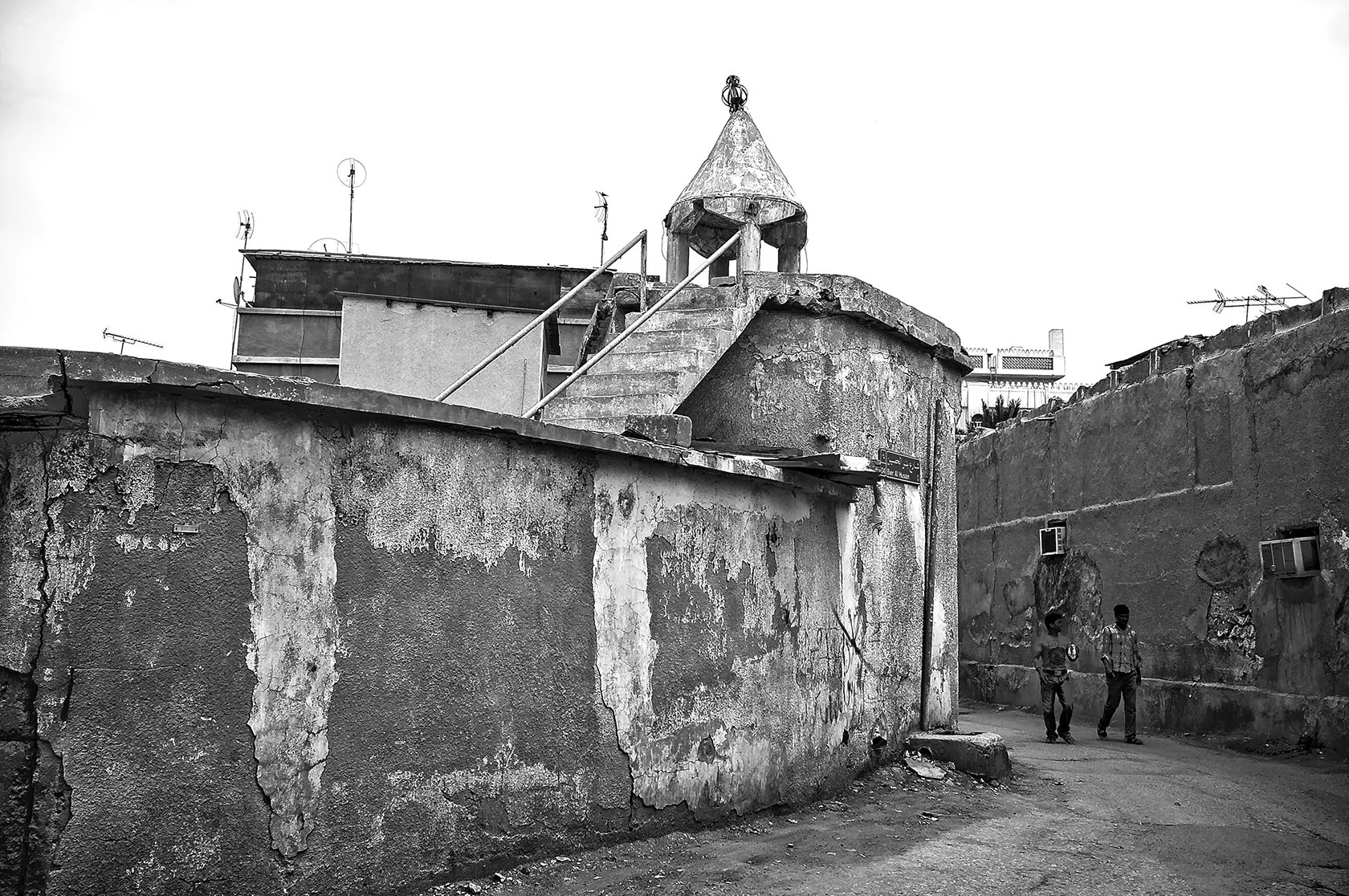
Al-Najada’s old alleyways. 2013
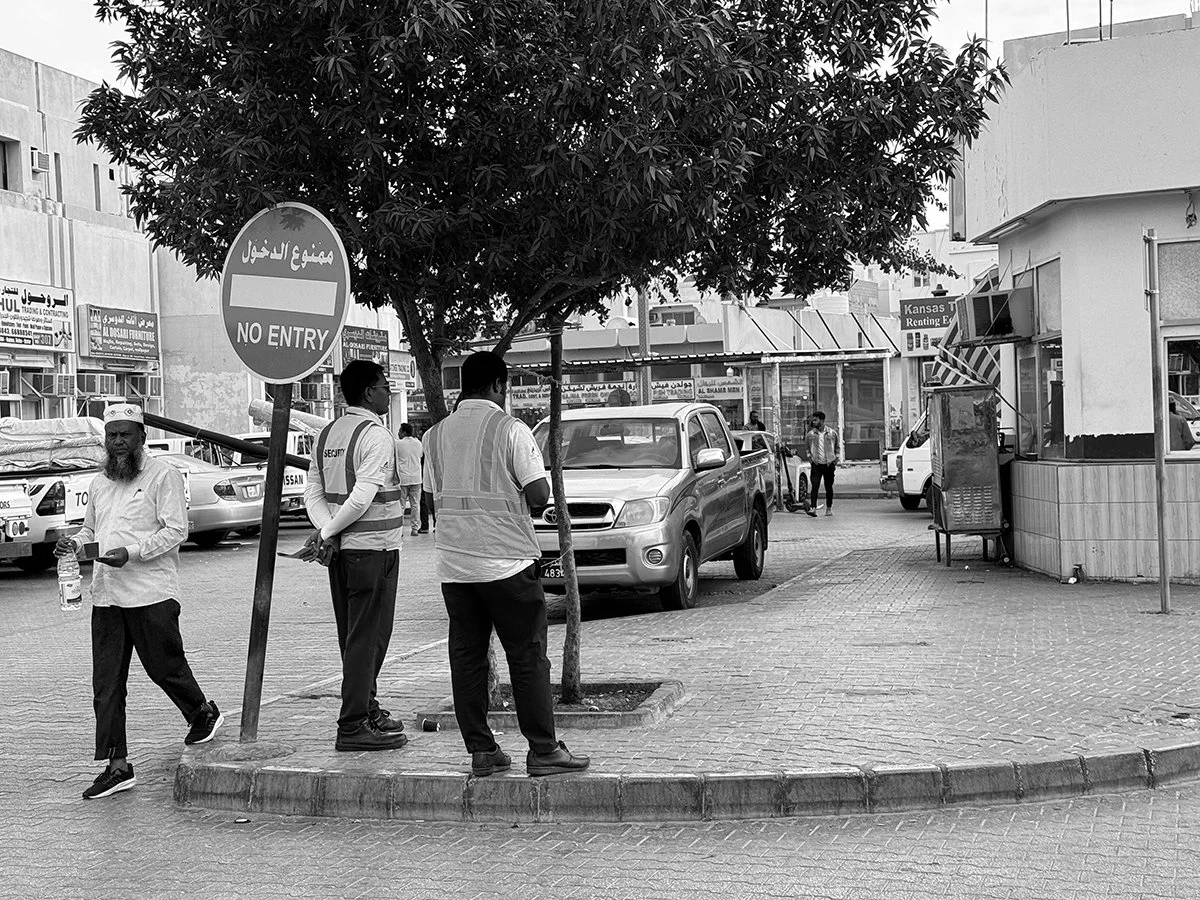
Used Items Market. 2024