Chapter 4. Algiers: “Rock the Casbah” & Post-Colonial Legacies
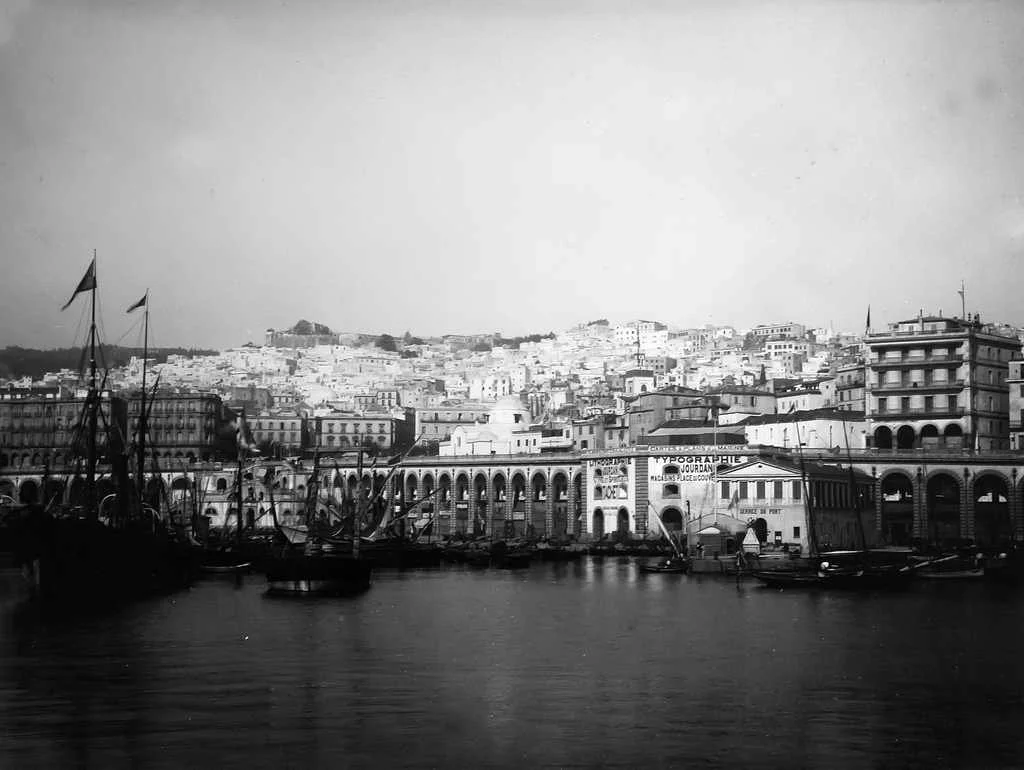
This chapter explores the architectural and urban legacy of Algiers, tracing its transformation from a colonial cityscape to a complex postcolonial metropolis shaped by resistance, neglect, and contested modernities. It begins by unpacking the spatial legacy of French occupation—particularly the dual city structure of European quarters and indigenous neighborhoods—and looks at how colonial modernism, through projects like Le Corbusier’s Plan Obus and Fernand Pouillon’s Climat de France, was deployed as a tool of control, surveillance, and assimilation. These architectural interventions sought to remake Algerian society but were ultimately subverted, repurposed, or resisted by the very populations they aimed to contain.
Through film and literature—including The Battle of Algiers, Omar Gatlato, Mariner of the Mountains, and novels by Albert Camus and Kamel Daoud—the chapter analyzes how Algiers has been represented and imagined, revealing the city’s psychological and spatial fragmentation. It also critically engages with post-independence efforts to project a modern national identity, such as Oscar Niemeyer’s visionary but unrealized projects, and recent controversial proposals like Jean Nouvel’s plan for the Casbah, framed as a postcolonial reprise of orientalist urbanism.
By examining historical preservation efforts, informal urban practices, and contemporary megaprojects, the chapter situates Algiers at a crossroads—caught between the inherited trauma of colonial planning, the failures of postcolonial state-led modernization, and the pressures of neoliberal globalization. Algiers emerges as a palimpsest city, where architectural modernism is both a legacy of domination and a contested field for cultural expression, resistance, and redefinition in the 21st century.
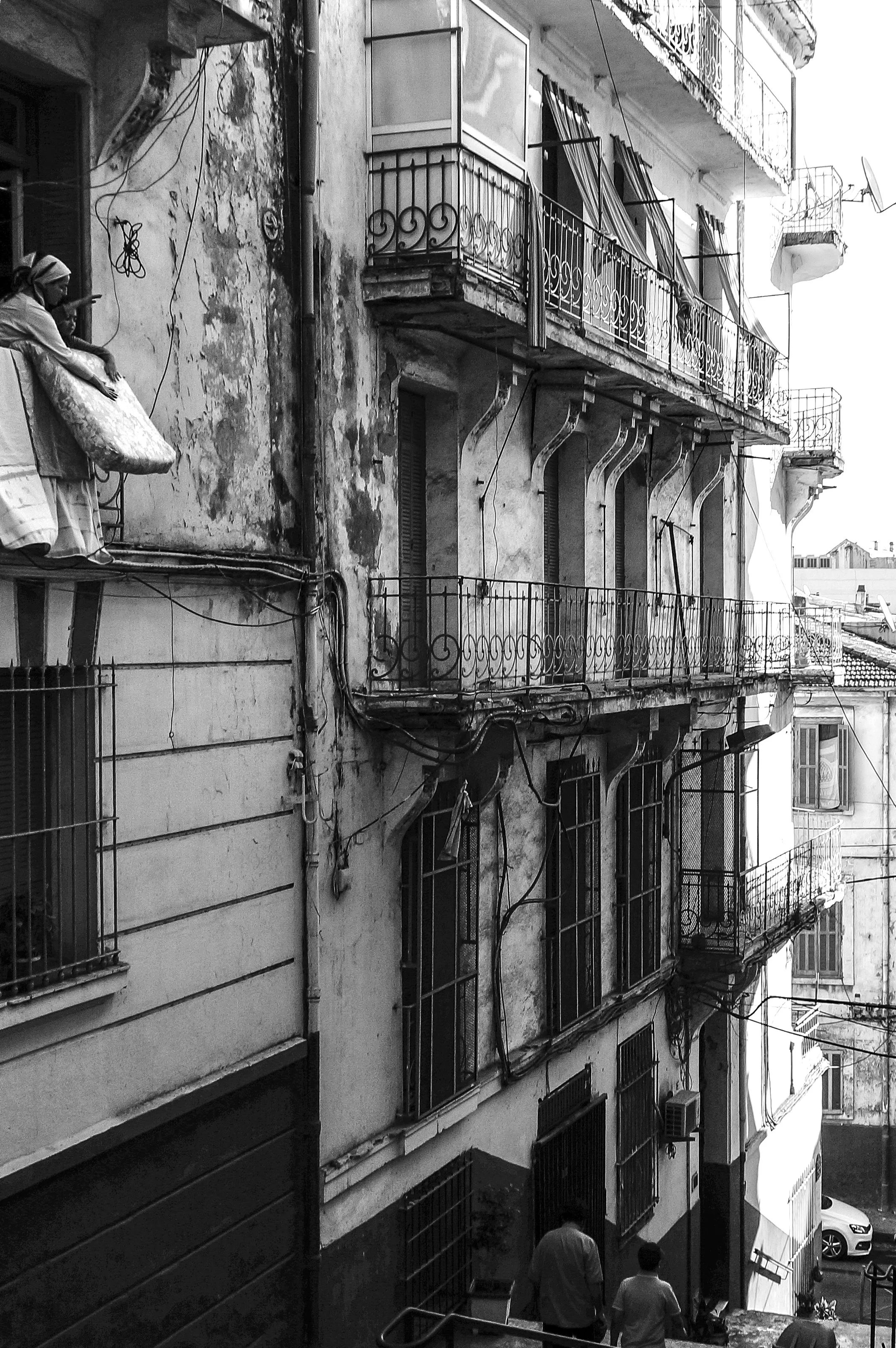
Casbah. Algiers. 2014
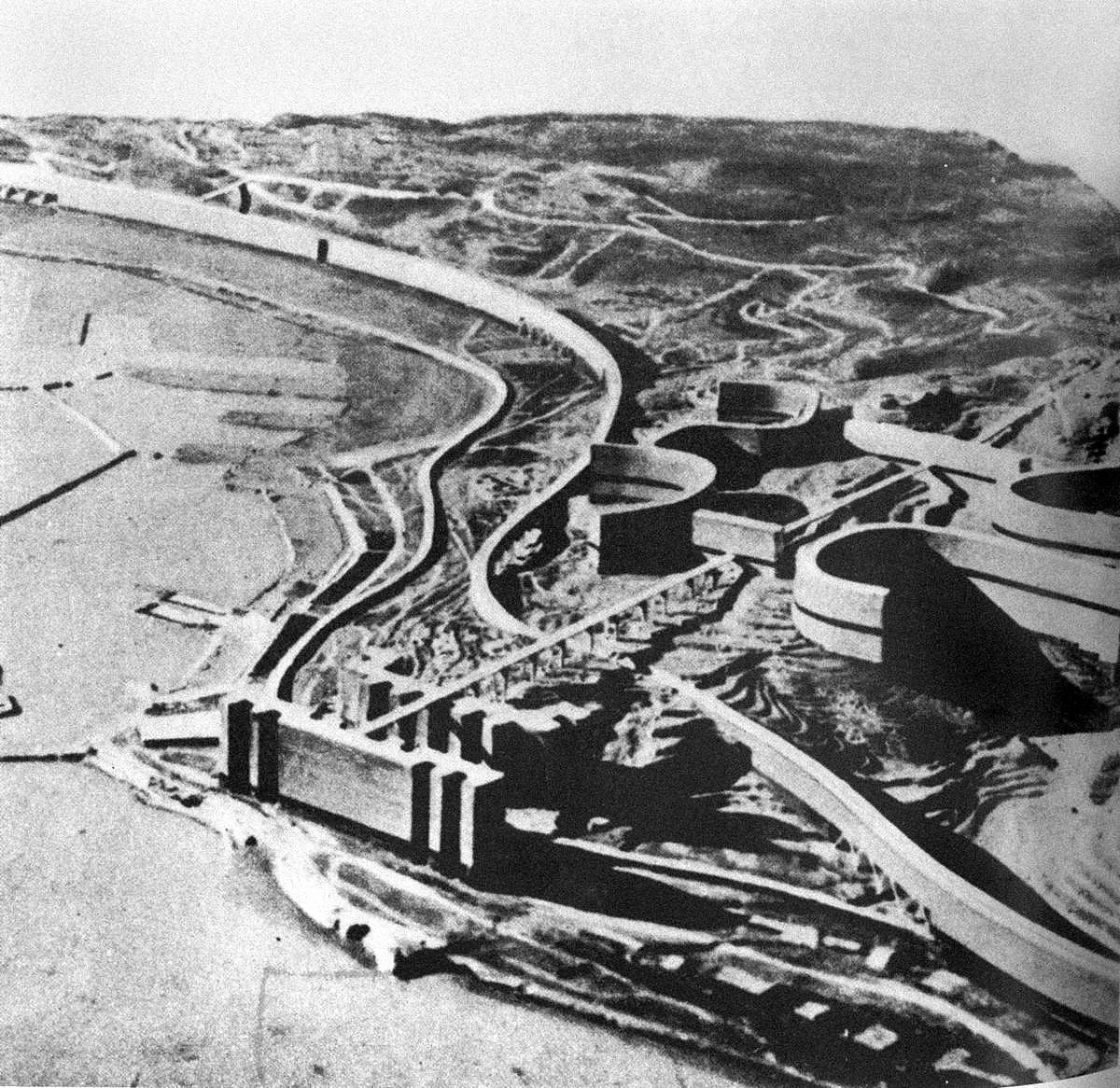
Le Corbusier’s Plan Obus
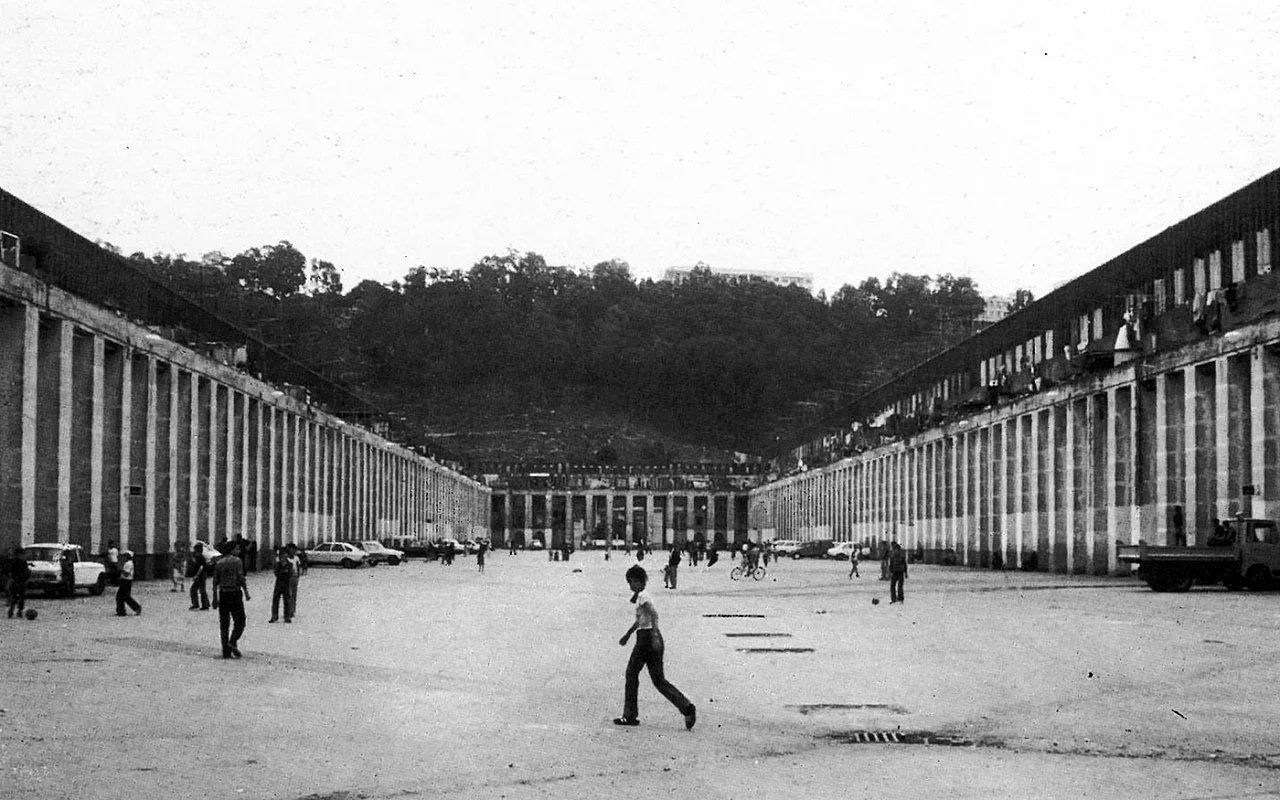
Climat de France 200 Colonnes. 1957
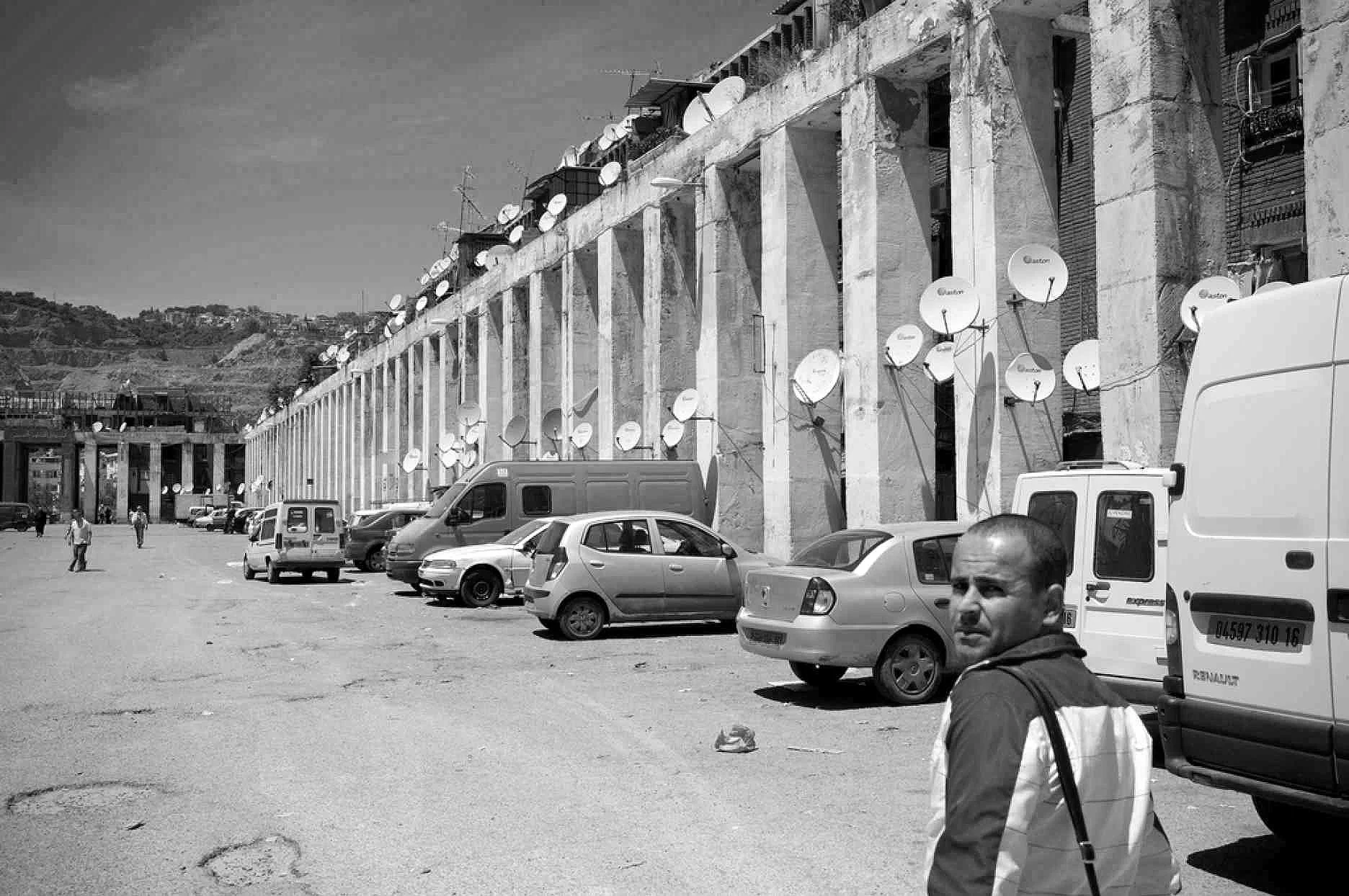
Current conditions of Climat de France
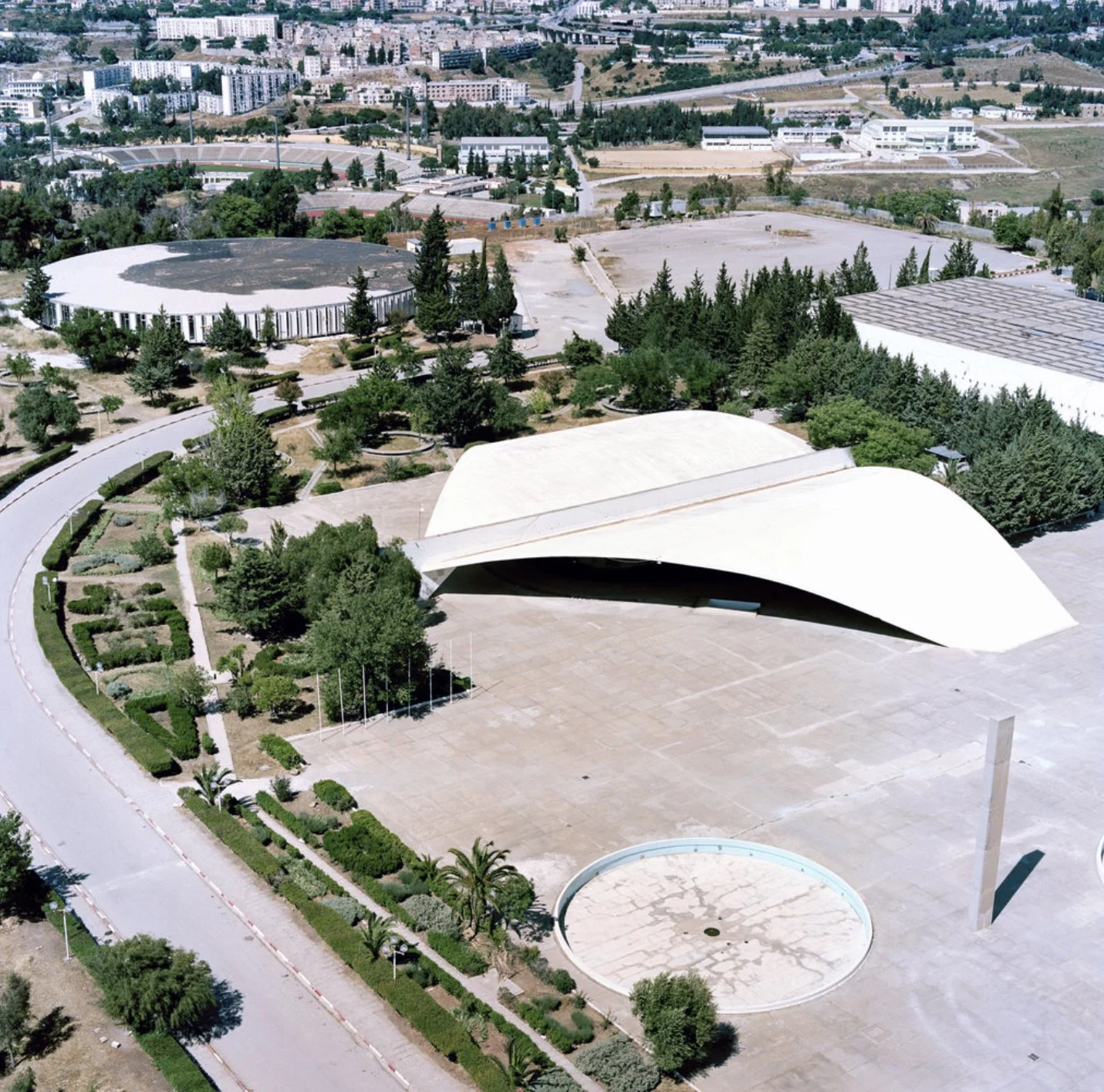
Seddik Ben Yehya Auditorium. Mentouri University, Constantine
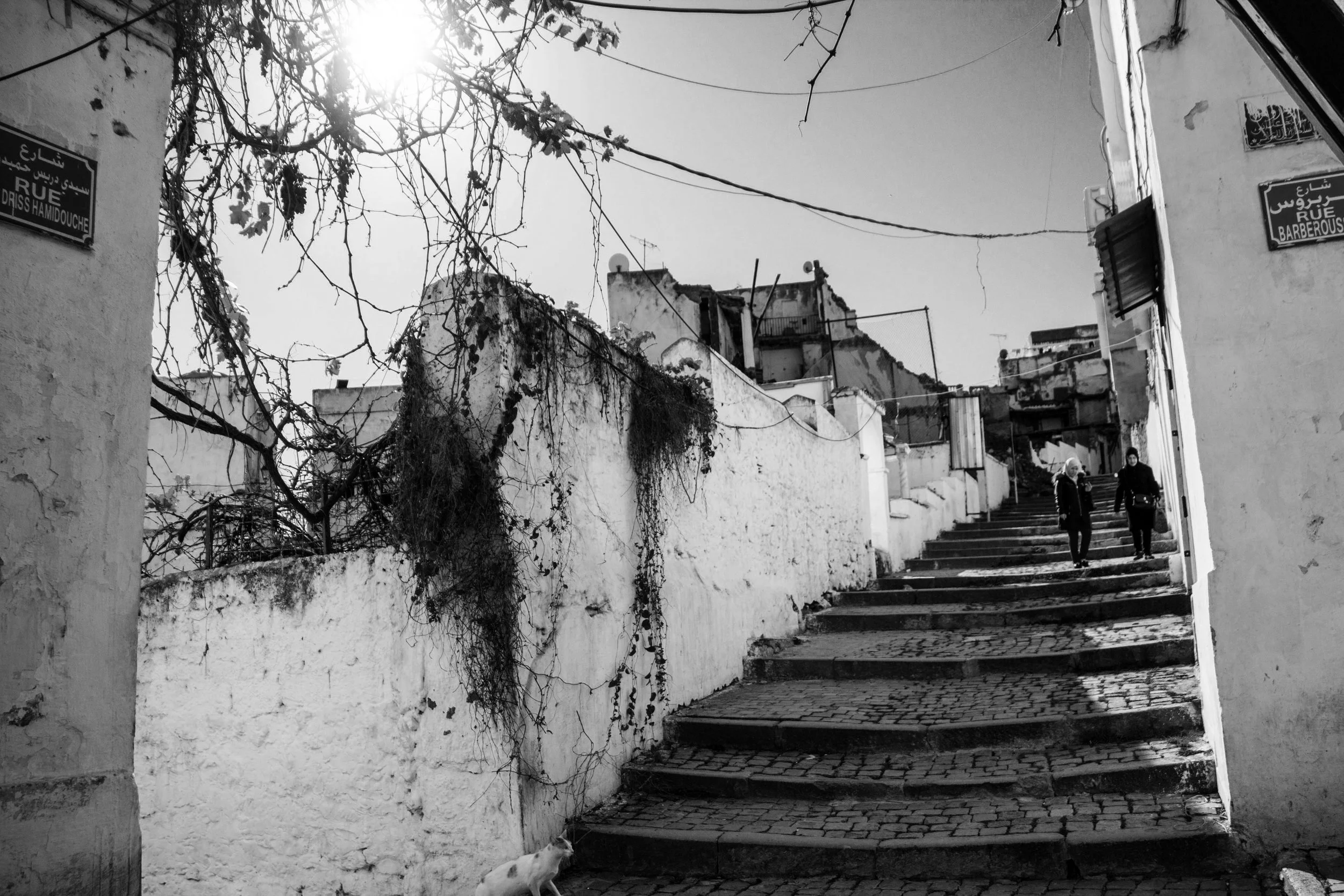
Current condition of the Casbah
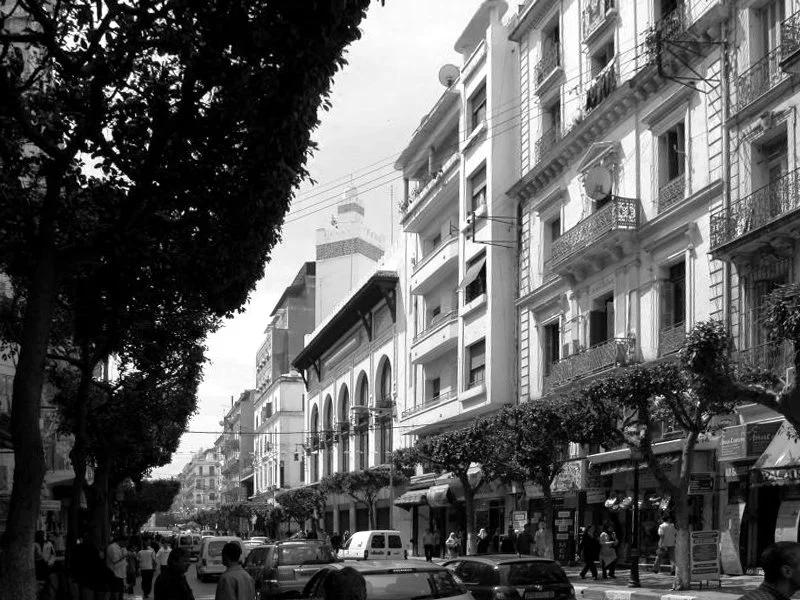
Rue Larbi Ben M'hidi in downtown Algiers. 2005
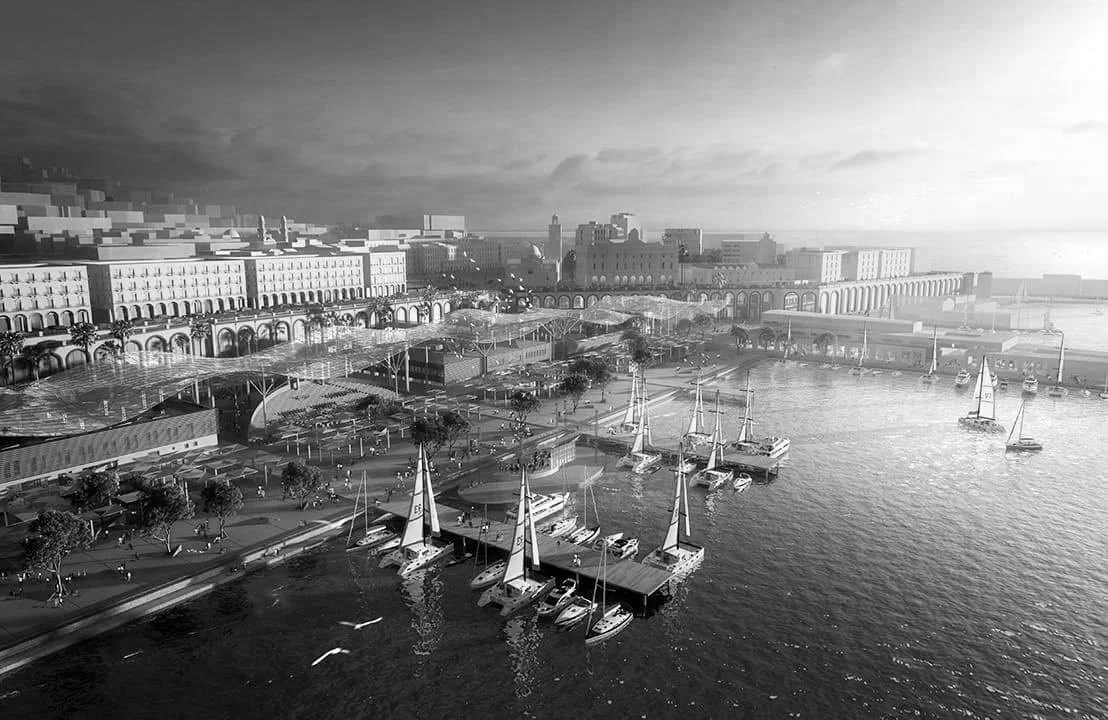
The development of Algiers into an open air museum. Front Mer.
The Batte of Algiers
Mariner of the Mountains
The 1966 war film, “Battle of Algiers”, directed by Italian filmmaker Gillo Pontecorvo, is set between 1954 and 1957 in the capital city, depicting events that ultimately led to the country’s liberation in 1962 (Fig. 12). Filmed on location in a neo-realist style, the movie gives the impression of a documentary or newsreel. The new housing projects of Algiers glimpsed in the coda anticipate the banlieue districts that would later grow outside the city perimeters in France, following the loss of its colonies. By including such a detail, “The Battle of Algiers” points forward in time to both the postimperial and postcolonial eras, not only in Algeria, the former colony, but also in the metropole of France itself.
"Mariner of the Mountains" (2021) marks filmmaker Karim Aïnouz’s first journey to Algeria, his father’s homeland. With his camera in hand and the memory of his mother, Iracema, accompanying him, Aïnouz embarks on a deeply personal voyage across the Mediterranean, intertwining the past, present, and future. The film unfolds like a travel diary, blending travel footage, home videos, family photographs, historical archives, and Super 8 footage into a reflective narrative about identity, memory, and belonging.
“Set in Bab El-Oued, one of the most popular neighbourhoods of Algiers, ‘Omar Gatlato’ broke with Algerian cinema’s customary post-independence heroism by diving deep into the youth culture of the time. In a quite cheerful, if at times ironic manner, it follows young Omar and his closest friends on their daily pursuit of happiness and their attempts to escape the limitations of poor housing conditions, gender segregation, unemployment and inadequate work conditions. At times gently mocking their macho values in displaying their ambivalence toward the opposite sex and, for the first time in Algerian cinema, employing the syncretistic slang of urban Algerian youth, the film nevertheless provides a sympathetic portrait of these young men’s aspirations for some sort of alternative culture and a different lifestyle.”
Source: YouTube Synopsis