Chapter 3: Modernizing Cairo. Urban Transformations and the Inexorable March Towards the Desert
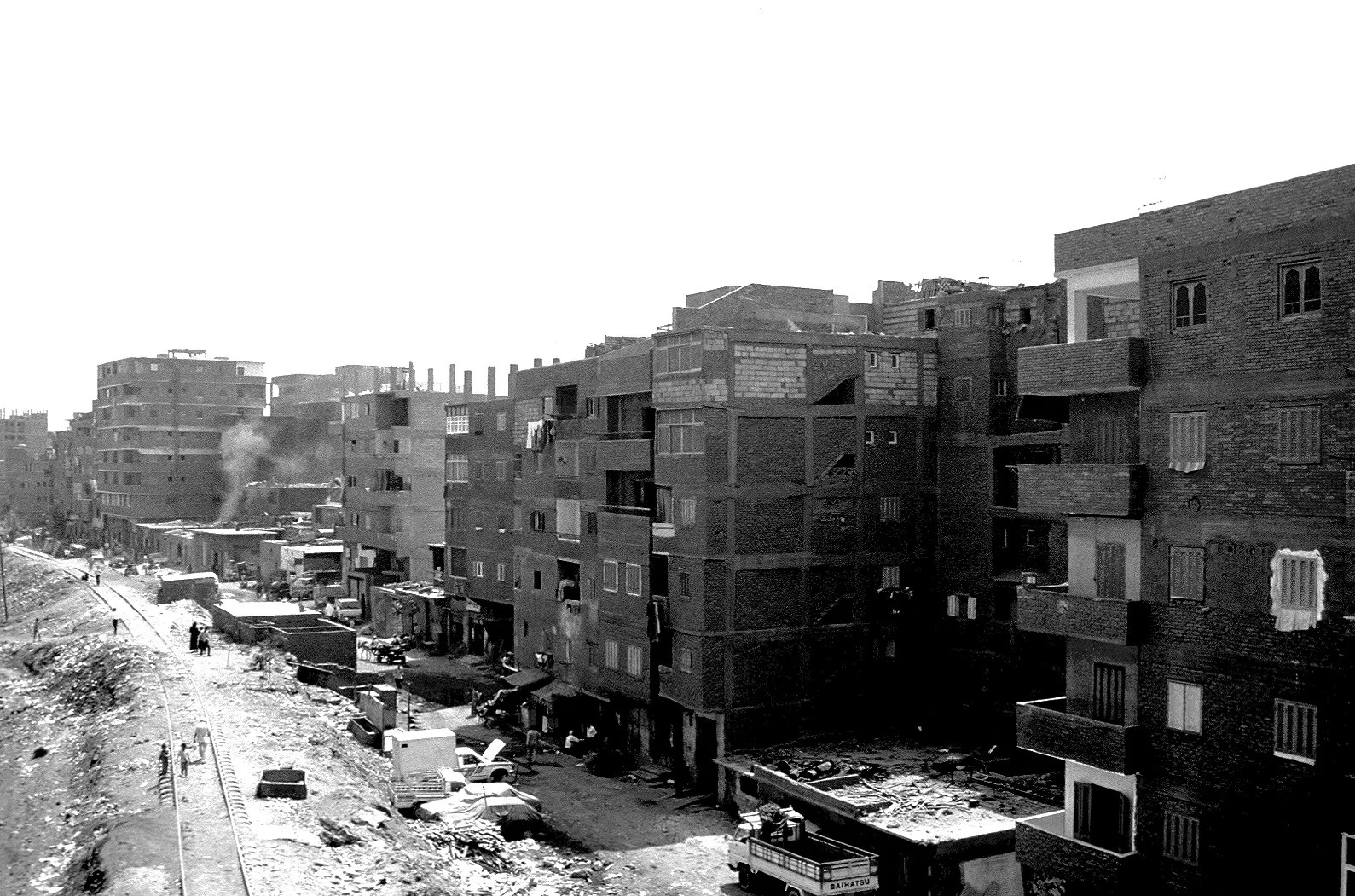
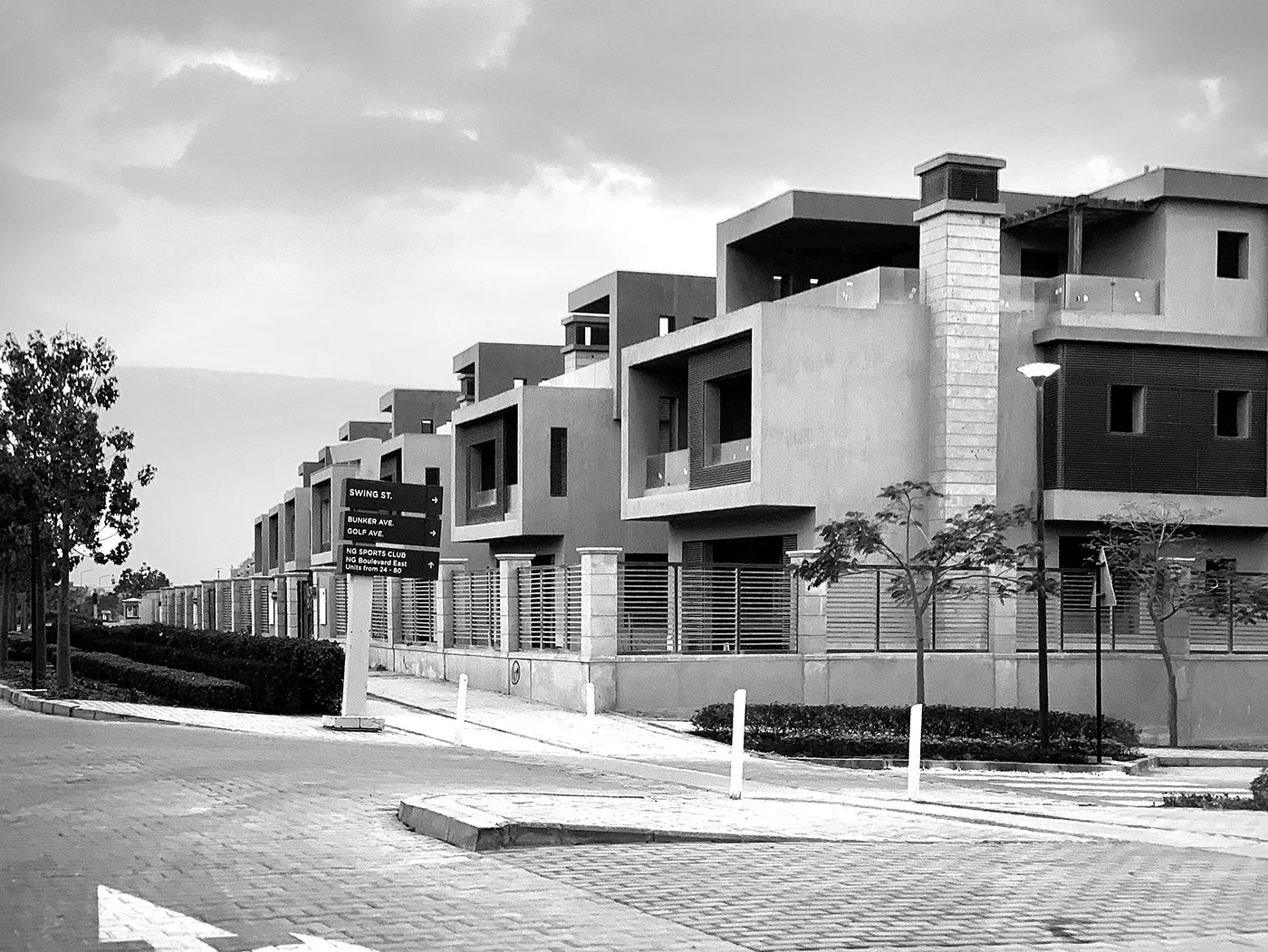
Manshiet Nasser (Informal Neighborhood) — Gated Community. Giza
This chapter critically examines Cairo’s urban transformation through the lens of modernism, informality, memory, and exclusion. Tracing the city’s development from its historical foundation as a desert settlement to its contemporary status as a sprawling megalopolis, it explores the tensions between heritage and modernization, state power and everyday life. Drawing on personal narratives, cinematic representations, and literary depictions—from Naguib Mahfouz to Ahmed Naji—the chapter highlights how Cairo’s architectural modernism and planning ideals have often served authoritarian agendas while marginalizing its urban poor.
Key case studies—such as the luxury enclave of Uptown Cairo overlooking the slum of Manshiet Nasser, the erasure of the historic Maspero district, and the construction of the New Administrative Capital—illustrate how neoliberal and militarized urbanism have reshaped the city into a fractured landscape. The chapter shows how urban policy has increasingly favored elite enclaves and spectacle-driven projects at the expense of inclusive, equitable development. It argues that Cairo’s modernist legacy is not only built in concrete but also inscribed with displacement, nostalgia, and social injustice.
Rather than a cohesive metropolis, Cairo emerges as a city of juxtapositions: informal vs. formal, slum vs. gated compound, memory vs. amnesia. Through literary, visual, and autobiographical materials, the chapter foregrounds the lived experience of Cairenes navigating a city where modernist dreams have often turned dystopian. It concludes by arguing that Cairo’s future cannot be envisioned without reckoning with the violence of its present and the persistence of its past—traces that refuse to be erased.
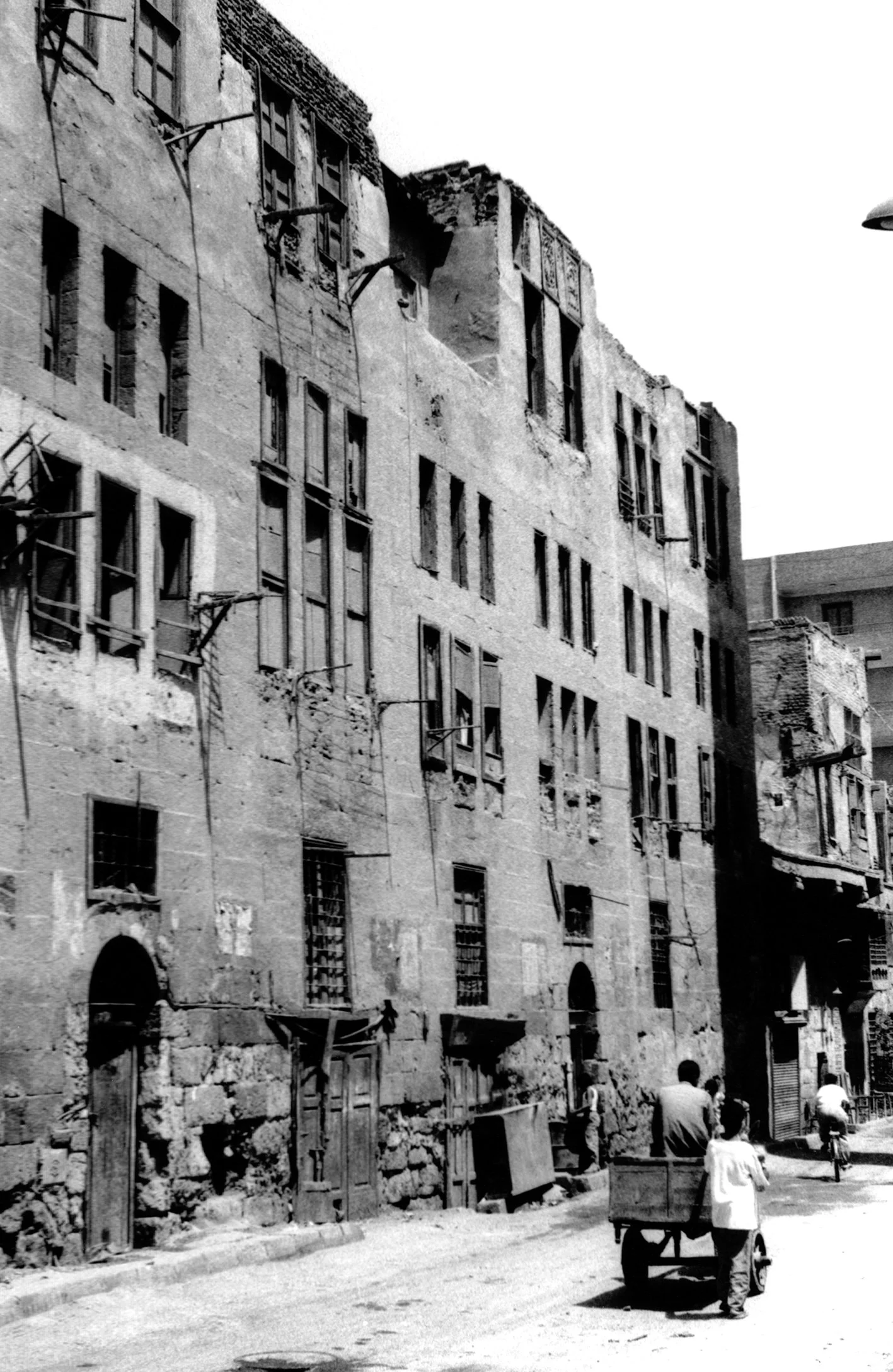
Old Cairo. 1994
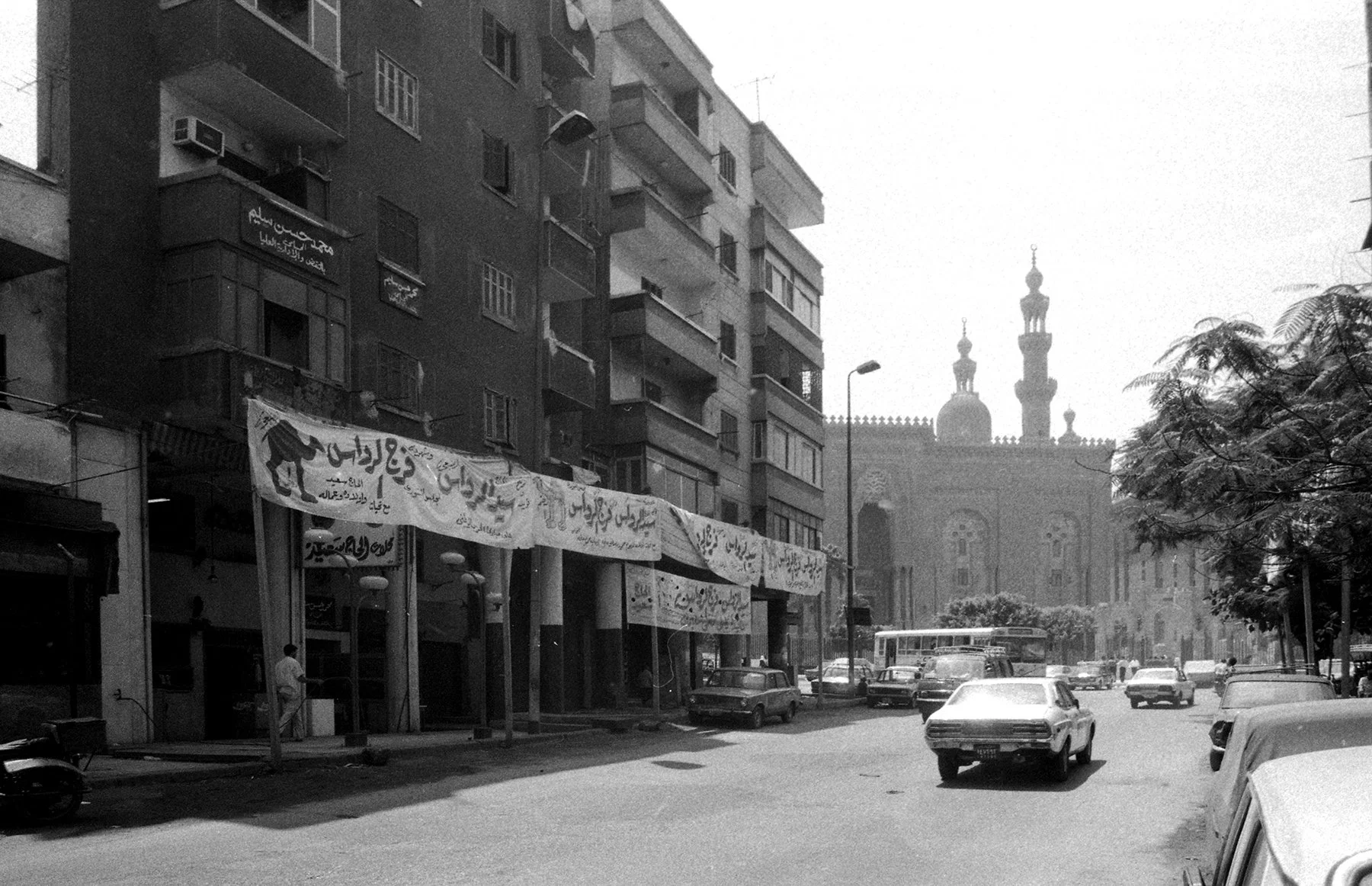
Mohamed Ali Street. 1994
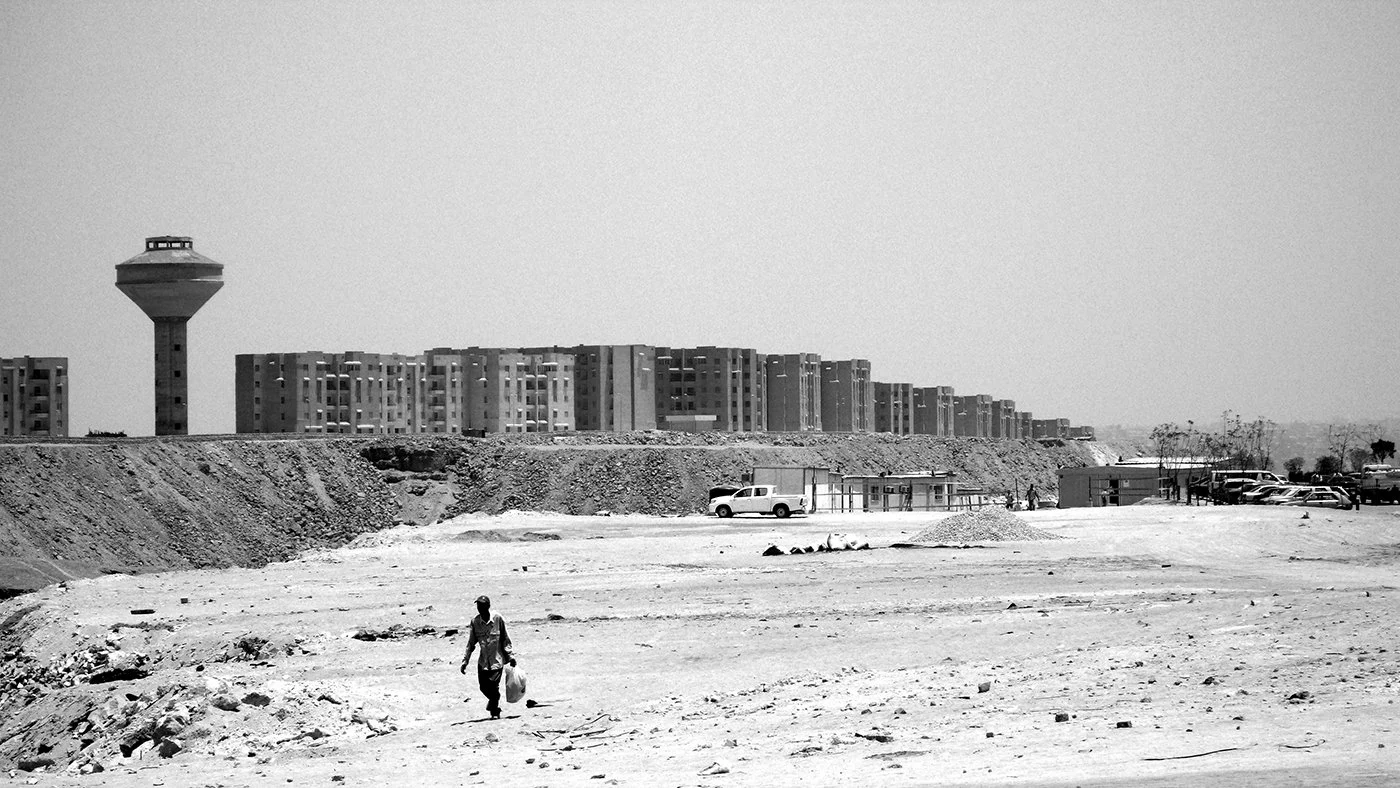
Public Housing. Moqattam Mountain. 2003
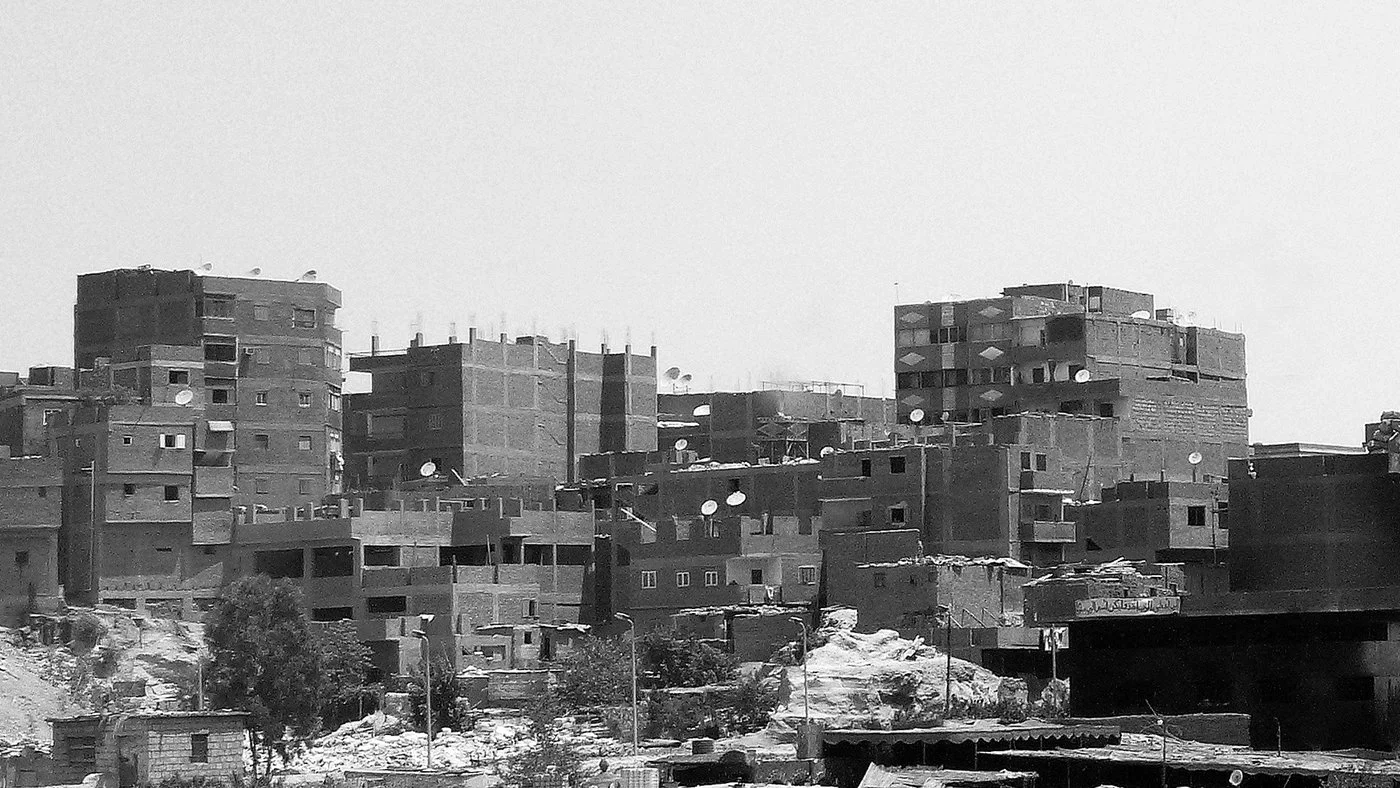
Manshiet Nasser. 2003
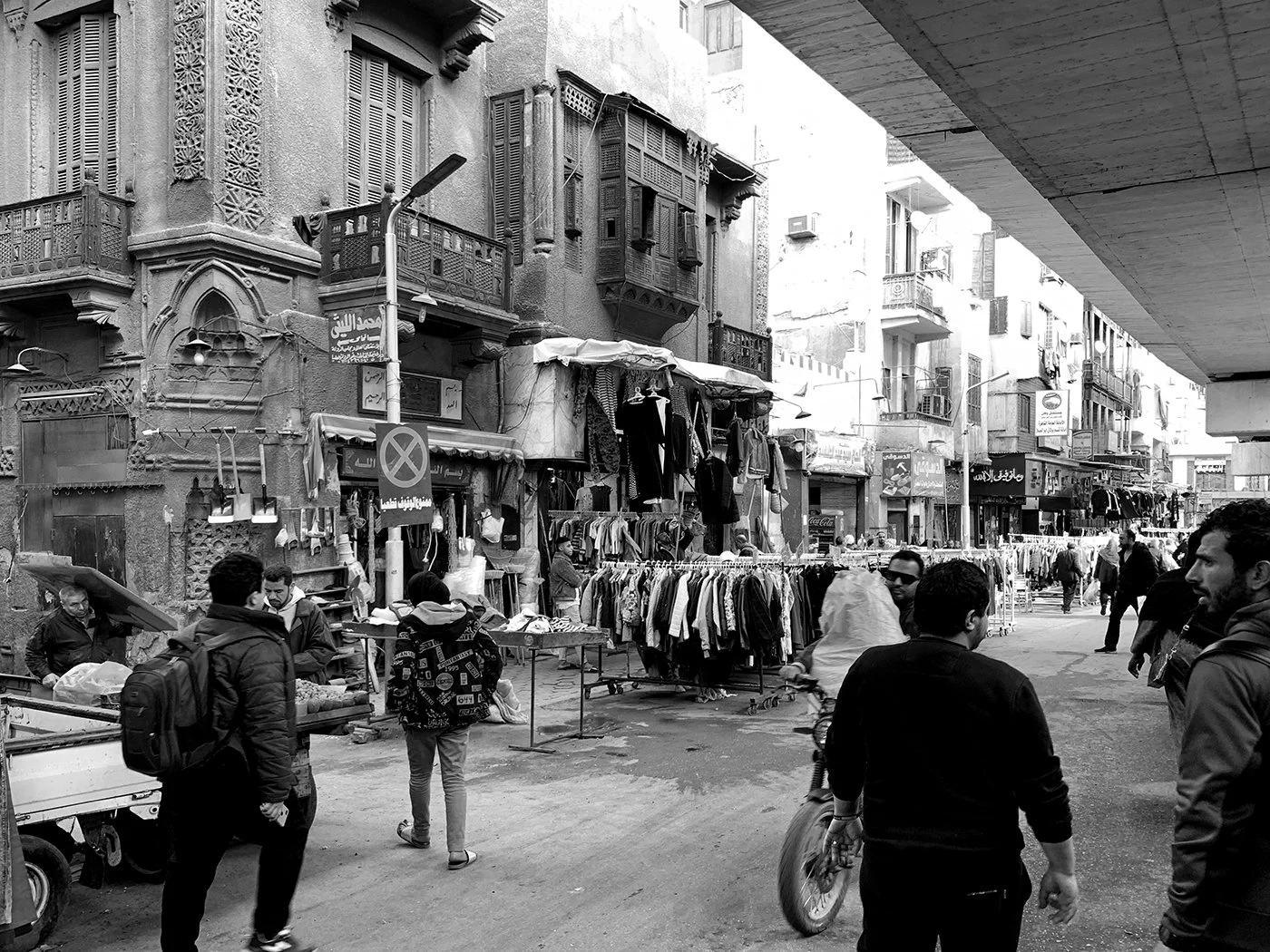
Wikalat Al-Balah (Used Items Market). 2023
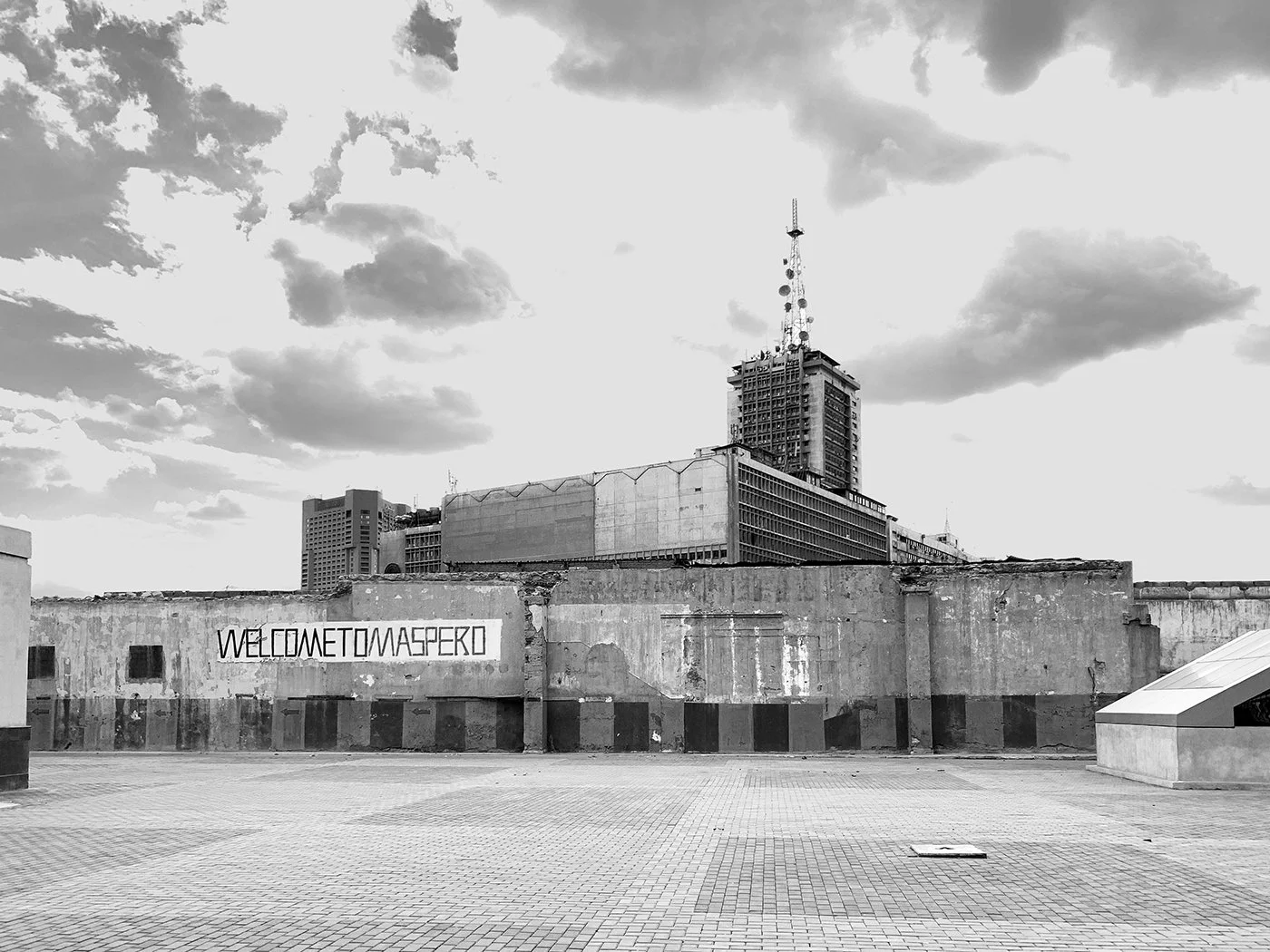
Maspero Development. 2023
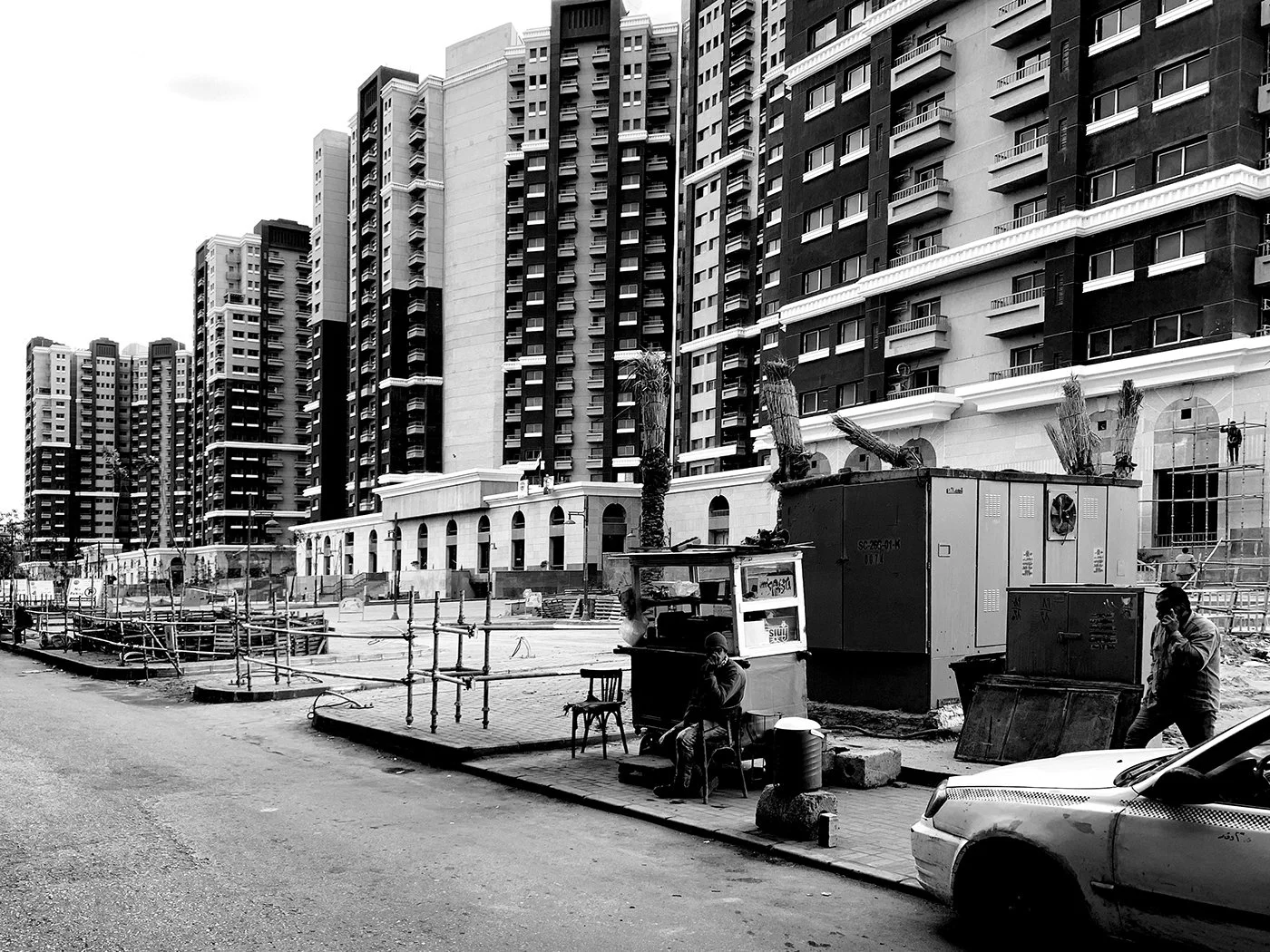
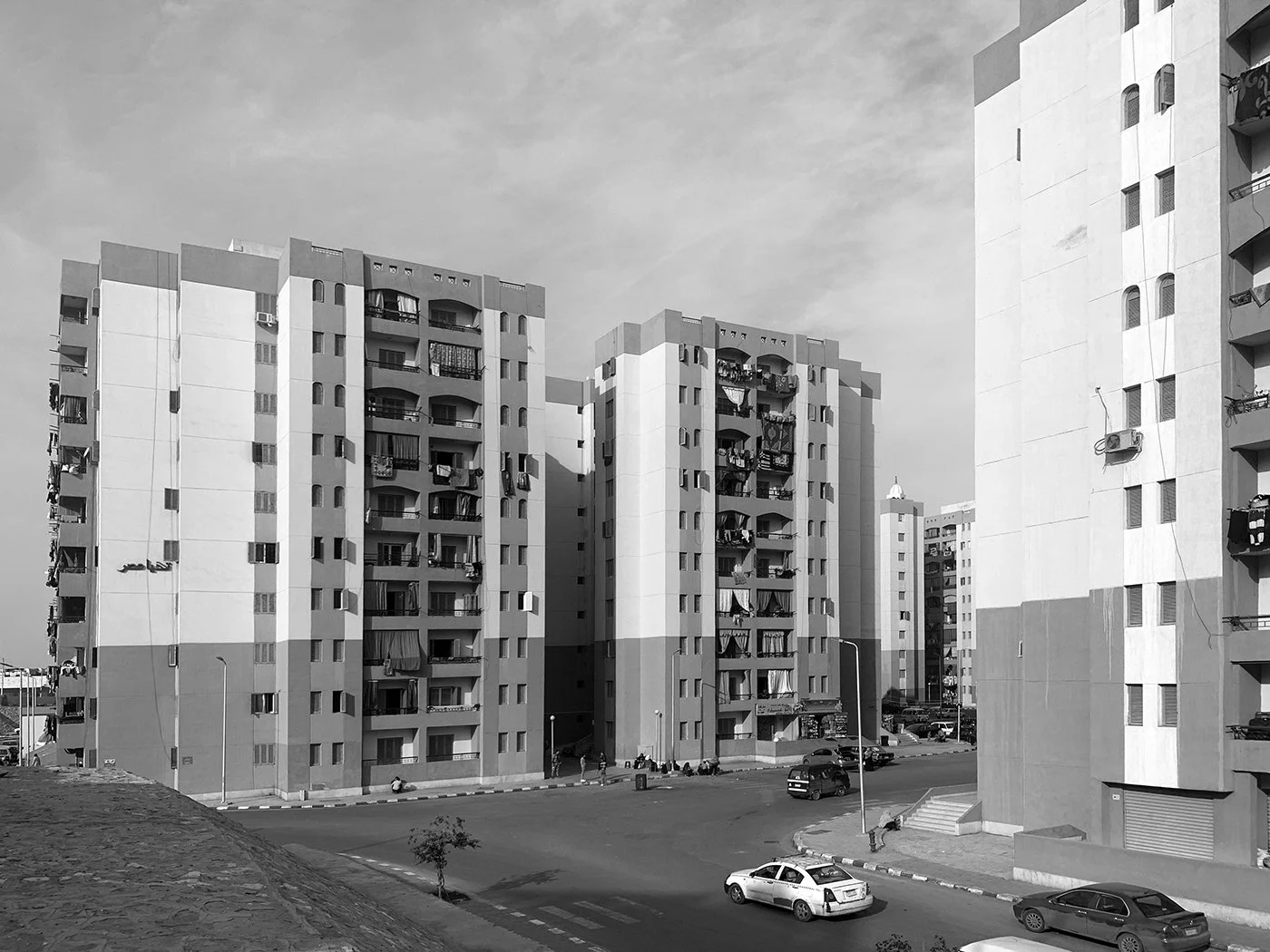
Asmarat Public Housing. 2024
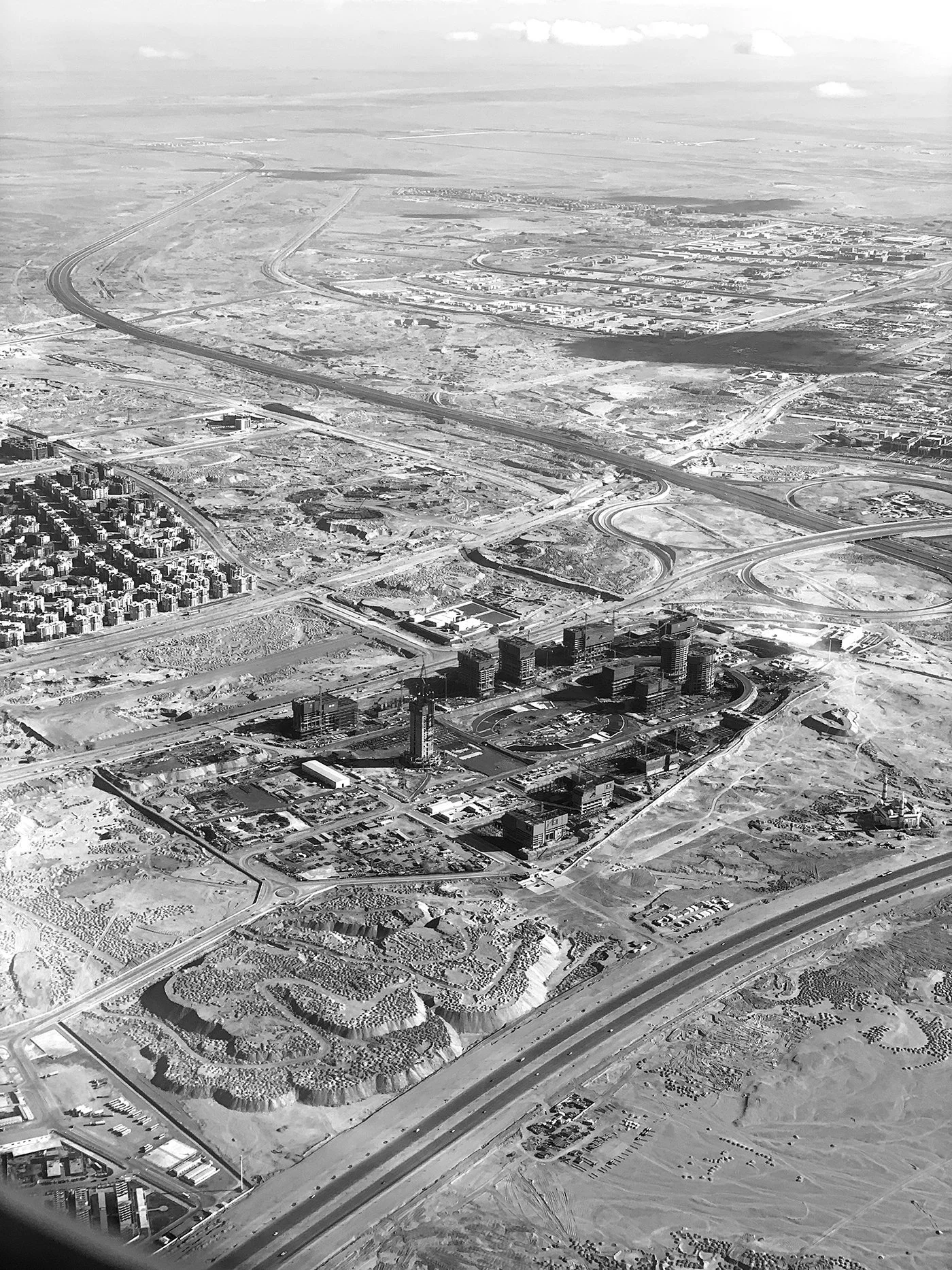
Administrative Capital
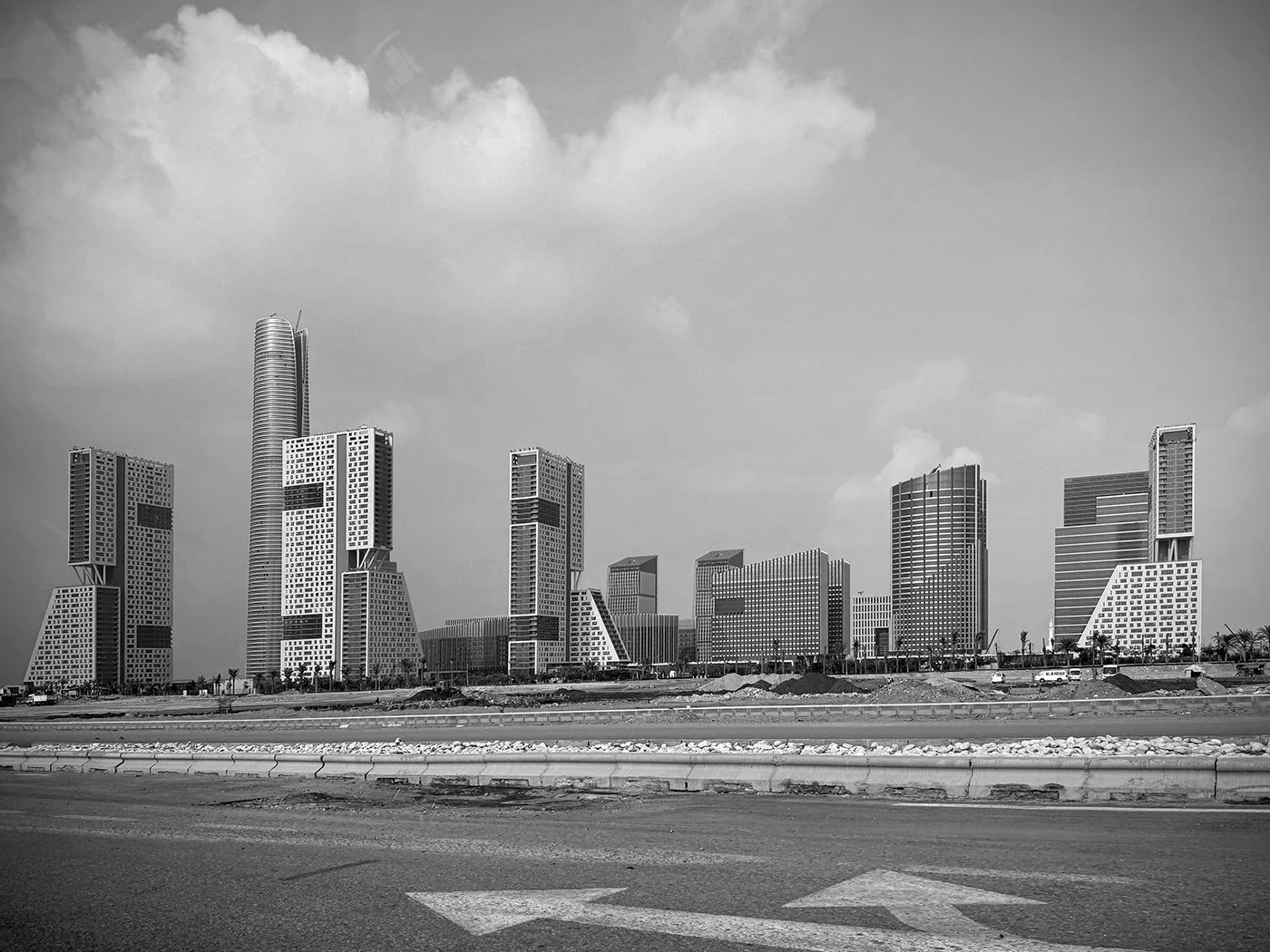
Administrative Capital. 2023
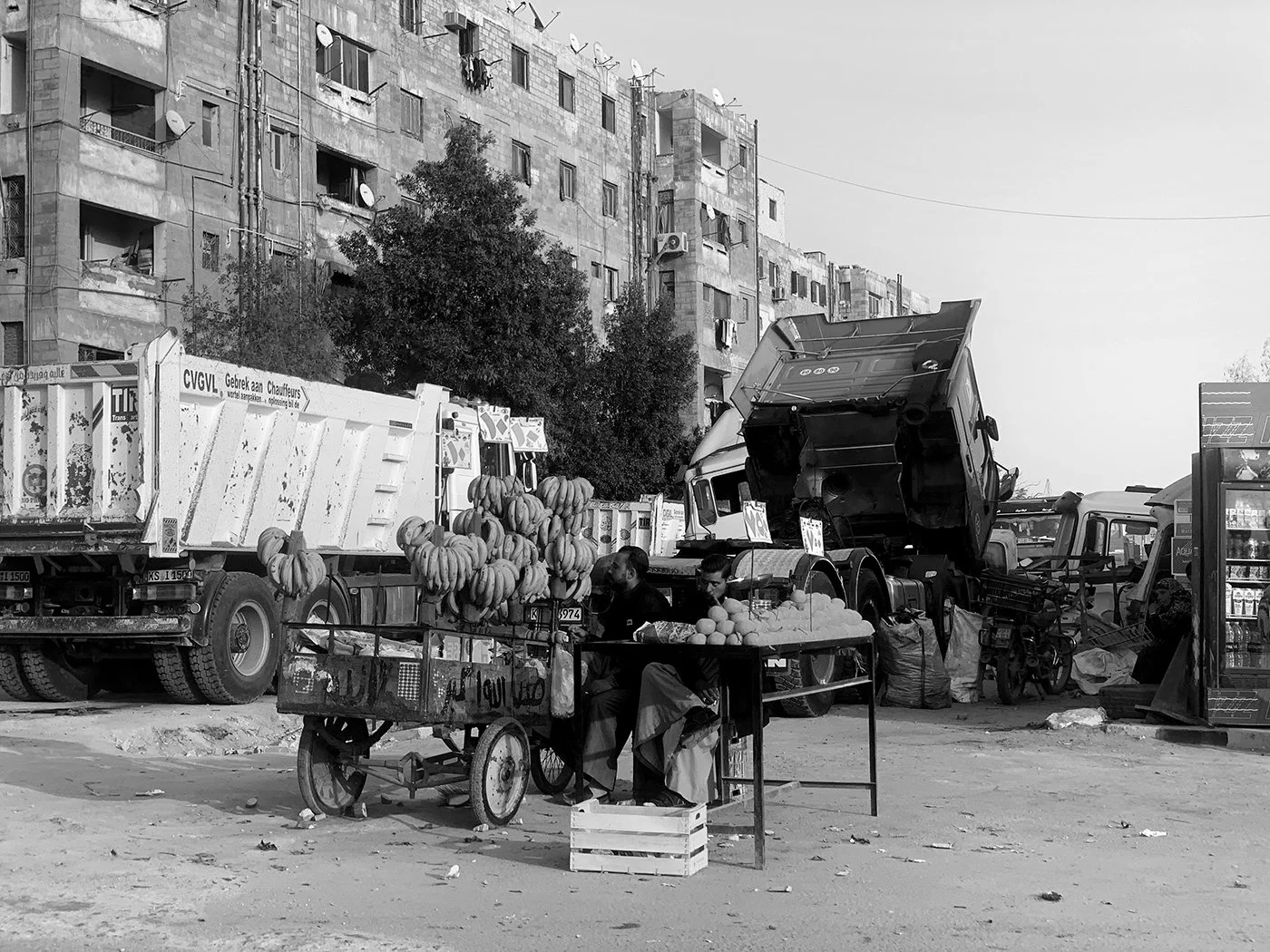
Informal Cairo. 2024
Masaken Zeinhom. Public Housing Project. 2026
Sayyid Zeinab Square.2026
Remembering Cairo
Cairo. 1954. Opening of the Corniche
Directed by Ahmed Abdalla, “Rags & Tatters” takes you into the heart of Cairo’s impoverished outskirts, following an unnamed fugitive (played by Asser Yasin) who escaped during the infamous jailbreak in the early days of the 2011 revolution. As he searches for warmth and safety, the film unfolds through minimal dialogue and long, contemplative shots, with characters who remain nameless.
The semi-documentary/biography was shot in downtown Cairo in 2009. The protagonist is Khalid, a 35-year-old filmmaker who struggles to make a film that captures the soul of his city. All the while he is facing loss in his life, namely imminent relocation from his apartment and caring for a dying mother whom he visits daily in the hospital. The movie is not just focused on Cairo however. His filmmaker friends send him footage from their respective cities: Beirut and Baghdad, which he aims to incorporate in his meditation on the lost glory of downtown Cairo. As noted in reviews, “the film’s multilayered stories are a visually rich exploration of friendship, loneliness, loss and life in cities shaped by the shadow of war and adversity.”
“Yacoubian Building,” a novel by Alaa al-Aswany published in 2002, and the cinematic adaptation in 2006, perfectly captures Cairo’s transformation. Set in 1990 it is a scathing portrayal of modern Egyptian society since the Revolution of 1952. The main setting is a building that actually exists in the city center. Al-Aswany writes that it has been designed "in the high classical European style, the balconies decorated with Greek faces carved in stone, the columns, steps, and corridors all of natural marble" (Al Aswany, 2006; first published in Arabic in 2004)