A House for the People. Lives, Stories, and Everyday Urbanism in the Sha’abi Neighborhoods
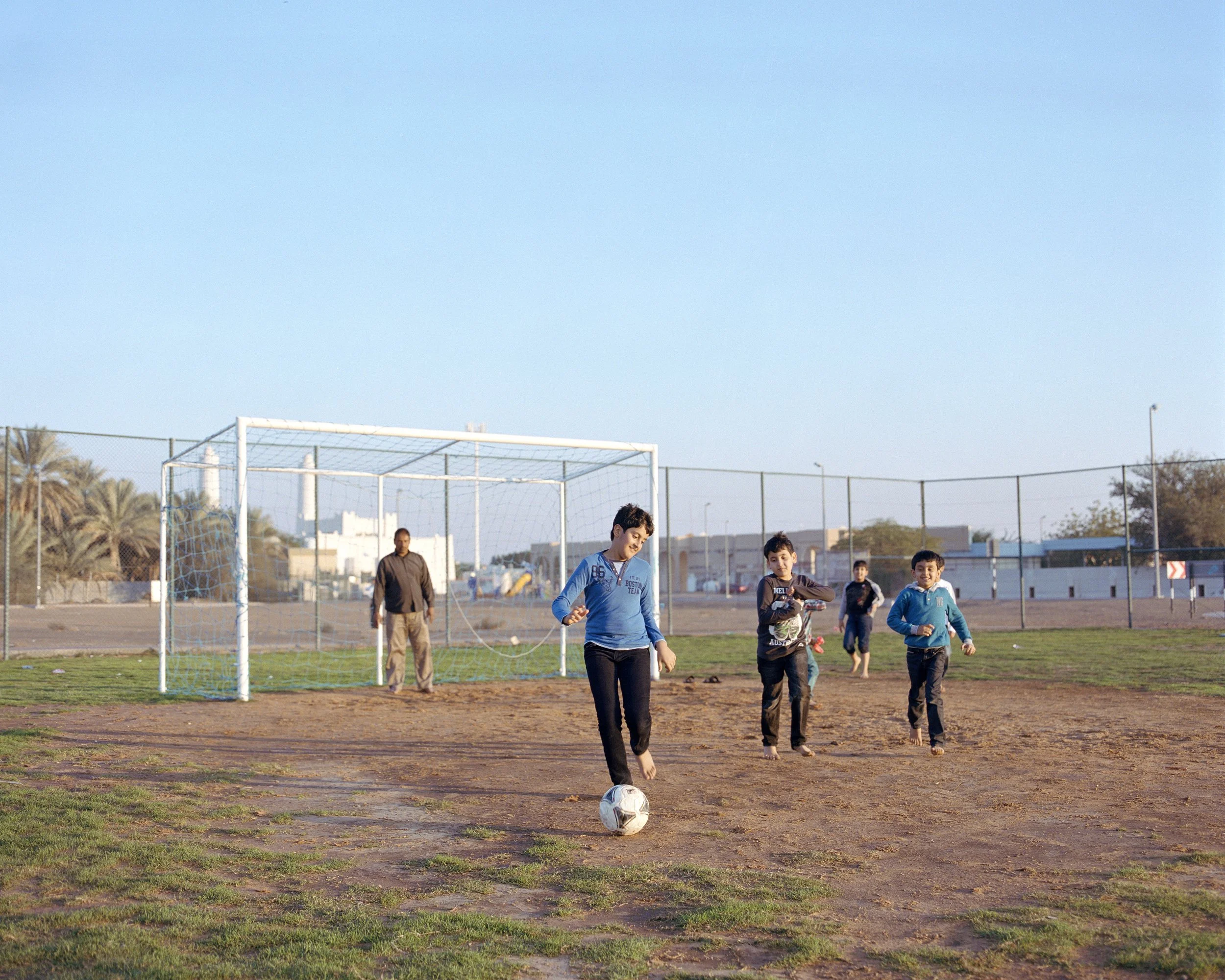
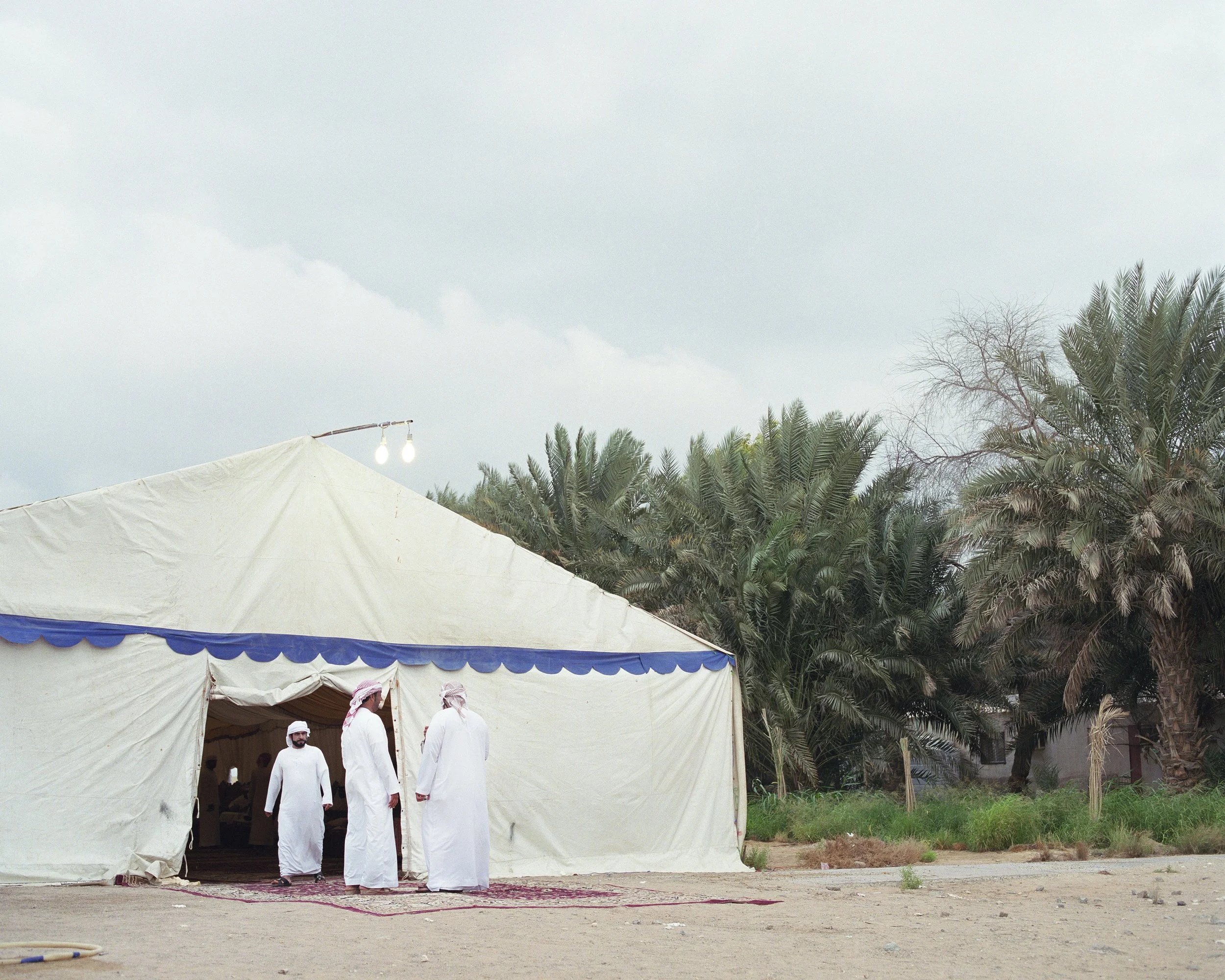
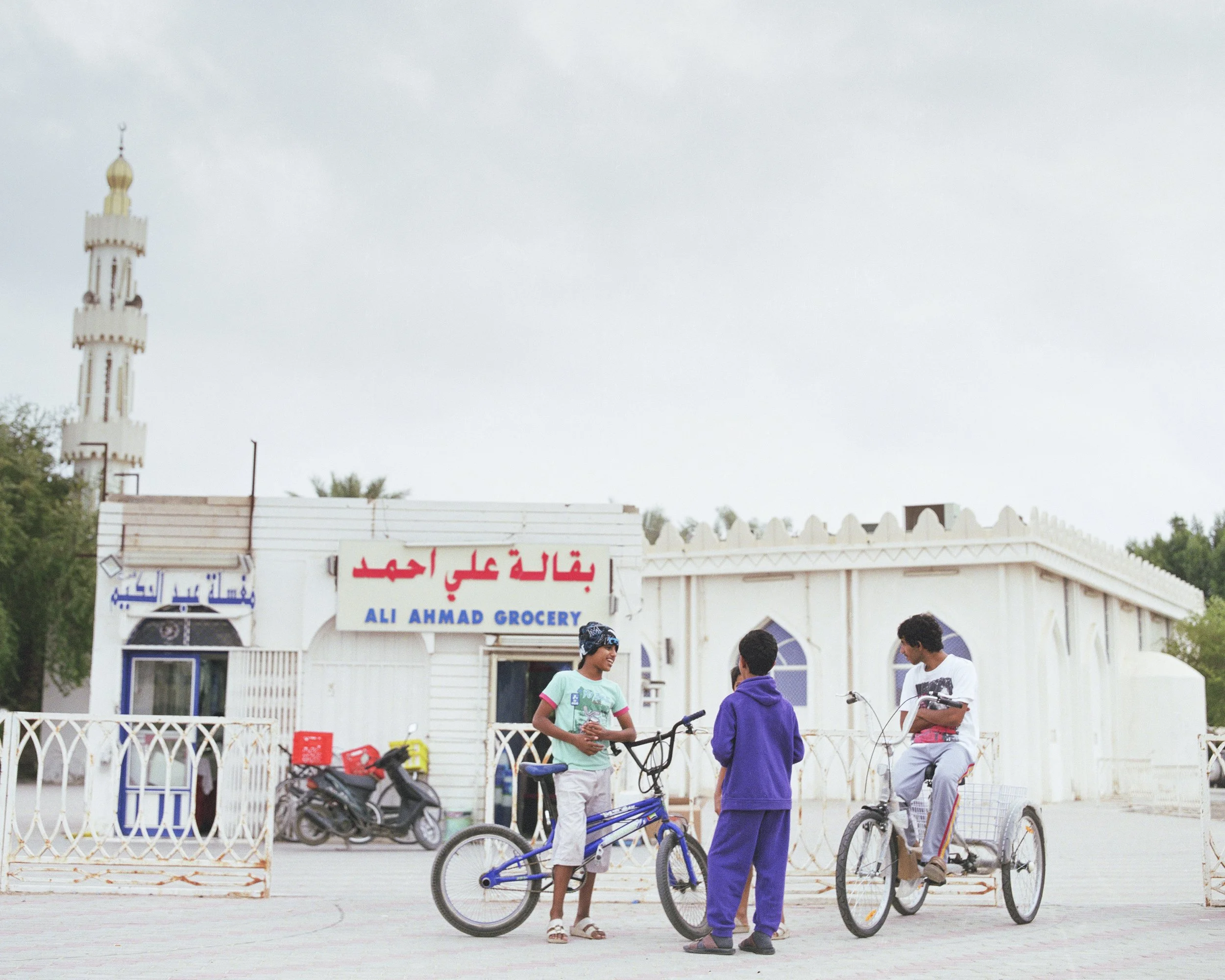
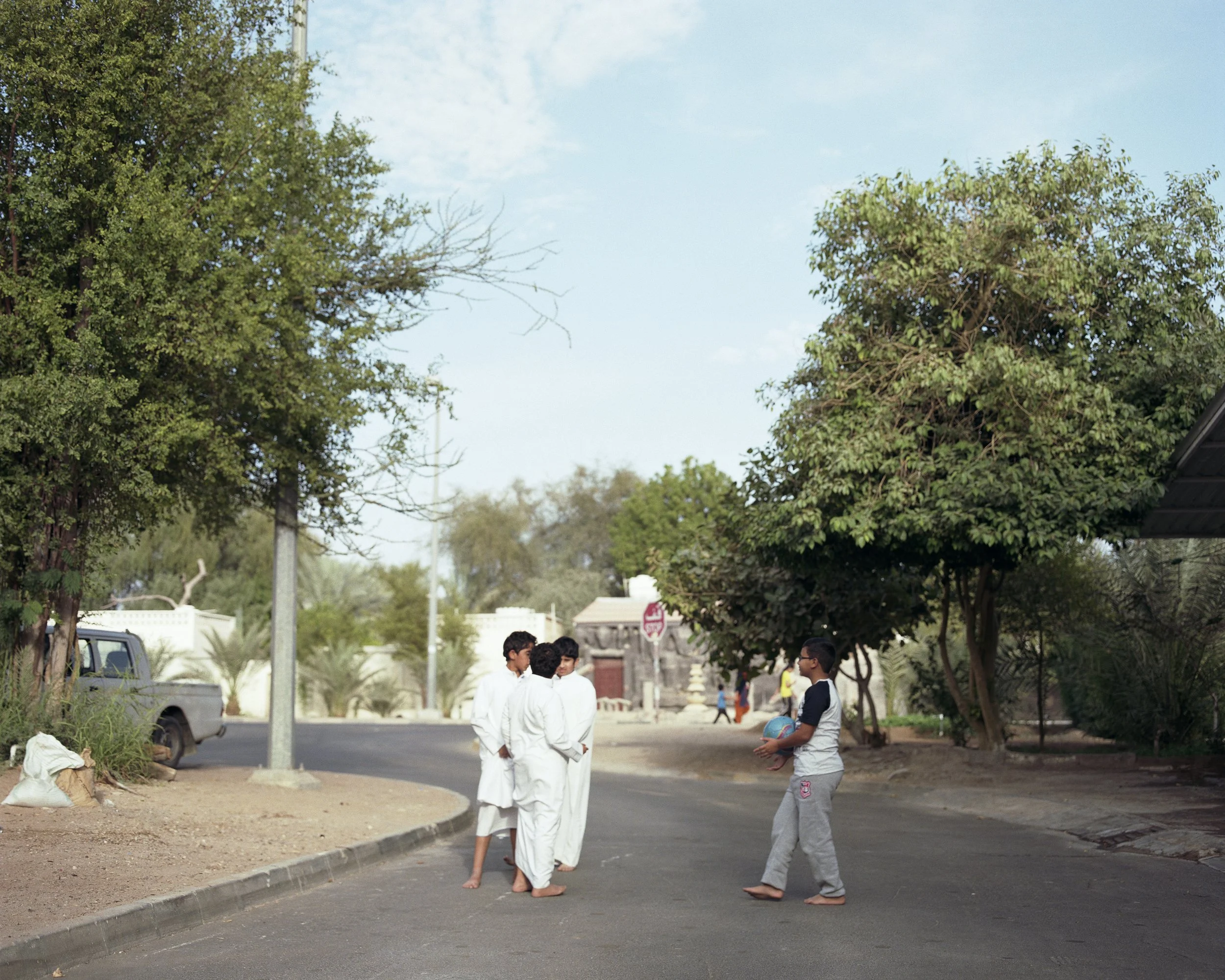
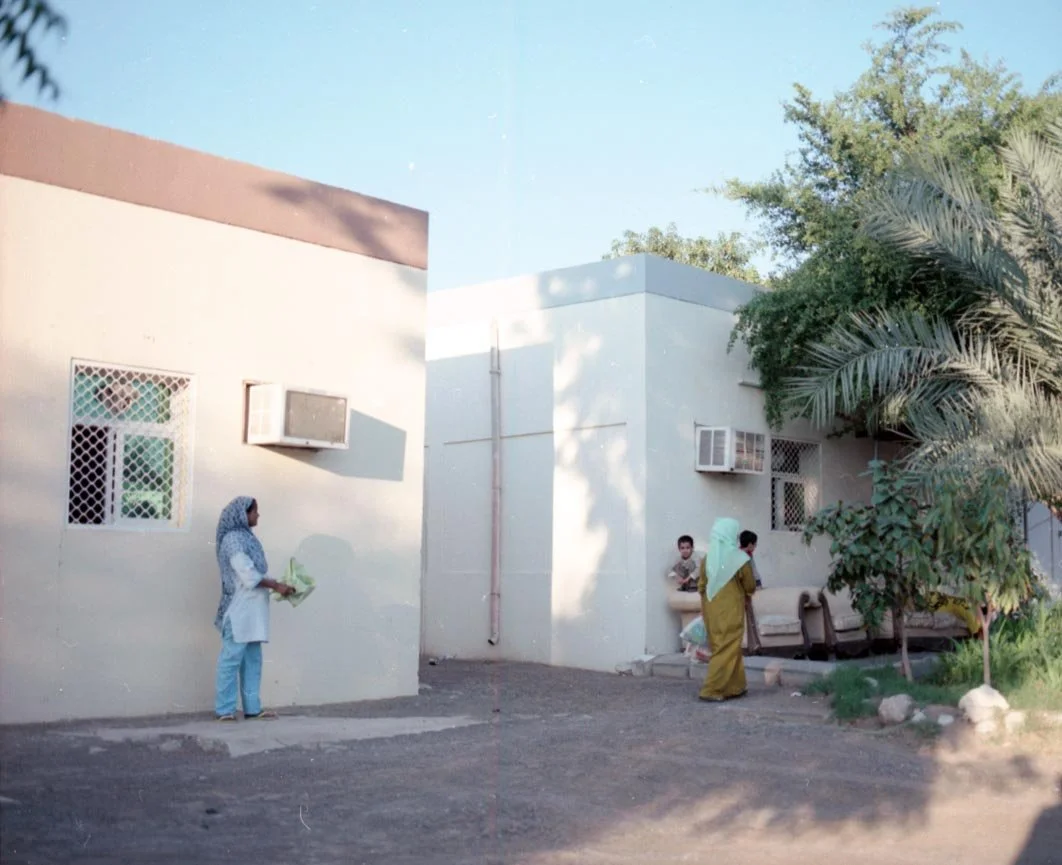
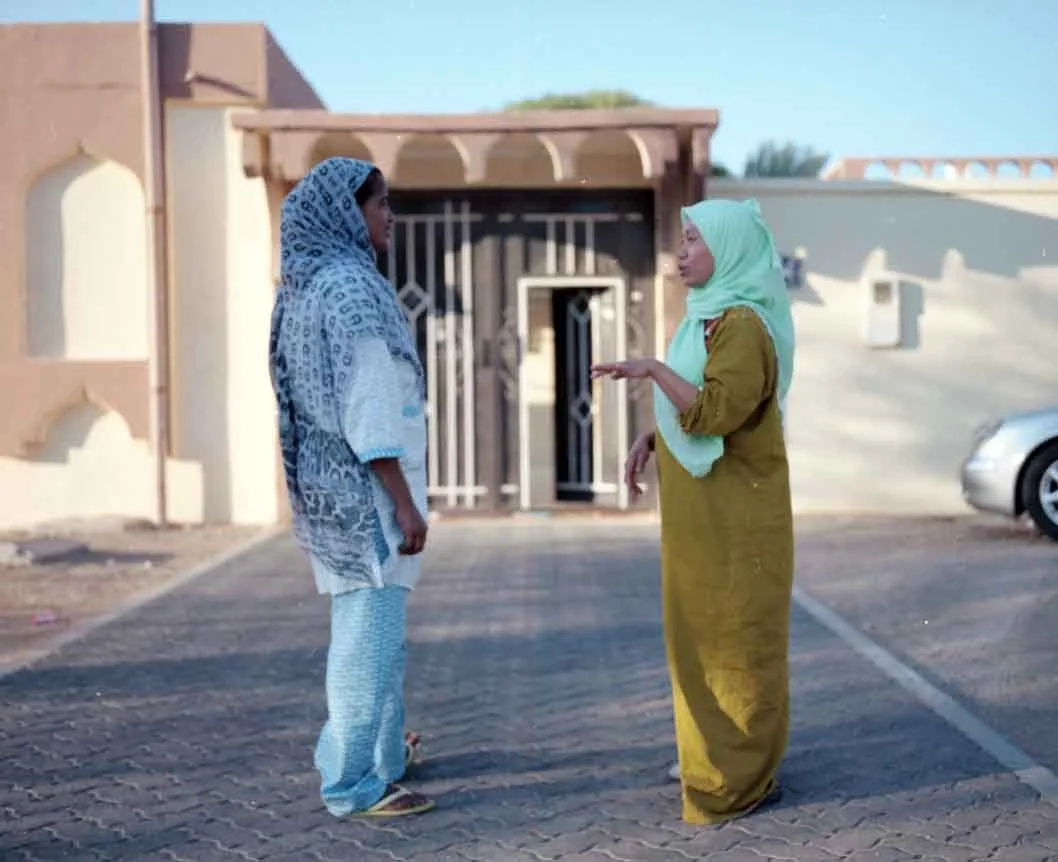
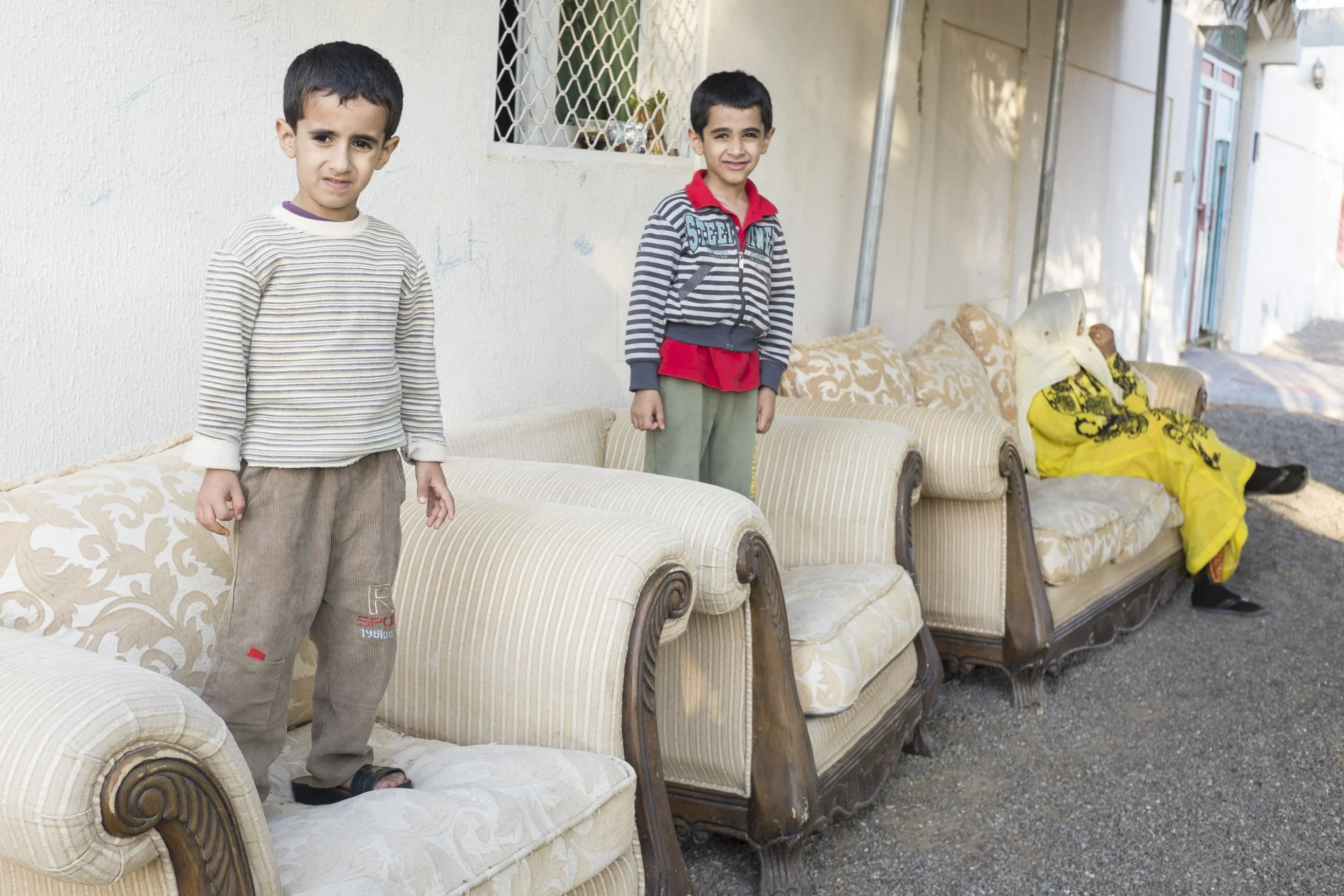
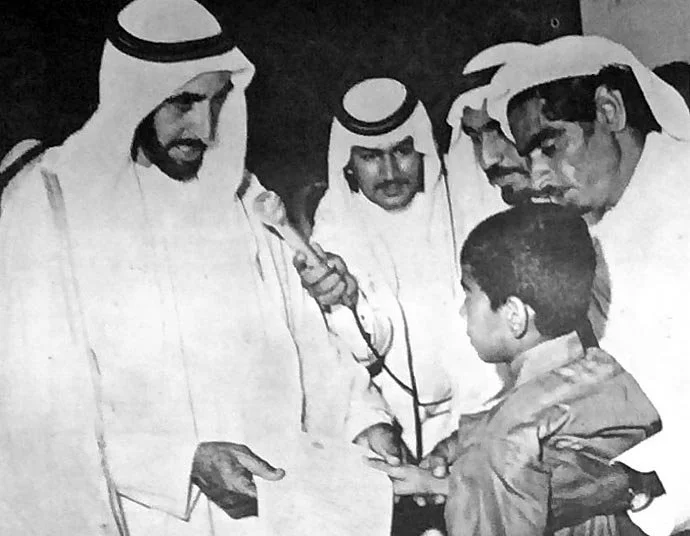
Beyond plans, diagrams, and architectural typologies, the “People” section of the Sha’abi project turns toward the lives that gave these modest houses meaning. It is here that the Sha’abi house emerges not simply as a state housing prototype introduced after 1971, but as a lived social world shaped through memory, adaptation, resilience, and everyday rituals. In neighborhoods such as Maqam, Baniyas, and Um Ghafa, the project documents inhabitants whose stories reveal the true ambition behind Sheikh Zayed’s vision: not merely the provision of shelter, but the creation of spaces where people could build community, dignity, and belonging. Through photographs, interviews, sketches, and observations collected over years of fieldwork, the research captures a disappearing generation whose lives remain embedded within the courtyards, sidewalks, extensions, and improvised landscapes of the Sha’abi neighborhoods.
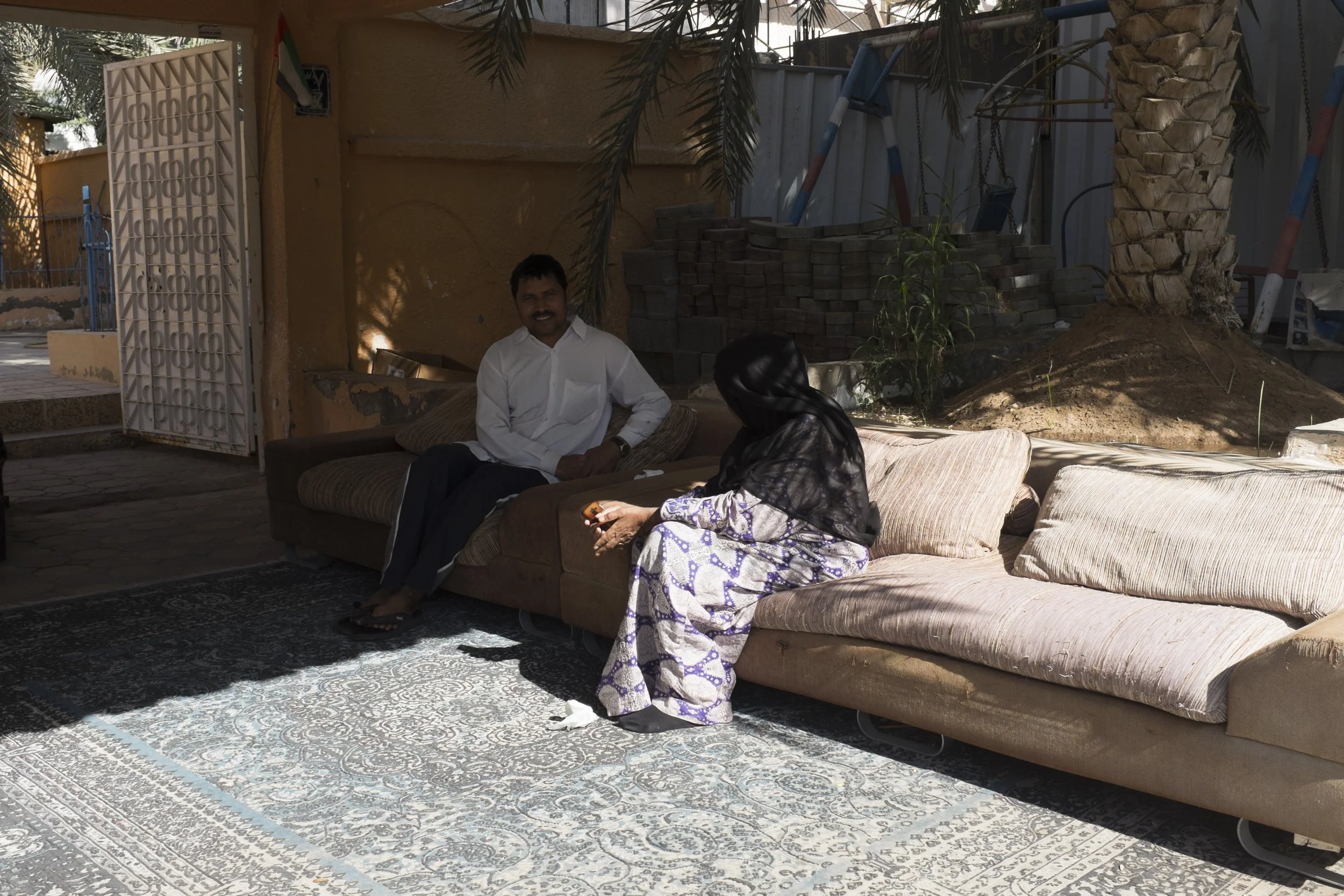
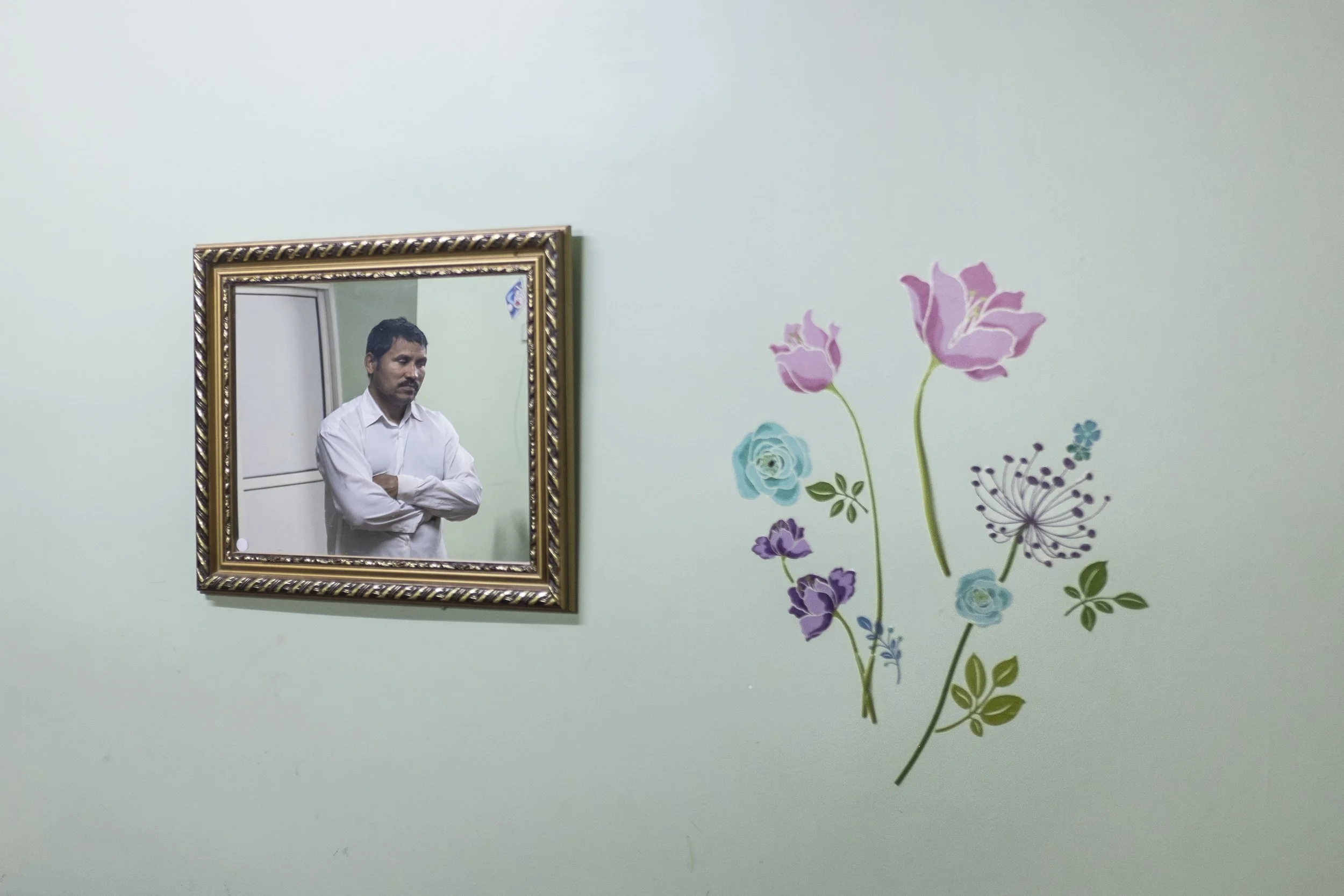
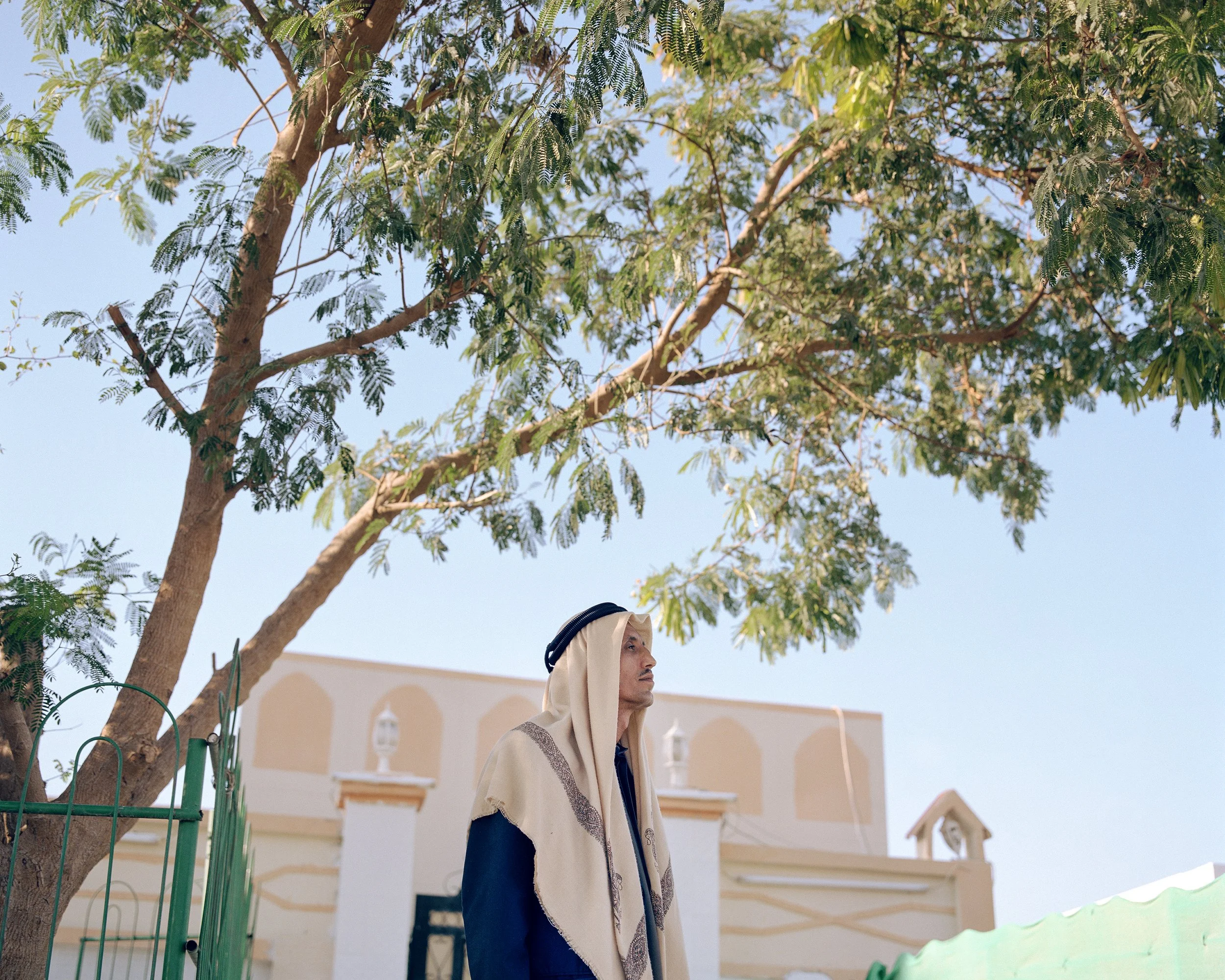
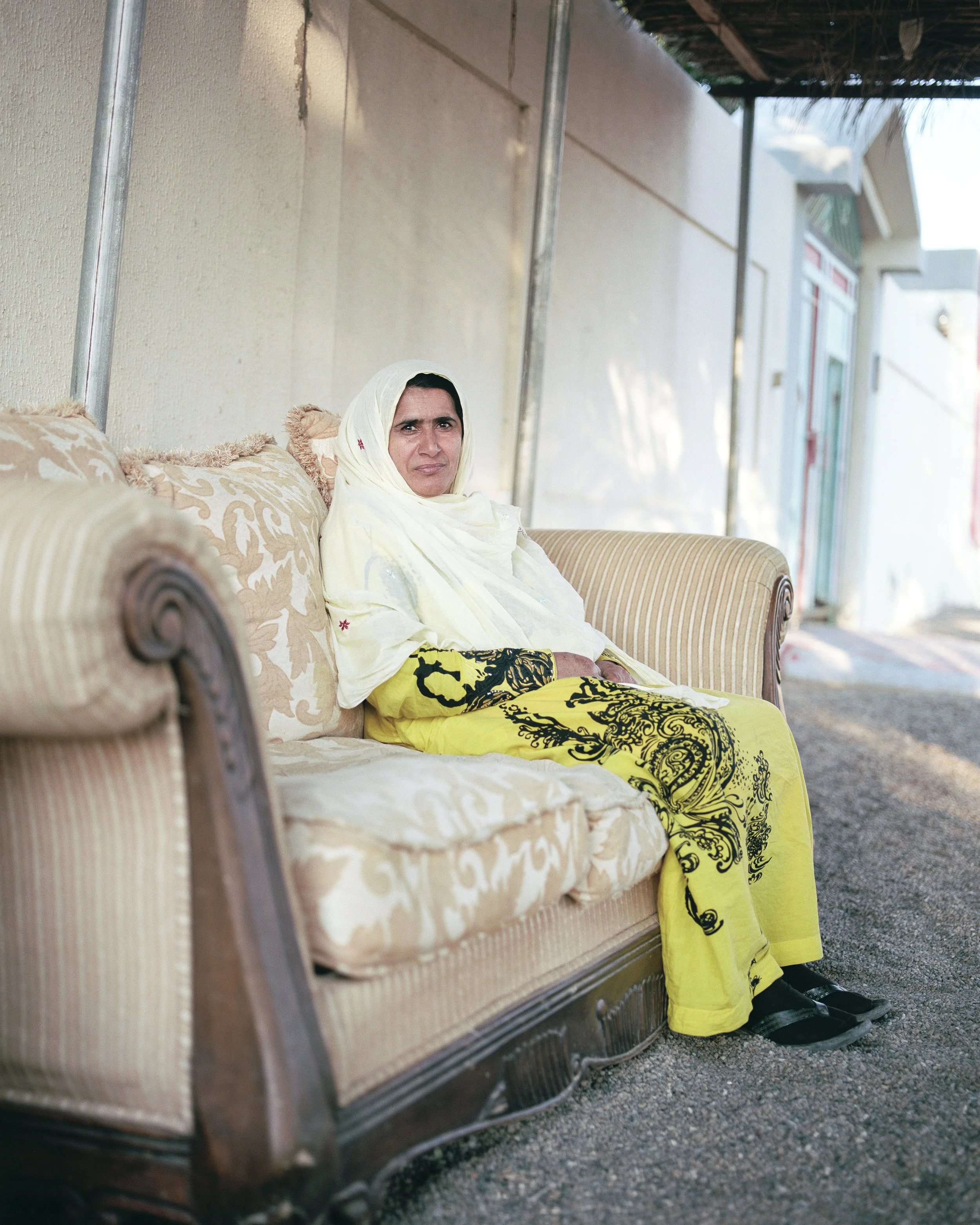
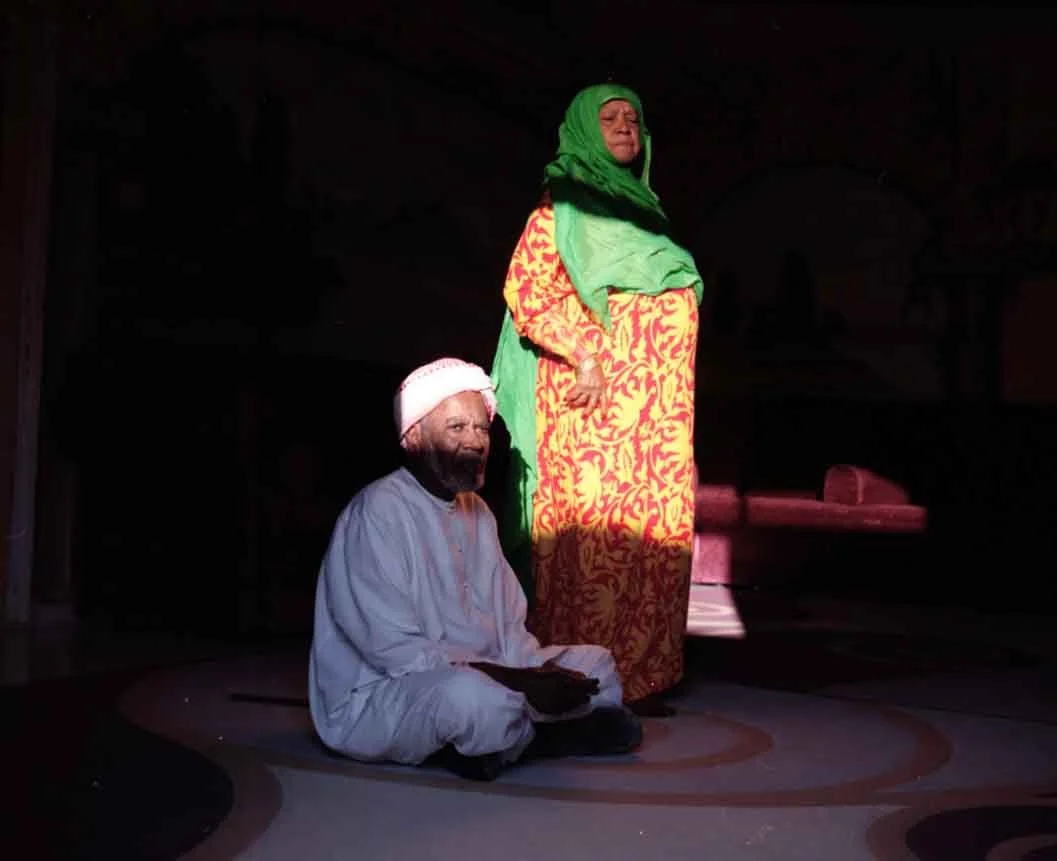
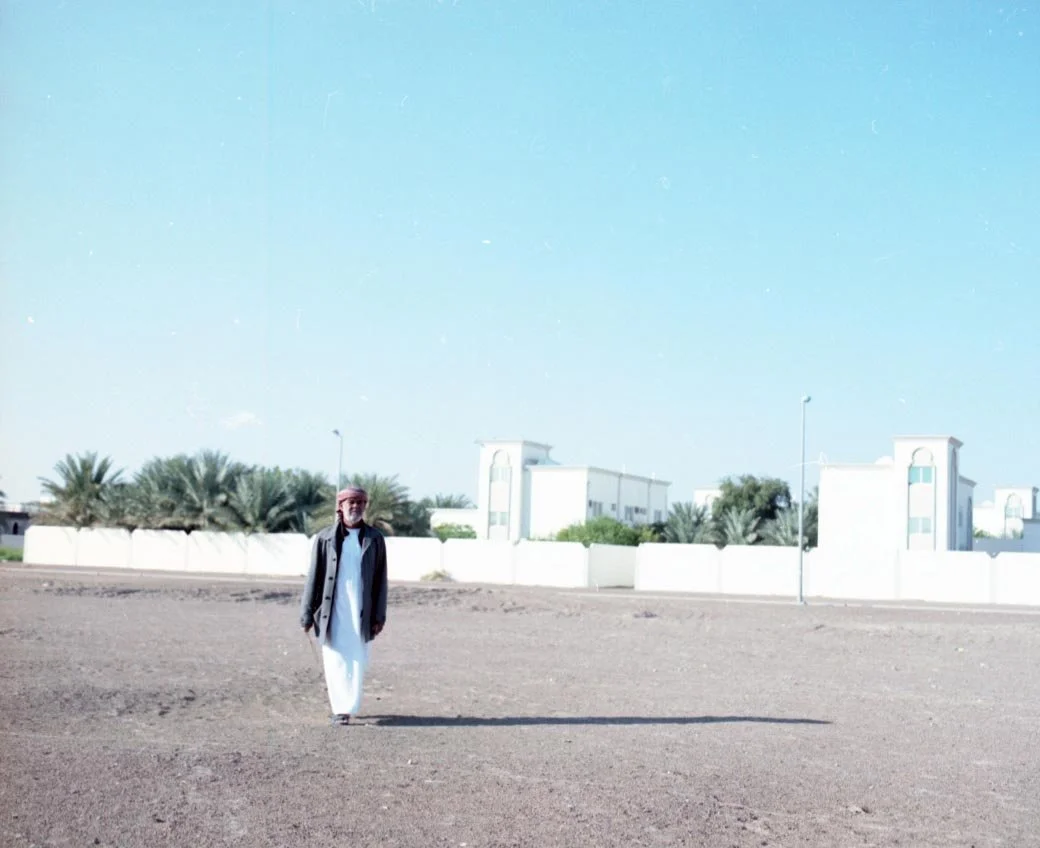
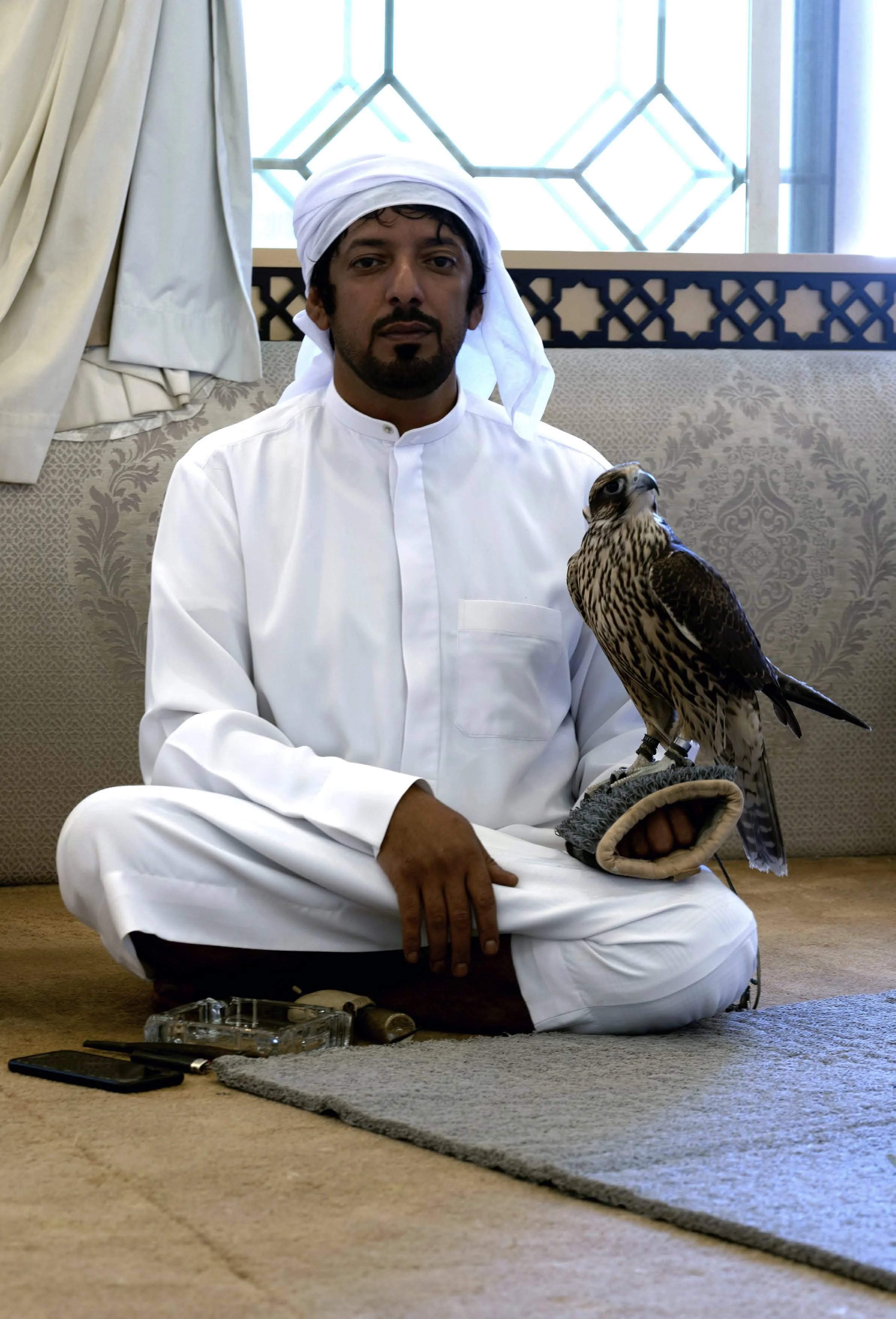
Among them is Um Mohammed in Maqam, defiantly occupying the sidewalk outside her home as an extension of domestic life, transforming public space into a realm of hospitality, surveillance, and social interaction. In Baniyas Sha’abiya, Rashad appears with his falcons—symbols of continuity between Bedouin traditions and settled urban existence—standing within a transformed house layered with memories, additions, and personal adaptations accumulated over decades. In another corner of Maqam lives Rawiya, an elderly widow navigating solitude with the support of her trusted Indian helper, her house revealing the intimate entanglements of migration, care, and aging within Gulf society. Elsewhere, the residents of Um Ghafa embody a quieter but equally powerful narrative of everyday urbanism: gardens cultivated over time, shaded gathering spaces, hand-built modifications, and homes that evolved organically alongside family life. Together these stories shift the focus away from architecture as object toward architecture as lived experience. They reveal the Sha’abi house not as a static artifact of modernization, but as a social framework continually reshaped by its inhabitants—precisely the humane and collective vision Sheikh Zayed had imagined: a city and a neighborhood built for people.
One Woman on a Sidewalk
Belonging and Defiance in a Sha’abi NeighborhoodI
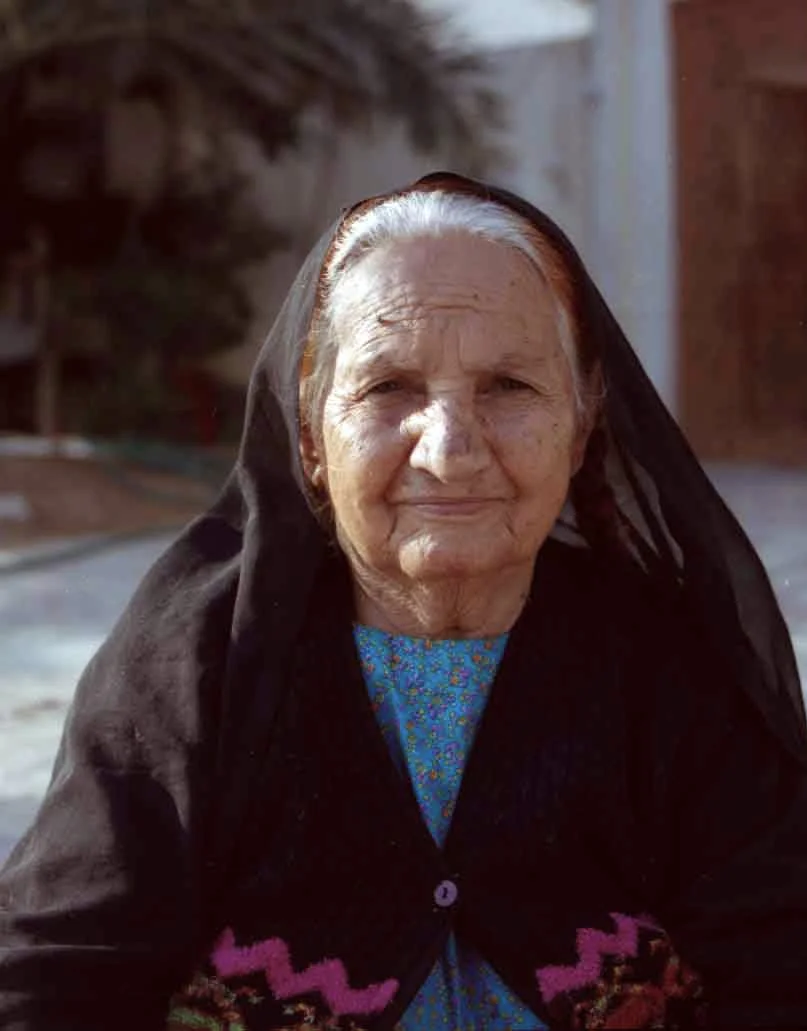
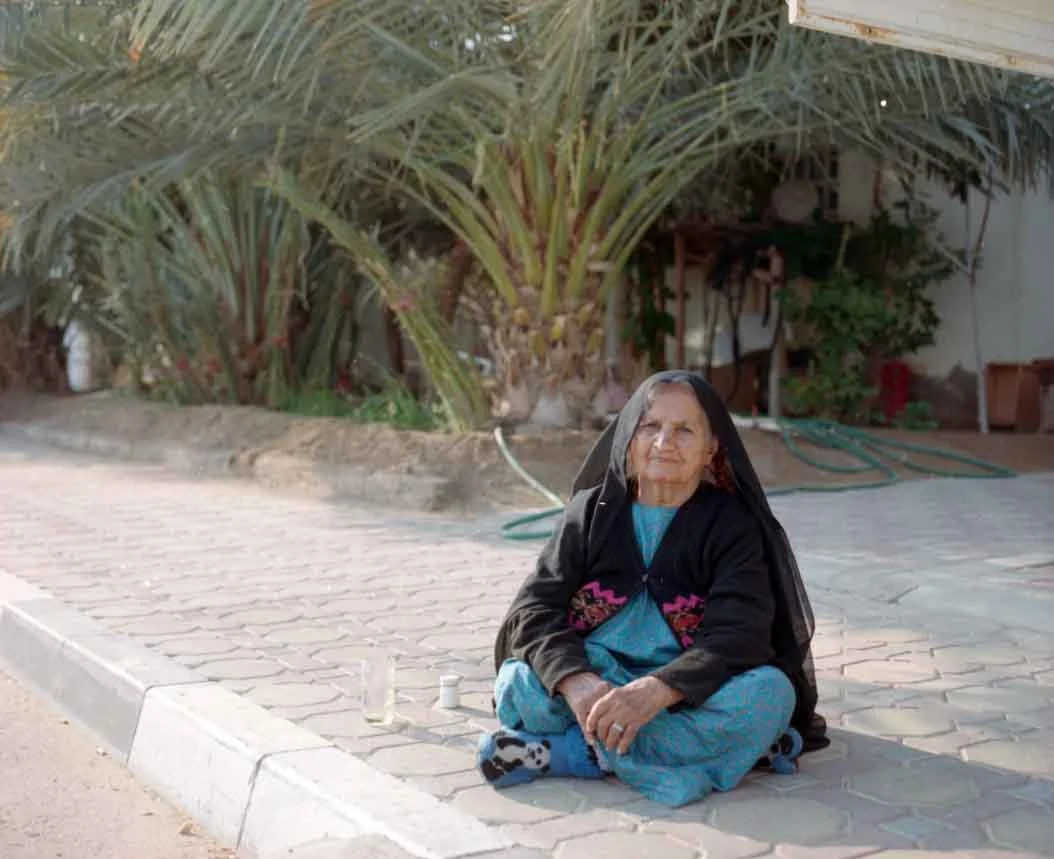
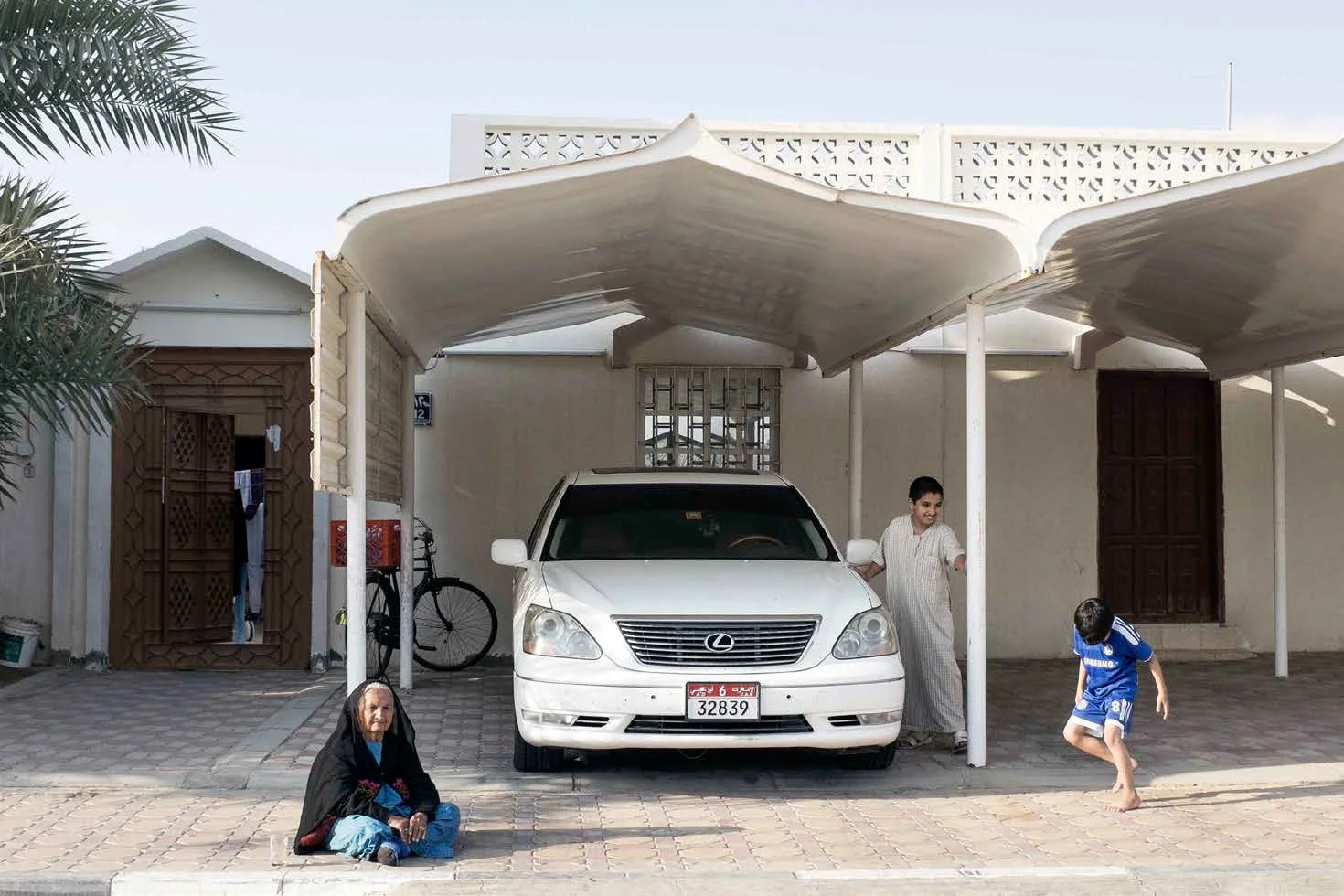
In the Sha’abi neighborhood of Maqam, Um Mohammed became one of the project’s most poignant figures: an elderly woman who spent much of her day seated on the curb outside her house, quietly observing the rhythms of neighborhood life as relatives, children, and cars moved through the street. Dressed in traditional clothing, with a glass of water and medicine placed beside her, she transformed the sidewalk into an extension of the home itself—a social threshold between private memory and public life. Living alone after the death of her only son and frequently visited by family members, her presence embodied the deeply human quality of the Sha’abi neighborhoods, where everyday rituals unfolded not behind walls but within shared communal spaces. Although not originally Emirati, Um Mohammed had become inseparable from the social fabric of Maqam, and in occupying the sidewalk she performed what the study describes as a subtle act of defiance: asserting visibility, belonging, and rootedness within an increasingly sanitized and controlled urban environment.
(Photograph: Reem Falaknaz)
One Man and His Falcons
Hospitality, Memory, and Everyday Life in Baniyas Sha’abiya
What began as a tense encounter on a quiet street in Baniyas slowly unfolded into one of the most memorable moments of the Sha’abi project. While documenting a row of aging Sha’abi houses, I was confronted by Rashad, a resident wary of a stranger photographing his neighborhood and, more specifically, his chickens. Yet suspicion quickly gave way to warmth and hospitality. Inviting me into his modest home, Rashad introduced me to a world where falcons rested beside the majlis, elderly relatives exchanged stories, and the rhythms of everyday Emirati life remained deeply rooted within the walls of the Sha’abi house. Over cups of gahwa, he spoke about moving to the neighborhood as a child in 1987 and why he never wished to leave. The house was more than shelter; it was memory, continuity, and belonging. By the time I departed—with a portrait of Rashad holding his falcon and an invitation to return “whenever you’re in Abu Dhabi”—it became clear that these neighborhoods embody something increasingly rare in the contemporary Gulf city: an architecture inseparable from generosity, intimacy, and human connection.
Ali Meqbali’s Garden
Photographs from a More Intimate Time
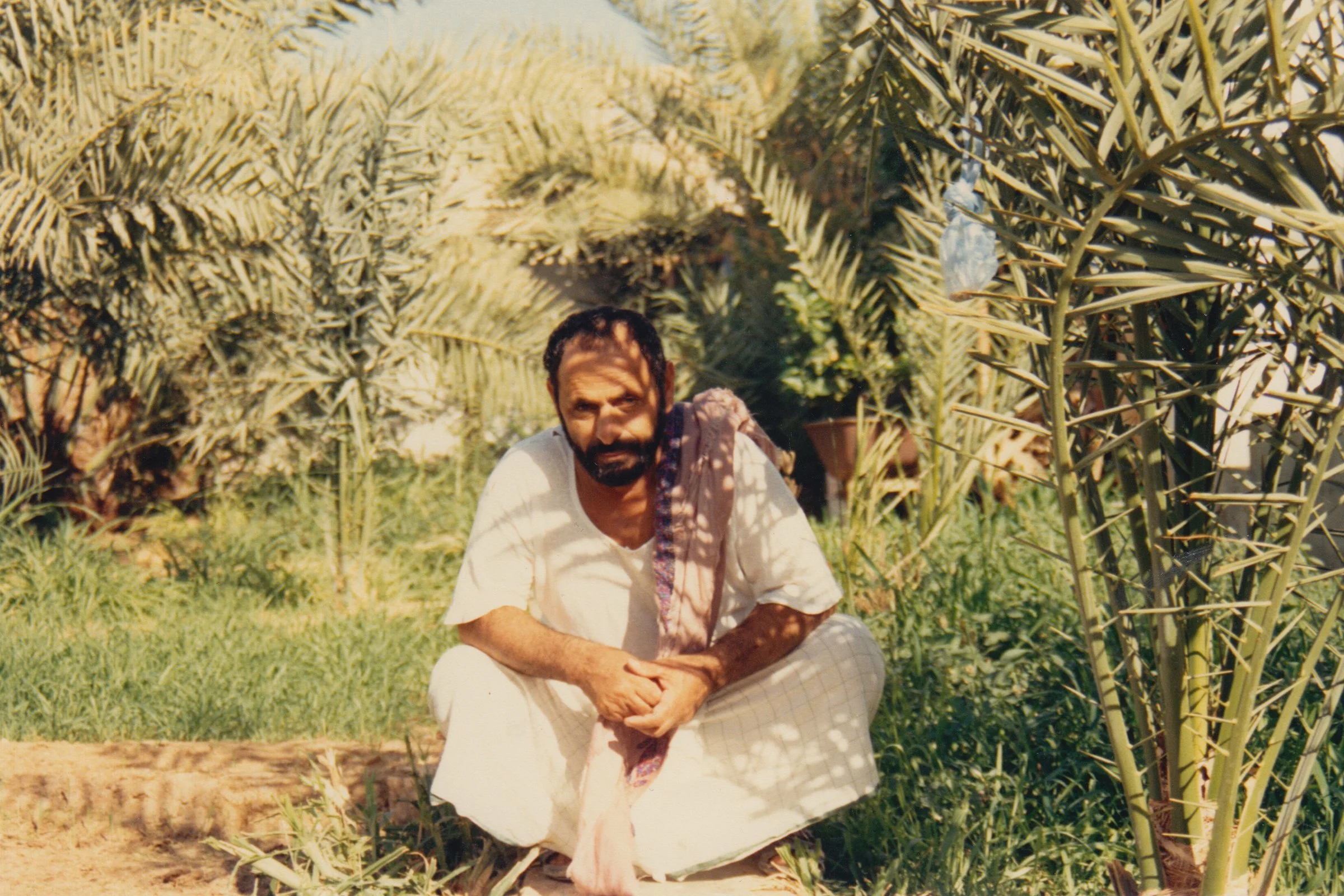
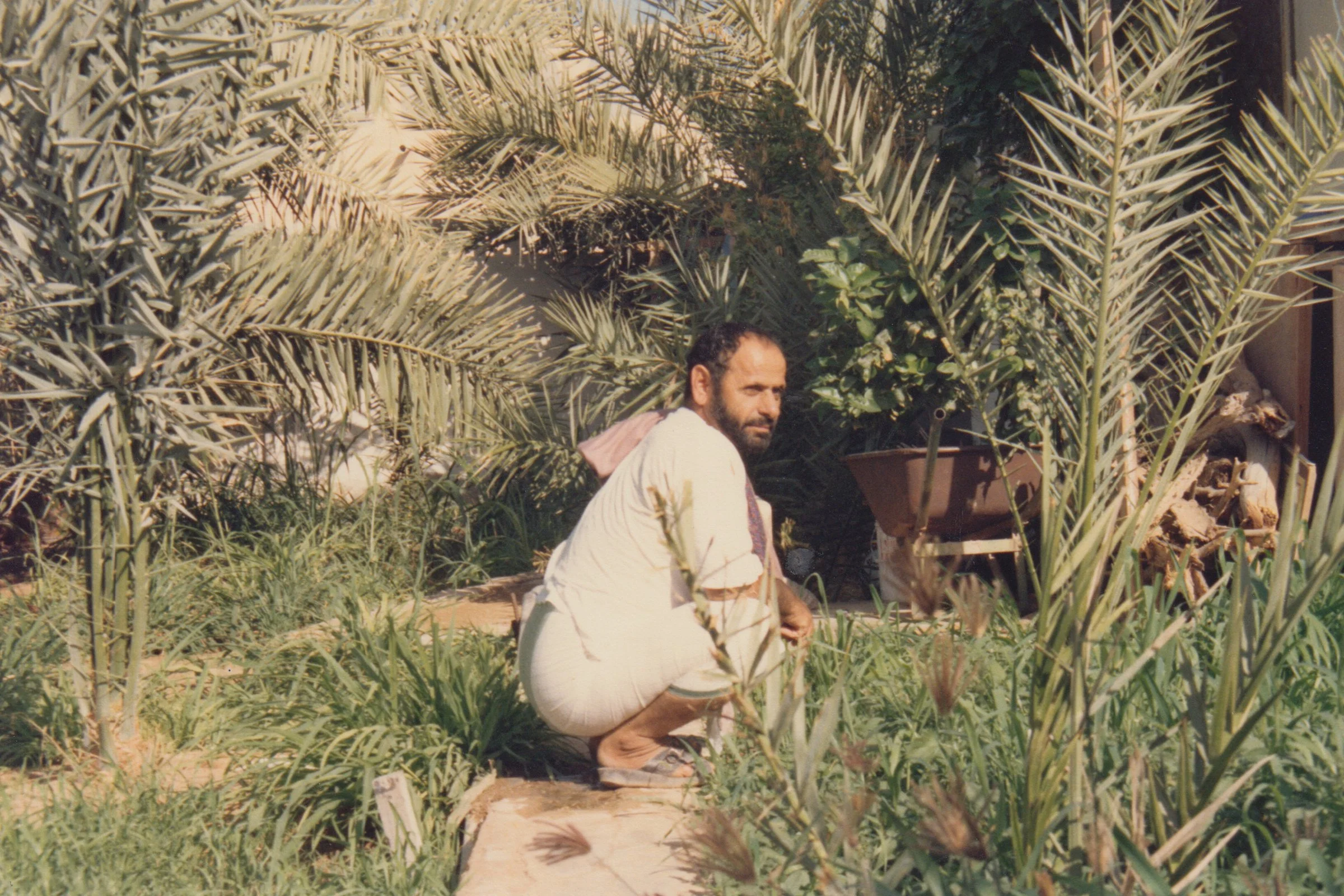
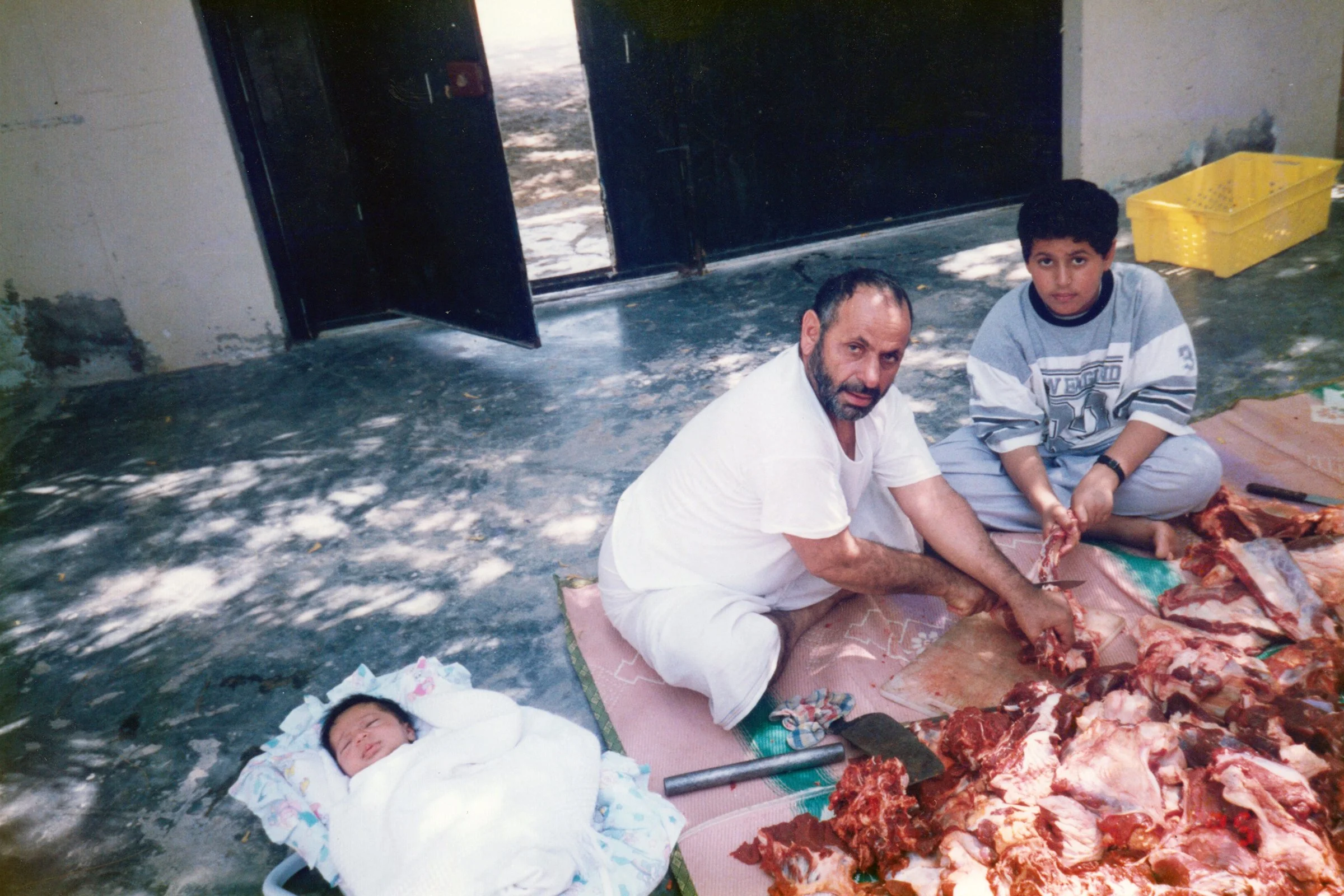
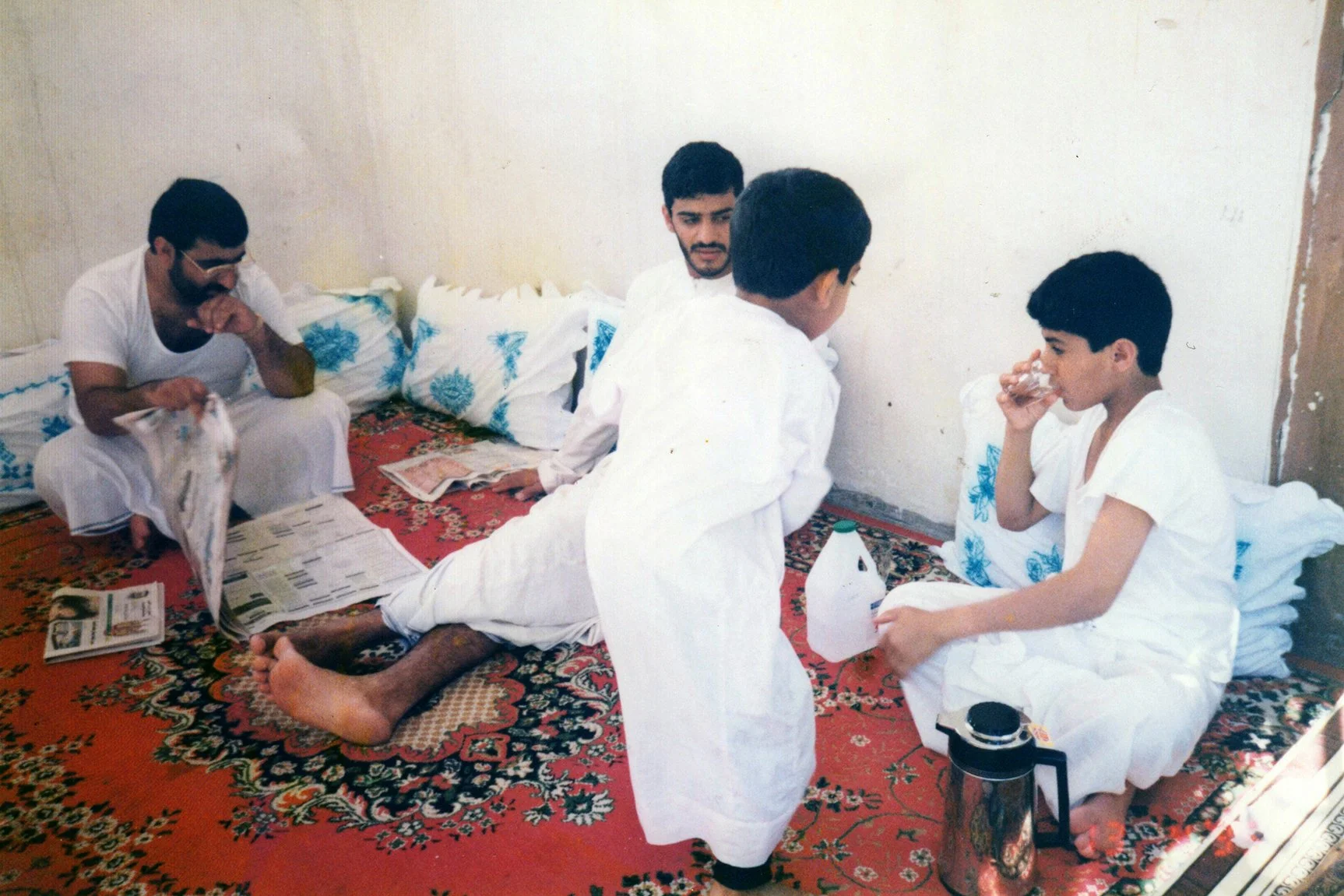
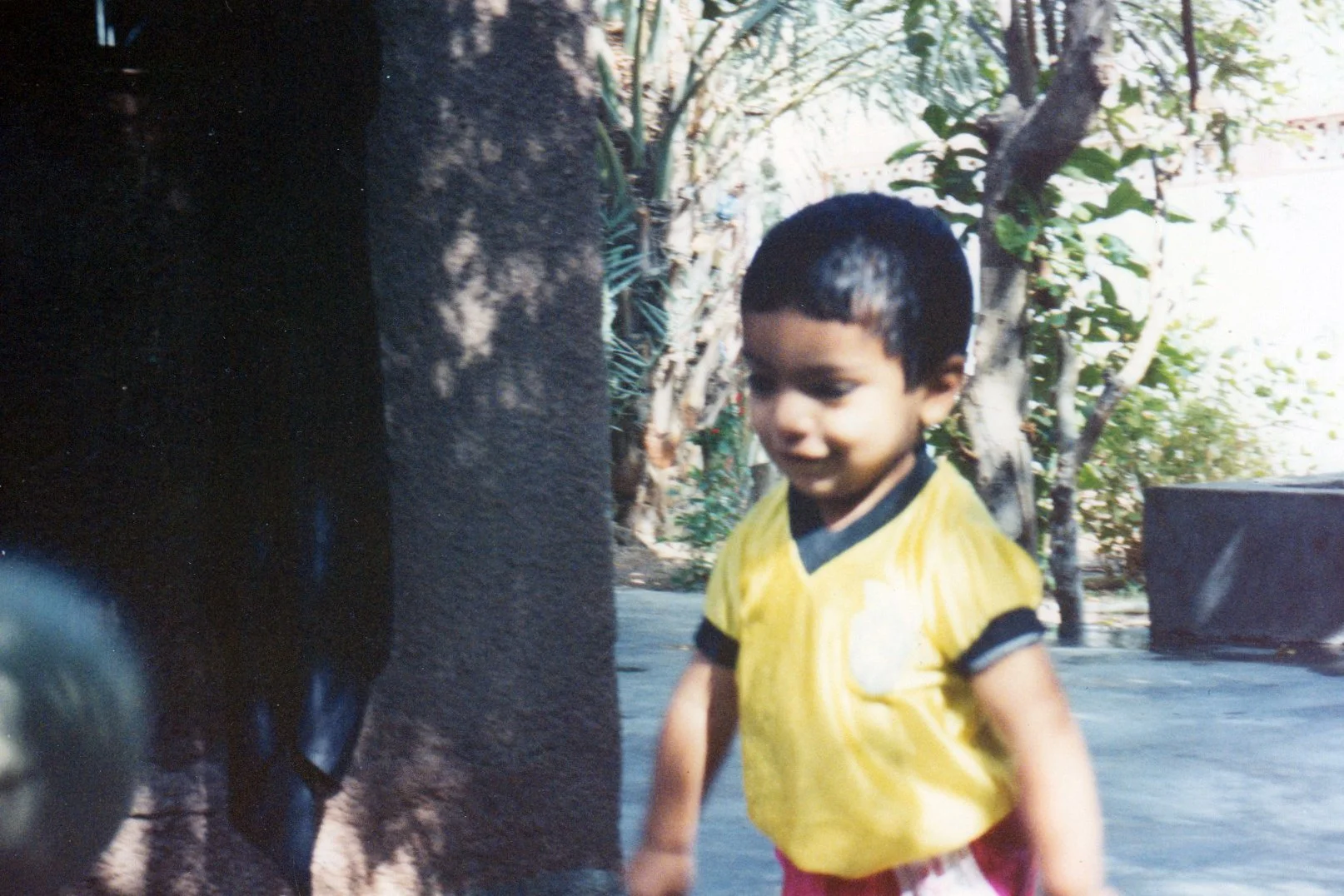
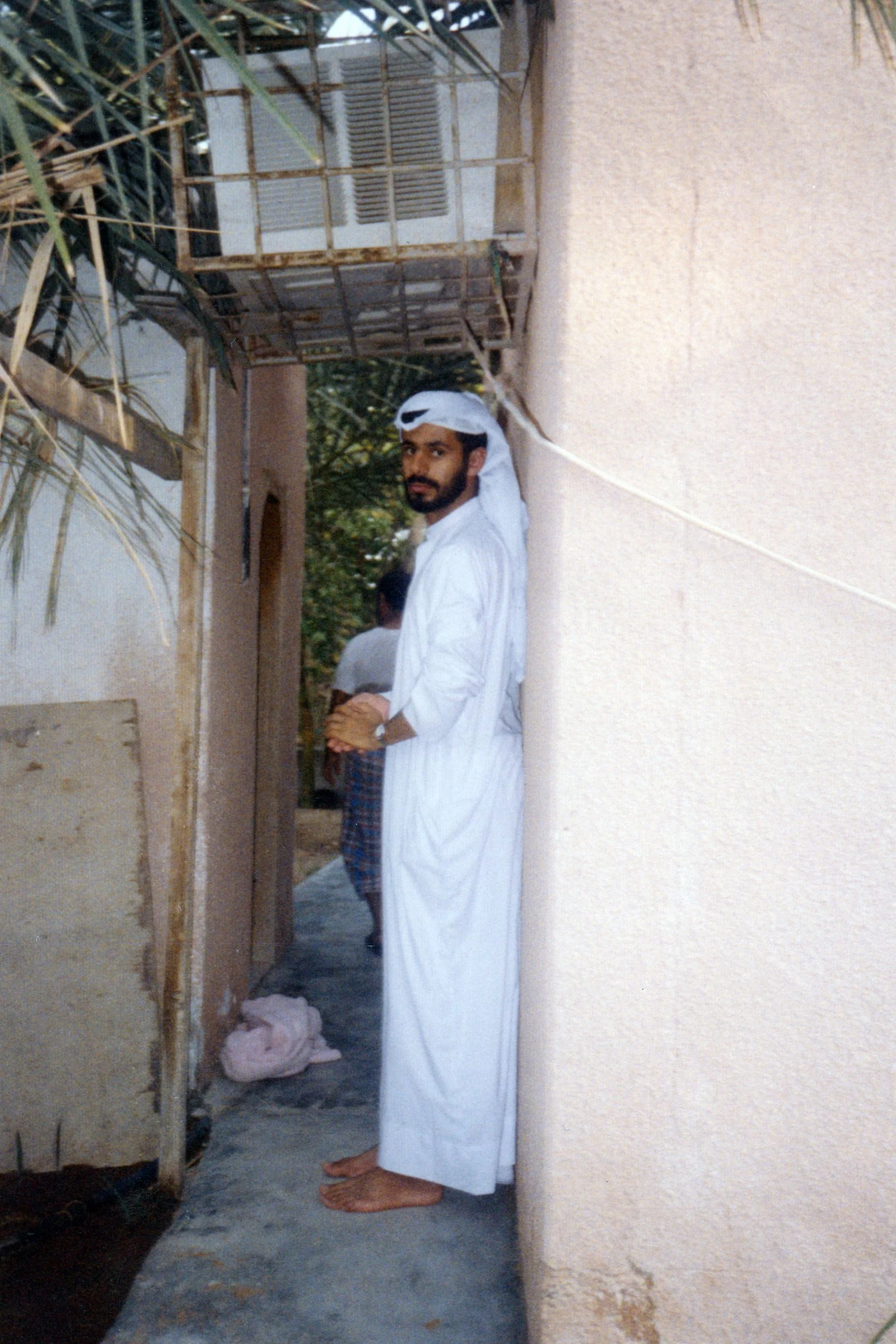
The people of the Meqbali house emerge through faded family photographs that capture a slower and more intimate era in the life of the Sha’abi neighborhood. At the center stands Ali Meqbali, the family patriarch, quietly tending to his garden—an act that transformed the house into a place of care, cultivation, and permanence. Around him unfolds the everyday life of an extended Emirati family: children running through courtyards and open spaces, relatives gathered together during Eid al-Adha celebrations, and family members seated casually on the floor of the living room in moments of rest and conversation. These images reveal more than domestic scenes; they document a way of life rooted in simplicity, closeness, and communal belonging. The Sha’abi house appears not as an architectural object but as a lived environment shaped by routine, affection, hospitality, and memory—a world where indoor and outdoor life blended seamlessly, and where the rhythms of family and neighborhood unfolded with an ease and intimacy increasingly absent from contemporary urban life.
A House That Remembers
Rawiya and the Vanishing World of Maqam
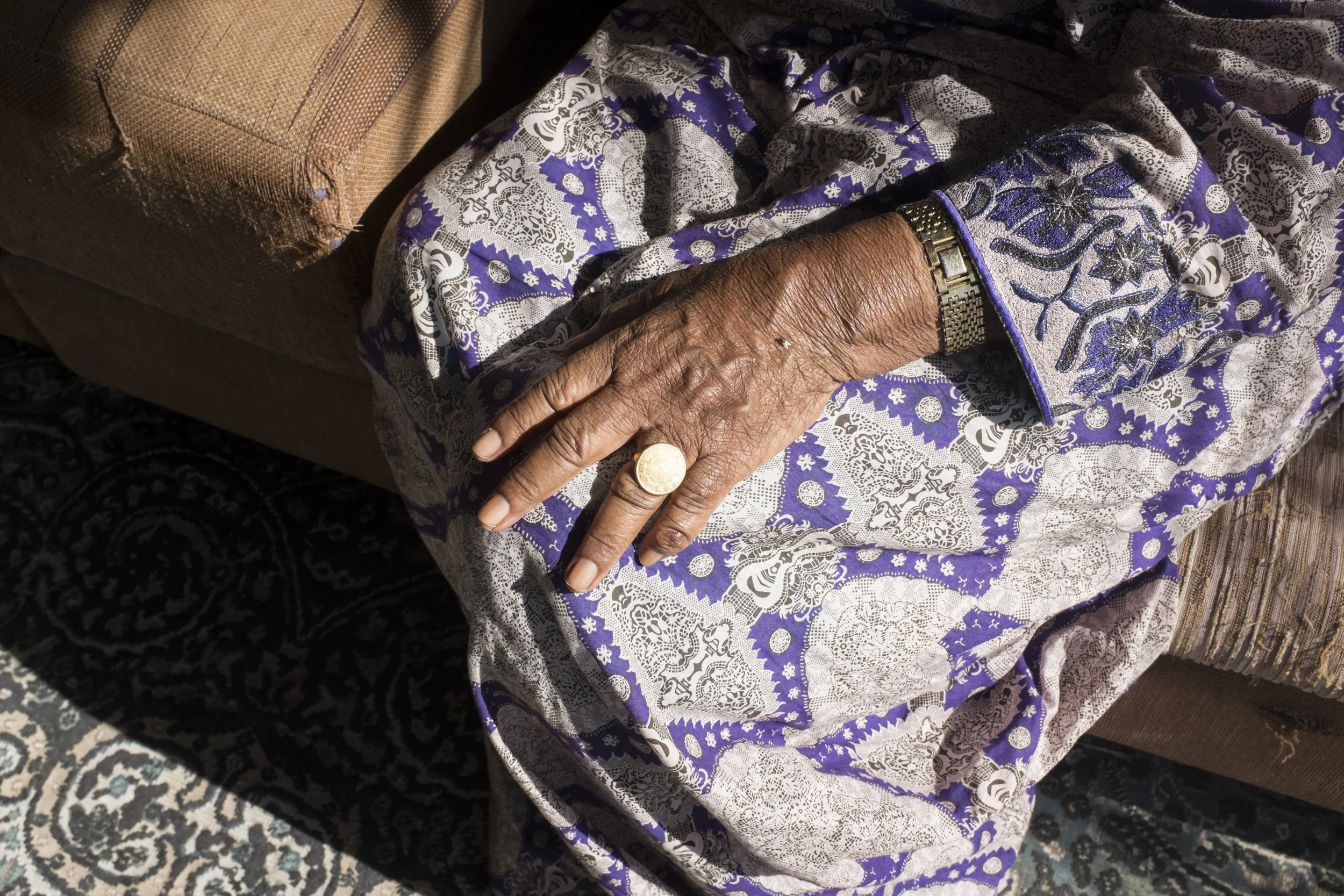
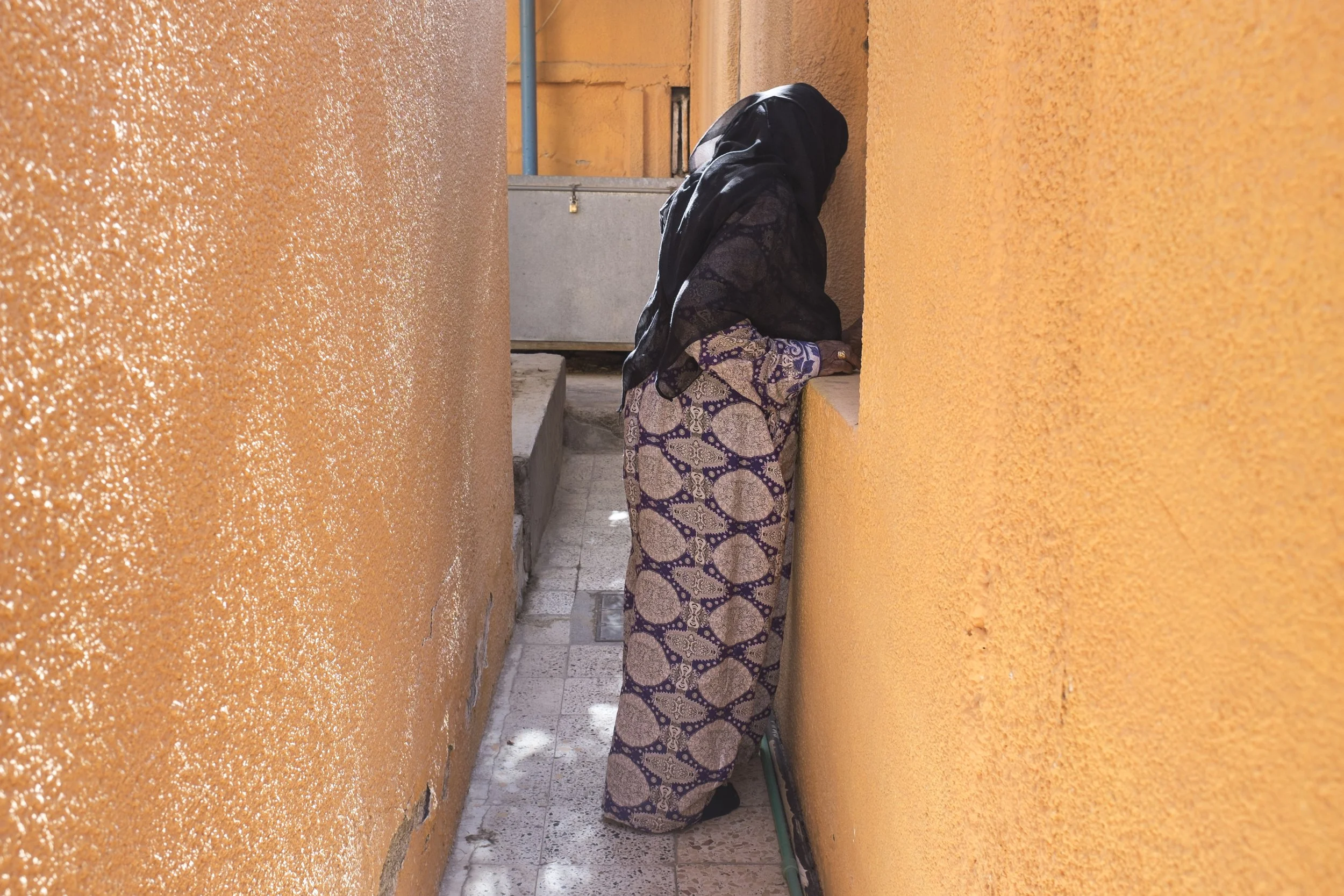
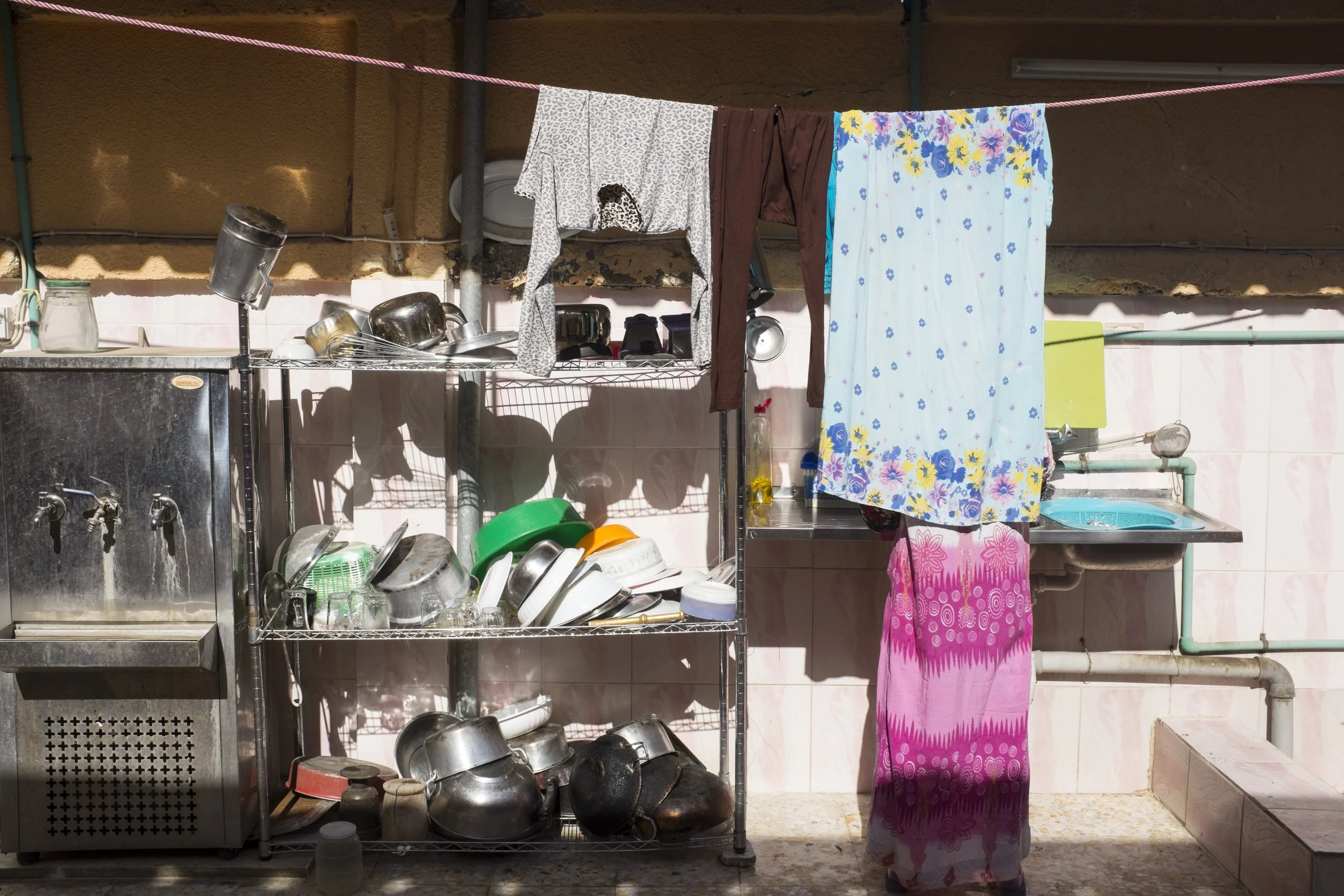
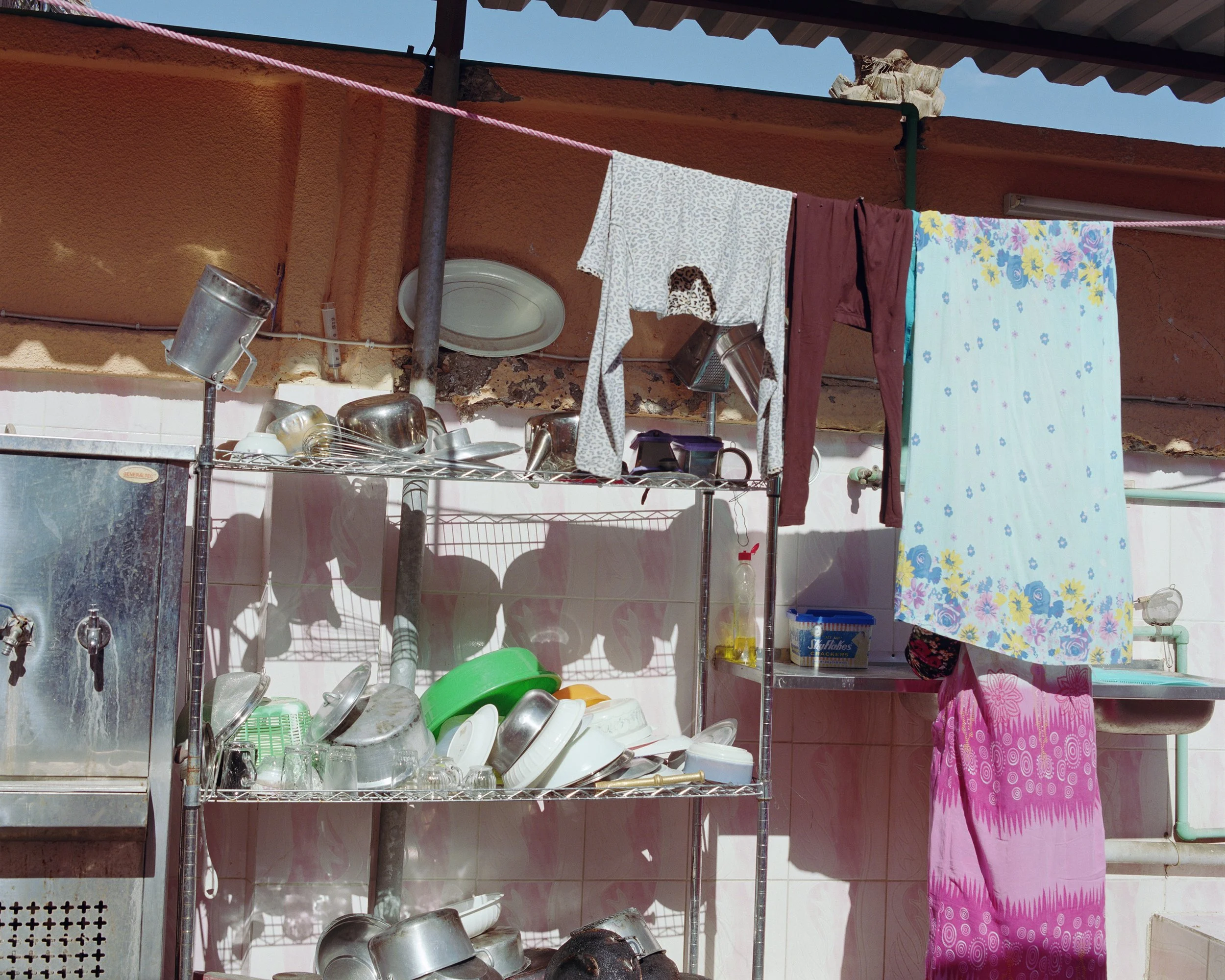
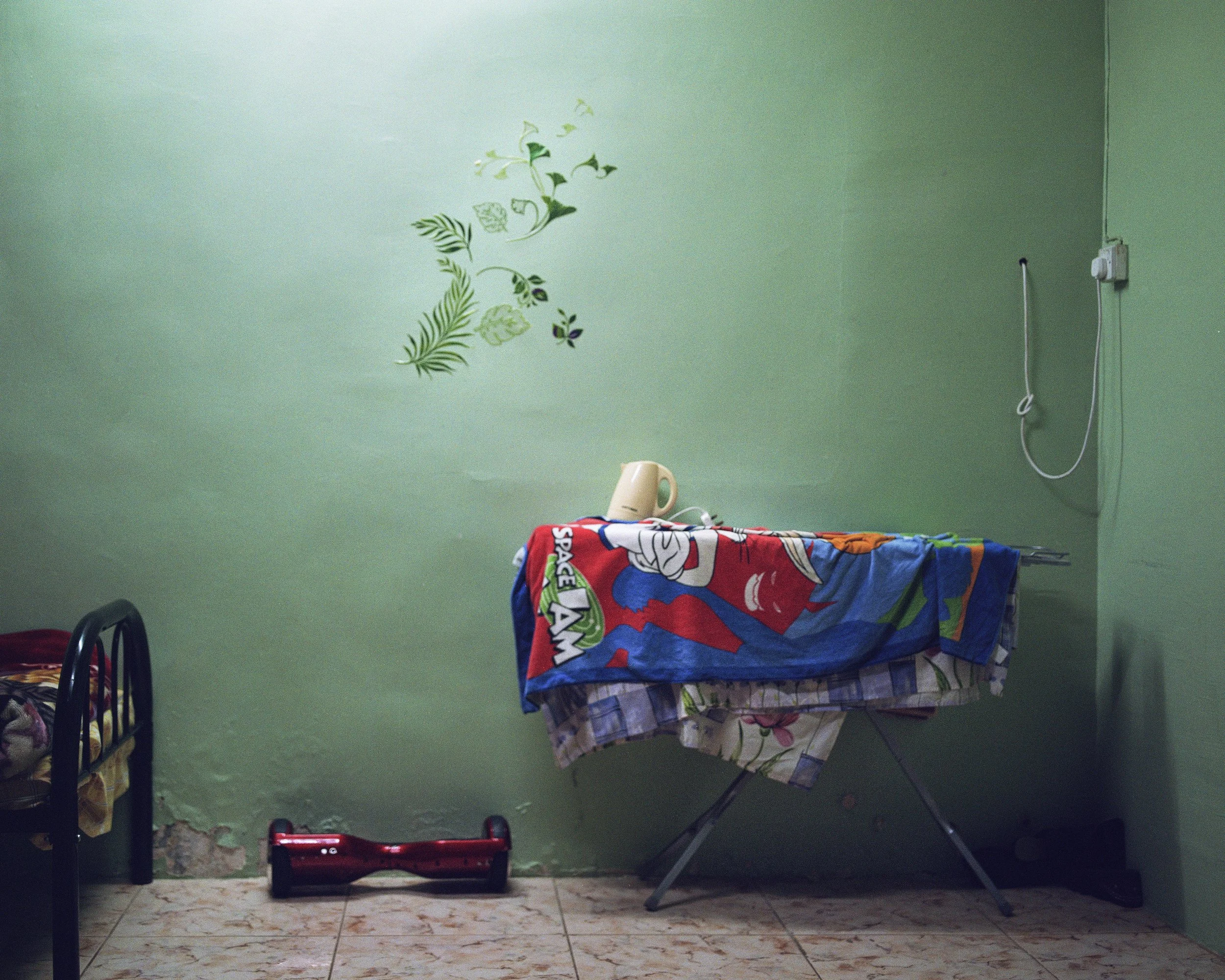
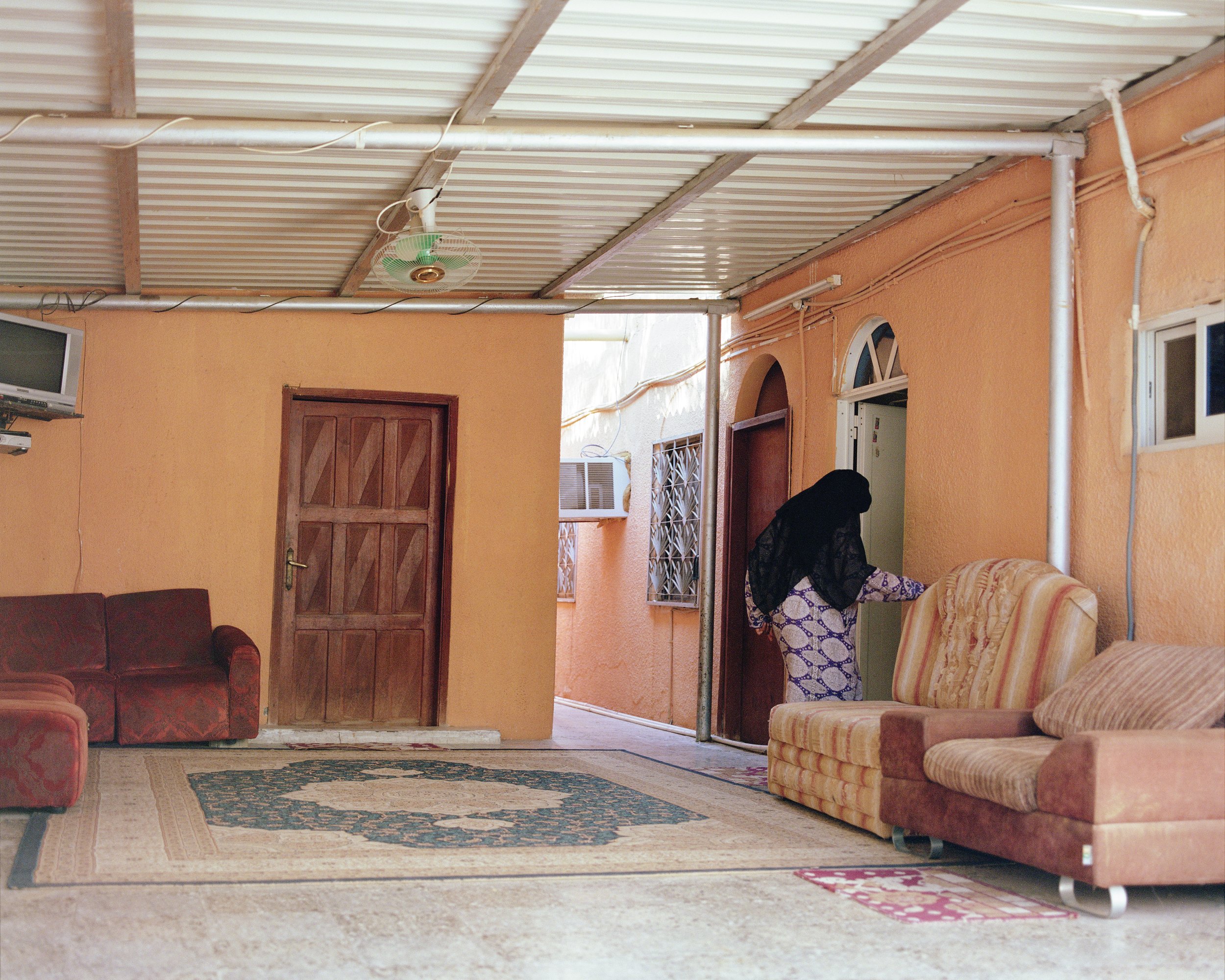
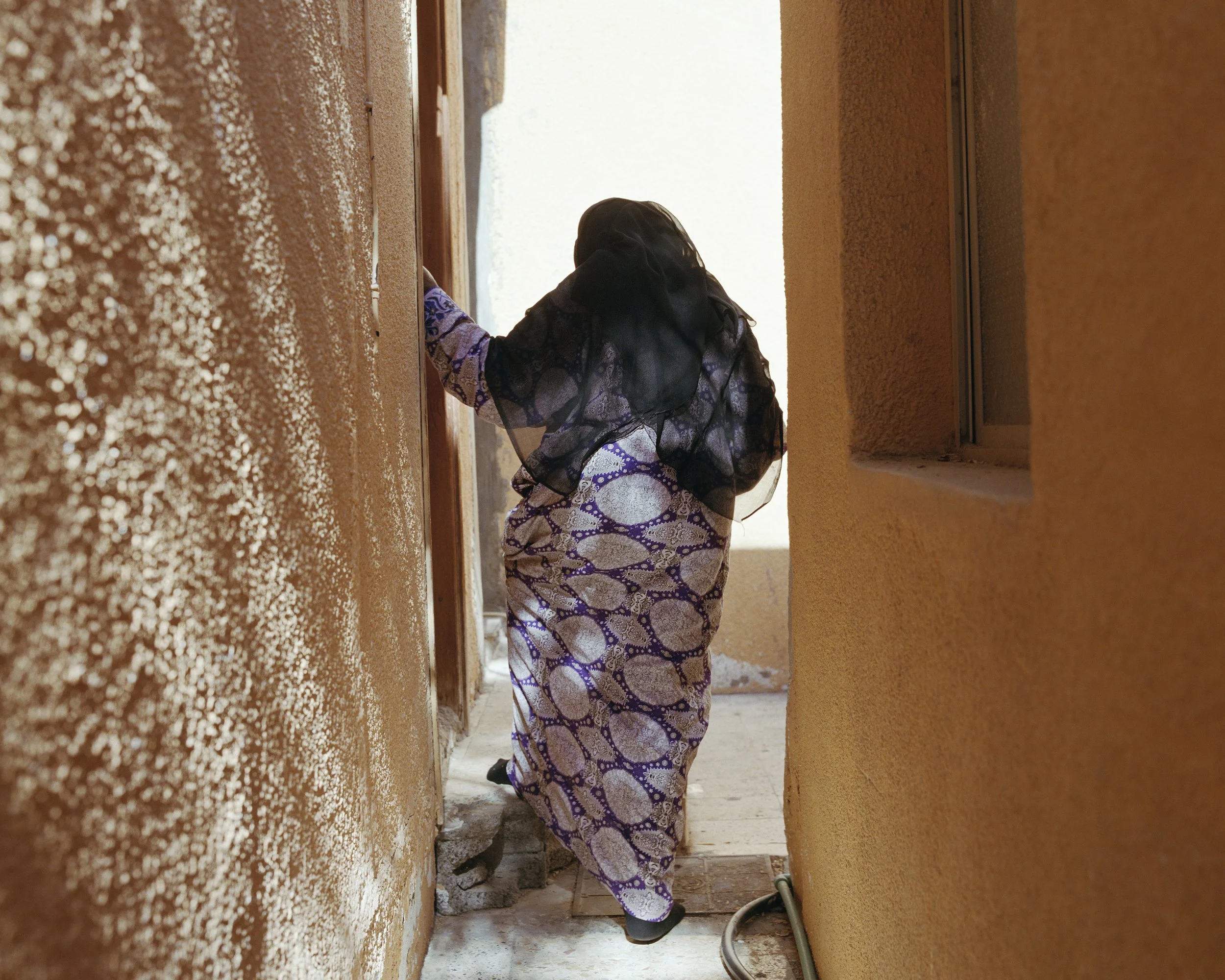
In the Sha’abi neighborhood of Maqam lives Rawiya, an elderly Emirati widow whose modest house quietly preserves the atmosphere of an older Abu Dhabi now rapidly disappearing. Living largely on her own, accompanied only by her trusted Indian maid and gardener and occasionally visited by her daughter and grandchildren, Rawiya’s home embodies the layered social worlds that shaped everyday life in the UAE’s Sha’abi neighborhoods. Photographed as part of the research for the UAE National Pavilion at the Venice Architecture Biennale, her living spaces reveal traces of decades of habitation: worn furniture, carefully arranged objects, children’s toys left behind for visiting grandchildren, and rooms marked by use rather than display. Unlike the sanitized interiors of contemporary villas, Rawiya’s house possesses a deeply lived-in quality where memory accumulates through ordinary routines and familiar objects. The house is not frozen in nostalgia but continues to function as a space of care, hospitality, and continuity, reflecting the intimate human dimension of the Sha’abi house as a place where aging, family life, migration, and belonging intersect within the everyday landscape of Maqam.
(Photography: Reem Falaknaz)