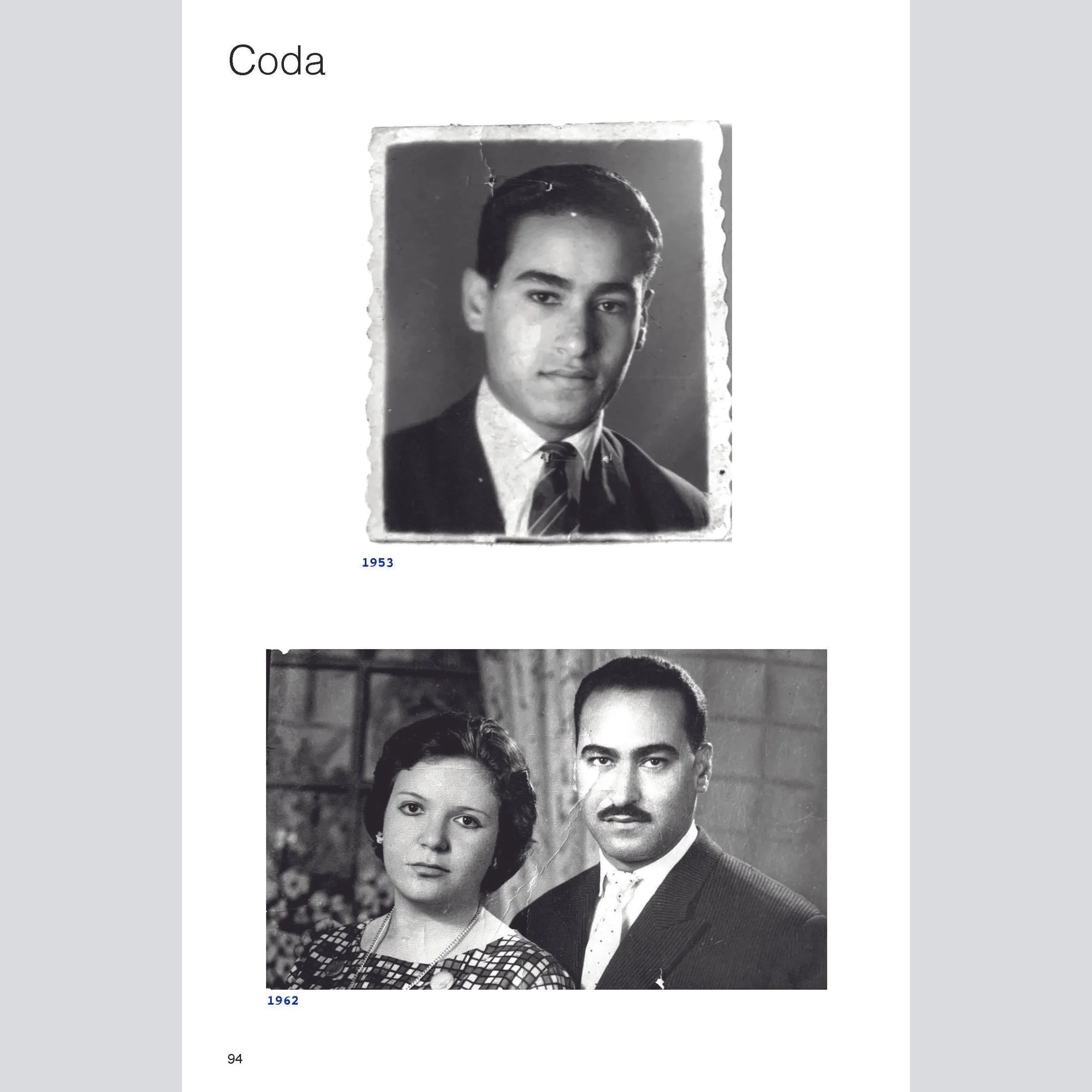
This booklet is a tribute to Hassan Elsheshtawy (1933–2006), an architect, educator, and devoted father whose life and work shaped his son’s own architectural journey. Recalling a final conversation about Mies van der Rohe and the Barcelona Pavilion, the text reflects on shared intellectual passions and fleeting moments of clarity before his passing. It traces the author’s parallel career and eventual return to Riyadh, where encounters with his father’s former students revealed an unseen legacy. More than a catalog of projects, the booklet honors a life grounded in integrity, family, and quiet influence, seeking to preserve memory and inspire future generations.
BUILT WORKS & PROJECTS
1 Egypt
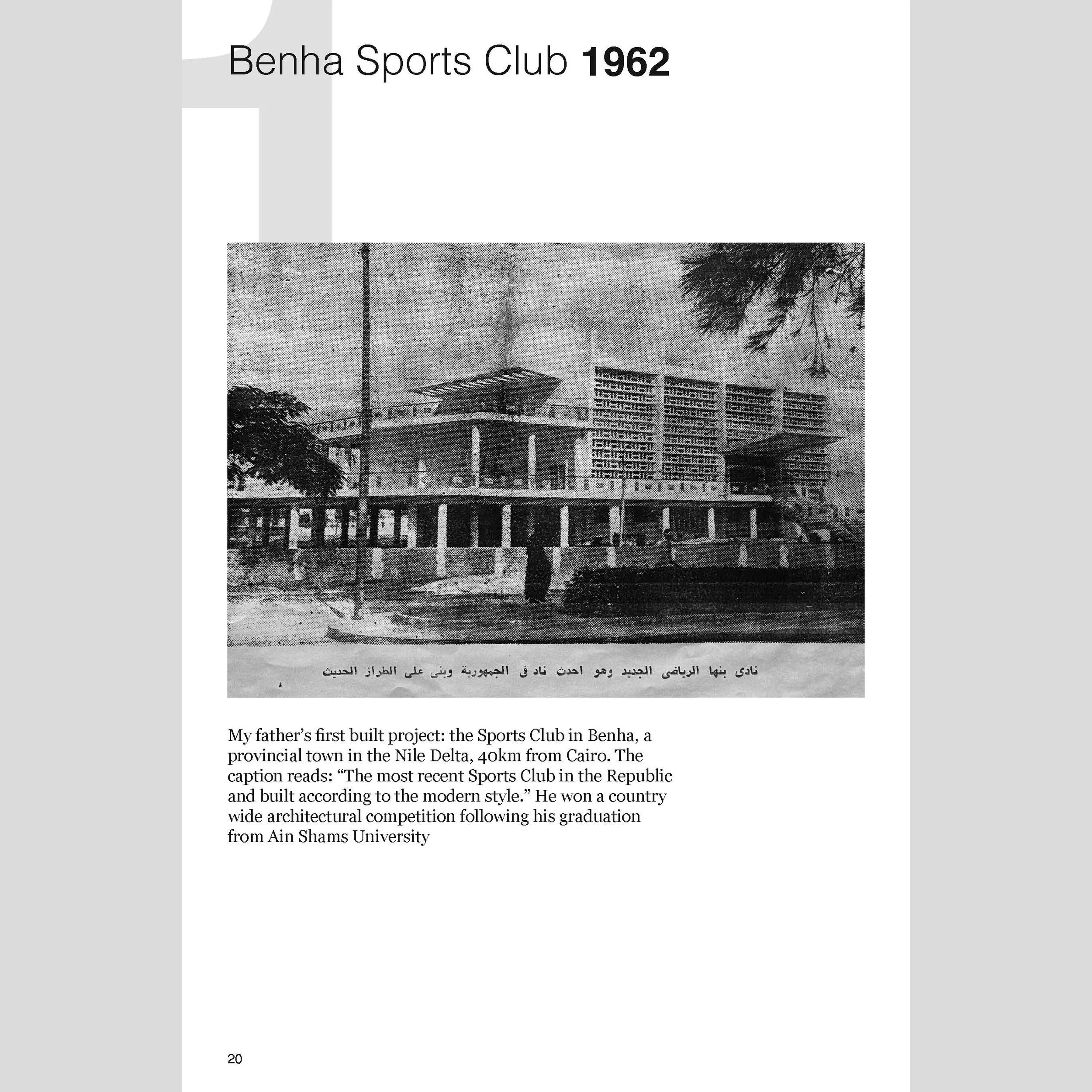
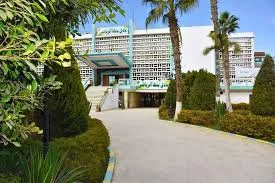
Benha Sports Club. 1962
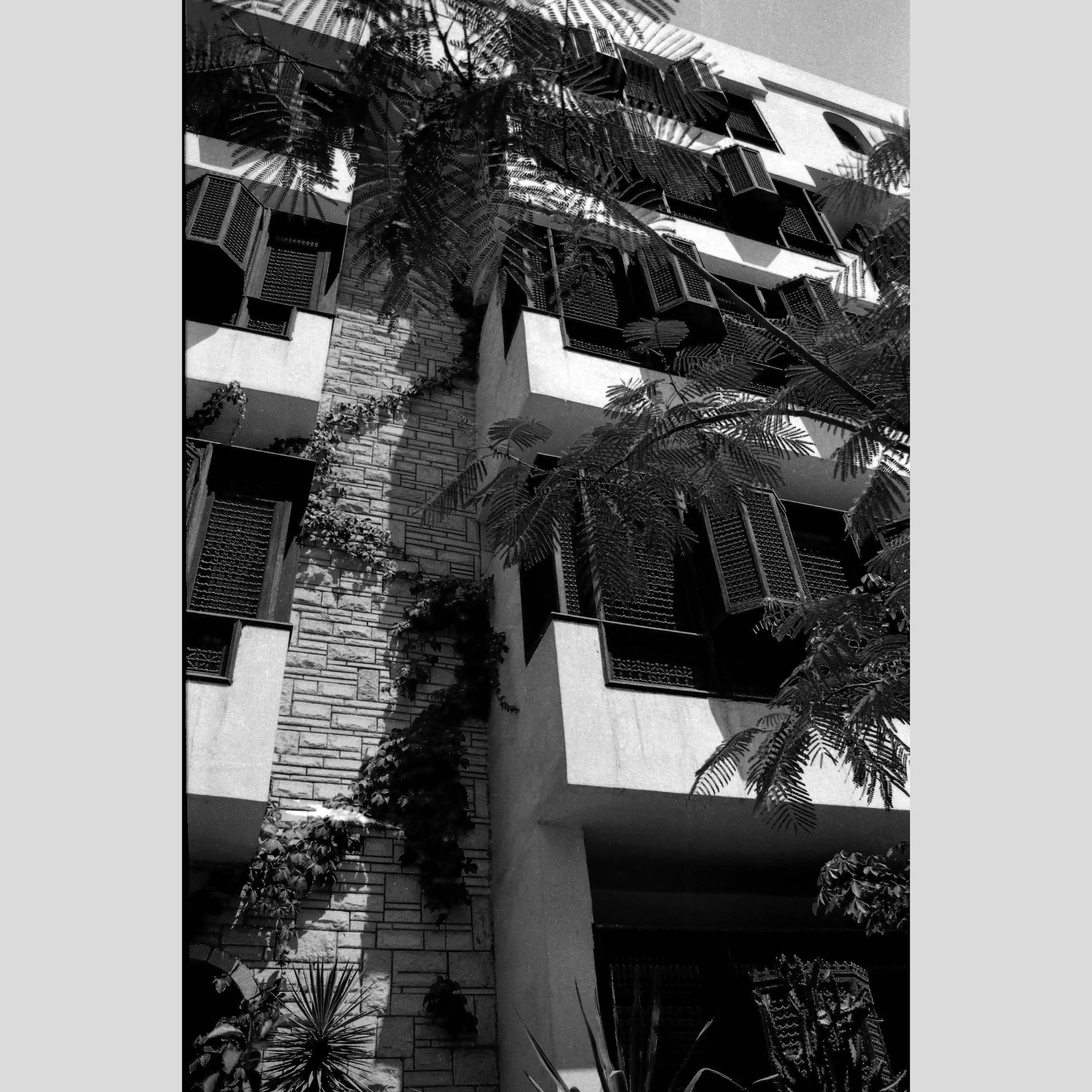
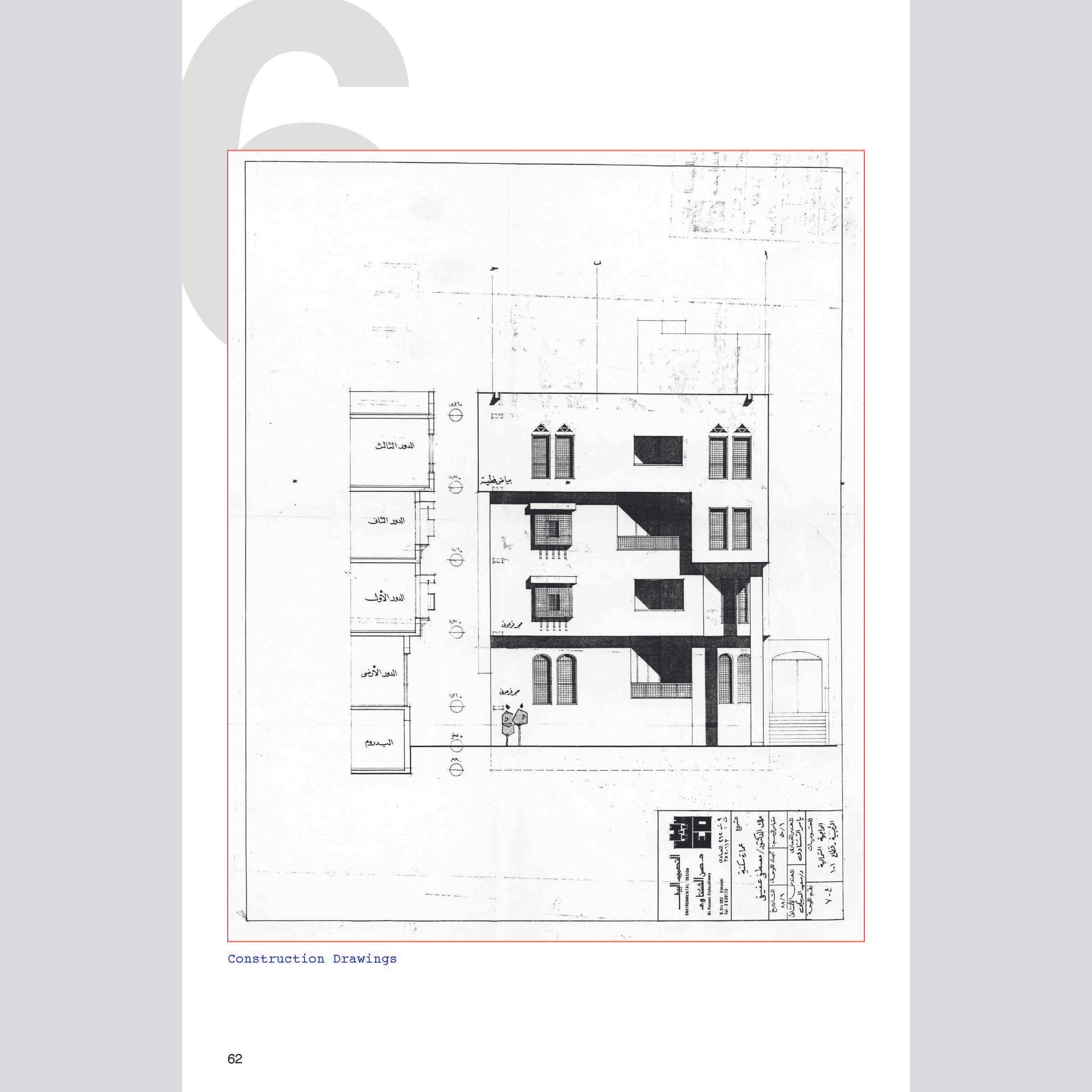
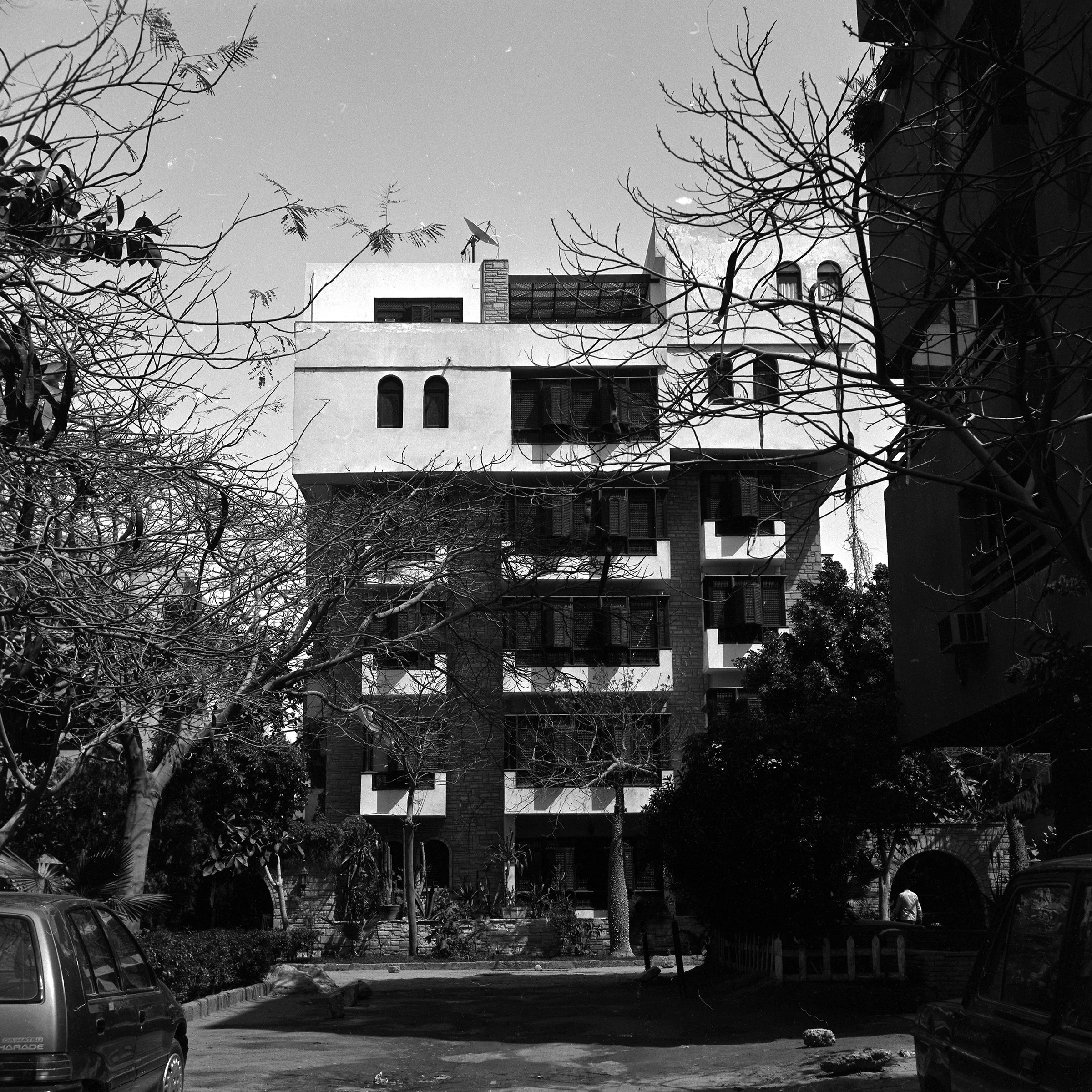
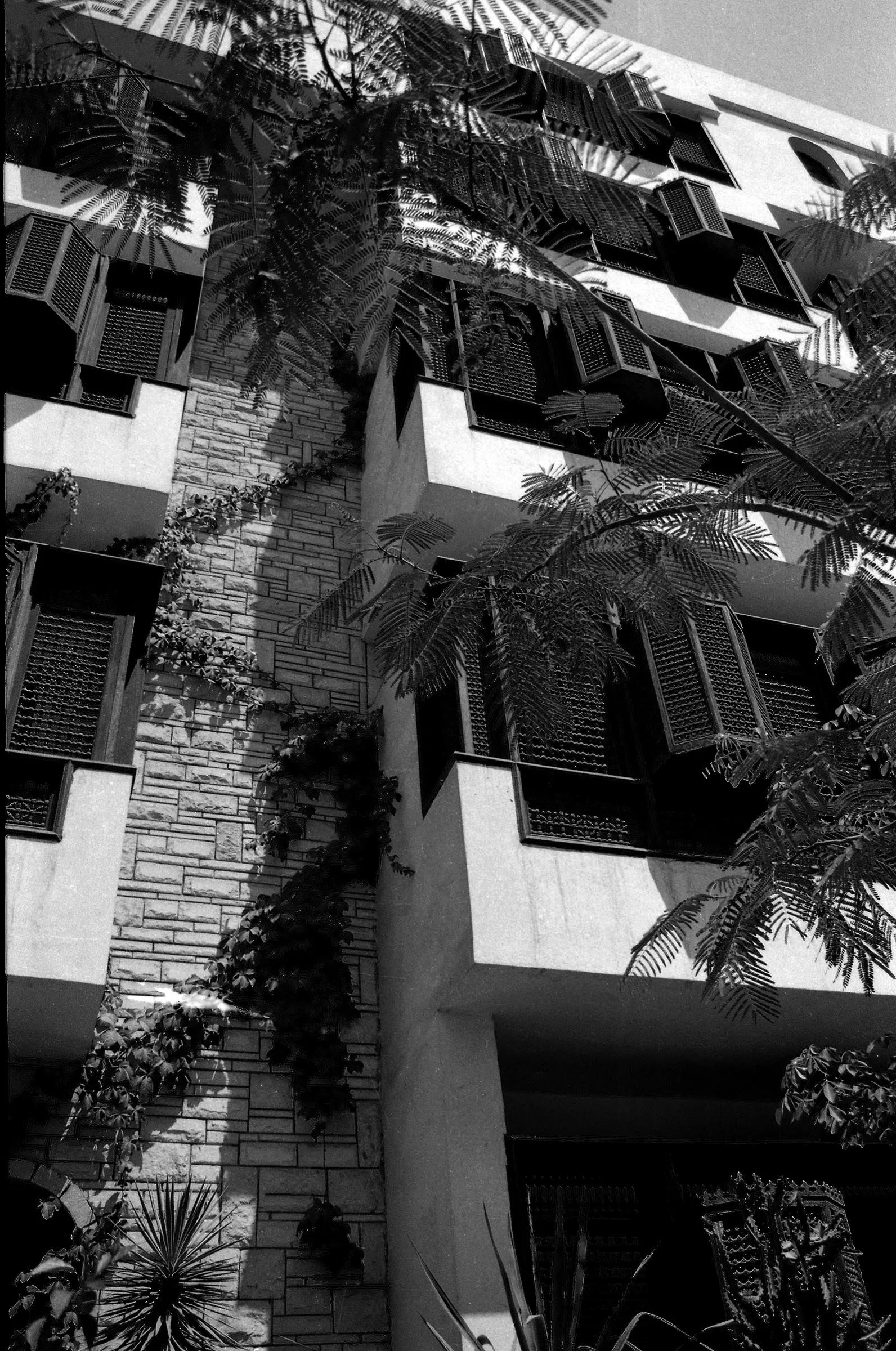
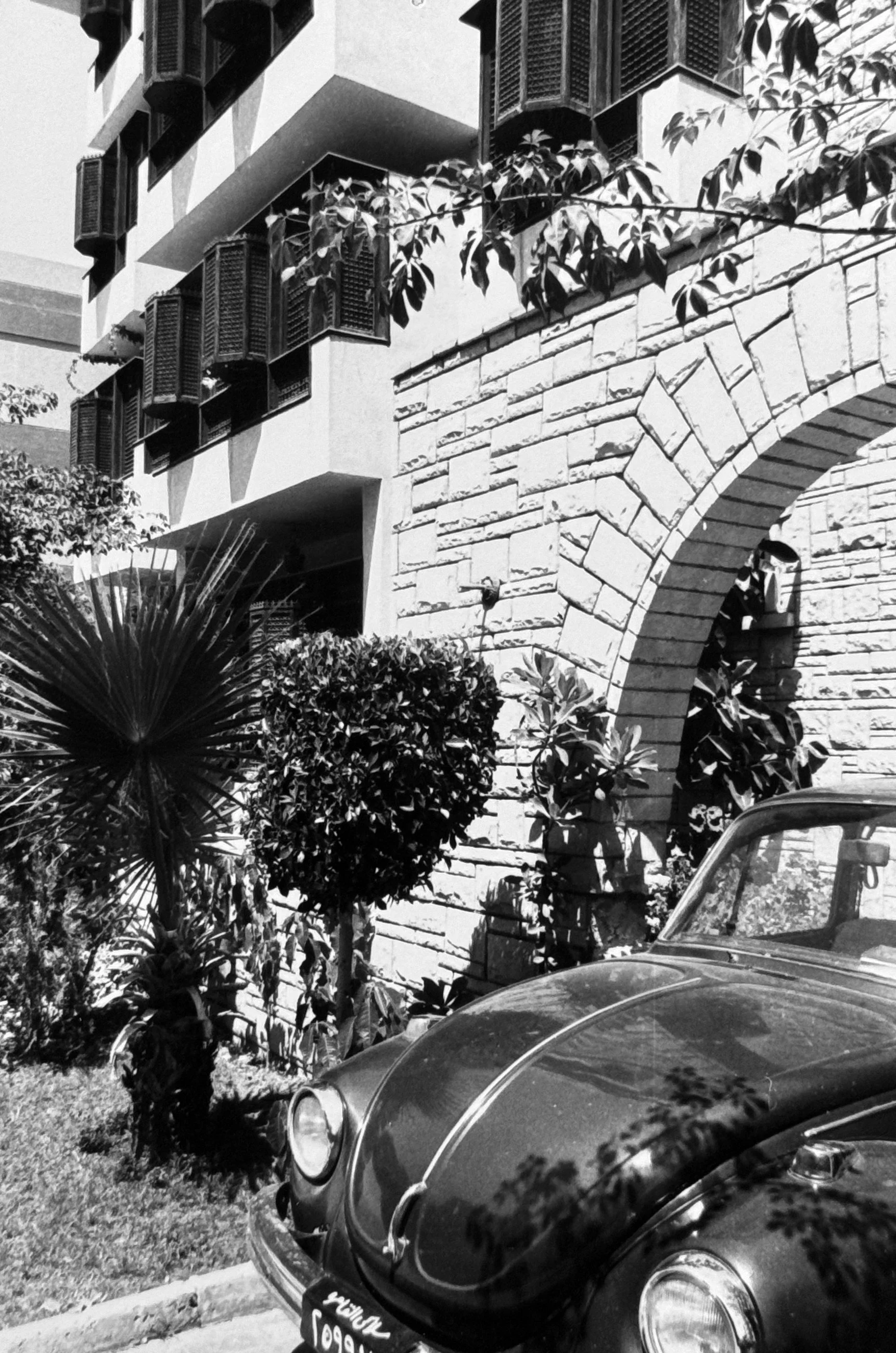
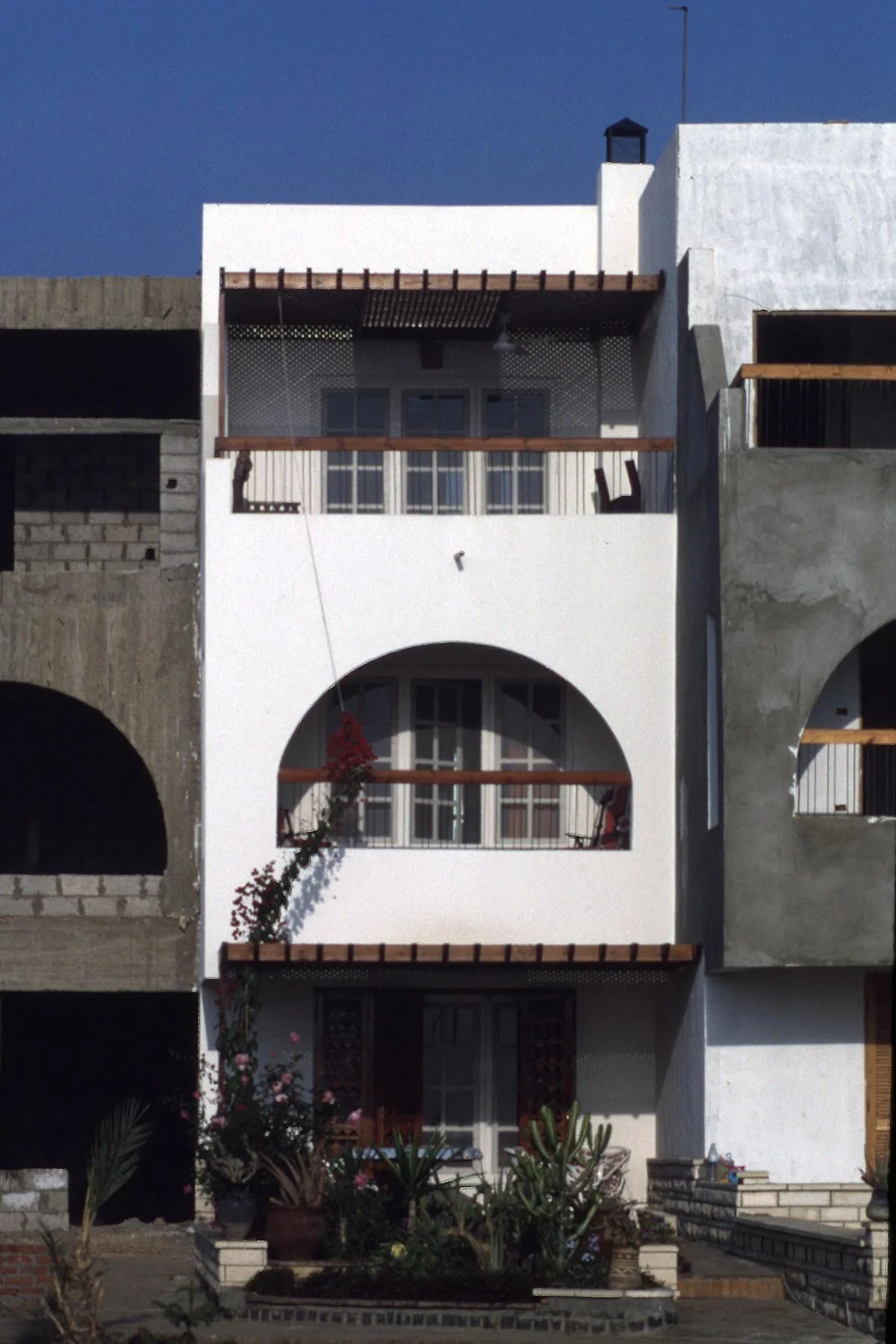
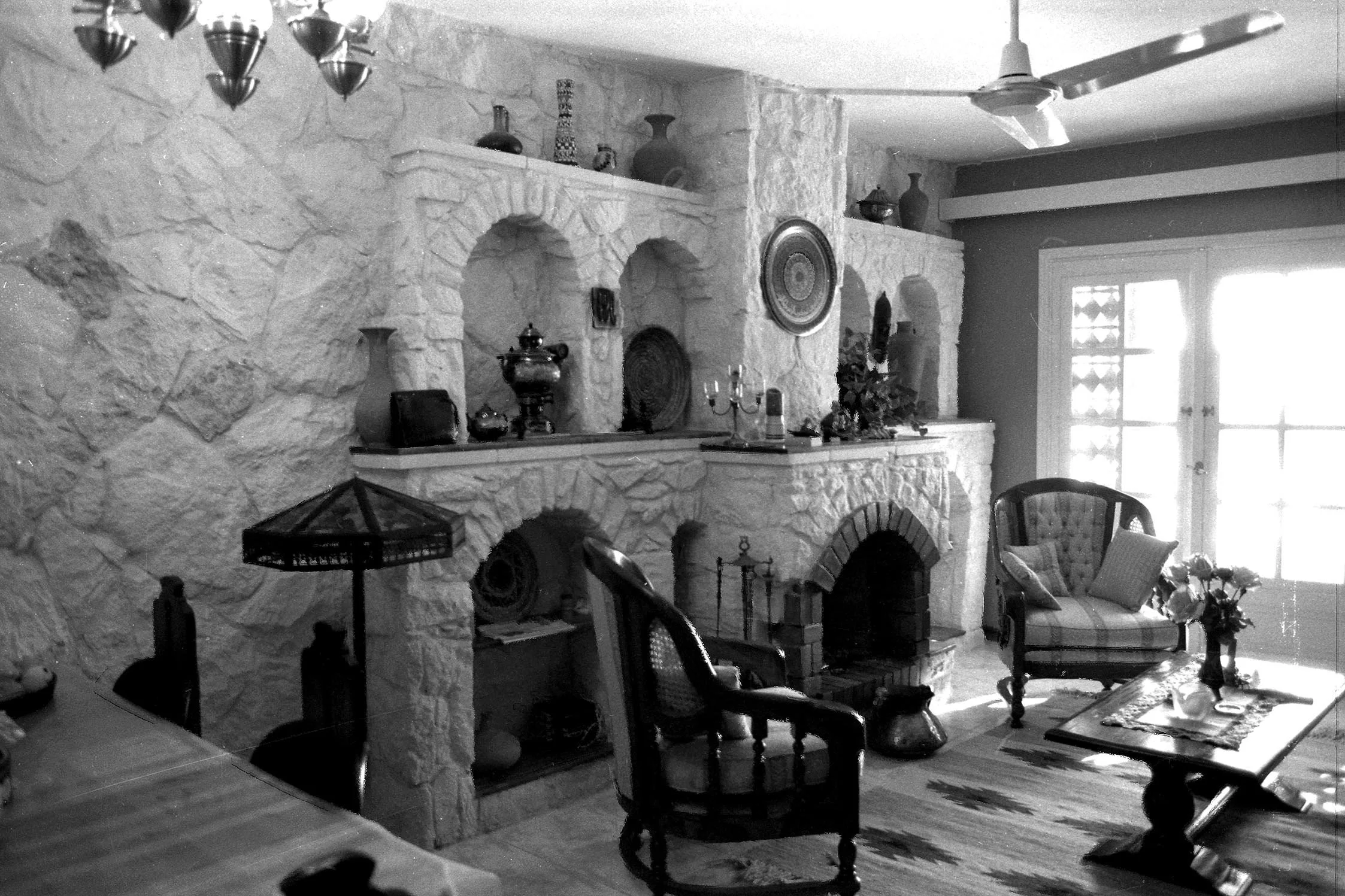
Maadi House. 1984
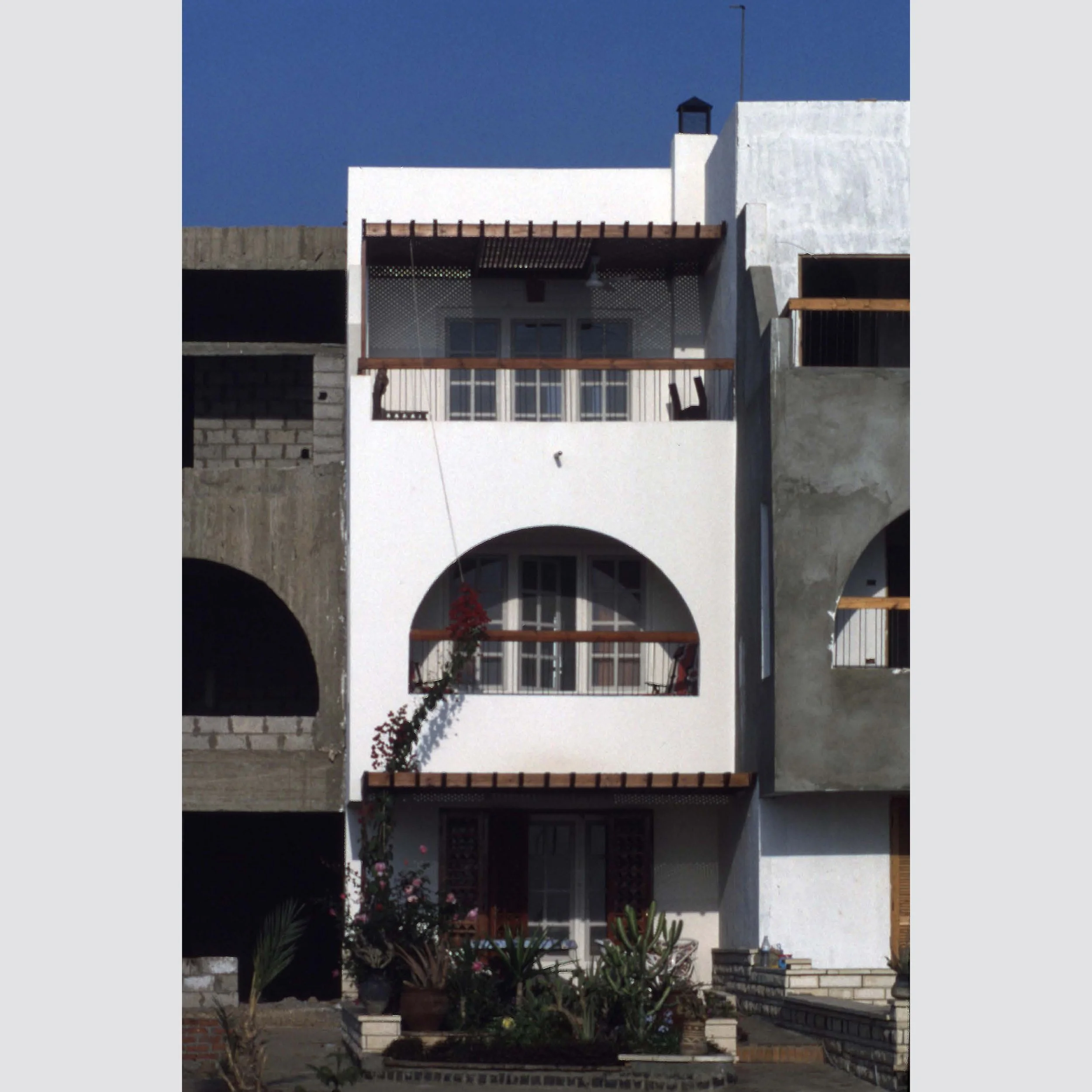
Fayed Resort Village. 1986
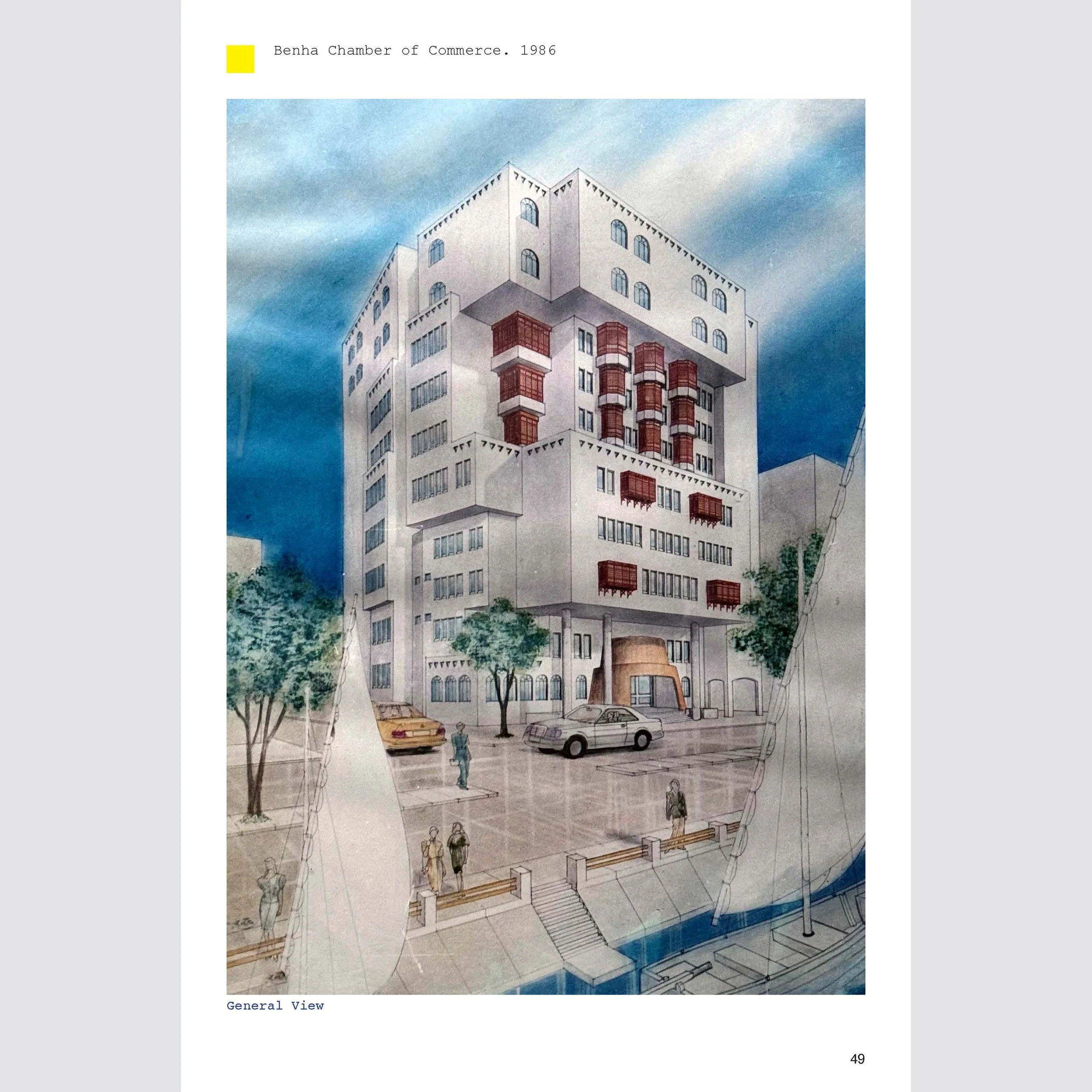
Benha Chamber of Commerce. 1986
Social Club. Monofiya University. 1994
Afifi House. 1987-1991
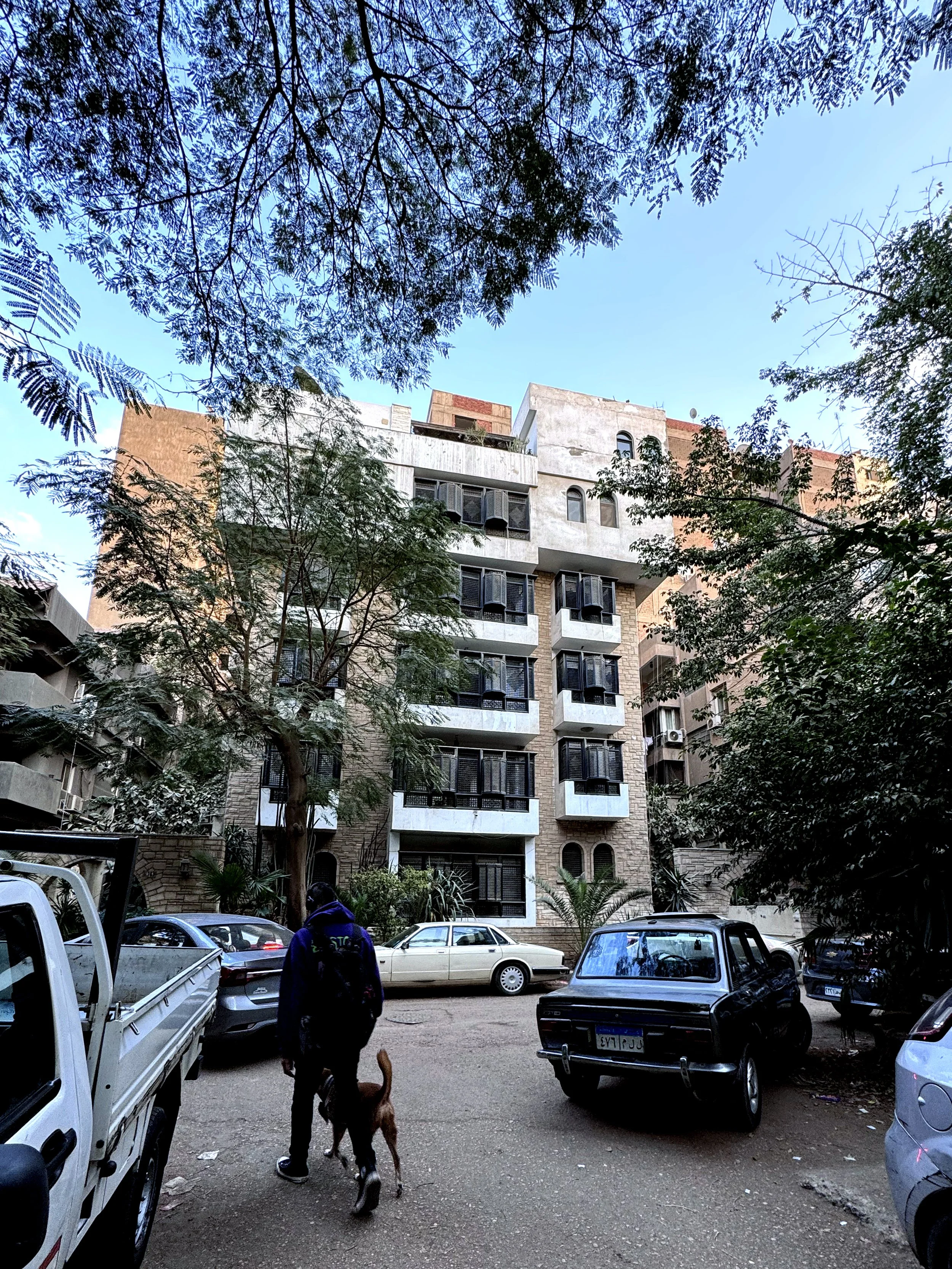
This section traces the evolution of my father’s architectural journey, beginning with his first built project: the Sports Club in Benha, completed after he won a nationwide competition upon graduating from Ain Shams University. Celebrated as one of the Republic’s most modern clubs, it signaled an early commitment to progressive design. After returning from Germany in 1974, he invested his savings in a plot in New Maadi, Cairo, financing construction by teaching in Riyadh. Initially conceived as a conventional apartment building, the house transformed under the influence of his experiences in Saudi Arabia into a more generous, villa-like composition incorporating mashrabiy’ya screens and “pharaonic stone,” crafted by artisans from Khan el-Khalili.
The section also recounts the Fayed lakeside retreat near the Bitter Lakes—an experimental modernist enclave blending abstraction with local sensibility—and later projects including a Chamber of Commerce competition in Benha and commissions for Monofiya University. It concludes with our collaboration on a New Maadi residential complex — the Afifi House — revealing his role not only as architect, but mentor, shaping both buildings and lives.
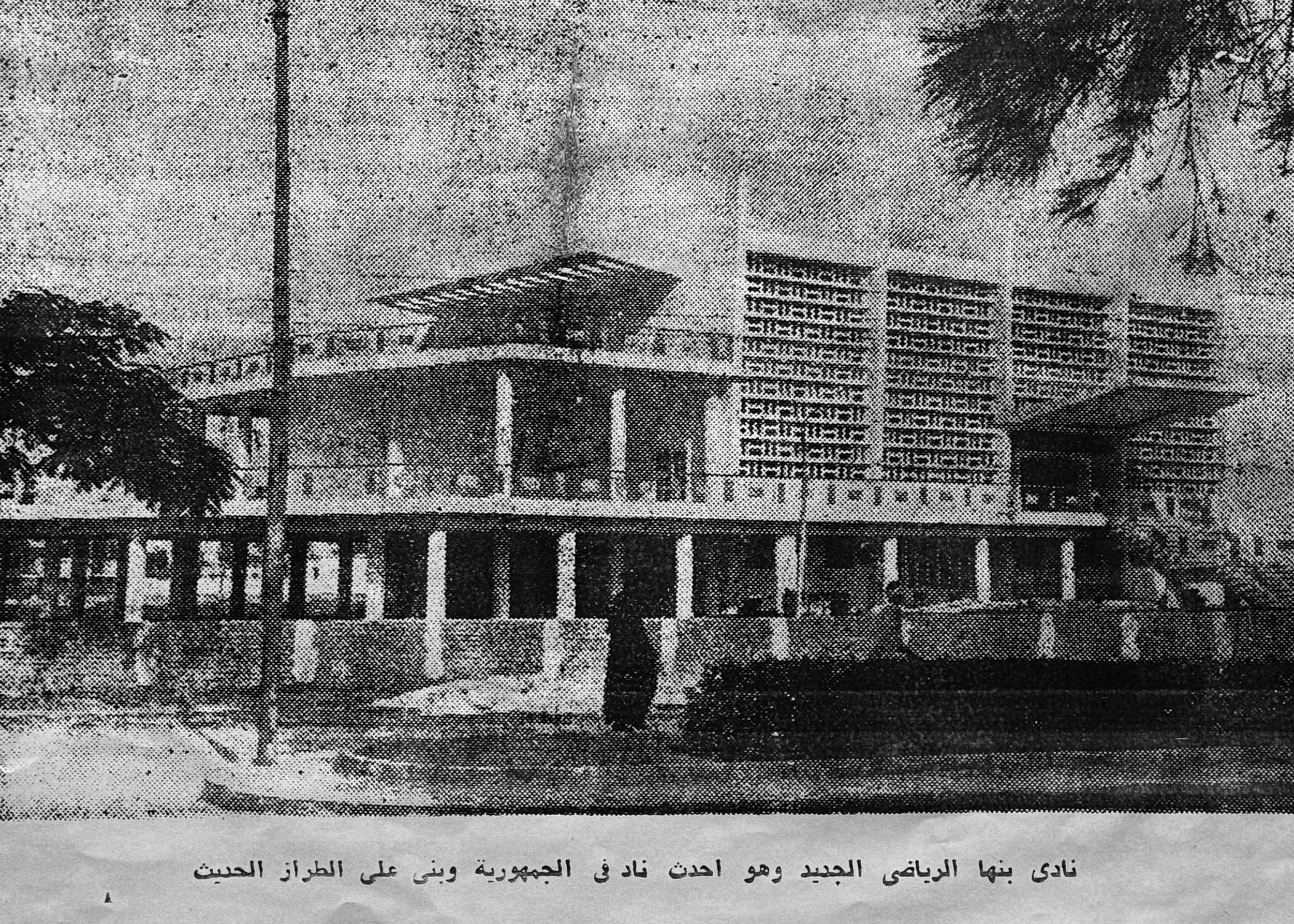
Benha Sports Club
Maadi House
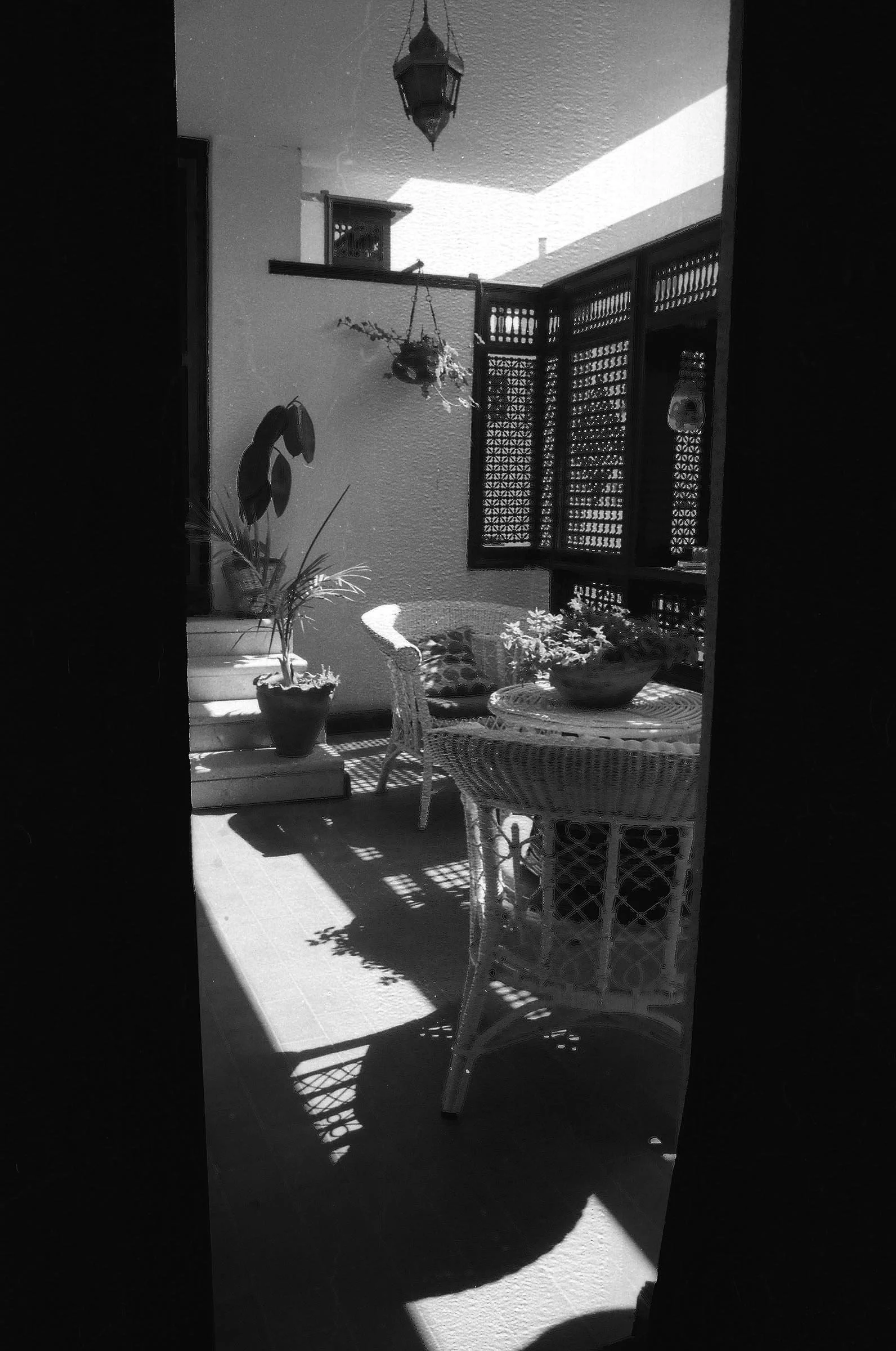

Afifi House
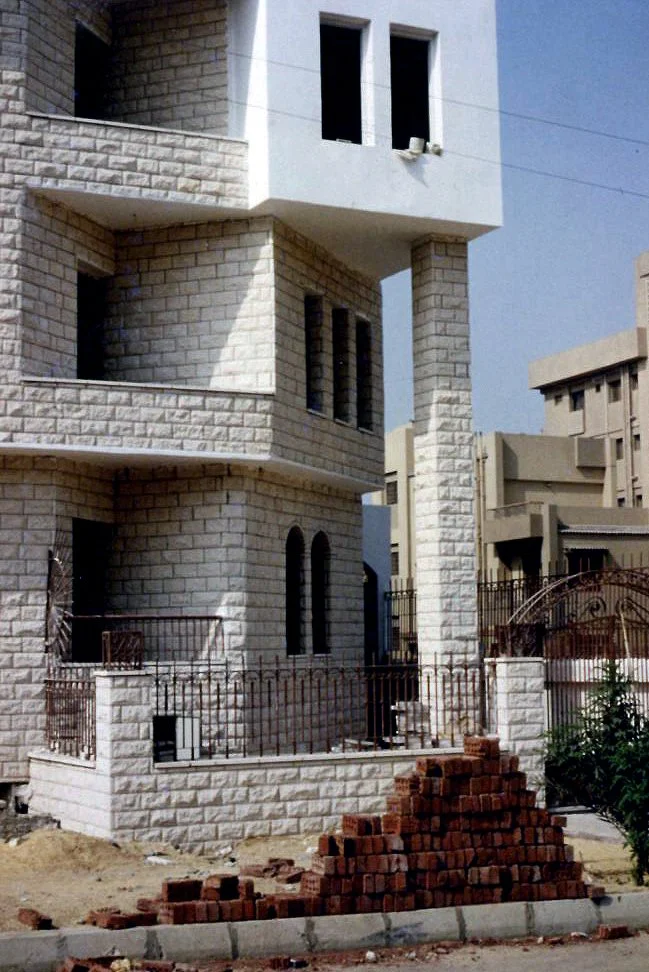
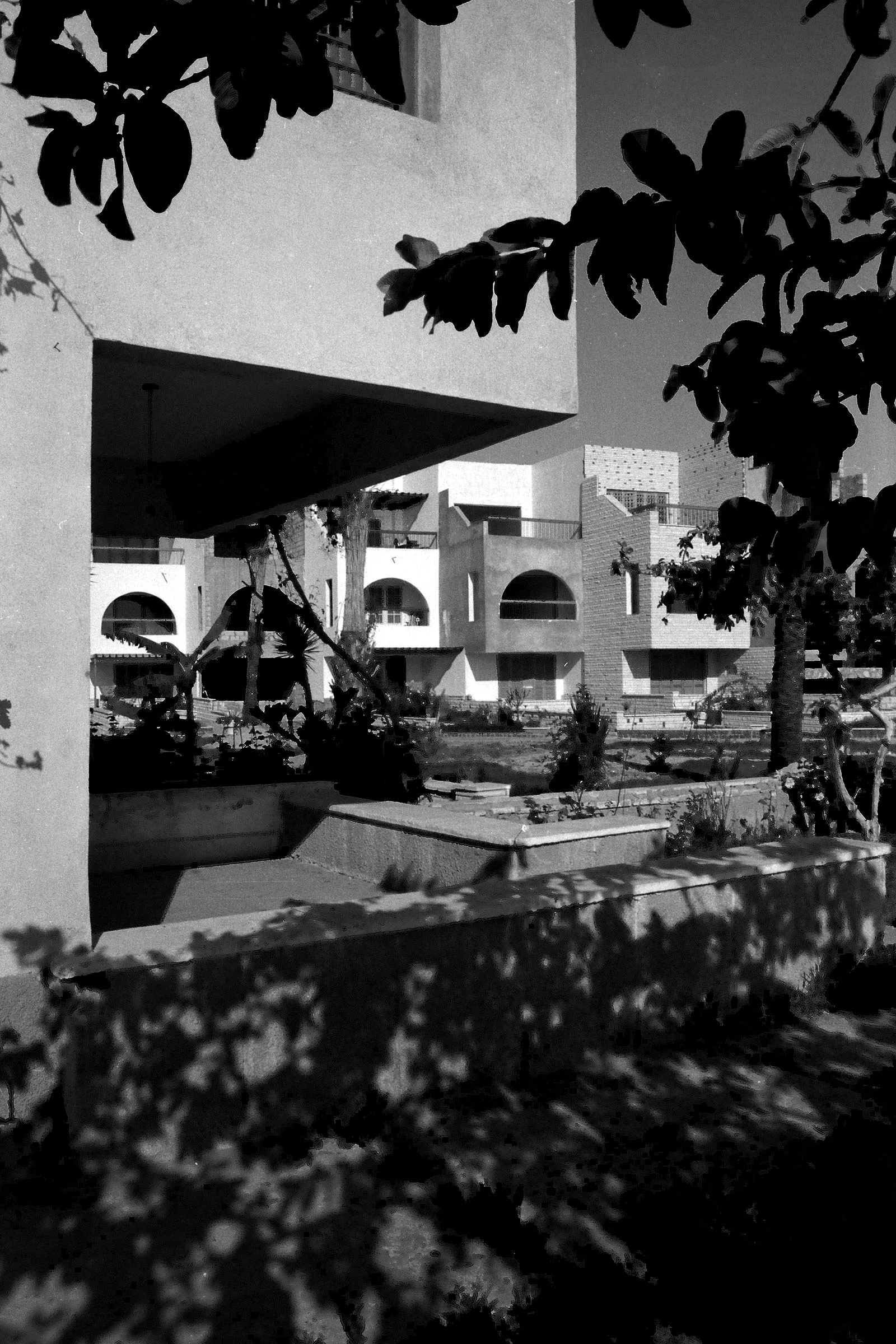
Fayed Resort
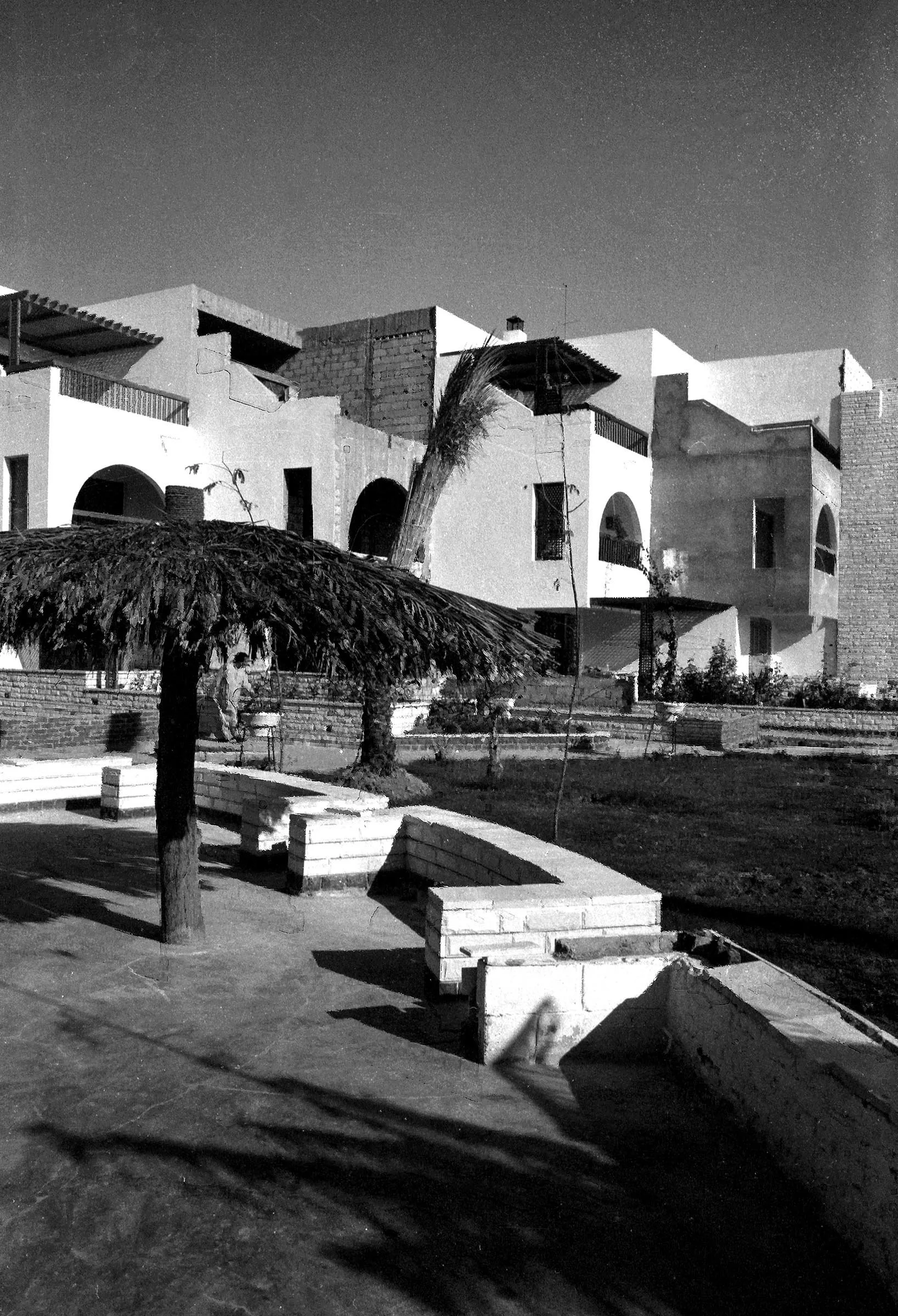

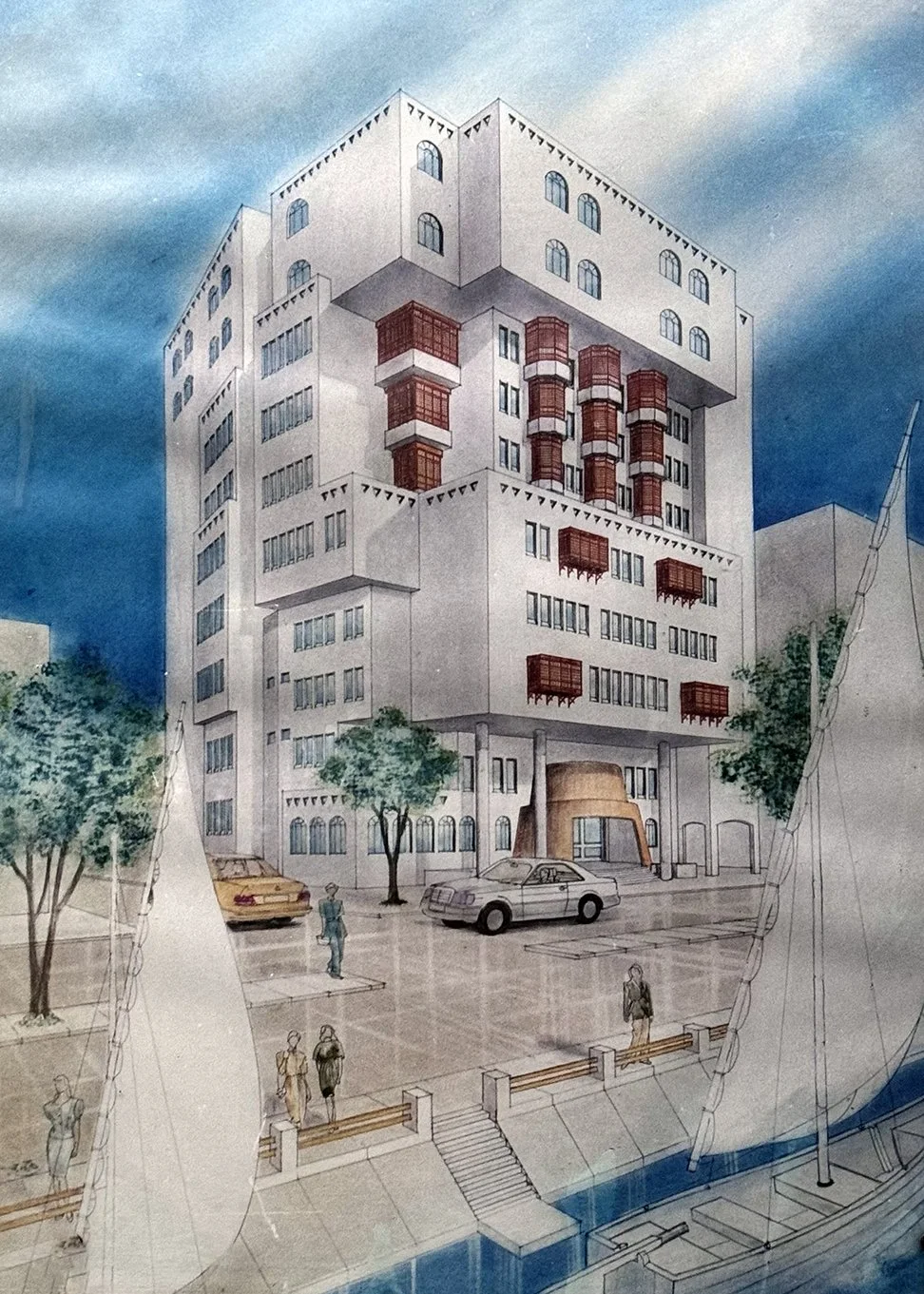
Benha Chamber of Commerce
2 Germany
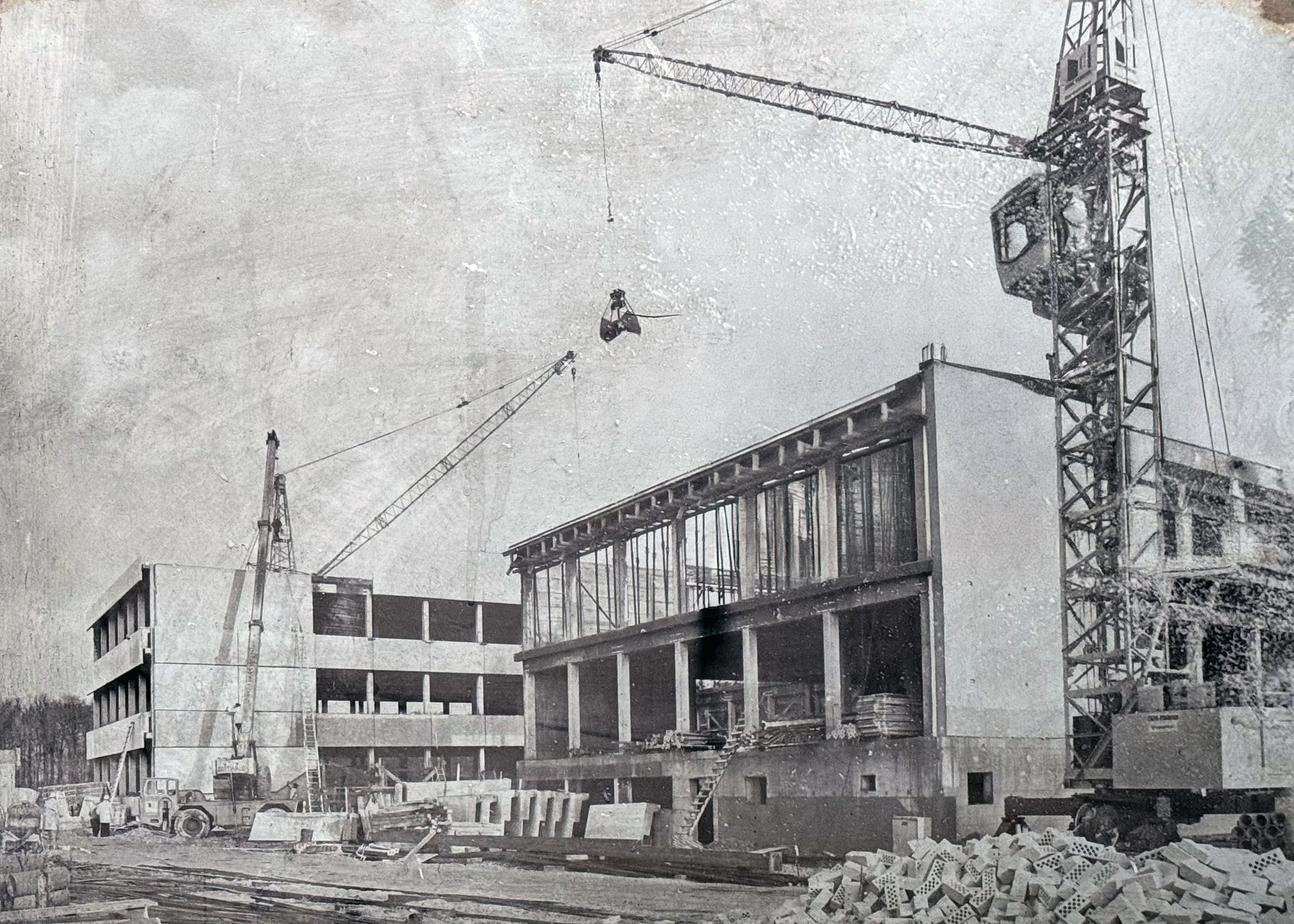
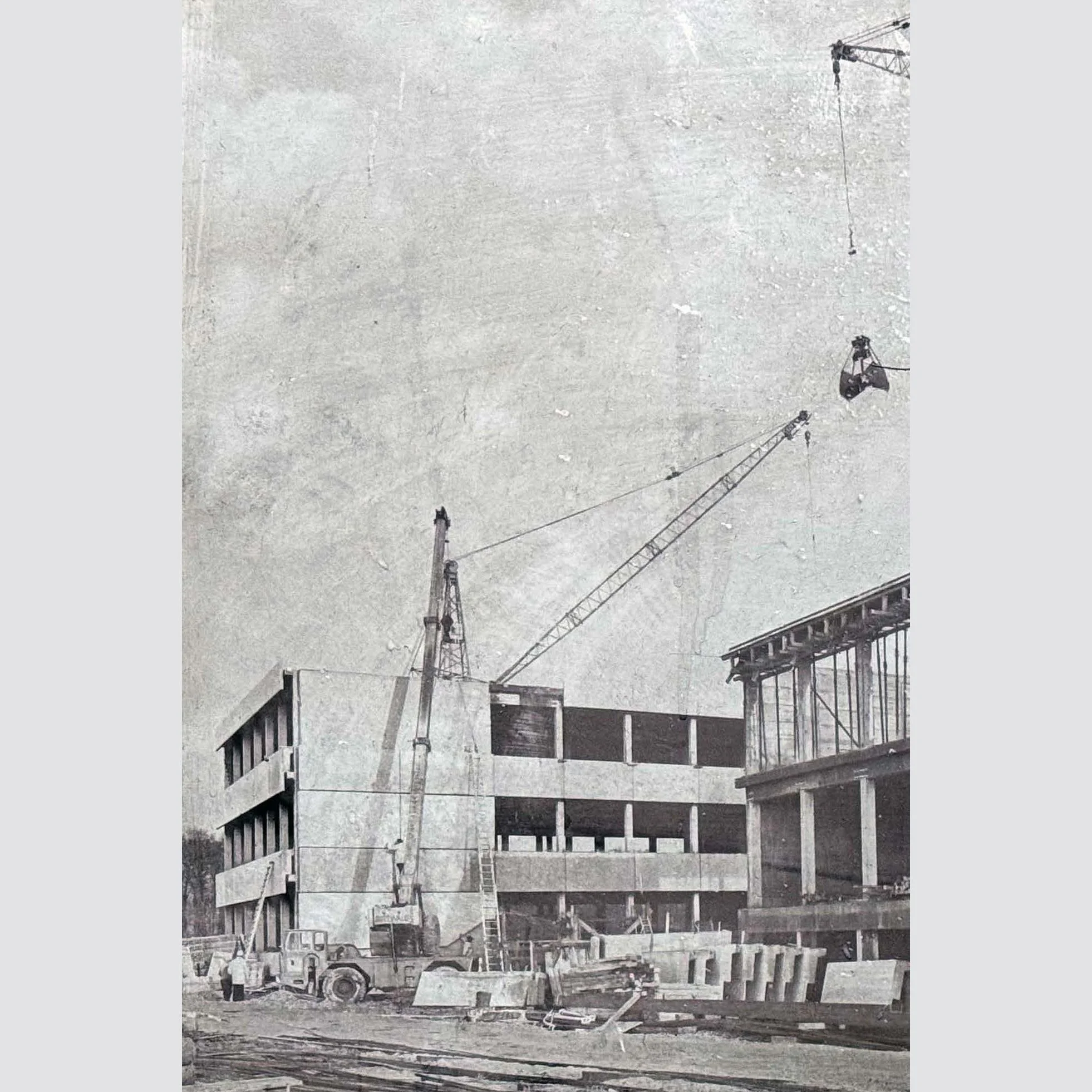
After my father completed his architectural studies at the ETH in Zürich, we moved to Hannover, Germany where he pursued a Doctoral Degree in architecture at the University of Hannover. Under the German system, he worked under the supervision of a “Doctoral Father” (Doktorvater) with a high degree of autonomy. Thus, he set out to work at the Landkreis (equivalent to a municipality) where he was involved in numerous projects from 1969 until he left in 1973. These projects were primarily Educational, specifically High School or Gymnasium buildings and centers for children with special needs.
3 Saudi Arabia
Administrative Headquarter 1978
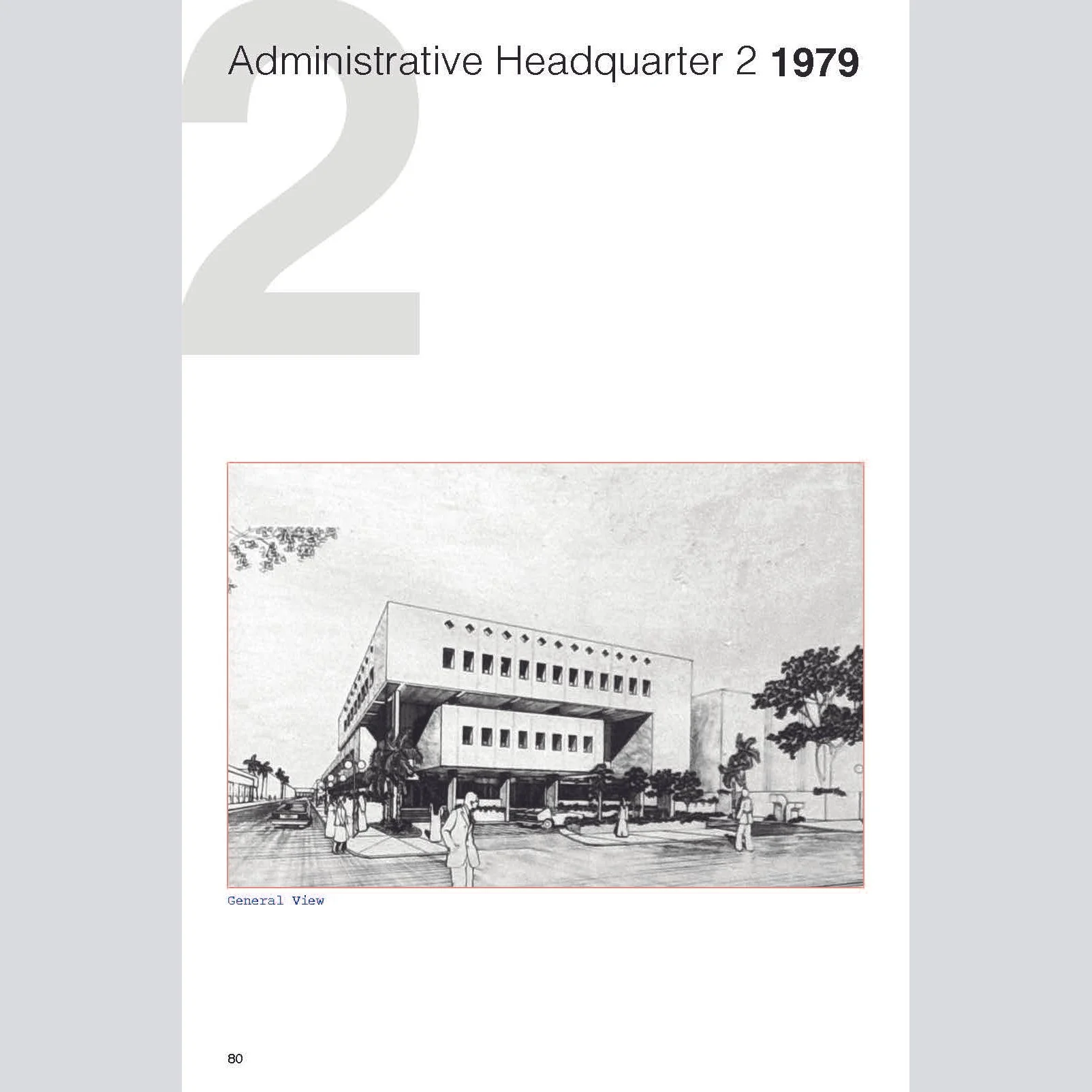
Administrative Headquarter 1979
Ministry of Religious Affairs 1981

My father joined Riyadh University (now renamed to King Saud) in 1974, following his return from Germany and a brief stay in Cairo. Frustrated with the post-war conditions at the time, he set his sights on the Gulf. While his primary occupation was teaching, he was also able to practice. Many projects were private commissions by Saudis for whom he designed villas. In many ways, this changed his design approach as he moved away from a German Bauhaus-inspired philosophy, to one more grounded in the pursuit of spatial abundance while utilizing traditional architectural elements. He also worked with several architectural consultancies, which allowed him to design larger buildings, including administrative headquarters and ministries.
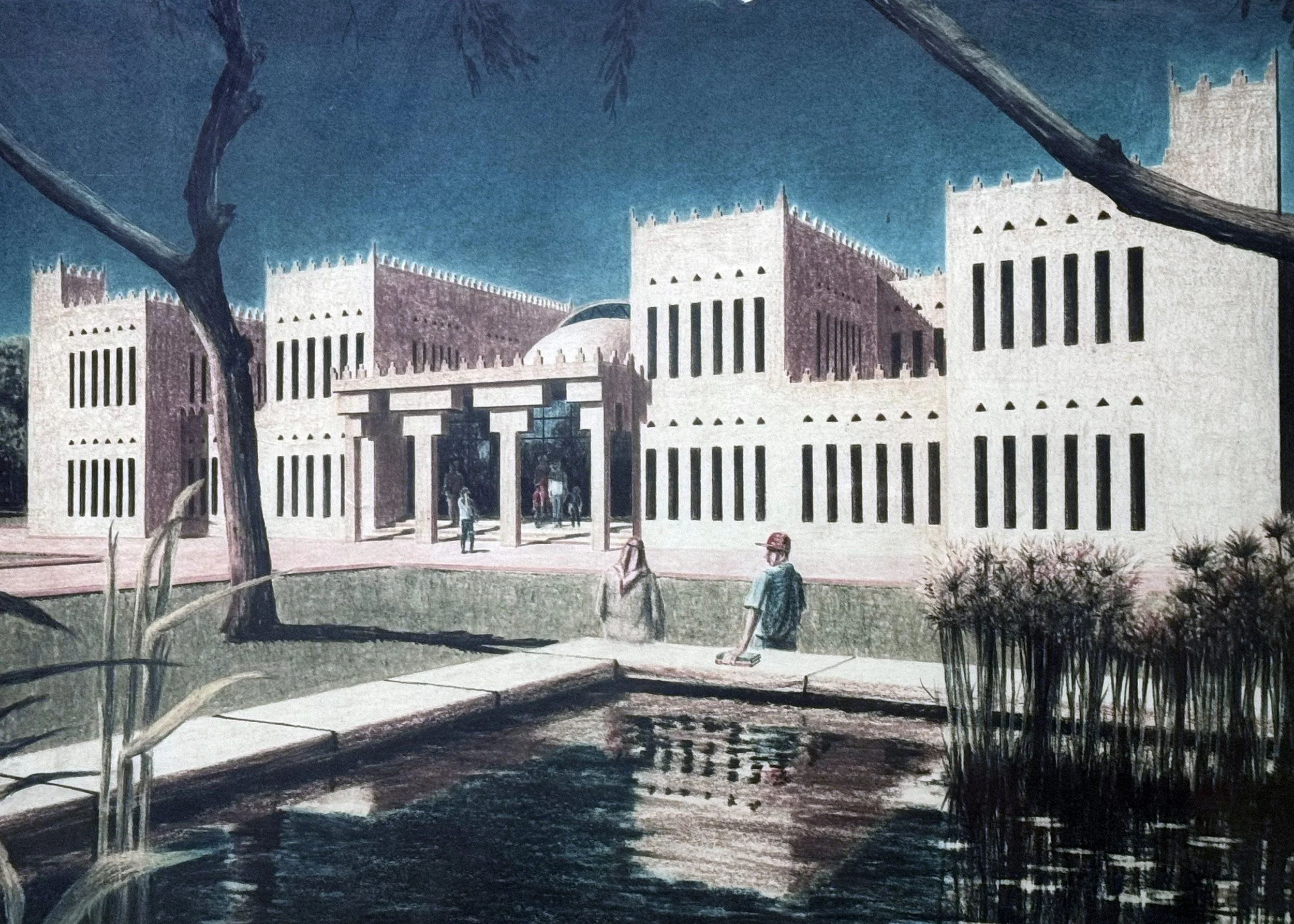
Administrative Building 1978
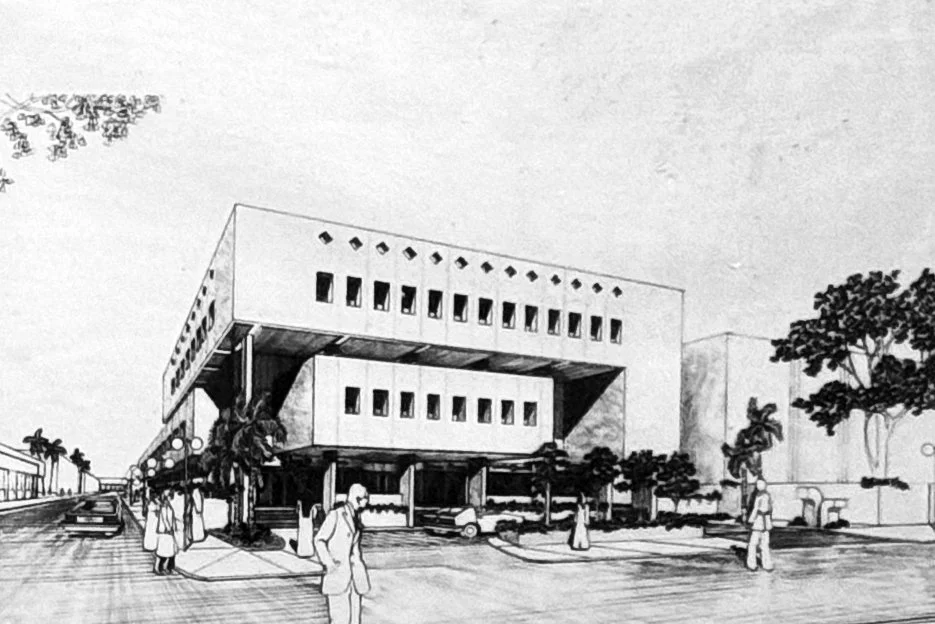
Administrative Building 1978

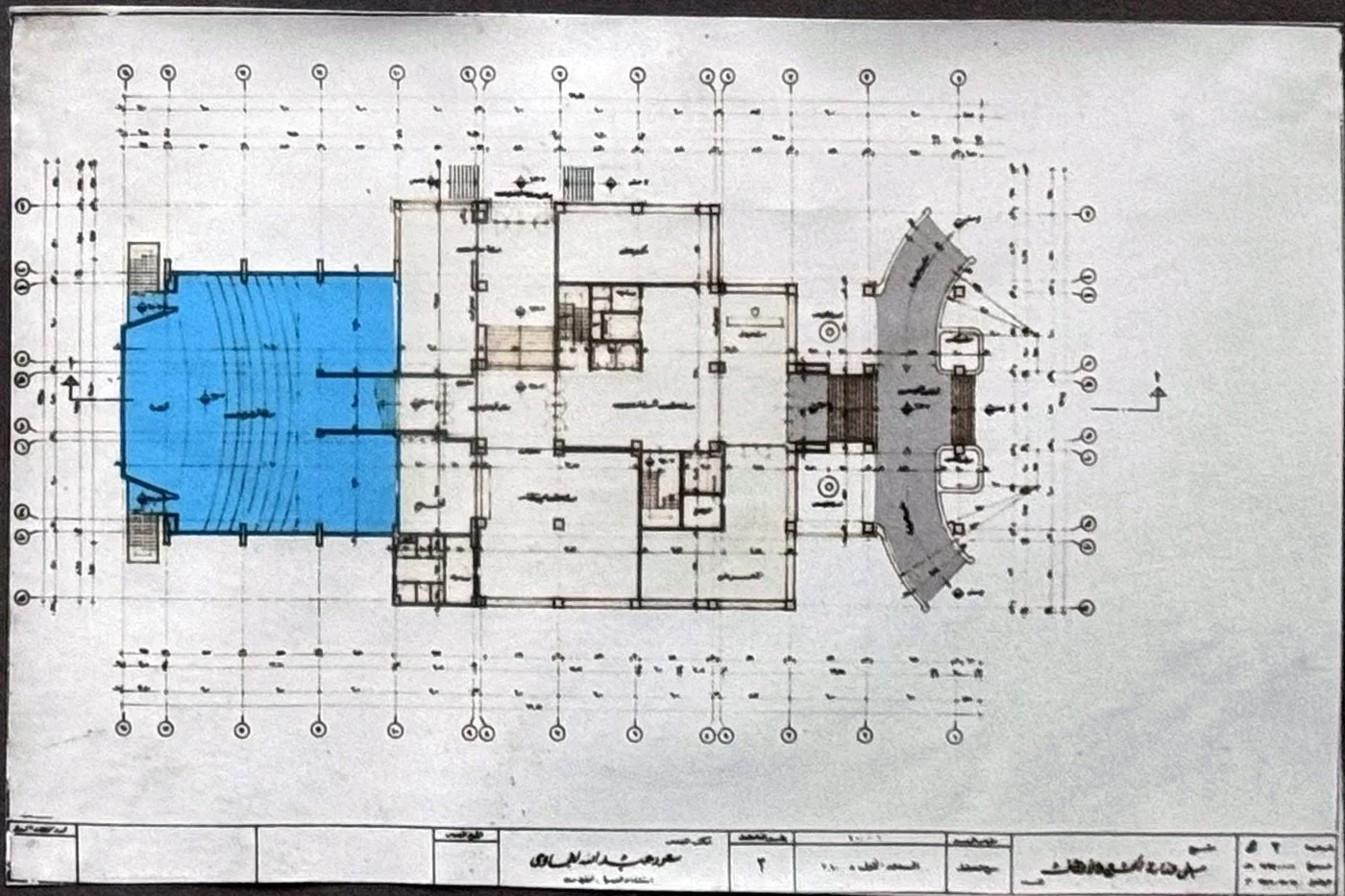
Ministry of Religious Affairs 1981
Written & Published Work
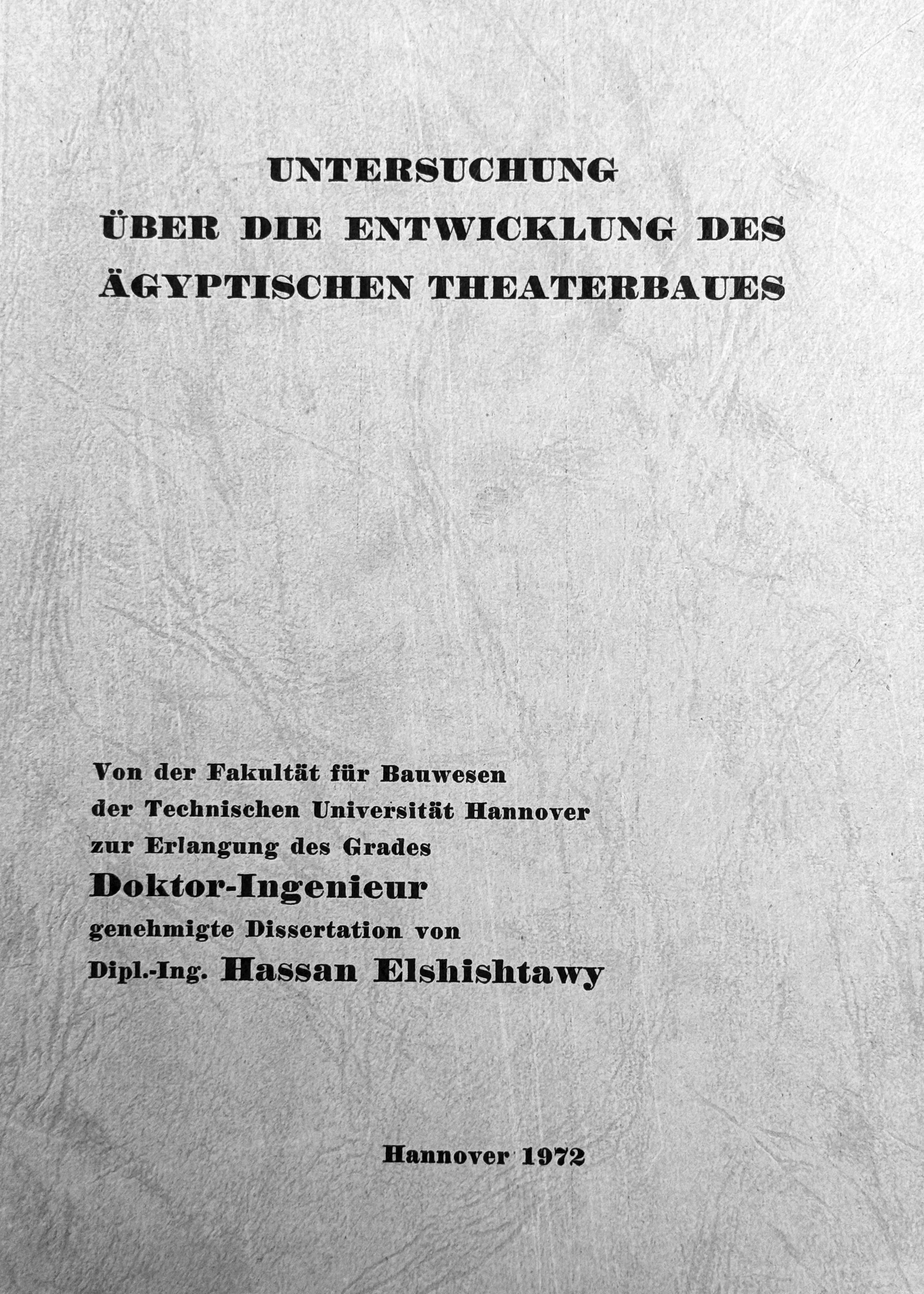
Doctoral Dissertation 1972
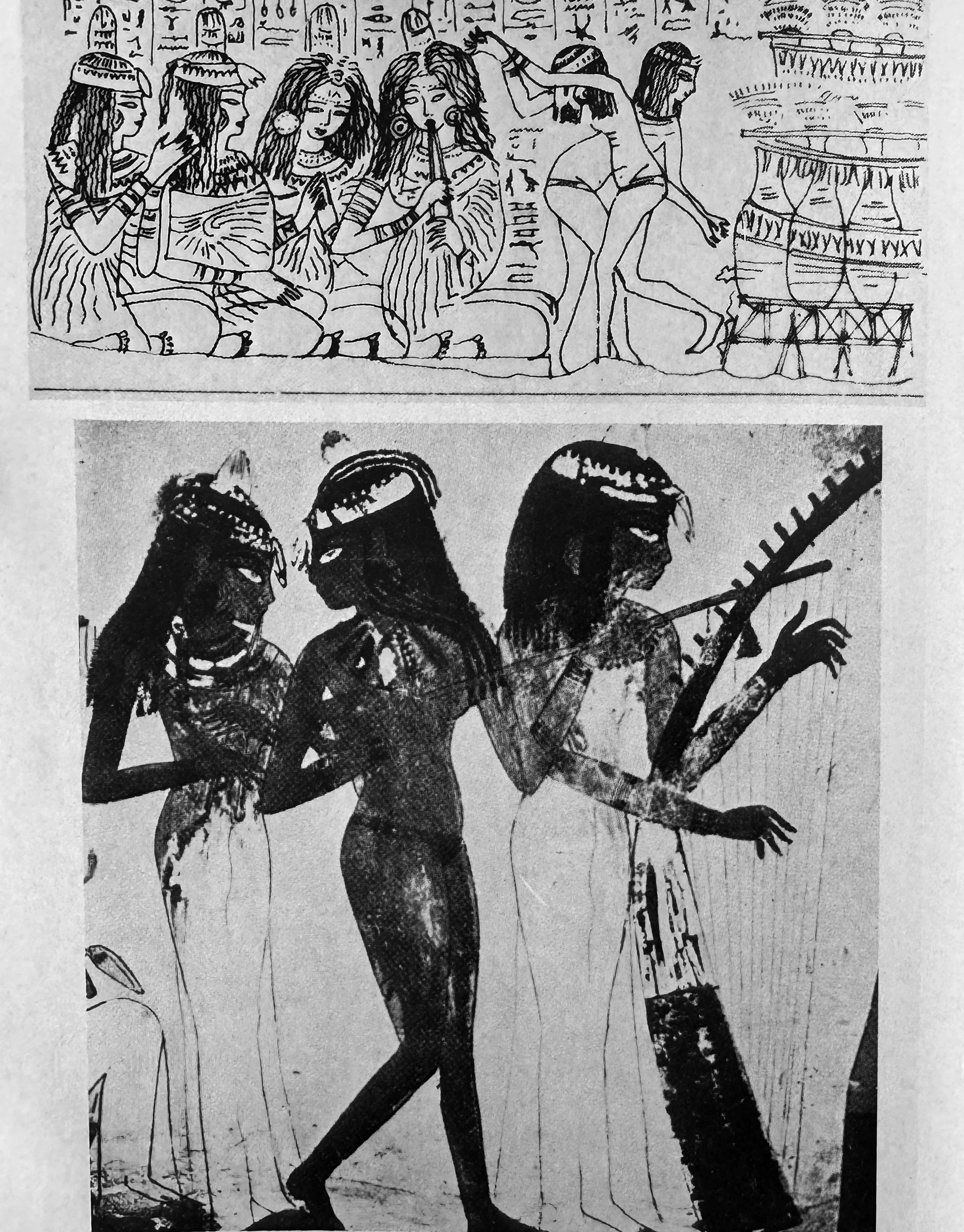
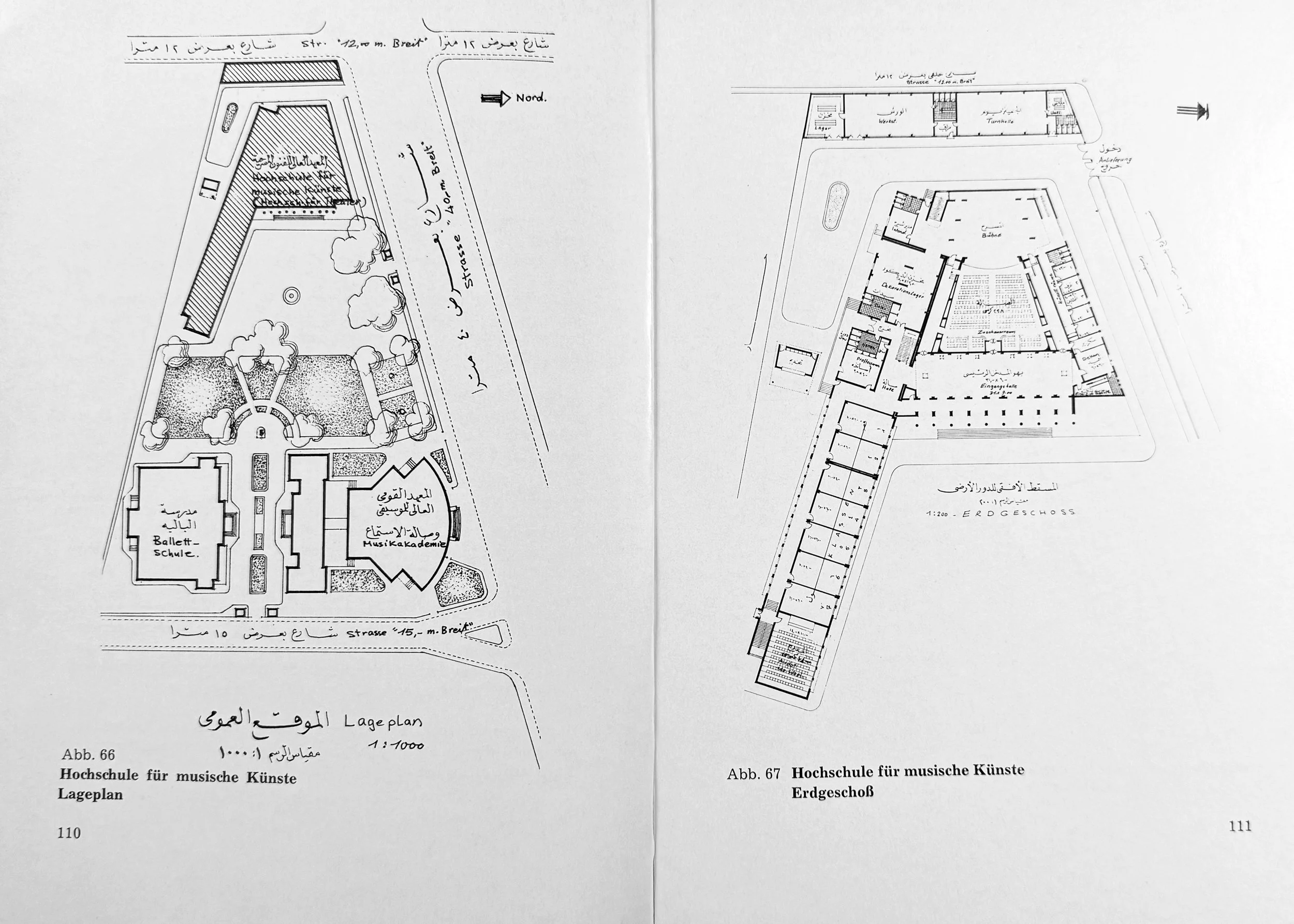
Basic Design Book 1988
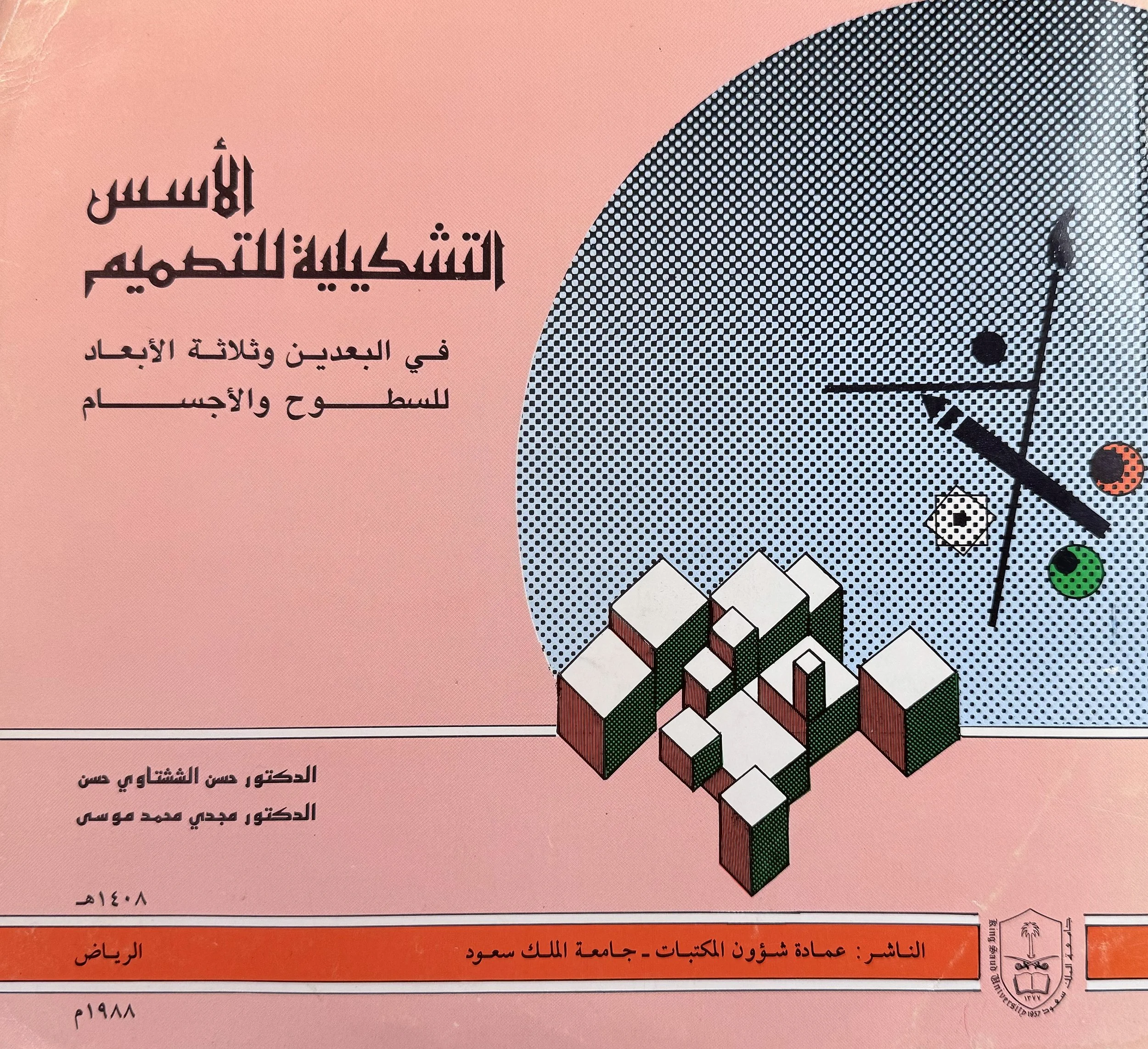
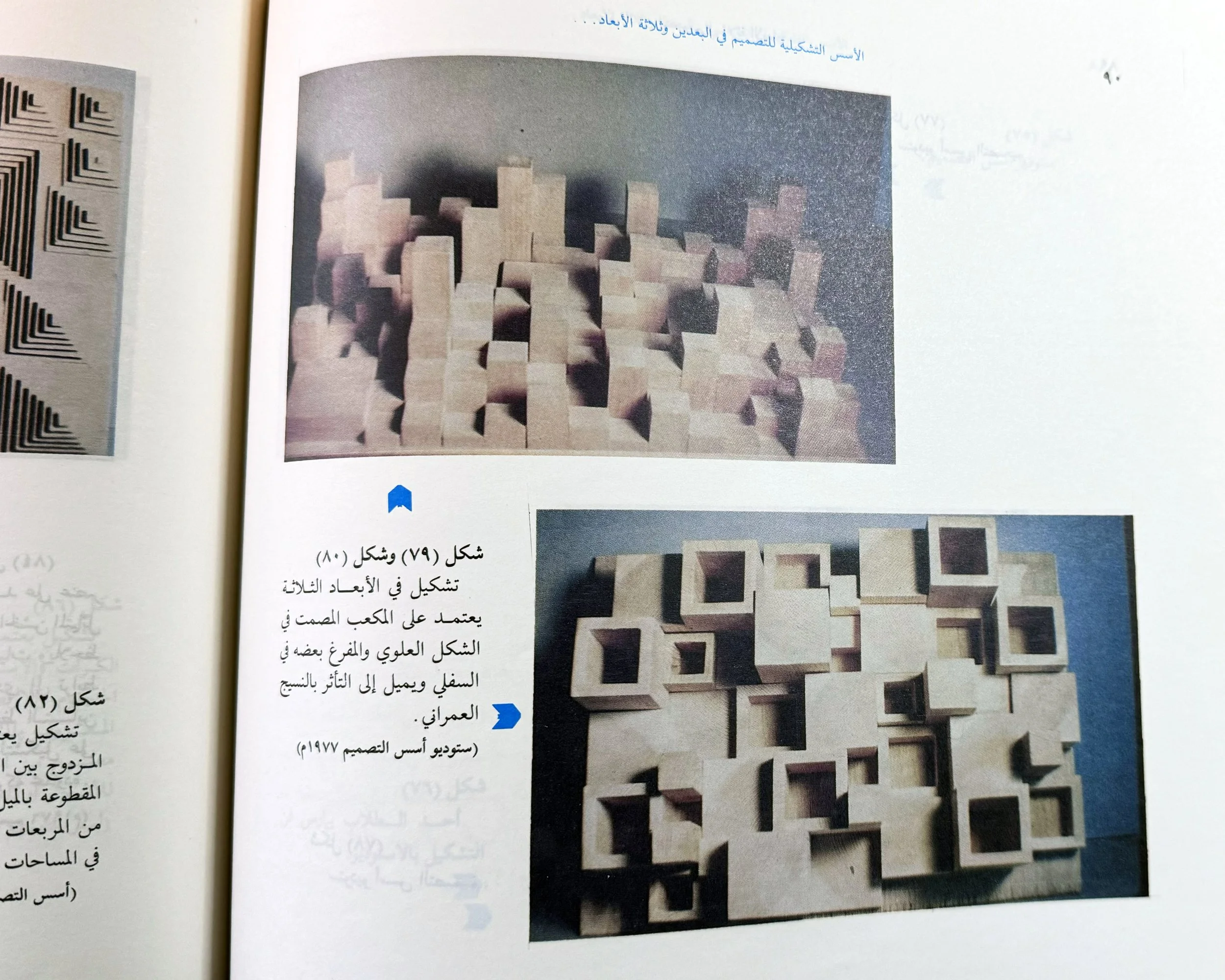
The book was written while my father was a professor at KSU. It is co-authored with Magdy Mousa, titled “The Formal Principles for Design.”
Heritage Book
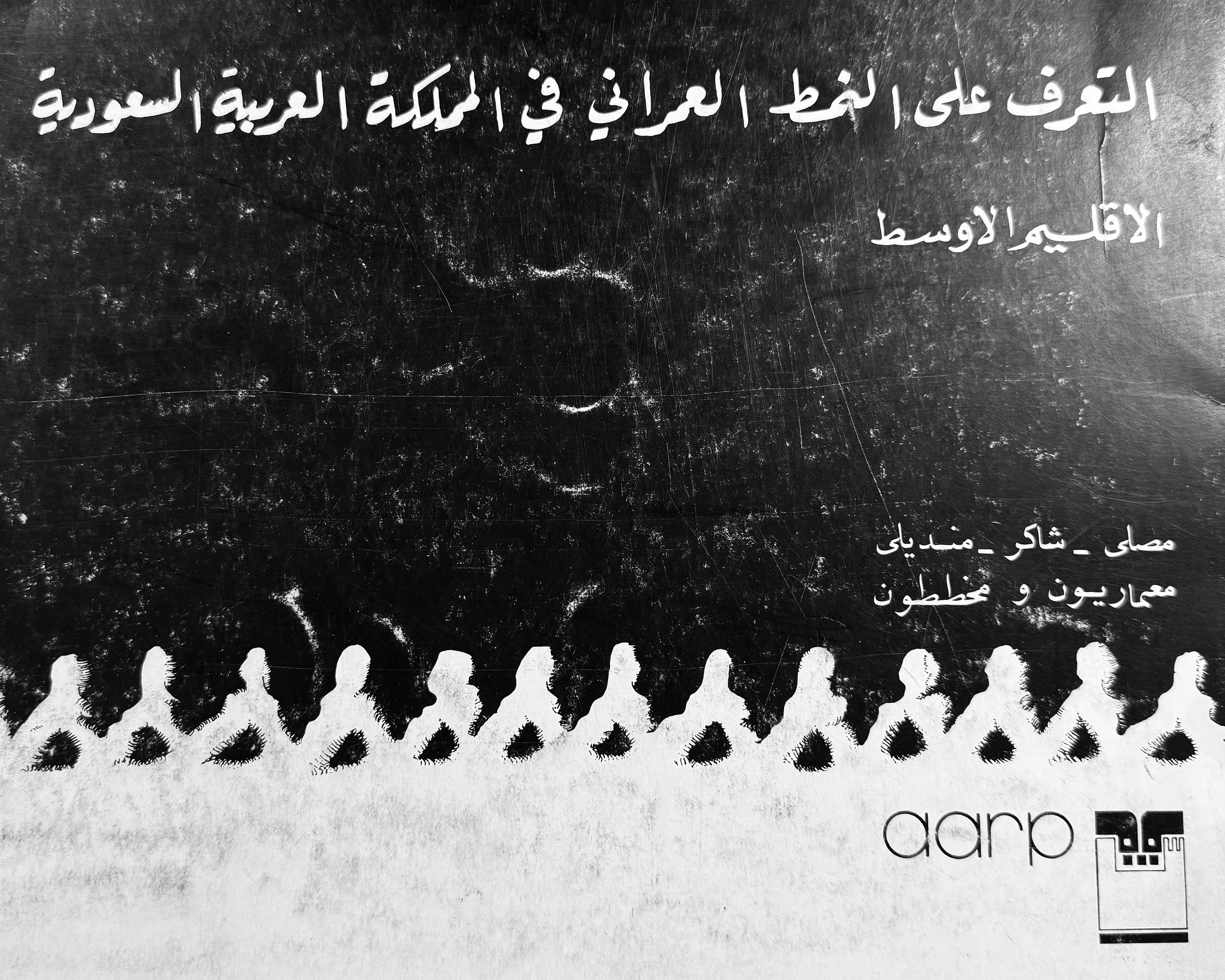
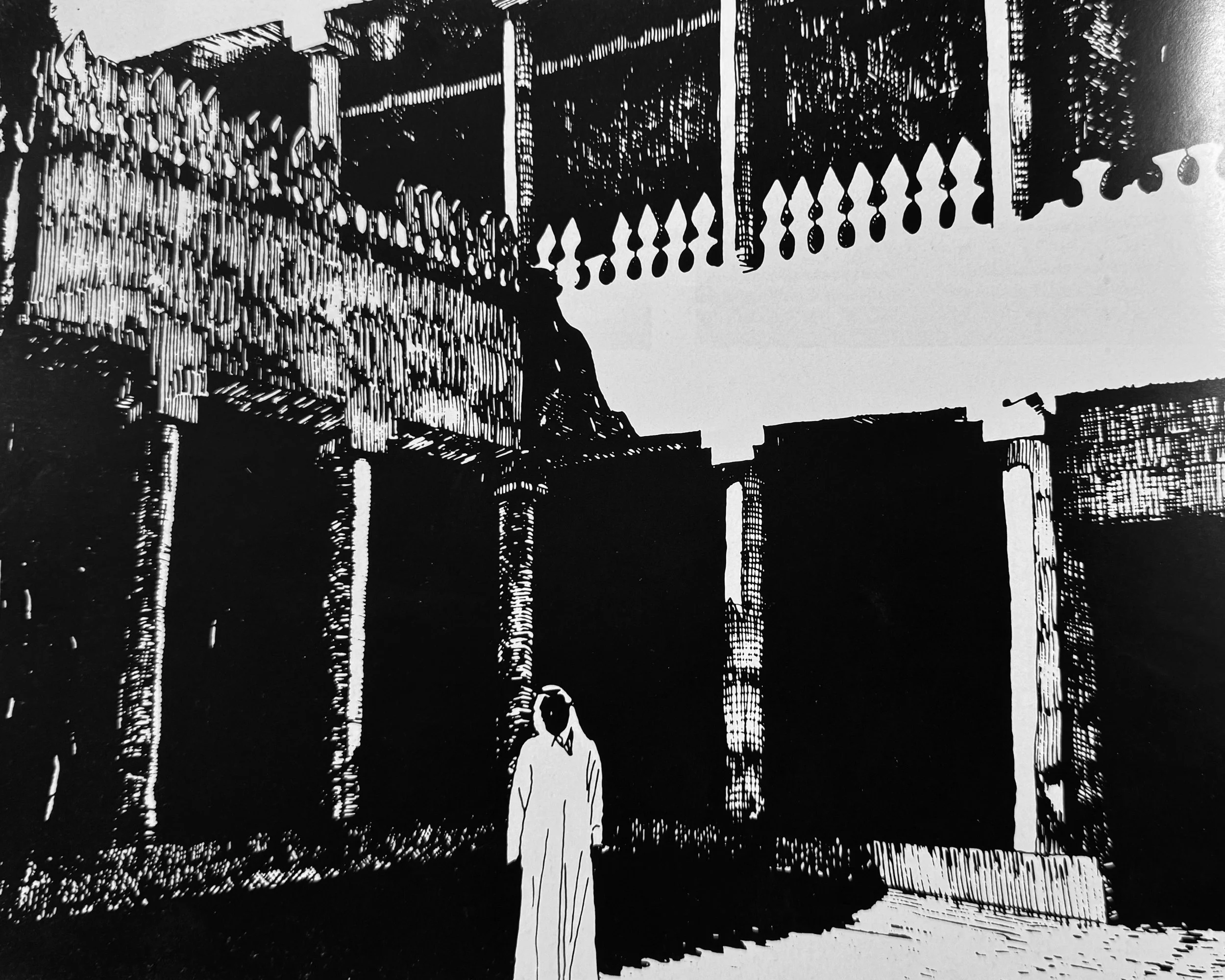
My father contributed to a book authored by AARP concerning the traditional heritage of Saudi Arabia. To that end, he prepared a series of drawings and sketches of traditional buildings in Riyadh.
The Booklet
An Architect from Egypt is an intimate, visually rich tribute to Hassan Elsheshtawy (1933–2006)—architect, educator, and quiet modernist whose work bridged Cairo, Riyadh, and the Nile Delta. Blending personal memoir with architectural history, the booklet traces projects from the award-winning Benha Sports Club to the family home in New Maadi and experimental retreats along the Bitter Lakes. More than a portfolio, it is a story of legacy, mentorship, and the transmission of ideas across generations. Available in a beautifully produced hardcover edition for collectors and a convenient digital version for readers on the go, An Architect from Egypt is both keepsake and inspiration.
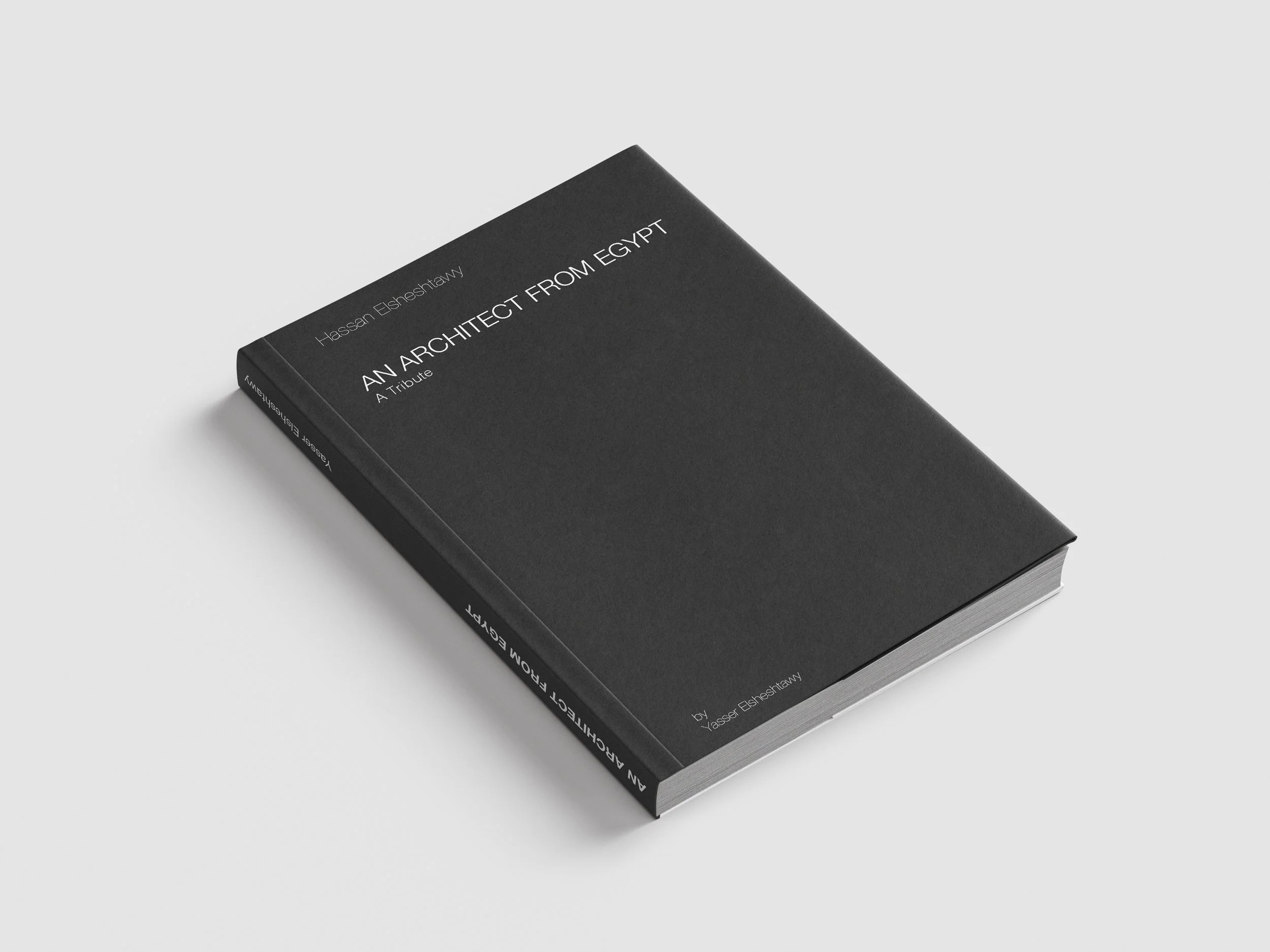
Perusing the Book (Paperback)
Sample Pages Below