Cairo Was His City
This opening, inspired by Woody Allen’s “Manhattan,” frames Cairo as both monumental and intimate, a city of contradictions where every corner carries memory, struggle, and beauty. It blends poetic voiceover with personal recollection, presenting Cairo as home even when lived in exile.
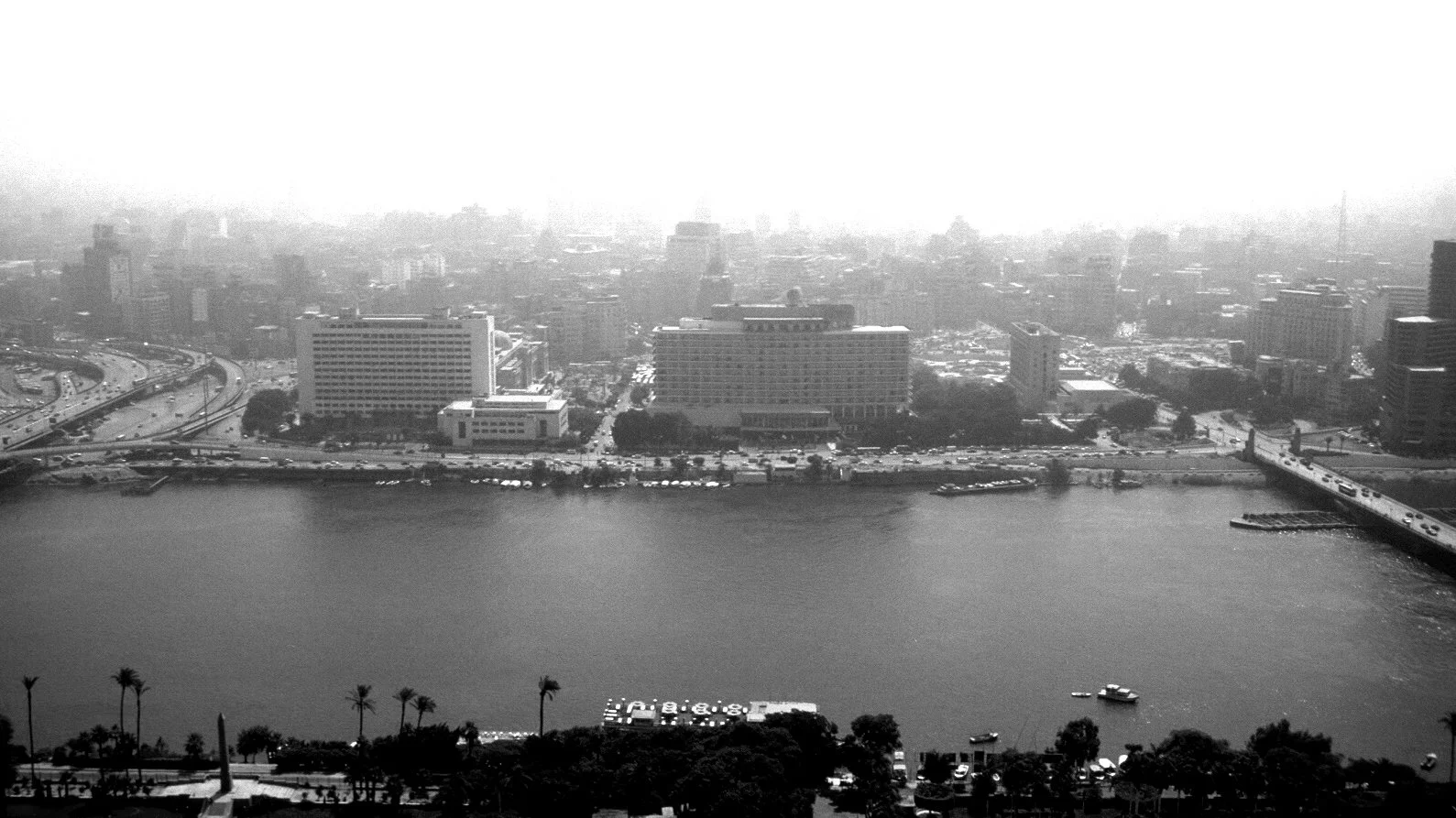
The film opens with Um Kulthum’s “Enta Omri” rising in the background. A sweeping aerial montage drifts over Cairo—its modern skyline and its ancient quarters—juxtaposing glass towers with winding alleys, bridges with mosques, highways with the Nile’s timeless flow. The city unfolds as both monumental and intimate, a living palimpsest of past and present. Then a voiceover:
The opening scene of Manhattan (1979) presents New York as a city filtered through memory, voice, and affection rather than plot. Accompanied by Gershwin’s music, Woody Allen’s voiceover assembles a series of images into a deeply personal portrait—part love letter, part confession—where the city becomes inseparable from the narrator’s inner life. This subjective framing, in which place is shaped by emotion, repetition, and lived moments, inspired me to imagine a similar approach for Cairo: not a comprehensive portrait, but a city revealed through fragments, memory, and personal attachment.