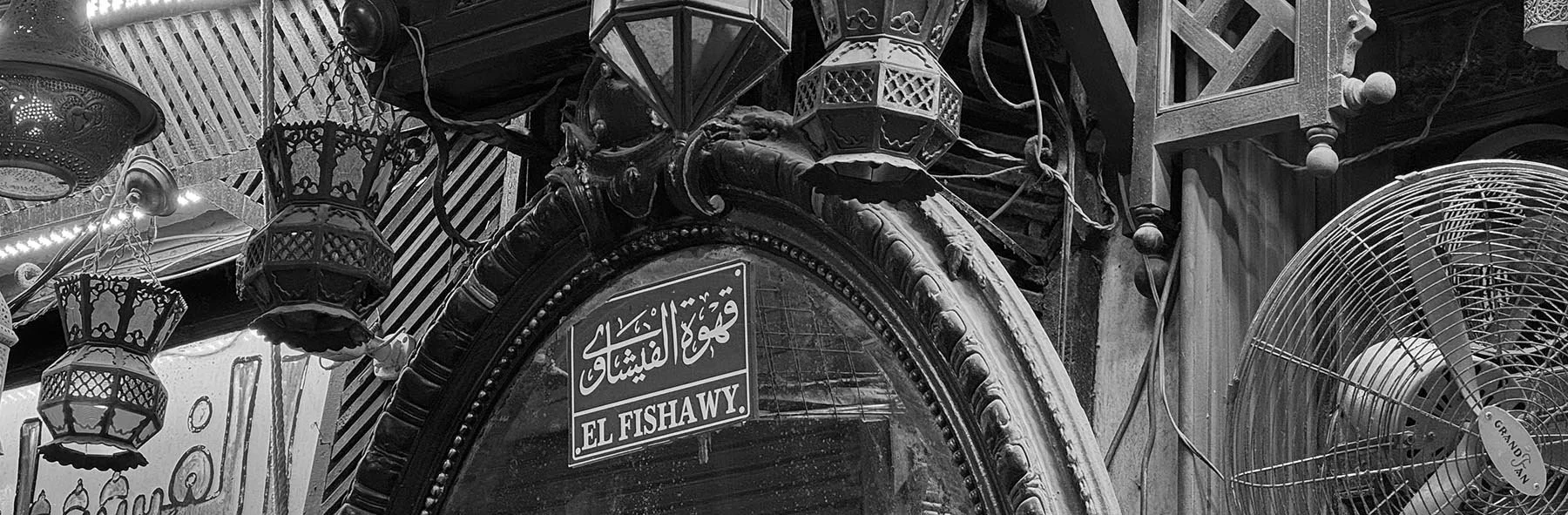
In the Shadow of Mirrors: El Fishawy Café and the Enduring Culture of Cairo’s Coffeehouses
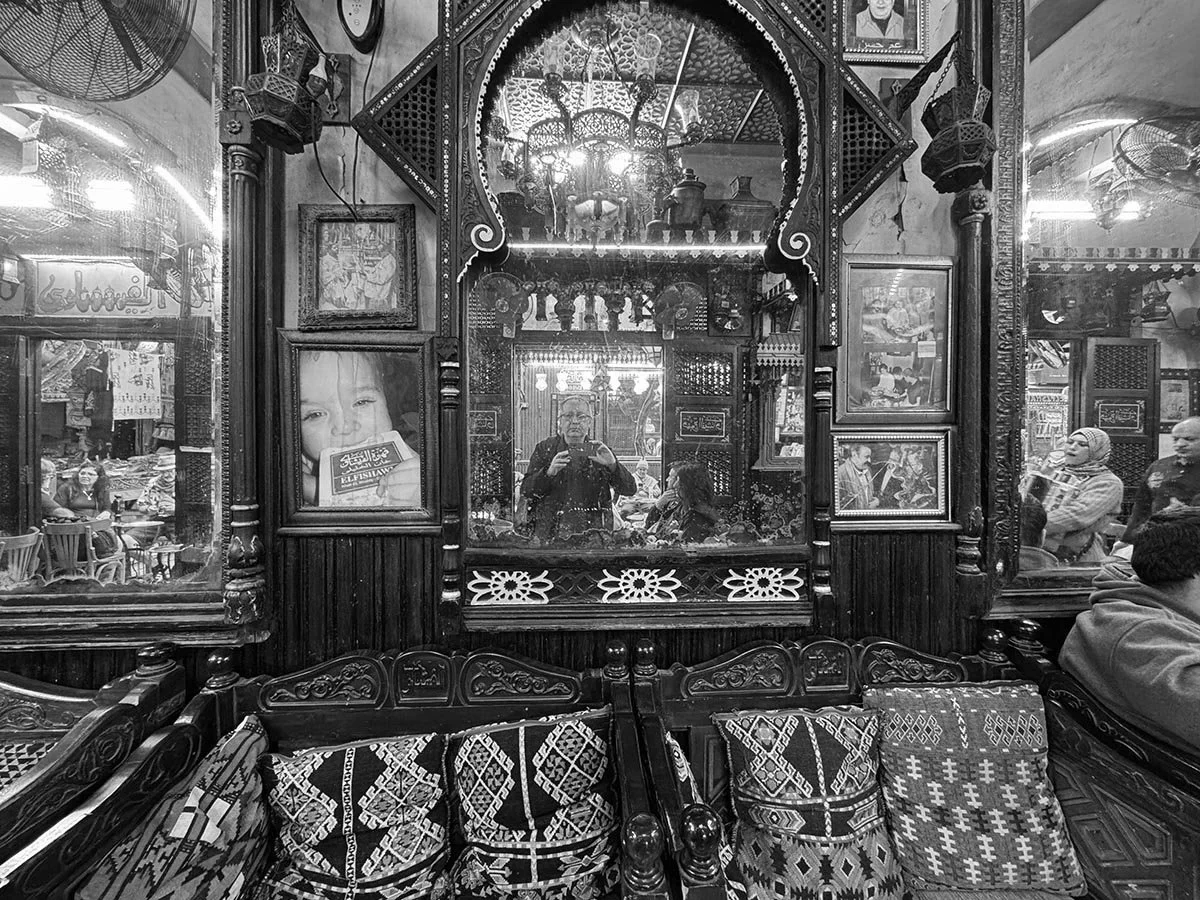
El-Fishawy in Khan al-Khalili was established in 1773 by the El-Fishawy family, it began humbly as a family gathering spot, a place where neighbors dropped by for conversation. Over two centuries it grew into Cairo’s most famous café, its narrow alleyway seating spilling into the heart of the bazaar. Generations of artists, intellectuals, and politicians gathered there. Its most famous patron, Naguib Mahfouz, was a regular fixture, and his novels often captured the atmosphere of places like Fishawy.

A coffeeshop in Cairo. 1849
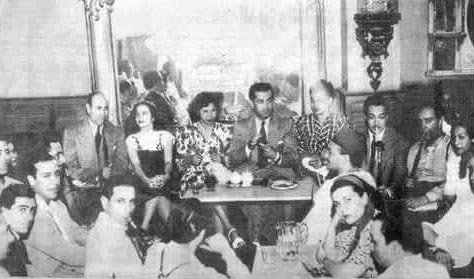
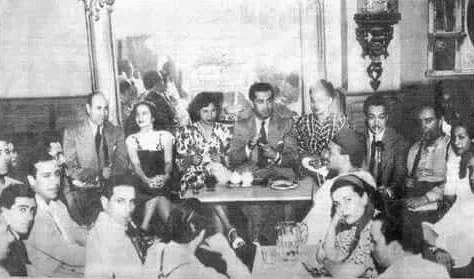
Celebrities in El-Fishawy. 1940s
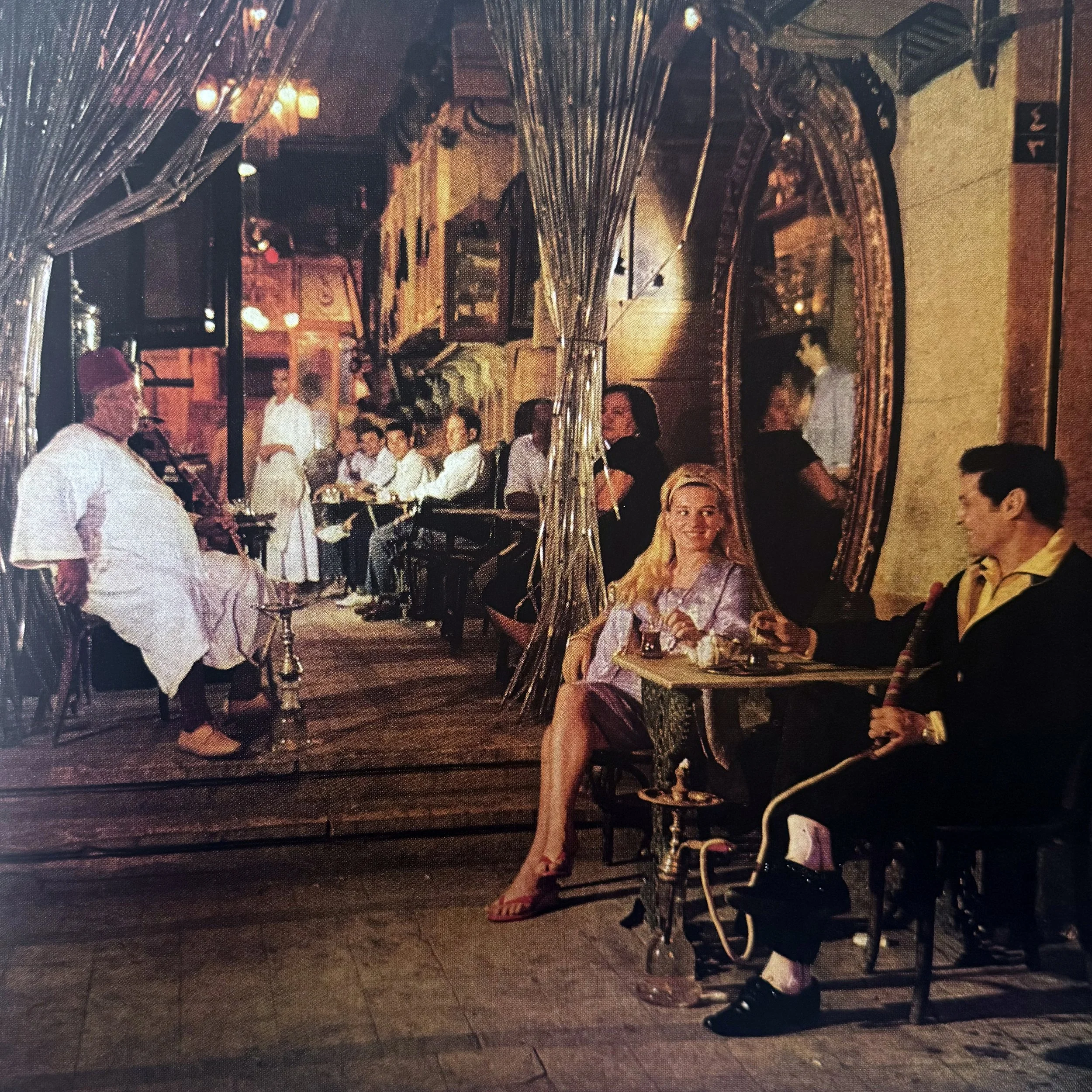
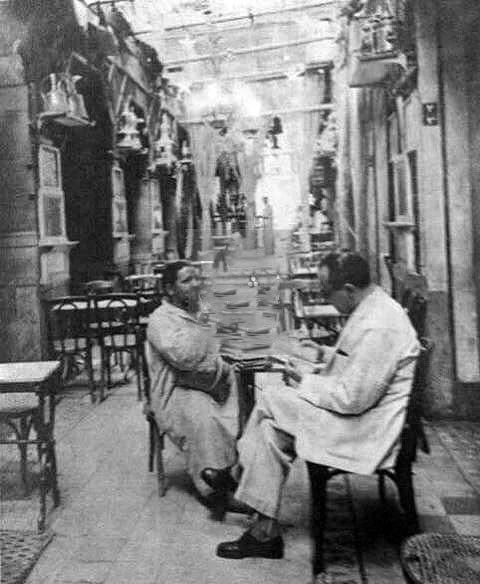
El-Fishawy. 1960s
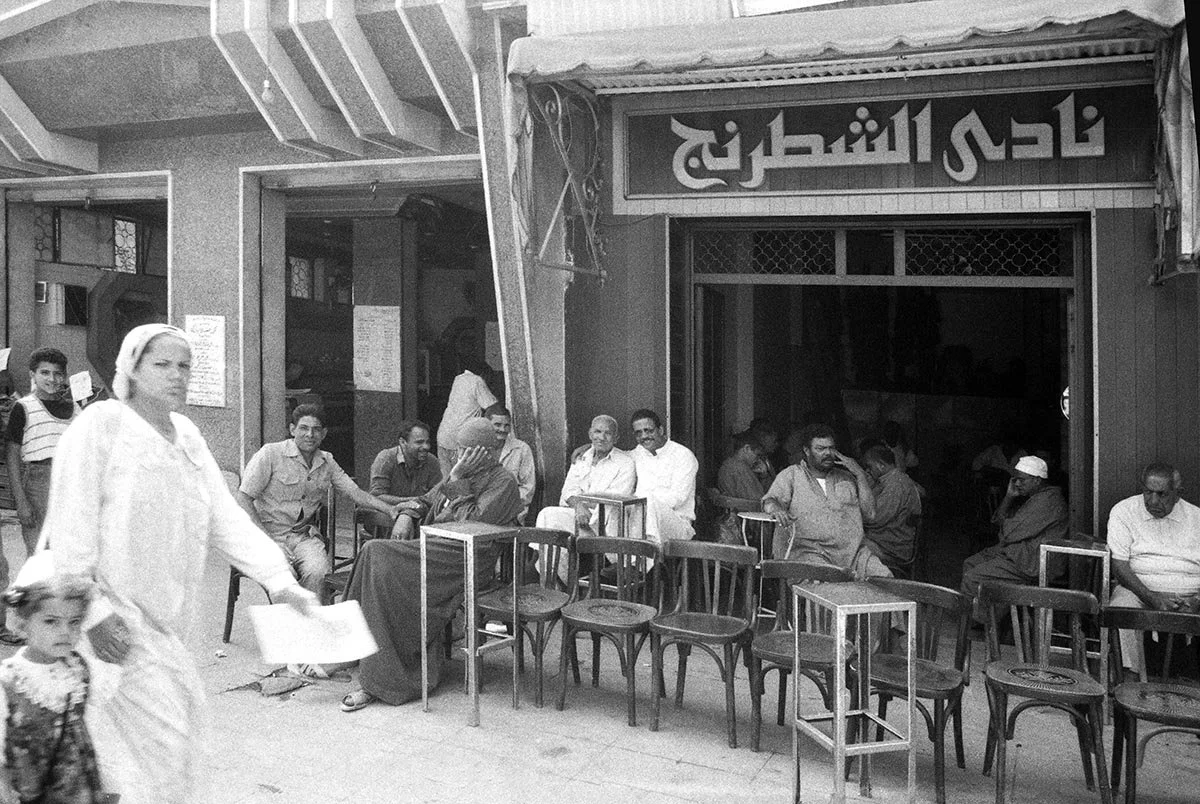
Traditional Ahwa Baladi. Cairo. 1994
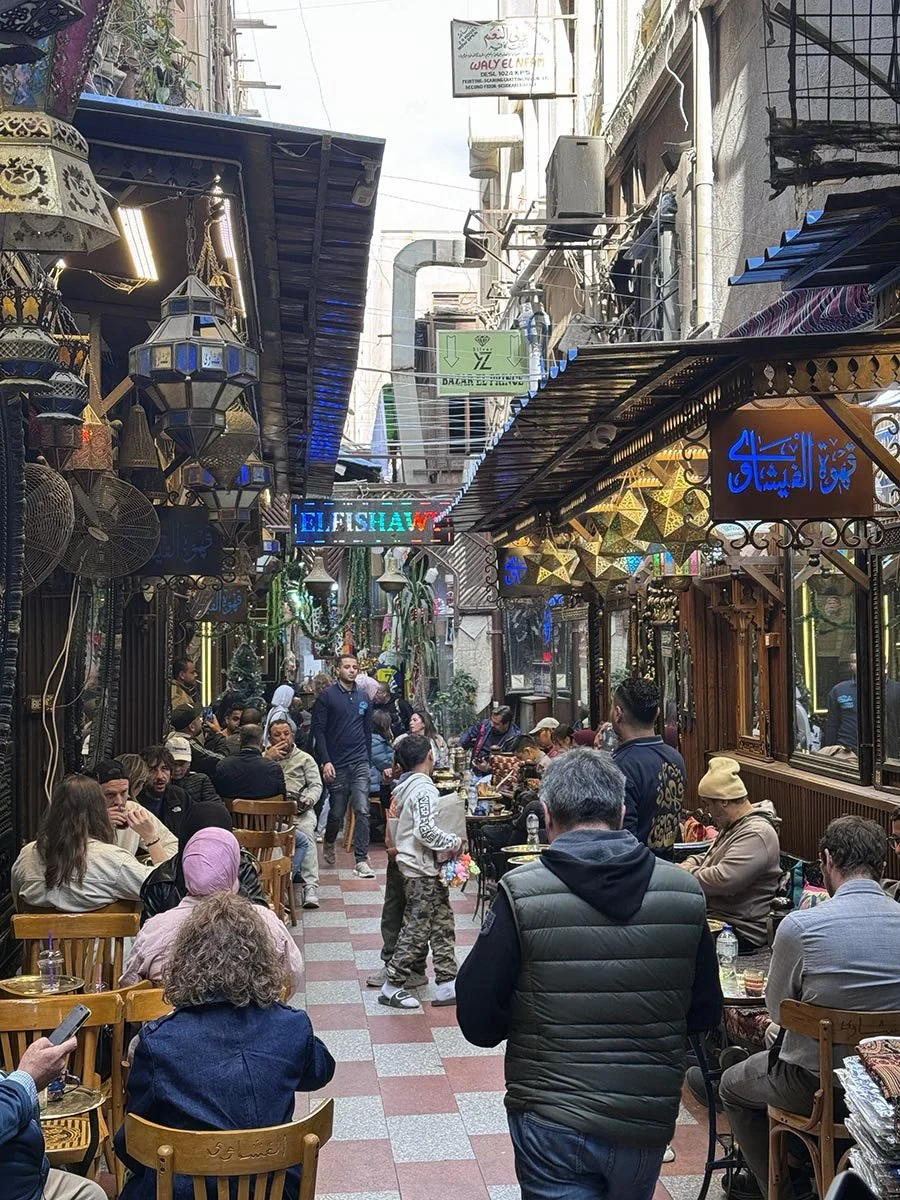
In the 1970s, my father would sometimes take my brother and me to el-Fishawi. I still remember sitting on the benches, drinking tea, the narrow alley filled with life. As I grew older, it became a frequent hangout with my college friends. Sitting there, we observed the stream of characters that passed through. Beggars came asking for coins, vendors appeared selling cigarettes, sunglasses, framed pictures, or even racks of clothing. We smoked shisha, the bubbling water pipe accompanying our conversations, a ritual that felt inseparable from the experience. With the Covid pandemic, shisha service was banned, a loss that diminished part of Fishawy’s ritualistic appeal. Yet even without it, I return whenever I am in Cairo. I still order a cup of black tea, accompanied by another cup filled with fresh mint leaves, and for a brief moment, sitting on the narrow benches, I recapture the sensation of being embedded in Cairo’s timeless social fabric. And in 2026, during my last visit I found that Shisha service has been restored!